The best plants for growing in water indoors are lucky bamboo, pothos, heartleaf philodendron, and selected aroids. Many others—including coleus, Tradescantia, begonias, basil, mint, and lemongrass—root easily in water but are better transferred to soil, LECA, or another aerated medium after roots develop.
That distinction matters: plain water is usually a propagation medium, not a complete long-term diet. Permanent water culture requires fresh, oxygenated water, bright indirect light, and appropriately diluted mineral nutrients.
As an Amazon Associate I earn from qualifying purchases.
Water is an excellent rooting medium for many houseplants, but it is not automatically a complete long-term growing system. Lucky bamboo is the clearest choice for permanent indoor water culture. Pothos, heartleaf philodendron, some aroids, spider-plant plantlets, mint, and basil can also grow for extended periods in water when they receive light, oxygen, and mineral nutrients. Many other plants on this list root readily in water but should eventually move to soil, LECA, or another airy medium.
Recommended Free Tools
What “growing in water” actually means
There are two different practices behind the phrase plants that grow in water:
#1 Best Overall
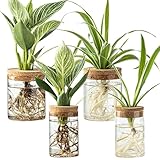
- Premium Borosilicate Glass Plant Propagation Stations for Superior Durability & Clarity:Crafted from high-quality, heat-resistant borosilicate glass, these propagation vases ensure long-lasting use and crystal-clear visibility for healthy root growth.sizes: Large (3.34" x 3.9") or Small (2.55" x 3.9")—perfect for any plant type or space.
- Elegant Nordic Design for Modern Décor:Elevate your home or office with these minimalist yet functional vases!creating a tidy display for herbs,Hydroponic plants or flowers.Effortlessly stylish in any setting.
- Versatile Decor for Every Space:More than just a propagation vase! Use it as a charming centerpiece for weddings, a desk organizer, or a shelf accent. Purify indoor air with fresh greenery, add life to dull corners, or create a mini indoor garden. Perfect for homes, offices, cafes, or even as a unique holiday decoration.
- Effortless Hydroponic Growing & Plant Propagation:A must-have for plant lovers! Root cuttings effortlessly, display blooming flowers, or grow aquatic plants with ease. The compact design fits perfectly on windowsills, bathrooms, or kitchen counters—ideal for herbs, succulents, or trailing vines. Start your hydroponic garden today!
- Endless DIY Creativity:Unleash your imagination! Mix and match plants like lucky bamboo, monstera cuttings, or roses for a personalized touch. Great for DIY projects, boutique hotels, or plant-themed gifts. Packaged ready to delight gardening enthusiasts—the perfect present for birthdays, housewarmings, or any green-thumbed friend!
- Long-term water culture: The plant remains in a vase, reservoir, or hydroponic container for an extended period. Its roots need oxygen and, after the initial water supply is exhausted, a suitable source of mineral nutrients.
- Water propagation: A cutting is placed in water until it produces roots, then transplanted into soil, LECA, or another well-aerated growing medium. Water-rooted cuttings can develop roots that are less adapted to a solid medium, so rooting in water does not necessarily make water the best permanent home. University of Minnesota Extension’s begonia guidance illustrates this distinction.
The table below labels each plant by its most reliable use instead of suggesting that all 33 will thrive indefinitely in plain tap water.
33 plants that grow or root in water indoors
Best candidates for long-term water culture
| Plant | Scientific name | Best use | Light | Pet-safety note |
|---|---|---|---|---|
| 1. Lucky bamboo | Dracaena sanderiana | One of the most dependable decorative water plants. Keep the roots in chlorine-free or filtered water, supported with pebbles. | Bright, indirect | Do not assume it is pet-safe; verify with a current veterinary database. |
| 2. Golden pothos | Epipremnum aureum | Excellent for both water propagation and long-term vase or passive-hydroponic culture when supplied with nutrients. | Medium to bright, indirect | Problematic if chewed because of calcium oxalate crystals. See Penn State Extension’s pothos profile. |
| 3. Neon pothos | Epipremnum aureum ‘Neon’ | A bright chartreuse pothos cultivar that roots readily at stem nodes and can be maintained in water with appropriate care. | Bright, indirect | Has the same pothos toxicity concern if chewed. |
| 4. Marble Queen pothos | Epipremnum aureum ‘Marble Queen’ | Suitable for propagation and possible long-term water culture. More light helps preserve its white-and-green variegation. | Bright, indirect | Has the same pothos toxicity concern if chewed. |
| 5. Heartleaf philodendron | Philodendron hederaceum | One of the easiest vines to root in water. A cutting needs at least one healthy node, with leaves kept above the waterline. | Medium to bright, indirect | An aroid that can be irritating or toxic if eaten. |
| 6. Monstera deliciosa | Monstera deliciosa | Excellent for a visible propagation display. Long-term growth is generally more dependable after moving the rooted cutting to a nutrient-containing, aerated medium. | Bright, indirect | Do not place within reach of pets unless the exact plant has been checked. |
| 7. Arrowhead vine | Syngonium podophyllum | Roots readily from nodes and works well in water displays or passive-hydroponic experiments. Treat permanent water culture as a project rather than a maintenance-free arrangement. | Bright, indirect | Verify before placing near pets; it is an aroid. |
| 8. Peace lily | Spathiphyllum spp. | A more advanced water-culture option. Keep the crown above water and ensure the roots receive oxygen; do not submerge the entire plant in a stagnant jar. | Medium to bright, indirect | Verify the exact plant before placing it near pets. |
| 9. Chinese evergreen | Aglaonema spp. | Can be propagated in water and may adapt to passive hydroponics with stable support and dilute nutrients. It should not sit indefinitely in stagnant water. | Medium to bright, indirect | Verify the exact species or cultivar before treating it as pet-compatible. |
| 10. Spider-plant plantlets | Chlorophytum comosum | Suspend young plantlets so only their developing roots reach the water. This is more reliable than submerging a mature spider plant. | Bright, indirect | ASPCA lists spider plant as non-toxic to cats and dogs; individual pets can still react differently. See Missouri Extension’s plant guidance. |
Excellent plants for rooting in water, then transferring
| Plant | Scientific name | How to use water | Light | Pet-safety note |
|---|---|---|---|---|
| 11. Monstera adansonii | Monstera adansonii | Root a stem segment with at least one node. Treat it primarily as a propagation candidate and pot it after rooting. | Bright, indirect | Verify before placing near pets. |
| 12. Inch plant | Tradescantia zebrina | Fast-rooting stems produce roots at nodes and look attractive in a narrow propagation vase. | Bright, indirect | Verify the exact Tradescantia before placing within reach of pets. |
| 13. Inch plant | Tradescantia fluminensis | Root stem pieces in water, then transplant. Keep it contained because some Tradescantia can spread aggressively outdoors in suitable climates. | Bright, indirect | Verify the exact species. |
| 14. English ivy | Hedera helix | Stem cuttings root readily, but easy water rooting does not make permanent water culture the recommended method. | Bright, indirect | Verify before placing near pets. |
| 15. Coleus | Coleus scutellarioides | One of the best beginner choices. Take a 4–6-inch cutting, strip the lower leaves, and place the bare stem in water. Transplant after roots form. | Bright, indirect | Verify the exact cultivar before placing near pets. See UMN Extension’s coleus guidance. |
| 16. Wax begonia | Begonia × semperflorens-cultorum | Cover the leafless section of a healthy cutting with water, then transplant when roots develop. | Bright, indirect | Begonias are toxic to cats and dogs according to UMN Extension. |
| 17. Rex begonia | Begonia rex-cultorum | Use water mainly for suitable leaf or stem propagation. Move the rooted plant to a light, airy medium rather than keeping it in a stagnant jar. | Bright, indirect | Begonias are toxic to cats and dogs. |
| 18. Cane begonia | Begonia spp. | Strong candidate for stem-cutting propagation. Keep the cutting warm in bright indirect light and transplant after roots are established. | Bright, indirect | Begonias are toxic to cats and dogs. |
| 19. Impatiens | Impatiens spp. | Root healthy, non-flowering tip cuttings in water or another moist medium. Transfer after roots are about 1 inch long, recognizing that timing varies with conditions. | Bright, indirect | Verify the species or cultivar. |
| 20. Peperomia | Peperomia spp. | Use appropriate stem cuttings for water propagation, then move them to an airy medium. Leaf propagation is also possible for some types, but water is not equally suitable for every species. | Bright, indirect | Toxicity varies by species; identify it first. See Illinois Extension’s propagation guidance. |
| 21. Baby rubber plant | Peperomia obtusifolia | A compact plant for water-rooted stem cuttings. Treat the water as a propagation stage, not a guarantee of permanent water growth. | Bright, indirect | Confirm the exact species before calling it pet-safe. |
| 22. Fittonia | Fittonia albivenis | Soft-stem cuttings can root in water. Transfer after rooting because long-term performance is generally more dependable in a moist, aerated medium. | Bright, indirect | Verify the exact plant. |
| 23. Pilea | Pilea peperomioides | Root plantlets or stem cuttings in water, keeping the crown and foliage above the waterline. Pot once established. | Bright, indirect | Verify before placing within reach of pets. |
| 24. Rubber plant | Ficus elastica | Stem cuttings may root in water, although tougher or woody material can be slow and prone to rot. Some cuttings benefit from allowing the cut surface to callus first. | Bright, indirect | Verify the exact plant before placing near pets. |
| 25. Corn plant | Dracaena fragrans | Propagate cane or stem sections, preferably with filtered water. Dracaenas can be sensitive to salts, chlorine, and fluoride in tap water. | Bright, indirect | Many Dracaena species can be problematic if eaten; verify the exact plant. See NC State Extension’s Dracaena information. |
| 26. Snake plant | Dracaena trifasciata | Leaf or division-based propagation is possible, and some cuttings can start in water. Move them to a well-drained medium once roots and new growth develop. | Medium to bright, indirect | Verify the exact plant; do not infer safety from its ability to root in water. |
| 27. ZZ plant | Zamioculcas zamiifolia | Start leaf or stem material in a shallow amount of water only until roots and a rhizome develop, then plant in a well-drained medium. | Medium to bright, indirect | Verify before placing near pets. |
| 28. Hoya | Hoya spp. | Node-bearing cuttings can root in water, but these epiphytic plants generally do better long term in a highly aerated medium. | Bright, indirect | Species and cultivar safety varies; verify it. |
| 29. African violet | Streptocarpus ionanthus | Root a leaf-petiole cutting in water or moist media, then move the rooted plant to a light, airy potting mix. Keep the leaf crown out of water. | Bright, indirect | Verify the exact plant. |
| 30. Christmas cactus | Schlumbergera × buckleyi | Root segments in water as a propagation experiment, then maintain the plant in a porous growing medium. | Bright, indirect | Verify before placing near pets. |
Edible kitchen-window options
| Plant | Scientific name | Best approach | Light |
|---|---|---|---|
| 31. Basil | Ocimum basilicum | Root fresh stem cuttings in water and harvest from a bright window. For continuing production, use hydroponic nutrients and eventually move the plant to a nutrient-containing system or growing medium. | Bright light; supplemental light may help |
| 32. Mint | Mentha spp. | Roots readily from stems and can remain in water temporarily or longer with regular water changes and nutrients. Water culture also keeps its aggressive soil growth contained. | Bright light |
| 33. Lemongrass | Cymbopogon citratus | Place a fresh stalk base in water to produce roots and new shoots. For sustained harvesting, transplant it or use a nutrient-containing hydroponic setup. | Bright light |
The best four choices for a first water garden
Lucky bamboo: the easiest permanent display
Lucky bamboo is not bamboo; it is Dracaena sanderiana. It is the strongest choice here if the goal is a decorative plant that stays in water rather than a cutting that will soon be potted. Place the stems in a clean container, anchor them with pebbles, keep the foliage above the water, and use chlorine-free or filtered water. Provide bright indirect light and change the water regularly. A weak liquid fertilizer can support continued growth, but too much fertilizer can damage the plant. NC State Extension provides species-specific information on growing lucky bamboo.
Pothos: the most forgiving trailing vine
Golden, Neon, and Marble Queen pothos all root at stem nodes. Cut just below a node, remove leaves that would sit underwater, and place the node beneath the surface. Keep the leaves dry and the container in bright indirect light. Golden pothos is especially tolerant, while Marble Queen usually needs brighter indirect light to retain variegation. A pothos cutting can live in water for a long time, but vigorous new growth eventually requires mineral nutrients and good root oxygenation. Every pothos cultivar should be treated as unsafe to chew because of calcium oxalate crystals.
The Tool Desk
Outbyte Driver Updater FREEFix the driver behind crashes, sound loss and screen glitchesFind Drivers →Outbyte PC Repair FREERepair Windows errors before they cause bigger problemsFix Now →Heartleaf philodendron: an easy node-rooting vine
Choose a healthy vine section with at least one node. A leaf by itself cannot reliably produce a new philodendron plant because the node contains the growth tissue needed for a new shoot. Keep the node submerged and the leaf above water. It is a good choice for a propagation station, but it is not a pet-safe choice if an animal can chew it.
Monstera: attractive propagation, more demanding permanence
Monstera deliciosa and Monstera adansonii make particularly attractive water-propagation displays because their nodes and developing roots are easy to observe. Follow the node rather than the leaf: a cutting without a viable node may form roots but fail to produce a new plant. UMN Extension’s Monstera propagation instructions support this approach. Once roots are established, transferring the cutting to soil, LECA, or another aerated medium is usually a more reliable route to sustained growth than leaving it in plain water indefinitely.
Rank #2

- 3-Vase Plant Propagation Station: Grow and display multiple plant cuttings in one compact tabletop station. Three separate clear glass vases let you propagate different cuttings at the same time while making roots and water levels easy to observe. Suitable for pothos, philodendron, ivy, lucky bamboo, herbs and other small plants that root in water.
- Easy-Access C-Shaped Holders: Unlike closed-ring holders, the open C-shaped metal supports allow each glass vase to be lifted out individually for changing water, cleaning or replacing cuttings. The removable design simplifies routine plant care without requiring you to take apart the entire propagation station.
- Watch Roots Grow Through Clear Glass: The 3 bulb-shaped borosilicate glass vases provide a clear view of developing roots and water levels, turning plant propagation into part of the display. Use the vases for water-rooted houseplant cuttings, herbs, flowers or other suitable small stems while keeping each cutting organized separately.
- Natural Wood and Compact Tabletop Design: The wood, black metal and transparent glass create a rustic decorative look for windowsills, desks, shelves, kitchen counters, living rooms, bedrooms and offices. Wooden frame measures 11 x 4 x 4.4 in; each glass vase measures 3.9 in high, 2.5 in bottom diameter and has a 1 in mouth opening.
- Complete Propagation Set: Includes 3 glass propagation vases, natural wooden stand, C-shaped metal support rod, cleaning brush and assembly components. The compact plant display is also suitable for plant lovers, gardeners, moms and anyone who enjoys indoor greenery. Plants are not included.
How to grow a cutting in water indoors
- Start with healthy material. Select a pest-free stem, plantlet, leaf, or cane appropriate to the species. Avoid soft, blackened, damaged, or already-rotating tissue.
- Use a clean, sharp tool. Make a clean cut rather than crushing the stem. A clean pair of pruning shears or small bypass snips is useful when taking multiple cuttings; disinfect the tool between questionable or diseased plants.
- Include a node when propagating vines. For pothos, philodendron, Monstera, Syngonium, Tradescantia, and similar plants, put at least one healthy node in the water. A leaf or internode without a node may root without producing a new shoot.
- Remove submerged leaves. Only the node, lower stem, or designated rooting tissue should be underwater. Leaves, crowns, and most foliage should remain above the waterline because submerged foliage decays quickly.
- Use a stable, clean container. A clear glass propagation vase or propagation station makes root development easy to inspect and is suitable for both temporary rooting and decorative displays. It does not, by itself, turn a cutting into a permanent water-culture plant. Support the cutting so it cannot fall completely into the water.
- Place it in bright indirect light. A bright window filtered by a sheer curtain is usually safer than hot direct sun, which can scorch leaves and heat a small container. Very little light produces weak growth and encourages a cutting to decline.
- Refresh the water. Replace cloudy, foul-smelling, or stagnant water immediately. Even when water looks clear, regular changes help limit accumulated waste and keep the root zone fresher. Rinse the container if algae or slime appears.
- Watch the roots. Healthy new roots are generally firm. Brown, mushy roots, a bad odor, collapsing stems, or a slimy film indicate that the cutting needs immediate cleaning and often a fresh cut above damaged tissue.
- Transplant at the right point. Move most water-propagated plants after they have several healthy roots and, ideally, signs of new growth. A root length of about 1 inch is a useful guide for quick-rooting cuttings such as impatiens, but species and conditions vary.
Water, nutrients, and root oxygen
Plain water supplies hydration, but it does not reliably supply every mineral nutrient a growing plant needs. A cutting can use stored energy while it is producing roots; a mature plant expected to make leaves, stems, or harvestable herbs needs a complete feeding strategy. UMN Extension’s small-scale hydroponics guidance explains why hydroponic plants require mineral nutrients rather than water alone.
For long-term culture, use a fertilizer made for hydroponic growing and follow its dilution instructions. A dilute hydroponic fertilizer for houseplants is more appropriate than repeatedly pouring full-strength garden fertilizer into a small vase. Begin conservatively: concentrated nutrient solution can injure roots, and nutrient-rich water can accelerate algae and bacterial growth.
PC Slower Than It Used to Be?
A free scan shows the junk files, broken settings and background clutter dragging Windows down - then fixes them in one click.Free scan · Windows 10 & 11Outdated Drivers Are Slowing You Down
One free scan finds every outdated or missing driver and matches the right update for your exact hardware.Free scan · exact hardware matchRoots also need oxygen. A plant sitting in a small volume of stagnant, warm, nutrient-rich water is not experiencing the same conditions as a properly managed hydroponic reservoir. Keep the water fresh, avoid burying the entire root mass under an airtight or crowded arrangement, and use an aerated or semi-hydroponic setup for plants that outgrow a simple vase.
When LECA is a better choice than a jar of water
LECA, or lightweight expanded clay aggregate, provides physical support while leaving air spaces around the roots. It can be useful when a water-rooted cutting is ready to leave a vase but is not yet suited to dense potting soil, or when a peace lily, pothos, Chinese evergreen, or similar plant needs a more controlled passive-hydroponic setup.
Use LECA clay pebbles as a semi-hydroponic medium rather than assuming they eliminate maintenance. The container still needs a suitable water level, clean roots, appropriate nutrients, and enough oxygen. LECA is especially worth considering for plants that become unstable in a narrow vase or for growers who want a reservoir without keeping every root fully submerged.
How to control algae and prevent root rot
- Shield the reservoir from light. An opaque container or a cover around the lower portion of a clear vase reduces algae. Clear glass is useful for propagation, but light reaching nutrient-rich water can encourage green growth.
- Clean the container. Empty and rinse the vessel when it becomes cloudy, slimy, or odorous. Do not simply top off foul water.
- Keep foliage out of the water. A submerged leaf is a common starting point for decay.
- Do not crowd cuttings. Crowded stems are harder to inspect and can spread rot between cuttings.
- Use nutrients sparingly. More fertilizer does not compensate for poor light or low oxygen.
- Separate declining plants. If one cutting develops mushy tissue, remove it from the container, cut away damaged material with a clean tool, and restart it in fresh water if viable.
Choosing the right setup
| Your goal | Best setup | Good plant choices | Main limitation |
|---|---|---|---|
| See roots develop | Small clear vase or propagation station with fresh water | Pothos, philodendron, Monstera, Tradescantia, coleus, begonia | It is primarily a rooting stage; the cutting may later need a medium. |
| Keep a decorative plant in water | Stable container, support stones, filtered water, bright indirect light, regular changes | Lucky bamboo, pothos, heartleaf philodendron | Long-term growth requires nutrients and root oxygen. |
| Grow herbs indoors | Hydroponic reservoir or another nutrient-containing system | Basil, mint, lemongrass | Plain water will not support indefinite production. |
| Support a larger plant | LECA or another airy semi-hydroponic medium | Pothos, peace lily, Chinese evergreen, selected aroids | Requires attention to water level, nutrients, and cleaning. |
Common problems and what to do
The cutting has roots but no new leaves
Check whether the cutting contains a viable node. A node-less leaf or stem section may produce roots without producing a new shoot. Also check light and temperature, and avoid adding strong fertilizer to a newly rooting cutting.
Quick wins for a faster PC:
Scan for outdated or missing drivers - takes under a minuteDriver Scan →Repair Windows errors before they cause bigger problemsFix Now →Fix the driver behind crashes, sound loss and screen glitchesFind Drivers →The roots are brown and mushy
Remove the cutting, rinse it, and inspect the stem. Trim soft tissue back to firm tissue with a clean tool, discard severely damaged material, wash the container, and restart in fresh water. If the same problem returns, move the plant to a more aerated medium such as LECA or a suitable potting mix.
Rank #3

- COMPACT SET OF 5 SIZES – Includes five small self watering plant pots measuring 4.9, 5.5, 5.9, 6.4, and 6.8 inches. These are small indoor planters designed for succulents, herbs, seedlings, flowers, and compact houseplants.
- Self-Watering Design – Featuring a plastic plant pot with a removable reservoir to maintain steady moisture at the roots. These flowerpots for indoor plants simplify care by allowing your greenery to hydrate as needed.
- Drainage & Airflow – These indoor plant pots with drainage facilitate excess water escape and vital root aeration. The plastic pots for plants prevent root rot, ensuring a healthy environment for any indoor pot for plants or planting pots.
- Durable Plastic Pots - Made from lightweight plastic, these flower pots are easy to move and reposition while providing stable support for indoor planter use, including larger house plants placed on shelves, desks, or windowsills.
- Clean Modern Look – Our indoor planter pots feature a sleek matte finish. This plant pot fits any decor, whether used as a flowerpot for the office or as outdoor pots for plants on a porch or windowsill.
Green algae keeps returning
Reduce light reaching the water by using an opaque vessel or covering the lower portion of the container. Change the water and clean the vessel. If you are using nutrients, dilute them correctly and avoid leaving nutrient solution exposed to strong light.
The leaves are pale or growth has stopped
Plain water, insufficient light, and depleted nutrients are the most likely causes. Move the plant to brighter indirect light, then use a properly diluted hydroponic nutrient if the plant is intended to remain in water. Do not respond to pale leaves by applying a heavy dose of fertilizer.
The cutting wilts after moving to soil
Water-grown roots were formed in a very different environment from potting mix. Transition gradually: use a loose, evenly moist medium, keep the plant out of harsh sun while it adjusts, and avoid either drowning the new roots or allowing them to dry completely. Some plants, particularly succulents, woody cuttings, hoyas, snake plants, ZZ plants, and Christmas cactus, are better moved to an airy medium rather than kept permanently submerged.
Edible plants: water propagation versus hydroponic production
Basil, mint, and lemongrass are convenient kitchen-window projects, but a stalk sitting in a glass of water is not the same as a productive hydroponic crop. Water can initiate roots and support short-term growth, while continued harvesting requires light, oxygen, and a balanced supply of mineral nutrients. For small-scale food production, use a nutrient-containing hydroponic system or transplant into a suitable growing medium. The principles are covered in UMN’s small-scale hydroponics resource.
Mint is particularly convenient in water because it roots quickly and can be kept from spreading through soil. It still needs regular water changes and nutrients if retained for a long period. Utah State University Extension’s mint guidance is useful when deciding whether to contain it in water or plant it elsewhere. Lemongrass stalk bases can produce roots and new shoots, but sustained growth is more reliable after transplanting or moving to a nutrient-fed hydroponic setup; see USU Extension’s vegetable water recommendations.
Rank #4

- 【Practical Size Combo】-These plastic planters indoor combines with 6 different sizes, 8 inch 7inch 6.5 inch 6 inch 5.5 inch 5 inch which are suitable for planting most small and medium-sized home office plants.Ideal gift,Carbonfree Certified.
- 【Durability, Light weight, Sturdiness】-Made of durable recyclable plastic, solid plastic plant pots protect plants and soil. Premium polypropylene planters feel sturdy in hand but not too heavy. Thick sidewalls 4mm in size keep everything in place. These planters are perfect gardening gift for your mom, your father, your sister or your friends who are plant lover.
- 【Intriguing Design】-A simple modern aesthetic and clean matte finish planters indoor plants bringing out a minimalistic styled. representation for any home/office decor without any sense of violation.
- 【Excellent Drainage Holes】-These flower pots for plants come with multiple drainage holes in the bottom. The holes and watering lip provide an air circulation system for the plant roots.
- 【Self Watering For Bottom】- I really like how big the bottom tray is to catch all the extra water. They come with a string to put at the bottom of the pots if you want to do bottom watering. A separate reservoir completely separates the plant growth environment from the water storage environment, and we don't have to worry about the flooding of plants anymore.
Pet safety: check the plant, not the growing method
Whether a plant grows in water has no bearing on whether it is safe to chew. Pothos, philodendron, many Dracaena, begonias, and other common houseplants can be harmful if eaten. Begonias are specifically identified as toxic to cats and dogs by UMN Extension, while spider plant is listed by ASPCA as non-toxic to cats and dogs. Some peperomia entries are considered non-toxic, but toxicity varies by species, so a plant sold under a common name should not automatically be assumed safe.
Before putting a water-grown plant on a low shelf, identify the exact species or cultivar and check a current veterinary toxicity database such as the ASPCA toxic and non-toxic plants database. Keep fertilizer, nutrient concentrates, pebbles, and small LECA pieces away from children and pets as well.
Do these 3 things before closing this tab:
1Fix the driver behind crashes, sound loss and screen glitches2Clear out junk files and repair common Windows errors3Scan for outdated or missing drivers - takes under a minuteA practical starter setup
- One healthy cutting or plantlet with the correct rooting tissue
- A clean glass propagation vase or stable container
- Filtered or otherwise suitable water, especially for lucky bamboo and sensitive Dracaena
- Clean, sharp pruning shears
- Bright indirect light from a window or, when necessary, a small LED grow light for propagation
- A hydroponic fertilizer only if the plant will remain in water beyond the initial rooting stage
- LECA or another airy medium if the cutting is ready to leave water or needs better support
Start with golden pothos, heartleaf philodendron, lucky bamboo, spider-plant plantlets, coleus, or Tradescantia if this is your first attempt. Choose Monstera, peace lily, Chinese evergreen, herbs, or a semi-hydroponic system when you are prepared to manage nutrients and root oxygen rather than simply topping up a decorative jar.
Sources and further reading
- University of Minnesota Extension: Propagating Monstera deliciosa
- Penn State Extension: Propagating houseplants
- University of Illinois Extension: Houseplant cuttings
- University of Vermont Extension: Propagating houseplants
- NC State Extension: Dracaena sanderiana
The Bottom Line
Bottom line: Choose lucky bamboo, pothos, heartleaf philodendron, or spider-plant plantlets for the best chance of a lasting water display. Use water for rooting most of the remaining plants, then transfer them to soil, LECA, or another aerated medium. Fresh water, bright indirect light, root oxygen, and appropriate nutrients—not water alone—determine whether the project succeeds.
Quick Recap
Product prices and availability are accurate as of the date/time indicated and are subject to change. Any price and availability information displayed on Amazon at the time of purchase will apply.

