Do these 3 things before closing this tab:
1Clear out junk files and repair common Windows errors2Fix the driver behind crashes, sound loss and screen glitches3Repair Windows errors before they cause bigger problemsThe fastest sensible approach depends on the size of the infestation. For a few mounds, use a product labeled for individual fire-ant mound treatment. For many mounds spread across a lawn or worksite, broadcast fresh fire-ant bait across the area, then spot-treat the nuisance mounds that remain. Reinspect after warm weather and rain, because fire ants commonly reinvade and no residential treatment keeps a property permanently fire-ant-free.
A properly applied two-step program can reduce mound numbers by roughly 80–90%, but it is suppression—not permanent eradication. New colonies may appear after rain, and populations can recover within about 12–18 months after bait treatment, especially in low, wet, or flood-prone areas.
As an Amazon Associate I earn from qualifying purchases.
Choose the treatment before you start
| Situation | Best starting point | Important limitation |
|---|---|---|
| Numerous mounds throughout a lawn or landscaped area | Broadcast fresh fire-ant bait, then spot-treat persistent nuisance mounds | It takes several days or weeks and must be repeated as reinvasion occurs |
| Only a few mounds in a small yard | Individual mound treatment | More labor-intensive and less protective against colonies entering from elsewhere |
| One mound beside a garden, plant, well, or other sensitive location | A label-approved mound treatment or carefully applied hot water | Hot water is incomplete and can cause serious burns or plant damage |
| Children, pets, livestock, or workers use the area | A product specifically labeled for that site and pest, applied when the area can be restricted | Follow the current label’s reentry, watering, storage, and animal restrictions |
| Fire ants are entering a building | Indoor-labeled bait or professional assessment, plus sealing suitable entry points | Outdoor lawn bait is not automatically legal or suitable indoors |
For a construction site, rental property, landscaped commercial lot, or home improvement project, prioritize access routes, play areas, entrances, sidewalks, staging areas, utility boxes, and any place where workers or residents regularly kneel or walk. Treating every inch of property with a contact insecticide is usually a less efficient strategy than using bait for area-wide suppression and treating only the remaining high-risk mounds.
Recommended Free Tools
The Two-Step Method: the best all-around plan for many mounds
Texas A&M describes the Two-Step Method as particularly appropriate when there are at least five mounds per quarter-acre—approximately 20 mounds per acre—or when mounds are scattered throughout a medium or large lawn.
#1 Best Overall

- Bug spray that quickly kills ants, roaches and flies
- Plant-based active ingredient bug killer safe for use around people and pets (when used as directed)
- Entomologist tested bug spray made with botanical extracts to kill bugs; with a fresh scent and no added dye, fragrance, or harsh chemical odors
- Bug killer for indoor and outdoor use, wherever bugs try to bother you
- Rooted in Nature, Optimized by Science
Step 1: Broadcast fresh bait over the area
Fire-ant bait is food-based. Foraging worker ants collect it and carry it into the colony, where it is shared with other ants and the queen. That lets one application reach colonies whose mounds you have not located.
- Confirm that ants are foraging. Place a small amount of bait beside a mound. If workers begin removing it within approximately 30 minutes, conditions are suitable. Do not disturb the mound to make this test.
- Apply in dry conditions. Grass and soil should be dry, and the weather should allow the bait to remain available for the period specified on the label. Late afternoon or evening may be useful during hot, dry weather, when ants are more likely to forage outside the hottest part of the day.
- Spread uniformly. Use the application rate and coverage area on the product label. A handheld spreader can make a more even broadcast application than scattering granules by hand.
- Protect the bait from rain and irrigation. Follow the label’s rain and watering restrictions. Rain or irrigation soon after application can reduce effectiveness.
- Do not combine products. Never mix bait with fertilizer, grass seed, or another pesticide unless the label expressly permits it. Do not use bait that is stale, damp, rancid, or contaminated. Fresh bait from a newly opened container is preferable; otherwise reseal and store it as directed.
Do not expect instant results. Depending on the active ingredient and conditions, indoxacarb baits may produce control in roughly 3–10 days; hydramethylnon baits commonly take about 2–3 weeks when broadcast; spinosad baits may take several weeks; and insect-growth-regulator baits may take longer—sometimes months—but can provide longer suppression. These are general ranges, not guarantees. The current product label controls the application method and any stated timing.
Step 2: Spot-treat the mounds that remain
Wait several days or longer, according to the bait’s directions, then inspect the property again. Treat only the mounds that remain active in high-traffic or sensitive locations. This combination gives you broad suppression without repeatedly spraying the entire lawn.
PC Slower Than It Used to Be?
A free scan shows the junk files, broken settings and background clutter dragging Windows down - then fixes them in one click.Free scan · Windows 10 & 11Outdated Drivers Are Slowing You Down
One free scan finds every outdated or missing driver and matches the right update for your exact hardware.Free scan · exact hardware matchIndividual mound products may be sold as baits, granules, dusts, liquid drenches, or aerosols. Their directions are not interchangeable. Some granules must be watered into a mound; some baits must be left dry. Some labels say not to disturb the mound, while other products require a specific application procedure. Read the exact label for the product in your hands rather than combining instructions from different products.
For example, one current EPA-accepted fire-ant bait label instructs users not to disturb mounds, not to water in the bait, and not to water for specified periods after mound or broadcast applications. It also advises avoiding mowing immediately before or after treatment and keeping the product dry and sealed. That is an example of why the label—not a generalized internet recipe—must determine what you do.
How to treat a few fire-ant mounds
If you have only one or a few mounds, individual treatment may be more practical than broadcasting bait over the entire property. It also lets you preserve nonproblem native ants elsewhere, which can compete with fire ants for food and nesting sites.
Rank #2
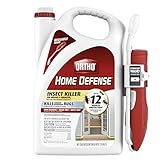
- WHERE TO USE INSECT SPRAY: Use this pest control spray indoors in kitchens and bathrooms or around doors and windows, and outdoors to the perimeter of foundations, patios, decks, garages or wherever insects are a recurring problem
- LONG-LASTING PROTECTION: This outdoor perimeter and indoor bug spray for homes creates a bug barrier that provides up to 12 month protection against ants, roaches and spiders when applied indoors on non-porous surfaces
- EASY-TO-USE APPLICATOR: This 1.33 gal. container of Ortho Home Defense Insect Killer for Indoor & Perimeter2 Ready-To-Use comes with a battery-powered Comfort Wand sprayer, which delivers a continuous spray for easy application
- INDOOR INSECT KILLER: Ortho Home Defense Insect Killer for Indoor & Perimeter2 is a bug killer spray that kills the toughest home-invading insects, including ants, cockroaches, spiders, fleas, ticks, scorpions, earwigs, silverfish, and more as listed
- WHEN TO USE: Apply this bug spray outdoors or indoors anytime as a preventative treatment or after you see evidence of insect activity
- Identify the active mound from a safe distance. Do not kneel on it, poke it, or dig into it; disturbed colonies can swarm.
- Choose a product whose label specifically covers fire ants, the intended outdoor site, and the application method you plan to use.
- Apply the stated amount and follow the label’s instructions about watering, mound disturbance, mowing, rain, and reentry.
- Keep people, pets, livestock, and workers away for the period stated on the label.
- Recheck after the product’s expected control period and after substantial rain. A nearby new mound may be reinvasion rather than treatment failure.
Spot treatment is fast and selective, but it does not protect the rest of the property from colonies arriving from untreated neighboring land, drainage areas, vacant lots, or flood-prone ground.
Quick wins for a faster PC:
Scan for outdated or missing drivers - takes under a minuteDriver Scan →Clear out junk files and repair common Windows errorsFree Scan →Fix the driver behind crashes, sound loss and screen glitchesFind Drivers →What about boiling water?
Very hot or boiling water is a nonchemical option for an isolated mound in a location where pesticide use is undesirable. University of Georgia and Texas A&M guidance describe using approximately 2–3 gallons, with success around 60% of treated mounds under favorable conditions. It works best when ants are near the surface, such as on a cool, sunny morning.
It is not a reliable whole-yard solution and is not a permanent cure. Surviving ants may relocate, and the treatment can kill only part of the colony. More importantly, boiling water can cause life-threatening burns and can damage turf, roots, irrigation components, or desirable plants.
- Do not carry boiling water near children, pets, livestock, or workers.
- Keep it off your feet, legs, exposed skin, desirable grass, plant crowns, and roots.
- Do not use it where a slip, splash, or unstable path creates a hazard.
- Never disturb a mound merely to confirm that it contains fire ants.
For most properties, hot water is best regarded as a carefully controlled option for one isolated mound—not the primary prevention program.
How to keep fire ants from coming back
You cannot reliably block reinvasion from surrounding land, but you can make recurring infestations smaller and less disruptive.
Inspect on a schedule
Walk the property after warm weather and rain. Check lawn edges, sidewalks, garden borders, playgrounds, entrances, utility boxes, drainage areas, and other high-use locations. On a construction or maintenance site, include material staging zones and routes that workers use repeatedly.
Rank #3
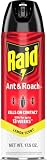
- Raid Ant & Roach kills a wide variety of listed insects that crawl around your home
- Kills on contact and has residual killing power for up to 13 weeks for roaches and carpenter ants
- Easy-to-use ant & roach killer that can be applied to infested surfaces directly
- No lingering chemical odor from this aerosol ant & roach spray
- Maintain control of indoor surfaces by retreating with roach & ant killer every 13 weeks as necessary
Repeat bait only when appropriate
Texas A&M describes once- or twice-yearly broadcast bait applications as a common suppression schedule. University of Georgia guidance emphasizes treating again when reinvasion occurs and mound numbers become problematic. Neither is a universal calendar for every location. Follow the chosen product’s label and local extension guidance, and do not apply simply because a fixed date has arrived if conditions are unsuitable.
Treat new nuisance mounds early
A few new mounds are easier to manage than a property-wide outbreak. Spot-treat newly appearing mounds in high-traffic areas, while using selective methods elsewhere when practical.
Preserve competing ants where possible
Native and other nonproblem ant species compete with fire ants for food and nesting sites. Indiscriminate, repeated broad-spectrum spraying can remove those competitors and may create more opportunities for fire ants. If selective bait or mound treatment solves the immediate problem, there is usually no reason to spray every ant you see.
Reduce building entry points
For ants entering a home, outbuilding, or site office, follow the trail and seal appropriate cracks and crevices after locating the entry route. Use only a bait or pesticide labeled for indoor use in an interior space. Outdoor fire-ant bait is not automatically suitable for walls, kitchens, offices, or other indoor locations.
Safety and label rules that matter
Use only an EPA-registered pesticide and follow the current label. The label specifies the permitted pest, site, amount, timing, protective equipment, storage, disposal, and restrictions. A product labeled for a lawn is not automatically labeled for a vegetable garden, hardscape, livestock area, building interior, or playground.
- Keep bait and pesticides away from children, pets, livestock, food, and animal feed.
- Do not allow pets or livestock to consume fire-ant bait.
- Keep people and animals out of the application area until the label permits reentry.
- Never transfer pesticide to a food or drink container.
- Do not use kitchen utensils to measure or apply pesticide.
- Store products in their original, labeled containers in a dry, secure location.
- Use gloves or other protective equipment only as required or recommended by the selected label, and use the specified glove material when one is named.
- Follow restrictions on mowing, watering, irrigation, rain, and disposal exactly.
If the property includes a private well, drainage channel, edible garden, livestock, a childcare area, or a sensitive ecological location, confirm that the intended product is labeled for that site before buying or applying it. When label directions are unclear, contact the product manufacturer, local extension office, or a licensed pest professional.
Rank #4

- INDOOR INSECT KILLER: Ready-To-Use Ortho Home Defense Max Indoor Insect Barrier bug killer spray pest control kills and prevents home invading insects including ants, roaches, spiders, fleas, ticks, and other common household bugs as listed
- HOW TO USE: Apply Ortho Home Defense Max Indoor Insect Barrier Ready-To-Use using the Extended Reach Comfort Wand, which lets you spray the insect and ant spray without bending
- LONG-LASTING PROTECTION: This insect control, bug spray for home kills listed bugs and protects your home for up to 365 days against ants, roaches and spiders indoors on nonporous surfaces
- WHERE TO USE: Use this indoor insect spray in kitchens, bathrooms and basements, and around doors and windows; apply outdoors to foundations to create a bug barrier around your home
- WHEN TO USE: Use this indoor bug spray to create an insect barrier anytime as a preventative treatment or after you see evidence of insect activity
What to buy—and what not to assume
The most useful purchase depends on the treatment plan, not on a universal “best” brand.
The Tool Desk
Outbyte Driver Updater FREEScan for outdated or missing drivers - takes under a minuteDriver Scan →Outbyte PC Repair FREERepair Windows errors before they cause bigger problemsFix Now →- For many mounds: choose a fresh fire-ant bait labeled for broadcast use on the intended property.
- For a few nuisance mounds: choose an individual mound treatment labeled for fire ants and follow its specific watering or no-watering directions.
- For broadcasting: a handheld lawn spreader is a practical way to distribute granular bait evenly.
- For pesticide handling: chemical-resistant gloves may be appropriate when the label requires or recommends them; the label determines the material and protection needed.
Products such as hydramethylnon baits, indoxacarb baits, spinosad baits, and insect-growth-regulator baits have different speed and persistence characteristics. Consumer examples may include Amdro Fire Ant Killer for Mounds, Advion Fire Ant Bait, and Antixx Fire Ant Bait, but availability, formulation, legal uses, and directions vary by product and location. Treat the active ingredient and current label as more important than the brand name, and do not assume a product is legal or suitable for your state, garden, pets, livestock, or indoor use without checking its label.
When to call a professional
Consider a licensed pest-control service when colonies are widespread, reinvasion is rapid, the property includes sensitive occupants or regulated areas, label directions cannot be followed safely, or fire ants continue to threaten workers, residents, or animals after a properly applied program. A professional can assess the property boundary, neighboring sources, drainage patterns, and treatment restrictions. Ask which products will be used, where they are labeled for use, how long people and animals must stay away, and what follow-up inspection is included.
Fire-ant stings: when to get urgent help
Fire ants can cause painful pustules and allergic reactions. Seek emergency medical care immediately after a sting if there is trouble breathing, swelling of the throat or tongue, faintness, or widespread symptoms suggesting a severe allergic reaction. Severe allergic reactions can be fatal.
Move away from the mound and brush ants off rather than standing over or repeatedly disturbing it. Do not risk additional stings to identify the species or inspect the colony more closely.
Free tools Windows power users keep installed
One-click scans. No signup required.
Frequently Asked Questions
Can fire ants be eliminated permanently from a yard?
Usually not. The realistic goal is suppression. A well-applied Two-Step program can greatly reduce mound numbers, but colonies may return after rain, flooding, or reinvasion from neighboring land. Inspect and retreat according to the product label and local guidance.
Best Value

- Raid Ant & Roach kills a wide variety of insects including Cockroaches, Waterbugs, Palmetto bugs, Ants, Silverfish, Carpet Beetles, Crickets, Earwigs, Household Spiders, Multicolored Asian Lady Beetles, Stinkbugs, Scorpions, Black Widow Spiders
- Kills on contact and keeps killing with residual action for up to 13 weeks* * Roaches and Carpenter ants
- Ant & Roach spray with no lingering chemical odor
- Easy-to-use ant & roach killer that can be applied to surfaces where bugs infest
- Retreat with ant & roach killer every 13 weeks as necessary to maintain control of indoor surfaces
How long does fire-ant bait take to work?
Timing depends on the active ingredient, weather, colony, and application. Indoxacarb products may produce control in roughly 3–10 days, hydramethylnon products often take about 2–3 weeks when broadcast, and spinosad products may take several weeks. Insect-growth-regulator baits can take months.
Should I water fire-ant bait into the mound?
Not unless the exact product label tells you to. Some granular mound treatments require watering, while some baits must remain dry and should not be watered in. Never combine directions from different products.
Is boiling water an effective fire-ant treatment?
It can eliminate some isolated mounds—roughly 60% under favorable conditions—but it is unreliable, can cause severe burns, and can damage turf and plants. It is not a whole-yard or permanent solution.
What should I do if fire ants are inside my house?
Follow the trail, seal suitable entry points, and use only an indoor-labeled bait or treatment. Outdoor lawn bait is not automatically approved for indoor use. A licensed professional can help when the entry source or treatment restrictions are unclear.
The Bottom Line
For fast, durable suppression, separate the two jobs: use a label-approved individual mound treatment for the few colonies creating an immediate hazard, and use fresh broadcast bait when mounds are spread across the property. Keep the area restricted during treatment, follow the exact label, inspect again after warm weather and rain, and treat new nuisance mounds before they multiply. Fire ants can be controlled very effectively, but a repeatable inspection-and-treatment plan is more realistic than a promise of permanent eradication.
Quick Recap
Product prices and availability are accurate as of the date/time indicated and are subject to change. Any price and availability information displayed on Amazon at the time of purchase will apply.

