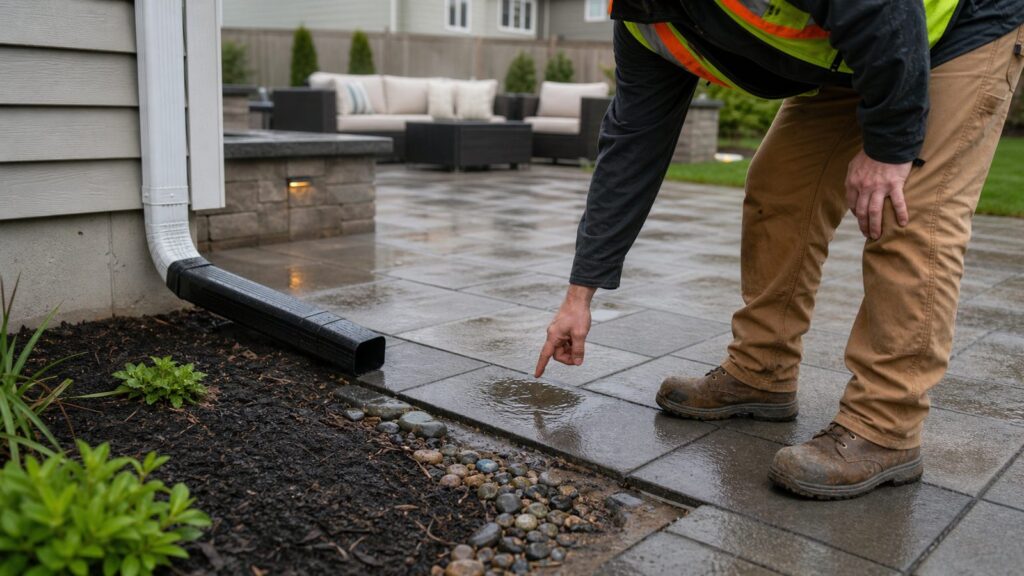
The fastest way to reduce backyard mosquitoes is not to start with a spray. It is to remove or treat the water where they are breeding, then make the yard less comfortable for adult mosquitoes. On construction and outdoor-living projects, we see the same pattern repeatedly: a patio drains toward a low corner, a gutter drops water beside the seating area, a corrugated pipe holds water between rains, or dense planting keeps the foundation damp and shaded. A yard can be sprayed every few weeks and still feel bad if those conditions stay in place.
The professional approach is an integrated plan: inspect after rain, dump or drain standing water, correct grading and gutter problems, use EPA-registered larvicides such as Bti where water cannot be removed, reduce cool resting habitat, add screens and air movement, and use targeted adult mosquito treatments only where they make sense. That sequence matters because mosquitoes can develop in very small amounts of standing water, and many species can move from egg to adult in roughly 7 to 10 days when conditions are right.
As an Amazon Associate I earn from qualifying purchases.
For most homeowners, meaningful mosquito reduction starts with a 30-minute property walk once a week during mosquito season. For homes with drainage problems, ponds, large plantings, or heavy summer entertaining, the best result usually comes from combining homeowner maintenance, a licensed pest-control provider, and permanent site improvements such as grading, drains, gutter work, patio corrections, or screened outdoor spaces.
Free tools Windows power users keep installed
One-click scans. No signup required.
Start With a 7-Day Backyard Mosquito Inspection
Pros do not guess where mosquitoes are coming from. They inspect the property after rain, then inspect it again several days later. A good rule is to walk the yard 24 to 48 hours after a storm and again around day 7. Anything still holding calm water at day 7 deserves attention because it may be giving larvae enough time to mature.
#1 Best Overall
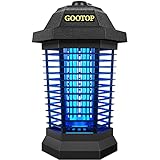
- Effectively eliminate most flying insects: Mosquito, Aedes, gnats, midges, flies, fruit flies, house flies, horse flies, moths, wasps, etc. Please use this exterminator at night and in the dark.
- EPA Registered: The bulb light attracts flying insects, and the high-voltage electric grid zaps them on contact. Efficient physical mosquito control. So you don't have to put up with the smell of sprays, insecticides and attractants. You also don't have to worry about your pets eating insects that have been killed by pesticides.
- Easy to use & Light weight : It’s very light so you can hang it everywhere you like. No warm up, Starts working when plugged in.
- Replaceable bulb & Easy to clean : Dead bugs will fall onto the tray, you just need to clean the tray with brush provided. 15W Bulb is replaceable. If your bulb becomes less effective at attracting flying insects, you can replace it.
- Area Coverage up to 1/2 Acre. Good for home, patio, balcony, courtyard, front porch, garden, pergola, deck, backyard, camping, swimming pool, garage, farm, etc.
Bring a flashlight, gloves, a trash bag, and a small stick or screwdriver to lift lids and move objects. Start at the house and work outward. Check gutters, downspout outlets, splash blocks, corrugated extensions, catch basins, stairwell drains, window wells, AC condensate areas, hose bibs, plant saucers, buckets, tarps, wheelbarrows, children’s toys, bird baths, fountains, rain barrels, wading pools, trash can lids, grill covers, outdoor storage bins, and low spots in lawns or hardscape.
Mosquitoes do not need a pond. A bottle cap, a wrinkled tarp, a saucer under a planter, or a clogged gutter can be enough. On job sites, one of the most common sources is construction debris or stored materials that hold water for a week: upside-down lids, folded plastic, unused pipe, and shallow depressions in unfinished grading. Around finished homes, the repeat offenders are gutters, drainage pipes, planters, and anything tucked out of sight behind a shed or along a fence.
What to Look For
Standing water is the obvious clue, but the bigger issue is calm, protected water. Mosquito larvae are more likely in water that sits still, is shaded, and is protected from disturbance. A shallow depression in a paver patio that holds water for 6 days is more concerning than a lawn area that dries in 24 hours. A rain barrel with a loose lid is more concerning than a sealed barrel with fine mesh at the inlet and overflow.
What’s actually slowing this PC down?
Pick the symptom - the matching free tool is one click away.
If you see tiny wriggling larvae near the surface, do not wait for a scheduled service visit. Dump the water if possible. If the water cannot be dumped, treat it with a label-approved larvicide or call a mosquito-control professional. The goal is to stop the next generation before it becomes a biting problem.
Remove Standing Water Before You Spray
Source reduction is the backbone of mosquito control. The U.S. Environmental Protection Agency recommends an integrated approach that combines source reduction, larval control, adult control, monitoring, and education rather than relying on routine spraying alone. In a backyard, that translates into one practical rule: empty, drain, cover, or treat water before spending money on adult mosquito sprays.
Start with containers. Dump buckets, toy bins, saucers, watering cans, wheelbarrows, and tarps after every rain. Store small items upside down or under cover. Drill drainage holes in outdoor bins where appropriate. Keep trash and recycling lids tight. Empty and refill bird baths at least weekly, and more often during hot weather.
Next, look at the house drainage. Clean gutters so they do not hold water. A properly pitched gutter should move water toward the downspout, not leave a long wet line after rain. Downspouts should discharge away from patios, play areas, foundation beds, and low lawn areas. If a downspout extension is corrugated, inspect it closely. The ridges can hold water, and a low sag can become a hidden breeding line.
Quick wins for a faster PC:
Clear out junk files and repair common Windows errorsFree Scan →Fix the driver behind crashes, sound loss and screen glitchesFind Drivers →Repair Windows errors before they cause bigger problemsFix Now →For patios and walks, water should move away from the house and away from seating zones. A common hardscape target is a slope of about 1/8 inch to 1/4 inch per foot, depending on the material, layout, and local conditions. The exact slope should be designed around thresholds, drainage outlets, soil, and accessibility, but flat work that holds birdbath puddles for days is a mosquito and maintenance problem. Paver patios need proper base preparation, edge restraint, joint condition, and surface pitch. Concrete patios need planned slope and control joints that do not trap water in settled panels.
The 3-Day Drainage Standard
Stormwater design is relevant even in a residential yard. Many mosquito aquatic stages need about 7 to 10 days in calm standing water, while properly functioning detention basins are typically designed to drain within about 3 days. That does not mean every puddle must vanish instantly, but it does mean water that sits for a week is a red flag.
If a lawn, swale, catch basin, dry creek, or low patio corner still holds water after 72 hours in normal weather, look for the cause. The issue may be compacted soil, poor grading, clogged drain stone, a buried pipe with no outlet, a crushed line, a blocked catch basin, or irrigation running too often. Permanent fixes cost more than a spray visit, but they address the condition that keeps producing mosquitoes.
Rank #2

- 2-WAY PROTECTION: The UV-LED light attracts insects, while the whisper-quiet fan pulls them into the mosquito trap basket, providing comprehensive mosquito killer outdoor and flying insect trap
- LARGE COVERAGE: This outdoor mosquito control protects up to a 1-acre area by disrupting mosquito breeding cycles, making it an ideal mosquito trap for large yards or gardens
- EASY MAINTENANCE: This bug catcher offers effortless use with touch-button basket emptying. The outdoor fly trap features a long-lasting LED bulb that rarely needs replacement
- DURABLE DESIGN: Our fly trap outdoor boasts weather-resistant construction, allowing continuous use as an outdoor fly trap and insect trap in varied conditions throughout the season
- DISCREET AND QUIET: The sleek black design of the backyard mosquito control blends with your décor, and the quiet operation of the mosquito killer outdoor won't be noticed
Use Larvicide Where Water Cannot Be Eliminated
Some water belongs in a yard. Ponds, rain barrels, drainage features, and certain water gardens cannot simply be dumped after every storm. For those areas, professionals use larval control. The idea is straightforward: treat mosquito larvae before they become flying adults.
Bti, short for Bacillus thuringiensis israelensis, is widely used across the United States for mosquito larvae. Homeowners commonly see it sold as dunks, bits, granules, or briquets. It can be used in water-collecting containers or areas where water cannot be eliminated, such as some ponds, tires, flower pots, and drainage areas, when the product label allows that use. Always follow the label for where it can be applied, how much to use, and how often to reapply.
Small retail packs of Bti usually cost about $10 to $30. For a simple backyard with a rain barrel, bird bath, or small water feature, that is often one of the lowest-cost tools available. It is not a substitute for cleaning up the yard, and it will not stop adult mosquitoes that fly in from neighboring properties, but it can prevent a known water source from becoming a nursery.
For larger sites, drainage ditches, HOA ponds, or stormwater basins, licensed mosquito-control professionals may apply EPA-registered larvicides with backpack sprayers, truck equipment, or other methods depending on scale and local rules. For a residential homeowner, the key lesson is that larvicide should follow inspection. The product and placement should match the actual breeding site.
Rain Barrels, Ponds, and Water Features
Rain barrels need tight lids, fine mesh over inlets and overflow points, and a spigot or hose setup that does not leave water pooled underneath. If the barrel has an open top, torn screen, or loose overflow, assume mosquitoes can use it. Keep the barrel shaded if possible, but do not hide it where you cannot inspect it.
The Tool Desk
Outbyte PC Repair FREERepair Windows errors before they cause bigger problemsFix Now →Outbyte Driver Updater FREEScan for outdated or missing drivers - takes under a minuteDriver Scan →Ponds and fountains need circulation and maintenance. Mosquitoes favor shallow, stagnant edges with vegetation and debris. A well-maintained water feature should move water, avoid hidden dead zones, and be easy to clean. Trim overgrown aquatic plants, remove leaf mats, and check pump performance during peak season. If a water feature is ornamental but chronically stagnant, redesigning the edge, adding circulation, or reducing shallow pockets may do more than repeated treatments.
Make the Yard Less Comfortable for Adult Mosquitoes
Adult mosquitoes rest in cool, shaded, humid places during the day. Dense foundation plantings, tall weeds, ivy, overgrown fence lines, damp mulch, shaded deck undersides, stacked material, and cluttered storage areas can all create resting habitat. Reducing that habitat will not eliminate mosquitoes by itself, but it makes the yard less inviting and improves the performance of targeted treatments.
Keep grass mowed, thin dense shrubs, and lift low branches where practical. Around the house, maintain enough space between siding and plantings for air movement and inspection. A 12- to 18-inch service gap behind shrubs is useful for maintenance, pest inspection, and drying. Avoid piling mulch against siding or burying the bottom of fence boards in wet organic material. Mulch should help beds retain healthy moisture, not stay swampy for days.
Decks and raised patios deserve special attention. Leaves and debris trapped beneath a deck can hold dampness, and stored bins or toys underneath can collect water. If the space is enclosed with lattice or skirting, make sure it still has ventilation and an access point for cleaning. A clean, ventilated under-deck area is easier to inspect and less attractive to mosquitoes.
Do these 3 things before closing this tab:
1Fix the driver behind crashes, sound loss and screen glitches2Repair Windows errors before they cause bigger problems3Scan for outdated or missing drivers - takes under a minuteAir movement also helps. Mosquitoes are weak fliers compared with a steady fan. For covered patios, screened porches, pergolas, and outdoor kitchens, ceiling fans or wall-mounted fans can make a noticeable difference in the immediate seating area. A fan will not treat the yard, but it can improve comfort during dinner or an evening gathering without adding pesticide exposure.
Rank #3

- MOSQUITO BACKYARD CONTROL: Effectively attract and trap mosquitoes, flies, and more with this indoor bug trap that utilizes a mosquito lamp; it disrupts mosquito breeding cycles
- DURABLE WEATHER-RESISTANT DESIGN: Suitable for both indoor and outdoor fly trap use, this sturdy fly killer can keep running all season long for non-stop outdoor fly trap usage
- EASY MAINTENANCE: This Dynatrap mosquito trap features a simple catch basket that empties with the touch of a button, while also having an easy-to-change LED bulb that lasts 6x longer than regular fluorescent bulbs
- EFFICIENT INSECT LURE: Each lure in our mosquito killer outdoor trap has a whisper-quiet fan that sucks them into the basket
- WIDE COVERAGE AREA: Protects up to ½ acre, great for backyard mosquito control; ensure proper placement 3-6 ft. off the ground and 20-40 ft away from areas of enjoyment to efficiently draw insects away from family relaxation areas
Use Sprays Carefully and Target the Right Areas
Adulticide sprays and barrier treatments can reduce adult mosquitoes for a period of time, especially before a backyard event or during peak season. They work best when used after source reduction and larval control, not as a replacement for them. If the yard keeps producing mosquitoes every week, spray results will feel short-lived.
Professional barrier treatments usually target the places adult mosquitoes rest: shrubs, shaded fence lines, lower tree foliage, ivy, tall grass edges, and protected areas around decks or sheds. The treatment should not be a random blanket application across every surface. Ask where the technician plans to apply the product and why those areas were selected.
A one-time residential mosquito spray or barrier treatment commonly costs about $75 to $250 for many standard yards. Larger lots, heavy vegetation, severe pressure, premium products, or bundled tick and flea service can push a visit into the $300 to $500-plus range. Season-long plans often run about $330 to $1,100, with visits commonly scheduled every 21 to 30 days through peak mosquito season. Warm, humid regions with long seasons, such as the Gulf Coast and Southeast, usually need more visits than cooler or drier markets.
| Option | Typical 2026 Cost | Best Use | Limitations |
|---|---|---|---|
| DIY cleanup and basic prevention | About $0-$200 for tools, screens, caulk, fans, and small supplies | Weekly standing-water control, minor sealing, simple comfort improvements | Requires consistency; does not fix major drainage or neighboring sources |
| DIY Bti larvicide | About $10-$30 for small retail packs | Rain barrels, small water features, and water that cannot be dumped | Must match the label; does not kill adult mosquitoes |
| One-time professional treatment | About $75-$250 for many standard yards; $300-$500+ for larger or difficult sites | Pre-event reduction or short-term relief | Works better with source control; weather and site conditions affect duration |
| Seasonal professional plan | Roughly $330-$1,100 for many homes | Recurring control during peak season, usually every 21-30 days | Costs rise with lot size, vegetation, and long mosquito seasons |
| Drainage or hardscape correction | Varies widely by access, excavation, soil, utilities, paving, and tie-ins | Permanent correction of water-holding patios, low areas, downspouts, and drains | Higher upfront cost; requires proper design and construction |
| Installed misting system | Often about $2,200-$4,500 plus chemical, refill, and service costs | Frequent outdoor use where allowed and carefully managed | Routine spraying raises drift, exposure, environmental, and regulatory concerns |
What to Ask a Mosquito-Control Company
Before hiring a provider, ask specific questions. What active ingredient will be used? What areas will be treated? Is larvicide included, or is the service only an adult spray? How often will they return? What happens after heavy rain? What are the pollinator precautions? What is the pet and child reentry time? Are technicians licensed or certified as required by your state? Will they identify drainage or source problems, or only apply product?
Commercial pesticide application is regulated through state agencies under EPA-approved certification programs, and requirements can vary by state and locality. Some jurisdictions require category exams, business licensing, notification practices, local registration, or specific recordkeeping. Homeowners can buy many consumer products, but that does not mean every chemical use is appropriate or legal for every site. If a company is applying pesticides for hire, ask for proof of licensing and insurance.
Be Cautious With Backyard Misting Systems
Backyard mosquito misting systems are often marketed as a convenience upgrade, but they deserve careful scrutiny. These systems typically use a tank, pump, tubing, and nozzles mounted around fences, eaves, pergolas, or landscape areas to release insecticide at scheduled times. Installed systems are often quoted in the low thousands, commonly around $2,200 to $4,500 depending on yard size and nozzle count, plus chemical, refill, and service costs.
The concern is not only cost. The Centers for Disease Control and Prevention states that mosquito misting systems are not regulated by EPA as equipment, and routine spraying can lead to inappropriate insecticide application and environmental harm. Drift, overspray, pollinator exposure, neighbor concerns, pets, children, fish ponds, vegetable gardens, and local rules all matter.
Recommended Free Tools
If you are considering a misting system, treat it like a regulated pest-control decision, not a simple patio accessory. Ask what product will be used, how the nozzles are aimed, how drift is controlled, whether wind or rain sensors are included, how often the system activates, who services it, and what local rules apply. Also ask whether the same budget would be better spent correcting drainage, screening a porch, adding fans, or hiring targeted seasonal service.
Design Mosquito Control Into Patios, Decks, and Outdoor Kitchens
The best time to prevent mosquitoes is when the outdoor space is being built. A patio, deck, pool surround, or outdoor kitchen should dry quickly, drain predictably, and avoid hidden pockets where water can sit. This is where a builder can solve problems that sprays never reach.
For patios, plan positive slope from the start. Avoid depressions in pavers, low spots near seat walls, and flat transitions around outdoor kitchens. Use drains where the layout needs them, and make sure those drains are cleanable. A beautiful trench drain that clogs with leaves every month is not a finished solution. If the patio is tied into a yard drain, confirm the outlet location and discharge path before covering anything with stone or concrete.
Rank #4

- BACKYARD MOSQUITO PROTECTION: Use the mosquito killer outdoors on the ground in a level shaded location near bushes, trees, or other secluded areas of your yard for lasting defense that keeps working and reduces the amount of mosquitoes over time
- OUTDOOR MOSQUITO CONTROL: Stops the breeding cycle at its source by using technology backed by scientific research to mimic natural mosquito breeding sites to lure mosquitoes in through a contained and targeted approach (Aedes and Culex spp)
- KILL & PREVENT: Kill adult mosquitoes in 9 days and their larvae in the station and other places they lay eggs, preventing new mosquitoes from developing; provides more comprehensive control than traps, repellents, or repellers (Aedes and Culex spp)
- HASSLE-FREE AND EASY TO USE: Quiet and effective mosquito control without flames, sprays, or batteries - just set-up per directions using a refill band and water, replace the band every 30 days, and check water level periodically to refill as needed
- LARGE PROTECTION ZONE: Ortho Home Defense Mosquito Kill & Prevent protects up to 4,300 sq. ft. against mosquitoes and larvae (Aedes and Culex spp)
For decks, think about what happens underneath. A second-story deck over a patio may need dry-under-deck detailing, gutters, or a drainage system that sends water away from the seating area. A low deck should have enough clearance or access to remove leaves and debris. If skirting is used, ventilation matters. Damp, enclosed voids create pest and maintenance problems.
Outdoor kitchens and storage areas should be easy to wash down and inspect. Keep trash and recycling covered. Avoid open storage bins that collect rain. Use screened or sealed cabinets where appropriate, and slope countertops and adjacent paving so water does not sit around appliance bases. If there is a sink, ice maker, or beverage station, route condensate and drainage deliberately rather than letting water drip behind cabinetry.
Gutters and downspouts should be part of the outdoor-living plan. We do not want roof water discharging onto a patio edge, into a mulch bed beside the dining table, or behind a retaining wall with no outlet. Extensions, buried lines, pop-up emitters, dry wells, and surface swales can all work when designed for the site, but each needs maintenance access and a discharge point that will not create a new wet zone.
Independent reader supportYour contribution helps us test, update, and keep practical guides available for everyone.When to DIY and When to Hire a Pro
DIY mosquito control makes sense when the problem is mostly maintenance: containers, bird baths, plant saucers, small rain-barrel issues, loose screens, minor gaps, and basic yard cleanup. A homeowner can do a lot with a weekly inspection, a $10 to $30 Bti product used according to label directions, clean gutters, better storage habits, and fans in outdoor seating areas. For a simple property, those steps may cut mosquito pressure dramatically.
Hire a licensed pest-control professional when you want chemical treatments, have a large or heavily planted yard, are dealing with a severe infestation, need recurring service, or cannot identify the source. Professional treatment is also appropriate before a major outdoor event when timing matters. A pre-event treatment may help for a party, while season-long comfort usually requires recurring visits plus source control.
Bring in a builder, drainage contractor, or landscape construction professional when water is staying where it should not. Warning signs include puddles that remain more than 72 hours after normal rain, gutters that overflow, downspouts that discharge into seating or planting beds, patios with birdbath depressions, soggy lawn areas, clogged or failed catch basins, retaining walls with no drainage outlet, and water under decks or against the foundation. Those are construction problems before they are pest-control problems.
The cost difference matters. A spray visit may be under $250, while drainage or hardscape corrections can range from modest gutter work to substantial excavation or reconstruction. But a permanent drainage fix can improve the house, protect the foundation, make the patio more usable, and reduce mosquito habitat at the same time. When a yard has a built-in water problem, repeated spray bills can become a temporary patch on a design issue.
A Practical 30-Day Backyard Mosquito Plan
Use the first week for inspection and cleanup. Walk the property after rain, dump every container, clean obvious debris, check gutters, inspect downspouts, and make a written list of water that cannot be removed. Take photos of low spots at 24 hours, 72 hours, and day 7 so you can see what is actually happening.
In week two, treat unavoidable water with a label-approved larvicide such as Bti and correct simple problems. Add mesh to rain-barrel openings, tighten lids, empty saucers, store toys and bins upside down, adjust irrigation schedules, and trim dense vegetation near seating areas. Repair torn window screens and add door sweeps where mosquitoes are entering the house.
PC Slower Than It Used to Be?
A free scan shows the junk files, broken settings and background clutter dragging Windows down - then fixes them in one click.Free scan · Windows 10 & 11Crashes, No Sound, or Screen Glitches?
Random freezes, missing sound and display glitches usually trace back to one bad driver. Find and replace yours safely.Free scan · under a minuteIn week three, address comfort and adult resting habitat. Add fans to covered patios, thin overgrown shrubs, remove leaf buildup under decks, and schedule a licensed mosquito-control service if adult activity remains high. If you are planning a party, ask the provider about ideal timing before the event and what rain may do to the treatment window.
Best Value

- Controls Mosquito Populations: Prevents larvae from maturing so no biting mosquitoes emerge, keeping your backyard, patio, and garden mosquito free
- Quick and Simple Setup: Just add water to activate and place in a shady area under bushes or trees for safe and hassle free outdoor mosquito prevention
- Breaks Mosquito Life Cycle: Attracts female mosquitoes to lay eggs inside the trap where larvae are eliminated, stopping future generations before they bite
- Family friendly design: Safe around kids and pets with a flat bottom for ground use or a hanging loop for trees, offering flexible placement outdoors
- Effective long term protection: Each mosquito killer trap provides up to 1500 sq ft of coverage, delivering reliable and eco friendly mosquito control for yards, porches, and patios
In week four, decide what needs permanent work. If the same low areas still hold water, price the drainage or construction fix instead of accepting it as normal. That may mean gutter repair, downspout rerouting, regrading, a French drain, a catch basin, patio correction, or rebuilding a failed section of hardscape. The right answer depends on soil, slope, access, utilities, and where the water can legally and safely discharge.
Mosquito control is never a perfect property-line guarantee. Mosquitoes can come from neighboring yards, public stormwater systems, wooded areas, and wetlands. A treated backyard may feel much better, but nuisance reduction is not the same as disease prevention. Use personal protection when mosquitoes are active: EPA-registered repellents, long sleeves when practical, intact screens, and extra caution at dawn and dusk depending on your local mosquito species.
The Bottom Line
Backyard mosquito control works when it is treated as a site problem, not just a spray problem. Remove standing water weekly. Fix gutters and drainage. Treat unavoidable water with the right larvicide. Cut back resting habitat. Use fans and screens where people gather. Bring in a licensed applicator for chemical treatments, and bring in a construction professional when the yard itself is holding water.
That is the durable approach we use around outdoor-living projects: build spaces that shed water, dry quickly, stay inspectable, and do not create hidden breeding spots. Sprays can help, especially at the right time and in the right places, but the yard performs better when the construction details are working with you.
Frequently Asked Questions
What is the fastest way to get rid of mosquitoes in a backyard?
The fastest practical sequence is to dump standing water, treat unavoidable water with a label-approved larvicide such as Bti, run fans in seating areas, and schedule a targeted professional barrier treatment if adult mosquitoes are heavy. Spraying without removing water usually gives short-lived results.
How much does professional mosquito control cost in 2026?
A one-time residential mosquito treatment commonly costs about $75 to $250 for a standard yard. Seasonal plans often run about $330 to $1,100, with higher pricing for large lots, heavy vegetation, severe infestations, bundled services, or long warm-weather seasons.
Do mosquito yard sprays really work?
They can reduce adult mosquitoes temporarily when applied to the right resting areas, such as shaded shrubs, fence lines, tall grass edges, and protected deck areas. They work best as part of a larger plan that includes standing-water removal, larvicide, vegetation management, and drainage correction.
Free tools Windows power users keep installed
One-click scans. No signup required.
How often should a yard be treated for mosquitoes?
Many seasonal mosquito-control services return every 21 to 30 days during peak season. The right interval depends on product label directions, rainfall, mosquito pressure, vegetation, yard size, and whether breeding sources have been removed.
What standing-water sources do homeowners usually miss?
Common missed sources include clogged gutters, corrugated downspout extensions, plant saucers, tarps, grill covers, wheelbarrows, toys, trash lids, rain barrels, bird baths, deck undersides, catch basins, low paver areas, and shallow pond edges.
Are mosquito misting systems safe and legal?
They require careful review. Misting equipment itself is not regulated by EPA, and routine spraying can create drift, exposure, pollinator, environmental, and neighbor concerns. Local rules and pesticide labels still matter, so homeowners should ask about licensing, product choice, nozzle placement, sensors, reentry time, and service practices before installing one.
Quick Recap
Product prices and availability are accurate as of the date/time indicated and are subject to change. Any price and availability information displayed on Amazon at the time of purchase will apply.

