Some links on this page are affiliate links: if you buy through them we may earn a commission, at no extra cost to you.
The safest first method for most washable clothes is: blot wet ink, place white absorbent towels behind the stain, test the fabric, apply rubbing alcohol from the back, rinse thoroughly, pretreat, wash according to the care label, and air-dry until you know the stain is gone.
Do not put the garment in a dryer while ink remains. Heat can make the remaining stain harder to remove. This method is most appropriate for washable, reasonably colorfast fabric—not silk, wool, leather, suede, tailored garments, or anything labeled “Dryclean Only.”
As an Amazon Associate I earn from qualifying purchases.
Do these 3 things before closing this tab:
1Repair Windows errors before they cause bigger problems2Scan for outdated or missing drivers - takes under a minute3Clear out junk files and repair common Windows errorsBefore you start: check the garment and the ink
Look at the care label before applying any solvent or water. If the label says “Dryclean Only,” follow that instruction and take the garment to a professional cleaner rather than trying to wash it at home. The Federal Trade Commission explains the significance of care-label instructions in its clothing care-label guidance.
Home treatment is most suitable for washable cotton, polyester, and similar fabrics, provided a hidden-area test shows that the color and texture remain unchanged. Be especially cautious with silk, wool, leather, suede, acetate, triacetate, modacrylic, spandex-containing garments, structured tailoring, and expensive or sentimental clothing.
Popular on Amazon

- What You'll Get: One 22oz spray bottle of Shout's Prewash Active Enzyme Stain Remover Spray. Bottle, excluding trigger & label, made of 25% Post Consumer Recycled plastic!
- Everyday formula: works on a wide range of stains from food, drinks, makeup, grass, dirt, red wine, blood, and more
- Clings, Penetrates, & Lifts: 50x more concentrated than in-wash powered when applied directly to stain
- Quick & Easy To Use: works on all machine-washable whites and colored fabrics, and works in all water temperatures and in HE and standard washers
- Spray, Rub, and Wash: our formula let's you treat the toughest stains and wash up to a week later
The ink type also affects the result:
- Ballpoint ink: rubbing alcohol is a sensible first treatment, although some ballpoint stains do not disappear completely.
- Felt-tip, marker, or stamp-pad ink: alcohol or a labeled prewash stain remover may help, but permanent marker can be difficult to remove.
- Dried ink or ink that has been through the dryer: it may respond to repeated treatment, but complete removal is less predictable.
What you need
- 70% isopropyl rubbing alcohol
- Several layers of white paper towels or clean white cotton cloths
- A clean white cloth, cotton pad, dropper, or similar applicator
- Liquid laundry detergent
- Optional: a bleach-free, color-safe laundry stain remover
- A jar or glass, if you want to use the drip-through method
White materials are preferable because they make it easier to see whether ink is transferring and avoid introducing dye from a colored towel.
The step-by-step method for washable clothes
1. Blot fresh ink—do not rub it outward
If the ink is still wet, gently blot excess ink with a clean white towel. Do not scrub from side to side: rubbing can spread the stain and drive it farther into the fibers. If a large amount of ink is present, work from the outer edge toward the center only enough to prevent spreading.
Free tools Windows power users keep installed
One-click scans. No signup required.
2. Put absorbent towels behind the stain
Slide several layers of white paper towels or a clean white cloth inside the garment, directly beneath the stained area. For a heavy stain, place the garment stain-side down on the towels. The goal is to give loosened ink somewhere to transfer instead of allowing it to soak into the opposite side of the garment.
Replace the towels as soon as they become ink-stained or wet. A dirty backing layer can redeposit ink on the fabric.
3. Patch-test the alcohol
Before treating the visible stain, apply a small amount of rubbing alcohol to an inconspicuous seam, hem, or inside area. Wait briefly and check for color transfer, fading, bleeding, spotting, or a change in texture. If the fabric reacts, stop and use a professional cleaner.
For a suitable washable garment, 70% isopropyl rubbing alcohol is the practical first-line solvent supported by the American Cleaning Institute’s ink-stain guidance. It is not universally safe for every textile, so the care label and patch test still control.
Quick wins for a faster PC:
Scan for outdated or missing drivers - takes under a minuteDriver Scan →Repair Windows errors before they cause bigger problemsFix Now →Fix the driver behind crashes, sound loss and screen glitchesFind Drivers →4. Apply alcohol from the back of the stain
Using a clean white cloth, cotton pad, or dropper, apply rubbing alcohol to the back of the stained fabric. Blot gently as the ink dissolves and transfers into the towels underneath. Avoid aggressive scrubbing.
Also popular on Amazon

- CHEMICAL GUYS LIGHTNING FAST STAIN EXTRACTOR (SPI_191_16) – Professional-strength stain remover formula penetrates deep into carpet, upholstery, and fabric to quickly break down and lift stains, dirt, and odors for a restored, like-new look
- SAFE FOR NATURAL AND SYNTHETIC FIBERS – This car upholstery stain remover works on automotive interiors, home furniture, office chairs, rugs, and mats without causing fading, discoloration, or damage to delicate materials
- REMOVES TOUGH STAINS AND ODORS – A carpet stain remover that targets coffee, soda, wine, food, pet messes, and more while neutralizing lingering smells, leaving a clean, fresh scent behind after each use
- EASY TO USE SPRAY APPLICATION – Spray directly onto the affected area, agitate with a brush to loosen grime, and blot or vacuum away for professional results in minutes; great as an upholstery cleaner for furniture or auto upholstery cleaner
- DETAILER-APPROVED RESULTS AT HOME – Trusted by professional detailers, this upholstery cleaner spray delivers deep cleaning performance, giving any fabric surface a revived look, feel, and smell without harsh chemicals
Continue moving to a clean section of the towel or replacing the backing towels as ink comes out. Applying the solvent from the reverse side helps push loosened ink away from the garment rather than through more of the fabric.
5. Rinse thoroughly
Once the ink transfer slows, rinse the treated area thoroughly with water. If possible, rinse from the reverse side so remaining ink and solvent are pushed out of the fabric. Do not skip this step: rinsing removes loosened ink and excess solvent before the wash.
6. Pretreat and wash
Apply liquid laundry detergent to the area, or use a bleach-free, color-safe stain remover according to its label. A product such as Clorox 2 for Colors stain remover directs users to apply it directly, leave it for 5–10 minutes, keep it from drying on the fabric, and then wash with detergent. Follow the product label and the garment’s permitted wash temperature and cycle.
The Tool Desk
Outbyte PC Repair FREERepair Windows errors before they cause bigger problemsFix Now →Outbyte Driver Updater FREEScan for outdated or missing drivers - takes under a minuteDriver Scan →For colored clothing, a bleach-free color-safe product is a more appropriate second-stage option than chlorine bleach. It does not replace the alcohol-and-rinse step; it is a pretreatment after the ink has been loosened.
7. Air-dry and inspect
After washing, inspect the garment in good light while it is still damp. Do not use a tumble dryer if any ink remains. Air-dry the garment and repeat the alcohol, rinse, and wash process if the fabric still looks stable and the care label permits it.
Repeated gentle treatments are preferable to one aggressive scrubbing session. Stop if the fabric begins to fray, fade, develop a ring, or change texture.
Alternative alcohol application: the jar method
For a concentrated stain, stretch the stained section over the mouth of a clean jar or glass and secure it if necessary. Drip or apply rubbing alcohol through the fabric so the dissolved ink falls into the container. Rinse the area afterward, then pretreat and launder as above.
Also popular on Amazon

- Deep Penetrating Spray Stain Removal: removes Set-In stains from carpets, rugs, and mats
- Removes Stains Without Fading or Damage: Color-safe carpet stain remover spray prevents carpets from bleaching or discoloration when treating stains
- Quick Results on Set-In Stains: Versatile carpet cleaner works on wide range of stains like wine, coffee, grass, dirt, make-up, and more
- Easy to Use: Less messy than powders — just spray, clean, and wipe
- Restore Home Harmony: Saves time tackling set-in stains and leaves a fresh scent
This method can help keep loosened ink from spreading to another part of the garment, but it still requires a patch test and is only appropriate for a fabric that can safely receive the treatment.
What to do for specific ink stains
Ballpoint pen
Start with rubbing alcohol on a washable, tested fabric. Work from the back with absorbent towels underneath and blot as ink transfers. Some ballpoint formulas may leave a shadow or resist complete removal. Do not keep scrubbing harder once the transfer stops; mechanical damage can become more noticeable than the original stain.
Felt-tip, marker, or stamp-pad ink
Rubbing alcohol is the safer general starting point for a washable garment. University of Georgia Extension also lists acetone and prewash soil-and-stain remover as possible treatments, with repeated sponging followed by laundering in appropriate cases. However, do not use acetone on acetate, triacetate, or modacrylic; those fibers can be damaged or dissolved by it. Because fiber content is often uncertain, use alcohol or a labeled stain remover first and reserve stronger solvents for a confirmed, compatible fabric after testing.
Dried ink or ink that went through the dryer
Dried ink is more difficult because it has had time—and possibly heat—to set. It may still respond to repeated alcohol pretreatment, thorough rinsing, and a suitable laundry stain remover. Clorox describes an alcohol-based hand-sanitizer pretreatment followed by Clorox 2 for Colors, washing, and air-drying for inspection in its dried-ink guidance.
That is a manufacturer-specific method, not a guarantee for every ink or fabric. If the garment is valuable, delicate, or already showing a solvent reaction, stop experimenting and use a professional cleaner.
Colored clothes versus white clothes
Colored clothing
Always test for colorfastness before applying alcohol or stain remover. The garment’s original dye can transfer just as readily as the ink. Use a bleach-free, color-safe product as directed, and do not allow it to dry on the fabric when the label instructs otherwise.
Also popular on Amazon
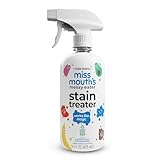
- POWERFUL & FAST WORKING This lightning fast laundry stain remover spray is perfect for clothes, upholstery, and carpets.
- SAFER CHOICE CERTIFIED Our stain remover is proudly EPA Safer Choice certified, giving you peace of mind that it meets your high standards for health and safety. Miss Mouth’s Messy Eater Stain Treater formula gets the job done while being a safer choice for you and your family.
- WORKS MAGIC ON STAINS This stain remover for baby clothes is great for infants, toddlers, and adults and is effective on both fresh and set-in stains. Works on fruit juice, baby food, formula, ketchup, blowouts, and even blood.
- EASY TO USE: First, ditch the excess gunk and dampen dry stains with a splash of water. Spray on Miss Mouth’s, give it a little rub if needed, then toss it in the wash or clean as usual. Still see the stain? Hit repeat. Easy peasy.
Products marketed for colored clothing can still exclude fabrics that water-spot, including suede, leather, or silk. The product label and garment care label both matter.
White, bleach-safe clothing
After alcohol treatment and thorough rinsing, a white cotton or polyester garment that is specifically bleach-safe may be washed with chlorine bleach according to the bleach label and care instructions. Never apply full-strength chlorine bleach directly to the ink stain. Clorox specifically warns against pretreating ink stains with undiluted bleach and advises avoiding bleach on wool, silk, mohair, leather, and spandex.
“White” does not automatically mean “bleach-safe.” Check the label before using chlorine bleach.
Common mistakes that make ink stains worse
- Putting the garment in the dryer too soon: heat can make residual ink more difficult to remove.
- Rubbing the stain vigorously: this spreads ink and can roughen or damage the fabric.
- Skipping the backing towels: dissolved ink can migrate into the garment instead of transferring out.
- Failing to replace dirty towels: saturated towels can put ink back onto the clothing.
- Skipping the patch test: alcohol, acetone, and stain removers can fade dyes or alter fibers.
- Using acetone indiscriminately: it is specifically unsuitable for acetate, triacetate, and modacrylic.
- Applying undiluted chlorine bleach to ink: it can damage fabric and is not the recommended pretreatment.
- Using solvents near heat or flame: flammable solvent methods suitable for fabric should not be used to clean an ink-stained dryer drum. A dryer is a heat source; follow the appliance manufacturer’s instructions and use a nonflammable cleaner for the appliance.
- Relying on milk or other household myths: New Mexico State University Extension identifies old remedies such as milk as unreliable for ink stains.
When to stop and call a professional cleaner
Use professional garment care instead of home treatment when:
- the label says Dryclean Only;
- the garment is silk, wool, leather, suede, or another fragile or solvent-sensitive material;
- the item is structured tailoring, an expensive coat, uniform, or sentimental garment;
- the patch test causes dye transfer, fading, spotting, or a texture change;
- the ink covers a large area or has been set by a hot dryer;
- several gentle treatment attempts have stopped improving the stain.
Tell the cleaner what kind of ink caused the mark and what products you already applied. Do not conceal a previous alcohol, bleach, or stain-remover treatment; that information helps the cleaner choose a safer process.
Quick decision guide
| Situation | Best next step |
|---|---|
| Fresh ballpoint ink on washable, colorfast cotton | Blot, test 70% rubbing alcohol, treat from the back, rinse, wash, and air-dry. |
| Colored washable garment | Patch-test first; use alcohol carefully, then a bleach-free color-safe stain remover if needed. |
| White cotton labeled bleach-safe | Alcohol-treat and rinse first; use chlorine bleach only as directed during laundering, never full-strength on the stain. |
| Permanent marker or dried ink | Expect a less certain result; repeat gentle treatment only if the fabric remains unaffected. |
| Acetate, triacetate, or modacrylic | Do not use acetone. Professional advice is safer if alcohol testing is inconclusive. |
| Silk, wool, leather, suede, tailored, or Dryclean Only | Do not wash or experiment with home solvents; use a professional cleaner. |
| Ink inside the dryer drum | Do not use flammable fabric solvents in the dryer. Follow the appliance maker’s cleaning instructions and use a nonflammable cleaner. |
Materials that make the process easier
White paper towels or reusable white cotton cloths are supporting supplies, not the stain remover itself. The transfer method depends on having a clean absorbent layer behind the fabric and changing it as ink moves out.
What’s actually slowing this PC down?
Pick the symptom - the matching free tool is one click away.
Liquid laundry detergent completes the wash after pretreatment. Use the detergent and cycle permitted by the care label rather than assuming that a hotter wash is better. Hotter water or dryer heat is not a substitute for removing the ink before laundering.
Also popular on Amazon

- The End of All Stains - Save your rug, carpet, clothes, mattress, upholstery from permanent stain damage - Incredible! Stain Remover is here to save the day, Our powerful formula eliminates various stains and odors - from coffee, red wine, oil, dog and cat urine, grease and more.
- Easy to Use, Instant Results - Just spot and blot the stain with Incredible Stain Remover - no washing, rinsing, rubbing, or vacuuming necessary, Gone goes all traces of stain and odor - in just a few seconds, like magic.
- Safe For The Whole Family - Incredible! Stain Remover is tough on stains, but safe for everybody - even children and pets, Our waterbased formula is non-toxic, non-flammable, and non-irritating unlike other harsh cleaners.
- Incredible Value - With 1 bottle of Incredible! Stain Remover there's no need for a separate stain remover and odor eliminator products for your carpet, furniture, mattress and your clothes, Use Incredible! Stain Remover on various surfaces, and upholstery
- Important Notice - Incredible! Stain Remover has gained the trust of American households to remove tough stains and odors in their house, car or workplace. However some stains are impossible to remove and our product cannot remove permanent ink stains (only washable ink), clay, paint, or cooking oils or grease. This liquid is colourless and odorless. Please read the instructions carefully and reach out to us via Amazon if you have any questions.
Frequently Asked Questions
Does rubbing alcohol remove ink from clothes?
It can loosen many ballpoint and some marker inks on suitable washable fabrics. Test an inconspicuous area first, apply it from the back with absorbent towels underneath, rinse thoroughly, and wash. It is not guaranteed to remove every ink or safe for every textile.
Can I put ink-stained clothes in the dryer?
Not until the stain is gone. Air-dry the garment after washing and inspect it. Dryer heat can make remaining ink more difficult to remove.
Can I use nail-polish remover on an ink stain?
Do not use acetone indiscriminately. University of Georgia Extension specifically warns against acetone on acetate, triacetate, and modacrylic. For general home treatment, rubbing alcohol is the safer first option after a patch test.
What if the ink stain has already dried?
Try repeated, gentle alcohol pretreatment on a suitable washable fabric, followed by thorough rinsing, a labeled color-safe stain remover, washing, and air-drying. Results are less predictable after drying, especially with permanent marker.
Should I use bleach on a white shirt with ink?
Only if the garment is bleach-safe and only according to the bleach and care-label instructions after the alcohol treatment has been rinsed out. Never apply full-strength chlorine bleach directly to the ink stain, and never use it on wool, silk, mohair, leather, or spandex.
The Bottom Line
For a washable garment, the evidence-supported sequence is simple: blot, protect the underside, patch-test, apply rubbing alcohol from the back, replace saturated towels, rinse, pretreat, wash, and air-dry. If the label or fabric makes home treatment unsafe—or the patch test causes a reaction—skip the experiment and use a professional cleaner.
Quick Recap
Product prices and availability are accurate as of the date/time indicated and are subject to change. Any price and availability information displayed on Amazon at the time of purchase will apply.

