What’s actually slowing this PC down?
Pick the symptom - the matching free tool is one click away.
The safest way to fix a roof leak is to control the water first, eliminate electrical and ceiling-collapse hazards, document the damage, and trace the water back to its real entry point. Do not start by spreading caulk over the ceiling stain: the stain may be downstream from the roof failure, and the underlying problem may be a shingle, vent boot, flashing detail, membrane, or damaged decking.
An isolated damaged asphalt shingle may be a reasonable DIY repair when the roof is sound and safely accessible. Wet or steep roofs, structural damage, chimney and skylight leaks, roof-to-wall failures, low-slope membranes, and metal, tile, or slate roofs are better handled by a qualified roofing professional.
As an Amazon Associate I earn from qualifying purchases.
A roof leak needs to be treated as an urgent water-management problem, not simply a caulking job. First contain the water indoors, protect yourself from electrical and ceiling-collapse hazards, and document the damage. Then trace the water back to its actual entry point—often uphill from the ceiling stain—before making a repair.
A single damaged asphalt shingle on a sound, safely accessible roof may be suitable for an experienced homeowner to replace. Leaks involving chimneys, skylights, valleys, roof-to-wall intersections, low-slope membranes, metal, tile, slate, structural decking, or steep and unstable roofs usually require a qualified roofing contractor.
#1 Best Overall

- Introducing the Bates caulking gun, your versatile companion designed to seamlessly dispense a variety of materials – from acrylic and adhesives to asphalt, butyl, and cement – with utmost precision.
- With its superior 10:1 thrust ratio, this caulking gun ensures precise bead control and consistent flow, making every application smoother than a jazz ballad.
- Crafted to perfection, this tool promises both durability and efficiency, standing up to the demands of professionals while also being user-friendly for the DIY enthusiasts.
- Its ergonomic design ensures a comfortable grip, allowing users to tackle extensive caulking jobs without a hint of hand fatigue.
- Whether you're sealing gaps, binding materials, or waterproofing surfaces, the Bates Caulking Gun is your go-to tool, promising precision with every squeeze.
This guide is written for U.S. homeowners. Building codes, permits, insurance policies, roof assemblies, and manufacturer requirements vary by location and product.
What to do in the first 15 minutes
- Contain the water. Put a container under the drip, protect flooring with plastic or towels, and move furniture, electronics, valuables, and other belongings away from the leak.
- Check for electrical danger. If water is near a light fixture, outlet, electrical panel, cord, appliance, or ceiling fan, do not touch wet equipment. Turn off power only if the panel is safely accessible and the person operating it is completely dry. Otherwise, call an electrician or emergency professional. EPA flood-cleanup guidance advises treating wet electrical systems as a serious hazard.
- Look for ceiling movement. Keep people away from bulging, sagging, cracked, or heavily saturated ceiling material. A water-filled ceiling can fail without much warning.
- Photograph everything before cleanup. Take wide and close-up photos of the ceiling, attic, wet insulation, flooring, damaged belongings, roof damage, fallen branches, hail evidence, and any temporary protection.
- Do not climb onto the roof in unsafe conditions. Rain, lightning, snow, ice, high wind, wet shingles, a structural hole, or an unstable ladder is a stop signal.
If the roof is visibly open, punctured, collapsed, or struck by a tree, call a roofer or emergency restoration company. If the damage is storm-related, notify your insurer promptly and ask what temporary protection and documentation it requires.
When you should not fix the roof yourself
Roof work combines fall hazards, hidden structural damage, fragile materials, and difficult diagnosis. Do not attempt a roof repair if any of these conditions apply:
The Tool Desk
Outbyte PC Repair FREERepair Windows errors before they cause bigger problemsFix Now →Outbyte Driver Updater FREEScan for outdated or missing drivers - takes under a minuteDriver Scan →- The roof is steep, wet, icy, windy, multi-story, or difficult to reach.
- You would need to step near a skylight, roof edge, open hole, damaged deck, or fragile roofing.
- The ceiling is sagging or the roof deck feels soft, rotten, or deflected.
- The leak is at a chimney, dormer, valley, skylight, wall intersection, or complicated flashing detail.
- The roof is flat or low-slope and has ponding water, blocked drains, split membrane seams, or damaged edge details.
- The roof is made of metal, tile, slate, EPDM, TPO, PVC, modified bitumen, built-up membrane, spray foam, or a solar-integrated system.
- There are multiple damaged shingles, widespread granule loss, repeated leaks, or signs of aging across the roof.
- You cannot set up and use a ladder safely or cannot work without overreaching.
OSHA guidance cited in this article regulates employers and workers; it is not a universal homeowner legal rule. It does, however, illustrate the seriousness of roofing falls. OSHA’s ladder guidance recommends approximately a 4:1 angle for a non-self-supporting portable ladder. Review OSHA ladder-safety guidance before using one.
Document storm damage before making permanent repairs
If wind, hail, a fallen branch, or another sudden event caused the leak, preserve evidence before removing damaged materials where practical. Photograph:
- Missing, torn, lifted, cracked, or punctured shingles.
- Exposed underlayment or roof decking.
- Hail marks, fallen branches, damaged vents, bent flashing, and damaged gutters.
- Ceiling stains, wet insulation, drywall damage, flooring, furniture, and personal property.
- The weather conditions and any temporary tarp or emergency work.
The National Association of Insurance Commissioners recommends promptly notifying the insurer, photographing and listing damage, and retaining repair receipts. Make reasonable temporary repairs to prevent additional damage, but avoid unnecessary permanent work until the insurer has inspected the loss or specifically authorizes it when that is practical. Keep receipts for tarps, emergency labor, drying equipment, and other related expenses.
Insurance coverage is not automatic for every roof leak. The result can depend on the cause of loss, policy language, exclusions, deductible, maintenance history, and state law. Be cautious with storm-chasing contractors, rushed contracts, large deposits, and assignments of benefits. Triple-I’s disaster-claims guidance recommends documenting the loss, retaining receipts, and understanding the difference between temporary protection and permanent repairs.
Outdated Drivers Are Slowing You Down
One free scan finds every outdated or missing driver and matches the right update for your exact hardware.Free scan · exact hardware matchPC Slower Than It Used to Be?
A free scan shows the junk files, broken settings and background clutter dragging Windows down - then fixes them in one click.Free scan · Windows 10 & 11Find where the roof is actually leaking
The ceiling stain is often not directly below the roof opening. Water can travel along roof decking, rafters, trusses, insulation, walls, and framing before it enters the room. Start on the inside and trace the water uphill.
1. Inspect the attic or ceiling cavity
- Use a flashlight or headlamp and step only on areas designed to support your weight, such as attic joists or walk boards.
- Inspect the underside of the roof deck, rafters, trusses, insulation, roof-wall intersections, and penetrations.
- Look for wet wood, dark stains, water trails, rusty fasteners, damp insulation, mold, soft decking, and fresh drips.
- Trace the wettest point uphill toward the roof plane or penetration.
- Mark the suspected area and photograph it.
Record what was happening when the leak appeared: light or heavy rain, wind direction, snow or ice, temperature, and whether the dripping stopped soon after the storm. The National Roofing Contractors Association recommends recording weather and leak behavior because those details can distinguish different failure points.
2. Consider non-roof causes
A ceiling stain is not proof that rain entered through the roof. Investigate other sources when the attic roof deck is dry or when the leak occurs without rain:
Rank #2
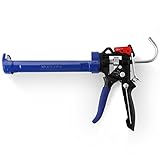
- Switch at Will of High & Low Flow Rates: WORKPRO caulking gun allows for switching between high and low flow rates. Pull the trigger handle downwards, the high setting thrust ratio 18:1 for use with adhesive materials. Push the trigger handle upwards, the low setting of thrust ratio 9:1 for use with acrylic materials
- Drip Controllable: The hand caulk gun can switch from drip to less-drip for dispensing desired applications. Press down on the front of the red button, this process stops the caulk from flowing and allows for clean, smooth transitions and less mess to clean up. Press down towards the rear of the red button, this mode keeps constant pressure on the tube for providing smoother action and quicker working
- Allows for Effortless Maneuvering in Tight Areas: The sealant cartridge gun with a rotating barrel can effortlessly reach hard-to-reach places. A rotating shaft is designed to allow easy maneuvering in tight areas. WORKPRO's half-barrel frame caulking gun is ideal for standard-size 10oz cartridges
- Smooth Round Rod for Less Force Required: Smooth plungers allow more control and more thrust to push the caulk. The smooth round rod with spring-loaded thumb release offers a quieter and less effortful project than a ratchet rod
- Comfortable Grip: The trigger with a cushion grip improves grip comfort and prevents your fingers from hurting when you are caulking. The handle and trigger of the cartridge gun are made of ergonomic plastic, which is comfortable for long time using
- Plumbing leaks around vent pipes, bathrooms, or supply lines.
- HVAC condensate lines, pans, or duct leakage.
- Bathroom or kitchen exhaust condensation.
- Cold-weather attic condensation on cold roof sheathing.
- Water entering through siding, a dormer, window, or wall-to-roof transition.
- Ice-dam backup during snow and freeze-thaw conditions.
Moist indoor air can condense on cold roof components and mimic a rain leak. Building Science Corporation explains how attic moisture, cold surfaces, and ice dams can create this type of problem.
Recommended Free Tools
3. Inspect the exterior only when it is safe
From the ground, attic, or a safely accessible low roof area, look for:
- Missing, cracked, slipped, curled, buckled, or punctured shingles.
- Exposed, loose, rusted, or incorrectly driven nails.
- Cracked plumbing vent boots or deteriorated rubber collars.
- Damaged roof vents or vent housings.
- Lifted or missing step flashing at sidewalls and dormers.
- Failed chimney base flashing, counterflashing, or a missing chimney cricket.
- Damaged skylight flashing or seals.
- Open valleys, debris, clogged drains, or ponding on low-slope roofs.
- Old holes from antennas, satellite dishes, or removed equipment.
- Tree, branch, hail, or wind damage.
Penetrations and transitions deserve particular attention because they interrupt the roof’s continuous drainage plane. They include vents, chimneys, skylights, valleys, dormers, walls, and roof edges.
4. Use a controlled hose test
A hose test can help isolate a leak only when the roof and ladder access are safe. Do not test during a storm or walk on wet shingles.
- Put one person inside with a flashlight and a phone or radio.
- Begin at the lowest suspected exterior area.
- Wet one small section for several minutes.
- Test the lower side of a penetration first, then its sides and upper side.
- Move gradually uphill, isolating one area at a time.
- Stop when the helper sees water appear indoors.
Do not spray the whole roof at once. Flooding a large area can create confusing water paths and false conclusions. The Home Depot roof-leak guide describes the same gradual isolation principle.
Free tools Windows power users keep installed
One-click scans. No signup required.
How to replace one damaged asphalt shingle
This repair is appropriate only when the problem is isolated, the surrounding roof is sound, the deck and underlayment are intact, and access is safe. If the deck is soft or rotten, stop. Replacing the shingle alone will not solve a structural or underlayment failure.
Materials and tools
- A matching replacement shingle.
- Flat pry bar.
- Hammer.
- Utility knife.
- Manufacturer-specified roofing nails.
- Compatible asphalt roofing cement or sealant, used only where permitted by the product instructions.
Procedure
- Break the adhesive seal beneath the damaged shingle with a flat bar.
- Carefully loosen the shingle above it to expose the fasteners.
- Remove the damaged shingle’s nails without tearing the surrounding shingles or underlayment.
- Slide out the old shingle.
- Inspect the deck and underlayment for rot, soft spots, holes, or structural movement.
- Slide the replacement shingle into position and align it with the surrounding courses and exposure.
- Drive nails only in the manufacturer’s specified nailing zone.
- Reseal the replacement shingle and any neighboring tabs loosened during removal.
- Seal exposed nail heads only where the manufacturer permits it.
- Recheck the attic and repaired area after the next rain.
There is no universal nail-count rule. For example, the posted GAF Timberline HDZ installation instructions specify four nails in the standard pattern and six in an enhanced pattern where required by certain codes or wind conditions. The same instructions specify nails penetrating at least three-quarters of an inch into wood decking.
Owens Corning Duration instructions also distinguish standard and six-fastener patterns and provide different requirements for very steep slopes. Always use the instructions for the actual shingle, account for local code and wind requirements, and drive fasteners flush—not overdriven or angled. Improper nailing can cause raised tabs, buckling, sealing failure, and blow-offs. Owens Corning’s nailing guidance explains these failure modes.
How to replace a plumbing vent boot
A cracked rubber collar can leak even when the nearby shingles look intact. Vent-boot replacement is more involved than applying caulk because the new flashing must be integrated with the shingle courses.
- Measure the pipe and buy the correct replacement boot or flashing assembly.
- Loosen the surrounding shingles without damaging them.
- Remove the old fasteners and flashing.
- Check the pipe for sharp edges that could cut the new rubber collar.
- Apply only the sealant specified by the product instructions.
- Slide the new flashing over the pipe and under the shingle course above it.
- Secure it with the specified roofing nails or washer-head fasteners.
- Reseal disturbed shingle tabs and exposed fastener heads where required.
If surrounding shingles are brittle, the deck is damaged, or the boot is part of a complex flashing assembly, hire a roofer. This Old House and Home Depot both identify vent boots as common leak sources.
Rank #3
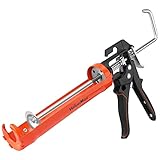
- Update Design: A 360 degree rotatable barrel helps using process more flexible, built-in spout cutter means the caulk gun has a utility knife as a bonus, cutting the nozzle directly. A seal puncture pin leads the liquid out of the spout. A rubber covered trigger comforts soft grip, reducing resistance pressure and friction which also protects your hands. The galvanized metal part makes a rust-resistance body which prolongs the lifespan and makes it more durable
- Easy Operation: After unlocking the metal piece, the putter can move forwards and backwards smoothly. When thrust exerted, the metal piece (lever) should be locked firmly, then the silicone/acrylic/adhesives/asphalt/butyl/cement will be perfectly controlled under the right use of the metal piece (lever). No drips will happen in using this hand caulk gun when apply medium to high viscosity adhesive. Pure liquid and thin sealant will drip automatically under any situation once placed upside down
- Portable Gun: This caulking gun weighs 0.76 kg, size 15 inch x 8 inch, the gun's diameter is 2 inch, length is 9 inch. The silver metal handle can act as a hook to hang on a ladder. Smooth plungers allow more control and more thrust to push the caulk. The smooth round rod with spring-loaded thumb release offers a quieter and less effortful project than a ratchet rod
- Multi-Scene Application: This 10 oz sealant gun/grout gun applies to all types of gaps and joints, such as windowsills, brick joints(to resist the earth breeze), toliet bottom seals,sink sides, etc
- Note: Make sure the inner seal of the tube is punctured before use for better performance, lubricate where necessary after every 10 catridges. THIS CAULK GUN DOES NOT INCLUDE ADHESIVE. ValueMax is committed to provide great products for you, any questions please feel free to contact us
Flashing repairs: when caulk is only a stopgap
A small crack, exposed fastener, or localized sealant failure may be temporarily sealed with a compatible roofing sealant after the area is clean and dry. The repair should remain smooth so it does not create a dam that redirects water beneath the roofing.
Large blobs of roofing cement are not a substitute for properly integrated flashing. Caulking a ceiling stain, coating every visible roof seam, or sealing over failed step flashing may hide the symptom while water continues to enter. It can also block drainage, trap moisture, and make later diagnosis more difficult.
Permanent step-flashing replacement normally requires loosening or removing shingles and sometimes siding. Each piece must be integrated course-by-course with the roof covering. Manufacturer dimensions vary; for example, the posted GAF instructions show step-flashing pieces overlapping two inches and extending five inches over the underlying shingle and five inches up the wall. Treat those dimensions as product-specific instructions, not a universal rule.
Chimney, skylight, valley, dormer, and roof-to-wall leaks often require partial disassembly to inspect the underlayment and concealed flashing. A surface patch may stop water briefly but leave the actual assembly failure in place. This Old House’s leak-location guidance identifies these areas as recurring diagnostic priorities.
Temporary roof protection after a storm
A properly installed temporary covering can reduce additional water entry while you arrange a permanent repair, but it is not a replacement roof. Use one only when the structure is sound and the work can be performed without climbing onto a dangerous surface.
Do not place a tarp over a collapsed, structurally unstable, wet, icy, or punctured roof. Do not walk across a roof with an open hole. If safe access is unavailable, call an emergency roofer or restoration company and ask your insurer about approved mitigation.
FEMA describes temporary roof coverings as protection until permanent repairs can be made. FEMA’s disaster Blue Roof program also requires the roof area to be structurally sound for crews; its program materials should not be interpreted as a universal lifespan for consumer tarps or as permission to delay permanent repair. See FEMA’s Individual Assistance Program and Policy Guide and its Blue Roof information.
Quick wins for a faster PC:
Scan for outdated or missing drivers - takes under a minuteDriver Scan →Clear out junk files and repair common Windows errorsFree Scan →Roof types that need specialist methods
Asphalt-shingle instructions should not be applied to other roof systems.
- Low-slope and flat roofs: Check drainage, blocked drains, ponding, membrane splits, failed seams, edge details, and penetrations. Generic roofing cement or a surface coating can conceal a drainage or membrane-design problem.
- EPDM, TPO, PVC, modified-bitumen, and built-up roofs: Patches require compatible material, correct preparation, adhesive or seam treatment, and suitable weather conditions.
- Metal roofs: Leaks may involve seams, penetrations, fasteners, oxidation, or movement. Incorrect sealants and fasteners can worsen the problem.
- Tile and slate: Replacing one broken piece may still leave concealed underlayment or flashing damage. Walking on these roofs can break surrounding material.
- Spray-foam, green, or solar-integrated roofs: Use a contractor familiar with that assembly and its warranty requirements.
Dry the attic and interior quickly
Once the water source is controlled:
- Remove standing water and protect clean areas from further contamination.
- Use fans and dehumidifiers only when electrical conditions are safe.
- Remove wet insulation and porous materials that cannot be cleaned and dried.
- Do not direct fans at visible mold or contaminated water.
- Open or replace damaged ceiling finishes only after the area is safe and the source is fixed.
EPA guidance recommends drying wet materials as quickly as possible—preferably within 24 to 48 hours in many situations—to reduce mold growth, but this is a guideline rather than a guarantee. Fiberglass and cellulose insulation may need replacement after water damage. EPA’s mold and moisture guide and its water-damaged-material table provide material-specific guidance.
Call a professional remediation company for sewage or floodwater, chemical contamination, extensive mold, widespread drywall damage, or water that has affected concealed building cavities. CDC mold-cleanup guidance warns that cleanup methods and protective equipment must match the contamination and its extent.
Rank #4
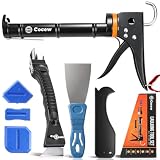
- 【Easy to operate】Cocew Caulking Gun is lightweight, the Smooth Pressure Rod is available with a high thrust ratio. 360°revolving barrel to maintain bead orientation when caulking around corners. Effortless to use for a long time.
- 【Perfect set】Use together with dripless caulk gun and sealant finishing tool grout scraper, remove stubborn old glue,smooth sealing lines,is your good helper in the process of caulking.
- 【Applicable in many scenarios】This professional caulking tool set is the ideal choice for home use (toilets, kitchens, living rooms) or outdoor decoration (walls, windows, roofs)
- 【Full fuction】The caulking gun is equipped with a through-needle to unclogging the blockage and the spout cutter could open caulk tubes easily.Drip free technology prevents dripping by releasing the trigger,easily control the flow of materials.The whole set of Caulk Remover& Glass Glue Angle Scraper can be used for different angles and shapes for caulking and waste removal.
- 【Best choice】High quality Cocew Caulking Gun can hold standard size 10oz cartridges.Well-designed packaging, you can send it as a gift to your families and friends.If there is any problem during use,please feel free to contact us.
Repair or replace the roof?
A roof leak does not automatically mean the entire roof needs replacement. The decision depends on the extent of damage, the roof’s overall condition, the age and availability of matching materials, the condition of the deck and underlayment, and whether the roof has a recurring systemic problem.
| Situation | Best next step | Why |
|---|---|---|
| One missing or torn asphalt shingle; sound deck; safe access | A limited DIY repair may be reasonable | The failure is localized and visible. |
| Cracked vent boot with accessible, sound surrounding materials | DIY may be possible for an experienced homeowner | The boot can be replaced, but it must be integrated correctly. |
| Exposed nail or tiny flashing crack | Use sealant as temporary protection, then investigate | The fastener or flashing may have failed for a larger reason. |
| Multiple damaged shingles or widespread granule loss | Arrange a professional inspection | The roof may have systemic weathering or storm damage. |
| Soft, rotten, sagging, or visibly deflected decking | Call a roofer promptly | Structural repair is required. |
| Chimney, skylight, dormer, valley, or wall leak | Usually hire a qualified roofer | Flashing must be integrated with adjacent assemblies. |
| Low-slope roof with ponding or membrane failure | Use a low-slope roofing specialist | Drainage and membrane details control the repair. |
| Metal, tile, slate, membrane, solar, or foam roof | Use a material specialist | Generic shingle methods may cause additional damage. |
| Steep, multi-story, wet, icy, windy, or difficult roof | Do not DIY | The fall risk outweighs the value of a small repair. |
| Leak continues after a repair | Stop patching and obtain a new diagnosis | The visible leak may be downstream from the actual failure. |
| Storm, tree, hail, or wind damage | Document, temporarily protect, and contact insurer and roofer | Permanent work may affect evidence and claim handling. |
When to call a roofer, electrician, or restoration company
Call an electrician when water has reached electrical equipment or you cannot safely isolate the circuit.
Call an emergency roofer when the roof is open, punctured, collapsed, storm-damaged, or actively allowing substantial water inside; when temporary protection is needed; or when safe access is impossible.
Call a qualified roofer for complex flashing, structural damage, repeated leaks, widespread deterioration, unusual roof materials, or any repair that requires removing siding, chimney components, skylights, or large roof areas.
Call a restoration professional when water damage is extensive, contaminated, moldy, or hidden in walls and ceilings.
Ask a roofer to explain the suspected entry point, the evidence found in the attic, whether the deck and underlayment were inspected, what will be removed and replaced, how the repair will be integrated with existing materials, and what warranty applies. Verify whether local permits or inspections are required before structural or roofing work.
Verify the repair and restore the ceiling
- Inspect the repaired roof area from a safe position.
- Use a controlled hose test only if access remains safe.
- Check the attic after the next significant rain and again after wind-driven rain if that triggered the original leak.
- Confirm that insulation, decking, framing, and drywall are dry.
- Replace damaged insulation and repair ceiling finishes only after moisture readings or observation show the area is dry.
- Keep photographs, invoices, permits, product information, and repair notes with the property records.
Prevent the next roof leak
- Inspect the roof and attic in spring and fall and after major storms.
- Keep gutters, downspouts, roof drains, and valleys clear of debris.
- Check penetrations, vent boots, skylights, chimneys, and roof-to-wall transitions.
- Trim branches that can scrape shingles or fall onto the roof.
- Maintain attic ventilation and air sealing to reduce condensation.
- Look for daylight, wet insulation, rusty fasteners, staining, or mold in the attic.
- Keep records of repairs, roofing materials, warranties, inspections, and storm damage.
Common mistakes that make roof leaks worse
- Caulking the ceiling stain: This is cosmetic and does not close the roof entry point.
- Caulking every roof seam: It can block drainage, trap water, conceal failed flashing, and complicate later diagnosis.
- Replacing only the shingle: The actual failure may be below the shingle in the underlayment, flashing, or deck.
- Assuming the stain marks the hole: Water commonly travels laterally or downhill before entering the room.
- Hose-testing too aggressively: Flooding a large area creates confusing water paths.
- Walking on wet shingles: This increases slip risk and can damage the roof surface.
- Leaving a tarp indefinitely: Temporary protection is not a permanent roof system.
- Using the wrong shingle or fastener pattern: Color, profile, exposure, seal strip, nail zone, slope, wind requirements, and code may not match.
- Driving nails through vulnerable flashing: Certain flashing layouts prohibit puncturing metal in exposed areas; follow the product instructions.
- Ignoring condensation: A roof can appear to leak during cold weather even without rain.
- Running fans around mold or contaminated water: Air movement can spread contaminants.
- Covering rotten decking with new roofing: The structural and moisture problem remains unresolved.
Frequently asked questions
Why does my roof leak only during heavy rain or wind?
Wind-driven rain can enter at a different angle and reach weak points around flashing, shingles, vents, walls, and valleys. Record wind direction and rainfall intensity, then inspect the likely upslope and windward areas.
Why is water dripping when it has not rained?
Possible causes include plumbing, HVAC condensate, exhaust condensation, indoor-air condensation on cold roof sheathing, or melting snow and ice-dam backup. Inspect the attic and nearby plumbing before assuming the roof covering failed.
What if I cannot access the attic?
Inspect the ceiling cavity if there is a safe access opening, use the stain pattern and weather behavior as clues, and arrange a professional inspection. Avoid cutting large holes in the ceiling until electrical wiring, plumbing, and structural conditions are considered.
Do these 3 things before closing this tab:
1Clear out junk files and repair common Windows errors2Fix the driver behind crashes, sound loss and screen glitches3Repair Windows errors before they cause bigger problemsHow long can a tarp stay on a leaking roof?
There is no universal duration for a consumer tarp. Its effectiveness depends on installation, weather, material, roof condition, and wind exposure. Treat it as temporary protection and schedule a permanent repair promptly. FEMA’s Blue Roof materials apply to a specific disaster program and should not be used as a general tarp-lifespan rule.
Best Value

- 12 OZ CARTRIDGE CAPACITY FOR STANDARD JOBS – Designed for 12 oz / 380 ml cartridges, this manual caulking gun is perfect for everyday projects including windows, doors, kitchens, bathrooms, trim, and sealing cracks. Compatible with most standard caulk, silicone, and adhesive tubes.
- 26:1 THRUST RATIO FOR SMOOTH DISPENSING – Professional-grade 26:1 drive ratio delivers consistent pressure, making it easy to apply thick adhesives and sealants without hand fatigue. Provides smooth, even beads for clean, professional results on every project.
- LIGHTWEIGHT DRIPLESS DESIGN – At only 2.70 lbs, this caulk gun is lightweight for all-day use yet built tough for demanding jobs. The dripless mechanism minimizes mess and reduces waste, ensuring precise application of sealants, construction adhesives, or silicone caulk.
- PROFESSIONAL QUALITY YOU CAN TRUST – Meritool caulking guns are engineered with durability and performance in mind, trusted by contractors, remodelers, and DIY users worldwide. Every dispenser is tested to withstand heavy-duty use while delivering accurate and reliable results.
- HIGH PERFORMANCE DISPENSING SOLUTIONS – Meritool has delivered professional-grade dispensing tools for over two decades, backed by expert support and a commitment to quality.
Should I wait for the insurance adjuster before repairing the roof?
Do not delay reasonable emergency measures that prevent additional damage. Photograph the condition first, notify the insurer promptly, retain receipts, and ask whether it wants to inspect before permanent repairs. Coverage depends on the policy, cause, exclusions, deductible, maintenance history, and applicable law.
What should I do about an ice dam?
Do not climb onto an icy roof. Keep people away from falling ice and call a qualified contractor to remove the immediate hazard and diagnose the cause. Long-term correction may involve attic air sealing, insulation, ventilation, drainage, and roof-edge details.
Can I repair a roof leak with roofing cement?
Roofing cement may provide short-term protection for a small, localized defect on a compatible surface, but it does not replace failed step flashing, a damaged membrane, rotten decking, or a defective roof assembly. Use only compatible products and follow the roof-material manufacturer’s instructions.
PC Slower Than It Used to Be?
A free scan shows the junk files, broken settings and background clutter dragging Windows down - then fixes them in one click.Free scan · Windows 10 & 11Outdated Drivers Are Slowing You Down
One free scan finds every outdated or missing driver and matches the right update for your exact hardware.Free scan · exact hardware matchFrequently Asked Questions
What should I do first when my roof is leaking?
Start by containing the drip, moving belongings, and keeping people away from sagging ceilings. Treat water near lights, outlets, appliances, cords, or panels as an electrical hazard; turn off power only when the panel is safely accessible and you are dry. Photograph the damage, then call a roofer or emergency professional if the roof is open, collapsed, unstable, or unsafe to access.
Does a roof leak mean I need a new roof?
Not necessarily. One damaged shingle on a sound, accessible asphalt-shingle roof may be repairable. Widespread deterioration, soft decking, repeated leaks, complex flashing, or incompatible and difficult-to-match materials may justify replacement or a broader professional assessment.
Why is the ceiling stain far from the roof leak?
Water often travels along roof decking, rafters, insulation, walls, or framing before entering the room. Inspect the attic and trace the wettest trail uphill; the ceiling stain may be far from the actual roof opening.
Can a tarp permanently fix a roof leak?
A tarp can reduce additional water entry while permanent repairs are arranged, but it is temporary protection—not a roof system. Do not install one on a wet, icy, unstable, collapsed, or structurally damaged roof.
The Tool Desk
Outbyte PC Repair FREERepair Windows errors before they cause bigger problemsFix Now →Outbyte Driver Updater FREEFix the driver behind crashes, sound loss and screen glitchesFind Drivers →Should I file an insurance claim for a roof leak?
Yes, if the damage is storm-related. Photograph the roof, interior, belongings, and temporary work; notify the insurer promptly; retain receipts; and ask whether an adjuster should inspect before permanent repairs. Coverage depends on the policy, cause, exclusions, deductible, maintenance history, and local law.
The Bottom Line
Stop the water, make the area electrically and structurally safe, document the damage, and trace the leak uphill before repairing it. DIY work is reasonable only for a limited, clearly identified failure on a sound and safely accessible asphalt-shingle roof. Complex flashing, unusual roof materials, structural damage, repeated leaks, and unsafe access call for a qualified professional.
Quick Recap
Product prices and availability are accurate as of the date/time indicated and are subject to change. Any price and availability information displayed on Amazon at the time of purchase will apply.

