Do not sign a lease until you can verify that the space is legally approved for residential use and passes a basic life-safety inspection. An office converted into apartments is a change-of-occupancy project, not merely a cosmetic renovation. Before paying an application fee or deposit, obtain the local certificate of occupancy (or equivalent), check permits and violations, walk every exit, inspect bedroom windows and ventilation, test alarms and electrical service, and put every promised repair or approval in writing.
Building, fire, housing and tenancy rules vary by jurisdiction. The steps below identify the records and conditions a careful renter should verify locally; they do not replace advice from your building department, fire marshal or housing authority.
As an Amazon Associate I earn from qualifying purchases.
Begin with the legal-use record
The first question is not whether the apartment looks finished. It is whether the authority having jurisdiction has approved that space for people to live there. Ask for the final certificate of occupancy (CO) or your locality’s equivalent document. It should identify residential use and the permitted number and type of units. A document that still describes offices, storage or another commercial use does not establish lawful residential occupancy.
Recommended Free Tools
New walls, kitchens and finishes can be installed without the approvals required for a change of occupancy. An apartment created without those approvals may lack required fire protection, exits, structural work or utility capacity. Owner or broker assurances are not a substitute for the public record.
#1 Best Overall

- Electrochemical sensor technology detects CO gas
- Easy installation, no wiring needed, detects during a power failure by operating on 2-AA batteries (included); Install on a wall of your home or place on a tabletop
- Green LED indicates power to the carbon monoxide detector, while an 85-decibel alarm & a red LED indicates the presence of carbon monoxide
- Event Memory records the last time carbon monoxide was detected or when the unit was last tested
Documents to request before applying
- The current final CO or local occupancy/completion approval covering the specific building and, where applicable, the individual unit.
- Approved plans or permit numbers for the conversion, including the final inspection status.
- Permits and sign-offs for fire-protection systems, egress, emergency escape openings, plumbing, electrical, heating, ventilation and air-conditioning, and structural work.
- The permitted number of dwelling units and any limits on bedrooms or occupancy.
- Open and closed building, fire, housing and safety violations.
Request copies rather than relying on a verbal summary. If the owner says records are “being updated,” ask which agency issued the approval, the application or permit number, and the expected completion date. A pending application is not the same as final approval.
Search the record yourself
Most larger jurisdictions provide an online building, permit or violation database; others require a records request or an in-person visit. Search the street address, parcel number and, if available, the building’s older address or lot identifiers. Match the record to the floor and unit you are being shown. Look for a conversion permit, a change in occupancy classification and a final inspection, not only permits for paint, flooring or a kitchen remodel.
Read violation descriptions and their status. A violation marked open, unresolved, or subject to a hearing can signal work that must be completed before the premises are safe or legal. Ask the building department what an open item means for a prospective tenant. If you cannot confirm lawful residential use, pause the application instead of assuming the issue will be fixed after move-in.
Walk the entire route to safety
During the viewing, physically walk from the apartment to every available exit. Do this in daylight and, if possible, when the building is occupied so you can see whether doors, corridors or stairs are routinely blocked. You should be able to identify the required number of usable exits for that building and reach them without special knowledge or a key that only the landlord controls.
- Start at the apartment’s entrance and follow each marked or obvious egress route to the outside or another approved place of safety.
- Open each exit door normally. Confirm that it is not padlocked, chained, blocked by furniture or secured with a device that prevents occupants from leaving.
- Check that corridors, stairs, landings and exit doors are unobstructed and adequately lit. Note stored materials, bicycles, bins or construction debris.
- Confirm that exit doors swing and latch as expected and that you are not directed through a locked adjoining space.
- Ask which route remains available if the nearest corridor is filled with smoke or the primary stair is unusable. A second route must be genuinely accessible, not merely shown on a plan.
Two ways out is a common safety expectation, but the exact number, travel distance and door requirements depend on local code, building height and occupancy. Do not infer compliance from a “fire exit” sign alone. A window, roof hatch or ladder may have specific dimensional and operational requirements before it counts as emergency escape.
Rank #2

- Keep your family safe with this easy to use plug in carbon monoxide alarm; It works with any standard outlet and also has a battery backup for continuous monitoring of Carbon Monoxide levels, even if there's a power failure
- Features an advanced electrochemical carbon monoxide sensor that accurately detects carbon monoxide levels, no matter where the detector is placed in the room
- Simple to use, with a single test/silence button; a loud 85 decibel alarm sounds when Carbon Monoxide levels reach dangerous levels. Low battery signal mute, quiets low battery signal for upto 8 hours
- To ensure complete protection make sure to place one on each level of your home and in each bedroom
- 7 year limited warranty; Equipped with end of life signal chirp, so you know when it’s time to replace the unit for safety
Questions to ask about shared exits
- Are both stairs or exit paths open to residents at all times?
- Does a security system release doors during a power failure or fire alarm?
- Who removes stored items or repairs damaged lighting, and by what date?
- Have inspectors required temporary measures while conversion work is unfinished?
If a landlord tells you to ignore a locked door, use an unauthorized route or wait for staff during an emergency, treat that as a refusal to demonstrate safe egress.
Check every bedroom for compliant light and ventilation
In New York City guidance, every bedroom must have a window, and a room without one or with a very small opening is an illegal-conversion warning sign. Other jurisdictions set their own minimum area, height, operability, light, ventilation and emergency-escape dimensions. The practical rule is to verify the local standard for each room advertised or intended for sleeping.
Do these 3 things before closing this tab:
1Fix the driver behind crashes, sound loss and screen glitches2Repair Windows errors before they cause bigger problems3Scan for outdated or missing drivers - takes under a minuteBedroom inspection checklist
- Identify which rooms the listing and lease call bedrooms. A landlord cannot avoid bedroom requirements simply by labeling a windowless room a den, office or alcove if it is marketed for sleeping.
- Open each window. Check that it is not painted shut, blocked by permanent construction, covered by an exterior security grille that cannot release, or too high to use safely.
- Look for a clear emergency-escape opening where local code requires one. Measure only as a preliminary check; the building department must determine compliance with the applicable dimensions.
- Check for moisture, condensation, mold-like growth, damaged seals and stale air. These can indicate inadequate ventilation or water intrusion.
- Ask how bathrooms, kitchens and interior rooms are ventilated and where exhaust discharges. A fan recirculating air into a ceiling void may not satisfy local requirements.
Mechanical ventilation does not automatically make a windowless sleeping room legal. Ask the building department which rooms are approved as bedrooms and compare that designation with the lease and listing.
Test alarms, power and other life-safety basics
Test smoke and carbon-monoxide alarms during the viewing if the owner permits it, or ask for a demonstration and the installation date. Alarms should be present where required, audible from sleeping rooms and not disabled by missing batteries, paint or a fault indicator. Confirm who maintains them and how residents report a failure.
Electrical warning signs
- Permanent receptacles and lighting should serve the apartment. Extension cords, power strips daisy-chained together, exposed splices and overloaded outlets are warning signs.
- Ask where the electrical panel is located and whether breakers are labeled. Do not remove covers, but look for heat damage, corrosion or a panel that is inaccessible.
- Check that kitchens and bathrooms have the protective devices required locally and that outlets near water are not loose or cracked.
- Ask whether heating, cooling, cooking and laundry equipment were included in the conversion permit and final inspection.
Never accept a sleeping room or exit route that is padlocked. A lock installed for security must still allow occupants to leave without a key where local life-safety rules require that.
Rank #3

- DETECTS CARBON MONOXIDE: With backlit display that shows CO levels & sounds a loud 85 dB alarm when CO is detected to signal evacuation; sleep peacefully with no nighttime chirps; LED warning light indicates hazard; Test/Hush button for quick checks
- PLUG-IN POWER WITH BATTERY BACKUP: CO detector plug-in operates on 120V AC with 2 AA backup batteries (included) for detection during outages; rotating plug fits vertical or horizontal outlets; includes power surge immunity to help maintain performance
- TRAVEL-READY DESIGN*: Compact carbon monoxide detector is suitable for use at home or for travel; lightweight design allows you to take it on the go to use in hotels or vacation rentals when detection is needed away from home
- TESTED & TRUSTED: This carbon monoxide alarm is rigorously tested to meet UL 2034 5th Edition standards, and is ETL Listed; includes a 10-year limited warranty on alarm
- BUILT FOR EVERY HOUSEHOLD: Designed to help provide dependable carbon monoxide monitoring for everyday residential use; supports renters, homeowners, and pet owners seeking added awareness and protection from CO hazards in the home
Find out exactly what the conversion changed
Office-to-residential work can involve much more than partitions. Residential occupants sleep in the building, may include children or other sensitive people, and can remain there continuously. San Diego’s development-services guidance describes this use as more hazardous than a typical office occupied mainly during working hours. That difference explains why a lawful conversion may require upgraded fire protection, plumbing capacity, ventilation, sound control and structural review.
Free tools Windows power users keep installed
One-click scans. No signup required.
Match the scope of work to approvals
Ask for the permit set or a plain-language description of the approved work, then compare it with the apartment you are viewing. Check whether the records cover:
- Fire alarms, sprinklers, standpipes, fire separations and rated doors.
- New or relocated exits, stairs, corridors and emergency escape or rescue openings.
- Water, drainage, kitchens, bathrooms and fixture counts.
- Electrical service, panels, lighting and emergency power where required.
- Heating, cooling, fresh-air supply, exhaust and equipment clearances.
- Removal of heavy equipment, new partitions, floor openings or other structural changes.
Unpermitted alterations can leave a building with an approved office layout but an unapproved residential one. If the owner cannot identify the final inspection for a major system, ask the building department whether the work is legal to occupy while that item remains open.
Consider structural and seismic risk where relevant
In earthquake-prone areas, ask whether the change of occupancy triggered a seismic evaluation, retrofit or other structural review. Portland describes a life-safety seismic standard intended to help occupants exit after a major earthquake. Los Angeles issued a 2026 bulletin addressing structural seismic standards for office-to-residential conversions. These are local examples, not universal requirements; the applicable threshold depends on the jurisdiction, building type, scope of work and date of construction.
Questions for the owner or authority
- Was a structural engineer involved in the conversion?
- Did the project add floors, remove walls, cut openings or change the weight of equipment and partitions?
- Was a seismic or wind review required, and is the approval final?
- Are there known structural notices, shoring requirements or restrictions on occupancy?
Do not treat a recent interior finish as evidence of structural safety. If records are unclear, ask the building department whether a professional inspection is appropriate before signing.
PC Slower Than It Used to Be?
A free scan shows the junk files, broken settings and background clutter dragging Windows down - then fixes them in one click.Free scan · Windows 10 & 11Crashes, No Sound, or Screen Glitches?
Random freezes, missing sound and display glitches usually trace back to one bad driver. Find and replace yours safely.Free scan · under a minuteRank #4

- DETECTS CARBON MONOXIDE: Model COB monitors CO and sounds a loud 85 dB alarm to signal evacuation to fresh air; LED warning light indicates hazard; Test/Hush button allows quick checks or temporary silencing
- AA BATTERY POWERED: This CO detector is battery-powered, installs without wiring, mount it on the wall or set it on a table, and operates during outages using two included AA batteries
- TRAVEL-READY DESIGN*: Compact carbon monoxide detector is suitable for use at home or for travel; lightweight design allows you to take it on the go to use in hotels or vacation rentals when detection is needed away from home
- TESTED & TRUSTED: This carbon monoxide alarm is rigorously tested to meet UL 2034 5th Edition standards, and is ETL Listed; includes a 10-year limited warranty on alarm
- BUILT FOR EVERY HOUSEHOLD: Designed to help provide dependable carbon monoxide monitoring for everyday residential use; supports renters, homeowners, and pet owners seeking added awareness and protection from CO hazards in the home
Inspect comfort and building systems that affect daily living
Legal status and life safety come first, but an office conversion can still be a poor rental if it performs badly as a home. Spend enough time in the unit to evaluate noise, temperature, air movement and utility arrangements.
Noise and privacy
- Visit during a busy period and, if possible, at night. Listen for elevators, rooftop equipment, loading areas, restaurants, neighboring offices and mechanical rooms.
- Check whether bedroom walls, ceilings and doors appear to separate living areas from corridors and shared equipment. Ask what sound-control work was included in the conversion.
- Review building rules for deliveries, commercial tenants, events and overnight access.
Heating, cooling and air quality
- Run heating and cooling through a full cycle. Note slow response, unusual odors, vibration and rooms that remain much hotter or colder than others.
- Locate thermostats and ask whether each unit has independent control or shares a system with former office spaces.
- Ask when filters, coils and ventilation equipment were last serviced and whether maintenance access requires entering the apartment.
Utilities and operating costs
Identify which utilities are separately metered, which are allocated by a formula and which are included in rent. Ask for the formula in writing and request typical bills for a comparable occupied unit if the owner will provide them. A low advertised rent can be offset by mandatory fees, unusually high heating or cooling costs, parking, storage or shared-utility charges. Do not assume an office building’s commercial service arrangement works like a residential account.
Compare two possible units using documented evidence
When you have a choice, score each unit on evidence rather than appearance. The first four categories below correspond directly to basic safety guidance; the remaining categories help predict whether the conversion will work as a home.
| Comparison point | What to verify | Evidence to keep |
|---|---|---|
| Legal residential status | Final CO or equivalent identifies residential use, permitted units and approved occupancy. | Copy of the final record and permit number. |
| Exits | Required routes are usable, unlocked, lit and free of obstructions. | Photographs and notes from walking each route. |
| Bedrooms and ventilation | Each sleeping room meets local window, light, ventilation and emergency-escape rules. | Room designation on approved plans and inspection observations. |
| Alarms and electrical service | Smoke and carbon-monoxide alarms work; permanent wiring serves the unit. | Test date, maintenance contact and photographs of outlets or cords. |
| Conversion inspections | Fire, plumbing, electrical, HVAC and structural work has final approval where required. | Permit history and final inspection results. |
| Structure or seismic work | Required local review or retrofit is complete. | Engineer letter, permit sign-off or agency confirmation. |
| Noise and HVAC | Equipment, neighbors and temperature are acceptable at likely occupancy times. | Visit notes and written operating information. |
| Total monthly cost | Rent plus utilities, fees, parking, storage and shared-service charges. | Lease clauses, fee schedule and utility terms. |
| Landlord cooperation | Owner supplies records and agrees to correct documented defects. | Emails, attachments and signed addendum. |
A unit with a slightly higher rent but complete approvals and predictable utilities may be the lower-risk choice. Do not trade away lawful status or safe egress for finishes, views or a short-term discount.
Quick wins for a faster PC:
Scan for outdated or missing drivers - takes under a minuteDriver Scan →Repair Windows errors before they cause bigger problemsFix Now →Put defects and promises into the lease file
Make a dated record before signing. Photograph each defect, save the listing and floor plan, and keep copies of every occupancy, permit and violation record. Send a written list of questions and preserve the responses. If the owner promises a repair, inspection, permit closeout or change to the advertised bedroom count, state the work, responsible party and deadline in the lease or a signed addendum.
Best Value
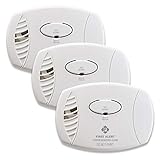
- Keep your family safe from carbon monoxide in multiple rooms with this convenient plug in carbon monoxide alarm 3 pack; The alarms work with any standard outlet and also have a battery backup for continuous monitoring of CO levels, even if there's a power failure
- Features an advanced electrochemical carbon monoxide sensor that accurately detects carbon monoxide levels, no matter where the detector is placed in the room
- Simple to use, with a single test/silence button; A loud 85 decibel alarm sounds when Carbon Monoxide levels reach dangerous levels
- To ensure complete protection make sure to place 1 on each level of your home and in each bedroom
- 7 year limited warranty; Equipped with end of life signal chirp, so you know when it’s time to replace the unit for safety
Useful lease language to request
- The premises are to be used as a lawful residential dwelling under the applicable occupancy approval.
- Specific repairs, alarm replacements or clearance of obstructions must be completed by a stated date.
- Any approved bedroom designation or occupancy limit is identified accurately.
- Utility allocations, mandatory fees and access for maintenance are fully described.
- Your remedies or right to delay possession are stated if a promised approval is not obtained.
Do not rely on a text message that is absent from the signed agreement. Keep the move-in condition report and compare it with your pre-lease photographs.
Red flags that warrant a pause
| What you see or hear | Why it matters | Prudent response |
|---|---|---|
| No CO or equivalent showing residential use | The apartment may be an unapproved change of occupancy. | Contact the building department and do not sign until lawful use is confirmed. |
| Owner refuses permit or violation records | You cannot verify final inspections or unresolved hazards. | Pause the application; request records directly from the authority. |
| Windowless advertised bedroom | Sleeping rooms commonly require natural light, ventilation and emergency escape. | Verify the room’s legal designation and local requirements. |
| Locked, blocked or inaccessible exit | Residents may be unable to escape fire or smoke. | Reject the unit unless the condition is corrected and verified. |
| Extension cords serving permanent equipment | May indicate inadequate electrical service or an unsafe temporary installation. | Ask for permitted electrical work and final inspection. |
| Alarms missing, silent or disabled | Fire and carbon-monoxide warnings may not reach occupants. | Require functioning devices before possession. |
| Conversion work visibly incomplete | Open construction can compromise fire separation, egress and utilities. | Request the inspection status and written completion schedule. |
| Pressure to sign immediately or avoid official questions | Urgency can conceal unresolved legal or safety issues. | Walk away if documentation is not provided. |
If records are unavailable or contradictory
- Ask the owner in writing for the address-specific CO, permit numbers and violation history.
- Search the local database using the address, parcel and older building identifiers.
- Call or visit the building department, fire marshal or housing authority and ask whether the described unit may be occupied as a residence.
- Provide the agency with the floor, unit number, bedroom count and any conversion permit number; a building-wide approval may not cover a later subdivision.
- Ask what inspection or correction is required and whether tenants may occupy during the process.
- Do not pay a nonrefundable deposit or sign a lease that treats missing approval as your risk.
If you already signed and discover a possible illegal conversion, document conditions, avoid disabling safety equipment, and seek jurisdiction-specific advice from the housing authority or a qualified tenant lawyer. Remedies, rent rules and reporting protections differ by location.
Know which rules apply to your location
Occupancy classifications, minimum window dimensions, exit counts, permit databases, landlord duties and tenant remedies vary by city, state and country. A checklist from one city cannot establish compliance elsewhere. For example, England’s fitness-for-human-habitation guidance applies to rented property and common parts in England; it should not be generalized to a U.S. city or another country.
What’s actually slowing this PC down?
Pick the symptom - the matching free tool is one click away.
Use local terminology when requesting records: “certificate of occupancy,” “occupancy permit,” “completion certificate,” “change-of-use approval” and similar terms can refer to different documents. Ask the authority which record proves that this specific space is approved for residential occupancy and whether a separate fire or housing inspection is required.
Make the go-or-no-go decision before signing
Proceed only when the evidence answers all of these questions:
- Does the final local occupancy record approve residential use and the number and type of units being offered?
- Are required exits usable, unlocked and unobstructed from the apartment to the outside?
- Does every advertised bedroom meet local window, ventilation and emergency-escape requirements?
- Are smoke and carbon-monoxide alarms working, and is permanent electrical service installed?
- Do permits and final inspections cover the conversion’s fire, egress, plumbing, electrical, HVAC and structural work?
- Where relevant, has seismic or other structural review been completed?
- Are noise, temperature, air quality and utility charges acceptable for ordinary residential use?
- Are defects, repairs, occupancy terms and utility responsibilities written into the lease or a signed addendum?
A “no” or “not documented” answer is a reason to stop and verify, not a detail to resolve after moving in. The safest office-to-apartment rental is one whose residential use is documented, whose escape routes and life-safety systems work in person, and whose remaining promises are enforceable in writing.
Quick Recap
Product prices and availability are accurate as of the date/time indicated and are subject to change. Any price and availability information displayed on Amazon at the time of purchase will apply.

