Quick wins for a faster PC:
Repair Windows errors before they cause bigger problemsFix Now →Fix the driver behind crashes, sound loss and screen glitchesFind Drivers →A tropical home stays more comfortable by stopping solar heat before it enters, then moving air across occupants when outdoor conditions are suitable. The reliable approach is coordinated: shade the roof, walls and windows; orient openings to real breezes; provide screened, controllable ventilation; use fans where people sit and sleep; and select roof, wall and moisture details for the local climate and building code.
Passive measures reduce heat gain and the hours when cooling equipment is needed, but they cannot guarantee air-conditioning-free comfort during every hot, humid, still or stormy period. Begin with a climate and site assessment rather than copying a house plan from another tropical region.
As an Amazon Associate I earn from qualifying purchases.
What passive cooling can—and cannot—do
Passive cooling is a sequence of decisions, not a single product. First reduce the amount of heat entering the building. Next give that heat a route out when outdoor air is cooler. Finally increase air movement around people so the same room feels more comfortable.
What’s actually slowing this PC down?
Pick the symptom - the matching free tool is one click away.
That last step matters because a fan cools people, not the building. Air movement helps sweat evaporate and removes the layer of warm air around skin, but a fan does not lower room temperature or remove moisture. Turn it off in an unoccupied room.
#1 Best Overall

- Perfect Size for Rooms: This 52-inch ceiling fan is ideal for cooling and illuminating spacious areas like living rooms, bedrooms, and kitchen, featuring an 20W 2000LM bright light and powerful average 3057 Cubic Feet Per Minute airflow.
- High Configuration: The flush mount fan is equipped with APP & Remote Control, 10~100% Dimmable, Stepless Color Temperature (warm → neutral → cool white, 3000K→6500K), Memory Function (the memory function retains your settings), Energy-efficient LED Light, Pure Copper High-performance DC Motor, High-Quality Tough Plywood.
- Quiet and Efficient Operation: Experience peaceful relaxation with the energy-efficient, quiet, high-RPM motor that provides strong airflow without the noise.
- Stylish and Functional: Enhance your home decor with this modern ceiling fan featuring a sleek design and a built-in light kit. Choose from a variety of finishes to match your style.
- Year-Round Comfort: Enjoy a cool breeze in the summer and improved air circulation in the winter with the reversible blade feature.
Open windows are also conditional. Cross-ventilation only works when outside air is cooler than inside, as the Australian Government’s Tropical and sub-tropical living guidance puts it. During a hot, humid, windless spell, opening every window can add heat and moisture. A well-designed house therefore needs openings that can be opened, shaded, screened and closed.
1. Start with the local climate and the site
“Tropical” covers very different conditions. A coastal hot-humid location, a tropical highland, and a monsoonal site with a pronounced dry season do not have the same useful breeze, humidity, rainfall or storm exposure. Australian guidance for northern Australia describes a hot, humid wet season followed by a warm, dry season; that pattern should not be assumed elsewhere.
Map sun and weather before drawing the plan
- Mark the direction and height of morning, midday and afternoon sun on every facade and roof plane.
- Record prevailing breezes by season, including whether neighboring buildings, walls or vegetation interrupt them.
- Identify shaded garden areas, paved surfaces that reflect heat, drainage routes and places exposed to wind-driven rain.
- Note seasonal humidity, rainfall, security concerns and periods when outdoor air is hotter or wetter than indoor air.
- Check cyclone, hurricane, typhoon, flood, bushfire and termite requirements that apply in the jurisdiction.
Use this information to decide whether the design should emphasize year-round shading, seasonal ventilation, insulation, thermal storage, or a combination. Local climate classifications, energy rules and construction requirements take precedence over generic tropical diagrams.
Do these 3 things before closing this tab:
1Scan for outdated or missing drivers - takes under a minute2Repair Windows errors before they cause bigger problems3Fix the driver behind crashes, sound loss and screen glitchesUse the site without blocking its useful air
Place outdoor living areas and major rooms where they can receive shade and a reliable breeze. Trees and planting can cool the ground and reduce reflected heat, but dense planting or a tall solid fence on the windward side can stop the air path. Plant for shade while preserving the approach and exit routes of the breeze.
2. Shade the entire building envelope
External shade is usually the first line of defense because it prevents solar radiation from heating glass, walls and roof surfaces. The Australian Government’s Design for your climate and keep cool guidance says to “Shade the entire building all year round.” In a hot-humid zone, YourHome recommends shading walls on all aspects and considering shade over the whole roof.
Roof shade
The roof receives intense sun and can dominate heat gain. Options include a light-coloured roof, a ventilated fly roof, a broad over-roof structure, and roof-mounted shading designed for the local wind loads. A fly roof shades the main roof while leaving an air space where breezes can carry away heat. It must be detailed so wind, rain, pests and maintenance access are addressed.
Walls, windows and outdoor rooms
Wide eaves, verandas, covered balconies and properly sized awnings shade upper walls and openings. Adjustable external shutters or screens can respond to low-angle sun that fixed overhangs miss. A veranda should shade the wall and window rather than merely create a dark strip beside the house; check the sun angles for both seasons.
The Tool Desk
Outbyte Driver Updater FREEScan for outdated or missing drivers - takes under a minuteDriver Scan →Outbyte PC Repair FREERepair Windows errors before they cause bigger problemsFix Now →Light-coloured exterior surfaces generally absorb less solar heat than dark ones. The benefit depends on the coating, roof build-up, orientation, dirt accumulation and local weather, so treat colour as one layer of a complete envelope strategy rather than a guaranteed percentage reduction.
Rank #2

- Ceiling Fan with Light: Decorate your home with Amico ceiling fan! While bringing you coolness and comfort, it also becomes a beautiful decorative piece for your home. Our 42 inch small ceiling fan with light remote control has A energy efficiency rating, which can avoid 80% of electricity loss compared with traditional fans.
- Ceiling Fans with Remote: All operations can be controlled by the remote controller, adjust the fan speed with 6 levels, select light color temperature, and supports timing (1/2/4 hour) sleep shutdown, on/off. The fan and light can be turned on separately. (Tips: After fixed, the remote control can be used as a wall switch)
- Low Profile Flush Mount: We provide very detailed instructions and installation videos to help you complete the flush mount installation. Suitable for farmhouse, living room, bedroom, office, study, kitchen or other small indoor spaces. Besides, this is also a outdoor ceiling fan for patio, breezeways, gazebos, pergolas and other outdoor spaces. (Not to be exposed directly to rain)
- Noise-free Experience: This modern ceiling fan with light is designed for light sleepers, brings you comfortable sleeping with a quiet living environment. The volume is low to 35dB when the fan is running, like the sound of falling leaves, or like a butterfly flaps its wings(30dB). It is more suitable for families with babies or elders. Super quiet, only wind.
- Reversible DC Motor: The high-quality & high-speed motor brings a perfect wind experience. The wind speed can be adjusted in 6 gears, you can choose between comfortable wind, natural wind and strong wind. Reversible dual-direction fan improves air circulation to keep you warm in winter and cool in summer. Our fan blades are double sided in different colors, one side is black and the other side is walnut. Choose the fan blade color that best fits your home decor!
Landscape shade
Canopy trees, pergolas and planted ground cover can shade walls and reduce hot reflected radiation. Keep branches, roots and irrigation away from vulnerable roof and wall details, and preserve access for inspection. Avoid replacing shaded ground with large areas of unshaded paving, which can re-radiate heat toward windows and walls.
3. Plan openings as a complete airflow path
Ventilation works only when air has somewhere to enter and somewhere to leave. A single large window on one wall is not a cross-ventilation strategy.
Cross-ventilation
Provide operable openings on different sides of a room or along a clear path through the plan where the site allows. Align doors, windows and internal circulation so furniture, partitions and closed bedrooms do not stop the flow. Openings should be large enough for the intended air movement and protected from direct sun and wind-driven rain.
High-level and stack ventilation
Warm air rises. High windows, clerestories, roof vents or stairwell openings can let accumulated heat escape and draw replacement air through lower openings. YourHome describes stack ventilation as a way to increase cross-ventilation when breezes are unreliable. Convection alone may not create enough air speed to cool people directly, so pair high-level exhaust with shaded low-level inlets and occupant-level fans.
Control openings instead of leaving them permanently open
Use latches, louvers, awnings, shutters or automated controls that allow occupants to respond to changing weather. When outdoor air is hotter than indoors, or when humidity and rain are high, close windows and curtains to limit heat and moisture entry. Security screens and insect screens should not prevent the opening from being used at the times it is most valuable.
4. Make screened windows genuinely usable
Fly screens let occupants ventilate without inviting insects. Fit screening to the actual window, door or louver dimensions, and confirm that the frame does not reduce the effective opening more than expected.
Maintain the airflow area
- Vacuum or wash screens when dust, pollen or salt buildup is visible.
- Repair tears, loose seals and bent frames that create pest or rain problems.
- Check that sliding panels, hinges and latches still open fully.
- Choose mesh and framing suited to the local insect load, corrosion conditions and security needs.
A clogged screen can turn a promising breeze path into a weak one. Cleaning is a small maintenance task with a direct effect on usable ventilation.
5. Put fans where occupants need air movement
Ceiling fans are most useful in bedrooms, living rooms, dining areas and covered outdoor rooms where people spend time. Place them over the occupied zone, not merely at the geometric center of a room. Check ceiling height, blade clearance, furniture layout, lighting conflicts, controls and safe structural fixing before installation.
Rank #3

- Smart Ceiling Fans with APP & Remote Control: This modern ceiling fan with lights has all functions controllable via both the included remote and smartphone app. Adjust fan speed, light brightness/color, and set timers hands-free
- Ultra-Quiet Reversible DC Motor: Our low profile ceiling fan with light features a ultra-quiet DC motor with noise levels as low as 20 dB. With 6-speed settings delivering 4,580 CFM airflow, the reversible motor provides summer cooling breezes or winter warm air circulation – ideal for year-round climate control
- Dimmable LED & Stepless Color Temperature: Equipped with an energy-efficient 18W LED light, this flush mount ceiling fan offers stepless color temperature adjustment from 3000K warm light to 6000K cool white, along with 5%–100% brightness dimming. Enjoy eye-friendly, flicker-free illumination tailored to your needs, whether relaxing, reading, or working
- Modern Minimalist Style: The black ceiling fan with light features a double-sided 5-blade design with different colors, one side is black and the other side is wood-grey. This design allows the 52 inch ceiling fan to blend seamlessly with various home decor styles, suitable for indoor use in spaces like living room, bedroom, farmhouse, kitchen, office and outdoor use for coverd patio
- Easy 30-min Installation: Effortlessly install the fan on flat ceilings, this bedroom ceiling fan comes with all necessary mounting hardware and detailed installation instructions, following the instructional video ensures a hassle-free setup
Use separate controls so a fan can run without unnecessary lights or other equipment. Energy-efficient ceiling fans can reduce the need for mechanical cooling at the occupant level, but they do not refrigerate a room or dehumidify it. Run them when people are present and switch them off in empty spaces.
6. Design the roof, ceiling and walls as a heat-and-moisture assembly
Roof colour, insulation, air sealing, roof-space ventilation and shading interact. A reflective-foil layer under a verandah roof, for example, is not a substitute for a correctly designed main roof. Ventilated roof spaces can act as a buffer, while insulation and a well-sealed ceiling limit heat transfer into living areas.
Roof-space ventilation
Provide intake and exhaust openings that are protected from rain and insects and are compatible with the roof form. The path must remain open after insulation, electrical work and later renovations. Wind-driven rain, salt air, rodents and maintenance access all affect the detail.
Recommended Free Tools
Insulation and condensation
Insulation reduces heat flow, but tropical assemblies also need moisture control. The correct position of vapor-control layers, air barriers and ventilation depends on the direction of seasonal moisture movement and the construction system. A detail that works in a dry inland climate may trap condensation in a humid coastal one. Have the roof and wall build-up checked by a local designer or building-science professional.
Lightweight versus high-mass construction
Australian tropical guidance suggests lightweight construction where possible and controlled use of concrete slabs or brick walls. U.S. Department of Energy Building America guidance likewise highlights low-mass construction for hot-humid climates. This is climate-responsive guidance, not a universal ban on masonry. Heavy materials can store heat and release it later; whether that helps depends on night-time temperatures, ventilation, solar exposure, insulation and humidity.
7. Treat humidity as a design constraint
Evaporative cooling works best when relative humidity is 70% or less, according to the cited government guidance. In persistently humid weather, evaporation from skin and from cooling devices is limited. Opening windows can also bring in outdoor moisture, even if the air feels breezy.
When outdoor air is hotter or wetter than the indoor air, prioritize shade, a closed and insulated envelope, and targeted air movement over indiscriminate ventilation. Mechanical dehumidification or air conditioning may still be necessary for health, mold control, sleeping comfort or particularly humid periods. Passive design reduces the load; it does not remove the need to manage moisture in every tropical climate.
How the main design choices compare
| Choice | Best contribution | When it works | Limits and checks |
|---|---|---|---|
| Deep eaves, verandas and awnings | Blocks direct sun from walls and openings | When sized for the local sun angles and kept clear of wind-driven rain paths | Low-angle sun, storms, wind loads and maintenance still require design checks |
| Fly roof or whole-roof shade | Reduces solar load on the roof while allowing heat to escape | Where the air gap is continuous and ventilation is protected | Must resist local wind, rain, pests and corrosion |
| Cross-ventilation | Moves indoor heat out and brings in outdoor air | When outside air is cooler and a clear inlet-to-outlet path exists | Fails as a cooling strategy during hotter, wetter or still conditions |
| High-level vents or stack openings | Releases rising warm air | When lower shaded inlets and an unobstructed vertical path are available | Natural convection may not move air fast enough for occupant comfort |
| Ceiling fans | Increases air speed over people | When occupants are present and fan coverage and controls are right | Does not lower air temperature or humidity; requires safe installation |
| Light-coloured roof and walls | Reflects more solar radiation than dark finishes | When the surface remains reflective and the assembly is appropriate | Not a replacement for shade, insulation or moisture detailing |
| Screened operable windows | Make natural ventilation practical while limiting insects | When screens are correctly sized, clean and easy to open | Dirty mesh, small opening area and damaged frames reduce performance |
A practical design sequence
- Document the weather. Gather seasonal temperature, humidity, rainfall, wind and storm information for the exact site.
- Draw the solar exposure. Mark sun on each facade and roof plane, then test eaves, verandas, trees and adjustable shade against the critical hours.
- Protect the envelope. Select roof shade, wall shade, glazing shade, roof colour and outdoor-room depths as one package.
- Lay out the air paths. Place operable openings on multiple sides, preserve clear internal routes and add high-level exhaust where stack ventilation is plausible.
- Make openings controllable. Specify screens, shutters, latches and rain protection so occupants can open or close the house as weather changes.
- Design the roof and walls. Coordinate insulation, air barriers, roof-space ventilation, reflective layers and condensation control with the local construction system.
- Place fans at occupied zones. Confirm structural support, clearance, controls, noise expectations and coverage in bedrooms and living areas.
- Model difficult periods. Consider the hottest still afternoon, the most humid wet-season night, heavy rain, smoke or dust, and a security-closed scenario.
- Check compliance and maintenance. Have a local professional review structural, storm, fire, energy, electrical, glazing, insect-screen and moisture requirements.
Operating the house through changing weather
Cooler morning or evening with a breeze
Open shaded, screened windows on opposite sides of rooms. Use high-level outlets if available, and run ceiling fans over occupied areas. Close openings before outdoor air becomes hotter than the interior.
Rank #4

- All-in-One Cooling & Lighting: This 46-inch black ceiling fan light combines a powerful fan with dimmable, three-color LED lighting. Control everything by one remote—choose from 6 fan speeds and 3 light colors to match any mood or weather.
- Advanced Remote Control with Timer: Enjoy convenient control from anywhere in the room with the included remote. Adjust fan speed, set lighting color and brightness, or activate the 2-hour automatic shut-off timer for energy savings and peace of mind—all without leaving your bed or sofa.
- Sleek Design & Easy Flat-Mount Installation: Designed for flush ceiling installation (sloped ceilings not supported), this fan light combines a modern matte black finish with hassle-free setup. Just secure it directly to flat ceilings for a clean, integrated look that complements any decor.
- Energy-Efficient & Quiet Performance: Engineered for powerful yet silent operation, the fan delivers optimal airflow without distracting noise. The energy-saving LED lights provide bright, long-lasting illumination while reducing electricity costs, making it ideal for daily use in homes or offices.
- Reliable Quality & Assurance: Rest easy with our commitment to durability and customer satisfaction. This product comes with an ensuring long-term performance and support. Should any issues arise, our responsive service team is ready to assist.
Hot, sunny and still
Keep external shade deployed. Close windows, doors and curtains where they would admit hotter air, and use fans only where people are present. Do not expect stack ventilation to create a strong breeze without a temperature or wind difference.
Humid wet-season conditions
Ventilate when outdoor air is genuinely cooler and moisture entry is acceptable. Otherwise keep the envelope shaded and closed, monitor condensation and mold risk, and use mechanical dehumidification or cooling if indoor conditions become unhealthy.
Heavy rain or storm conditions
Close and secure openings, protect roof vents and verify that screens, shutters and overhangs are rated for local exposure. Storm design can override a preferred open-window routine.
Free tools Windows power users keep installed
One-click scans. No signup required.
Common mistakes and how to correct them
Relying on one large window
A large opening without an outlet does not create cross-ventilation. Add an opening on another side or a high-level exhaust route, subject to rain and security constraints.
Using an unshaded glass wall
Glass can admit substantial solar heat even when the window opens. Shade it externally first; then review glazing, frame, ventilation and local energy requirements with a window specialist or energy rater.
Leaving windows open all day
Outdoor conditions change. Use a simple rule: open when outside air is cooler and acceptable in humidity and air quality; close when it is hotter, wetter, smoky, dusty or raining.
Assuming a fan lowers room temperature
Fans improve perceived comfort only while air moves over occupants. They do not remove heat from the room, so switch them off when no one is there.
Blocking the breeze with landscaping
Shade trees and planting are helpful, but dense barriers at the inlet or outlet can eliminate the intended airflow. Keep a deliberate, maintainable corridor for air.
Best Value
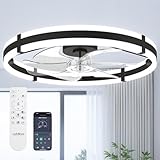
- Wider Airflow for Larger Rooms:Upgraded from our 20″ model, this 24″ low profile ceiling fan with light delivers up to 80% wider airflow coverage for stronger circulation. Perfect as a bedroom ceiling fan, kitchen ceiling fan, or living room flush mount ceiling fan in medium-sized spaces.
- Dimmable LED Light with 3 Color Temperatures:This ceiling fan with lights features an integrated LED panel that adjusts from 10%–100% brightness and supports 3000K warm white, 4500K natural white, and 6000K cool white. Easily create the right atmosphere for relaxing, working, or entertaining.
- Remote & APP Control with Memory Function: Control your ceiling fan with lights and remote or through the mobile app. Choose from 6 fan speeds, set 1- or 2-hour timers, and turn the fan or light on/off instantly. The built-in memory function restores your last-used light setting. When using the wall switch, please turn the power off for more than 5 seconds to activate the memory function. (No waiting time is required when using the remote.)
- Reversible DC Motor for Year-Round Comfort: Powered by an energy-efficient DC motor, this black ceiling fan with light runs quietly and smoothly. Switch between downdraft mode in summer and updraft mode in winter to improve air circulation throughout the year.
- Modern Flush Mount Fandelier Design: Designed as a flush mount ceiling fan, this small fandelier ceiling fan with light is ideal for low ceilings. The blade design enhances safety while maintaining strong airflow, making it suitable for bedrooms, kitchens, and living rooms.
Choosing insulation without a moisture review
Insulation installed without a complete air, vapor and drainage strategy can create condensation or concealed mold. Specify the entire assembly for the local climate, not a product in isolation.
Professional and code checks before construction
Local code determines structural tie-downs, cyclone or hurricane resistance, glazing safety, electrical installation, fire separation, ventilation openings and energy performance. Roofs, fans, screens, windows and shading devices must also be accessible for inspection and replacement.
Ask a climate-responsive designer, building-science professional, energy rater or window specialist to review the drawings where the decision is complex. The review should cover solar control, airflow paths, humidity, condensation, storm exposure, security, acoustic privacy and the way occupants will actually operate the house.
What success looks like
A successful tropical design remains shaded during the critical sun hours, keeps roof and wall heat out of living spaces, offers screened openings along a deliberate airflow path, and gives occupants fan-driven air movement where they sit and sleep. It also has a clear response for weather that is too hot, humid, rainy or still for natural ventilation.
The U.S. Department of Energy summarizes the trade-off plainly: “Although ventilation is not an effective cooling strategy in hot, humid climates, the other approaches can significantly reduce the need to use air conditioning.” Design for those conditions from the beginning, and the house can use less mechanical cooling without pretending that every tropical day will be comfortable with windows open.
Frequently Asked Questions
Should every room in a tropical house have windows on two sides?
Two-sided openings can make cross-ventilation easier, but site setbacks, privacy, security, rain and neighboring buildings may prevent it. Where two-sided openings are impossible, combine a shaded inlet with a high-level outlet or another designed airflow path, then provide a fan for occupant comfort.
Are ceiling fans a substitute for air conditioning?
No. Fans increase air movement around people but do not lower room temperature or remove humidity. They can reduce the need to run air conditioning during suitable conditions, while cooling or dehumidification may still be required during hot, humid or still periods.
Windows Errors? Fix Them Before They Spread
Repair common Windows errors and clear accumulated junk for a smoother, more stable PC - no reinstall needed.Free scan · no reinstallOutdated Drivers Are Slowing You Down
One free scan finds every outdated or missing driver and matches the right update for your exact hardware.Free scan · exact hardware matchWhat should be checked before adding roof insulation or ventilation?
Review the complete roof assembly, including air and vapor control, condensation risk, rain and insect protection, structural and storm requirements, access for maintenance, and the continuity of the ventilation path after insulation and services are installed.
Quick Recap
Product prices and availability are accurate as of the date/time indicated and are subject to change. Any price and availability information displayed on Amazon at the time of purchase will apply.

