Crashes, No Sound, or Screen Glitches?
Random freezes, missing sound and display glitches usually trace back to one bad driver. Find and replace yours safely.Free scan · under a minuteWindows Errors? Fix Them Before They Spread
Repair common Windows errors and clear accumulated junk for a smoother, more stable PC - no reinstall needed.Free scan · no reinstallSome links on this page are affiliate links: if you buy through them we may earn a commission, at no extra cost to you.
The reliable way to control remodeling dust is to contain the room before work starts, remove or cover everything inside it, seal doors and relevant HVAC openings, use the least-dust method suitable for the material, capture dust at power tools, and keep everyone else out. When work is finished, clean inside the containment zone with a HEPA-filtered vacuum and wet methods before removing barriers. Those steps reduce ordinary dust, but lead paint, silica and asbestos require hazard-specific controls.
U.S. EPA guidance notes that demolition and even removing wood casings can create dust. Its general remodeling advice is a useful starting point, but the material being disturbed determines whether you also need lead-safe, silica or asbestos procedures. See EPA’s remodeling air-quality guidance before choosing a method.
As an Amazon Associate I earn from qualifying purchases.
Identify the material and hazard before opening a wall
Dust control starts with knowing what the dust may contain. A plastic barrier and a vacuum cannot make every material safe to disturb. Before moving furniture or switching on a saw, establish the home’s age, the surface you will disturb and who is doing the work.
Check for lead in older homes
Homes built before 1978 may contain lead-based paint. If the home’s age is unknown, EPA’s DIY lead-safe guidance recommends treating the area as potentially lead-containing and using the corresponding precautions. Scraping, sanding, drilling, cutting or demolishing painted components can create fine lead dust that spreads beyond the room. Read EPA’s Lead-Safe Renovations for DIYers before starting.
Popular on Amazon

- 3-stage Filtration: This air scrubber features a three-stage filtration system consisting of a pre-filter (MERV-10), carbon filter, and H13 HEPA filter. It effectively clears dust, pollen, smoke, and odors, while also capturing 99.97% of particles as small as 0.3 microns. This results in quick improvements to indoor air quality and a more pleasant living environment.
- 550 CFM Airflow: This negative air machine features a high-efficiency copper motor that is longer-lasting and more stable. With a 15.5'' intake and 8.5'' outlet, this air purifier provides optimal purification. It has a filtration area of 5,500 cubic feet and a maximum airflow of 550 CFM (adjustable), ensuring that the entire room benefits from cleaner air.
- User-friendly Control Panel: The control panel makes it easy to operate the air purifier's functions, including adjusting the airflow range, setting a resettable timer, and activating a circuit breaker for overheat protection. Additionally, it has an indicator light that illuminates to remind you when it's time to change the filter.
- Plug and Work: No assembly is required; simply plug it in and it's ready to use. You'll find two auxiliary sockets on the panel, allowing you to daisy chain up to 3 units with a combined airflow speed of 1650 CFM. This makes it ideal for heavy restoration work in multiple rooms.
- Widely Used: The air scrubber weighs only 35 pounds and features a foldable handle, making it easy for one person to carry and stack in a corner when not in use. It is perfect for use in areas where air quality is a concern, such as during home painting, at construction sites, for sewage remediation, fire restoration, house repair, etc.
Stop when asbestos may be present
Do not disturb a material you suspect contains asbestos. EPA’s remodeling guidance directs homeowners to an asbestos professional or their health department for advice. Ordinary wet sanding, a household vacuum or a disposable mask is not a substitute for asbestos assessment and control.
Separate silica and PCB concerns from ordinary dust
Cutting, grinding or drilling materials that contain crystalline silica can create respirable silica dust. OSHA’s Small Entity Compliance Guide for the Respirable Crystalline Silica Standard for Construction is written for construction employers and covered work; do not assume every homeowner is automatically an employer covered by that standard, but follow its cleaning controls when silica dust is involved.
Some older building materials may contain PCBs. EPA’s Steps to Safe Renovation and Repair Activities describes additional containment and cleanup for that specific possibility. Apply it to the relevant material, not as a universal rule for every remodeling job.
| Possible hazard | When to consider it | Appropriate response |
|---|---|---|
| Lead paint | Painted surfaces in a pre-1978 home, or an older home of unknown age | Use lead-safe containment, wet methods, HEPA cleanup and appropriate PPE; use a certified lead-safe contractor for covered projects. |
| Respirable crystalline silica | Tasks that cut, grind or drill silica-containing construction materials | Use the task’s applicable OSHA controls; clean with wet methods or a HEPA-filtered vacuum, never dry sweep or use compressed air. |
| Asbestos | Any material suspected of containing asbestos | Stop disturbing it and obtain advice from an asbestos professional or health department. |
| PCB-containing material | Renovation involving a material that may contain PCBs | Follow EPA’s PCB-specific containment, misting, removal and inspection procedure. |
Build the containment zone before work begins
Containment is more effective when the room is prepared as a clean-to-dirty system. Finish this setup before demolition or sanding so you do not carry dust through the house while gathering supplies.
Remove or cover everything that can hold dust
Take furniture, rugs, curtains, food, clothing and other movable items out of the work area. Cover anything that must remain, and cover the floor with heavy plastic sheeting. Secure the sheeting so a person, tool or airflow cannot pull it loose. Protect adjacent surfaces that workers must cross to reach the room.
Close the boundary and isolate air movement
Close doors and seal their edges and other openings with plastic sheeting and tape. Cover HVAC supply and return vents that serve the work area. For a DIY lead-safe setup, EPA also advises turning off forced-air heating and air conditioning systems serving that area. This prevents the system from distributing contaminated dust to other rooms.
Free tools Windows power users keep installed
One-click scans. No signup required.
Exhaust ventilation from the work area to outdoors can remove pollutants and help create a pressure barrier, according to EPA’s general remodeling guidance. Place fans so they do not blow dust toward clean rooms, and consider nearby household combustion appliances before operating exhaust equipment. Do not create a backdraft or otherwise compromise combustion safety.
Also popular on Amazon
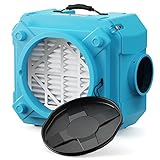
- Receive 2-Pack MERV-10 Filter for HEPA 550 air scrubber + all promo items [Multilevel Filtration]: This ALORAIR air scrubber has a 3-stage filtration system. It is equipped with a MERV-10 filter that can capture large particles and a carbon filter that can eliminate smoke and pet odor, a HEPA filter that can trap 99.97% of particles of larger than 0.3 microns. The unit size is very suitable for home repairs and construction sites, sewage repairs, water and fire repairs, salons and printing shops, etc.
- Heavy Duty and Easy to Operate: Rotomolded polyethylene (LLDPE) shell has great durability. It is easy to turn ON/OFF the air purifier through the control panel、adjust the airflow range of 270-550 CFM and the reset circuit breaker. It has an indicator light, the indicator light will light up to remind you when you need to replace the filter. You will find the auxiliary GFCI outlets on the panel. This air machine has a filtration area of 5,500 cubic feet and a maximum airflow of 550CFM.
- Easy to Stack: This HEPA air scrubber can be stacked horizontally and vertically. You can daisy-chain up 3 to the maximum, with a combined airflow speed of 1650 CFM. The size is 20.87 x 24.8 x 14.96 in, and the weight is 39.6 pounds which is easy to stack!
- Portable Air Scrubber: The air machine has a handle so that it’s easy to transport the air scrubber from one room to another room. Plug and play, don’t forget to remove the black cover before using this machine. Duct compatibility (optional) 16 inches for the air inlet and 8 inches for the air outlet, not included.
- 10-Year Limited Warranty: Every AlorAir air scrubber is ETL-certified for electrical safety and backed by a 10-year limited warranty. AlorAir combines top-tier manufacturing, advanced R&D, professional customer service,and decades of expertise as a leading damage restoration company based in California.
Use an entrance airlock when lead dust is a concern
For DIY lead-safe work, EPA describes an optional two-layer airlock at the entrance. Two overlapping plastic layers create a small transition space where a worker can step out of dusty clothing and handle tools without opening the work room directly to the rest of the house. It is an additional control, not a replacement for sealing, exclusion and cleaning.
Stage supplies before crossing the boundary
Bring supplies to the clean side and place them where they can be reached without repeated trips through the opening. A practical starting list from EPA guidance includes:
- Heavy plastic sheeting and painter’s or masking tape
- Heavy-duty plastic bags for debris and disposable materials
- A suitable HEPA-filtered vacuum with the attachments required for the task
- A misting bottle or pump sprayer
- Wet-cleaning cloths, wipes, mop heads and rinse water
- Gloves and any hazard-specific protective clothing or eye protection
This is a planning list, not a universal kit. The material, tool and applicable rule determine what else is required.
Quick wins for a faster PC:
Repair Windows errors before they cause bigger problemsFix Now →Fix the driver behind crashes, sound loss and screen glitchesFind Drivers →Clear out junk files and repair common Windows errorsFree Scan →Reduce dust where the tool makes it
Containment limits spread; source control limits the amount that can escape in the first place.
Prefer a wet method when the material allows it
EPA gives misting before sanding or scraping as a general low-dust example. For lead-safe DIY work, it lists wet-dry sandpaper, sanding sponges and misting before sanding, scraping, drilling or cutting. Apply only enough moisture to suppress dust without creating a slip, electrical or material-damage hazard. A wet method is not appropriate for every tool or surface, so follow the tool and material instructions.
Capture power-tool dust at the attachment
When a power tool is suitable for extraction, connect a compatible HEPA-filtered dust-collection attachment and keep the hood or shroud positioned as designed. EPA lists power tools with HEPA vacuum attachments as a source-control option. OSHA’s silica guide provides task-specific controls for construction work. A generic shop vacuum, an ill-fitting hose or a respirator by itself does not establish that hazardous dust is controlled.
Keep work practices inside the dirty zone
Keep the door closed, stop unnecessary traffic, and put waste into bags as it is generated instead of allowing piles to accumulate. Clean tools before taking them out. Workers should change or remove dusty outer layers and shoe covers within the containment area so dust is not tracked onto clean flooring.
Do these 3 things before closing this tab:
1Scan for outdated or missing drivers - takes under a minute2Repair Windows errors before they cause bigger problems3Fix the driver behind crashes, sound loss and screen glitchesAlso popular on Amazon

- POWERFUL AIR PURIFIER - BlueDri's Air Shield 550 HEPA Air Scrubber delivers at least 40% more CFM than leading competitors in the category. It removes harmful airborne particles including smoke, pet dander, pollen, saw dust, and other miscellaneous debris.
- HEAVY DUTY - AS-550 operates at 3 different stages, each offering its own unique contribution to purifying air. The pre-filter protects the prime HEPA filter acting as a large particle cleaner allowing the HEPA filter to do the finer work. Ideal for commercial repair and construction sites and sewage remediation, water and fire damage restoration.
- PURITY - HEPA filter removes 99. 97% of particles down to 0.3 microns. Perfect for purifying the air in homes, businesses, schools and even hospitals
- ODOR ELIMINATOR - The optional carbon filter (Not Included) eliminates odors from paint, smoke, pets, cleaning products, etc. This separately sold filter is perfect for a salon or print shop for removing unwanted fumes.
- WARRANTY - 1-year and 5-year housing . Our Air Shield 550 is engineered with technology into a single housing piece making it the toughest in the market. We stand by our quality products and hope you do too
Use PPE for the identified hazard
For DIY lead work, EPA identifies a disposable N-100-certified respirator among possible PPE, along with disposable coveralls, shoe covers, eye protection and gloves. Respirators require the correct selection, fit and use; the lead advice should not be generalized to every dust hazard. PPE is the last layer after containment and source capture, not permission to ignore either one.
Keep occupants and pets out until cleanup is complete
Children, pregnant people, pets and other non-workers should remain outside a lead-dust work area. The same exclusion is sensible for any dusty renovation because people and animals can carry settled dust into living spaces. Plan a separate route to the bathroom or exit, and keep food, drink and personal items out of the contained room.
Make the boundary part of the daily routine: inspect tape and plastic, replace damaged sections, keep bags closed, and clean tools before they cross out. If dust is visible outside the barrier, stop, isolate that area and clean it before resuming. Continuing work while a boundary is leaking usually spreads more contamination than a short repair pause would have.
Clean in stages before reopening the room
Cleanup is not one final sweep. Keep the room isolated while you remove debris, vacuum, wet-clean and inspect it.
Perform ongoing cleanup during the job
Use the HEPA vacuum frequently on settled dust, ledges and tools. Bag debris as it is generated. Clean or dispose of PPE as the hazard instructions require. Keep the vacuum, hoses and attachments inside the work zone until their dusty surfaces have been cleaned.
Use the lead-safe final-cleaning sequence
For DIY lead-safe work, EPA’s sequence is deliberately thorough:
- HEPA-vacuum the work area and its surfaces while the containment remains intact.
- Wet-mop uncarpeted floors.
- Clean walls with a HEPA vacuum or damp cloth.
- HEPA-vacuum other surfaces and objects that remained in the room.
- Wipe surfaces with wet, disposable cloths until the cloths come away clean.
- Clean tools and either clean or dispose of PPE as appropriate.
Do not remove the plastic as soon as the visible debris is gone. EPA’s homeowner FAQ advises wet-mopping with plenty of rinse water before taking down plastic over doors, windows and vents. A qualified lead dust sampling technician, inspector or risk assessor can perform post-renovation dust-lead testing when you need documented confirmation.
Also popular on Amazon

- POWERFUL AIR PURIFIER - BlueDri's Air Shield 550 HEPA Air Scrubber delivers at least 40% more CFM than leading competitors in the category. It removes harmful airborne particles including smoke, pet dander, pollen, saw dust, and other miscellaneous debris.
- HEAVY DUTY - AS-550 operates at 3 different stages, each offering its own unique contribution to purifying air. The pre-filter protects the prime HEPA filter acting as a large particle cleaner allowing the HEPA filter to do the finer work. Ideal for commercial repair and construction sites and sewage remediation, water and fire damage restoration.
- PURITY - HEPA filter removes 99. 97% of particles down to 0.3 microns. Perfect for purifying the air in homes, businesses, schools and even hospitals
- ODOR ELIMINATOR - The optional carbon filter (Not Included) eliminates odors from paint, smoke, pets, cleaning products, etc. This separately sold filter is perfect for a salon or print shop for removing unwanted fumes.
- WARRANTY - 1-year and 5-year housing . Our Air Shield 550 is engineered with technology into a single housing piece making it the toughest in the market. We stand by our quality products and hope you do too
Clean silica dust without putting it back in the air
For silica-containing dust on surfaces and equipment, OSHA says to use wet methods or a HEPA-filtered vacuum. Do not dry sweep and do not use compressed air for this cleanup; both actions can re-aerosolize settled dust.
What’s actually slowing this PC down?
Pick the symptom - the matching free tool is one click away.
Remove plastic without redistributing dust
If the project involves possible PCB-containing materials, EPA’s PCB-specific guidance recommends carefully misting dusty plastic before removal, folding it dirty-side-in, then HEPA-vacuuming and wet-cleaning exposed surfaces. Inspect the area and reclean if dust remains. Keep this procedure tied to that PCB context rather than treating it as a universal household requirement.
Inspect before allowing normal use
Use bright, low-angle light to look for settled residue on floors, sills, ledges, tools and the route out of the room. Reclean any visible dust, and keep the barrier in place while doing so. Only after the final inspection and wet-cleaning should ordinary household traffic resume.
Independent reader supportYour contribution helps us test, update, and keep practical guides available for everyone.Choose a HEPA vacuum and accessories by task, not label alone
A HEPA-filtered vacuum is a useful renovation-dust category, but the word HEPA does not by itself prove that a particular machine is suitable for lead, silica or another regulated hazard. EPA names HEPA vacuums and HEPA-filtered power-tool attachments in its lead and remodeling guidance, and OSHA identifies HEPA-filtered vacuuming for silica cleanup.
| Decision point | What to verify |
|---|---|
| Dust and hazard | Whether the filter, collection bags and disposal method are suitable for the material you are disturbing and the applicable instructions. |
| Tool connection | That the hose, shroud and attachment fit the specific power tool and maintain capture at the point where dust is produced. |
| Wet work | Whether the task calls for misting or another wet method instead of relying on vacuuming alone. |
| Capacity and access | Enough bag or container capacity, hose reach and attachments to clean floors, ledges, tools and the exit route without opening the containment repeatedly. |
| Maintenance and disposal | Manufacturer instructions for changing filters or bags without releasing dust, and a way to seal and dispose of loaded bags. |
Read the manufacturer’s instructions together with the hazard guidance. If the product documentation does not establish suitability for your material or task, ask the manufacturer or a qualified professional rather than assuming the label is sufficient.
The Tool Desk
Outbyte Driver Updater FREEScan for outdated or missing drivers - takes under a minuteDriver Scan →Outbyte PC Repair FREERepair Windows errors before they cause bigger problemsFix Now →Know when a qualified contractor is the safer choice
Call for qualified help when suspected asbestos is involved, when a lead project is beyond your ability to contain and clean, or when the material and applicable rule are unclear. EPA recommends lead-safe certified contractors for covered renovation, repair and painting projects in pre-1978 homes.
EPA says its Renovation, Repair and Painting Rule generally does not apply to homeowners doing renovation work in their own homes, but it lists exceptions such as rental property, operating a child-care center in the home, or buying, renovating and selling homes for profit. Contractors performing covered work must follow current RRP requirements. Check current EPA requirements and local rules for the specific property and project rather than relying on a general exemption.
Also popular on Amazon

- VARIABLE-SPEED AIRFLOW: Adjust airflow up to 500 CFM for renovation, construction and restoration work. The HEPA filter and pre-filter help capture airborne dust and particles as air passes through the unit.
- DURABLE AND PORTABLE: The rotomolded housing is built for transport between jobs. A carry handle makes repositioning easier, while the stackable design helps organize storage and transportation.
- SIMPLE FILTER MAINTENANCE: A filter-change indicator helps you monitor service needs, and the quick-access filter compartment makes replacement straightforward. Includes one HEPA filter and one pre-filter.
- JOBSITE CONNECTIONS: Dual GFCI outlets support daisy-chain connections within the rated electrical load. Pair the air scrubber with an air mover and dehumidifier for a coordinated restoration setup; additional equipment is sold separately.
- SIZE AND WARRANTY: Measures 24 x 23 x 15 inches (L x W x H). Includes a 1-year warranty on the complete unit and a 3-year parts warranty for added ownership support.
Common dust-control failures and the correction
Starting demolition before sealing the room
Why it fails: Dust reaches hallways and HVAC openings before the barrier exists. Correction: Finish the floor, door and vent containment first, then bring tools through one controlled entrance.
Leaving the central HVAC system running
Why it fails: Air circulation can move dust to rooms that were never part of the project. Correction: For a lead-safe setup, turn off forced-air systems serving the work area and seal the relevant vents; use outdoor exhaust only with safe fan placement.
Dry sweeping or blowing dust with compressed air
Why it fails: It turns settled particles back into airborne dust. Correction: For silica dust, use wet cleaning or a HEPA-filtered vacuum as OSHA directs; use the appropriate wet and HEPA sequence for lead dust.
Relying on a respirator instead of source control
Why it fails: A respirator does not keep dust off floors, clothing, tools or other occupants. Correction: Contain the room, capture dust at the tool, exclude non-workers and use fitted, hazard-appropriate PPE as an additional layer.
Removing plastic while residue is still present
Why it fails: Dust on the barrier can fall into the newly cleaned room during removal. Correction: Complete HEPA vacuuming and wet-cleaning first; where the PCB-specific procedure applies, mist and fold plastic dirty-side-in before removing it.
Assuming a clean-looking room is safe
Why it fails: Fine dust can remain on sills, ledges, walls and objects after visible debris is gone. Correction: Follow the full vacuum-and-wet-clean sequence, inspect under strong light, and arrange lead dust testing when documented confirmation is important.
Recommended Free Tools
Quick Recap
Product prices and availability are accurate as of the date/time indicated and are subject to change. Any price and availability information displayed on Amazon at the time of purchase will apply.

