Distance alone cannot tell you which home is the better choice. A connector road may make some trips easier while adding traffic noise, changing local access, creating construction disruption, or affecting resale appeal. Compare the two properties against the road’s actual design, forecast traffic, mitigation decisions, and each home’s exposure—not simply a map radius.
The reliable method is to combine repeated visits at different times with project documents and recent, genuinely comparable local sales. Federal U.S. guidance can explain how agencies study traffic noise, air-quality influence, and access management, but it cannot predict the experience or value of an individual property without location-specific information.
As an Amazon Associate I earn from qualifying purchases.
Start with the project, not the property line
A “connector road” links existing streets, neighborhoods, employment areas, or regional routes. Two houses at the same measured distance can have very different experiences because of elevation, orientation, intersections, traffic volume, truck routing, barriers, and the position of bedrooms and outdoor space.
Outdated Drivers Are Slowing You Down
One free scan finds every outdated or missing driver and matches the right update for your exact hardware.Free scan · exact hardware matchPC Slower Than It Used to Be?
A free scan shows the junk files, broken settings and background clutter dragging Windows down - then fixes them in one click.Free scan · Windows 10 & 11Before comparing houses, establish what is actually being built. Ask whether the design is approved, under revision, or still conceptual; which agency is responsible; when construction is expected; and what traffic the completed road is intended to carry. A plan shown at an open house may not be the current design.
#1 Best Overall

- 2.25-inch LCD Screen with Backlight: This TS-501B sound level meter is measured noise levels are expressed in decibels and displayed on the 2.25-inch LCD screen, it easy to read on a big display design. Long press the backlight button to turn on a backlight, making it easy to view even in dim light
- Decibel Meter with A/C Weighting: TopTes TS-501B decibel meter uses a precise condenser microphone to capture sound. It’s equipped with A-weighting and C-weighting facilities that measure noise levels from 30 to 130 dB with an accuracy of 1.5 dB, Frequency from 30 to 8000Hz. Perfect for monitoring noise levels in communities, home theaters, audio systems, automobiles, workshops, schools, offices, factories
- MAX/MIN Measurement: The sound pressure level (SPL) meter has Max or Min measurement values to represent the maximum/minimum (high/low peak) value of the sound produced within a certain time, and the data hold function can freeze the current reading based on the sound measurement according to individual needs
- Easy Use and Feature Packed: The non-slip side design ensures that the portable noise meter fits easily in the hand. TS-501B SPL meter is a battery-operated noise meter that comes with three durable batteries and has an automatic power off function to extend battery life. A low battery indicator will appear on the screen when the battery is low to remind the user to replace the battery in time
- What’s in the Box: One TS-501B Decibel Meter, Three AAA Batteries, One User Manual, One Carry Case. The device has been factory calibrated to ensure high measurement accuracy and compliance with quality standards.
- Obtain the latest roadway layout, including lanes, ramps, intersections, sidewalks, crossings, turn restrictions, and any connection to your street.
- Check projected traffic volumes and the assumptions behind them, including whether trucks or buses are modeled separately.
- Identify construction staging, work hours, detours, utility work, and the agency’s current schedule.
- Find the project’s environmental and traffic documents, then note their publication dates and whether the analysis used a design that has since changed.
If the agency cannot provide a current design or schedule, treat the road-related comparison as uncertain rather than assuming the best or worst outcome.
Use the same inspection method for both homes
Comparing one house during a quiet weekend showing with another during a weekday peak period produces a misleading result. Visit each home more than once and record observations in the same order.
Plan visits around real use
- Visit on a typical weekday during a busy period, then return during an evening or other quieter period. If the road is not open, observe the existing streets that will feed it and visit nearby roads carrying similar traffic.
- Stand in the rooms where you sleep, work, or spend time with windows open and closed. Note voices, engines, braking, acceleration, motorcycles, and intermittent loud events separately from the general traffic hum.
- Spend time in the yard, patio, balcony, and any room facing the proposed road. Outdoor exposure often matters more than the view from the front door.
- Drive, walk, or cycle the routes you would use to work, school, shops, transit, parks, and medical services. Repeat the routes at the times your household would actually travel.
- Write observations immediately, including weather, wind direction if known, traffic conditions, and how long you stayed. Use the same checklist for both properties.
A consumer sound-level meter can document relative differences between visits, but a household reading is not a regulatory measurement and cannot replace the agency’s modeling or field work. Treat readings as notes, not proof that a property meets a legal limit.
Inspect the house as a sound and air pathway
Look at bedroom and living-room windows, vents, doors, porches, and mechanical equipment facing the road. A well-sealed newer house may feel different from an older house with leaky windows even when both lots are equally close. Ask what windows, doors, and ventilation systems are included in the sale and whether any upgrades were made specifically for road noise.
Record the locations of fences, walls, garages, mature vegetation, and proposed barriers. Vegetation can affect sightlines and privacy, but do not assume a hedge will provide the same noise reduction as an engineered barrier. The road’s grade and the house’s floor elevation can also change what reaches upper rooms and yards.
Compare traffic noise using the project’s analysis
Noise is a project-specific question. For qualifying federal-aid projects, Federal Highway Administration (FHWA) guidance calls for analysis of highway traffic noise. Agencies consider predicted levels relative to applicable criteria and whether the project would cause a substantial increase over existing conditions. The existence of an analysis does not mean every property receives a barrier or that traffic noise will disappear.
Rank #2
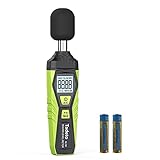
- 【Accurate Measurement】 The measuring range of the sound level meter is 30dB to 130dB . Highly accurate with ± 2.0 dB. Real-time monitoring can give you accurate data on the sound level in the area.
- 【A/C Weighted Measurement】 The A weighted simulates the frequency characteristics of low-intensity human ear noise, which is suitable for the detection of ambient noise. The C weighted simulates the frequency properties of high-intensity noises of the human ear, which are suitable for the sound pressure analysis of machine motors and machines. More professional measurement methods provide users with a more perfect user experience.
- 【Fast and Slow Measurement】 The sound level meter has the function of converting the fast and slow response rate. The fast response rate uses a time constant of 0.125s/time for general environmental measurement. The slow response rate uses a 1s/time constant, which is used for environmental measurements with relatively large changes in noise levels.
- 【Digital LCD Display 】 The digital display is a 4-digit LCD display with a resolution of 0.1 dB. Backlit LCD digital display, the reading effect is clearer in dark places. When the battery is low, the LCD display will display a low voltage icon, indicating that the power is low at this point and the battery needs to be replaced.
- 【Convenient and Lightweight 】Tadeto sound level meter is lightweight and easy to carry. It's widely used in factories, transportation, car, baby room and audio system offices, sound quality control in homes, schools, and construction sites.
Request these noise documents
- The traffic-noise analysis and the model year or traffic forecast used.
- Predicted levels at representative homes, yards, patios, and other affected locations.
- The existing-condition baseline and the project condition used for comparison.
- Maps showing proposed walls, berms, building treatments, or other mitigation and the locations they are intended to protect.
- The agency’s written feasibility-and-reasonableness decision, including any explanation for measures that were considered but not selected.
- A construction-noise plan covering equipment, work hours, temporary barriers, and complaint procedures.
Read the map, not only the summary. A barrier may protect a rear yard but stop before a side street, upper story, driveway, or neighboring parcel. A wall can also redirect sound or leave gaps at entrances and crossings. Ask the agency to explain which receptor locations were modeled and how the proposed measure changes those results.
Free tools Windows power users keep installed
One-click scans. No signup required.
Separate existing sound from future change
One home may already be near a busy arterial while the other is quiet today. Compare both the current condition and the forecast change. A modest increase in an already noisy setting may be less noticeable than a new intermittent sound in a previously quiet yard, even if a table shows similar modeled levels. Your visits should test how each pattern feels during the times you will use the property.
Construction can be a different noise problem from completed-road traffic. Demolition, grading, pile driving, paving, truck queues, and detours may be temporary but intense. Ask how long each phase is expected to last, whether work will occur outside ordinary daytime hours, and what happens if the schedule slips.
Evaluate air-quality information without inventing a safety boundary
Roadway-related air-quality influence depends on the road type, traffic volume, truck share, wind, terrain, weather, and surrounding development. The U.S. Environmental Protection Agency’s near-road FAQ describes potential influence extending a few hundred meters in some settings, including areas downwind of heavily traveled roads and trucking corridors. That description is context, not a universal setback line and not an individual health-risk prediction.
Ask what applies to this road
- What traffic and truck assumptions were used in the project’s environmental documents?
- Which nearby roads, ramps, loading areas, or intersections could create queues and repeated acceleration?
- What are the prevailing wind patterns and terrain between the road and each home?
- Are local air-monitoring results available, and where are the monitors relative to the properties?
- Will construction create dust, diesel exhaust, or detours that change exposure before the road opens?
Monitoring data can show regional or local conditions, but a monitor’s distance and placement matter. Do not treat one reading as a personal exposure estimate. Households with particular health concerns should discuss the decision with an appropriate clinician and review local environmental information rather than relying on a generic distance rule.
Quick wins for a faster PC:
Scan for outdated or missing drivers - takes under a minuteDriver Scan →Repair Windows errors before they cause bigger problemsFix Now →Map access, crossings, and everyday safety
A nearby road can improve access for some trips and make others less convenient. FHWA defines access management as controlling entry and exit points along a roadway. It is about how driveways, intersections, medians, and turning movements are arranged—not a guarantee of faster travel.
Rank #3

- Accurate 30-130dB Noise Measurement: The Goldeep SL750A decibel meter measures sound levels from 30 to 130dB with ±1.5dB accuracy and a 31.5Hz-8KHz frequency response. This sound decibel meter is ideal for checking home noise, neighbor noise, traffic sound, office noise, construction sites, factories, classrooms, baby rooms and musical instruments.
- A/C Weighting for Different Sound Environments: This digital sound level meter supports A/C weighting modes for more flexible noise testing. A-weighting is suitable for environmental noise such as urban traffic, schools, offices, business areas and construction sites. C-weighting is designed for industrial noise from machinery, equipment, aerospace, high-speed rail and other high-intensity sound sources.
- dB/SONE Units for Sound & Loudness Testing: Use the dB unit to measure sound intensity for environmental noise, machine noise, traffic noise and workplace noise. Switch to SONE to better understand perceived loudness, making this db meter useful for music, audio systems, acoustic checks and instrument noise control..
- FAST/SLOW Response with MAX/MIN Tracking: The spl meter includes FAST and SLOW response settings. FAST response, 0.125s per reading, is useful for changing noise levels, while SLOW response, 1s per reading, is suitable for steady-state noise. MAX/MIN value tracking helps record peak and minimum noise levels over a period of time.
- Easy-to-Use Sound Meter for Daily & Professional Needs: Designed with data hold, clear LCD display, anti-slip grip and a windbreak ball, this sound meter is practical for indoor and outdoor use. Package includes 1 sound level meter, 2 AAA 1.5V batteries and 1 user manual, so you can start measuring noise right away.
Compare each property’s actual routes
- Mark the planned connection points and determine whether either home will gain a direct route to a major destination.
- Check whether existing driveways will move, close, or require a new turn direction.
- Count the crossings needed to reach schools, parks, transit, shops, and neighbors on the opposite side.
- Review sidewalks, bike facilities, lighting, crossing signals, refuge islands, and the speed environment shown in the plan.
- Ask how emergency vehicles, deliveries, waste collection, and visitors will enter during construction and after opening.
- Drive the likely routes at peak periods and consider queues at intersections, not just free-flow travel time on the connector.
A home farther from the connector may still be affected if its only street becomes a feeder route. Conversely, a nearby home may gain a useful connection if the design includes a safe crossing and an appropriate intersection. The layout determines which result applies.
Look for local-street effects
New connections can shift traffic onto residential streets, alter turning patterns, or create shortcuts that were not previously attractive. Ask for the traffic study’s forecasts on the streets around each property, not only the connector itself. Examine school drop-off areas, bus stops, pedestrian desire lines, and narrow intersections where added traffic could be uncomfortable even if the main road is well designed.
Treat construction disruption as a separate decision
A project can affect a home for years before the completed road’s long-term pattern is known. Construction documents should identify work limits, staging areas, haul routes, temporary lane closures, utility relocations, and expected milestones.
Questions for the transport agency or builder
- When does substantial work begin, and what is the expected duration for each phase near the homes?
- Which hours will heavy equipment, deliveries, and road closures occur?
- Where will workers’ vehicles, materials, and excavated soil be staged?
- How will dust, mud, vibration, and storm-water runoff be controlled?
- Which detours will affect each property’s route to work, school, shops, and emergency services?
- How will residents receive schedule updates and report problems?
- What conditions could delay completion, and how often is the public schedule updated?
Ask for the most recent agency update rather than relying on an old sales brochure. A schedule is a forecast, so write down its date and the assumptions that could change it.
Compare price and resale with local evidence
There is no defensible universal percentage discount for a home near a connector road. The effect on price depends on the road’s design, sound, access, views, neighborhood demand, house condition, lot, schools, commute, and the market’s current expectations.
Build a like-for-like sales set
- Collect recent sales in the same market area with similar floor area, age, condition, lot characteristics, school context, and amenities.
- Separate homes with comparable road exposure from those on quieter streets instead of averaging them together.
- Note whether a sale occurred before the project was announced, during construction, or after the route and mitigation were known.
- Adjust for differences such as a corner lot, direct driveway access, a wall, a view, parking, renovation quality, and outdoor usability.
- Ask a qualified local valuation professional to explain how the project and those property differences affect the comparison.
Do not infer that a premium or discount exists because one listing is priced differently. Listing prices are asking positions, not completed transactions. A local professional can also tell you whether disclosure rules require information about the planned road in your jurisdiction; the applicable duties vary by location.
Rank #4

- 【Widely Used】The noise meter is the use of environmental sound level instrument, can be widely used in such as factories, workshops, schools, residential, office areas, traffic roads, audio and other occasions of sound level measurement. Also suitable for noise engineering, product quality control, health,prevention and control.
- 【Accurate Measurement】Measuring Range:30~130dB ;Accuracy:±1.5dB(94dB@1KHz);Display Resolution:0.1dB
- 【A Weighted Measurement】 A Weighted network (automatic switching range display)
- 【Fast/Slow mode selection】Press the MODE key, you can convert the response speed of the noise meter, FAST fast, SLOW slow
- 【MAX/MIN Measurement】Press RANGE key to measure the maximum value of MAX and minimum value of MIN.A maximum duration of more than 3 seconds is recorded, with a normal test sampling rate of 0.5 seconds. The maximum error is ± 5%.
Consider your future sale as a buyer would
Write down the facts a future buyer would discover: the road’s alignment, traffic forecast, noise analysis, barrier decision, access changes, construction history, and any unresolved schedule issue. If you would need to explain away a concern that is visible during a short visit, assume future buyers may raise the same concern. That does not establish a fixed loss in value, but it helps you judge whether the home remains attractive at the price you are considering.
Use a decision matrix instead of a single distance rule
Score each home only after collecting the same evidence. A simple written matrix makes trade-offs visible and prevents a convenient commute from overshadowing a daily comfort issue.
| Dimension | What to inspect | Evidence to request |
|---|---|---|
| Noise | Bedrooms, living areas, yard, patio, windows open and closed, daytime and evening conditions | Project noise analysis, forecast traffic, barrier plans, construction-noise plan |
| Air quality | Road type, truck share, wind, terrain, distance, and available monitoring | Environmental documents and local air-monitoring information |
| Access and safety | Driveway and intersection changes, crossings, walking and cycling routes, emergency access, likely traffic patterns | Road layout, access-management plan, traffic study |
| Construction and uncertainty | Work hours, duration, detours, staging, schedule risk | Construction plan and current agency updates |
| Price and resale | Comparable sales and differences in house, lot, schools, commute, and amenities | Local sales records and qualified valuation advice |
| Personal priorities | Noise sensitivity, outdoor use, commute needs, and household health considerations | Repeated visits and a written list of deal-breakers |
For each row, record the evidence, your confidence in it, and whether the issue is reversible. You may be able to install better windows later; you cannot move a connector or change its intersection pattern. Mark unresolved items as risks to investigate, not as neutral scores.
When the nearer home may be the better choice
Proximity is not automatically negative. The nearer property may make a major commute shorter, provide a direct and safe connection, or sit behind a well-designed barrier while the farther property receives feeder traffic. It may also be priced fairly for its exposure and have a layout that places bedrooms and outdoor living away from the road.
Choose it only when the project documents and visits support the advantages you value. Confirm that the access benefit survives peak-period traffic and that the barrier or other mitigation is actually proposed for the spaces you use.
Recommended Free Tools
When the farther home may justify its premium
The farther property can be worth more to you when quiet outdoor time, open windows, predictable sleep, or a low-traffic street are daily priorities. Extra distance is most meaningful when it also removes the home from likely truck routes, queues, crossings, and construction staging. Verify those conditions rather than treating “farther away” as proof.
Best Value

- Datalogs up to 16,000 readings with USB interface for downloading to a PC
- Triple LCD displays humidity, temperature, and date (year, month, and day)
- Programmable from keypad or PC
- Selectable data sampling rate
- User programmable audible and visual alarms
If the farther home costs more, compare the premium with local sales evidence and with the practical cost of mitigating the nearer home. Avoid counting an unverified future resale gain as if it were guaranteed.
Make the offer and contingency reflect what you learned
Before committing, keep copies of the project documents you relied on and note their dates. Ask your legal and real-estate advisers which inspection, disclosure, survey, financing, and project-information contingencies are available in your jurisdiction. If the road design or schedule is still changing, make sure the contract and due-diligence period give you time to review material updates.
Revisit the property after receiving new plans or an agency decision. A changed intersection, barrier endpoint, truck assumption, or construction route can alter the comparison even if the homes themselves have not changed.
The Tool Desk
Outbyte PC Repair FREEClear out junk files and repair common Windows errorsFree Scan →Outbyte Driver Updater FREEFix the driver behind crashes, sound loss and screen glitchesFind Drivers →Answers to common questions
Is it bad to buy a house near a new road?
Not necessarily. The outcome depends on noise, air-quality context, access, construction, personal priorities, and price. Decide from the project’s actual design and repeated visits rather than distance alone.
How far away should a house be from a busy road?
There is no universal distance that guarantees quiet, clean air, or a particular health outcome. Roadway influence varies with traffic, trucks, wind, terrain, barriers, and building design; use local project and environmental information.
Will a new road make my house noisier?
It might, but only the project’s forecast and mitigation analysis can show the expected change for a particular location. Check modeled receptors, barrier locations, and the difference between existing and future conditions.
Does living near a highway affect home value?
It can influence buyer demand, but this material does not establish a general discount. Use recent, comparable local sales and property-specific valuation that account for the road’s design and market timing.
Quick Recap
Product prices and availability are accurate as of the date/time indicated and are subject to change. Any price and availability information displayed on Amazon at the time of purchase will apply.

