Quick wins for a faster PC:
Fix the driver behind crashes, sound loss and screen glitchesFind Drivers →Repair Windows errors before they cause bigger problemsFix Now →The correct cleaner depends on the battery chemistry. For ordinary alkaline AA, AAA, C, D, and 9-volt batteries, remove the battery, wear gloves and eye protection, brush away loose residue, then apply a small amount of equal-parts white vinegar and water—or lemon juice and water—to the affected contacts. Wipe the residue away and let the device dry completely before installing new batteries.
For automotive lead-acid battery terminals, use baking soda and water after disconnecting the battery correctly. Do not use the household-battery procedure on a car battery. For a swollen, hot, hissing, smoking, punctured, or leaking lithium battery, do not clean or puncture it yourself; isolate the hazard and contact the manufacturer, a battery recycler, or your local household-hazardous-waste program.
As an Amazon Associate I earn from qualifying purchases.
Identify the battery before choosing a cleaner
Battery residue is often called corrosion, although it may be a mixture of leaked electrolyte, corrosion products, and salts formed after the electrolyte reacts with air. Color can provide a clue, but it cannot reliably identify the battery chemistry. Read the label on the cell, inspect the markings in the battery compartment, or check the device manual before applying any liquid.
Free tools Windows power users keep installed
One-click scans. No signup required.
| Where you found it | Likely battery chemistry | Correct general approach |
|---|---|---|
| White powder or crystals in a remote, toy, flashlight, calculator, clock, camera, or smoke detector | Usually an alkaline battery containing potassium hydroxide | Remove the battery and use a small amount of diluted white vinegar or lemon juice on the affected contacts |
| Rechargeable AA or AAA marked NiMH or NiCd | Nickel-metal hydride or nickel-cadmium | Follow the battery maker’s instructions. Duracell permits diluted vinegar or lemon juice for these chemistries, but they are not the same as lithium-ion cells |
| Older “heavy duty,” zinc-carbon, or manganese cell | Usually zinc-carbon or manganese chemistry, with a mildly acidic electrolyte | Do not automatically use vinegar. Remove the cell and follow the manufacturer’s cleaning guidance |
| CR2032, CR2025, CR2016, lithium AA, or another lithium camera cell | Lithium-metal primary battery | Do not treat it as an ordinary alkaline leak. Isolate it and obtain manufacturer or recycling guidance |
| Phone, laptop, power tool, e-bike, scooter, camera pack, or power bank | Usually lithium-ion | Do not clean, open, puncture, flex, charge, or otherwise handle a damaged or swollen pack as a household-battery spill |
| Car, truck, boat, motorcycle, or golf-cart battery | Usually lead-acid, including some AGM designs | Use the separate automotive procedure with baking soda and water; have a cracked or leaking battery handled professionally |
Alkaline batteries primarily use potassium hydroxide. The white or gray deposit often associated with a leaking alkaline cell may include potassium carbonate formed when the leaked material reacts with carbon dioxide. Manganese or zinc-carbon cells use an electrolyte based mainly on zinc chloride or ammonium chloride instead. That is why “use vinegar on every battery” is not a safe universal rule. See Panasonic’s dry-battery FAQ.
#1 Best Overall

- 【Effortlessly removes corrosion】The dual-ended battery post cleaning brush, made of stainless steel casing and with steel wire bristles, powerfully removes stubborn corrosion and oxides from battery terminals and clamps, ensuring optimal conductivity. In winter, clean terminals will help your car start more easily while reducing battery drain.
- 【Durable corrosion protection】Our premium fiber battery gaskets are suitable for both top-pole and side-pole batteries or cables, applicable to 6V and 12V batteries. They effectively block harmful acid mist and moisture, preventing corrosion around the battery terminals and significantly extending battery life. Gasket colors distinguish positive and negative terminals: red for positive (+) and green for negative (-).
- 【Battery terminal gasket protector dimensions】Outer ring diameter approximately 1.73 inches/44 mm; Inner ring diameter approximately 0.79 inches/20 mm; Inner ring diameter after removal approximately 1.18 inches/30 mm; The inner ring is removable to accommodate larger battery terminals.
- 【Easy to use】The battery terminal brush features a double-ended design, Simply remove the metal cap to reveal the internal brush, then press the other end onto the battery terminal and twist to clean. Cleaning takes only one minute. Tip: After cleaning, apply a thick layer of insulating grease to the terminals and contacts to reduce corrosion, prevent moisture, and improve weather resistance.
- 【Complete kit for full terminal maintenance】 This convenient set includes everything needed for routine battery care: 2 metal-case battery terminal cleaning brushes and 10 anti-corrosion fiber washers (5 red, 5 green). Ideal for cars, trucks, RVs, boats, and other 6V or 12V battery applications.
What battery corrosion looks like
- White powder or crystals: Common in small devices with leaking alkaline batteries, although white or gray deposits can also occur with other chemistries.
- Blue-green buildup around a car terminal: Often involves corrosion of copper clamps, wiring, or other metals. Battery vapors, charging conditions, a loose connection, or an actual acid leak may be involved.
- White or gray buildup on lead-acid terminals: Corrosion may affect the lead posts, clamps, cable ends, tray, or nearby hardware.
- Swelling, bulging, hissing, heat, smoke, a solvent-like odor, a torn pouch, or a ruptured wrapper: Treat this as a damaged lithium battery or another serious battery failure—not as ordinary surface corrosion.
A dry crust is not automatically harmless. Battery residue can irritate or chemically burn skin and eyes, and it can continue damaging electrical contacts. At the same time, a small amount of dry alkaline residue is not the same hazard as a large sulfuric-acid spill from a lead-acid battery. The chemistry, quantity, location, and condition of the battery determine the risk.
Safety precautions before cleaning
- Wear disposable nitrile, rubber, or waterproof household gloves and safety glasses or goggles.
- Work in a well-ventilated area. Keep children and pets away.
- Do not touch powder or wet residue with bare hands, brush it toward your face, or deliberately inhale loose material.
- Turn off and unplug electronic equipment. Remove chargers, external power supplies, and removable battery packs.
- Keep flames, cigarettes, sparks, and unnecessary metal tools away from lead-acid batteries.
- Never mix vinegar, baking soda, alcohol, or another household chemical directly on your skin or in your eyes to “neutralize” exposure. Flush with running water instead.
For a small replaceable battery, the goal is to remove the leaking cell and clean accessible contacts with the least liquid possible. For an automotive battery, the goal is to neutralize external acid residue without allowing the mixture into vents, connectors, soil, or drains. For a damaged lithium battery, the goal is not cleaning; it is preventing injury and fire.
How to clean alkaline corrosion from a remote, toy, flashlight, or other small device
Supplies
- Disposable gloves and safety glasses
- White vinegar or lemon juice
- Water for an equal-parts diluted solution
- Cotton swabs
- Paper towels or a lint-free cloth
- A soft toothbrush or anti-static brush
- A plastic tool or wooden pick for loose crust
- Optional: isopropyl alcohol above 90% for a final wipe on accessible, disconnected metal contacts or circuit boards
Use a small container for the diluted cleaner. Do not pour cleaner into the battery compartment. Duracell’s guidance allows a 50/50 mixture of vinegar or lemon juice and water for leakage from alkaline, NiCd, and NiMH batteries. Texas Instruments also recommends a small amount of vinegar for alkaline battery residue in calculators.
What’s actually slowing this PC down?
Pick the symptom - the matching free tool is one click away.
Step-by-step method
- Power down the device. Turn it off, unplug it, and remove any external power source. If it has a removable battery pack, disconnect it.
- Put on protection. Wear gloves and eye protection, and provide ventilation.
- Remove the leaking batteries if they come out easily. Do not twist aggressively, crush, drill, pry against, or puncture a stuck cell.
- Isolate the spent batteries. Keep them away from children, pets, coins, keys, tools, and other metal objects. Bag a leaking cell separately if taping its terminals is impractical. Do not reuse a battery that has leaked.
- Brush off loose, dry crust. Use a dry toothbrush, anti-static brush, plastic tool, or wooden pick. Position the device so debris falls away from the circuit board rather than deeper into it. Do not strike or scrape the battery casing.
- Confirm that the cell was alkaline. If it is marked lithium, is swollen or hot, or is otherwise damaged, stop and use the lithium-battery procedure below.
- Dampen a cotton swab with the diluted vinegar solution. The swab should be damp, not dripping.
- Touch the swab to the affected contacts and crust. Apply the cleaner only where residue is present. Do not soak the compartment or let liquid run into the device. A little bubbling may occur as the acidic cleaner reacts with alkaline material.
- Repeat with fresh swabs. Work gradually until visible residue is gone. Avoid spreading dissolved residue across clean electronics.
- Wipe the area clean. Use a clean, dry lint-free cloth or paper towel. On accessible metal contacts, a small amount of isopropyl alcohol above 90% can be used as a final wipe after power is disconnected, provided the device materials and manufacturer’s instructions permit it. Isopropyl alcohol is flammable and should not be used near flames, sparks, or powered equipment. iFixit’s contact-cleaning guide describes this final-wipe approach.
- Dry completely. The compartment and contacts must be free of visible moisture before new batteries are installed. iFixit specifies two minutes after its isopropyl-alcohol step, but allow substantially longer if water entered the device or if any liquid reached internal electronics.
- Inspect the contacts. Clean contacts should be intact and metallic. Deep pits, missing plating, broken springs, blackened areas, or a contact that has been eaten away may require replacement.
- Install correct replacement batteries. Match the size, chemistry, and polarity markings. Do not mix old and new batteries, brands, charge levels, or battery types.
- Test the device. If it remains dead, leakage may have damaged the circuit board, wiring, battery-door switch, or solder joints.
What if the battery is stuck?
A stuck battery is usually held by dried electrolyte and corrosion. It is not a reason to increase force.
- Remove loose crust around the battery without touching the cell aggressively.
- If the battery is confirmed to be alkaline, apply a very small amount of diluted vinegar to nearby residue while keeping the device oriented so liquid cannot run deeper into the electronics.
- Allow the residue to soften, then try only gentle removal using a nonmetallic tool. Do not lever against or puncture the cell.
- Stop immediately if the battery is swollen, hot, hissing, smoking, torn, or labeled lithium.
- If the cell still will not come out safely, take the device to a repair professional or arrange safe disposal rather than forcing it.
iFixit advises cleaning around a stuck battery rather than forcing it. Its swollen-battery guidance warns against puncturing or flexing damaged lithium cells.
How to clean corrosion from a car battery
This procedure is for external corrosion on a conventional automotive lead-acid battery or compatible AGM installation. It is not the procedure for an AA battery compartment. Lead-acid batteries contain sulfuric acid and can release flammable gas during charging or operation.
Rank #2
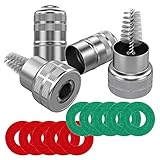
- Quantity: comes with 10 pieces battery anti-corrosion washers(5 red & 5 green) and 2pcs Battery Terminal Cleaning Brush.
- Features of Battery Terminal washers protector: the battery washers can prevent corrosion around the battery terminals, prolong battery life, for use with 6 and 12-volt battery,the color coded for positive and negative terminals, red for +, green for -
- Size of Battery Terminal washers protector: inner ring can be removed to fit larger terminals, outer ring diameter is approx. 44 mm/ 1.73 inch; Inner ring diameter is approx. 20 mm/ 0.79 inch; Diameter of inner ring after dismantling: approx. 30 mm/ 1.18 inch
- Battery Terminal Cleaning Brush-Stainless steel metal brush cleans corrosion build up on cables and batteries,Works on positive and negative battery posts, extenders, adapters, connectors, shims, and cable clamps.
- Battery Terminal Cleaning Brush-Strong metal construction with premium nickel plated housing,Cap covers brush for easy storage and locks closed - Pocket Sized Tool
Before disconnecting the battery
- Park safely, switch off the ignition and accessories, and follow the vehicle owner’s manual.
- Work outdoors or in a well-ventilated area.
- Wear chemical-resistant gloves, safety glasses or goggles, and clothing that covers exposed skin.
- Remove rings, watches, necklaces, and other metal jewelry.
- Keep cigarettes, flames, sparks, and loose metal tools away from the battery.
- Do not clean a battery that is cracked, bulging, hot, visibly wet with acid, or otherwise damaged. Have it handled or replaced by a qualified professional.
- Check the owner’s manual before disconnecting. Some vehicles may require a prescribed procedure because battery removal can affect immobilizers, power windows, transmission settings, alarms, or other electronics. A memory saver is not appropriate for every vehicle.
Workplace battery-safety guidance from OSHA emphasizes ventilation and open vent holes where applicable. The same principles are sensible for household vehicle work. Interstate’s battery safety manual also covers sulfuric-acid and charging hazards.
The Tool Desk
Outbyte PC Repair FREERepair Windows errors before they cause bigger problemsFix Now →Outbyte Driver Updater FREEScan for outdated or missing drivers - takes under a minuteDriver Scan →Automotive cleaning steps
- Disconnect the negative or ground cable first.
- Disconnect the positive cable second. Keep the disconnected positive cable from touching the battery or vehicle metal.
- Prepare the cleaner away from the battery. Mix one part baking soda with five parts water. A small amount of paste may be useful for a localized deposit.
- Brush away loose corrosion. Keep the residue away from your face and prevent it from falling into open electrical connectors.
- Apply the baking-soda mixture slowly. Treat the posts, clamps, and external residue. Foaming indicates a reaction with acidic material, but foaming alone does not prove that the battery case itself is leaking.
- Keep liquid out of vent caps, vent holes, connectors, and the battery interior. Never pour cleaner into a battery.
- Scrub the posts and cable clamps. Use a battery-terminal brush or small wire brush. Clean the battery tray and hold-down hardware if corrosion has spread there.
- Remove the residue carefully. Wipe it away or rinse in a controlled way after neutralizing and brushing. Do not flood the engine bay or allow contaminated runoff into soil, storm drains, or waterways.
- Dry everything thoroughly. Dry the posts, clamps, cables, tray, and hold-down hardware before reconnecting.
- Inspect for damage. Look for a cracked or bulging case, wet acid, badly eroded clamps, damaged cables, or a battery that is not securely held down. Cleaning cannot repair those problems.
- Reconnect the positive cable first.
- Reconnect the negative cable second.
- Test the battery and charging system. If corrosion returns, the engine cranks slowly, or electrical problems remain, have the battery, terminals, and alternator/charging system tested.
Interstate’s automotive procedure specifies the cable order and one-part-baking-soda-to-five-parts-water mixture. Do not substitute vinegar or a sugary soft drink for this procedure. Vinegar is the wrong primary cleaner for lead-acid terminal corrosion, and a drink can leave a sticky conductive residue.
Why car-battery corrosion keeps returning
Repeated corrosion can be associated with battery vapors, high temperatures, overcharging, a cracked case, a loose or poorly fitting connection, a failing battery, or a charging-system problem. Corrosion does not prove by itself that the battery is bad. Clean it once, inspect the hardware, and test both the battery and charging system. Interstate discusses recurring automotive corrosion and its causes.
Do not clean a swollen or leaking lithium battery yourself
A lithium battery that is hot, smoking, hissing, sparking, emitting a strong odor, or showing signs of thermal failure may present a fire or thermal-runaway hazard. Leave the area, keep people and flammable materials away, and call emergency services if there is an active or imminent fire hazard.
If the battery is damaged but not actively burning, avoid unnecessary handling and contact the manufacturer, retailer, local household-hazardous-waste program, or a specialized battery recycler for handling instructions. Place damaged batteries only where the receiving program directs; do not improvise a container or transport method for a hot, smoking, or severely damaged pack. EPA’s lithium-ion battery guidance explains why these batteries do not belong in household trash or curbside recycling.
Recommended Free Tools
What to do if battery residue touches your skin or eyes
- Skin: Immediately rinse with plenty of running water. Remove contaminated clothing while rinsing. Wash gently with soap and water afterward. Seek medical care if burning, pain, redness, or irritation continues.
- Eyes: Do not rub. Flush immediately with running water for at least 15 minutes while holding the eyelids open, then obtain urgent medical attention.
- Inhalation: Move to fresh air. Seek medical advice if coughing, breathing difficulty, or other symptoms occur.
- Swallowed residue or chemical: Do not induce vomiting. Call Poison Control or seek emergency care. If a battery itself was swallowed, treat that as an emergency and contact Poison Control immediately.
In the United States, call Poison Control at 1-800-222-1222. Call 911 for severe exposure, breathing difficulty, loss of vision, fire, smoke, or an imminent lithium-battery hazard. The CDC’s decontamination guidance, NIOSH first-aid procedures, and Energizer’s alkaline safety information support these precautions.
How to dispose of leaking batteries in the United States
Disposal rules can be stricter in some states and municipalities. Check your local solid-waste authority, household-hazardous-waste program, or battery collection site before disposal.
Rank #3

- 【WHAT YOU GET】: Included in the package are 2 battery terminal cleaning brushes and 10 battery terminal corrosion-resistant fiber washers (5 green and 5 red). We have thoughtfully designed different colors to help you distinguish between positive and negative, red for + and green for -.
- 【PROTECT YOUR BATTERY】: The stainless steel battery terminal cleaning brush effectively cleans corrosion, debris or other dirt from cables and batteries. Commonly used in positive and negative battery posts, extenders, adapters, connectors, shims, and cable clamps. It can effectively extend the life of your equipment.
- 【COMPACT SIZE】: Outer ring diameter is approximately 1.73 inches / 44mm. Inner ring diameter is approximately 0.79 inches / 20mm. Inner ring diameter after removal: approximately 1.18 inches / 30mm. The metal brush is also designed with a cover for easy storage and locking. It is very compact and can fit into any of your toolboxes.
- 【EASY TO USE】: You simply remove the cover of the metal brush, press and hold the battery terminal and turn and clean with the brush at the same time. The battery terminal cleaners will help your car start more easily and reduce battery consumption.
- 【WORRY FREE】: We are committed to creating a perfect product experience for our customers. If this product does not meet your expectations, please feel free to contact us, we will try the best to deal with till you satisfied.
| Battery type | General U.S. disposal guidance |
|---|---|
| Alkaline and zinc-carbon single-use batteries | EPA says these can generally go in household trash in many communities, but local collection or recycling may be available and local rules control. A leaking cell should be isolated and handled according to local guidance. |
| Lithium single-use batteries and lithium coin/button cells | Do not put them in household trash or curbside recycling. Use a battery recycler, participating retailer, or household-hazardous-waste program. For an intact spent cell, terminals may be taped or the cell individually bagged when the collection program directs it. |
| Rechargeable NiMH, NiCd, Ni-Zn, and other rechargeable batteries | Do not put them in household trash or curbside recycling. Use a suitable rechargeable-battery collection program. |
| Lead-acid automotive batteries | Return them to a battery retailer or household-hazardous-waste program. Do not put them in household trash or municipal recycling. |
Keep leaking batteries separate from metal objects. Panasonic advises using a bag for a leaking cell when taping the terminals is impractical. Do not tape over a swollen, hot, punctured, or otherwise damaged lithium battery unless the receiving program specifically instructs you how to do so. EPA’s used-household-battery guidance covers the main chemistry categories.
Why the device still does not work after cleaning
Cleaning removes residue; it does not restore metal that has been eaten away or repair a damaged circuit. Check these possibilities:
- The replacement batteries are dead, installed backward, or the wrong size or chemistry.
- A spring or contact is pitted, broken, missing, or no longer pressing firmly against the battery.
- Corrosion has reached the circuit board, wiring, battery-door switch, or solder joints.
- Cleaner or water remains trapped inside the device.
- A trace on the circuit board has been eaten through and requires board-level repair.
- The device was damaged before the corrosion was discovered.
On an expensive, sealed, waterproof, safety-critical, or heavily corroded device, professional repair is usually more sensible than adding more liquid. If the battery cannot be removed without force, stop the job rather than risking a puncture or short circuit.
Prevent battery corrosion
- Remove depleted batteries promptly.
- Remove batteries from devices that will be stored or unused for a long period.
- Install every battery with the polarity shown in the compartment.
- Do not mix old and new batteries, brands, charge levels, or chemistries.
- Do not recharge alkaline or zinc-carbon batteries.
- Store spare batteries in a cool, dry place away from direct sunlight.
- Keep loose batteries away from coins, keys, tools, and other batteries so their terminals cannot short.
- Inspect infrequently used flashlights, toys, calculators, cameras, smoke detectors, and tools periodically.
- For a calculator or similar device stored for three months or more, remove the batteries. Texas Instruments also advises avoiding storage temperatures above 45°C/113°F. See its battery-storage guidance.
- For vehicles, keep terminals clean and dry, make sure the battery is secured, and investigate corrosion that repeatedly returns instead of repeatedly scrubbing it.
Panasonic’s battery-use guidance and Duracell’s FAQ also recommend removing batteries from stored devices and avoiding mixed batteries.
Common mistakes to avoid
- Calling every leak battery acid: Alkaline leakage is alkaline, not acidic, while lead-acid batteries contain sulfuric acid.
- Using vinegar everywhere: Diluted vinegar is a reasonable treatment for confirmed alkaline residue and is also listed by Duracell for NiCd and NiMH leakage. It is not a universal battery cleaner.
- Using baking soda on an alkaline AA battery: Baking soda is the automotive lead-acid approach, not the primary neutralizer for alkaline residue.
- Pouring liquid into a remote or flashlight: Excess liquid can carry conductive residue into switches, boards, and wiring.
- Installing new batteries immediately: Residue left on contacts can continue corroding them.
- Forcing a stuck cell with a screwdriver: A metal tool can puncture the cell, short the device, or create a spark.
- Reusing a leaking battery: Dispose of it through the appropriate channel.
- Treating a swollen lithium pack like an alkaline AA: This can create a fire or thermal-runaway hazard.
- Assuming a clean contact guarantees a repair: Pitted contacts, eaten traces, and damaged solder joints may require replacement or repair.
- Replacing a car battery based only on corrosion: Have the battery and charging system tested instead of assuming corrosion alone proves failure.
Frequently asked questions
Is battery corrosion the same as battery acid?
No. White residue from a common alkaline battery usually comes from an alkaline potassium-hydroxide electrolyte and its reaction products. Zinc-carbon electrolyte is mildly acidic, while an automotive lead-acid battery contains sulfuric acid. “Battery corrosion” is a broad description, not a chemical identification.
Can I use vinegar to clean battery corrosion?
Use diluted vinegar or lemon juice only for confirmed alkaline residue, and apply it sparingly to accessible contacts. Duracell also lists this approach for NiCd and NiMH leakage. Do not use it as the default treatment for lead-acid terminals, lithium batteries, or unidentified residue.
Rank #4

- Widely Used: 4 in 1 Car Battery Cleaning Brush can quickly wash steel parts, machinery, paint stains and will not damage the of the item. This tool is suitable for maintaining car batteries, marine batteries and other similar components and can be used for rust removal and painting. Rotates and rubs back and forth by screwing into the pile head to achieve cleaning purposes
- Easy to Carry & Comfortable Handle Design: This cleaning brush is lightweight and mini,making it easy to store. This cleaning tool is ergonomically designed, design is easy to grip and save strength to use and will not damage the surface of machine parts. They can be placed anywhere and can be taken out when you need them and It won't take up space when not in use
- Multifunctional Washing: The 4 in 1 Car Battery Cleaning Brush has an overall length of 7.6 inches. The steel wire brush is 1.14 inches long, while the other brush is 1.22 inches long. Different brush sizes can target different areas. Using this 4 in 1 Car Battery Cleaning Brush can effectively remove rust and acid and alkali for steel parts, machinery, unprocessed metal parts, cleans debris from inside and outside pipes and threads in preparation for soldering and brazing
- Premium Material: Our 4 in 1 Car Battery Cleaning Brush the material of the brush part is selected from premium steel wire, handle section is made of Premium ABS and stainless steel. Strong and durable, not easily damaged during use, it is scratch and wear resistant to ensure the best durability, very easy to brighten the pipeline again
- Package includes: Each brush has 2 holes and brush heads at both ends,very easy to use.This product can be used to clean deposits and rust spots on cable,and can go deep inside the battery terminals to clean the rust stains inside.Terminals to ensure good conductive properties of the terminals and extend the service life of automotive cables. It is a very practical tool, you can use to make your life easier
Can I use baking soda on AA batteries?
Not as the primary neutralizer for an ordinary alkaline AA battery. Baking soda and water are intended for external corrosion on automotive lead-acid terminals. Identify the AA battery first and use the small-device procedure if it is alkaline.
Can I use Coca-Cola on a car battery?
It is not recommended. Use the controlled baking-soda-and-water method for external lead-acid terminal corrosion. A sugary drink can leave residue and does not replace inspection of the battery, cables, and charging system.
Is white battery powder dangerous?
It can irritate or chemically burn skin and eyes, even when dry. Wear gloves and eye protection, avoid breathing the dust, and keep children and pets away. The risk is different from a sulfuric-acid spill or a damaged lithium battery, but dry powder should still be handled cautiously.
What if the battery is stuck?
Remove loose residue, use only a small amount of chemistry-appropriate cleaner, and try gentle removal with a nonmetallic tool. Never drill, crush, puncture, or aggressively pry the cell. Stop if it is swollen, hot, damaged, or lithium, and use a repair professional if it will not come out safely.
Can I reuse a battery that leaked?
No. Remove it if safe, isolate it from metal objects, and dispose of it through the correct local program.
How long should a device dry before new batteries are installed?
Wait until the battery compartment and contacts are completely dry with no visible moisture. iFixit specifies two minutes after its isopropyl-alcohol step, but water that entered a device requires longer drying and may require professional disassembly.
Best Value

- 【Applicable】Alltooetools Battery terminal post cleaner wire brush used for removes dirt, debris and corrosion to restore electrical contact.Brushes are encased in a durable steel housing, stainless steel bristles withstand heavy use and resist flattening. Cone brush cleans for top and side terminals,and both battery positive (+) and negative (-) terminals. Inside brush cleans battery posts.
- 【Feature】Round Terminal Brush Overall dimensions: 3-1/4" L x 1-1/2" diameter. Handle Terminal Brush Overall dimensions: 7-3/4" L x 1-13/16" W x 1" H. Holes in handle for cleaning 7/8" and 5/8" outer diameter, brushes for cleaning 7/8" and 5/8" inner diameter.
- 【Suitable】Compatible with Alfa, compatible with Audi, compatible with Fiat, compatible with Ford, compatible with Nissan, compatible with GM(Vauxhall/Opel), compatible with Peugeot, compatible with Renault, compatible with Rover, compatible with VW, compatible with Porsche, any suitable car models etc.
Why does corrosion keep returning on my car battery?
Possible causes include battery vapors, high temperature, overcharging, a loose connection, a cracked case, a failing battery, or a charging-system problem. Clean and inspect the hardware, then test the battery and charging system.
Can I throw leaking batteries in the trash?
It depends on the chemistry and local rules. EPA generally allows alkaline and zinc-carbon batteries in household trash in many communities, but lithium, rechargeable, and lead-acid batteries should not go in household trash or curbside recycling. Leaking cells require extra isolation and local disposal guidance.
What should I do with a swollen lithium battery?
Do not clean, puncture, open, flex, charge, or tape over it. Keep people and flammable materials away, avoid unnecessary handling, and contact the manufacturer, retailer, household-hazardous-waste program, or a specialized battery recycler. Leave and call emergency services if it is hot, smoking, hissing, sparking, or burning.
Will cleaning corrosion restore a dead device?
Sometimes, if the residue was limited to the contacts. Cleaning will not repair pitted contacts, broken springs, eaten circuit traces, damaged switches, or corroded solder joints. If the device remains dead after installing correct batteries, inspect those parts or seek repair.
Frequently Asked Questions
Is battery corrosion the same as battery acid?
No. Alkaline battery leakage is alkaline, zinc-carbon leakage is mildly acidic, and automotive lead-acid batteries contain sulfuric acid. The battery chemistry must be identified before choosing a cleaner.
Can I use vinegar to clean battery corrosion?
Use diluted vinegar or lemon juice sparingly for confirmed alkaline residue, and follow the battery manufacturer’s guidance for NiCd or NiMH cells. Do not use it as a universal cleaner for car batteries, lithium batteries, or unidentified residue.
Do these 3 things before closing this tab:
1Fix the driver behind crashes, sound loss and screen glitches2Clear out junk files and repair common Windows errors3Scan for outdated or missing drivers - takes under a minuteWhat should I do with a swollen lithium battery?
Do not clean, puncture, open, flex, charge, or tape over it. Avoid unnecessary handling, keep people and flammable materials away, and contact the manufacturer, retailer, or local hazardous-waste or battery-recycling program. Call emergency services for heat, smoke, hissing, sparks, or fire.
Can cleaning corrosion save a device?
It can restore a device when residue is limited to accessible contacts. It cannot repair pitted contacts, broken springs, eaten circuit traces, corroded solder joints, or internal board damage.
The Bottom Line
Match the cleaner to the chemistry: diluted vinegar or lemon juice for confirmed alkaline household-battery residue; baking soda and water for external automotive lead-acid terminal corrosion; and no DIY cleaning for a damaged lithium battery. Use minimal liquid, wear protection, dry completely, inspect for permanent damage, and dispose of each battery through the correct U.S. collection or waste channel.
Quick Recap
Product prices and availability are accurate as of the date/time indicated and are subject to change. Any price and availability information displayed on Amazon at the time of purchase will apply.




