Do these 3 things before closing this tab:
1Clear out junk files and repair common Windows errors2Fix the driver behind crashes, sound loss and screen glitches3Repair Windows errors before they cause bigger problemsVinegar can help loosen mineral scale and residue in a humidifier, but it is not a universal disinfectant and should not be treated as a guarantee against bacteria. The safest method is to follow the humidifier’s owner’s manual, apply vinegar only to approved water-contacting parts, rinse everything thoroughly, and disinfect separately if the manufacturer requires it.
Because humidifiers hold standing water—and some models disperse that water or its minerals into the air—regular cleaning is essential. The procedure below is suitable only for a humidifier whose manufacturer permits vinegar on the relevant parts.
As an Amazon Associate I earn from qualifying purchases.
Before you begin: check the manual
Humidifiers differ substantially. An ultrasonic unit, evaporative humidifier, warm-mist model, and filtered portable unit may have different cleaning instructions, materials, filters, heating elements, and electrical components.
Quick wins for a faster PC:
Repair Windows errors before they cause bigger problemsFix Now →Fix the driver behind crashes, sound loss and screen glitchesFind Drivers →Find the brand and exact model number, then check the owner’s manual for:
#1 Best Overall
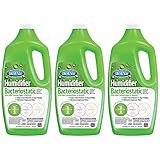
- For use in all evaporative type humidifiers
- Keeps water smelling fresh and clean - Add up to 2 teaspoons per gallon of water each time the humidifier is filled
- Whether Distilled white vinegar is approved for cleaning;
- Which parts may be soaked;
- Whether vinegar must be diluted and for how long;
- Whether a wick filter, demineralization cartridge, fragrance pad, or cassette must be removed;
- Whether the manufacturer specifies a separate disinfectant;
- Whether the tank, base, nebulizer, heating element, or other components can be rinsed or submerged.
Do not assume that instructions for one humidifier apply to another. For example, some Honeywell manuals say to remove wicking filters before cleaning and warn that vinegar can damage them, while other Honeywell and Vicks models permit vinegar on specified water-contacting parts. Crane also publishes vinegar-based procedures for compatible models. These are model-specific instructions, not a universal recipe.
Safety checklist
- Switch the humidifier off and unplug it. Never clean a running unit.
- Let a warm-mist or steam humidifier cool completely before opening or handling it.
- Empty the tank and base. Do not leave old water in the unit while preparing to clean it.
- Keep liquid away from electrical parts. Do not submerge the motor housing, fan assembly, controls, power cord, or electrical base unless the manual specifically says it is waterproof.
- Remove filters and accessories as directed. Wicking filters, cartridges, fragrance pads, and cassettes may need separate care or replacement.
- Never mix vinegar with bleach. If the manufacturer calls for both descaling and disinfection, perform them as separate procedures and rinse between them.
How to clean a compatible humidifier with vinegar
1. Disassemble only the approved parts
Remove the tank, cap, water tray, and other components according to the manual. Keep screws, seals, gaskets, and small parts together so they can be reinstalled correctly.
Recommended Free Tools
Take out any filter or cartridge that the manual says must not contact vinegar. Do not try to rescue a filter that has visible mold, a persistent sour or musty odor, severe mineral buildup, or an expired service life. Replace it with the exact part specified for the humidifier.
2. Apply vinegar only to water-contacting parts
Use ordinary distilled white vinegar if the manual permits it. Manufacturer procedures vary:
- Some Vicks models specify undiluted white vinegar with a soak of at least 20 minutes.
- Crane instructions for compatible models use warm water and white vinegar with a 30-minute soak.
- Some Honeywell manuals specify particular quantities, ranging from approximately 1 to 3 cups for certain units.
These examples demonstrate why the model manual comes first. Do not copy a 20-minute soak, a 30-minute soak, a vinegar-to-water ratio, or a stated quantity onto a different humidifier without checking its instructions.
Pour the approved vinegar solution into the tank or reservoir, or apply it to the approved part as directed. Do not pour vinegar into the humidifier and run the machine. Operating a humidifier with vinegar inside can send acidic liquid or vapor into the room and may damage components.
Free tools Windows power users keep installed
One-click scans. No signup required.
Rank #2
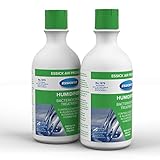
- Package Contents: Includes 2 bottles of 32-ounce bacteriostatic treatment solution for humidifier maintenance
- Optimal Humidifier Performance: Specially formulated treatment designed to work with Essick Air humidifiers for best results
- Bacteriostatic Formula: Helps prevent the growth of bacteria and algae in your humidifier water tank
- Extended Supply: 2-quart total capacity provides long-lasting treatment for multiple refills of your humidifier
- Easy Application: Simple to use treatment that helps maintain clean and fresh humidifier operation throughout the season
3. Let the solution loosen mineral scale
Leave the vinegar solution in place only for the time specified by the manufacturer. If no vinegar procedure is provided, do not assume that a homemade soak is safe for the materials. Contact the manufacturer or use the cleaning method stated in the manual.
Vinegar’s acidity can help loosen calcium and other mineral deposits, especially the white or chalky scale that develops when mineral-rich water evaporates. It may also help remove some residue and odor-causing buildup, but the result is not the same as sterilization or complete disinfection.
4. Remove loosened deposits gently
Empty the solution into a sink while keeping it away from electrical openings. Use a soft cloth, cotton swab, soft brush, or the tool supplied or recommended by the manufacturer.
A soft humidifier cleaning brush or small nylon brush can help reach corners, tank seams, caps, and narrow water channels. Scrub carefully rather than aggressively. Avoid steel wool, hard abrasive pads, knives, screwdrivers, and other sharp tools that can scratch plastic, damage a protective coating, or harm a nebulizer or heating element.
5. Rinse until no vinegar remains
Rinse the tank and every approved water-contacting part with several changes of clean water. Continue until the vinegar smell is gone and no visible residue remains.
This is not an optional finishing step. Any cleaning chemical left in the water path may become airborne when the humidifier operates. Pour rinse water away from electrical openings, and do not reinstall a part while it still contains cleaning solution.
6. Disinfect separately when required
Descaling and disinfection are different jobs. Vinegar can loosen mineral deposits, but it should not be described as a dependable treatment that eliminates all bacteria, mold, or other microorganisms in every humidifier.
Rank #3
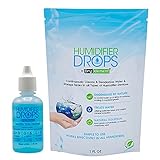
- THE ORIGINAL FORMULA: We are the first and the only true authentic humidifier treatment solution on the market. We thank our customers for their trust and support
- HEALTHIER HUMIDIFIERS: This advanced humidifier treatment from Dry Element is engineered to keep any humidifier in peak condition
- REDUCED CLEANING: These humidifier maintenance drops help prolong your humidifier's life and increase the time between cleaning cycles. Humidifier Drops work in all makes and models
- QUALITY FIRST: Combining over 10 years of expert research and development and proudly made right here in the USA to strict American standards
- LONG LASTING: In a convenient one ounce bottle, the bottle will on average last over 100 days
If the owner’s manual specifies a disinfectant, follow its exact product, concentration, contact time, application method, and rinsing instructions. Some Vicks and Honeywell instructions separate vinegar descaling from a later bleach-based disinfection step. Do not generalize those model-specific bleach instructions to another device.
The Tool Desk
Outbyte PC Repair FREERepair Windows errors before they cause bigger problemsFix Now →Outbyte Driver Updater FREEFix the driver behind crashes, sound loss and screen glitchesFind Drivers →Never mix bleach and vinegar. Use one procedure at a time, rinse thoroughly between them, and follow the manufacturer’s ventilation and handling directions.
If the manufacturer provides no specific disinfecting directions, the U.S. Environmental Protection Agency identifies a 3% hydrogen-peroxide solution for water-contacting surfaces as a general fallback. That does not override the owner’s manual, and it should not be applied to filters, electrical parts, or materials unless the device instructions allow it.
7. Air-dry before refilling
Leave removable parts open and allow them to air-dry completely. Reassemble the humidifier only after cleaning is finished and no chemical odor remains. Refill it with fresh water immediately before use rather than storing water in the tank.
How often should a humidifier be cleaned?
Use the manufacturer’s schedule when it is available. If the manual does not provide a clearer schedule, the following framework reflects EPA and CDC guidance:
| When | What to do |
|---|---|
| Every day | Empty standing water, wipe accessible surfaces dry, and refill with fresh water only if the unit will be used again. |
| At least every third day | Clean the portable humidifier, brushing away scale, deposits, and film. A heavily used unit or a unit in a warm room may need more frequent attention. |
| Weekly or as directed | Some manufacturers recommend weekly cleaning or separate weekly descaling and disinfection during periods of use. Follow the model-specific instructions. |
| Before seasonal storage | Empty, clean, rinse, and dry the unit completely. Store it in a dry location. Dispose of or replace filters, cartridges, and cassettes as directed, then clean the humidifier again before putting it back into service. |
Why a dirty humidifier can be a bacteria problem
Standing water gives microorganisms an opportunity to grow. Ultrasonic and impeller cool-mist humidifiers can disperse microorganisms and minerals from the tank into indoor air. Evaporative and steam models may disperse less of the tank’s contents, but they can still become contaminated if water sits in the reservoir or if filters and internal channels are neglected.
A dirty machine may release bacteria or mold into the air and can aggravate respiratory symptoms. Very young children, older adults, people with weakened immune systems, those with chronic lung disease, and people affected by respiratory allergies may be more vulnerable to some airborne or water-associated exposures.
If coughing, wheezing, irritation, or other respiratory symptoms seem connected to humidifier use, stop using the unit and contact a physician. Cleaning is important, but a clean humidifier cannot prevent every respiratory illness.
Rank #4

- Continuous cleaning: This humidifier water filter cartridge helps keep your humidifier cleaner longer
- Cleaner mist without the mess: Simply drop in this humidifier cleaner fish into your humidifier tank for fresher, cleaner mist
- Long lasting: This humidifier fish cartridge cleans for 30 days and works in most humidifiers, vaporizers, and steamers
- Gentle cleaning action: Free from harsh chemicals, this small humidifier fish cleaner is as gentle as water - for use in almost all personal humidifier tanks
- Humidifier Tank Cleaner: This tank cleaner for humidifiers helps control slimy surface buildup
Water choice can reduce scale and contamination
Low-mineral water reduces the deposits that vinegar later has to remove. The EPA identifies distilled water as the most effective of the commonly described water-treatment processes for removing minerals. The CDC also identifies distilled or boiled-and-cooled water as an option that can further reduce germ growth.
Use distilled water when it is compatible with the manufacturer’s instructions. Do not make an absolute rule that tap water is always unsafe: some humidifiers are designed for particular water types, and the manual controls the final recommendation. If the manufacturer permits it, distilled water is often a practical way to reduce white dust and mineral scale, particularly in ultrasonic units.
Keep indoor humidity under control
Cleaning the humidifier is only part of safe operation. EPA guidance advises keeping indoor relative humidity at or below 50%. A digital hygrometer can show whether the room is becoming too damp.
Condensation on windows, walls, furniture, or nearby surfaces is a warning sign. Reduce the humidifier’s output, lower its humidistat, move it away from the affected surface, improve ventilation, or use it less often. Excess moisture can encourage mold growth even when the humidifier itself has been cleaned.
Model-specific issues to watch for
Ultrasonic humidifiers
These units use a vibrating nebulizer to create a fine mist. Mineral deposits can collect on the nebulizer and may be dispersed with the mist if the unit is poorly maintained. Use only the cleaning method approved for the nebulizer and never scrape it with a sharp tool.
Crashes, No Sound, or Screen Glitches?
Random freezes, missing sound and display glitches usually trace back to one bad driver. Find and replace yours safely.Free scan · under a minuteWindows Errors? Fix Them Before They Spread
Repair common Windows errors and clear accumulated junk for a smoother, more stable PC - no reinstall needed.Free scan · no reinstallCool-mist impeller humidifiers
These models can disperse contaminated water into the room. Emptying the tank daily and cleaning the water path regularly is especially important. Do not operate the machine with vinegar, bleach, or another cleaning chemical in the tank.
Evaporative humidifiers
Evaporative models commonly use a wick or filter. The wick may not be vinegar-safe, and soaking it in an acidic solution can damage its structure or reduce its performance. Remove or replace it exactly as the manual directs.
Warm-mist and steam humidifiers
Allow the unit to cool before cleaning. Mineral scale may build up around a heating element, but the element and electrical base can be particularly easy to damage. Do not flood or submerge them unless the manufacturer explicitly permits that method.
Filtered and cartridge-equipped units
Demineralization cartridges, wicks, fragrance pads, and other accessories are not interchangeable with the tank or reservoir. A chemical that is acceptable for a plastic tank may damage a filter. Search for a replacement humidifier wick filter or cartridge using the exact brand and model number, and verify compatibility before ordering.
When should you replace the filter—or the humidifier?
Replace a filter, wick, or cartridge rather than attempting to clean it with vinegar when it is:
Best Value

- Extra Strength Treatment: Prolongs filter life and controls odors
- Prevents Lime & Scale Buildup: Keeps your humidifier clean and efficient
- Made in USA: Ensures quality and reliability
- Versatile Use: Compatible with all portable evaporative humidifiers
- Maximizes Humidity: Enhances the effectiveness of your humidifier and wick
- Visibly moldy or persistently discolored;
- Heavily encrusted with mineral deposits;
- Giving off an odor after cleaning;
- Damaged, misshapen, brittle, or past its recommended service interval;
- Unable to absorb or pass water properly.
Use an exact-model replacement. A filter that physically fits may still have the wrong material, dimensions, treatment, or airflow characteristics.
Consider replacing the humidifier itself if internal contamination cannot be reached, the water channels remain slimy or odorous after cleaning, the plastic is cracked, seals no longer hold, or the appliance repeatedly causes symptoms despite correct maintenance. Stop using a unit with damaged wiring, overheating, leaking near electrical components, or other electrical safety problems.
Common mistakes to avoid
- Using one vinegar ratio for every humidifier: manufacturer instructions vary.
- Calling vinegar a disinfectant: it is useful for scale removal but is not a universal bacteria-killing solution.
- Running the machine with vinegar inside: clean the parts while the unit is unplugged; never humidify cleaning chemicals.
- Soaking every filter: wicks and cartridges may be damaged by vinegar or bleach.
- Using abrasive or sharp tools: these can damage plastic, coatings, nebulizers, and heating elements.
- Skipping the rinse: chemical residue can become airborne during operation.
- Mixing vinegar and bleach: never combine them.
- Leaving water in the tank: standing water supports microbial growth.
- Over-humidifying the room: keep relative humidity no higher than 50% unless a qualified professional gives different advice for a specific medical or building circumstance.
A practical cleaning decision tree
- Does the manual permit vinegar? If yes, continue using its stated parts, dilution, and contact time. If no or unclear, use the manufacturer’s approved method instead.
- Is the part a filter or cartridge? Remove or replace it if the instructions prohibit chemical cleaning.
- Is the buildup mineral scale? Vinegar may be appropriate for approved hard surfaces.
- Is the concern microbial contamination? Follow the separate manufacturer-approved disinfection procedure. Do not rely on vinegar alone.
- Can you rinse the part completely and keep liquid away from electrical components? If not, do not use the vinegar procedure.
- Does the unit still smell, look contaminated, leak, or cause symptoms afterward? Stop using it, replace the affected consumable or appliance as appropriate, and seek medical advice for respiratory symptoms.
Frequently Asked Questions
Can vinegar kill bacteria in a humidifier?
Vinegar can help loosen mineral scale and residue, but it should not be presented as a universal disinfectant that eliminates all bacteria. Use the disinfecting product and procedure specified by the humidifier’s manufacturer, and rinse thoroughly afterward.
How long should vinegar sit in a humidifier?
There is no universal soak time. Examples in manufacturer instructions include at least 20 minutes for some Vicks models and 30 minutes for compatible Crane models, while some Honeywell manuals specify different quantities and procedures. Follow the exact instructions for your model.
Can I put vinegar in the humidifier and turn it on?
No. Do not run a humidifier with vinegar or another cleaning chemical in its tank. Apply vinegar only to approved parts while the unit is unplugged, then empty and rinse thoroughly.
Can I clean a humidifier filter with vinegar?
Not necessarily. Wicking filters and demineralization cartridges may be damaged by vinegar. Remove, clean, or replace them exactly as the manufacturer directs. A moldy, badly scaled, or persistently smelly filter generally should be replaced.
Is distilled water better for a humidifier?
When compatible with the owner’s manual, distilled water can reduce mineral deposits and mineral dispersal. The EPA identifies distilled water as the most effective of commonly described processes for removing minerals, while CDC guidance also discusses distilled or boiled-and-cooled water as a way to further reduce germ growth.
What’s actually slowing this PC down?
Pick the symptom - the matching free tool is one click away.
The Bottom Line
Use vinegar to descale only when your humidifier’s manual permits it. Unplug and cool the unit, remove filters that are not vinegar-safe, soak approved parts for the specified time, scrub gently, rinse until odor-free, and air-dry completely. Treat disinfection as a separate, manufacturer-directed step—and never mix vinegar with bleach.
Quick Recap
Product prices and availability are accurate as of the date/time indicated and are subject to change. Any price and availability information displayed on Amazon at the time of purchase will apply.