Some links on this page are affiliate links: if you buy through them we may earn a commission, at no extra cost to you.
Choose a light bulb in this order: confirm the fixture’s base, shape, and restrictions; set the light output in lumens; choose the color appearance in Kelvin; check color rendering (CRI); then verify dimmer and enclosed-fixture compatibility. For many homes, 2700–3000K is a useful starting point, but the best bulb depends on the room’s finishes, task, and your preferred atmosphere.
Start with the fixture, not the package
A beautiful bulb that does not fit, safely operate, or work with the controls is the wrong bulb. Before comparing color or efficiency, inspect the fixture and record what it requires.
As an Amazon Associate I earn from qualifying purchases.
Match the base
The base is the part that screws or plugs into the socket. Common household fixtures use screw bases, but the exact diameter and contact arrangement still matter. Remove the existing bulb, read its markings, and compare the replacement’s base designation with the fixture or the old lamp. Never force a bulb into a socket: a seemingly similar base can make poor electrical contact or damage the fitting.
Match the shape and envelope
Bulb shape determines whether the lamp clears a shade, sits behind a decorative glass, or fits inside a recessed housing. An A19-style replacement is a natural choice only when the fixture accepts that general form. Candle, globe, tubular, reflector, and vintage-style envelopes distribute light differently even when their lumen ratings are similar. Check the maximum bulb dimensions printed on the fixture or listed by its manufacturer, including length and diameter.
Popular on Amazon

- Energy-Saving Brilliance: The EVELOR A19 100 watt LED light bulbs consumes only 13W while delivering the same brightness as a 100W incandescent bulb, achieving up to 90% energy savings. It's the perfect upgrade from outdated, inefficient lighting.
- Vivid, Sunlight-Like Illumination: With 1500LM brightness and a CRI of 80+, this bright white bulb enhances color accuracy, making spaces appear more vibrant. The non-flicker 100 watt lamp light bulbs beads ensure steady brightness, while the 5000K daylight white light is ideal for areas where clarity and visibility matter.
- Reliable Non-Dimmable Lighting: Designed for consistent performance, these light bulbs 100w provide unwavering illumination-perfect for living rooms, bedrooms, garages, meetingroom, office,kitchen, bathroom, readingroom, study, basement and workspaces where stable light is essential.
- Long-Lasting Durability: Rated for 15,000+ hours, these A19 E26 ampoule LED bulbs reduce replacement frequency and maintenance costs, making them suitable for indoor, outdoor, and commercial use.
- Eye Comfort & Easy Installation: The no-flicker design ensures smooth, strain-free lighting, while the standard E26 base allows for quick installation. Enjoy a bright, steady glow that enhances any environment.
Check fixture restrictions
- Enclosed fixtures: Heat can affect some LED products’ performance and life. Use a bulb explicitly rated for fully enclosed fixtures when the lamp will be surrounded by glass or a sealed cover.
- Recessed downlights: Confirm the bulb or retrofit is approved for the particular housing and follow the manufacturer’s installation instructions.
- Damp or wet locations: A bathroom, porch, or other humid location may require a product marked for that environment. The fixture’s rating and local electrical requirements take priority.
- Clearances: Make sure the lamp does not touch fabric, paper, insulation, or another material that the fixture does not permit near the light source.
These checks eliminate incompatible choices before you spend time comparing brightness or color.
Set brightness in lumens
Brightness is measured in lumens, not watts. Watts describe electrical power; lumens describe the visible light produced. Once you know how much light the fixture and activity need, choose the lowest-wattage bulb that delivers that output among the suitable products.
Crashes, No Sound, or Screen Glitches?
Random freezes, missing sound and display glitches usually trace back to one bad driver. Find and replace yours safely.Free scan · under a minutePC Slower Than It Used to Be?
A free scan shows the junk files, broken settings and background clutter dragging Windows down - then fixes them in one click.Free scan · Windows 10 & 11Use replacement comparisons correctly
ENERGY STAR’s brightness guide gives these incandescent-replacement comparisons:
| Incandescent lamp being replaced | Approximate replacement output | How to use the figure |
|---|---|---|
| 40 watts | 450 lumens | A brightness comparison for replacement shopping |
| 60 watts | 800 lumens | A brightness comparison for replacement shopping |
| 75 watts | 1,100 lumens | A brightness comparison for replacement shopping |
| 100 watts | 1,600 lumens | A brightness comparison for replacement shopping |
| 150 watts | 2,600 lumens | A brightness comparison for replacement shopping |
These values are replacement equivalents from ENERGY STAR, not guarantees that a room will receive a particular amount of illumination. A frosted globe, a clear lamp, a shaded table lamp, and a recessed reflector can all produce different visual results at the same lumen rating because their optics and mounting positions differ.
Distinguish ambient, task, and accent light
Decide what the bulb is supposed to do before choosing its lumen output:
Also popular on Amazon

- 【Efficiency Meets Comfort】 Dalattin's A19 engergy saving LED bulbs replace 60W incandescents with just 9W while delivering full 800 lumens brightness, slashing energy usage by up to 85%. This eco-conscious choice not only saves you approximately $1.08 annually per bulb but also ensures a cooler operation,and enhancing safety. With a lifespan of up to 13.7 years (at 3 hours daily use), they provide a lasting, no worry experience.
- 【Enhanced Ambiance】 Boasting a high Color Rendering Index (CRI) of 80+, our bulbs bring out the truest hues in your surroundings, ensuring colors appear as vivid and accurate as in natural light. This makes them ideal for spaces where aesthetics matter, from art galleries to cozy living rooms, ensuring that every detail shines in its most authentic light.
- 【Eyes First, Safety Always】 Designed with eye care in mind, our non-flicker and non-dazzling technology reduces eye strain, promoting a healthier visual environment. No of lead, mercury, these bulbs prioritize user safety and environmental sustainability, making them suitable for households with children and pets, without compromising on the quality of light.
- 【Seamless Integration, Versatile Charm】 Universally fitting into E26 sockets, our bulbs effortlessly blend into any setting—be it residential, commercial, or hospitality. From bedrooms to cafes, they enrich spaces with their energy-efficient glow, adding a touch of sophistication without the need for special fixtures. Embrace the future of lighting with bulbs that seamlessly adapt and excel in every application.
- 【Long Lifespan & Dedicated Service】Last up to 7 years with typical 3-hour daily use, significantly outlasting traditional bulbs.
- Ambient light provides the room’s general illumination. Several moderate-output lamps may feel more comfortable than one very bright source.
- Task light supports reading, food preparation, grooming, sewing, or other close work. Place the light where it reaches the work surface without shining directly into the user’s eyes.
- Accent light highlights artwork, cabinetry, a textured wall, or an architectural feature. Beam shape and aiming can matter as much as total lumens.
The U.S. Department of Energy and Oak Ridge National Laboratory remodeling guidance presents broad output ranges per square foot and advises using the lower end for ambient lighting and the higher end for task and accent lighting. Treat that as a planning framework rather than a universal prescription: room proportions, surface reflectance, shade opacity, daylight, and the task itself all change the result. Older occupants may need more light for close work, so design the task layer around the person who will use it.
Account for shades and surfaces
Opaque shades, deep pendants, dark ceilings, and dark wall finishes absorb or block light. Pale, reflective surfaces spread more of the lamp’s output through the room. If a room still feels dim after installing a bulb with the expected lumen rating, inspect the shade and placement before simply escalating to an extremely bright lamp. Multiple sources at different heights often reduce glare and shadows more effectively.
Choose the color appearance in Kelvin
Kelvin (K) describes the bulb’s color appearance, not its brightness. Lower values look warmer and yellower; higher values look whiter or bluer. ENERGY STAR uses these orientation ranges:
| Color-temperature range | Visual description | Typical design use |
|---|---|---|
| 2200–3000K | Warm, incandescent-like light | Relaxed residential rooms, decorative fixtures, and spaces where warm finishes should feel inviting |
| 3500–4100K | Whiter, more neutral light | Focused household tasks and rooms where a cleaner appearance is wanted |
| 5000–6500K | Bluer white light | Situations where a distinctly cool appearance is intentional |
The DOE’s residential guidance says 2700–3000K will probably suit most uses. That is a starting point, not a rule. A warm lamp can make cream, wood, terracotta, and brass feel cohesive, while a neutral or cooler lamp may make a work surface feel more visually alert. The same paint, tile, or textile can look noticeably different under each range.
Keep adjacent fixtures consistent
Color differences are especially visible when lamps are in the same sightline. If a kitchen has several pendants, use the same Kelvin rating across them unless the contrast is deliberate. Check nearby ceiling lights, under-cabinet lamps, and daylight before choosing a new source. A single 3000K lamp among 2700K sources can look cooler even though both are considered warm.
Recommended Free Tools
Also popular on Amazon
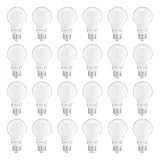
- LONG LASTING PERFORMANCE: These LED bulbs offer a 10,000 hour lifespan, providing lasting illumination for over 9 years (based on 3 hours of use each day), helping minimize replacements
- GREAT ATMOSPHERE: Enjoy daylight white light bulbs that create a bright, crisp atmosphere for any room
- STANDARD FIT: The E26 standard base provides compatibility with most fixtures, making it easy to install these LED bulbs in lamps and overhead lighting
Room-by-room starting points
An ENERGY STAR builder tip sheet from 2017 lists the following examples. It also notes that preferences are subjective, so use them as design starting points rather than standards:
| Room or area | Example Kelvin choices | How to refine the choice |
|---|---|---|
| Living room | 2700K or 3000K | Choose the warmer end for a cozier, layered residential feel; compare it with upholstery and wood tones. |
| Dining room | 2700K or 3000K | Coordinate with the dining fixture, wall color, and the appearance you want during evening meals. |
| Kitchen | 2700K, 3000K, or 3500K | Warm light can support adjoining living spaces; 3500K may provide a cleaner task appearance if it remains visually compatible with the room. |
| Utility and task spaces | 3000K or 3500K | Use the work being performed and the finish palette to decide whether neutral or warmer light is more comfortable. |
When a finish decision is important, buy or borrow one candidate bulb and view it in the actual room at the time of day you use the space. This practical check is more reliable than judging a color chip or a package photograph in isolation.
Evaluate color quality with CRI
Color temperature tells you whether light looks warm or cool; color rendering index (CRI) describes how accurately colors appear under that light compared with a reference source. The DOE recommends at least CRI 80 for interior lighting and considers CRI 90 or higher excellent color fidelity.
Choose CRI for the visual task
- CRI 80 or above: A sensible minimum for ordinary interior lighting when accurate color is not the main purpose.
- CRI 90 or above: Worth considering where upholstery, art, cosmetics, clothing, food, paint, or other finishes need to look especially faithful.
- R9 information: CRI has limitations, particularly with saturated reds. If red fabrics, wood undertones, artwork, or food presentation matter, look for a supplemental R9 value or a manufacturer’s fuller color-rendering data rather than relying on the headline CRI alone.
CRI and Kelvin answer different questions. A 2700K bulb with a high CRI can show colors more faithfully than a lower-quality 2700K bulb, but both will still look warm. Do not substitute a higher CRI for the color appearance you want.
Verify dimming and control compatibility
A bulb marked “dimmable” is not automatically compatible with every dimmer. Check the bulb’s instructions and the installed dimmer’s compatibility list before purchase. DOE guidance notes that LEDs generally dim better than compact fluorescent lamps, but compatibility still needs to be confirmed. ENERGY STAR’s downlight guidance likewise directs shoppers to the relevant manufacturer recommendations.
Also popular on Amazon

- 【Energy Efficiency】: EVELOR A19 LED light bulb is an energy-saving 9W (60W equivalent) bulb, saving up to 90% energy compared to traditional incandescent light bulbs 60 watt. The led lamp bulb is designed to be highly efficient, making it an ideal replacement for old-fashioned bulbs.Gift options for Christmas and other festivals.
- 【High Brightness & Excellent Light】: With 800LM and a high CRI 80+ (color rendering index), the light it gives out is close to the sun's value, making colors in your room appear richer, true and natural. Also, it has No flicker LED beads for enhanced brightness. This makes the light bulbs 60 watt daylight white 5000K light bulbs a perfect fit for any room where accurate color perception is important.
- 【Non Dimmable Feature】: The A19 E26 LED lightbulbs is Non Dimmable, providing a consistent level of illumination. This is especially useful in areas where a steady light source is required, such as in hallways or stairways. Daylight white light bulb gives a reliable and unchanging light output, different from some dimmable bulbs.
- 【Long Lifespan】: Type a 60w LED light bulbs a long lifespan of 15000+ hours, which means fewer replacements and less hassle. Whether used indoors in living rooms, bedrooms, kitchens, bathrooms, dining rooms, entryways or outdoors in gardens, garages, porches, patios, or in commercial settings like offices, hotels, bars, coffee shops, restaurants, etc., this led light bulb can last for a long time, reducing maintenance costs.
- 【No Flicker & Stable Performance】: NO Flicker design ensures a stable and comfortable light output, providing a better visual experience and protecting your eyes. It operates at 110 - 130VAC and has an E26 Medium base for easy installation. The daylight white light bulbs offer a smooth and steady glow, enhancing the overall lighting effect of any space.
Check the complete control setup
- Identify the dimmer type and, if possible, its model number.
- Read the bulb’s package or specification sheet for dimmable status and the approved dimmer list.
- Confirm the number and type of lamps on the circuit; some dimmers have minimum-load requirements.
- Install one bulb first and test the full range from low to high before replacing every lamp.
- If the lamp flickers, buzzes, drops out at low settings, or will not reach full output, stop using that combination and consult the bulb or dimmer manufacturer.
Do not assume a standard wall switch can be replaced with a dimmer without checking the circuit, the fixture, and local electrical requirements. If rewiring is needed, use a qualified electrician.
Compare wattage only after the light output is right
Once you have narrowed the choice by fit, lumens, Kelvin, CRI, controls, and fixture rating, compare wattage among the remaining bulbs. Select the lower electrical draw when the products provide the light quality and compatibility you need. A low-wattage bulb that is too dim, the wrong color, or unsuitable for an enclosed fixture is not an efficient solution; it is a poor match that may be replaced again.
Independent reader supportYour contribution helps us test, update, and keep practical guides available for everyone.A practical buying workflow
Use this sequence when shopping for a replacement or planning a new decorative installation:
What’s actually slowing this PC down?
Pick the symptom - the matching free tool is one click away.
- Photograph the old bulb and socket. Capture the base marking, shape, wattage, and any warning label on the fixture.
- Write down the fixture constraints. Note enclosure, damp-location, recessed-housing, size, and maximum-wattage requirements.
- Define the job. Label the lamp ambient, task, accent, or a combination.
- Set a lumen target. Use the existing lamp and ENERGY STAR replacement comparisons as a starting point, then adjust for shade opacity, mounting height, and the task.
- Choose Kelvin. Start around 2700–3000K for many residential applications, then move warmer or cooler to suit finishes and preference.
- Set the CRI threshold. Use 80 or higher for general interiors and consider 90 or higher, plus R9 information, for color-critical spaces.
- Check controls. Confirm dimmable status and dimmer compatibility before ordering multiple lamps.
- Confirm special ratings. Verify enclosed-fixture, damp-location, or downlight suitability where applicable.
- Compare wattage and warranty terms. Among otherwise suitable products, prefer the lower draw and retain the specification sheet for future replacements.
- Test in place. View the lamp with the shade installed and the room’s normal finishes and neighboring lights present.
Common mistakes and how to correct them
Using watts as a brightness target
Symptom: The package says “60-watt replacement,” but the room still feels wrong. Correction: Compare the actual lumen rating, then consider shade losses, beam direction, and whether the fixture is intended for ambient or task light.
Choosing Kelvin from a chart alone
Symptom: A theoretically suitable bulb makes paint or fabric look unpleasant. Correction: Keep the Kelvin choice within the intended range, but test the actual lamp against the room’s finishes and adjacent fixtures.
Also popular on Amazon

- Technical Features: 24 Packs, A19 Daylight LED bulbs, 8.5 watts, 800 lumens, daylight 5000k, light bulbs 60 watt equivalent, E26 base, non-dimmable, frosted, AC-120V, CRI 80, beam angle 230°, turn on instantly
- Energy Saving and Long-lasting: Save up to 80 on energy costs by replacing 60W with just 8.5W
- Direct Replacement: Perfect replacement for incandescent light bulbs. No breakable parts and are free of toxic chemicals, they are safe for your family and the environment
- Eye-care and Comfortable: Flicker-free and non-dazzling led bulbs protect your eyes while ensuring a healthy environment. No lead or mercury, no IR radiation
- High Brightness and CRI 80+: Designed with the advance LED source technology, 60w LED light bulbs to emit with a full 800 lumens of brightness. With high CRI 80+, the A19 standard light bulbs 60 watts will provide you natural and brilliant realistic colors
Ignoring CRI in finish-heavy rooms
Symptom: Reds, skin tones, food, or textiles look dull or shifted. Correction: Move to a bulb with CRI 90 or higher and inspect any available R9 information.
Installing a non-enclosed-rated LED in a sealed fixture
Symptom: The lamp runs hot, loses output, or fails earlier than expected. Correction: Replace it with a product explicitly rated for fully enclosed fixtures and follow the fixture maker’s instructions.
Free tools Windows power users keep installed
One-click scans. No signup required.
Mixing color temperatures unintentionally
Symptom: One pendant or ceiling lamp looks blue, yellow, or gray beside the others. Correction: Match Kelvin ratings within the same visual group, or make the contrast intentional and limited to a defined layer.
Assuming “dimmable” means universal compatibility
Symptom: Flicker, buzzing, drop-out, or a narrow dimming range. Correction: Check the exact dimmer and bulb compatibility information, test the circuit with one lamp, and replace the incompatible component rather than forcing the combination.
How to specify bulbs for a decorating project
For a renovation or furnishing schedule, record the complete specification instead of writing only “LED bulb.” A useful line item includes the fixture location, base, shape, lumen output, Kelvin rating, minimum CRI, dimmable status, dimmer compatibility, and any enclosed- or damp-location requirement. This prevents substitutions that technically fit but change the room’s appearance.
For example, an A19-style fixture might be specified as: screw base to match the existing socket; approximately 800 lumens when replacing a 60-watt incandescent; 2700K or 3000K; CRI 80 minimum or 90 preferred for a color-critical room; dimmable only with the listed control; and enclosed-fixture rated if the shade seals the lamp. The exact product still has to be checked against the fixture and manufacturer documentation.
The Tool Desk
Outbyte Driver Updater FREEScan for outdated or missing drivers - takes under a minuteDriver Scan →Outbyte PC Repair FREERepair Windows errors before they cause bigger problemsFix Now →When a different solution is better
A replaceable bulb is convenient when the fixture accepts standard lamps and you want future flexibility. An integrated LED fixture may be appropriate when the housing, optics, and controls are designed as one system, but it also means the light source is tied to that fixture’s specifications and replacement path. For either approach, judge the complete installation by fit, lumen output, Kelvin, CRI, control behavior, heat management, and maintainability—not by wattage alone.
If you are changing sockets, adding circuits, altering recessed housings, or working in a damp location, treat the bulb choice as part of the electrical design and follow applicable local code. A decorator can define the visual brief; a qualified electrician should handle work that changes wiring or protection.
Quick Recap
Product prices and availability are accurate as of the date/time indicated and are subject to change. Any price and availability information displayed on Amazon at the time of purchase will apply.

