What’s actually slowing this PC down?
Pick the symptom - the matching free tool is one click away.
Choose cement from the approved project specification first, then confirm that it suits the structure’s exposure and has current UAE conformity documentation. Ordinary Portland cement (OPC) is the usual general-purpose starting point when the specification permits it. Moderate- or high-sulfate-resistant cement is appropriate only when the project’s exposure assessment and design require it. Before ordering, match the exact product designation, governing standard, certificate status, technical data sheet and delivery documents to the approved submittal.
1. Let the approved specification govern the choice
A cement bag labelled “Portland” is not enough information for a structural project. The engineer’s specification and approved mix design should establish the cement family, governing standard and edition, strength class or type, exposure requirements, supplementary-material limits and any authority conditions. If supplier literature conflicts with the contract documents, stop the purchase and obtain a written decision from the engineer of record and the approving authority.
As an Amazon Associate I earn from qualifying purchases.
Dubai Municipality publishes certification routes for cement under both BS EN 197-1 and ASTM C150. Its rules are a conformity framework; they do not replace the project specification, site investigation, mix design or approval process. Check the controlled municipal documents and the applicable project edition before relying on an older tender clause.
Quick wins for a faster PC:
Scan for outdated or missing drivers - takes under a minuteDriver Scan →Clear out junk files and repair common Windows errorsFree Scan →For procurement, write the requirement as a complete designation rather than a generic name. A request such as “sulfate-resistant cement” can cover products classified differently under different standards. The purchase description should state the required standard, edition, cement type, strength class, resistance designation and any low-alkali or supplementary-material requirement.
#1 Best Overall
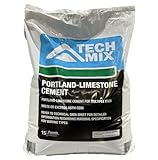
- MULTIPURPOSE: Basic building material for crafts, pavement, sidewalks, reinforced concrete buildings, masonry units, and more
- MIX AND USE: Use to create concrete, mortar, and stucco mixes
- GREAT FOR DIY PROJECTS: Ideal for small crafts with forms and silicone molds
- HIGH STRENGTH: Solid once dry, dry in 48 hours
- LESS IS MORE: One bag yields approximately .16 cu. ft.
2. Match cement to exposure and performance
The UAE location alone does not tell you whether a site has sulfate exposure, chloride exposure or another aggressive condition. Use the geotechnical report, groundwater information, marine or wastewater design requirements and the project exposure classification. Manufacturer descriptions provide useful starting points, but the project team must establish the actual exposure.
Ordinary Portland cement (OPC)
OPC is the general-purpose baseline where the approved design allows it. Cemex UAE states that “Ordinary Portland Cement are the most widely specified in the UAE” on its product page. National Cement describes its OPC as a general-purpose cement for residential, commercial and infrastructure work. The manufacturers list concrete, mortar, render, precast units, blocks, pipes and tiles among typical uses. Those descriptions indicate common applications, not automatic approval for every environment or mix.
Moderate sulfate-resistant cement
Moderate sulfate-resistant products are intended for conditions classified as moderate sulfate exposure. Confirm the exact classification and standard because abbreviations and product names differ between producers and standards. The project specification should identify the required resistance level; do not upgrade or downgrade it solely because a supplier uses a similar-sounding label.
Recommended Free Tools
High sulfate-resistant cement
High sulfate-resistant cement is specified where concrete may encounter higher sulfate concentrations or other aggressive conditions identified by the project. UAE product information cites sulfate-bearing soils or groundwater, foundations, marine structures and wastewater or sewage facilities as possible applications. These are examples of exposure contexts, not a blanket rule that every foundation or coastal project requires the same cement.
Ground granulated blast-furnace slag (GGBS)
GGBS is a supplementary cementitious material rather than a simple substitute selected at the site gate. National Cement associates it with enhanced durability, reduced heat of hydration and improved chemical resistance. Its percentage, cement combination, curing regime and strength development must follow the approved mix design and project requirements. Obtain approval before changing the binder composition.
| Category | Role described by UAE sources | Decision point |
|---|---|---|
| OPC | General-purpose cement for concrete, mortar, render, precast, blocks, pipes, tiles and broad construction uses. | Use only when the design and exposure specification permit a general-purpose cement. |
| Moderate sulfate-resistant cement | For moderate sulfate exposure. | Confirm the exact classification, standard and project acceptance. |
| Sulfate-resistant cement | For higher sulfate conditions; product sheets mention marine, wastewater, sewage, sulfate-bearing soil and groundwater applications. | Match the exposure class and required designation; do not assume products with similar names are interchangeable. |
| GGBS | Supplementary material associated with durability, lower heat of hydration and chemical resistance. | Treat as a mix-design and approval decision, not an informal site substitution. |
The descriptions in this table come from manufacturer materials and municipal certification documents. They are not an independent performance ranking or a UAE-wide prescriptive rule.
3. Understand the UAE standards and designations
Dubai Municipality’s certification documents cover common cement under BS EN 197-1 and Portland cement under ASTM C150/C150M. The BS EN document reviewed is titled for BS EN 197-1:2011 and carries a February 2019 document basis; the ASTM rules reviewed refer to ASTM C150/C150M-21 and show approval dated 7 November 2021. Standards and municipal documents can be revised, so verify the controlled version applicable when the submittal is made.
PC Slower Than It Used to Be?
A free scan shows the junk files, broken settings and background clutter dragging Windows down - then fixes them in one click.Free scan · Windows 10 & 11Outdated Drivers Are Slowing You Down
One free scan finds every outdated or missing driver and matches the right update for your exact hardware.Free scan · exact hardware matchUnder BS EN terminology, a designation can communicate several attributes at once. One National Cement sulfate-resisting product sheet identifies CEM I 42.5 R LA SR 3 and states compliance with BS EN 197-1:2011 and ASTM C150 Type V-2020. In practical terms, the designation conveys a cement family, strength class, early-strength category, low-alkali claim and sulfate-resisting category. It is a product-specific claim, not evidence that every cement carrying a similar trade name is equivalent.
Rank #2

- WHITE PORTLAND CEMENT FOR SWIMMING POOL REPAIRS AND MOLD CASTING
- TYPE 1 CEMENT FOR CONCRETE PROJECTS
- USE TO MAKE COLORED CONCRETE AND GROUT
- USE IN ALL CONCRETE MIXTURES FOR POURING MOLDS
- MIX WITH SAND AND GRAVEL TO MAKE CONCRETE
ASTM Type V and a BS EN sulfate-resisting designation should not be treated as interchangeable without the engineer’s acceptance. Ask the supplier to identify the exact standard, edition and test evidence behind the designation, then compare it with the contract requirement.
4. A step-by-step selection workflow
-
Extract the requirement from the design documents
Record the specified cement family, standard and edition, strength class or ASTM type, sulfate or other exposure class, supplementary-material limits, required tests and authority approvals. Note whether the requirement applies to all concrete, only substructure concrete, or a particular element.
-
Establish the actual exposure
Review the geotechnical and groundwater reports, durability calculations, marine or wastewater service conditions and any exposure classification in the drawings or specifications. If data are missing or contradictory, obtain clarification; do not infer exposure from the emirate, distance from the coast or a generic “aggressive soil” comment.
Do these 3 things before closing this tab:
1Repair Windows errors before they cause bigger problems2Scan for outdated or missing drivers - takes under a minute3Clear out junk files and repair common Windows errorsSpecial offer. See more information about Outbyte and uninstall instructions. Please review EULA and Privacy policy. -
Build a compliant shortlist
Start with OPC for ordinary exposure if permitted. Move to a moderate- or high-sulfate-resistant product only when the specified exposure requires it. Consider GGBS or another supplementary material only through the approved mix design. List the exact designation for each candidate, not just the marketing name.
-
Check conformity before comparing price
Request the current technical data sheet, conformity certificate or Dubai Municipality listing, manufacturer test or shipment certificate where required, declared standard and edition, strength class, resistance classification, production location and batch-identification method. Use the Dubai Municipality certified-products registry as a current cross-check. The registry contains manufacturer, standard and status or validity information and can change between procurement stages.
-
Confirm that the offered designation matches the submittal
Compare the wording on the purchase order, certificate, bag or bulk-delivery ticket and test report. A substitution from one standard to another, or from one sulfate-resistance class to another, requires formal technical acceptance. Do not accept a product because its strength number looks similar.
-
Check mix compatibility and intended use
Give the proposed data sheet to the mix designer. Confirm compatibility with aggregates, admixtures, curing method, required slump, temperature controls, heat-of-hydration limits and strength-age requirements. A cement suitable for mortar or blocks is not automatically suitable for the structural concrete mix under review.
Free tools Windows power users keep installed
One-click scans. No signup required.
Special offer. See more information about Outbyte and uninstall instructions. Please review EULA and Privacy policy. -
Compare supply reliability
Evaluate bulk or bagged delivery, production-batch consistency, lead time, minimum order, silo or warehouse capacity, traceability and contingency supply. Cemex notes that cement properties can vary by manufacturer and production batch; require current shipment documentation rather than relying on an old sample or brochure.
Rank #3
 Quikrete Concrete Mix Bag 10 Lbs.
- Quikrete Concrete Mix Bag 10 Lbs.
-
Submit and obtain approval
Assemble the data sheet, certificates, registry evidence, proposed mix information, source details and handling plan in the project submittal. Do not place a bulk order for structural work until the engineer and relevant authority have accepted the exact product.
5. What to request in a cement technical submittal
- Exact product name and designation: Include the standard, edition, cement family, strength class or ASTM type and sulfate-resistance category.
- Current conformity evidence: Provide the applicable certificate or registry entry and check its status or validity at procurement time.
- Technical data sheet: Use the current revision, including declared performance, test methods, storage limits and manufacturer contact details.
- Batch and shipment records: Ensure the delivery can be traced to a production batch and that the documentation matches the approved source.
- Mix-design statement: Identify the cement or cement combination used in the approved trial mix, including any GGBS proportion.
- Supply and logistics plan: State whether deliveries are bulk or bagged, how silos or pallets will be protected, and how rejected or wet material will be isolated.
- Change-control commitment: Require notification and approval before changing plant, product designation, source or supplementary-material proportion.
6. Choosing for common UAE project situations
General building concrete
For ordinary reinforced-concrete work with no specified sulfate or aggressive exposure, OPC may be the starting option. Confirm the required strength class, durability provisions and approved mix before ordering. “General-purpose” does not waive requirements for curing, water-cement ratio, temperature control or testing.
Foundations in sulfate-bearing soil or groundwater
Use the geotechnical and groundwater results to establish the sulfate exposure. If the specification calls for high sulfate resistance, shortlist products carrying the required designation and conformity evidence. Do not select a high-resistance product solely because the project has foundations; the exposure classification and design govern.
Marine or coastal structures
Marine exposure can involve several durability mechanisms. A National Cement technical sheet describes its sulfate-resisting Portland cement as intended for marine construction, while other durability requirements may also apply. Use the project’s exposure classification and durability design to determine whether sulfate resistance, supplementary materials, chloride controls or a combination is required.
Wastewater and sewage facilities
Manufacturer materials cite wastewater and sewage environments as potential uses for sulfate-resistant cement. Confirm the chemical exposure, service conditions and specified resistance level with the designer. Process chemistry, abrasion, permeability and curing requirements may be as important as the cement label.
Precast units, blocks, mortar and render
OPC product pages list precast units, blocks, pipes, tiles, mortar and render among common uses. Match the cement to the product standard, moulding process, release schedule, finish and required early strength. A cement accepted for one factory product is not automatically approved for structural concrete elsewhere on the project.
7. Storage, handling and site acceptance
Dubai Central Laboratory’s ASTM certification rules state that cement should be stored in a weather-tight building that protects it from dampness and allows shipment inspection and identification. National Cement advises protecting bulk cement from damp air and keeping bagged cement unopened, elevated and under dry, covered conditions.
At delivery, inspect the seal, batch or lot identification, packaging condition and documentation before unloading. Keep bags off the floor on pallets, protect them from rain and condensation, and use stock in a controlled first-in, first-out sequence. Keep bulk silos closed against humid air and verify that the silo is clean and correctly identified before transfer.
Rank #4

- 🏘️Great Value Masonry Tools: Includes 3 pcs grout bag + 1 pcs brick jointer + 1 pcs tuck pointers. The grout bag set is well suited for fitting-out works such as grouting, masonry and tile juncture, caulking, projects of stone bricks or floor tiles, mortar and cement, etc.
- 🏘️ Professional Tuck-Pointing Tools: Whether you're a professional mason or a DIY enthusiast, use Tahikem brand tile tile bag to fill with grout to get the job done quickly and protect your hands from dirty mess and other harsh substances. Brick jointer can make a professional finish to joints between bricks, and tuck pointers help tuck mortar between bricks and blocks.
- 🏘️ How to Use: Soak the grout bags masonry in water for 5 minutes before use, which can make your grouting process smoother, and then you can start working. You will find that you have never used such a useful grouting mortar tool.
- 🏘️ Easy to Clean Up and Money-saving: Designed for easy-cleaned and convenient for application of grouting. The concrete grout bag can be cleaned and is reusable depending on the material of application. As a decorator, the Tahikem brand mortar bag will save you a massive expense on materials. Tip: it is recommended to use warm water to clean the grout bag.
- 🏘️ High-Quality Material: Masonry bags are made from heavy duty canvas with heat sealed seam and waterproof vinyl. This PVC canvas is tear and puncture resistant so you can do your work without unnecessary interruptions. this mortar piping bags with molded in tip is designed to help you carry out your tasks efficiently, it can be applied as an applicator for a variety of materials such as cement, grout, mortar, and concrete.
Quarantine bags that are torn, hardened, contaminated or missing traceability. For bulk material, isolate a questionable load and notify the supplier and engineer rather than blending it into an approved silo. Follow the delivered product’s current handling instructions if they are stricter than the general site procedure.
Independent reader supportYour contribution helps us test, update, and keep practical guides available for everyone.8. Common selection mistakes and how to prevent them
Choosing by colour, brand name or bag size
Appearance and packaging do not establish strength class, sulfate resistance or conformity. Require the designation and certificate for the exact product.
Assuming every UAE site has the same exposure
Soil, groundwater, marine conditions and industrial or wastewater service vary by location. Use project data, not geography alone.
Equating similar labels across standards
OPC, Type V, SRPC and other abbreviations can describe different classification systems. Compare the full designation and standard, then obtain engineer approval for equivalence.
Using an old certificate or data sheet
Certificates, registry status, product formulations and document revisions can change. Check the municipal registry and request current manufacturer documents at the time of purchase.
Changing cement after the trial mix
A different source or supplementary-material proportion can alter setting, heat, workability and strength development. Treat every change as a mix-design and submittal change.
Ignoring moisture during storage
Humidity can damage cement before batching. Weather-tight storage, elevated bags, closed silos and batch traceability are basic acceptance controls.
9. Comparing two compliant products
When multiple products satisfy the specification, compare them on the axes that affect project risk rather than on unit price alone.
Best Value
- WHITE PORTLAND CEMENT FOR MOLD CASTING
- TYPE 1 CEMENT FOR CONCRETE
- USE TO MAKE COLORED CONCRETE AND GROUT
- USE IN ALL CONCRETE MIXTURES FOR POURING MOLDS
- MIX WITH SAND AND GRAVEL TO MAKE CONCRETE
| Comparison axis | Questions to ask |
|---|---|
| Conformity | Is the exact designation listed or certified under the required standard and current edition? |
| Exposure fit | Does the declared resistance match the project’s classified exposure? |
| Strength and performance | Do current test results and the approved mix demonstrate the required performance at the specified ages? |
| Application | Has the product been assessed for the concrete, mortar, render, precast or block process in which it will be used? |
| Consistency | Can the supplier provide batch certificates, stable production and notification of source changes? |
| Logistics | Can the supplier deliver the required quantity, packaging and lead time with protected storage on site? |
Only compare price after each candidate passes the technical and conformity checks. A cheaper non-compliant or poorly documented product can create rejection, rework and delay costs.
10. Procurement guidance for UAE projects
For structural or bulk procurement, use project-approved suppliers and technical submittals rather than a generic retail listing. The Dubai Municipality registry can help identify manufacturers and applicable standards, but it is a point-in-time reference; verify the entry again when the purchase is placed.
Bagged cement can be practical for small, non-structural repairs when a specification-appropriate product is verified. Retail availability does not prove engineering suitability, certification status or compatibility with a structural mix. For foundations, frames, slabs, marine work or other major elements, procure through the approved project supply chain.
The Tool Desk
Outbyte Driver Updater FREEScan for outdated or missing drivers - takes under a minuteDriver Scan →Outbyte PC Repair FREERepair Windows errors before they cause bigger problemsFix Now →Include delivery documentation, storage responsibility, rejected-load procedures and change notification in the purchase order. Keep the approved data sheet and certificates with the concrete quality records so each load can be traced to the accepted product.
11. A practical decision example
Example A: ordinary interior building frame
The specification permits a general-purpose cement, the exposure classification is ordinary, and the approved mix uses OPC. Shortlist OPC products that meet the specified standard and strength class, verify current certification and batch documentation, then submit the selected source and mix evidence. Do not substitute a sulfate-resistant product without checking whether the change affects the approved mix or cost.
Example B: foundation with documented moderate sulfate exposure
The site investigation classifies sulfate exposure as moderate and the specification calls for a moderate sulfate-resistant category. Request products carrying that exact classification, compare their standards and certificates, and have the mix designer confirm setting, strength development and admixture compatibility. A high-sulfate label is not a substitute for the specified class unless the engineer approves it.
Example C: marine or wastewater structure
The design identifies aggressive exposure and specifies a high sulfate-resistant cement or a binder system containing supplementary material. Obtain the exact designation, current technical sheet, conformity evidence and approved durability mix. Confirm that curing, permeability, chloride controls and other durability requirements are addressed; cement selection is one part of the system.
Quick Recap
12. Source documents to keep with the project file
- Dubai Municipality: List of Certified Products Under the Factory Assessment Scheme.
- Dubai Central Laboratory: Specific Rules for Certification of Common Cement Products as per BS EN 197-1:2011.
- Dubai Central Laboratory: Specific Rules for Certification of Portland Cement Products as per ASTM C150/C150M-21.
- National Cement Company: Products and Services.
- Cemex UAE: Ordinary Portland Cement and Cement.
- National Cement Company: Sulfate Resisting Portland Cement technical data sheet.
- Gulf Cement Company: High Sulfate Resistant Portland Cement technical data sheet.
Product prices and availability are accurate as of the date/time indicated and are subject to change. Any price and availability information displayed on Amazon at the time of purchase will apply.

