The legitimate course is the one that matches your construction role, leads to the qualification or test your employer or card application actually requires, and comes from a provider and trainer you can verify. Start with the outcome—not a provider’s “CSCS course” wording. For a CSCS card, identify the exact card and occupation in the official CSCS Card Finder, confirm the accepted qualification, then use the Ofqual register to check where that qualification can be taken. Treat the qualification, any training course and the CITB Health, Safety and Environment (HS&E) test as separate things.
What makes a construction health and safety course legitimate?
Legitimacy is not established by a logo, a short completion time or a claim that a course is “CSCS approved”. A sound choice has four connected parts:

As an Amazon Associate I earn from qualifying purchases.
- A defined work need: the subjects and hazards match the job you will perform.
- A defined outcome: you know whether you are gaining practical training, a regulated qualification, a test pass, or more than one of these.
- Verifiable recognition: the qualification is accepted for the intended CSCS card or employer requirement.
- Traceable delivery: the provider, awarding organisation, trainer competence, assessment and certificate can be checked independently.
Health and safety law focuses on competence, not simply possession of a card. The Health and Safety Executive (HSE) says workers must have the skills, knowledge, training and experience (SKTE) to do the work they have been employed to do, or be obtaining them. A card or certificate is evidence of one element of that picture; it is not proof that a person can safely perform every task on every site.
Decide the outcome before comparing providers
Write down the job, the site access requirement and the immediate learning gap. The answer normally falls into one or more of these categories.
#1 Best Overall
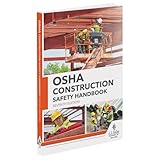
- 2024 OSHA Construction Safety Book is the seventh edition with the new OSHA HazCom final rule on 5/20/24. While the rule takes effect 7/19/24, the compliance dates don’t begin until 1/19/26 per 29 CFR 1910.1200(j).
- Construction Site Book offers quick access to essential OSHA regulations, jobsite hazards, and practical safety tips. It also helps employees identify hazards and prevent injuries and illnesses.
- Features easy-to-read format, full-color images, chapter quizzes with answer key, and comes in a compact size making it a convenient reference for employees.
- Critical topics include Confined Space Entry; Cranes & Derricks; Electrical Safety; Emergency Response; Ergonomics & Back Safety; Excavations; Fall Protection; First Aid & Bloodborne Pathogens; HazCom; Health & Wellness; Jobsite Exposures; Lockout/Tagout; Ladders & Stairways; Materials Handling/Storage; Motor Vehicles; PPE; Scaffolds; Site Safety & Security; Slips, Trips & Falls; Tool Safety; Welding, Cutting & Brazing; and Work Zone Safety.
- Specifications: 5 1/4” x 7 1/4", English, Soft bound. 7th Edition. Copyright 2024.
Task-specific training
This covers a particular activity or hazard, such as safe use of equipment, work at height, lifting operations, excavation or temporary works. It should be selected from the risks in the actual job and the controls your employer uses. A generic awareness certificate cannot replace training required for a high-risk task.
A nationally recognised qualification
A qualification may be required for a skilled occupation or a particular CSCS card. Its title, level, occupation and awarding organisation matter. Two courses with similar marketing names can lead to different qualifications, and only one may be accepted for the card you want.
The CITB HS&E test
The HS&E test checks health, safety and environmental knowledge for a specified application. It is operated by CITB, not by CSCS. Revision training or a book can help you prepare, but neither is the test itself.
A combination
Many applicants need both a recognised occupational qualification and the correct HS&E test. Confirm the sequence and any additional requirements for your card before paying for either service.
How CSCS, qualifications and the HS&E test fit together
“CSCS course” is commonly used by training businesses as shorthand for a qualification that may be accepted for a particular card. CSCS states that it does not provide courses, qualifications or exams; it processes applications and issues cards. It also does not endorse or approve training providers or third-party card services.
| Item | What it does | Who controls it | What to verify |
|---|---|---|---|
| Training course | Teaches knowledge or practical skills for a role or hazard. | The provider and, where applicable, an awarding organisation. | Syllabus, delivery, assessment, trainer competence and currency. |
| Regulated qualification | Provides a formally specified achievement that may satisfy an employer or card requirement. | The awarding organisation and the relevant regulatory framework. | Exact title, level, qualification number and acceptance for your intended card. |
| CITB HS&E test | Assesses health, safety and environmental knowledge for a test category. | CITB. | Correct test type, booking route, identity rules and current revision content. |
| CSCS card | Records evidence relevant to a defined occupation and card category. | CSCS. | Card type, accepted qualification, test requirement and current application rules. |
Do not pay a provider that implies CSCS itself will teach you, award your qualification or sit the test for you. Ask exactly which organisation issues each document and what you will receive at the end.
Check the exact qualification for your CSCS card
- Identify the card and occupation. Use the current CSCS Card Finder and select the card colour or category and the occupation you intend to carry out.
- Record the accepted qualification. Note the full qualification title, level and awarding organisation. Do not rely on a shortened course name.
- Check any additional conditions. The card rules may include the HS&E test, a separate practical or technical element, experience evidence or transitional arrangements.
- Confirm the information at application time. Card and qualification requirements can change, so check the current official entry before enrolling and again when you apply.
Acceptance varies by card. A qualification that is suitable for one occupation is not automatically suitable for another, even if both are described as construction health and safety training.
The Tool Desk
Outbyte PC Repair FREERepair Windows errors before they cause bigger problemsFix Now →Outbyte Driver Updater FREEScan for outdated or missing drivers - takes under a minuteDriver Scan →Verify the provider and awarding route
After identifying the qualification, check where it can legitimately be delivered. CSCS directs applicants to colleges and training providers and to the Ofqual register. Use the qualification check and the provider check as separate tests.
What to confirm in writing
- The provider’s legal or trading name and physical or verifiable contact details.
- The exact qualification title and awarding organisation.
- Whether the provider is approved to deliver that qualification, and under which centre number if applicable.
- Entry requirements, guided learning hours, practical elements and assessment method.
- How identity is checked and how results and certificates are issued.
- What happens if you fail, miss an assessment or need reasonable adjustments.
- Total cost, including registration, assessment, materials, resits, travel and any card or test fee that is not included.
Compare the provider’s answers with the awarding organisation’s public information. A certificate bearing an unfamiliar logo, an unverifiable qualification number or a promise of a card without an assessment is a reason to stop and investigate.
Check the learning against the actual work
HSE expects employers to provide adequate training when work starts and to revisit it when relevant changes occur. A legitimate course therefore begins with the risks and competence required for the role, not with the card colour alone.
Use a role-and-hazard test
List the tasks you will perform, the equipment and materials involved, the people who could be harmed, and the controls used on your site. Then ask whether the course teaches and assesses the knowledge or practical ability behind those controls. Look for coverage of:
Crashes, No Sound, or Screen Glitches?
Random freezes, missing sound and display glitches usually trace back to one bad driver. Find and replace yours safely.Free scan · under a minuteWindows Errors? Fix Them Before They Spread
Repair common Windows errors and clear accumulated junk for a smoother, more stable PC - no reinstall needed.Free scan · no reinstall- Site rules, emergency arrangements and reporting routes.
- Common construction hazards relevant to the job.
- Safe systems of work, permits, isolation and communication.
- Equipment checks, maintenance limits and stop-work decisions.
- Environmental controls, waste, pollution prevention and protection of the public.
- Human factors, supervision, fatigue, language and the limits of personal competence.
For a specialist activity, verify that the course includes practical demonstration or supervised assessment where that is needed. A multiple-choice awareness test alone cannot establish competence for every physical task.
Rank #3

- 2024 OSHA Construction Safety Book is the seventh edition with the new OSHA HazCom final rule on 5/20/24. While the rule takes effect 7/19/24, the compliance dates don’t begin until 1/19/26 per 29 CFR 1910.1200(j).
- Construction Site Book offers quick access to essential OSHA regulations, jobsite hazards, and practical safety tips. It also helps employees identify hazards and prevent injuries and illnesses.
- Features easy-to-read format, full-color images, chapter quizzes with answer key, and comes in a compact size making it a convenient reference for employees.
- Critical topics include Confined Space Entry; Cranes & Derricks; Electrical Safety; Emergency Response; Ergonomics & Back Safety; Excavations; Fall Protection; First Aid & Bloodborne Pathogens; HazCom; Health & Wellness; Jobsite Exposures; Lockout/Tagout; Ladders & Stairways; Materials Handling/Storage; Motor Vehicles; PPE; Scaffolds; Site Safety & Security; Slips, Trips & Falls; Tool Safety; Welding, Cutting & Brazing; and Work Zone Safety.
- Specifications: 5 1/4” x 7 1/4", Spanish, Soft bound. 7th Edition. Copyright 2024.
Assess the trainer, delivery and assessment
Ask who teaches, how current the material is and how learning is checked. HSE’s training approach is to decide needs, set priorities, choose methods and resources, deliver training, then check that it worked.
Trainer checks
- Relevant occupational experience as well as teaching or assessing competence.
- Evidence of current technical knowledge and any scheme-specific trainer approval.
- A clear explanation of how the trainer keeps course content and legal references current.
- For practical training, suitable equipment, ratios, supervision and a safe training environment.
Do not generalise requirements from one scheme to every course. CITB’s Site Safety Plus Quality Assurance Requirements, published 11 October 2025, set trainer qualification and experience criteria for that scheme and its specified courses. Those criteria should be checked for the particular Site Safety Plus course you are considering; they are not a universal approval standard for all construction training.
Delivery and assessment checks
- Ask whether the course is classroom, live online, blended or practical, and which parts must be attended in person.
- Confirm attendance rules, identity checks, accessibility support and language arrangements.
- Find out whether assessment is written, oral, observed or a combination, and what counts as a pass.
- Check whether online learning is instructor-led and monitored, rather than an unverified sequence of slides.
- Ensure the certificate names the learner, course, date, provider and awarding route, and explains its validity or renewal period where relevant.
Recognise misleading approval and accreditation claims
Marketing terms such as “approved”, “accredited” or “government recognised” need a specific explanation. Ask: approved by whom, for what qualification or scheme, and where can that approval be checked?
CSCS says it does not approve training providers or third-party CSCS card services. HSE also warns that conformity assessment schemes are not legally required and do not prove that a supplier can manage risks specific to your project. A badge may describe a commercial scheme, not a legal requirement or card acceptance.
Red flags that warrant verification
- “Guaranteed CSCS card” with no named qualification or occupation.
- “No exam”, “instant certificate” or a card issued before learning and assessment.
- A provider refuses to state the awarding organisation or qualification number.
- Pressure to pay immediately or to use an unexplained intermediary for a card application.
- Claims that CSCS itself has endorsed the provider.
- A course marketed as suitable for every trade, card and site without describing limits.
- Out-of-date legislation, test material or references with no revision date.
A single red flag is not proof of fraud, but it is enough to pause payment and verify the claim through the awarding organisation, CSCS or CITB.
Compare two or more courses consistently
Price and duration should come after recognition and suitability. Use the same questions for every option.
| Comparison point | Questions to ask | Evidence to retain |
|---|---|---|
| Role and hazards | Does it cover my occupation, tasks, equipment and site risks? | Syllabus, learning outcomes and practical schedule. |
| Outcome | Is this training, a regulated qualification, a test preparation course or the test itself? | Qualification specification, test category and certificate description. |
| Recognition | Is the named qualification accepted for my intended card or employer requirement? | Current CSCS Card Finder entry or written employer requirement. |
| Provider and trainer | Can their approval, experience and centre status be checked? | Provider details, awarding-body confirmation and trainer information. |
| Delivery and assessment | What is taught live or practically, and how is competence assessed? | timetable, assessment plan and resit policy. |
| Currency | When were the materials and legal references last updated? | Revision date and version of learner materials. |
| Cost and time | What is included, and how long until the certificate or result? | Itemised quote, cancellation terms and all mandatory fees. |
A practical selection process
- Describe the job. Write the occupation, tasks, hazards, equipment and site access condition.
- Ask the employer or principal contractor. Obtain the exact card, qualification, test and site-induction requirements in writing.
- Check the CSCS Card Finder. Confirm the accepted qualification and any HS&E test category for the intended card.
- Check the qualification. Use the Ofqual register or the awarding organisation’s information to confirm the title, level and status.
- Shortlist providers. Ask each one for the centre or approval details, trainer competence, delivery method, assessment and complete price.
- Validate the claims. Contact the awarding organisation, CSCS or CITB through their official channels if a provider’s statement is unclear.
- Choose the method that fits the risk. Use supervised practical learning where the task requires physical competence; do not substitute a short online awareness module.
- Keep records. Save the specification, quote, booking confirmation, attendance evidence, assessment result and certificate.
- Check transfer to the workplace. Arrange site-specific induction, supervision and any additional training before starting the task.
Common situations and the right response
“I need a green or skilled card quickly.”
Speed does not remove the qualification requirement. Identify the exact card and accepted qualification first. If a provider offers a fast route, ask which requirement it satisfies and which requirements remain, including the HS&E test.
Quick wins for a faster PC:
Fix the driver behind crashes, sound loss and screen glitchesFind Drivers →Clear out junk files and repair common Windows errorsFree Scan →“My employer only asked for a certificate.”
Ask what competence the certificate is intended to demonstrate and whether the employer has a preferred awarding route. A generic certificate may not cover the site’s hazards or the task’s practical requirements.
“I already have years of experience.”
Experience is valuable, but it may not be a substitute for a specified qualification, current test or documented training. An assessor can explain whether your experience can contribute to a qualification route; do not assume it automatically meets card rules.
“The provider says its badge is recognised everywhere.”
Request the named scheme, scope and independent verification. Recognition for one employer or procurement scheme does not automatically establish legal compliance, card acceptance or competence for a particular project.
“The course is online.”
Online delivery can suit knowledge learning when identity, attendance and assessment are controlled. It is unsuitable as the sole evidence for tasks that require observed practical performance unless the relevant scheme explicitly permits that route.
What’s actually slowing this PC down?
Pick the symptom - the matching free tool is one click away.
HS&E test preparation
Use revision material matched to the correct CITB HS&E test category and the current test specification. CSCS states that revision materials are available from CITB and from high-street and online booksellers. A revision book or preparation course supports study; it does not replace booking and passing the required test.
Best Value

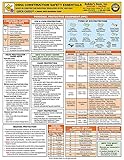
- Updated Compliance: While the new rule takes effect on 7/19/2024, training and compliance dates don’t start until 1/19/2026, giving your team ample time to prepare with this thorough guide to OSHA regulations (29 CFR 1910.1200(j)).
- Comprehensive Safety Training Handbook: Prepares your employees for 25 of OSHA’s hottest safety topics, from Confined Space Entry to Workplace Violence, ensuring they are equipped with vital safety knowledge for a safer work environment.
- In-Depth, Easy-to-Understand Content: Each chapter tackles key workplace hazards like Electrical Safety, Lockout/Tagout, Respiratory Protection, and more, helping to prevent injuries and illnesses while promoting safe practices.
- Interactive Learning with Quizzes: Engaging chapter review quizzes reinforce safety concepts, making it easier for employees to retain and apply the knowledge, with downloadable answer keys for easy tracking.
- Specifications: English, Softbound, full-color pages (272 pages) offer clear, visually appealing safety information for a diverse workforce, with home safety details included throughout.
Before booking, confirm the test type linked to your application, the identification rules, the test-centre process and how long a pass remains usable for that application. Keep the test result with your qualification records and check current requirements if your application is delayed.
After completion: prove competence at work
On completion, check the name, qualification, date and awarding organisation on every document. Give the employer the certificate or result they requested, but also complete the site induction and task-specific briefings. Supervisors should verify that you can follow the safe system of work, use equipment correctly, recognise changing conditions and stop when the job exceeds your competence.
Training is not one event. HSE expects it to be revisited when work, equipment, law, site conditions or the worker’s role changes. Record refresher needs, incidents, observed gaps and any additional supervision required.
Free tools Windows power users keep installed
One-click scans. No signup required.
When to reject a course
Do not enrol until the provider can answer the basic verification questions. Reject the option if it cannot name the qualification, awarding organisation or assessment; claims CSCS approval that cannot be verified; promises a card without the required evidence; hides mandatory fees; or offers content that plainly does not match the work. Report suspected misrepresentation to the relevant awarding organisation, CSCS, CITB or trading standards channel, and retain advertisements and payment records.
Final decision checklist
- I know the exact job and hazards the training must cover.
- I know whether I need training, a qualification, an HS&E test, or a combination.
- I checked the current CSCS card and occupation requirements.
- The qualification title, level and awarding organisation are explicit.
- The provider’s approval or centre status is independently verifiable.
- The trainer, delivery method and assessment fit the risk.
- The materials are current and the full cost is itemised.
- I have a plan for site-specific induction, supervision and refresher training.
Frequently Asked Questions
Is there an official CSCS health and safety course?
CSCS says it does not provide courses, qualifications or exams. Providers may use “CSCS course” to describe training for a qualification accepted for a particular card, so verify the exact qualification and card requirements separately.
Can a certificate alone prove I am competent for construction work?
No. Competence also depends on the skills, knowledge, training and experience required for the specific work, plus site induction, supervision and task-specific controls.
Does an accredited or conformity-assessed provider guarantee legal compliance?
No. HSE says conformity assessment is not legally required and does not prove that a supplier can manage risks specific to your project. Check the actual qualification, scheme scope and work requirements.
Where can I find revision material for the CITB HS&E test?
CSCS says revision materials are available from CITB and from high-street and online booksellers. Match the material to the correct test category and current specification.
Are CITB Site Safety Plus trainer rules universal for every course?
No. The quality requirements published on 11 October 2025 are scheme- and course-specific. Check the requirements for the particular Site Safety Plus course rather than applying them to all construction training.
Quick Recap
Product prices and availability are accurate as of the date/time indicated and are subject to change. Any price and availability information displayed on Amazon at the time of purchase will apply.

