Choose a household water tank by first deciding what water it will hold and how it will be used. Then match capacity to demand and a dependable supply, check that the tank and its materials suit that use, and confirm the site, installation details and local rules. There is no single tank size or material that works for every home—and a tank alone does not make water safe to drink.
Start with the water source and intended use
Make the potable or non-potable decision before comparing tanks. A system storing treated public water, a rainwater system intended to provide drinking water, and a tank supplying irrigation have different water-quality and plumbing requirements.
As an Amazon Associate I earn from qualifying purchases.
- Treated public water: Confirm the tank and connections are appropriate for storing treated water, and protect it from contamination after it enters the system.
- Rainwater for drinking: Treat this as a complete potable-water system, not simply a tank purchase. Collection surfaces, filtration or other treatment, maintenance, and protected connections to any supplementary public-water supply can all matter. California’s rainwater-reuse summary describes safeguards for potable systems; its rules apply to that jurisdiction, not everywhere. See the EPA summary of California’s rainwater rules.
- Non-potable water: For uses such as irrigation, identify which outlets the water will serve and make sure non-potable plumbing cannot be mistaken for or improperly connected to drinking-water plumbing. Applicable safeguards depend on local rules and system design.
CDC defines safe water storage as water that has been treated and kept in a container that protects it from recontamination. The principle applies to the whole handling and storage system: storage does not treat water or create a more reliable supply. Read CDC guidance on safe water storage.
What size water tank does a house need?
There is no universal household capacity in the available CDC and EPA guidance. A useful size depends on the intended use, expected demand, how much water the source can provide, how reliably it provides it, and the space and site available. A household relying on rain catchment has a different sizing problem from one storing an established treated-water supply.
#1 Best Overall

- 30-GALLON CAPACITY EMERGENCY WATER STORAGE — Build a reliable water reserve before you need it. The 30-gallon capacity provides substantial water storage for emergency preparedness, severe weather, power outages, natural disasters and unexpected disruptions.
- DESIGNED FOR POTABLE WATER STORAGE — Made from BPA-free, UV resistant, food-grade HDPE to provide clean drinking water storage. The durable blue tank provides a dedicated solution for storing water for drinking, cooking and other essential household needs.
- LARGE CAP FOR EASY FILLING — The generously sized top opening makes filling your 30-gallon water storage tank easier and more convenient. Designed for straightforward water filling, inspection and maintenance as part of your emergency water preparedness routine.
- STACKABLE, SPACE-SAVING DESIGN — providing substantial water capacity without the footprint of a traditional barrels. Designed for convenient placement in garages, basements, homes, cabins and other designated storage areas.
- EASY ACCESS WITH A LEAD-FREE SPIGOT — Built-in dispensing valve lets you access stored water without lifting, tipping or moving a full tank. The convenient spigot also makes routine water use and rotation easier.
To develop a project-specific estimate, establish the expected demand and the period the tank is meant to cover, then assess the dependable supply or rainwater catchment over that period. Account for site limits and any applicable local design requirements. Have the assumptions and calculation checked by a qualified installer or relevant local authority when the system is large, buried, potable, or connected to indoor plumbing. The cited guidance does not supply a universal household formula or engineering dimensions.
Do not use emergency portable-water quantities as a design rule for a fixed household cistern. CDC’s emergency guidance concerns water stored and handled in food-grade containers, not a general sizing specification for permanent tanks. See CDC’s emergency water-supply guidance.
Rank #2

- LARGE-CAPACITY WATER STORAGE (55 GALLONS): Store enough emergency drinking water for a family of four for up to two weeks. Perfect for preparedness, camping, off-grid living, or disaster response.
- SPACE-SAVING STACKABLE DESIGN: Engineered to stack securely and safely, giving you big-tank capacity without taking up extra floor space—ideal for garages, basements, or sheds.
- ROBUST DESIGN: Manufactured from high-quality rotationally molded polyethylene that’s safe for long-term potable water storage and built to withstand decades of use.
- EASY FILLING, DRAINING & CLEANING: Includes a 5-inch twist lid for quick filling and internal cleaning, plus a built-in brass spigot for simple dispensing and water rotation.
- BUILT TO LAST: Backed by over 70 years of tank-manufacturing experience, our emergency water tanks are tested for strength, leak integrity, and safety—so you can rely on them when it matters most.
Which tank material is best?
There is no best material independent of use and installation. Check the manufacturer’s documentation for the intended water, treatment regime, and location; verify that the product is accepted for the system under local requirements. Consider durability, watertightness, corrosion or decay resistance, and—if the tank is above ground—exposure to sunlight and weather.
Do these 3 things before closing this tab:
1Repair Windows errors before they cause bigger problems2Scan for outdated or missing drivers - takes under a minute3Clear out junk files and repair common Windows errorsCDC’s advice that durable plastic, ceramic, or metal can be suitable for safe water storage, and its preference for FDA-approved food-grade containers for emergency water, address portable containers. They are not blanket approvals of large fixed tanks or every product made from those materials. If a product’s food-grade status is unclear, CDC advises contacting its manufacturer. See CDC’s safe-storage guidance and emergency container guidance.
Rank #3
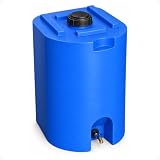
- Large Water Tank: Whether you're camping, hiking, or embarking on a road trip, rely on the 55-gallon water tank to meet your liquid storage needs with ease
- Safe Design: Specially blended UV-proof plastic safeguards water, preventing bacteria build-up, and ensuring its safety for extended periods
- Durable Container: Drum constructed from rugged high-density polyethylene (HDPE), ensuring durability for on-the-go liquid storage needs
- Integrated Spigot: Easy access to emergency water with a spigot that connects to standard garden hoses for versatile use
- Stackable Design: Water tanks have a unique stackable design, allowing for efficient space utilization; Measures 22"L x 23"W x 30"H
Requirements for fixed systems vary by jurisdiction and use. For example, EPA’s North Carolina summary describes durable, nonabsorbent, corrosion-resistant materials for non-potable storage and sunlight protection for aboveground tanks. Its Washington summary describes solid, durable, watertight construction not subject to excessive corrosion or decay. These examples are state-specific, not universal material rules:
- EPA summary of North Carolina’s non-potable reuse rules
- EPA summary of Washington’s non-potable reuse rules
Choose a location the site and system can support
Cisterns can be above ground, on a roof, underground, or beside a home, but those are examples of existing arrangements—not approval of every location for every tank. CDC describes these configurations in its cistern safety guidance. Before settling on a site, check the following with a qualified installer and, where needed, the local building or plumbing authority:
Rank #4

- 《High quality》High-density polyethylene material, safe and environmentally friendly, no odor, abrasion resistance, high hardness and good heat and cold resistance. It is insoluble in any organic solvents and is resistant to corrosion by acids, alkalis and various salts.
- 《Portable handle》Portable water tank with faucet, handle design, strong sealing, no water leakage, making it easy to clean, drain and refill.
- 《Wide caliber》The large diameter design of the water container makes it easy to clean the inside and saves water quickly and smoothly.The bucket is tightly sealed and will not leak.
- 《Applicable spac》large capacity water tank, strong and durable; suitable for agricultural, industrial, garden, car, outdoor camping, outing, fishing and other storage drinking water!It can also be used in schools, hotels, stations, offices, homes and other places.
- 《Quality assurance》We pursue to offer you the best product and service,If you are not satisfied with our products or any questions ,Please feel free contact us.
- Support and site conditions: Confirm that the structure or ground can support the tank and its contents, and assess soil and other site conditions. The sources cited here do not provide load calculations or universal foundation specifications.
- Contamination risks: Consider nearby sources of polluted water and how openings, pipe connections, or flooding could allow contamination into the tank.
- Access: Allow for inspection, cleaning, and maintenance. A tank that cannot be safely reached is harder to keep in service.
- Drainage and overflow: Plan where drained water and overflow will go so they do not create a site or building problem. Requirements depend on location and system use.
- Sunlight and weather: For an aboveground tank, confirm that its construction and placement are suitable for exposure and that any required sunlight protection is addressed.
Can a household rainwater tank be installed underground?
Yes, underground cisterns exist, but that does not establish that a particular buried tank or site is suitable. Buried systems need careful attention to construction and contamination: CDC’s technical manual warns that poorly constructed underground tanks can leak or admit polluted water from outside. Confirm structural and site suitability, watertight construction, access for inspection and cleaning, drainage, and local requirements before installation. Review the CDC technical manual on household water storage.
Quick wins for a faster PC:
Repair Windows errors before they cause bigger problemsFix Now →Scan for outdated or missing drivers - takes under a minuteDriver Scan →Flooding can also wash germs or chemicals into a cistern. CDC advises that after a disaster, cleaning and disinfection may be needed; untreated catchment water, especially where connections are open, may remain unsafe. See CDC’s advice on cisterns before, during, and after disasters.
Best Value
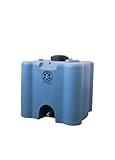
- COMPACT WATER STORAGE SOLUTION (30 GALLONS): The perfect size for smaller homes, apartments, or RVs — provides emergency drinking water for a family of four for up to one week without taking up excess space.
- STACKABLE, SPACE-SAVING DESIGN: Engineered to stack securely and safely, allowing you to expand your storage vertically while keeping your garage, shed, or basement organized and clutter-free.
- FOOD-GRADE, BPA-FREE & LEAD-FREE MATERIALS: Made from high-quality rotationally molded polyethylene, safe for long-term potable water storage and built to last through decades of use.
- EASY FILLING, DRAINING & CLEANING: Features a 5-inch twist lid for easy filling and cleaning, and a durable spigot connection for quick, spill-free dispensing when you need it most.
- BUILT TO LAST: Backed by over 70 years of tank-manufacturing experience, our emergency water tanks are tested for strength, leak integrity, and safety—so you can rely on them when it matters most.
Plan the tank as a system, not a vessel
Before installation, confirm which components the chosen system and local rules require. Washington’s non-potable-system summary describes features including debris filtration, access for inspection and cleaning, protected openings, drainage, and overflow. California’s potable rainwater summary describes inspection and maintenance, filtration, and protected potable makeup-water connections. These state examples do not make every listed feature a universal requirement; check the rule that applies to your location and intended use.
Ask the installer or supplier to confirm compatibility among the tank, inlet and debris screen, cover or access point, drain, overflow, venting where applicable, pump, and plumbing. If a potable system has a supplementary water connection, ask how cross-connections and backflow will be prevented under local requirements. Specify how the tank will be inspected, cleaned, and maintained, and how water quality will be protected during use.
Check local approvals before buying
Plumbing, building, health, and water-reuse requirements can vary by jurisdiction, particularly for potable rainwater systems, buried tanks, and systems connected to indoor plumbing. EPA’s California, Washington, and North Carolina summaries illustrate differences tied to both location and end use; none should be treated as a nationwide code. Contact the relevant local authority and a qualified installer before selecting a tank. Have them verify the proposed use, product documentation, site, connections, installation, and any approval or inspection requirements.
Free tools Windows power users keep installed
One-click scans. No signup required.
Quick Recap
Product prices and availability are accurate as of the date/time indicated and are subject to change. Any price and availability information displayed on Amazon at the time of purchase will apply.

