To determine whether a proposed airport will change your home’s aircraft-noise exposure, identify the exact project, obtain the airport operator’s current and projected noise-exposure maps, and read the FAA environmental review. Compare the proposed action with the no-action forecast for the same year and metric. Distance from a runway or a few sound-meter readings cannot establish future annual exposure. This is a U.S.-oriented process; the applicable maps, deadlines, contacts and mitigation rules depend on the airport and your jurisdiction.
Will a new airport affect my home’s noise levels?
It may, but the answer is project-specific. A “new airport” proposal could mean a completely new facility, a runway, a runway extension, a terminal expansion, a change in operating hours or a flight-path change. Each action can produce different aircraft routes, fleet assumptions and operating levels. The reliable way to evaluate your home is to use the project’s modeled forecasts rather than a straight-line radius around the airport.
As an Amazon Associate I earn from qualifying purchases.
Start with two documents: the airport sponsor’s noise-exposure information and the FAA environmental review for the proposed action. The review should identify the alternatives, forecast years and operating assumptions. The airport’s noise office can explain which maps are current, which represent the planned build-out and how to submit comments or complaints.
A map is a planning model, not a promise that aircraft will never be audible outside a contour. Conversely, hearing an occasional aircraft does not prove that a home falls inside a significant annual-exposure area.
#1 Best Overall

- 2.25-inch LCD Screen with Backlight: This TS-501B sound level meter is measured noise levels are expressed in decibels and displayed on the 2.25-inch LCD screen, it easy to read on a big display design. Long press the backlight button to turn on a backlight, making it easy to view even in dim light
- Decibel Meter with A/C Weighting: TopTes TS-501B decibel meter uses a precise condenser microphone to capture sound. It’s equipped with A-weighting and C-weighting facilities that measure noise levels from 30 to 130 dB with an accuracy of 1.5 dB, Frequency from 30 to 8000Hz. Perfect for monitoring noise levels in communities, home theaters, audio systems, automobiles, workshops, schools, offices, factories
- MAX/MIN Measurement: The sound pressure level (SPL) meter has Max or Min measurement values to represent the maximum/minimum (high/low peak) value of the sound produced within a certain time, and the data hold function can freeze the current reading based on the sound measurement according to individual needs
- Easy Use and Feature Packed: The non-slip side design ensures that the portable noise meter fits easily in the hand. TS-501B SPL meter is a battery-operated noise meter that comes with three durable batteries and has an automatic power off function to extend battery life. A low battery indicator will appear on the screen when the battery is low to remind the user to replace the battery in time
- What’s in the Box: One TS-501B Decibel Meter, Three AAA Batteries, One User Manual, One Carry Case. The device has been factory calibrated to ensure high measurement accuracy and compliance with quality standards.
Step 1: Identify exactly what is being proposed
Find the project page and environmental document
Look on the airport operator’s website for the project name, planning page or environmental-review library. Then locate the corresponding FAA review. Confirm whether you are reading a draft or a final document. A draft may still be open for public comment, while a final document records the agency’s adopted analysis and commitments.
- Record the project name and the airport sponsor or operator.
- Note whether the action is a new airport, runway, runway extension, taxiway, terminal or operating change.
- Write down the forecast years used in the document.
- List every alternative, including the no-action alternative.
- Check whether the document analyzes construction only, long-term operation, or both.
Do not assume that a map labeled “future” represents the same build-out described in a later project notice. Airport plans are revised, and a map can model a particular phase or forecast year.
Separate construction disturbance from operating noise
Environmental reviews may discuss temporary construction equipment, road traffic and permanent aircraft operations in separate sections. If your concern is aircraft noise after opening, use the operational forecasts and contours. Construction impacts can have different hours, controls and mitigation measures.
The Tool Desk
Outbyte Driver Updater FREEFix the driver behind crashes, sound loss and screen glitchesFind Drivers →Outbyte PC Repair FREERepair Windows errors before they cause bigger problemsFix Now →Step 2: Request the maps and technical materials
Ask the airport noise office for more than a screenshot
Request the current noise-exposure maps, projected maps for the proposed action, technical reports and any current Part 150 Noise Exposure Map update. Ask for the underlying assumptions if the map does not explain them. Useful supporting details include aircraft operations, fleet mix, runway use, flight paths, nighttime activity and the modeled year.
Airport maps and project reviews may model different years and conditions. A current Part 150 map might describe existing operations, while the project review models a future configuration. You need to know which one applies to the question you are asking.
Rank #2

- Accurate 30-130dB Noise Measurement: The Goldeep SL750A decibel meter measures sound levels from 30 to 130dB with ±1.5dB accuracy and a 31.5Hz-8KHz frequency response. This sound decibel meter is ideal for checking home noise, neighbor noise, traffic sound, office noise, construction sites, factories, classrooms, baby rooms and musical instruments.
- A/C Weighting for Different Sound Environments: This digital sound level meter supports A/C weighting modes for more flexible noise testing. A-weighting is suitable for environmental noise such as urban traffic, schools, offices, business areas and construction sites. C-weighting is designed for industrial noise from machinery, equipment, aerospace, high-speed rail and other high-intensity sound sources.
- dB/SONE Units for Sound & Loudness Testing: Use the dB unit to measure sound intensity for environmental noise, machine noise, traffic noise and workplace noise. Switch to SONE to better understand perceived loudness, making this db meter useful for music, audio systems, acoustic checks and instrument noise control..
- FAST/SLOW Response with MAX/MIN Tracking: The spl meter includes FAST and SLOW response settings. FAST response, 0.125s per reading, is useful for changing noise levels, while SLOW response, 1s per reading, is suitable for steady-state noise. MAX/MIN value tracking helps record peak and minimum noise levels over a period of time.
- Easy-to-Use Sound Meter for Daily & Professional Needs: Designed with data hold, clear LCD display, anti-slip grip and a windbreak ball, this sound meter is practical for indoor and outdoor use. Package includes 1 sound level meter, 2 AAA 1.5V batteries and 1 user manual, so you can start measuring noise right away.
Information to obtain
- A map showing the home or parcel in relation to the modeled contours.
- The contour level used on the map and the metric, such as DNL or CNEL.
- Separate current, proposed-action and no-action forecasts for the same year when available.
- The technical report explaining aircraft operations, runway use and forecast assumptions.
- Lists or tables of affected homes and other noise-sensitive land uses.
- Public-meeting dates, written-comment deadlines and the correct submission method.
- Information about monitoring stations, complaint procedures and noise-compatibility programs.
Step 3: Compare the proposed action with no action
The most useful comparison is not “airport versus no airport” in the abstract. It is the proposed action versus the no-action alternative for the same forecast year, using the same noise metric and contour levels.
| Comparison item | What to check | Why it matters |
|---|---|---|
| Scenario | Proposed action and no-action alternative | Shows the incremental effect of the project rather than the airport’s total existing noise. |
| Forecast year | The same year in both scenarios | Different years can reflect different traffic growth and cannot be compared fairly. |
| Metric | DNL, or CNEL in California | Values based on different definitions are not directly interchangeable. |
| Contour and change | The contour at or near the home and the modeled increase or decrease | A contour’s movement can show a change even when the home remains outside a reference contour. |
| Operating assumptions | Aircraft operations, fleet mix, runway configuration and flight paths | These assumptions determine where and when aircraft noise is modeled. |
| Affected uses | Homes, schools, hospitals and other noise-sensitive locations | The review may identify impacts that are not obvious from a general map. |
| Mitigation | Proposed insulation, easements, operating measures or other commitments | Eligibility and implementation depend on the sponsor’s documentation and program rules. |
If the documents use different contour intervals or color scales, compare the numerical values and legends rather than the colors. Ask the airport for a GIS layer or a parcel-level interpretation if the published image is too coarse to locate your property.
What DNL and CNEL actually measure
DNL: the FAA’s primary aviation-noise metric
Day-Night Average Sound Level, or DNL, represents cumulative aircraft-noise exposure across an average 24-hour period over a year of operations. Nighttime flights receive additional weighting, so a smaller number of night events can influence the annual value more than the same number of daytime events.
DNL is not the loudness of one overflight. It combines the frequency, duration and level of modeled events over the year. A home can experience a loud individual event while still being outside a particular annual DNL contour, or have repeated moderate events that contribute materially to its annual value.
The 65 dBA reference
FAA materials describe DNL 65 dBA as the current significance and residential-compatibility reference threshold used in airport-noise and land-use planning. The FAA is reviewing its noise policy, so check the policy language and project documents that apply to the action you are evaluating. Do not treat 65 dBA as a guarantee of silence below the line or as the only information relevant to your property.
Rank #3

- 【Widely Used】The noise meter is the use of environmental sound level instrument, can be widely used in such as factories, workshops, schools, residential, office areas, traffic roads, audio and other occasions of sound level measurement. Also suitable for noise engineering, product quality control, health,prevention and control.
- 【Accurate Measurement】Measuring Range:30~130dB ;Accuracy:±1.5dB(94dB@1KHz);Display Resolution:0.1dB
- 【A Weighted Measurement】 A Weighted network (automatic switching range display)
- 【Fast/Slow mode selection】Press the MODE key, you can convert the response speed of the noise meter, FAST fast, SLOW slow
- 【MAX/MIN Measurement】Press RANGE key to measure the maximum value of MAX and minimum value of MIN.A maximum duration of more than 3 seconds is recorded, with a normal test sampling rate of 0.5 seconds. The maximum error is ± 5%.
CNEL in California
California commonly uses Community Noise Equivalent Level, or CNEL. It also represents cumulative annual exposure but applies an additional weighting to evening events. When comparing a California map with a DNL map from another jurisdiction, identify the metric first; a numerical value should not be treated as equivalent without accounting for the definitions.
Crashes, No Sound, or Screen Glitches?
Random freezes, missing sound and display glitches usually trace back to one bad driver. Find and replace yours safely.Free scan · under a minuteWindows Errors? Fix Them Before They Spread
Repair common Windows errors and clear accumulated junk for a smoother, more stable PC - no reinstall needed.Free scan · no reinstallHow do I check whether my home is under a flight path?
Use the project’s flight-path figures and noise contours together. A flight path is a route or distribution of aircraft tracks, while a contour is a modeled area of cumulative exposure. They answer related but different questions.
- Locate the parcel on the airport’s current and projected contour maps.
- Read the legend and record the contour value that crosses the property, if any.
- Open the technical report’s runway-use and flight-track figures to see whether the proposed action changes routes over or near the home.
- Check the forecast year, aircraft mix and operating assumptions for that figure.
- Compare the same location under the no-action alternative.
Do not infer future exposure from runway distance alone. Wind, runway configuration, traffic distribution, aircraft type and operating procedures can place routes over areas that are not the closest to a runway. Likewise, a home outside a mapped contour may still hear aircraft; contours identify modeled exposure bands, not an audibility boundary.
Why a handheld sound meter cannot answer the annual-noise question
What a short reading can tell you
Repeated visits can help you compare conditions at different times. You might note the date, weather, aircraft type, apparent route and a short-term sound-level reading. A handheld meter can make those observations more consistent than unaided listening when used from the same location and under similar conditions.
What it cannot establish
An instantaneous or short-duration reading is not DNL. It does not include a year of operations, nighttime weighting, the number of events or future traffic assumptions. A reading in the 70s or 80s during one overflight therefore does not, by itself, contradict a home’s location outside a DNL contour or prove that a future project will produce a particular annual exposure.
Recommended Free Tools
Rank #4
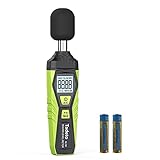
- 【Accurate Measurement】 The measuring range of the sound level meter is 30dB to 130dB . Highly accurate with ± 2.0 dB. Real-time monitoring can give you accurate data on the sound level in the area.
- 【A/C Weighted Measurement】 The A weighted simulates the frequency characteristics of low-intensity human ear noise, which is suitable for the detection of ambient noise. The C weighted simulates the frequency properties of high-intensity noises of the human ear, which are suitable for the sound pressure analysis of machine motors and machines. More professional measurement methods provide users with a more perfect user experience.
- 【Fast and Slow Measurement】 The sound level meter has the function of converting the fast and slow response rate. The fast response rate uses a time constant of 0.125s/time for general environmental measurement. The slow response rate uses a 1s/time constant, which is used for environmental measurements with relatively large changes in noise levels.
- 【Digital LCD Display 】 The digital display is a 4-digit LCD display with a resolution of 0.1 dB. Backlit LCD digital display, the reading effect is clearer in dark places. When the battery is low, the LCD display will display a low voltage icon, indicating that the power is low at this point and the battery needs to be replaced.
- 【Convenient and Lightweight 】Tadeto sound level meter is lightweight and easy to carry. It's widely used in factories, transportation, car, baby room and audio system offices, sound quality control in homes, schools, and construction sites.
Use observations as context for questions to the airport, not as a substitute for the modeled forecast. If the observed route differs from the project map, ask whether the difference reflects weather, temporary runway use, a construction phase or an assumption that has changed.
Independent reader supportYour contribution helps us test, update, and keep practical guides available for everyone.Step 4: Read the FAA environmental review critically
Check alternatives and assumptions
Find the chapter or appendix covering aircraft noise, noise-sensitive land uses and alternatives. Identify the modeled operations for each scenario. Pay attention to whether the proposed action changes runway alignment, arrival or departure paths, operating hours, aircraft capacity or the number of annual operations.
Forecasts are conditional. They represent the assumptions stated in the document, not a guarantee that every future flight will follow the exact modeled distribution. If a key assumption is unclear, ask the airport sponsor for the technical report or an explanation from its noise office.
Look for affected homes and other sensitive uses
Reviews may provide counts or lists of homes, schools, hospitals and other noise-sensitive locations within modeled contours. Those counts apply only to that project, scenario, forecast year and metric. Do not transfer an airport-specific number to another airport or use it as a general estimate for your neighborhood.
Track the public process
For a draft review or draft map, follow the stated public-comment method and deadline. Public meetings can explain the model and reveal proposed changes, but submit a written comment when you need a specific issue entered into the administrative record. Keep a copy of what you send and the date submitted.
Best Value
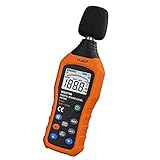
- The sound level meter is an instrument used to real-time measure the sound level,such as sound level around factories,workshops,schools,residential,offices,road,audio etc (Battery not include), Can not keep and generate a report directly from the device
- It also can be appropriate for noise engineering,product quality control,health prevention and treatment,etc.This audio noise measure device is a great tool for checking, monitoring or controlling and test the sound level of any environments. It is widely applicable for personal, families, business, studies, industrial and etc
- With the measuring scope from 30 to 130dB and shifting function. Digital display,good anti-interference performance,power saving
- With the backlight feature,it is appropriate for gathering the sound data at night.Backlight auto power off function is provided.With power saving and high-reliability circuit design,well-design high-efficiency power supply circuit makes the batteries more durable
- Composite material injection molding process is adopted for casing with anti-drop structure design.It is not only extremely wear-resisting,but also elegant,It’s a mini handheld portable sound level reader
Step 5: Contact the airport noise office
The noise office is the best place to resolve parcel-level questions that a general project page cannot answer. Give the staff your address or parcel identifier, the project name and the forecast year you are examining.
Questions to ask
- Which current and projected maps cover my parcel?
- Is the map based on DNL or CNEL, and what contour level is shown?
- Does the map represent the proposed build-out, an interim phase or existing operations?
- What is the no-action forecast for the same year?
- Which runway, flight-path and aircraft-mix assumptions drive the change?
- Are monitoring stations located near my area, and how can I obtain their data?
- How do I report or document noise complaints, and what information should each report include?
- What public meetings or comment deadlines remain open?
- Are noise-compatibility, acquisition or home-insulation programs available, and what are their eligibility dates and documentation requirements?
Ask for a written explanation when the answer affects a purchase, design decision or formal comment. Keep the map version, technical report title and date so you can tell whether later information supersedes it.
Could my home qualify for noise mitigation?
Some airport sponsors offer noise-compatibility measures, including home-insulation assistance or related programs. Availability is not automatic. Eligibility can depend on the modeled exposure, the current supporting map, the sponsor’s approved program, property conditions and other requirements.
Quick wins for a faster PC:
Clear out junk files and repair common Windows errorsFree Scan →Fix the driver behind crashes, sound loss and screen glitchesFind Drivers →Repair Windows errors before they cause bigger problemsFix Now →Do not order acoustic work on the assumption that reimbursement will follow. First ask the noise office for the written program criteria, the qualifying contour and forecast year, application deadlines, required ownership or occupancy documents and any inspection process. A contractor or acoustic assessment becomes useful after you know that a local program applies and what performance standard it requires.
If the project documents identify mitigation commitments, check who is responsible, when the measure is scheduled and whether it applies to existing homes, future construction or only a defined eligibility area.
Common mistakes and how to correct them
| Mistake | Why it fails | Better approach |
|---|---|---|
| Using a radius drawn from the runway | Noise follows operations and flight paths, not a uniform circle. | Use the modeled contours and track figures for the specific scenario. |
| Comparing proposed 2040 with no-action 2030 | Traffic and fleet assumptions differ by year. | Match the forecast year before comparing. |
| Treating DNL as a single-event loudness rating | DNL is cumulative and annualized, with extra nighttime weighting. | Use event observations only as context; rely on the annual model for exposure. |
| Reading a DNL map as a promise of silence outside the line | Contours show modeled exposure bands, not whether an aircraft can be heard. | Expect audibility outside contours and ask about route and event frequency. |
| Assuming every future map is interchangeable | Maps can represent different phases, metrics and operating assumptions. | Record the map date, scenario, forecast year and metric. |
| Relying on one sound-meter measurement | A short reading cannot calculate annual DNL or predict future operations. | Repeat observations if useful, then compare official forecasts. |
| Assuming mitigation is guaranteed | Programs have sponsor-specific criteria and documentation requirements. | Obtain written eligibility rules before planning work or a claim. |
A practical homeowner checklist
- Write down the airport project name, location and the action being proposed.
- Download the draft or final FAA environmental review and note every forecast year and alternative.
- Request current and projected noise-exposure maps, technical reports and any Part 150 update from the airport noise office.
- Confirm whether each map uses DNL or CNEL and record the contour values.
- Locate your parcel and compare the proposed action with no action for the same year.
- Read the assumptions for runway use, flight paths, operations, aircraft mix and nighttime activity.
- Review the list or count of affected homes and other noise-sensitive uses in the project document.
- Check public-comment deadlines and submit specific, documented concerns through the stated channel.
- Ask about monitoring, complaint reporting, future operating changes and mitigation eligibility.
- Save the map version, technical report, correspondence and submission receipts for your records.
What you can conclude—and what you cannot
You can determine whether the project’s modeled annual exposure at your home changes relative to no action, which metric and contour apply, what assumptions produced the result and whether the airport identifies mitigation or a public process. You cannot establish future DNL from runway distance, one visit or a few instantaneous meter readings.
If the available documents do not show your parcel clearly, the next useful step is not a guess. Ask the airport operator for a parcel-level map or technical explanation tied to the exact project, forecast year and alternative you are evaluating.
Do these 3 things before closing this tab:
1Scan for outdated or missing drivers - takes under a minute2Clear out junk files and repair common Windows errors3Fix the driver behind crashes, sound loss and screen glitchesQuick Recap
Product prices and availability are accurate as of the date/time indicated and are subject to change. Any price and availability information displayed on Amazon at the time of purchase will apply.

