Start with the building department responsible for the property—not the printer manufacturer or builder. Give officials the address and ask which code editions and local amendments apply, whether a 3D-printing appendix or standard has been adopted, and what technical evidence they will accept for the home’s exact wall system. Then compare the approved project documents with the system actually built, confirm required inspections, and obtain final approval before occupancy.
An ICC model-code appendix, technical standard, or evaluation report is not, by itself, proof that a particular home has local approval. The jurisdiction’s adopted requirements and project-specific review determine what is acceptable.
As an Amazon Associate I earn from qualifying purchases.
1. Find out which rules apply at the property
Contact the building department with the property address. Ask for the adopted residential or building code edition, its effective date, applicable local amendments, the permit process, and the official assigned to review the project. Ask specifically whether the jurisdiction has adopted a 3D-printed-construction appendix or referenced a relevant standard—and whether it has modified those provisions.
Do these 3 things before closing this tab:
1Scan for outdated or missing drivers - takes under a minute2Repair Windows errors before they cause bigger problems3Fix the driver behind crashes, sound loss and screen glitchesDo not assume that a provision in a model code applies in your town. For example, the 2023 City of Los Angeles Residential Code’s Appendix AW user note says: “The provisions contained in this appendix are not mandatory unless specifically adopted by a state agency or referenced in the adopting ordinance.” That is wording from a Los Angeles code appendix, not a rule for every jurisdiction. The 2024 International Residential Code is also model-code text; a local government may use another edition or amend it.
#1 Best Overall

- 【99% Pre-Installed and Print right out of the box】Liquid deposition Molding Ceramic 3D Printer,Building Size: 250*250*260mm;Materials: Clay, Ceramics Slurry, Red Porcelain and various liquid flowing materials.Contain 2 packs of clay for you to print happily.
- 【FOLDING STYLE 】Newly Designed Screw Feeding Device,and Replaceable Adjustable Synchronous Feeding System.
- 【NO NEED AIR COMPRESSOR】We developed electric putter instead of compressed air to guarantee outstanding printing quality and stability for prints. More easy to use for beginner.
- Rapid prototyping, high-speed printing-The maximum printing speed can reach 40mm/s, and the layer thickness can be set to 0.3-3mm.
- Dual axis metal guide rail, smooth and stable running, strong and durable
Ask the official to identify the code basis for this project in writing, including any alternate-method or evaluation-report process the jurisdiction uses for construction not covered prescriptively. A builder’s claim that a system is “code compliant” is not a substitute for finding out what the local official has accepted.
2. Identify the exact printed wall system
Approval depends on the assembly and how it is used, not just on the fact that concrete was printed. Obtain the construction drawings and a description detailed enough to compare with the scope of the proposed standard or evaluation report.
- Is each printed wall exterior or interior, bearing or non-bearing, or part of the lateral-force-resisting system?
- How many stories are planned, and what loads and site conditions were used in the design?
- What are the specified concrete or printable materials, reinforcement, grout or infill, and connection details?
- Which printer, process, and production parameters are part of the qualified system?
- How do the printed walls connect to the foundation, roof, openings, and any conventional framing?
Compare those details with the evaluation report’s scope and limitations. A report for a particular material, wall configuration, process, or structural role should not be treated as evidence for a different one without the official’s acceptance.
Rank #2

- 【250mm/s High-speed Printing】Creality Ender 3 V3 SE 3d printer supports a maximum printing speed of 250mm/s, 2500mm/s² acceleration.The speed has been greatly improved while maintaining the printing quality, saving 73% of the time compared with other printers.
- 【Powerful ""Sprite"" Direct Extruder】Ender 3 V3 SE is the upgrade of ender 3, ender 3 v2, ender 3 pro, ender 3 neo, ender 3 v2 neo, ender 3 s1, ender 3 s1 pro etc 3d printer, comes with the new upgraded ""Sprite"" full metal dual-geardirect extruder, more powerful extruder pushing force and lightweight, the extruder realizes smooth feeding and discharging of flaments without slipping. Works extremely well in printing flaments like PLA, TPU, PETG, etc. And the extruder is market-proven for its reliability, as over 500,000 units have been shipped worldwide
- 【Worry-free CR Touch Auto Leveling & Strain Sensor】Creality Ender 3 upgraded 3d printer features a CR Touch sensor for auto leveling and a strain sensor for auto z-offset. Just lay back and enjoy the print success, there is no need to participate manually throughout the process, making leveling much easier
- 【Stable Dual Z-axis & Y-axis Linear Shafts】High-precision dual Z-axis lead screws reduce Z wobbling effectively, avoid printing deviation in single-axis printing. This creality 3d printer Y-axis features two 8mm linear shafts made of strong and wear-proof steel, ensuring printing stability and higher printing accuracy over a long-lasting time
- 【Quick Assembly & Easy to Use】Preassembly has solved those hassles and worries of parts assembly, It only takes 3 steps to complete the assemble the ender-3 v3 se 3d printer, it only takes 20 minutes from the unpacking to the first printing
3. Understand the technical route being proposed
Two ICC resources that may be relevant are AC509, an evaluation criterion, and ICC 1150-2026, a standard. They address overlapping but not identical subjects. Their existence does not establish local adoption or approval for an individual house.
| Resource | What the cited ICC material says it covers | What to verify for the project |
|---|---|---|
| ICC-ES AC509 | Evaluation criteria for 3D-printed concrete walls, developed under IBC Section 104.11; the described evaluation includes structural performance, fire safety, and durability. The listed version was approved in August 2023 and editorially revised in August 2024. | Confirm that the report is current for the proposed system and that its materials, wall design, process, conditions, and limitations match the plans. Ask the building official whether this report and evaluation route are acceptable locally. |
| ICC 1150-2026 | A standard addressing wall materials, qualification, inspection, structural design, and connections. ICC announced ANSI approval of its first edition on July 15, 2026; its published scope spans wall roles and one- or multi-story construction. | Check which edition, if any, the jurisdiction has adopted or referenced, and whether the project fits the standard’s stated scope. Do not infer approval from the standard’s publication or ANSI approval. |
ICC describes AC509 evaluation reports as a way to demonstrate code compliance, used primarily by code officials and structural engineers. That makes the report useful evidence to submit; it does not make the report a permit or compel a jurisdiction to accept it.
4. Request the plans, calculations, and quality records
Before construction—or, if you are buying a completed home, before relying on a compliance claim—ask for the project’s actual approval record and technical documents. The building department can tell you which items are required and which professional credentials or formats it expects.
Rank #3
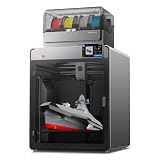
- 【Massive 350x350x350mm³ Build Volume】 Anycubic Kobra S1 Max Combo has extra-large 350x350x350mm³ workspace, provides expansive space for engineers and makers to print full-scale industrial prototypes, large enclosures in one single piece—no splitting or gluing required
- 【Fully-Enclosed CoreXY Structure】 Built with a solid all-metal frame that stays rock-steady even at top speed. Core XY design eliminates shaking and wobbling, giving smooth, clean prints for tall models and precise fitting parts every time
- 【600mm/s Ultra High-Speed Printing】 Delivers up to 600mm/s print speed and 20,000mm/s² acceleration, finishing a standard Benchy in just 15 minutes. Stop wasting hours waiting on prints—cut print times by 80% and finish projects in hours instead of days
- 【Native 4-Color to Max 16-Color】 Bundled with the ACE 2 Pro for 4-color printing out of the box, expanding up to 16 colors with 4 ACE 2 Pro boxes. Say goodbye to manual filament swaps and print vivid, multi-colored models completely hands-free in a single print
- 【65°C Heated Chamber for Advanced Materials】Features a 65°C heated chamber and 350°C hotend to easily print tough engineering materials and consumer-grade filaments like ABS, ASA, PVA, TPU, PLA,PETG. Keeps temperature steady, models won't warp or crack during printing.
- Permit application, approved site plan, construction drawings, and revisions.
- Structural design and calculations for the printed walls, reinforcement, connections, and other structural elements.
- The applicable evaluation or research report, including its scope, limitations, and material properties.
- Material qualification and quality-assurance documentation for the specified printing process.
- Inspection records, test or verification reports, and evidence that required construction hold points were approved.
- Final inspection approval and the certificate of occupancy or equivalent local approval, if required.
Where Appendix AW or an equivalent provision has been adopted, check whether the design organization and construction process must be certified to UL 3401 and whether a UL 3401 report of findings must be submitted with the structural design and construction documents. Appendix AW in the Los Angeles code is an example of this kind of requirement, not evidence that another jurisdiction uses it.
Under applicable residential-code provisions, a permit application is accompanied by construction documents; the building official examines them and may request additional information. A product brochure, marketing claim, or general description of a printer does not establish that the project-specific documents were reviewed.
5. Check the whole building, not only the printed walls
A technical evaluation of printed walls does not automatically establish compliance for every part of a house. Ask how the permit review addresses the following items under the locally adopted code:
Rank #4

- 【Stable Triangular Structure & Higher Precision】3D printer uses reinforced inclined rods to form a stable triangular structure, minimizing vibration and ensuring stable printing.The X and Y-axis automatic calibration technology minimizes vibrations to the maximum extent, ensuring printing accuracy of up to 0.1 mm. It is ideal for home DIY projects and school use, especially for FDM technology
- 【Larder Build Volume & Faster Printing Speed】The Longer LK5 Pro 3D printer measures about 20 x 20 x 15 inches, has a large build volume of 11.8 x 11.8x 15.7in. / 300*300*400mm. Enjoy a larger canvas for your 3D printing projects, providing more room for innovation. It achieves remarkable 180mm/s high-speed printing—surpassing industry standards
- 【Advanced Extruder Technology:】Enhance print quality with our silicon carbide lattice glass platform, ensuring uniform temperature for strong adhesion and preventing distortion. Paired with a Teflon tube for smooth material flow, and upgraded dual fans for swift cooling and filament extrusion, greatly reduces plugging risk and bad extrustion.It’s suitable for a variety of consumables, including PLA, ABS, PETG, and WOOD
- 【Filament Depletion Detection & Auto-Resume Printing】The LK5 Pro 3D printer, with its upgraded 32-bit mainboard, ensures improved print quality. It features sensors for filament and power detection, intelligently pausing printing in case of depletion or unexpected power outage. Upon power restoration, it resumes printing from the last position, saving time and reducing material waste
- 【Ultra-Quiet Driver & Open-Source Firmware】Experience the Longer LK5 Pro 3D printer, featuring an ultra-quiet TMC2209 driver and open-source firmware. Customize your printing with G-code modifications and join our community for insights into advanced 3D printing techniques. Explore the world of 3D printing technology and its applications with us
- Foundation design, wall-to-foundation connections, roof support, and anchorage.
- Fire and smoke safety, insulation and energy requirements, and openings.
- Electrical, plumbing, and mechanical penetrations through or around printed assemblies.
- Egress and other applicable life-safety requirements.
- Site-specific loads and conditions, as reflected in the project’s structural design.
The cited Appendix AW directs compliance with its provisions and other applicable code requirements. The official should identify how those building-wide requirements apply to the particular design.
Independent reader supportYour contribution helps us test, update, and keep practical guides available for everyone.6. Get the inspection sequence before printing begins
Ask the building department which inspections are required, when work must stop for approval, and what records the inspector will need. Depending on the adopted code and approved plans, relevant checks may include equipment and material verification, process parameters, reinforcement or infill, concealed work, connections, and final inspection. Appendix AW provides an example of inspections checking production equipment, parameters, and materials against the report of findings.
Settle the sequence before construction so that critical work is not concealed before inspection. Under the cited 2024 IRC provisions, work cannot proceed past required inspection points without approval. Local adoption and amendments determine the applicable rule for the property.
Best Value

- 【More Colors for More Projects】 Multiple compact 250g mini spools provide practical amounts of different colors for small prints, multicolor models, accent parts, and test prints. Explore more colors without filling your shelf with full 1kg spools or leaving large amounts of rarely used colors behind
- 【Natural Stone Inspired Finish】 Fine mineral particles create subtle color variation and a textured stone-like appearance that helps soften visible layer lines. Ideal for statues, architectural models, planters, busts, decorative objects, and display pieces inspired by marble, granite, concrete, or brick
- 【Neatly Wound for Reliable Feeding】 Precision winding supports smooth, consistent feeding and helps reduce snags and mid-print interruptions. Keep light tension on the filament end while loading or unloading, and secure it before storage to prevent loose loops
- 【Consistent Diameter and Steady Extrusion】 A consistent 1.75mm ±0.02mm diameter supports stable flow, even layers, and clean detail from the first layer to the final layer. Reliable extrusion means less time troubleshooting and more time printing
- 【Fits Most FDM Printers】 Designed for most 1.75mm FDM printers with external, top-mounted, or open spool holders. Each spool measures 140mm in diameter and 36mm in width, with a 53mm center hole. For Bambu Lab AMS or AMS lite, search MakerWorld for a compatible 250g spool adapter before use
7. Verify final approval before anyone moves in
For a completed home, match the final built work to the approved plans and revisions, then confirm the permit file shows required inspections and sign-offs. Ask the jurisdiction whether it issued a certificate of occupancy or another approval required before use. The cited 2024 IRC requires a certificate of occupancy before use or occupancy where that provision applies; confirm the rule and document with the local building department.
If you are buying, request the permit and occupancy records from the seller or builder and verify them directly with the department. If records are missing or the constructed system differs from the approved drawings, ask the official what review, documentation, or corrective work is required rather than treating a technical report as retroactive approval.
Quick Recap
Questions to ask the building official
- Which adopted code edition and local amendments govern this address?
- Has the jurisdiction adopted a 3D-printing appendix or referenced ICC 1150, AC509, or another evaluation route?
- What exact drawings, calculations, evaluation reports, and qualifications are required for this wall system?
- Which inspection hold points and quality records apply during printing and construction?
- What final inspection and occupancy documents must be issued before the home is used?
Product prices and availability are accurate as of the date/time indicated and are subject to change. Any price and availability information displayed on Amazon at the time of purchase will apply.




