Recommended Free Tools
A simple off-grid home power system uses solar panels to generate electricity, a charge controller to manage battery charging, batteries to store energy, and an inverter to supply the AC power used by most household appliances. The right system size depends on your actual loads, site conditions, the least-sunny season you need to cover, and how much backup you want—not on a universal panel count or battery size.
Plan in that order: inventory what must run and when, assess solar access and seasonal conditions, set an autonomy goal, then have the array and equipment designed to work together. Treat wiring, protective devices, permits, and any connection to residential circuits as part of the system design. Bring a qualified solar or electrical professional into code-sensitive work.
As an Amazon Associate I earn from qualifying purchases.
What an off-grid power system does
An off-grid system supplies electricity without being connected to utility lines. Sunlight reaches photovoltaic (PV) modules, which generate direct-current (DC) electricity. A charge controller manages the electricity sent from the array to the batteries. The battery bank stores energy for use when the panels are not producing enough, such as at night or during low-generation periods. An inverter converts DC power from the batteries into alternating-current (AC) power for most ordinary household appliances.
The panels, controller, batteries, and inverter are only part of the installation. Mounting, conductors, disconnects, overcurrent protection, grounding and bonding, equipment enclosures, and labels are also needed. Their specifications and arrangement depend on the equipment and the applicable electrical and fire requirements. The U.S. Department of Energy’s consumer guide describes stand-alone systems as unconnected to utility lines and explains that batteries store unused solar electricity for nighttime use; NREL likewise identifies the main generation, control, storage, inverter, and mounting components.
#1 Best Overall
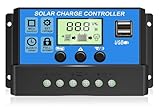
- UPGRADED SOLAR CONTROLLER: With the built-in industrial microcontroller, this PWM solar charge controller automatically helps you manage the working of solar panels and batteries in solar systems. When the battery runs out, it will memorize various parameters you set, so you don't need to reset it, which is easy and safe
- WIDELY COMPATIBILITY IN BATTERY: The 30A solar charge controller is compatible with 12V or 24V systems automatically, only suitable for lead-acid batteries, such as OPEN, AGM, and GEL. Dual USB 5V/3A output ports support mobiles, tablet PCs, or other devices that require 5V voltage. Please refer to the manual for more details. (NOTE: This PWM solar charge controller is NOT suitable for Lithium Battery.)
- EASY TO READ AND ADJUSTABLE: Easily to read the status and data with an LCD display, which is also able to switch modes and parameter configuration, such as adjustment of battery float, reconnect, and stop discharge voltage, which can perfectly protect the battery from over-discharge, suitable for home, industrial, commercial, etc
- SAFE TO USE: Built-in overcurrent protection, short circuit protection, reverse connection protection, open circuit protection, all automatic recovery, no damage to the solar controller, but a reliable protector for your devices and prolong the lifespan
- EASY TO INSTALL AND OPERATE: The charge controller should connect the battery first, then the solar panel, and finally the load. The disassembly sequence is contrary to the wiring order. Please refer to the manual for details. We offer a 12-month guarantee for quality-related issues an technique support, please contact us if any questions
Off-grid is not the same as grid-connected storage
A home that remains connected to the utility but has batteries is a grid-connected system with storage, not a stand-alone off-grid system. The distinction affects how sources are switched, how the system operates, and how household circuits are supplied. Decide which arrangement you are planning before discussing a connection to a home panel. Do not assume that equipment described as a backup system can simply be wired in as an off-grid supply.
Plan the system in the right order
Equipment should be selected only after you understand what the system must do. A panel’s headline wattage does not tell you whether a design can cover your daily energy needs, ride through a cloudy period, start a motor, or safely charge the selected batteries. Work through the following decisions before comparing equipment.
- List the loads. Record what must be powered, how much energy each item uses, when it runs, and whether it has a motor or other startup surge.
- Assess the site and season. Consider location, shade, orientation, tilt, usable area, roof condition, and weather, including the season with the weakest expected solar production.
- Choose an autonomy and backup goal. Decide which loads matter during low-generation periods, how long they must last, and whether a separate backup source is justified.
- Match the equipment. Have the array, controller, battery, and inverter checked together for compatible voltage, power, charging, and operating limits.
- Design protection and installation. Plan mounting, conductors, disconnects, protective devices, grounding and bonding, equipment locations, labels, permits, and any connection to household wiring with a qualified professional.
Inventory loads before estimating system size
Make a practical list of appliances and other equipment that the off-grid system would serve. For each item, note its rated wattage or energy use, expected hours or cycles of operation, and whether it has a motor or another load that may require more power when starting. Manufacturer labels and manuals are useful starting points; an appliance’s energy use over time is more informative for battery planning than its wattage alone.
Free tools Windows power users keep installed
One-click scans. No signup required.
Separate daily energy from peak power
Daily energy is the total electricity used over a day. Peak power is the amount of power needed at one time. These are different design questions. A light may use little energy over several hours, while several appliances operating together can create a high simultaneous demand. A motor-driven load may also require a startup surge that its ordinary running power does not show.
For an initial load inventory, estimate each appliance’s energy over its expected use period and add the entries to see which loads dominate the daily total. Separately, identify which appliances could run together and which have a startup surge. This exercise organizes the design brief; it does not, by itself, select an array, battery, controller, inverter, or wire size. No universal household load profile or safe system rating applies to every home.
Decide what is essential
Divide loads into those that must run, those that are useful but can be deferred, and those that can be left out during a low-generation period. This makes the reliability goal concrete. If the system is expected to support every appliance as if it were connected to a utility, the design may be substantially different from one intended to supply a limited set of essential loads.
Also note when each load is used. Loads that can run when solar production is available may place different demands on stored energy from loads that need to run overnight. The purpose is not to assume that timing alone solves a capacity problem, but to give the designer a more realistic picture of how energy moves through the day.
Quick wins for a faster PC:
Fix the driver behind crashes, sound loss and screen glitchesFind Drivers →Clear out junk files and repair common Windows errorsFree Scan →Scan for outdated or missing drivers - takes under a minuteDriver Scan →Assess the site and seasonal solar resource
Solar production depends on the installation as well as the panel rating. The U.S. Department of Energy’s consumer guide identifies orientation, tilt, shading, dust, panel conversion, and wire losses as factors affecting output. A site review should therefore consider the usable mounting area, nearby obstructions, roof condition, and how shade changes through the day and year. A roof that looks sunny during one visit may not have the same solar access in another season.
In U.S. guidance, the Department of Energy’s homebuilder material describes unshaded, south-facing roofs with a slope of 15–40 degrees as generally favorable and notes that southeast-to-southwest orientations can also work. These are broad orientation observations, not a prediction of how much electricity a particular roof will generate. They do not account for a specific location, shade pattern, system layout, weather, or equipment.
Rank #2
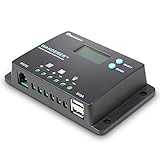
- 𝐒𝐦𝐚𝐫𝐭 𝟒-𝐒𝐭𝐚𝐠𝐞 12V/24V Solar Charge Controller: Renogy charge controller 𝐦𝐚𝐱𝐢𝐦𝐢𝐳𝐞𝐬 𝐁𝐚𝐭𝐭𝐞𝐫𝐲 𝐋𝐢𝐟𝐞 & 𝐒𝐨𝐥𝐚𝐫 𝐄𝐟𝐟𝐢𝐜𝐢𝐞𝐧𝐜𝐲, this advanced pwm solar charge controller utilizes intelligent 4-stage charging (Bulk/Boost/ Float/Equalization) to optimize power delivery for AGM, Gel, Flooded and Lithium batteries. RV solar charge controller prevents overcharging and gas buildup while 𝐚𝐜𝐡𝐢𝐞𝐯𝐢𝐧𝐠 𝟑𝟎% 𝐥𝐨𝐧𝐠𝐞𝐫 𝐛𝐚𝐭𝐭𝐞𝐫𝐲 𝐥𝐢𝐟𝐞𝐬𝐩𝐚𝐧 compared to basic charge controllers.
- 𝐀𝐝𝐯𝐚𝐧𝐜𝐞𝐝 𝐋𝐨𝐚𝐝 𝐌𝐚𝐧𝐚𝐠𝐞𝐦𝐞𝐧𝐭 & 𝐒𝐲𝐬𝐭𝐞𝐦 𝐏𝐫𝐨𝐭𝐞𝐜𝐭𝐢𝐨𝐧:Renogy Wanderer 10A charger controller offers 𝐮𝐧𝐩𝐚𝐫𝐚𝐥𝐥𝐞𝐥𝐞𝐝 𝐟𝐥𝐞𝐱𝐢𝐛𝐢𝐥𝐢𝐭𝐲 with manual/automatic/timed load control modes, allowing direct parameter adjustment for lighting, pumps and other DC loads. Solar panel charge controller has overcharge/over-discharge/ overload/ short-circuit/reverse polarity/temperature compensation) with 𝐋𝐂𝐃 𝐞𝐫𝐫𝐨𝐫 𝐜𝐨𝐝𝐞𝐬 𝐩𝐫𝐨𝐯𝐢𝐝𝐞 complete system security. Negative ground design making solar panel charge controller for RV and Marine 𝟗𝟎% 𝐬𝐚𝐟𝐞𝐫 𝐭𝐡𝐚𝐧 𝐜𝐨𝐦𝐩𝐞𝐭𝐢𝐭𝐨𝐫𝐬.
- 𝐇𝐢𝐠𝐡-𝐄𝐟𝐟𝐢𝐜𝐢𝐞𝐧𝐜𝐲 Renogy Solar Power Controller: 𝐈𝐧𝐝𝐮𝐬𝐭𝐫𝐲-𝐋𝐞𝐚𝐝𝐢𝐧𝐠 <𝟏𝟎𝐦𝐀 𝐒𝐞𝐥𝐟-𝐂𝐨𝐧𝐬𝐮𝐦𝐩𝐭𝐢𝐨𝐧, unlike standard charge controllers that drain your batteries, our Wanderer 10A Controller ultra-low power design maximizes every watt from your solar panels. Renogy Renewable energy controllers compact size (𝟓.𝟐×𝟑.𝟏 𝐢𝐧𝐜𝐡𝐞𝐬) fits perfectly in RV electrical cabinets or marine control panels. With IP32 waterproof rating, this solar controller withstands 𝐡𝐚𝐫𝐬𝐡 𝐨𝐮𝐭𝐝𝐨𝐨𝐫 𝐜𝐨𝐧𝐝𝐢𝐭𝐢𝐨𝐧𝐬 while maintaining optimal performance.
- 𝐕𝐞𝐫𝐬𝐚𝐭𝐢𝐥𝐞 Solar Charge Controller : Universal 12V/24V Battery Compatibility, whether you need a solar controller for lithium batteries (𝐰𝐢𝐭𝐡 𝐦𝐚𝐧𝐮𝐚𝐥 𝐚𝐜𝐭𝐢𝐯𝐚𝐭𝐢𝐨𝐧 𝐬𝐞𝐭𝐭𝐢𝐧𝐠𝐬) or traditional AGM/Gel systems delivers precise charging for all types. Lithium solar charge controller has rugged construction &𝐰𝐢𝐝𝐞 𝐨𝐩𝐞𝐫𝐚𝐭𝐢𝐧𝐠 𝐭𝐞𝐦𝐩𝐞𝐫𝐚𝐭𝐮𝐫𝐞 𝐫𝐚𝐧𝐠𝐞 make the go-to choice for professional solar installations and DIY off-grid projects alike.
- 𝐒𝐦𝐚𝐫𝐭 𝐌𝐨𝐧𝐢𝐭𝐨𝐫𝐢𝐧𝐠 Renogy Charge Controller: 𝐑𝐞𝐚𝐥-𝐓𝐢𝐦𝐞 𝐃𝐚𝐭𝐚 𝐓𝐫𝐚𝐜𝐤𝐢𝐧𝐠 & 𝐔𝐒𝐁 𝐂𝐡𝐚𝐫𝐠𝐢𝐧𝐠, upgrade your solar power controller with our backlit LCD that clearly displays voltage, current, and system status. The integrated RS232 port connects to Renogy's DC Home App via BT-1 Bluetooth module(𝐬𝐨𝐥𝐝 𝐬𝐞𝐩𝐚𝐫𝐚𝐭𝐞𝐥𝐲) for remote monitoring. 𝟓𝐕/𝟐𝐀 𝐔𝐒𝐁 𝐩𝐨𝐫𝐭 lets you charge phones/tablets directly - a must-have feature for 12V solar charge controllers used in off-grid living.
Plan around the period that challenges the system
Ask the designer to evaluate expected production for the location and for the season when solar generation is least favorable for your needs. An annual average can obscure a shortage at the time you rely on the system most. The amount of usable area, roof suitability, shading, and seasonal weather may all influence whether the proposed array can meet the intended load and recharge storage.
If the roof is unsuitable or shaded, that is a design constraint to resolve—not a reason to compensate by guessing at a larger panel count. A professional can assess whether another mounting location or a different system plan is feasible. The available evidence does not establish a nationwide output figure, current standard price, or required battery capacity for a home system.
What’s actually slowing this PC down?
Pick the symptom - the matching free tool is one click away.
Set autonomy and decide whether backup is needed
Autonomy is how long the system is expected to supply its chosen loads when generation is inadequate. Set this goal by asking what must remain powered and for how long during a stretch of weak or absent solar production. More autonomy generally means planning for more stored usable energy, but the appropriate amount depends on the load profile, site conditions, equipment, and reliability expectations.
The Department of Energy’s Small Wind Guidebook says battery banks in off-grid hybrid systems are typically sized for one to three days of load. That is contextual guidance from a small-wind guidebook, not a universal sizing rule for solar homes, every climate, or every battery type. Have the designer explain the assumptions behind the autonomy target and how the system behaves when actual conditions fall short.
Consider a generator only if it solves a defined problem
A generator is optional. Depending on the design, it may support loads or help recharge storage when renewable generation is insufficient. Consider one if the reliability goal cannot reasonably be met with the planned renewable supply and storage alone, or if the consequences of a long low-generation period warrant another source. The choice adds equipment and installation considerations, including fuel, safe placement, and switching or isolation.
A portable generator must not be casually connected to household wiring. The transfer or isolation arrangement and installation must be designed to prevent unsafe interaction with other supplies and to satisfy local requirements. Have a qualified professional specify any generator connection. The Department of Energy’s Small Wind Guidebook lists an average annual wind speed of 9 mph (4 m/s) as a condition for considering an off-grid hybrid small-wind system. That is a guidebook screening condition for small wind, not evidence that a wind turbine is appropriate or productive at a particular home.
Understand the components and what to check
Each major component has a distinct job, but none should be selected in isolation. The table summarizes the role of each category and the design question to resolve before purchase.
| Component | Role | What the design must establish |
|---|---|---|
| PV modules and array | Generate DC electricity from sunlight. | Expected production at the site, including shade, mounting conditions, and the season that matters most. |
| Charge controller | Regulate charging from the PV array to the battery bank. | Compatibility with the array and battery specifications, including the equipment’s applicable limits. |
| Deep-cycle battery bank | Store energy for use when generation is insufficient. | Required usable energy and autonomy, intended cycling, temperature conditions, and compatible charging. |
| Inverter | Convert battery DC electricity to AC for household loads. | Compatibility with the battery bank and enough continuous and surge capability for the intended loads. |
| Mounting, conductors, disconnects, and protective equipment | Support, connect, isolate, and protect system components. | Ratings, locations, installation details, and compliance with the adopted local requirements. |
| Optional generator | Provide a separate source of support or charging when the design calls for it. | Whether it is needed, plus safe placement, fuel arrangements, switching or isolation, and compliant installation. |
PV modules and charge controller
Choose an array based on the load and site-specific expected production, not a generic number of panels. The controller must suit both the array and the battery it charges. “Solar charge controller” and “MPPT charge controller” are useful category search terms, but a product label does not demonstrate compatibility. Check the actual equipment specifications as part of the system design.
Battery bank
Select storage only after estimating daily energy demand and choosing an autonomy goal. Compare batteries by usable energy, intended cycling, temperature conditions, charging compatibility, and suitability for the installation—not by a headline capacity alone. The Department of Energy’s Small Wind Guidebook cautions, in its stand-alone wind discussion, that automotive batteries are shallow-cycle batteries and are not suited to repeated deep cycling in renewable systems. That specific warning is not a detailed comparison of current battery chemistries; it should not be used as one.
Rank #3

- 【Superior MPPT Technology】 This 100A MPPT solar controller is equipped with an advanced MPPT maximum power point tracking technology algorithm. It automatically recognizes 12V/24V/36V/48V systems and features dual USB 5V charging ports. The controller can swiftly track the maximum power point of the PV array in any environment, ensuring a tracking efficiency of no less than 99.5%. This significantly enhances the energy utilization in the solar system.
- 【Versatile Design】 The controller features a multi-function LCD with a backlight display and clock. It offers seven operating modes: charging mode, light control mode, light control + time delay control mode, universal control mode, manual control mode, and timing control mode. The upgraded version now supports precise time control, allowing devices to be automatically powered on and off according to the user’s set time. Additionally, it can maintain a continuous bright screen state without entering hibernation or lock mode.
- 【Comprehensive Voltage Protection】 The MPPT solar controller provides extensive voltage protection, including safeguards against battery over-voltage, over-current, power failure, overcharge, deep discharge, reverse connection, and overheating. Moreover, the device can now display the real-time voltage of the solar panel, helping users monitor and optimize energy use, ensure normal operation, and assist in troubleshooting.
- 【User-Centric Design】 The LCD is designed to dynamically display the operational data and working status of the equipment. It shows controller parameters such as working mode, battery voltage, PV charging current, battery discharging current, product working temperature, and delay time. For scenarios requiring configuration resets or restoring default settings, a "reset to factory settings" feature has been added, providing a quick and effective solution.
- 【Diverse Battery Charging Options】 The controller is compatible with various types of batteries, including Seal, GEL, Flooded, and LifePO4.
Inverter
The inverter must be compatible with the battery bank and able to supply the loads the system is intended to run. Check continuous power needs as well as startup surges and possible simultaneous operation. A large inverter does not create more stored energy or solve inadequate solar production; it addresses the power the system can deliver to loads, not the amount of energy available over a long period.
Design wiring and protection as core equipment
Conductors, disconnects, overcurrent protection, grounding and bonding, equipment locations, enclosures, and labels belong in the plan from the beginning. They are not optional finishing touches. Their selection depends on the engineered system, the installed equipment, and the codes and fire requirements adopted in the relevant jurisdiction.
The Department of Energy warns that faulty design, defective components, or faulty installation can cause solar fires. It recommends compliance with current codes and clear labels. Its Solar Energy Technologies Office states: “Whether your rooftop solar PV is a grid-connected system, a back-up generator system, or an isolated battery-storage system, it should be installed in accordance with current safety codes and standards.” Because local requirements vary, a general article cannot determine the permits, equipment locations, protective-device ratings, or wiring methods required at a specific home.
Use appropriately qualified installers for code-sensitive residential work, especially batteries and any connection to a home panel. Licensing and training rules vary by state, and the Department of Energy’s homebuilder guidance notes that energy storage can bring additional electrical and fire-code requirements. Avoid live-DC wiring or panel-connection instructions from a generic diagram that has not been reviewed for the actual equipment and jurisdiction.
Use a professional design review before buying equipment
Once you have a load inventory, site information, and a clear autonomy goal, ask a qualified solar or electrical professional to turn them into a coordinated design. Provide the information that affects the design rather than asking for a quote based only on the word “home.” The review should make clear what the system is intended to power, what assumptions it uses, and what happens during low-generation conditions.
The Tool Desk
Outbyte Driver Updater FREEScan for outdated or missing drivers - takes under a minuteDriver Scan →Outbyte PC Repair FREERepair Windows errors before they cause bigger problemsFix Now →- Confirm whether the project is truly stand-alone or remains connected to utility service.
- Review the load list, daily energy estimate, simultaneous peak demand, and identified startup surges.
- Ask how site shading, orientation, tilt, usable mounting area, and seasonal production affect the proposed array.
- Ask what autonomy target is being designed for and how that translates into usable battery energy.
- Verify controller, array, battery, and inverter compatibility as a system.
- Clarify the intended role of any generator or other backup source, including safe switching and isolation.
- Confirm which permits, inspections, equipment locations, labels, and local fire or electrical requirements apply.
Ask for the design assumptions and operating limits in understandable terms. For example, clarify which loads are included, whether they can run together, and what response is expected if actual demand or weather differs from the plan. If a proposal gives a single capacity figure without connecting it to your loads and site, request that explanation before committing to equipment.
Common planning mistakes to avoid
- Choosing equipment before measuring demand. A generic panel count or battery size cannot reflect your appliances, operating schedule, or reliability goal.
- Confusing energy with power. Daily consumption determines how much energy must be supplied over time; simultaneous and startup demands affect the power equipment must deliver.
- Using an annual or idealized solar estimate alone. Shade, orientation, tilt, dust, conversion, wiring losses, and seasonal conditions affect output.
- Treating autonomy guidance as a prescription. The one-to-three-day figure in the DOE Small Wind Guidebook is contextual guidance for off-grid hybrid systems, not a default specification for a solar home.
- Comparing only headline wattage or capacity. A useful comparison also considers usable energy, site production, peak and surge capability, charging compatibility, safety and code fit, maintenance, environmental conditions, and complexity.
- Leaving protection and installation until last. Wiring, disconnects, protective devices, grounding and bonding, labels, and equipment placement affect safe and compliant design.
- Assuming a backup generator is plug-and-play. Fuel, placement, transfer or isolation, and household wiring require a deliberate, professionally reviewed plan.
What a simple system can—and cannot—promise
“Simple” should mean that the system has a clear purpose and a manageable set of components, not that it can be sized without site and load information. A modest supply for selected essential loads may be a different design from one intended to support an entire house. A professional can identify whether the stated goal is feasible and what trade-offs—such as which loads to defer, how much autonomy to target, or whether backup generation is useful—need to be made.
The available U.S.-oriented guidance establishes component roles and planning factors, but it does not provide a current universal price, national home-system output, or required battery capacity. Cost and performance must be evaluated for the actual location, design, equipment, and installation scope. The Small Wind Guidebook’s reported $5,120 per kilowatt is not a current solar-system price: it reflects the capacity-weighted average cost of small-wind projects installed in 2021, covering 16 projects across three states with 396 kW of combined rated capacity. It should not be used to budget a residential solar installation.
Quick Recap
Product prices and availability are accurate as of the date/time indicated and are subject to change. Any price and availability information displayed on Amazon at the time of purchase will apply.




