The Tool Desk
Outbyte Driver Updater FREEFix the driver behind crashes, sound loss and screen glitchesFind Drivers →Outbyte PC Repair FREEClear out junk files and repair common Windows errorsFree Scan →Use a documented, project-specific process rather than relying on how a single work shift feels. Identify the project owner and its published commitments, map homes and transport routes that could be affected, record baseline conditions, track noise, vibration, dust, access and traffic during each construction stage, then compare your observations with the project’s own criteria. Report patterns to the project team and obtain a qualified building or structural assessment if there is a credible property-condition concern. Rules, limits and remedies depend on the project location and jurisdiction.
What a useful assessment covers
Bridge construction can change conditions in several ways at once. A work zone may narrow lanes, move pedestrians, close a driveway, add trucks to a local street, create queues or alter emergency access. Pile installation, demolition, drilling, compaction and deliveries can produce airborne noise and ground motion. Dust, lighting and out-of-hours work can affect nearby occupants even when the bridge itself is not immediately beside a property.
As an Amazon Associate I earn from qualifying purchases.
Assess these effects separately and then look at how they interact. Construction impacts are usually temporary and tied to a stage, work area or route. Once the bridge opens, traffic volumes, vehicle mix, road alignment, access and long-term traffic noise may change. Those operational effects require a different comparison with the approved design and applicable environmental or road rules.
Outdated Drivers Are Slowing You Down
One free scan finds every outdated or missing driver and matches the right update for your exact hardware.Free scan · exact hardware matchPC Slower Than It Used to Be?
A free scan shows the junk files, broken settings and background clutter dragging Windows down - then fixes them in one click.Free scan · Windows 10 & 11There is no universal distance at which a home is safe from impact, and no single vibration or noise number applies to every bridge project. Ground conditions, equipment, barriers, building type, work duration, route selection, time of day and local requirements all matter.
#1 Best Overall

- 2.25-inch LCD Screen with Backlight: This TS-501B sound level meter is measured noise levels are expressed in decibels and displayed on the 2.25-inch LCD screen, it easy to read on a big display design. Long press the backlight button to turn on a backlight, making it easy to view even in dim light
- Decibel Meter with A/C Weighting: TopTes TS-501B decibel meter uses a precise condenser microphone to capture sound. It’s equipped with A-weighting and C-weighting facilities that measure noise levels from 30 to 130 dB with an accuracy of 1.5 dB, Frequency from 30 to 8000Hz. Perfect for monitoring noise levels in communities, home theaters, audio systems, automobiles, workshops, schools, offices, factories
- MAX/MIN Measurement: The sound pressure level (SPL) meter has Max or Min measurement values to represent the maximum/minimum (high/low peak) value of the sound produced within a certain time, and the data hold function can freeze the current reading based on the sound measurement according to individual needs
- Easy Use and Feature Packed: The non-slip side design ensures that the portable noise meter fits easily in the hand. TS-501B SPL meter is a battery-operated noise meter that comes with three durable batteries and has an automatic power off function to extend battery life. A low battery indicator will appear on the screen when the battery is low to remind the user to replace the battery in time
- What’s in the Box: One TS-501B Decibel Meter, Three AAA Batteries, One User Manual, One Carry Case. The device has been factory calibrated to ensure high measurement accuracy and compliance with quality standards.
1. Identify the project owner and its commitments
Start with the authority responsible for the bridge: a state or provincial transport department, local road agency, port or waterway authority, or another public or private owner. Use the owner’s project page and public-records or community-contact channels to obtain the documents that govern construction.
Documents to locate
- Environmental assessment or approval and any conditions attached to it.
- Work-zone or transportation-management plan, including staging drawings.
- Lane-closure, detour, pedestrian and bicycle-access plans.
- Haul-route, delivery and material-storage maps.
- Approved work hours and the process for out-of-hours work.
- Noise, vibration, dust, lighting and water-quality controls.
- Monitoring commitments, alert levels and actions for an exceedance.
- Complaint, incident and emergency-access contacts.
- Any pre-construction property-condition or pre-blast survey program.
Ask which phases are expected to be loudest or most disruptive, when they are scheduled, and where baseline measurements were taken. The Federal Highway Administration (FHWA) expects impact assessment and management through development and construction for covered Federal-aid work, but the exact documents and enforcement arrangements vary by state, locality and project.
2. Map homes, roads and other receptors
Make a simple map or annotated aerial image. Mark each potentially sensitive location and the route by which an impact could reach it, not merely the straight-line distance to the bridge.
Include these locations
- Homes, apartment buildings and properties with outbuildings or retaining walls.
- Schools, child-care centers, hospitals and care facilities.
- Businesses whose customers, deliveries or employees depend on a particular entrance.
- Sidewalks, crossings, bicycle routes, transit stops and parking areas.
- Driveways, loading bays, fire lanes and emergency routes.
- Detour streets, haul roads, staging areas, stockpiles and equipment yards.
For each location, note intervening buildings, walls or terrain; the likely work type; the hours of exposure; and the expected duration. A house can be affected by a haul route several blocks away even when it is far from the bridge, while a nearby building may be shielded by a substantial structure. FHWA identifies route selection, storage placement, existing barriers and operating schedules as possible controls for construction-related noise.
3. Establish a baseline before major work
A baseline gives you a defensible description of conditions before a new activity starts. Observe only from public areas or land where you have permission, and do not enter a work zone.
Rank #2

- Accurate 30-130dB Noise Measurement: The Goldeep SL750A decibel meter measures sound levels from 30 to 130dB with ±1.5dB accuracy and a 31.5Hz-8KHz frequency response. This sound decibel meter is ideal for checking home noise, neighbor noise, traffic sound, office noise, construction sites, factories, classrooms, baby rooms and musical instruments.
- A/C Weighting for Different Sound Environments: This digital sound level meter supports A/C weighting modes for more flexible noise testing. A-weighting is suitable for environmental noise such as urban traffic, schools, offices, business areas and construction sites. C-weighting is designed for industrial noise from machinery, equipment, aerospace, high-speed rail and other high-intensity sound sources.
- dB/SONE Units for Sound & Loudness Testing: Use the dB unit to measure sound intensity for environmental noise, machine noise, traffic noise and workplace noise. Switch to SONE to better understand perceived loudness, making this db meter useful for music, audio systems, acoustic checks and instrument noise control..
- FAST/SLOW Response with MAX/MIN Tracking: The spl meter includes FAST and SLOW response settings. FAST response, 0.125s per reading, is useful for changing noise levels, while SLOW response, 1s per reading, is suitable for steady-state noise. MAX/MIN value tracking helps record peak and minimum noise levels over a period of time.
- Easy-to-Use Sound Meter for Daily & Professional Needs: Designed with data hold, clear LCD display, anti-slip grip and a windbreak ball, this sound meter is practical for indoor and outdoor use. Package includes 1 sound level meter, 2 AAA 1.5V batteries and 1 user manual, so you can start measuring noise right away.
Record visible and access conditions
- Date, time, weather and exact observation location.
- Existing cracks, settlement, water entry, sticking doors or windows, damaged paving and retaining-wall conditions, photographed with a scale where practical.
- Normal driveway, sidewalk, loading and emergency access.
- Typical traffic queues, travel times and bus or delivery movements.
- Existing daytime and nighttime sound patterns, including recurring sources.
Photographs and notes document what was visible; they do not, by themselves, prove that construction caused a defect. Keep original files, avoid editing the images, and use a consistent viewpoint. A dated log is more useful than occasional statements that work was “loud” or “bad.”
Where blasting may affect nearby structures, site-specific federal specifications describe a formal pre-blast condition survey and instrumented monitoring when the assessment shows they are warranted. Ask whether your property is included, what the survey covers and how you receive a copy.
4. Understand noise and vibration as different effects
Noise: airborne sound from a scheduled activity
Noise depends on the task, equipment, distance, barriers, weather and operating schedule. Demolition, impact tools, pile driving, concrete breaking, backup alarms and trucks can have different sound patterns even at the same location. Detours and haul roads can move construction noise to streets that are not next to the bridge.
FHWA notes that many projects can address construction noise in a narrative discussion. More complex or locally regulated cases may require calculations, modeling, operating schedules, field monitoring and enforcement. FHWA lists the Roadway Construction Noise Model (RCNM) 1.1 and construction-noise modeling incorporated in Traffic Noise Model versions after 3.2; neither tool is required for every Federal-aid project.
Ground vibration: motion transmitted through soil or rock
Vibration varies with the work, equipment, ground conditions and distance. Piling, drilling, compaction, blasting and heavy demolition can produce different frequencies and durations. Feeling movement, hearing a rattle or seeing dust fall does not establish that a structure is damaged. Main Roads Western Australia’s November 2024 Mandurah Estuary Bridge Project FAQ states: “Experiencing vibration does not mean structural damage to a property will occur.” That is the project authority’s statement about its project, not a universal guarantee.
Rank #3

- 【Widely Used】The noise meter is the use of environmental sound level instrument, can be widely used in such as factories, workshops, schools, residential, office areas, traffic roads, audio and other occasions of sound level measurement. Also suitable for noise engineering, product quality control, health,prevention and control.
- 【Accurate Measurement】Measuring Range:30~130dB ;Accuracy:±1.5dB(94dB@1KHz);Display Resolution:0.1dB
- 【A Weighted Measurement】 A Weighted network (automatic switching range display)
- 【Fast/Slow mode selection】Press the MODE key, you can convert the response speed of the noise meter, FAST fast, SLOW slow
- 【MAX/MIN Measurement】Press RANGE key to measure the maximum value of MAX and minimum value of MIN.A maximum duration of more than 3 seconds is recorded, with a normal test sampling rate of 0.5 seconds. The maximum error is ± 5%.
For blasting, FHWA’s FP-24 specifications call for considering ground conditions, blast parameters and proximity. Where warranted, they describe pre-blast surveys and monitoring with a vibration specialist. Ask the project team what instrument is used, where it is installed, what is measured, who receives an alert and what action follows an alert.
Questions that reveal whether monitoring is meaningful
- What are the project’s noise and vibration criteria, and which jurisdictional rules apply?
- Are criteria limits, investigation levels or notification triggers?
- How often are monitors checked and calibrated?
- Are readings continuous, event-based or limited to selected activities?
- Which locations represent homes, schools and businesses rather than only the work face?
- Who reviews an exceedance, how quickly, and what operational change can follow?
- Will residents receive records or only a confirmation that a complaint was logged?
FHWA’s guidance for more complex projects emphasizes clear goals, capable monitors, trained staff, written requirements and defined responsibility. A consumer sound meter can help you log approximate airborne-noise timing, but it cannot measure ground vibration, establish a regulatory exceedance or diagnose structural damage.
5. Check traffic, safety and access at every stage
Read the staging plan as a sequence. A bridge project can have a different impact during utility relocation, demolition, foundation work, girder erection, deck construction and final road tie-ins. For each stage, identify the lanes, sidewalks, driveways and routes that change.
Indicators worth recording
- Queue length and the time a queue persists.
- Travel time between two repeatable points.
- Vehicle speeds where measuring is lawful and safe.
- Number and duration of lane, sidewalk or driveway closures.
- Blocked or delayed emergency access.
- Near-misses, crashes, damaged signs or confusing temporary markings.
- Truck frequency, route, idling and loading activity.
- Missed deliveries, customer-access problems or transit disruptions.
Record the date, location, stage, weather, what you observed and how long it lasted. Compare repeated observations with the project’s stated goals rather than treating one unusual delay as proof of a systemic failure. FHWA recommends using field observations plus available crash and operating information, including traffic volume, speed, travel time, queue length, crashes, congestion duration and access problems. Plans can be revised during implementation when monitoring shows that a strategy is not working.
Distinguish a temporary closure from a lasting change
A signed detour during a foundation pour is a construction effect. A permanently moved intersection, changed turning restriction, new bridge approach or increased heavy-vehicle flow after opening is an operational change. Ask the owner for the final traffic arrangement and the date it is expected to begin; do not assume that a construction detour represents the bridge’s permanent layout.
Quick wins for a faster PC:
Clear out junk files and repair common Windows errorsFree Scan →Scan for outdated or missing drivers - takes under a minuteDriver Scan →Repair Windows errors before they cause bigger problemsFix Now →Rank #4

- 【Accurate Measurement】 The measuring range of the sound level meter is 30dB to 130dB . Highly accurate with ± 2.0 dB. Real-time monitoring can give you accurate data on the sound level in the area.
- 【A/C Weighted Measurement】 The A weighted simulates the frequency characteristics of low-intensity human ear noise, which is suitable for the detection of ambient noise. The C weighted simulates the frequency properties of high-intensity noises of the human ear, which are suitable for the sound pressure analysis of machine motors and machines. More professional measurement methods provide users with a more perfect user experience.
- 【Fast and Slow Measurement】 The sound level meter has the function of converting the fast and slow response rate. The fast response rate uses a time constant of 0.125s/time for general environmental measurement. The slow response rate uses a 1s/time constant, which is used for environmental measurements with relatively large changes in noise levels.
- 【Digital LCD Display 】 The digital display is a 4-digit LCD display with a resolution of 0.1 dB. Backlit LCD digital display, the reading effect is clearer in dark places. When the battery is low, the LCD display will display a low voltage icon, indicating that the power is low at this point and the battery needs to be replaced.
- 【Convenient and Lightweight 】Tadeto sound level meter is lightweight and easy to carry. It's widely used in factories, transportation, car, baby room and audio system offices, sound quality control in homes, schools, and construction sites.
6. Examine dust, work hours and truck movements
Dust controls and work-hour rules are project-specific. Look for watering, street sweeping, covered loads, wheel cleaning, dust suppressants, wind shutdown criteria and complaints procedures in the project documents. Note whether dust comes from the work site, an unpaved staging area or a haul route, and record wind and visible duration.
Work outside approved hours may require notification or a separate authorization. Keep the notice, date and actual start and finish times. For truck access, compare the published route with what you see; a route change can shift noise, dust and safety risks to another neighborhood.
The Mandurah Estuary Bridge FAQ issued by Main Roads Western Australia in November 2024 describes that project’s use of water carts, street sweepers, dust suppressants, air-quality readings, monitoring, notification for out-of-hours work, anticipated traffic effects and efforts to minimize local truck movements. Those measures illustrate questions to ask; they are not requirements for every bridge project.
Independent reader supportYour contribution helps us test, update, and keep practical guides available for everyone.7. Compare proposed controls before they are locked in
When the owner presents alternatives, evaluate the effect at each receptor and route rather than choosing the option that simply moves the work elsewhere. FHWA says construction-noise mitigation should weigh cost, feasibility, implementation issues, enforceability, achievable noise reduction, receptor sensitivity and project delay or disruption.
| Comparison factor | Questions to ask |
|---|---|
| Noise and vibration | Which equipment and methods are used, at what distance, and for how long? |
| Timing | Does the option avoid evening, night, school and care-facility periods? |
| Traffic and safety | How do lanes, crossings, queues, transit, cyclists and emergency access change? |
| Displaced effects | Does a detour or haul route shift noise, dust or risk to another street? |
| Monitoring | Are locations, methods, calibration, reporting and response duties defined? |
| Enforceability | Can the promised control be checked and required when conditions change? |
| Feasibility and schedule | What cost, access, engineering or completion-date effects make the option impractical? |
Request the reasoning in writing, including why a more protective option was rejected. A mitigation measure that cannot be monitored or enforced should be treated differently from one with a clear trigger and responsible person.
Best Value
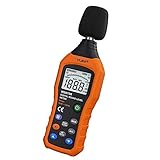
- The sound level meter is an instrument used to real-time measure the sound level,such as sound level around factories,workshops,schools,residential,offices,road,audio etc (Battery not include), Can not keep and generate a report directly from the device
- It also can be appropriate for noise engineering,product quality control,health prevention and treatment,etc.This audio noise measure device is a great tool for checking, monitoring or controlling and test the sound level of any environments. It is widely applicable for personal, families, business, studies, industrial and etc
- With the measuring scope from 30 to 130dB and shifting function. Digital display,good anti-interference performance,power saving
- With the backlight feature,it is appropriate for gathering the sound data at night.Backlight auto power off function is provided.With power saving and high-reliability circuit design,well-design high-efficiency power supply circuit makes the batteries more durable
- Composite material injection molding process is adopted for casing with anti-drop structure design.It is not only extremely wear-resisting,but also elegant,It’s a mini handheld portable sound level reader
8. Ask the project team precise questions
Send questions through the published community or complaint channel and keep the reference number. Ask for written answers where possible.
- What work is planned near my property or street, and during which dates and hours?
- Which streets are approved haul and delivery routes, and where may trucks wait or load?
- What noise, vibration, dust, traffic and access criteria apply at my location?
- What baseline surveys or measurements exist, and can affected property owners obtain them?
- Where are monitors installed, what do they measure, and how often are results reviewed?
- Who investigates an alarm, complaint, blocked driveway or emergency-access problem?
- What immediate and longer-term changes can be made if a criterion or access goal is missed?
- Does the project offer a property-condition survey, and what are its scope and timing?
A project FAQ describes only that project’s methods. Do not assume that another bridge uses the same hours, thresholds, monitoring locations or remedies.
9. Respond when conditions change
For noise, dust or access problems
- Write down the activity, exact location, start and finish time, frequency and effect.
- Photograph visible dust, blocked signs or access conditions from a safe place; do not confront workers or enter restricted areas.
- Report the event promptly through the project channel, giving the log entry and any reference number.
- Ask what criterion or commitment was checked and what corrective action is planned.
- Continue logging repeated events and notify the relevant road or environmental authority if the project’s escalation route does not respond.
For a suspected property change
Do not infer causation from a vibration sensation or a consumer instrument. Secure the area if there is an immediate safety issue, notify the project owner promptly and preserve dated photographs and records. A qualified building inspector, structural engineer or construction-vibration monitoring specialist can distinguish ordinary movement and pre-existing defects from conditions needing further investigation. Ask for a written scope, instruments used, limitations and whether a pre-construction record is available.
Compensation, liability and access to records depend on local law, contracts and project conditions. An engineer’s observation can document condition; it does not by itself decide legal responsibility.
10. Keep a practical project log
Use one row per event so that the project team can identify a pattern.
| Field | What to enter |
|---|---|
| Date and time | Start, finish and whether the event was within approved hours. |
| Location | Property, street segment, driveway, sidewalk or monitoring point. |
| Activity | For example, piling, demolition, truck movement, lane closure or sweeping. |
| Observed effect | Noise character, vibration sensation, dust, queue, delay, access or safety issue. |
| Evidence | Original photographs, video, approximate sound reading or travel-time note. |
| Notification | Contact, reference number, response and promised follow-up. |
| Outcome | Whether the condition stopped, recurred or changed after mitigation. |
Keep project notices, maps, replies and revisions with the log. A consistent record helps separate isolated inconvenience from a repeated failure and gives a professional adviser usable information.
Jurisdiction, standards and limits
FHWA material describes United States federal guidance and specifications; the Mandurah example is an Australian project. State, local and national rules can differ, and a project may impose stricter criteria than the minimum legal requirement. Without the project location and governing documents, it is not responsible to state a universal acceptable vibration threshold, legal noise limit, entitlement to compensation or finding of liability.
Free tools Windows power users keep installed
One-click scans. No signup required.
The most reliable assessment therefore combines the project’s own commitments, lawful observation, repeatable records, measured data where appropriate and qualified professional advice. Use the documented criteria for that bridge—not a number copied from an unrelated project—to decide whether escalation is warranted.
Quick Recap
Product prices and availability are accurate as of the date/time indicated and are subject to change. Any price and availability information displayed on Amazon at the time of purchase will apply.

