Free tools Windows power users keep installed
One-click scans. No signup required.
Three habits cause most avoidable stainless-steel sink damage: scrubbing with steel wool or other harsh abrasives, leaving bleach or chlorine cleaner on the metal, and allowing wet cloths, sponges or standing water to remain in the basin. Manufacturer care guidance from Moen, Kohler and Franke connects these practices with scratches, rust-like staining, pitting, corrosion, discoloration and watermarks.
The safer routine is uncomplicated: use mild soap or detergent with water, apply it with a soft cloth or nonabrasive sponge, follow the grain on brushed finishes, rinse thoroughly and dry the sink. A sink is not automatically ruined because of one brief mistake, but repeated abrasion, chemical residue or trapped moisture can permanently change its appearance. When a product’s instructions differ, the sink maker’s instructions take priority.
As an Amazon Associate I earn from qualifying purchases.
What can actually damage stainless steel?
Stainless steel resists ordinary kitchen moisture, but “stainless” does not mean scratch-proof, stain-proof or immune to chemical attack. The visible surface has a finish that can be marred, and residues left on that finish can dry into deposits or remain in contact with the metal. Damage is usually cumulative: a single light mark may be cosmetic, while repeated aggressive cleaning can make scratches, dull areas or rust-like spots more obvious.
Do these 3 things before closing this tab:
1Scan for outdated or missing drivers - takes under a minute2Clear out junk files and repair common Windows errors3Fix the driver behind crashes, sound loss and screen glitchesMoen warns that steel wool can cause rust or pitting. Kohler advises against steel wool, wire brushes and abrasive sponge pads, and Franke also lists scourers, wire wool pads and abrasive cleaners as products to avoid. The same manufacturers caution against bleach or chloride cleaners, particularly when they remain on the surface. Their advice about wet cloths, sponges and water addresses discoloration, watermarks and deposits rather than a claim that every damp item will permanently corrode a sink.
#1 Best Overall

- Cleaner & Polish - Hope’s Perfect Sink is a gentle cleaner that shines polishes and protects in one simple step; get your cleaning done faster and more efficiently
- Restorative - Give your sink that like-new shine again with this sink cleaner and polish; features a fresh lemon essence scent
- Water Repellant - Perfect Sink cleaner and polish is specially formulated to create an invisible water repellent barrier making future cleaning even easier and water bead like on a freshly waxed car
- Removes Stains - Tough stains water spots and rust stains are no match for this sink cleaner and polish; our sink cleaning product won’t scratch the surface of your sink and will leave it with a brilliant shine
- Multi-Surface - Perfect Sink cleaner and polish is great for brushed stainless steel, cast iron (porcelain), Corian (solid surface), composite, acrylic, and vitreous china
Use the three mistakes below as a risk check. If you catch one quickly, stop the exposure, rinse and dry rather than escalating to an even harsher treatment.
| Mistake | Why manufacturers caution against it | Safer replacement | When to seek sink-specific guidance |
|---|---|---|---|
| Steel wool, wire brush or abrasive pad | Can scratch the finish and contribute to rust-like staining or pitting | Soft cloth or non-scratch, nonabrasive sponge | Visible grooves, pits or a finish that looks different after cleaning |
| Bleach or chlorine cleaner left on the metal | Chloride exposure and residue can cause corrosion, especially with extended contact | Routine soap or detergent and water; rinse any accidental contact immediately | Discoloration or corrosion remains after thorough rinsing |
| Wet sponges, cloths, mats or water left to sit | Trapped food particles and evaporating water can leave discoloration, deposits, watermarks or rust spots | Remove items, rinse the basin and wipe it dry after use | Marks persist after a normal clean and dry, or the finish is unusual |
Mistake 1: Scrubbing with steel wool or harsh abrasives
Why the tool is risky
Steel wool and wire brushes have hard, sharp fibers that can cut across the sink’s finish. Abrasive sponge pads and gritty cleaners can produce a similar effect. On a brushed sink, scratches that run across the grain are especially conspicuous because they reflect light differently from the surrounding lines. Moen specifically links steel wool with rust or pitting; Kohler and Franke likewise tell users to avoid steel wool, wire tools and abrasive pads.
This does not mean every abrasive pass will visibly ruin every sink. The risk depends on the force used, the condition of the pad, the direction of the scrubbing and the sink’s finish. The practical rule is to avoid a tool whose label or texture suggests it will scour, scratch or cut the surface.
Rank #2

- Cleans, polishes & protects stainless steel: Our stainless steel cleaner for appliances, which won a 2026 Good Housekeeping Cleaning Award, helps clean delicate, hard-to-clean surfaces. This appliance cleaner removes grease, fingerprints, water spots and residue while restoring a polished, like-new shine.
- No streak residue when used correctly: This stainless steel cleaning cloth & spray kit leaves a brilliant, streak-free finish when wiped in the direction of the metal grain and buffed with soft, dry cloth - no rinsing required.
- Safe for all stainless steel finishes: Our stainless steel polish & clean kit contains pH-neutral formula and is safe for stainless steel kitchen appliances, sinks, trash cans, grill exteriors, backsplashes, and countertops. This cleaning supplies for home kit does not contain Tetrachloroethylene (PCE) and will not dull or damage finishes.
- Prevents future smudges & water marks: This stainless steel appliance cleaner & polisher leaves behind a protective barrier that repels fingerprints, dust, and smudges, helping keep surfaces cleaner and shinier for longer.
- For appliances, sinks & Outdoor grills: Our spray & appliance cloth stainless steel kit is safe to use on stainless steel refrigerators, sinks, ovens, stovetops, microwaves, range hoods, trash cans, and grill exteriors.
What to use instead
- Clear loose food and grit from the basin so you are not rubbing particles across the steel.
- Apply mild soap or detergent mixed with water to a soft cloth or nonabrasive sponge.
- Wipe in the direction of the existing grain when the sink has a brushed pattern.
- Rinse with clean water so loosened soil and cleaner do not dry back onto the surface.
- Dry with a clean, soft cloth.
A microfiber cloth is a suitable category of tool because it is soft and reusable, but the important characteristic is nonabrasiveness rather than a particular brand or fabric claim. If you use a stainless-steel cleaner or polish for a persistent spot, choose only one permitted by the sink maker and work with the grain, not across it.
If you already scrubbed with steel wool
Stop using the abrasive and rinse the sink to remove loose fibers and cleaner. Dry it under good light and inspect whether you are seeing a removable deposit, a directional scratch or a small pit. Do not try to “even out” one mark by scouring the entire basin; that can enlarge the damaged area. For scratches, pitting or a finish that has become visibly uneven, consult the manufacturer’s care instructions for that model or finish before attempting any restorative product. A household cleaner cannot be assumed safe simply because it is sold for metal.
Mistake 2: Leaving bleach or chlorine cleaner on the sink
Contact time matters
Moen advises avoiding bleach and notes that even diluted bleach can cause corrosion if it remains in the sink for an extended period. Kohler says cleaners containing chloride, including bleach, are not recommended and says to rinse immediately if one is used. Franke also advises against bleach. These warnings concern chemical contact and residue, especially prolonged exposure; they do not establish that one brief accidental splash always causes permanent damage.
Rank #3

- STAINLESS STEEL CLEANING BUNDLE: Includes a 16 oz. bottle of stainless steel cleaner and a premium 16" x 16" microfiber cloth
- PLANT-POWERED FORMULA: Made with 100% USDA Certified Biobased Content, our stainless steel cleaner leaves a brilliant polished finish.
- STREAK-FREE SHINE: Remove streaks, smudges, and residue with ease, revealing a brilliant finish that rejuvenates your appliances.
- VERSATILE & SAFE: With a pH-neutral formula, this is the best stainless steel cleaner for appliances, grills, sinks, refrigerators, microwaves, stoves, range hoods, trash cans, and more.
- BLACK STAINLESS SPECIALIST: Expertly cleans black stainless steel and leaves a protective barrier against fingerprints, dust, dirt, and smudges, keeping surfaces cleaner for longer.
Chlorine products can be particularly troublesome when they collect in a corner, under a rack or beneath a wet cloth, where the liquid stays concentrated against the metal. Letting the product evaporate is not a safe neutralizing step. The residue should be removed with plenty of clean water.
Recommended Free Tools
What to do after an accidental splash
- Remove bottles, cloths, mats or other items that could hold the cleaner against the steel.
- Flush the affected area with clean running water. Rinse the drain, corners and overflow area as well as the visible bowl.
- Wipe the surface with a soft cloth or nonabrasive sponge and more clean water.
- Rinse again, then dry completely with a clean cloth.
- Check the sink later in good light for a new dull patch, discoloration or corrosion. If a mark remains, use the sink maker’s instructions rather than repeating the chlorine treatment.
Never combine bleach with another cleaning product in an attempt to improve the result. The safest response to unwanted chlorine contact is removal and ventilation, not chemical experimentation.
How to disinfect without making chlorine residue a routine
For ordinary soil, manufacturer guidance does not require a strong disinfectant: Moen lists soap, ammonia, detergent and water applied with a sponge or cloth, followed by a clean-water rinse and drying. Use the least aggressive method that handles the task, and read the label and sink instructions before using any specialty cleaner. If the sink has a protective coating, unusual texture or an integrated accessory, the product-specific directions may be narrower than general stainless-steel advice.
Rank #4

- All Purpose Cleaner for Everyday Cleaning: Concentrated powder cleanser eliminates stubborn rust stains, cuts through heavy baked-on grease, burnt pots and pans, and removes hard water mineral deposits. This oxalic acid formula works without bleach to restore shine to stainless steel, porcelain, ceramic tile, aluminum, and is septic safe - no dilution needed, just sprinkle onto a wet surface
- Works Across Multiple Surfaces: Suitable for stainless steel, aluminum, brass, bronze, copper, ceramic, porcelain, glass, tile, grout, fiberglass, Corian and laminate countertops, cast iron, as well as laminate throughout your home. Removes rust stains, hard water deposits, soap scum, grease, tarnish, and mineral buildup. Septic safe. Not suitable for porous surfaces like wood, granite, marble, or natural stone
- Room-By-Room Cleaning Power: In kitchens, this multi surface cleaner restores burnt cookware like pots and pans, sheet pans, and Dutch ovens to like-new condition. Removes mineral buildup from glass cooktops, coffee stains from mugs, utensil marks from dishes, and cuts through baked-on grease on stovetops, range hoods and as an oven cleaner
- Concentrated Bathroom Cleaner: Remove soap scum from tubs and tile while removing rust stains from toilet bowls and clearing mineral deposits from faucets. Particularly effective as a glass cleaner in hard water areas where calcium and lime buildup clouds glass. Cleans grout and tile, and removes tarnish from stainless steel, chrome, brass, bronze, and copper fixtures
- Professional Performance for Everyday Care: Since 1882, Bar Keeper's Friend has delivered powerful cleaning trusted by professionals and homeowners alike to restore shine, remove stains, and help care for the surfaces you rely on everyday
Mistake 3: Leaving wet cloths, sponges or standing water in place
How moisture creates marks
A damp sponge, cloth, rubber mat or container can trap food particles and cleaning residue against the sink. Moen cautions that these deposits can cause discoloration. Franke recommends removing wet cloths and containers to help prevent watermarks and rust spots. Kohler explains that water evaporating on metal leaves deposits and recommends wiping the sink with a soft cloth after use.
Hard-water content varies by location, so the visible result may be a chalky ring, cloudy film, darkened patch or orange-looking spot. The appearance alone does not prove that the steel has corroded. Start with a normal soap-and-water clean, rinse well and dry before deciding that the metal itself is damaged.
Windows Errors? Fix Them Before They Spread
Repair common Windows errors and clear accumulated junk for a smoother, more stable PC - no reinstall needed.Free scan · no reinstallOutdated Drivers Are Slowing You Down
One free scan finds every outdated or missing driver and matches the right update for your exact hardware.Free scan · exact hardware matchA low-effort drying routine
- Take sponges, cloths, rubber mats and bottles out of the basin after cleaning or dishwashing.
- Rinse away food particles and detergent foam instead of allowing them to dry in corners.
- Wipe the bowl, ledges and faucet-side area with a soft cloth.
- Leave the basin open to air-dry rather than covering it with a damp item.
- Empty standing water from racks or containers that sit inside the sink.
Drying is preventive maintenance, not a cosmetic extra. It reduces the time that deposits and residues remain on the finish and makes it easier to notice a new mark while it is still minor.
Best Value
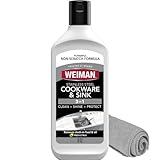
- #1 Selling Stainless Steel Brand - The best selling & most trusted stainless steel cleaning product
- Safe - For use on food contact surfaces, rinse after use
- Eliminate - Stains, rust, lime, tarnish, soap scum & hard water deposits don't stand a chance
- Protect - Polish leaves protective barrier that prevents smears dirt & smudges
- Recommended Use - Use on stainless steel cookware, sinks, & flatware - also works create on copper, aluminum, ceramic, porcelain, glass, brass & bronze cookware, bakeware & sinks
The safest routine cleaning method
Use this sequence for normal food residue, soap film and everyday grime. It reflects the common points in Moen and Kohler guidance without assuming that one special polish is necessary.
- Clear the basin. Remove dishes, racks, mats, sponges and containers. Pick out solid debris so it does not become an abrasive under your cloth.
- Wet the surface. Use clean water to loosen residue. Avoid leaving a strong cleaner pooled in one area.
- Wash gently. Put mild soap or detergent and water on a soft cloth or nonabrasive sponge. Clean the bowl, rim, corners and drain area.
- Follow the grain. If the finish has visible lines, move the cloth in the same direction. Do not scrub across the grain to chase one spot.
- Rinse completely. Remove all soap and loosened soil with clean water, including from seams, corners and around the drain.
- Dry the metal. Wipe with a clean, soft cloth. This step removes water before evaporation can leave deposits.
- Inspect before escalating. If a mark remains, identify whether it is a deposit, discoloration, scratch or pit. Check the sink maker’s instructions before using a specialty cleaner.
How to choose a response to a stubborn mark
| What you see | First response | Avoid | Escalate when |
|---|---|---|---|
| Grease, food film or ordinary soil | Mild soap or detergent, water, soft cloth, rinse and dry | Steel wool, wire brushes and abrasive pads | The residue remains after a complete gentle clean |
| Cloudy ring or chalky water spot | Rinse, wipe with a soft cloth and dry; repeat the normal routine | Scraping or aggressive scouring | The spot persists and the manufacturer lists an approved cleaner |
| Orange-looking stain | Remove wet items, rinse thoroughly and dry; check for surface residue | Assuming bleach will remove it or using steel wool | It remains, spreads or appears accompanied by pits |
| Linear scratch or dull strip | Stop abrasive cleaning and compare the mark with the grain | Scouring the surrounding area to blend it | The finish is visibly altered or the metal is pitted |
| Possible chlorine exposure | Flush immediately with clean water, rinse again and dry | Leaving the product to evaporate or mixing cleaners | Discoloration or corrosion remains after rinsing |
Why the sink maker’s instructions come first
“Stainless-steel sink” describes a material category, not one identical finish. Brushed, polished, coated or specially textured surfaces can have different limits. Moen, Kohler and Franke all provide care guidance, but their approved products and wording are not interchangeable guarantees for every sink sold under every name. Use the manual, care label or model-specific page for your sink when it is available.
Pay particular attention if the sink has an integrated drainboard, protective coating, colored finish, accessories that sit on the bottom or a warranty tied to approved maintenance. A cleaner that is acceptable for bare stainless steel may be unsuitable for a coating or adjacent material. When no model information is available, stay with the least aggressive routine: mild soap and water, a soft cloth or nonabrasive sponge, thorough rinsing and drying.
A practical prevention checklist
- Keep steel wool, wire brushes and abrasive pads away from the sink.
- Do not leave bleach or chlorine cleaner on the surface; rinse accidental contact promptly and thoroughly.
- Remove wet sponges, cloths, rubber mats and containers after use.
- Rinse away food and cleaner residue rather than letting it dry.
- Wipe the sink dry, especially after a final evening clean.
- Move with the grain on brushed finishes.
- Use only a sink-maker-approved specialty cleaner for persistent marks.
- Never mix cleaning chemicals to solve a stain.
These habits address the three documented failure points without turning routine sink care into a complicated project. The goal is to remove soil while minimizing abrasion, chemical contact time and trapped moisture.
Quick Recap
Product prices and availability are accurate as of the date/time indicated and are subject to change. Any price and availability information displayed on Amazon at the time of purchase will apply.

