Do these 3 things before closing this tab:
1Clear out junk files and repair common Windows errors2Scan for outdated or missing drivers - takes under a minute3Repair Windows errors before they cause bigger problemsYes, road construction can increase local ponding, erosion or flood impacts when paving, grading, embankments, ditches, inlets, pipes or culverts change where and how quickly stormwater moves. It does not automatically make flooding worse: a road designed with adequate collection, conveyance, storage, outlet protection and maintenance can keep water away from the traveled way and neighboring property. The outcome depends on local rainfall, watershed area, topography, soils, downstream capacity, construction sequencing and applicable design standards.
Why a road changes drainage
A road is more than a paved strip. It creates a new line across the landscape, replaces some permeable ground with a relatively smooth surface and often changes the elevation of the surrounding soil. Those changes can alter both the amount of runoff reaching a drainage point and the time it takes to get there.
As an Amazon Associate I earn from qualifying purchases.
Pavement produces faster surface runoff
Rain that falls on pavement generally has less opportunity to soak into the ground than rain falling on vegetated or otherwise permeable soil. Water therefore travels across the pavement, curb or shoulder toward a gutter, inlet, ditch or low point. The relevant question is not whether every paved road creates a fixed increase in flooding; it is whether the project’s rainfall and runoff calculations, collection points and downstream facilities can handle the flow under the selected design criteria.
Grading redirects existing flow paths
Cut slopes, fills and embankments can intercept overland flow that formerly crossed a field or followed a shallow swale. A crowned roadway can split water toward both sides, while a superelevated curve or a cross-slope can concentrate it on one side. A new ditch may safely carry that water, but an abrupt alignment change, a blocked low point or an outlet without erosion protection can turn the same change into ponding or gullying.
#1 Best Overall

- Low Profile Design. This catch basin can be installed without deep digging. You no need to connect to the downspout. Perfect for underground using. Able to route the water in another direction so the water won’t flood the open patio.
- Pipe Size: Inside Diameter: 2 inches; Outside Diameter: 2.4 inches. Extendable Flexible Pipe from 4.6ft to 16.4ft. The pipe and catch basin are separate, you need to assemble them together.
- Durable Flexible Pipe. The flexible pipe is made of high quality material. Makes it has a long service life under ground. Drains rainwater via this pipe. Reduce damage to foundations from rainwater.
- Flexible Pipe. You can change its shape and length according to your needs. If this length does not meet your needs and you need longer pipe for installation. You can get another 8.2ft pipe(2" ID) from the accessory which sold separately.
- Easy to Assemble and No Leaking. No adapters needed for pipe connections. Just expand the pipe and screw it in the connector.
Roads can act as barriers
An embankment may hold water on the uphill side unless cross-drainage openings, bridges or culverts preserve the natural flow route. If those openings are too small, poorly aligned or obstructed, water can back up toward the road or adjacent land. If they discharge a concentrated jet onto an unprotected slope, they can create downstream erosion even when the road itself remains passable.
How the roadside drainage system works
Road drainage is a connected system rather than a collection of independent parts. Water is collected, conveyed and discharged through features that must work together.
| Feature | Primary job | Typical failure or risk | What design and inspection address |
|---|---|---|---|
| Curbs and gutters | Guide sheet flow along the pavement edge | Flow spreads across lanes or bypasses an inlet when capacity, grade or surface condition is inadequate | Gutter-flow calculations, cross-slope, inlet spacing and safe spread limits |
| Drop inlets and catch basins | Capture water from the gutter, shoulder or low point | Clogging, poor placement, sediment accumulation or a connection that cannot pass the inflow | Opening size, bypass flow, grate safety, access for cleaning and pipe connection |
| Roadside ditches | Collect and convey runoff beside the roadway | Insufficient capacity, steep or abruptly changing alignment, bank erosion or sediment deposition | Hydraulic grade, lining or vegetation, stable transitions and outlet protection |
| Storm-drain pipes | Carry collected runoff to a discharge point, storage area or waterway | Blockage, undersized segments, poor joints, backwater or settlement that creates a low spot | Pipe sizing, inverts, maintenance access, bedding, joints, backfill and tailwater conditions |
| Culverts and bridges | Move water beneath or over the road while preserving a cross-drainage route | Constriction, debris blockage, inlet scour, outlet erosion or a misaligned crossing | Separate hydraulic analysis, debris considerations, headwater and outlet protection |
| Detention or water-quality facilities | Temporarily store, slow or treat runoff before release | Loss of storage from sediment, an uncontrolled outlet or maintenance neglect | Volume and outlet design, emergency overflow, inspection and sediment removal |
FHWA’s HEC-22, fourth edition, published in 2024, provides general highway storm-drainage guidance for rainfall and runoff, pavement drainage, gutter flow, inlet design, median and roadside ditches, storm-drain piping, detention and water-quality practices. It does not cover cross-drainage facilities such as bridges and culverts or subsurface drainage, so those elements require their own hydraulic references and project criteria.
What’s actually slowing this PC down?
Pick the symptom - the matching free tool is one click away.
Rank #2

- Low-profile Drain System: Dimensions of each channel: 5.9" W x 5.1" H x 39.4" L. Commercial water drainage systems allow safe and efficient drainage for grassed areas, gardens, farms, patio areas, pool sides, office buildings, driveways, or factory interiors. The anti-flotation design prevents floating and doesn’t require staking when setting in concrete.
- Easy & Quick Installation: You can connect these trench drains together for extra length. The interlocking design connects the drains tightly with no potential leak of water. Detachable grate can be manually installed and detached easily, needs no screws or bolts. It also provides a convenient way to clean the drain if it is bunged up.
- Various Outlet Connections: Each trench drain provides a bottom outlet with multiple sizes(3.1 inch/ 3.6 inch), and a side outlet(2.2 inch). You can choose the size you need. No outlet connector is required because it is already built-in; thus, the pipe can be connected directly. Kind Reminder: The 3.1" outlet fits standard 3" pipes. For 3.6" and 2.2" outlets, choose pipes accordingly
- Durability & High Performance: Sturdy HDPE plastic creates a hard and durable structure. The load capacity is A125. The HDPE plastic provides a smooth interior surface, which allows faster water intake.
- Complete Packing List: This trench drain kit comes with six drains with built-in bottom outlets, six plastic grates, and six end caps. Plus, the outlet connector is already built-in. All the accessories that you may need are included.
Can road construction cause flooding?
It can cause or worsen flooding at a particular location, but the answer requires site evidence. A new road may reduce flooding by providing a controlled path and adequate outfalls, or worsen it by blocking a natural channel, sending water to a low property or exceeding the capacity of an existing system.
Common construction and design mechanisms
- Increased impervious area: pavement and concrete route rainfall toward drainage features instead of allowing as much infiltration.
- Concentrated discharge: several small flow paths may be collected and released at one ditch, pipe or culvert outlet, increasing local velocity and erosion potential.
- Changed elevations: fills, cuts and driveway connections can create a depression where water previously spread and drained.
- Blocked or incomplete drainage: temporary earthworks, stockpiles, unconnected pipes or covered inlets can leave water without its planned route.
- Downstream constraints: a receiving ditch, pipe, stream or detention outlet may have less capacity than the new inflow, especially when tailwater is already high.
A complaint such as “the road caused flooding” should therefore be checked against grades, rainfall timing, inlet and pipe condition, culvert openings, upstream catchment changes and downstream water levels. Ponding may result from a blocked inlet or private drainage problem rather than the pavement itself.
Construction-stage risks are different from permanent-road risks
During clearing, excavation and grading, soil is exposed and the final drainage network may not yet be connected. Bare soil erodes more readily, and sediment can fill ditches, cover inlet grates or enter streams and pipes. A temporary access road or diversion can also create a new low point or concentrate runoff before permanent controls are in service.
Rank #3

- 【 Easy to install 】 The Yard Drain Emitter is combined with a 4-inch connector, eliminating the hassle of finding an adapter. This combination is suitable for 4-inch drainage pipes and provides a perfect connection. Please check if your drainage pipe has an inner diameter of 4 inches/outer diameter of 4.5 inches
- 【 Better Quality 】 The overall weight of this combination is 3.2 pounds, with a wall thickness of 0.24 inches providing sufficient support, making your courtyard drainage system more sturdy and durable
- 【 Fix courtyard drainage 】The inclined drainage design seamlessly integrates with the courtyard. The drainage grate can effectively block the entry of organisms, facilitate the smooth discharge of sewage and rainwater, match the color of the grassland, and its pre tilt matches the soil slope
- 【Durable structure】 The grille can be easily disassembled with just two stainless steel screws, making cleaning simple and convenient., made of heavy-duty abs plastic, ensuring long-lasting performance in various weather conditions
- 【Drainage solution】This downspout extension is compatible with French style drainage pipes and is highly suitable for residential and commercial applications. This well made drainage grate can last for a long time. If there are any problems with the drainage device, please contact us and we will correct them
Federal expectations for federally funded highways
FHWA construction-program guidance states that highways funded in whole or in part under Title 23 should be located, designed, constructed and operated using standards that minimize erosion and sediment damage to the highway and adjacent properties and abate pollution of surface and ground water. State, local and project-specific requirements may add obligations; the applicable permit and approved plans control a particular site.
Controls should follow the construction sequence
Temporary and permanent stormwater controls should be planned from initial clearing through final stabilization. Federal Lands Highway guidance describes controls for both water quantity and water quality where policy requires them and calls for best management practices (BMPs) that reduce construction runoff and protect conveyance inlets and outlets to be incorporated into the project’s stormwater pollution prevention plan (SWPPP).
- Install perimeter controls, stabilized entrances and diversion measures before large-scale earth disturbance.
- Keep clean upstream water separated from muddy work areas where feasible.
- Stage clearing and grading so exposed soil is limited to the area that can be stabilized promptly.
- Protect stockpiles with appropriate covers, perimeter measures and drainage paths.
- Use sediment barriers, check structures, sediment traps or basins where the approved plan requires them.
- Stabilize channels, ditch bottoms, culvert inlets and outlets as soon as their final geometry is established.
- Remove accumulated sediment and repair damaged controls after storms and at the inspection frequency required by the plan or permit.
Inspection points that prevent avoidable failures
Construction inspection is a drainage control, not paperwork after the fact. FHWA’s construction guidance highlights several conditions that deserve documented checks:
Rank #4
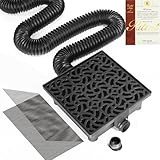
- 🏆【US Patented Design】 Patent No. D1018796.
- 🏆【Material Introduction】Catch basin and "Flexible/ Shapeable Pipe" is made of premium PP To ensure high strength while maintaining high shrinkage, Pipe can extension from 2 .5ft to 8ft. Can be spliced for longer length. Durable, antifreeze explosion proof and no creases, no hole, won't be damaged, andUV resistant to withstand all outdoor elements. Buried underground will not corrode.
- 🏆【NAACOO Unique Design】①Catch basin has double drain holes, improves efficiency. 8Ft Pipe can be cut into two use for drainage on both sides. If you only need one side drain, the other side can be blocked with provided Blockage. ②Catch Basin Special Slope Design - Won't accumulate water and dirt. and Blocked side will not leak water. ③Flexible pipe can be extended and shortened flexibly according to your needs. easily divert rainwater where you want.
- 🏆【Other Advanced Design】①No digging required, Different from traditional catch basin. ②Low profile design can be hidden by covering with mulch. ③Pipe install on catch basin never fall off. ④Debris Catcher Included:GRATE - filter large leaves or some other debris to prevent the block to the pipe, GIFT SCREEN - use for smaller imperities. meet your more needs. ⑤Flexible pipe holds its shape to Adapt more complex environment, and pipe can be spliced for longer length.
- 🏆【Widely Used】High compatibility can be suitable for 2X3 inch, 3x4 inch and 3x3 inch downspout(all standard residential downspouts). This flexible gutter pipe can extension and holds its shape and can be extended from 2.5feet to 8feet. So as to meet any environment needs. prevents foundation damage by diverting rain water around landscaping, Solve difficult irrigating garden and so on.
- Waterways, ditches and drainage structures remain open, correctly graded and free of construction debris.
- Ditch alignment changes are smooth enough to avoid unexpected velocity and bank erosion.
- Sediment is not leaving the right-of-way or entering a waterway.
- Installed measures match the approved SWPPP and project drawings.
- Culvert and waterway discharges have permanent erosion protection where specified.
- Culvert pipe alignment, bedding, joints and backfill meet the design requirements so settlement does not create leaks, sags or blockage.
Inspection records should connect a defect to a corrective action, responsible party and completion date. A control that is present but buried by sediment or bypassed by a new flow path is not functioning.
Independent reader supportYour contribution helps us test, update, and keep practical guides available for everyone.Culverts, concentrated outlets and downstream erosion
Culverts move water under a road, but they also alter flow conditions. Intercepting scattered overland flow and concentrating it at one opening can increase velocity. Constricting a natural waterway can raise upstream water levels, accelerate flow through the opening or shift erosion to the inlet and outlet.
FHWA’s HDS-5 explains that energy dissipators reduce discharge velocity to an acceptable level and protect downstream areas. Dissipators and outlet aprons are not universal add-ons: their form and dimensions depend on hydrology, hydraulic grade, soil, tailwater, channel geometry and the receiving environment. Unchecked erosion can undermine culverts and damage detention-basin outlets, so the outlet must be treated as part of the hydraulic design rather than an afterthought.
Best Value
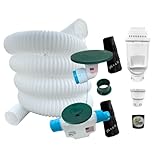
- NO TOOLS NEEDED - Our goal at French Drain Man is to make your underground downspout project as easy as possible. That means you won’t need to dig out any tools. All you need is a shovel to dig your trench.
- EASIEST DOWNSPOUT KIT ON THE MARKET - 3½ pipe is the easiest drainage pipe to install and requires less labor compared to 4 in. pipe. You don’t have to dig as deep of a trench to reach a desired slope and one person can easily handle the pipe and lay it in the trench.
- CONVENIENT ALL IN ONE PACKAGE - No more driving around to multiple stores for different parts that fit. French Drain Man has already done the legwork for you and provide everything you need in one downspout extensions kit.
- KEEPS FOUNDATIONS DRY - Underground downspout extensions transfer roof runoff water far away from the home and protect your foundation, basement and landscape from water damage.
- KIT INCLUDES: 19 ft. Coil of 3½ in. High Octane Extreme Duty Solid Corrugated Pipe in white, Vented Downspout Clean Out Leaf Filter, Pop-Up Emitter & Turf Restrictor Plate with 3 ft x 4 ft of filter fabric, Catch Basin with riser and 3 ft x 4 ft of filter fabric, 1 roll of FDM’s 200 Year Tape – Extra Sticky & Extra Stretchy for making watertight junctions and connections.
Questions to resolve before selecting a culvert or outlet
- What drainage area and design rainfall generate the inflow?
- What headwater level is acceptable upstream of the road?
- Will debris, ice or sediment reduce the effective opening?
- What are the inlet, barrel and outlet elevations and slopes?
- What downstream water level or tailwater condition controls performance?
- What soil, lining and vegetation can resist the expected shear and velocity?
- How will the crossing be accessed, inspected and cleared?
Without those inputs, recommending a particular culvert diameter or dissipator would be unsafe. A qualified designer should perform the hydrologic and hydraulic analysis and check the applicable road, waterway and environmental criteria.
A practical design process for drainage and flood prevention
- Map the existing watershed. Identify upstream drainage areas, low points, channels, wetlands or other receiving waters, existing pipes and private drainage connections. Survey elevations and note evidence of past flooding or erosion.
- Define design criteria. Use the jurisdiction’s rainfall data, recurrence criteria, allowable spread, freeboard, tailwater assumptions and water-quality or detention requirements. Record which criteria apply to the road classification and project limits.
- Model the changed condition. Account for new pavement, shoulders, slopes, ditches, embankments, cuts and other impervious or regraded areas. Evaluate how quickly runoff reaches each inlet, ditch, pipe, culvert and storage facility.
- Lay out collection points. Place inlets, cross-drains and ditch breaks so water does not cross unsafe areas or accumulate at driveways, intersections, curves and sag points.
- Check conveyance and crossings. Verify pipe, ditch, bridge and culvert capacity, upstream headwater, downstream tailwater, debris allowance and emergency overflow routes. Use separate cross-drainage and subsurface references where HEC-22 does not apply.
- Protect soil and outlets. Select lining, vegetation, check structures, aprons or energy dissipation appropriate to the expected flow and soil conditions.
- Plan construction staging. Show temporary diversions, sediment controls, access routes, stockpile locations, inspection points and stabilization milestones in the approved plans and SWPPP.
- Commission and maintain. Confirm that pipes are connected, inlets are open, grades match the design, outlets are stable and temporary controls are removed only after permanent stabilization. Set inspection and cleaning responsibilities before opening the road.
How to compare alternative drainage approaches
Projects often have several workable arrangements, such as an open ditch versus a closed storm-drain system or one large crossing versus multiple smaller cross-drains. The best option is not determined by capacity alone.
| Decision factor | Questions to ask |
|---|---|
| Runoff collection and conveyance | How much drainage is captured, where does it travel, and what happens if an inlet is blocked? |
| Hydraulic performance | Does the option meet the project’s design rainfall and downstream water-level conditions without unacceptable spread or headwater? |
| Erosion and sediment protection | Are inlets, ditch transitions and outlets stable during construction and after completion? |
| Detention and water quality | Does the arrangement provide required storage, treatment or controlled release? |
| Maintenance and blockage risk | Can crews reach grates, pipes, ditches, basins and culverts for inspection and cleaning? |
| Safety and environmental constraints | Will the design create hazards for drivers, pedestrians or wildlife, or affect protected waterways and adjacent property? |
| Rules and cost | Does it satisfy local standards, permits and specifications, and can it be built and maintained within the project budget? |
Local standards and permits may impose requirements that differ from general federal guidance. The project engineer and permitting authority should resolve those differences before construction begins, not after a drainage complaint.
Free tools Windows power users keep installed
One-click scans. No signup required.
What property owners should document after road work
If flooding or erosion appears after construction, document the conditions rather than relying on a single assumption about cause. Photograph the location during and after rainfall, note the date and approximate duration, identify blocked inlets or culverts, and mark where water first overtops a ditch or leaves the roadway. Compare the observed path with the approved grading and drainage plans if they are available. Report urgent hazards such as a washed-out shoulder, exposed pipe, undermined culvert or water entering a building to the road authority or contractor immediately.
A useful investigation distinguishes a capacity problem from a maintenance problem, a changed flow path, a private connection issue and an unusually severe storm. That distinction determines whether the remedy is cleaning, regrading, outlet protection, added storage, a revised crossing or a larger system-wide solution.
Bottom line
Road construction affects drainage whenever it changes surface permeability, ground elevations or the paths that collect and discharge stormwater. Flood prevention comes from designing the entire connected system for local hydrology and downstream conditions, protecting soil and outlets during construction, inspecting every transition and maintaining the finished facilities. HEC-22 is a useful general highway drainage reference, but culverts, bridges and subsurface drainage require separate analysis. No single inlet, ditch, pipe or culvert can guarantee safety without the site-specific calculations, permits and maintenance that make the network function.
Quick Recap
Product prices and availability are accurate as of the date/time indicated and are subject to change. Any price and availability information displayed on Amazon at the time of purchase will apply.
The Tool Desk
Outbyte PC Repair FREERepair Windows errors before they cause bigger problemsFix Now →Outbyte Driver Updater FREEFix the driver behind crashes, sound loss and screen glitchesFind Drivers →
