Proper curing does not make pozzolanic concrete inherently more likely to crack. It preserves moisture and a suitable temperature while cement hydration and pozzolanic reactions develop the concrete’s intended properties. It also limits the volume changes and temperature stresses that create early cracks. The right curing period is not a universal number: it depends on the cementitious blend, pozzolan type and percentage, water-to-cementitious-material ratio, placement temperature, weather and the project’s strength or performance requirements.
Early cracking is usually a curing-and-conditions problem rather than proof that fly ash or another supplementary cementitious material (SCM) was a mistake. ACI states that, when proper curing is followed, comparable structures in similar climate and service conditions show no discernible difference in the number or width of cracks whether or not a pozzolan is used.
As an Amazon Associate I earn from qualifying purchases.
What curing does in pozzolanic concrete
ACI defines curing as maintaining moisture and temperature in freshly placed cementitious material so hydraulic cement hydration and, when applicable, pozzolanic reactions can proceed. Those reactions allow the mixture to develop its potential strength, durability and dimensional stability. Moisture and temperature control also reduce adverse volume changes that can lead to cracking.
Outdated Drivers Are Slowing You Down
One free scan finds every outdated or missing driver and matches the right update for your exact hardware.Free scan · exact hardware matchPC Slower Than It Used to Be?
A free scan shows the junk files, broken settings and background clutter dragging Windows down - then fixes them in one click.Free scan · Windows 10 & 11Hydraulic cement reacts with water to form hydration products, including calcium hydroxide (often abbreviated CH) and calcium silicate hydrate (C-S-H). A pozzolan reacts with CH and water to form additional C-S-H. The added C-S-H can refine the pore structure and contribute to later-age performance, but the rate of reaction varies with the material and temperature. Curing is therefore not simply “keeping the slab wet”; it is managing the environment in which both reaction systems develop.
#1 Best Overall

- TRAPS CURING HEAT Fresh concrete gives off heat as it sets, and this insulated concrete curing blanket holds that warmth against the slab so hydration keeps working when jobsite temperatures drop. The foam core puts a thermal barrier between your pour and cold air, wind, and overnight chill, which helps crews place and finish flatwork through late fall, winter, and early spring instead of waiting on the weather to cooperate.
- CLOSED CELL FOAM A coated woven poly tarpaulin wraps a closed-cell PE foam core measuring 3/16 inch thick, giving this curing blanket genuine insulating body instead of the single thin layer you get from an ordinary poly tarp. The outer shell is built on an 8 x 8 weave that stands up to being dragged across gravel, rebar, and rough forms, so the same thermal tarp holds its shape and its insulating value through repeated pours.
- BUILT FOR JOBSITES Double stitched seams and reinforced hems keep the edges together under wind load and repeated folding, and included grommets let you stake, rope, or weight the blanket down so it stays where you put it overnight. The shell is water resistant, tear resistant, and UV resistant, which keeps this insulated tarp serviceable through rain, sun exposure, and the rough handling a working crew gives it.
- EASY TO HANDLE Tarp sizes are listed as cut sizes, the industry standard, so this 6 by 24 foot blanket finishes at 5 feet 10 inches by 23 feet 10 inches and covers long runs of flatwork. At roughly 6.5 pounds it stays light enough for one person to roll out, reposition, and roll back up, and several blankets overlap edge to edge to cover wider slabs, driveways, and sidewalk pours without leaving cold gaps.
- WORKS EVERY SEASON Concrete finishers, masons, general contractors, rental yards, and property crews use this commercial grade construction blanket over slabs, footings, driveways, patios, sidewalks, and block walls, and it doubles as an insulated cover for equipment, materials, and supplies staged outdoors. Roll it up and store it dry between jobs and it goes straight back to work on the next pour.
Very low water-to-cementitious-material (w/cm) mixtures deserve special attention. Sealing the surface may retain the original mixing water, but that internal water can still be insufficient as hydration consumes it. ACI notes that some low-w/cm mixtures may need added water during curing, subject to the project’s approved method and finishing requirements.
Does fly ash or another pozzolan cause more cracking?
Not by itself. The American Concrete Institute’s technical FAQ answer is: “No, provided that proper curing procedures are followed. Similar structures in similar climate and service conditions exhibit no discernible difference in number or width of cracks, whether or not a pozzolan is used in the concrete.” That statement compares structures under similar conditions; it is not a promise that any individual slab will remain crack-free.
Pozzolans do change the timing and heat profile of strength development. Class F fly ash and slag cement commonly develop strength more slowly at early ages, while Class C fly ash and silica fume have different early-strength tendencies. Silica fume can increase heat of hydration, particularly at early ages. These are tendencies, not guarantees for every mixture, because cement chemistry, fineness, dosage, admixtures and temperature all affect the result.
What’s actually slowing this PC down?
Pick the symptom - the matching free tool is one click away.
A Federal Highway Administration (FHWA) comparison from 2006 illustrates the scale of a possible timing difference without establishing a general rule: in an airfield-pavement study, concrete containing 20% Class F fly ash took about seven days to gain the strength that concrete without fly ash gained in three days. That was a comparison among eight mixtures under the study conditions, not a required curing time for every fly-ash concrete.
How early-age cracks develop
Several mechanisms can act separately or together during the first hours and days.
Plastic-shrinkage cracking
Before concrete has gained enough tensile strength, evaporation can remove surface water faster than bleed water can replace it. The surface contracts while the underlying concrete restrains that movement, producing short, often roughly parallel cracks. Low humidity, wind, high air or concrete temperature and a large exposed surface increase the risk. Rapid finishing or a delayed curing start can worsen it.
Thermal cracking
Cement hydration generates heat. If the interior becomes substantially warmer than the surface, or the concrete cools rapidly after heating, restraint can create tensile stress. ACI reports that hydration is greatly retarded below 5°C (40°F). Between 5°C and 15°C (40°F–60°F), satisfactory results can be obtained by prolonging moist curing. At higher temperatures, hydration and pozzolanic reactions accelerate, but rapid early stiffening and early strength gain can harm later strength development. Abrupt cooling is especially risky when a warm interior is covered by a much cooler surface.
Recommended Free Tools
Drying-shrinkage cracking
As hardened concrete loses moisture, it shrinks. FHWA cautions that significant drying in the first few days can create more shrinkage than the joint layout was intended to accommodate. Cooling-related stress can add to drying stress, so a crack that appears to be “shrinkage” may have more than one cause.
Restraint and construction effects
Reinforcement, the subbase, adjacent pours, penetrations and changing slab thickness restrain movement. Joints must be located and formed or saw-cut at the specified time; curing cannot compensate for missing or badly timed joints. Finishing while bleed water is present, retempering with water, traffic before adequate strength and an uneven subgrade can also create or concentrate cracks.
Variables that determine a curing plan
Use the actual mixture and placement forecast rather than assuming that a plain-portland-cement schedule applies. The main decision axes are:
Rank #2

- 【High-Quality】: Construction Concrete Curing Blanket is designed with a high-quality PE foam core that offers excellent insulation properties. It effectively maintains a controlled curing environment by minimizing heat loss and temperature fluctuations.
- 【Funtion】: Insulated concrete blankets is widely used on construction sites, highways, self-built houses. It is one of the effective materials for protecting buildings in winter. Use the ball bungee cords to connect the other tarp.
- 【Dimension】: The concrete blanket sie is 6x25Ft, about 72x300inch. And the thinkness is about 3.6mm/0.15inch. The R value of this product is 0.2 approximately(R=D/K). If you found the R is low , you could use two or more to solve.
- 【Features】: The curing blanket is weatherproof and durable in winter. After that, you can continue working next year. Built-in UV protection prevents degradation from sunlight exposure.
- 【Design】: Maintains consistent temperature, promoting uniform concrete curing. We hope that the design of our products will add to your joy of life.
| Variable | Why it matters | What to confirm |
|---|---|---|
| SCM type and replacement percentage | Different pozzolans and slag have different reaction rates, heat output and early-strength behavior. | Material designation, source, percentage replacing cement and approved mixture data. |
| Water-to-cementitious-material ratio | Lower w/cm can improve performance but may leave too little internal water for continued hydration. | Specified w/cm and whether external water is permitted or required during curing. |
| Total cementitious content | Changes heat generation, paste volume and shrinkage potential. | Mass of cement plus SCM per unit volume. |
| Cement and pozzolan properties | Fineness, chemistry and compatibility influence setting and strength development. | Supplier data, approved trial batches and project test requirements. |
| Admixtures and aggregate proportions | They affect setting, bleeding, workability, heat and restraint. | Water reducers, retarders, accelerators, air entrainment and aggregate grading. |
| Placement and curing temperature | Cold slows reactions; high heat accelerates them and can increase gradients. | Concrete temperature at placement, forecast highs and lows, wind, humidity and solar exposure. |
| Required performance | Slow early strength may be acceptable or may delay form removal, opening to traffic or loading. | Specification duration, strength or maturity acceptance criteria and release conditions. |
Step-by-step method for preventing early cracking
1. Review the mixture before placement
Identify the SCM type and replacement level, w/cm, total cementitious content, admixtures and aggregate proportions. Ask the concrete supplier for early-age setting and strength information for the proposed materials, especially when the blend has a high Class F fly ash or slag content. Confirm whether the specification requires a particular curing compound, membrane, wet method, temperature limit or strength criterion.
2. Check the weather and placement temperature
Examine the expected conditions for at least the first several days, not only the delivery-hour forecast. Consider cold nights after a warm placement, wind and low humidity that can drive evaporation, direct sun and rapid temperature swings. Measure concrete temperature at placement and follow the project’s limits. The curing plan should be agreed before the first truck arrives.
3. Prepare the base and edges
Make sure the subgrade or subbase is at the specified condition and will not draw water unpredictably from the concrete. Have forms, reinforcement, penetrations and joint materials ready so placement is not delayed. A sound preparation reduces restraint and prevents crews from extending finishing operations while the surface is drying.
4. Control evaporation during placement
Use the project-approved measures for the forecast conditions, such as windbreaks, sunshades, evaporation control or a temporary fogging approach where permitted. Do not add water to the surface to make finishing easier. If the surface begins drying, correct the environmental cause and follow the engineer’s approved procedure rather than trapping a weak, water-rich layer.
5. Start curing immediately after finishing
Apply the specified curing method as soon as the surface can receive it without damage. The aim is continuous moisture retention and temperature control, not intermittent wetting after the surface has already dried. On low-w/cm concrete, determine whether the approved plan requires added water in addition to sealing.
Do these 3 things before closing this tab:
1Fix the driver behind crashes, sound loss and screen glitches2Clear out junk files and repair common Windows errors3Scan for outdated or missing drivers - takes under a minute6. Maintain a stable temperature
Use the project-approved insulation, enclosure, heating, cooling or curing-blanket arrangement when conditions require it. A blanket can help manage heat and moisture, but it is not a cure by itself: it must be suitable for the concrete, secured against wind and used without creating damaging temperature differences. Avoid sudden removal of protection that leaves a warm interior exposed to cold air.
7. Keep curing for the specified duration and acceptance test
Do not stop because the surface looks hard. Continue for the duration in the governing specification, or until the approved strength or maturity criterion is met when that criterion controls. A mixture that gains strength slowly may need longer protection than a comparable mixture without the SCM. Record curing start time, concrete and ambient temperatures, weather protection and any test results.
8. Coordinate joints and loading
Install or saw-cut joints at the specified spacing and timing, without cutting so early that edges ravel or so late that uncontrolled cracks form. Keep construction traffic, stored materials and early loads off the concrete until the project’s release requirement is satisfied.
Curing in cold weather
Below 5°C (40°F), hydration is greatly retarded. The concrete may appear firm while gaining strength very slowly, and freezing before sufficient strength develops can cause permanent damage. Between 5°C and 15°C (40°F–60°F), ACI indicates that satisfactory results can be obtained by prolonging moist curing.
The Tool Desk
Outbyte Driver Updater FREEScan for outdated or missing drivers - takes under a minuteDriver Scan →Outbyte PC Repair FREERepair Windows errors before they cause bigger problemsFix Now →A cold-weather plan should therefore provide both moisture and temperature protection. Confirm the required concrete temperature, enclosure and heating method in the project specification; monitor the concrete rather than relying only on outdoor air temperature; and prevent abrupt cooling when protection is removed. If early strength controls form removal or traffic, use the specified field-cured specimens, maturity procedure or other acceptance method rather than a calendar assumption.
Rank #3
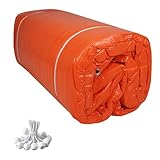
- 【High-Quality】: Construction Concrete Curing Blanket is designed with a high-quality PE foam core that offers excellent insulation properties. It effectively maintains a controlled curing environment by minimizing heat loss and temperature fluctuations.
- 【Funtion】: Insulated concrete blankets is widely used on construction sites, highways, self-built houses. It is one of the effective materials for protecting buildings in winter. Use the ball bungee cords to connect the other tarp.
- 【Dimension】: The concrete blanket sie is 12x24Ft, about 141x288inch. And the thinkness is about 3.6mm/0.15inch. The R value of this product is 0.2 approximately(R=D/K). If you found the R is low , you could use two or more to solve.
- 【Features】: The curing blanket is weatherproof and durable in winter. After that, you can continue working next year. Built-in UV protection prevents degradation from sunlight exposure.
- 【Design】: Maintains consistent temperature, promoting uniform concrete curing. We hope that the design of our products will add to your joy of life.
Curing in hot, dry or windy weather
High temperature accelerates hydration and pozzolanic reactions, while wind, low humidity and sun accelerate surface evaporation. Rapid early stiffening can make finishing difficult and can increase the risk of plastic-shrinkage cracking. The response is to shorten the time between finishing and curing, reduce wind and solar exposure, and maintain a stable moisture and temperature condition under the approved method.
Do not infer that a hot placement needs less total curing. Faster early reaction can produce a steep temperature gradient or rapid surface drying, and ACI warns that very rapid early development can be detrimental to later strength. The mixture’s measured performance and specification, not appearance, determine when protection may end.
How long should pozzolanic concrete be cured?
There is no single duration supported for every pozzolanic mixture. FHWA explains that curing duration and strength gain depend on cement and pozzolan properties, the type and amount of pozzolan or slag, temperature history, w/cm, aggregate proportions and admixtures. Historical tables and old specification approaches are useful background, but the current project specification governs a particular placement.
Use this decision sequence:
- Find the governing requirement. Read the structural, pavement or owner specification for curing method, minimum duration, temperature limits and release criteria.
- Determine what ends curing. It may be a calendar period, a specified compressive strength, a maturity value or a combination.
- Adjust for the actual mixture and weather. Extend protection when cold temperatures, high SCM replacement, low w/cm or slow measured strength development warrant it.
- Document evidence. Keep temperature records and test results that demonstrate the acceptance condition was reached.
The FHWA 2006 comparison of 20% Class F fly ash—about seven days to reach the strength reached in three days by the no-fly-ash mixtures—shows why plain-cement timing cannot simply be copied. It does not establish seven days as a universal requirement.
Choosing a curing method
The method must match the surface, weather, mixture and specification. Common categories include a membrane or other approved moisture-retention system, continuous moist curing, and physical protection that controls both heat loss and moisture loss. The selected system should be compatible with later finishes, coatings, overlays or bond requirements.
- Moisture retention: Use an approved method that prevents early evaporation for the entire required period.
- Added water: Determine whether the low-w/cm mixture needs external water rather than relying only on a sealed surface.
- Temperature control: Add insulation, enclosure or controlled heating/cooling when the forecast creates cold conditions or harmful gradients.
- Continuity: Repair damaged coverings, maintain overlaps and check edges, corners and penetrations where drying starts first.
- Compatibility: Verify that the curing material will not interfere with specified joint sealers, coatings, toppings or later bonding.
Diagnosing a newly cracked slab
Photograph the cracks with a scale, map their location and record when they appeared. Note whether they are random, parallel, concentrated near joints, located over reinforcement or associated with a change in thickness. Compare the timing with finishing, curing start, weather, joint sawing and construction traffic.
Cracks that appear while the surface is still plastic
Short, shallow cracks that form during a windy, hot or dry placement suggest rapid evaporation and plastic shrinkage. Review evaporation controls, finishing sequence and the time curing began.
Quick wins for a faster PC:
Fix the driver behind crashes, sound loss and screen glitchesFind Drivers →Repair Windows errors before they cause bigger problemsFix Now →Cracks that appear after a cold night or rapid temperature change
Review concrete temperature records, insulation and the timing of protection removal. A steep gradient or abrupt cooling can create thermal stress even when the surface was initially well finished.
Cracks that develop over the following days or weeks
Consider drying shrinkage, restraint, joint timing and slow strength development. Check whether the concrete was kept continuously moist, whether the specified duration was completed and whether early loads or restraint were introduced.
Crack appearance alone cannot establish the cause or structural significance. Have the engineer or qualified concrete professional assess width, depth, movement, exposure and load path before selecting repair. Do not rout, seal or overlay a crack until its cause and required repair class are known.
Field checklist
- SCM type, replacement percentage, w/cm and total cementitious content verified.
- Approved curing method and compatibility with later finishes confirmed.
- Concrete temperature and weather forecast reviewed for the first several days.
- Wind, sun and evaporation controls ready before placement.
- Curing begins immediately after finishing and remains continuous.
- Low-w/cm mixture assessed for added-water requirements.
- Temperature protection prevents harmful gradients and abrupt cooling.
- Joint layout and saw-cut timing coordinated with curing.
- Strength, maturity and temperature records retained.
- Loading and protection removal follow the specified acceptance criteria.
Key takeaways for project teams
Pozzolans do not automatically increase service cracking. The risk is governed by the interaction of mixture chemistry, moisture loss, temperature history, restraint, joints and construction timing. Protect the concrete from early drying, maintain a suitable temperature, provide added water when the approved low-w/cm plan requires it, and keep the protection in place until the project’s specified duration or performance criterion is satisfied. When a crack appears, investigate the timing and conditions instead of blaming the SCM without evidence.
Quick Recap
Product prices and availability are accurate as of the date/time indicated and are subject to change. Any price and availability information displayed on Amazon at the time of purchase will apply.

