Quick wins for a faster PC:
Repair Windows errors before they cause bigger problemsFix Now →Scan for outdated or missing drivers - takes under a minuteDriver Scan →Clear out junk files and repair common Windows errorsFree Scan →Some links on this page are affiliate links: if you buy through them we may earn a commission, at no extra cost to you.
Energy-code changes do not automatically require a cover board on every commercial roof. They do make roof assemblies more demanding: insulation levels, rooftop equipment, photovoltaic arrays, vegetated systems and maintenance traffic all have to work together. A durable protection layer can help preserve that assembly, but the correct design depends on the jurisdiction’s adopted code, roof construction, structural capacity, fire and wind requirements, and the manufacturer-approved system.
What “proper protection” means on a commercial roof
Commercial roofs are systems, not single products. The 2012 International Energy Conservation Code (IECC) definition cited in the source identifies the roof covering, roof deck, insulation, vapor retarder and interior finish as components of a roof assembly. A change to one layer affects the performance and installation of the others.
As an Amazon Associate I earn from qualifying purchases.
In this context, protection generally means a cover board or other specified layer installed above roof insulation and below the membrane or roof covering. Its job is to provide a more durable surface for the roofing system during construction and service. Depending on the assembly and tested design, that layer may contribute to resistance against impact, concentrated loads, moisture exposure, wind forces or fire. Those benefits are system-specific; they cannot be assumed from the word “cover board” alone.
The historical article behind this topic describes fiberglass-mat gypsum roof boards, including DensDeck Roof Boards, as examples. That mention is a product-category example, not a current ranking or independent performance comparison. Current specifications, compatibility, attachment and testing must be checked for the exact project.
Popular on Amazon

- FLEXIBLE WATERPROOF MEMBRANE: Our professional-grade RV roof sealant creates a flexible seal, preventing leaks and water damage while maintaining flexibility in all temperatures - perfect for travel trailers, campers, pop up campers, rv’s, and for keeping your trailer’s interior dry all year long
- COMPLETE ROOF PROTECTION SYSTEM: This elastomeric roof coating with heat reflective properties surpasses basic rubber roof repair kits by providing unmatched solar reflective performance that reduces heat absorption, lowering interior temperatures, saving costs on your heating bills and extending your RV roof's lifespan
- VERSATILE MULT-SURFACE SYSTEM: Designed to work with EPDM, TPO, Fiberglass, and aluminum Roofs, skylights, RV vent covers, and camper awning components as part of a complete RV roof sealing system. This liquid rubber coating pairs with Liquid Rubber EPDM Primer for enhanced adhesion on EPDM and TPO surfaces., delivering durable, leak-proof coverage.
- WEEKEND PROJECT SOLUTION: Achieve professional RV roof repair results in just one weekend with our easy 3-step system (Liquid Rubber RV Smart Cleaner, Liquid Rubber EPDM & TPO Primer, Liquid Rubber RV Roof Coating) - no special tools required! Simply apply with brush, roller or sprayer between 50°F-90°F(10°C-32.2°C) for a brilliant white, durable roof sealant waterproof membrane
- MAXIMUM COVERAGE & PERFORMANCE: Rolls on like paint - Apply 1 gallon for every 50 sq ft to achieve your final recommended thickness. 1 - 5G pail will cover a 30 foot RV; be sure to use up all material - For complete protection, use with Liquid Rubber Lap Sealant, and Liquid Rubber Seam Tape on joints, vents, skylights and transitions where movement may occur, creating a watertight system compatible with all camper roofs
Why the 2012 article still matters—and where it does not
Barry Reid’s article in Building Enclosure was published May 1, 2012. It responded to provisions and trends that were new at that time: the 2012 IECC, the newly issued 2012 International Green Construction Code (IgCC), a then-draft LEED 2012, and growing use of commercial roofs for photovoltaic and vegetative systems.
The article reported that the 2012 IECC called for a “30 percent increase in energy efficiencies over the 2006 IECC.” That is the article’s historical description of the code, not a universal measured result and not a current 2026 requirement. Likewise, the article’s statement that a well-insulated and well-protected roof is critical is an attributed manufacturer-trade-publication position, not an independent test conclusion.
Outdated Drivers Are Slowing You Down
One free scan finds every outdated or missing driver and matches the right update for your exact hardware.Free scan · exact hardware matchWindows Errors? Fix Them Before They Spread
Repair common Windows errors and clear accumulated junk for a smoother, more stable PC - no reinstall needed.Free scan · no reinstallIts durable lesson is about coordination. More insulation can make the roof build-up thicker and change attachment details. Equipment and planted systems add penetrations, concentrated loads and routes for maintenance personnel. Protecting the assembly becomes more important as the roof has more functions, but the code edition and project specification still control what is mandatory.
What the 2012 IECC actually established for commercial roofs
The cited 2012 IECC commercial-roof provision set minimum insulation resistance through tables and by roof construction. The reproduced ICC language allows insulation between roof framing or continuous insulation on the roof assembly. That distinction matters because the same nominal R-value can require different detailing depending on whether insulation is placed between framing members, above the deck or in another approved configuration.
- Table-based requirements: the minimum insulation level depends on the applicable roof construction and table entry.
- More than an R-value: the assembly must be buildable with the specified deck, framing, vapor-control strategy, membrane and attachment method.
- Protection is not the same as insulation: a cover board may protect insulation and the membrane, but it does not replace the code-required insulation layer unless the tested and approved assembly specifically gives it that function.
A later model-code edition, including the 2021 IECC, also contains roof-assembly insulation and above-deck insulation provisions. That demonstrates that wording changes by edition; it does not prove that any particular jurisdiction had adopted that edition in 2026.
What the 2012 IgCC added
The 2012 IgCC prescriptive path required the building thermal envelope to meet IECC provisions and then set a higher envelope target. Section 605.1.1 states: “The building thermal envelope shall exceed the requirements of Tables C402.1.2 and C402.3 of the International Energy Conservation Code by not less than 10 percent.”
What’s actually slowing this PC down?
Pick the symptom - the matching free tool is one click away.
That 10 percent figure applies to the 2012 IgCC text, the prescriptive compliance path and projects where that model code was adopted and applicable. It is not a blanket rule for every U.S. building and does not by itself prescribe a particular cover board, membrane or insulation product.
| Code reference | Requirement described in the cited material | How to use it on a project |
|---|---|---|
| 2012 IECC | Commercial roof insulation minimums were set by table and roof construction; insulation could be between roof framing or continuous on the roof assembly. | Confirm the adopted edition, climate zone, roof construction and table entry with the authority having jurisdiction. |
| 2012 IgCC, Section 605.1.1 | The prescriptive thermal envelope had to exceed referenced IECC envelope criteria by not less than 10 percent. | Apply only when the jurisdiction adopted the 2012 IgCC and the project uses the relevant prescriptive path. |
| Later IECC editions | Later model-code text also addresses roof-assembly and above-deck insulation, with wording that differs by edition. | Do not substitute a later model-code provision for the edition actually adopted locally. |
Why rooftop equipment and vegetation increase protection demands
The 2012 article argues that equipment and vegetation add maintenance traffic and mechanical stress. A technician walking repeatedly between rooftop units, a contractor servicing electrical equipment and a grounds crew tending a vegetated roof all create more opportunities for punctures, compression and damage at seams or penetrations than an inaccessible roof.
That argument is directional rather than quantified. The article does not provide an independent test statistic showing how much longer one cover-board system lasts, nor does it compare named alternatives under identical conditions. Treat rooftop use as a design input, then require the selected assembly to have evidence relevant to the actual loads and exposures.
Also popular on Amazon

- Commercial Silicone Roof Coating: 100% silicone coating designed for flat and low-slope roofs; cures into a seamless waterproof membrane for long-term roof protection
- 96% High-Solids Formula: Leaves behind a thicker cured coating with excellent UV resistance, weather durability, and reduced shrinkage during curing
- Reflective White Roof Surface: Provides up to 87% solar reflectance and 89% thermal emittance to help reduce roof surface heat buildup from direct sun exposure
- Flexible Waterproof Performance: 249% elongation rating - expands and contracts with normal building movement to help resist cracking, splitting, and coating stress over time
- Professional Application Methods: Apply by roller, brush, or high-pressure airless spray equipment to clean, dry, properly prepared roof surfaces
Photovoltaic installations
Solar arrays can introduce support points, ballast, cable routes and access paths. Before installation, coordinate the membrane, cover board, insulation, attachment or ballast strategy and structural design. Keep service routes clear so future work does not force personnel to step on unprotected membrane areas.
Free tools Windows power users keep installed
One-click scans. No signup required.
Vegetated roofs
Vegetated systems add growing media, drainage layers, retained water and recurring maintenance. The roof must be checked for dead load, saturated load, root resistance, drainage and waterproofing continuity. A protection layer may be part of that assembly, but only the tested vegetated-roof design establishes compatibility.
Mechanical equipment
Curbs, pipes, supports and service platforms concentrate loads and create penetrations. Detail them before insulation and membrane work begins. A cover board cannot correct an incorrectly sized curb, inadequate flashing or an attachment that bypasses the approved assembly.
How the roof assembly and protection layer interact
Protection is most effective when it is designed as part of the assembly rather than added after the insulation and membrane have been selected. The deck provides the structural base; insulation supplies thermal resistance; the vapor retarder controls vapor movement where specified; the cover board can provide a firm, durable substrate; and the membrane or roof covering provides weather resistance. Interior finishes and the deck-side conditions also remain part of the code-defined assembly.
Changing board thickness or location can alter fastener length, adhesive coverage, edge detailing, parapet height, curb elevations and drainage relationships. On a retrofit, those changes may affect existing flashings and door thresholds. On new construction, they should be coordinated before shop drawings are issued. The design team should show the complete section, not simply call out “cover board” in a notes column.
The Tool Desk
Outbyte PC Repair FREERepair Windows errors before they cause bigger problemsFix Now →Outbyte Driver Updater FREEScan for outdated or missing drivers - takes under a minuteDriver Scan →Protection needs also vary by phase. During construction, boards may be exposed to carts, dropped tools, temporary storage and weather before the membrane is installed. After turnover, the same roof may receive occasional inspection or frequent service traffic. A temporary protection measure is not automatically a permanent traffic surface; walk pads and service routes should be specified separately where needed.
How to decide whether a cover board belongs in the specification
Use a project-specific sequence rather than treating a cover board as an automatic response to an energy-code change.
- Identify the governing rules. Record the jurisdiction, adopted IECC or other energy-code edition, local amendments, climate zone, occupancy and any adopted green-construction code. Ask the authority having jurisdiction which provisions apply.
- Define the roof assembly. Document deck type, framing, insulation location and thickness, vapor retarder, membrane, roof covering, interior finish and the intended attachment method.
- Map rooftop use. Show photovoltaic equipment, vegetated zones, mechanical units, walk pads, service routes, anchors, penetrations and areas that will receive recurring traffic.
- Establish performance needs. Identify the required fire classification, wind uplift, impact resistance, compressive capacity, moisture exposure and construction-traffic protection. Use the values required by the project documents and applicable tests.
- Check structural effects. Include the cover board, additional insulation, ballast, pavers, saturated growing media and equipment in the roof-load calculation. Confirm that the deck and framing can carry the complete build-up.
- Verify compatibility. Obtain the current manufacturer-approved assembly for the exact membrane, insulation, board, adhesive or fastener and deck. Confirm sequencing, substrate condition, joints, edge treatment and temporary weather protection.
- Coordinate installation. Sequence work so trades do not damage completed layers. Define where workers may walk, where materials may be staged and how penetrations will be protected before the membrane is closed.
- Document maintenance access. Provide walk pads, service paths and safe access to equipment. Protection designed only for construction may not be adequate for decades of maintenance traffic.
Specification and submittal checklist
- Adopted code edition, local amendments and climate-zone basis.
- Complete roof build-up, including deck, insulation, vapor retarder, cover board, membrane and interior finish.
- Manufacturer-approved compatibility statement for every adjacent layer.
- Fire, wind, impact, moisture and compressive-performance evidence applicable to the proposed assembly.
- Attachment pattern, fastener or adhesive type, board joints and perimeter details.
- Structural review of added dead load and concentrated equipment loads.
- Construction sequencing, temporary protection and weather limitations.
- Walk-pad and maintenance-access plan for equipment, solar arrays and planted areas.
- Inspection requirements for seams, penetrations, drains, edges and damaged boards before membrane installation.
- Current product data and availability confirmed for the project location and schedule.
Common mistakes and how to avoid them
Calling a historical code provision a current mandate
The 2012 IECC and IgCC are useful historical references, but a model code does not establish what a local jurisdiction adopted. Avoid statements such as “the code requires a cover board” unless the adopted code and project documents actually say so.
Assuming every gypsum board performs the same
Board facer, thickness, fastener layout, adhesive, membrane and substrate all affect tested performance. Use the exact current assembly listing or approval, not a generic product description.
Also popular on Amazon
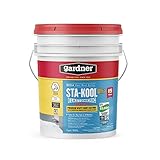
- ELASTOMERIC ROOF SEALANT: Seal and protect your roof from intense heat and harsh UV rays with Gardner-Gibson Sta-Kool 15-Year Turbo-Dri Elastomeric Roof Coating. It's engineered to be "rain safe" in 30 minutes for protection against unexpected rain.
- COOL-CORE TECHNOLOGY: This heat reflective paint features "cool-core" technology – specialized pigments that repel heat gain to keep interiors cooler and help save on cooling costs.
- PREMIUM “SINGLE DAY” WHITE ROOF COATING: Engineered to be “Rain Safe” in 30 minutes and recoated in just three hours, STA-KOOL Turbo-Dri Technology greatly improves efficiency allowing for faster completion times and unprecedented protection against unexpected rain.
- EASY TO APPLY: Simply use a roller to spread Sta-Kool into a uniform coat on your surface. Follow all directions on label. Packaged in a 5-gallon container.
- SERVING PROS SINCE 1945: Established in 1945, Gardner-Gibson has been setting the industry standard with a variety of roof, road and waterproofing products for more than 75 years.
Ignoring construction traffic
Even a properly selected board can be damaged by dropped tools, uncontrolled staging or unplanned foot traffic. Define protection and inspection procedures before trades begin.
Designing only for installation day
Solar, mechanical and vegetated roofs continue to receive service visits. Walk pads, routes and access details should be shown on the permanent roof plan, not improvised after the membrane is complete.
Skipping the structural review
Additional insulation, boards, ballast, pavers, equipment and saturated vegetation can materially change roof loads. The cover-board decision belongs in the structural and roofing coordination process.
Relying on an old submittal
A product name may remain familiar while its published thicknesses, facer, approvals or installation instructions change. Require dated technical literature for the exact model proposed, and reconcile it with the membrane manufacturer’s current requirements. Do not substitute a similar-looking board without written acceptance.
Recommended Free Tools
Confusing a protection layer with a maintenance surface
A cover board is part of the roof assembly; it is not automatically a walkway. Where recurring traffic is expected, specify walk pads or service platforms that distribute loads and protect the finished membrane.
How to evaluate products without overstating the evidence
When comparing current cover-board options, use the same criteria for every candidate:
- System compatibility: the board must be approved with the selected insulation, membrane, deck and attachment method.
- Tested performance: compare only relevant fire, wind, impact, moisture and compressive data produced under stated test conditions.
- Installation: account for board dimensions, cutting, fastening, adhesive curing, sequencing and weather exposure.
- Weight: include board weight in the structural calculation, especially on retrofit roofs.
- Lifecycle and supply: confirm lead time, regional availability, repair procedures and replacement compatibility.
- Cost: evaluate installed cost and the consequences of damage or restricted maintenance access, rather than comparing material prices alone.
The source material does not establish a current head-to-head winner, a retail price or an independently verified superiority claim. A project team should request current technical data and make the selection against the documented assembly requirements.
Independent reader supportYour contribution helps us test, update, and keep practical guides available for everyone.Cost and lifecycle questions to resolve
No reliable current price can be assigned from the historical article, and material prices vary by board type, thickness, region, order size and delivery conditions. A useful estimate should separate board material, fasteners or adhesive, labor, staging, waste, freight and any structural reinforcement. Installed cost is more informative than a per-board price because a heavier or more labor-intensive option can change hoisting, cutting and sequencing requirements.
Also consider the cost of roof disruption. A board that is compatible with the membrane and readily available for repairs may simplify future maintenance, while an unapproved substitution can void assembly approvals or force removal of adjacent layers. Include inspection, replacement access, walk-pad maintenance and the expected service pattern for photovoltaic, mechanical or vegetated areas in the lifecycle discussion. These are planning factors, not a claim that one product will always cost less or last longer.
Also popular on Amazon

- HIGH-SOLIDS FORMULA – Countryman 100% Silicone Roof Coating for RV & flat roofs leaves more protective silicone after curing, creating a thicker, longer-lasting waterproof membrane with fewer coats and less wasted material.
- 100% SILICONE PERFORMANCE – Unlike many acrylic, latex and solvent-based roof coatings, premium 100% silicone resists ponding water, UV exposure and extreme weather without becoming brittle, cracking or peeling over time.
- NO PRIMER REQUIRED FOR MOST APPLICATIONS – Premium 100% silicone bonds to properly prepared metal, EPDM rubber, fiberglass, SPF, modified bitumen and existing silicone roof coatings without primer in most applications.
- SINGLE-COAT APPLICATION – When applied at the recommended coverage rate, Countryman restores and protects your roof in a single application, helping reduce labor and project time while creating a durable, seamless waterproof membrane.
- PROUDLY MADE IN THE USA – Manufactured in America using premium ingredients and backed by knowledgeable, U.S.-based product support from the people who make it.
Questions to resolve with the authority having jurisdiction and design team
- Which energy-code edition and local amendments govern the permit?
- Is the 2012 IgCC, another green-construction code or a voluntary rating program actually part of the project?
- Which climate-zone table entry and roof-construction category apply?
- Does the approved roof assembly meet the required fire and wind classifications with the proposed board and attachment?
- Are photovoltaic supports, vegetated zones, equipment screens or service platforms included in the structural and roofing drawings?
- What documentation will the inspector, owner or insurer require for substitutions and repairs?
Getting these answers in writing prevents a historical code reference from being mistaken for a present mandate and gives the installer a clear basis for submittal review.
Bottom line for 2026 projects
Newer energy and green-building provisions can increase the complexity of commercial roof assemblies, but they do not create one universal cover-board requirement. The strongest practice is to start with the locally adopted code, then design the complete roof system around insulation, fire and wind performance, structural capacity, rooftop equipment, vegetation, construction traffic and long-term maintenance. A durable cover board may be an important part of that system; its value is established by the approved assembly and project-specific evidence, not by a historical product mention alone.
Frequently Asked Questions
Do current energy codes require a cover board on every commercial roof?
No universal requirement is established here. The 2012 IECC and 2012 IgCC provisions discussed are edition- and jurisdiction-specific, and a cover board must be required by the adopted code, project specification or approved assembly to be mandatory.
What did the 2012 IgCC require?
For its prescriptive path, Section 605.1.1 required the building thermal envelope to exceed the referenced IECC envelope criteria by not less than 10 percent. That rule applies only where the 2012 IgCC was adopted and applicable.
What does a commercial roof cover board protect?
It can provide a more durable layer above insulation and below the membrane, helping address construction traffic, maintenance activity and system-specific impact, moisture, compressive, wind or fire needs. The exact protection depends on the tested assembly.
Is DensDeck automatically suitable for a project?
No. It is named as an example of a fiberglass-mat gypsum roofing board in the historical article. Current specifications, compatibility, attachment, structural implications and approvals must be verified for the proposed roof system.
What information should be confirmed before specifying a cover board?
Confirm the adopted code and amendments, climate zone, roof construction, complete assembly, structural loads, rooftop uses, required fire and wind classifications, installation method, manufacturer compatibility and long-term maintenance access.
Does the 30 percent figure from the 2012 IECC apply to every project today?
No. The article used that figure as a historical description of the 2012 IECC relative to the 2006 IECC. It is not a universal measured outcome or a current requirement for every jurisdiction.
How should cover-board costs be compared?
Compare installed cost, including material, labor, attachment, freight, staging and waste, then consider structural effects, availability, repair compatibility and maintenance access. No current retail price or universal lower-cost option is established here.
Can a cover board replace required insulation?
Not automatically. Insulation and protection serve different functions. Treat the board as a replacement only when the applicable code and the specific tested, approved assembly explicitly support that configuration.
The Bottom Line
Bottom line: A cover board is a project-specific protection decision, not an automatic consequence of an energy-code update. Verify the locally adopted rules, design the complete roof assembly, account for rooftop uses and loads, and approve only current, compatible system data.
Do these 3 things before closing this tab:
1Clear out junk files and repair common Windows errors2Scan for outdated or missing drivers - takes under a minute3Repair Windows errors before they cause bigger problemsQuick Recap
Product prices and availability are accurate as of the date/time indicated and are subject to change. Any price and availability information displayed on Amazon at the time of purchase will apply.

