Quick wins for a faster PC:
Repair Windows errors before they cause bigger problemsFix Now →Scan for outdated or missing drivers - takes under a minuteDriver Scan →Clear out junk files and repair common Windows errorsFree Scan →Plan on about 12 months for ordinary bagged cement when the bag is unopened, undamaged and kept completely dry. That is a practical manufacturer limit, not a universal expiry date. Cement that has been protected from moisture and carbon dioxide has remained usable in controlled ASTM testing for as long as five years, while cement exposed to dampness can become unreliable much sooner.
The deciding factor is condition, not age alone. Moisture can partially hydrate cement, form hard lumps and make setting time and strength unpredictable. Replace damp, contaminated, torn or stone-hard material, and verify any borderline stock before using it where failure would matter.

As an Amazon Associate I earn from qualifying purchases.
What a cement shelf-life statement actually means
A shelf-life statement tells you how long the manufacturer expects the product to retain its specified performance when it remains in the stated condition. It is normally measured from the production date and assumes the original package is unopened, undamaged and stored correctly.
Recommended Free Tools
For example, SikaEmaco 1061 EX states “12 months from date of production if stored properly in original, unopened and undamaged packaging.” CTS gives LOW-P Cement a 12-month shelf life when it is kept dry, protected from moisture and direct sunlight, and left in an undamaged package. These statements apply to those products under those conditions; they are not a universal expiry rule for every cement.
#1 Best Overall
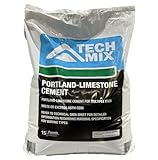
- MULTIPURPOSE: Basic building material for crafts, pavement, sidewalks, reinforced concrete buildings, masonry units, and more
- MIX AND USE: Use to create concrete, mortar, and stucco mixes
- GREAT FOR DIY PROJECTS: Ideal for small crafts with forms and silicone molds
- HIGH STRENGTH: Solid once dry, dry in 48 hours
- LESS IS MORE: One bag yields approximately .16 cu. ft.
A printed date should therefore be treated as a stock-rotation and quality-control limit. A bag that is 13 months old may still perform acceptably if it has stayed dry, while a newer bag that absorbed dampness may already be unsuitable. The older the material and the less certain the storage history, the more verification is needed.
What published figures show
| Source or product | Stated or observed period | Condition and qualification | How to use the figure |
|---|---|---|---|
| SikaEmaco 1061 EX | 12 months | From production, in original, unopened and undamaged packaging stored properly | Use as that product’s minimum planning period, not as a rule for all cement |
| SikaEmaco S 466 | 12 months for the product; 3 months for bulk bags | Manufacturer limits differ by package format | Check whether stock is bagged or bulk before applying a date |
| CTS LOW-P Cement | 12 months | Dry location, protected from moisture and direct sunlight, undamaged package | Shows the common one-year manufacturer specification under controlled storage |
| ASTM record, 1958 | Tests extending to five years | Portland cement was properly stored so moisture and carbon dioxide could not react with it | Demonstrates that age by itself does not set an automatic failure date |
| Betontechnische Daten guidance | 10–20% strength loss after three months; 20–30% after six months | Bagged cement in dry rooms; year of the guidance is not stated on the page | Treat as regional technical guidance, not a guaranteed loss for every cement or package |
These figures appear different because they describe different products, packages and storage assumptions. A controlled laboratory result cannot be transferred directly to a bag stored on a damp floor, and a conservative one-year product statement does not prove that every bag fails on its anniversary.
Why stored cement loses reliability
Moisture starts partial hydration
Cement is intended to react with water during mixing. Water vapour, condensation or direct wetting can start that reaction inside the bag. The material may then form partly hydrated grains and lumps before you are ready to use it. Because the reaction has already begun, the remaining powder may no longer develop strength or set at the expected rate.
Do these 3 things before closing this tab:
1Repair Windows errors before they cause bigger problems2Fix the driver behind crashes, sound loss and screen glitches3Clear out junk files and repair common Windows errorsCarbon dioxide is another storage concern
The ASTM work found no significant change in setting time or compressive strength when cement was protected from both moisture and carbon dioxide. That qualification matters: long storage is safest only when the package and storage environment prevent those reactions.
Lumps are a warning, not a performance test
Hard caking means moisture has reached at least part of the contents. A bag can look mostly dry while containing zones with altered material. Fine, friable caking is not proof that the cement still meets its specification; stone-hard lumps are a strong reason to discard it.
How to store cement so it lasts
- Use a weatherproof, dry room. Keep the stock away from rain, leaks, wash-down water and persistent humidity. Storage facilities should protect cement from dampness and moisture.
- Keep the original package closed. Do not open bags until they are needed. For products supplied in containers, keep the container closed whenever it is not in use.
- Raise every bag off the floor. Place bags on pallets or bearers. Concrete floors can transmit moisture, and condensation can collect beneath or around stored bags.
- Keep bags away from exterior walls. Walls facing outdoors can be colder than the room air and create condensation. Leave a gap for dry ventilation rather than pressing stacks against the wall.
- Protect the stock from direct sunlight. Follow the product data sheet; CTS specifically requires protection from direct sunlight as well as moisture.
- Stack for stability, not maximum height. Avoid tall stacks that compress lower bags for long periods. Compression can damage packaging and make lower bags harder to inspect or handle.
- Rotate by date. Mark the production or delivery date and use first-in, first-out stock rotation. Put the oldest acceptable bags where they will be selected first.
- Separate damaged stock. Move torn, wet, stained or contaminated bags out of the usable stack immediately so they cannot be issued accidentally.
Bulk storage can have a shorter stated period than bagged storage. SikaEmaco S 466, for example, lists 12 months for the product but three months for bulk bags. Always apply the limit for the actual package and product, not a generic “cement” rule.
How to assess an old bag before use
1. Check the package
- Look for tears, pinholes, open seams, water marks, staining or evidence that the bag has been moved while wet.
- Confirm that the package is the specified cement type and that its production or delivery date is legible.
- Check whether the bag has been stored on a pallet or bearer rather than directly on a floor.
2. Examine the contents
- Discard material that is contaminated with soil, debris or another powder.
- Discard cement that has become stone-hard in lumps. Aalborg Portland specifically advises against using cement in that condition.
- Do not assume that powder which breaks apart easily has full original performance. Friable caking still indicates that moisture reached the product and requires verification for important work.
3. Consider the consequence of failure
For a nonstructural patch or temporary work, a small trial batch may provide useful evidence if the material is clean, dry-looking and only slightly aged. For structural, load-bearing, safety-critical or specification-controlled work, the tolerance for uncertainty is much lower. Follow the product’s technical-data-sheet instructions and obtain appropriate setting or strength verification before committing the material.
Rank #2
When an old bag can be tried and when it should be replaced
| Condition | Suitable response | Reason |
|---|---|---|
| Unopened, undamaged bag; dry storage; within the manufacturer’s stated period | Use normally, following the product data sheet | This is the condition assumed by the labeled shelf life |
| Past the stated period but package and storage history are excellent | Use only after appropriate verification; reserve for work where the verified performance is acceptable | Age alone does not prove failure, but the manufacturer’s stated period has been exceeded |
| Minor, friable caking with no damp package | Do not rely on appearance; make a controlled trial or obtain testing before important work | Partial hydration may have changed setting or strength even when lumps break apart |
| Damp bag, water staining, torn packaging or contamination | Replace it | Package integrity and moisture protection have been lost |
| Stone-hard lumps throughout or in substantial portions | Discard it | The material has undergone severe caking and cannot be assumed to meet performance requirements |
| Any uncertain bag for structural or safety-critical work | Use fresh, compliant cement or obtain documented setting and strength verification | The consequence of unpredictable performance is too high for an informal trial |
How to verify borderline cement
A trial casting is the practical field check recommended by Aalborg Portland for long-stored cement. The trial should be made with the same mix proportions, water control and curing approach intended for the job, then checked for setting and hardening behavior. A trial is evidence for that material and that use; it is not a blanket approval for every bag in the stack.
For work governed by a cement standard, contract specification or structural design, use the verification required by that specification. Appropriate setting-time or strength testing is more defensible than judging powder texture. Keep the product data sheet, batch information and test records with the project documentation so the decision can be traced.
Do not “refresh” questionable cement by blending it into a large batch of fresh material. Unless the governing specification permits and the resulting performance is verified, mixing can spread an unknown loss of performance through otherwise compliant work.
Independent reader supportYour contribution helps us test, update, and keep practical guides available for everyone.Managing stock on a construction site
Record dates and conditions
At delivery, record the product name, package format, batch or production information and date received. Note where the pallets are stored and inspect the stack after severe weather, roof leaks or changes in the building envelope.
Use first-in, first-out rotation
Issue the oldest acceptable bags first, but never issue a bag merely because it is old enough to be used up. Rotation reduces avoidable aging; it does not override a failed package or a product-specific shelf-life statement.
Set an internal replacement trigger
A practical site rule is to review stock before the labeled period ends and arrange replacement when the remaining time is too short for the planned work. This avoids making a quality decision under schedule pressure and prevents questionable bags from being diverted to critical applications.
Keep bulk and bagged inventory separate
Because bulk material may have a shorter manufacturer limit, identify bulk storage clearly and track its date independently from bagged stock. Never transfer a bagged-cement date to a silo or bulk bag without the applicable product documentation.
Rank #3

- MULTIPURPOSE: Basic building material for crafts, pavement, sidewalks, reinforced concrete buildings, masonry units, and more
- MIX AND USE: Use to create concrete, mortar, and stucco mixes
- GREAT FOR DIY PROJECTS: Ideal for small crafts with forms and silicone molds
- HIGH STRENGTH: Solid once dry, dry in 48 hours
- LESS IS MORE: One bag yields approximately .5 cu. ft.
Does cement “expire”?
Cement has a product-specific labeled shelf life, commonly around 12 months, but it does not have one universal expiry date. Actual usability depends on moisture exposure, package integrity, cement type and the performance required for the job.
Crashes, No Sound, or Screen Glitches?
Random freezes, missing sound and display glitches usually trace back to one bad driver. Find and replace yours safely.Free scan · under a minutePC Slower Than It Used to Be?
A free scan shows the junk files, broken settings and background clutter dragging Windows down - then fixes them in one click.Free scan · Windows 10 & 11What is the safest practical rule?
Use fresh cement for structural or otherwise critical work unless older material has documented verification. For less critical work, an old bag may be usable when it stayed dry and intact and a representative trial confirms acceptable setting and hardening. Replace any bag that is damp, contaminated, torn or stone-hard in lumps.
Frequently Asked Questions
Is the date printed on a cement bag an automatic discard date?
No. It is the manufacturer’s planning limit under specified storage conditions. A bag beyond that period needs condition assessment and, for important work, performance verification rather than an assumption that it is either safe or unusable.
Can cement with soft or friable lumps be used?
Only with caution. Friable caking does not prove full performance; use a representative trial or documented testing before relying on it, and do not use it for critical work without the required verification.
Why can bulk cement have a shorter shelf life than bagged cement?
The package format and storage system change how well the material is protected. Product documentation can therefore specify a different period; one example lists 12 months for the product but three months for bulk bags.
What’s actually slowing this PC down?
Pick the symptom - the matching free tool is one click away.
What should I do with a wet or stone-hard bag?
Remove it from usable stock and replace it. Moisture exposure and severe caking make setting and strength unpredictable.
Does keeping cement dry for years guarantee original strength?
No guarantee follows from age alone. Controlled ASTM testing found no significant change through tests extending to five years when moisture and carbon dioxide reactions were prevented, but project decisions still depend on the product specification and required verification.
Quick Recap
Product prices and availability are accurate as of the date/time indicated and are subject to change. Any price and availability information displayed on Amazon at the time of purchase will apply.

