How long do pumpkins last? A whole, mature, unblemished pumpkin usually lasts about two to six months in suitable storage. Jack-o’-lantern types often last two to three months, while some storage varieties last three to six months; carved pumpkins are a separate, much shorter-lived case.
The deciding factors are not just the calendar. Pumpkin variety, maturity at harvest, stem condition, bruising, curing, temperature, humidity, airflow, and exposure to ripening fruit all affect whether a pumpkin lasts days, weeks, or several months.
As an Amazon Associate I earn from qualifying purchases.
Key takeaways
- A whole, mature, undamaged pumpkin usually lasts about two to six months in suitable storage, depending on variety and handling.
- Jack-o’-lantern varieties commonly store for about two to three months, while some storage-oriented pumpkins can last three to six months.
- Cure homegrown pumpkins for approximately 5–14 days at 80–85°F before moving them into long-term storage.
- Store pumpkins in a single layer at approximately 50–55°F, with 50–70% relative humidity, darkness, and good ventilation.
- Carved pumpkins have a much shorter, different storage life because cutting exposes the interior; the two-to-six-month estimate does not apply.
- Commercially canned pumpkin is a separate food category: unopened cans generally keep for two to five years, while opened pumpkin lasts three to four days in the refrigerator.
How long do pumpkins last?
A whole, mature pumpkin usually lasts about two to six months when it is undamaged, properly cured, and stored in a cool, dry, dark, ventilated place. Jack-o’-lantern pumpkins often last closer to two or three months, while certain storage varieties can last three to six months; variety, maturity, bruising, and temperature account for the range.
Outdated Drivers Are Slowing You Down
One free scan finds every outdated or missing driver and matches the right update for your exact hardware.Free scan · exact hardware matchWindows Errors? Fix Them Before They Spread
Repair common Windows errors and clear accumulated junk for a smoother, more stable PC - no reinstall needed.Free scan · no reinstallUniversity of Minnesota Extension gives a more conservative home-garden estimate of about two months. That estimate is not a contradiction of the longer ranges: a pumpkin harvested immature, handled roughly, exposed to frost, or stored in warm, damp conditions will deteriorate sooner.
#1 Best Overall

- Fruit Size: Varied seed blend produces pumpkins ranging widely from two to twenty pounds in diverse, whimsical proportions.
- Appearance: Eclectic combination of bright orange, white, and bicolored rinds in smooth, warty, round, or flattened forms.
- Best Uses: Ideal for diverse doorstep displays, colorful carving selections, festive autumn decor, and school gardens.
- Growing Tips: Plant in fertile mounds with full sun, watering evenly to support diverse growth rates across mixed plants.
- Quality: Fresh seeds for the current & following season that originate from a temperature & moisture-controlled facility.
| Pumpkin situation | Typical time or guidance | What determines the result |
|---|---|---|
| Whole, uncarved pumpkin | About two to six months | Variety, maturity, curing, damage, and storage conditions |
| Jack-o’-lantern varieties | About two to three months | Oregon State University Extension storage guidance for Jack O’Lantern and Connecticut Field types |
| Storage-oriented pumpkin | About three to six months | Proper harvest, curing, and cool, dry storage |
| Carved pumpkin | No reliable universal figure in the cited sources | The cut rind exposes the interior and creates a substantially shorter-lived product |
| Commercially canned pumpkin, unopened | Two to five years | USDA shelf-stable-food guidance; this does not apply to fresh pumpkins |
| Commercially canned pumpkin, opened | Three to four days refrigerated | Keep the opened product refrigerated and follow the product’s instructions |
The University of Illinois Extension’s 2022 storage guidance gives two to six months for properly handled pumpkins and winter squash, depending on variety. Oregon State University Extension’s home storage table lists approximately two to three months for Jack O’Lantern and Connecticut Field pumpkins.
How long do uncarved pumpkins last?
Uncarved pumpkins last the longest when the rind is fully mature, the stem remains attached, and the fruit has no soft spots, cracks, punctures, or deep scratches. A pumpkin that is already bruised or leaking may begin to rot within days or weeks, even if an unblemished pumpkin of the same variety could last for months.
A hard rind is an important maturity test. The skin should resist indentation from a fingernail and show the mature color expected for the variety. Harvest before a hard freeze. Oregon State University Extension advises, “Harvest all types of squash and pumpkin before frost begins.” A light frost may not immediately destroy a pumpkin, but freezing temperatures can injure its tissue and accelerate deterioration after thawing.
How should you harvest pumpkins after picking them?
Cut the pumpkin from the vine with clean, sharp pruning shears or a knife, leaving several inches of stem attached when possible. Do not snap the stem off, and never carry a pumpkin by its stem. A broken stem leaves an opening where decay can begin, and the fruit can be damaged if the stem breaks while being carried.
Handle each pumpkin as though it were fragile produce. Bruises, cuts, punctures, and deep scratches shorten storage life because microorganisms can enter damaged tissue. Separate damaged pumpkins from sound ones rather than placing every pumpkin into long-term storage together.
Do pumpkins need to be cured?
Homegrown pumpkins intended for storage should usually be cured. Curing means holding harvested pumpkins in a warm, well-ventilated place so the rind toughens and small surface cuts or scratches can seal before cool storage.
Rank #2

- FOUR HEIRLOOM VARIETIES – Small Sugar, Jack O’ Lantern, Fairytale & Casper pumpkins for sweet pies, carving traditions, and fall decorating
- COOKING & STORAGE – Bake pies, roast seeds, or can pumpkin puree; dependable harvests for family meals and long-term food storage
- CARVING & HOLIDAY FUN – Grow classic orange Jack O’ Lanterns and ghost white Caspers for halloween, autumn décor, and seasonal traditions
- GROW ANYWHERE – Reliable germination in garden beds, raised planters, or containers; suitable for spring planting or fall gardening projects
- FAMILY OWNED USA SMALL BUSINESS – Heirloom non-GMO seeds from Survival Garden Seeds, a trusted American brand; always open-pollinated, untreated, and quality tested for garden success
- Place clean, dry pumpkins in a single layer in a warm location with good airflow.
- Aim for approximately 80–85°F for 5–14 days.
- Turn or inspect the fruit carefully if needed, but avoid bruising it.
- Move pumpkins to long-term storage when the skin is hard enough that a fingernail cannot easily puncture it.
In warm, dry weather, some extension guidance allows curing in the field for roughly one to two weeks. Indoor curing is safer when weather is cool, wet, or threatening frost. Curing is particularly useful for homegrown or farmers-market pumpkins that will not be cooked immediately.
Do these 3 things before closing this tab:
1Repair Windows errors before they cause bigger problems2Scan for outdated or missing drivers - takes under a minute3Clear out junk files and repair common Windows errorsHow do you keep pumpkins from rotting?
Keep pumpkins cool, dry, dark, ventilated, and separated from one another. The practical target for long-term storage is approximately 50–55°F and 50–70% relative humidity; some extension guidance allows a broader 45–60°F range.
- Arrange pumpkins in a single layer rather than stacking them tightly.
- Keep air moving around every pumpkin.
- Place pumpkins on cardboard, wood, straw, or another porous barrier instead of directly on a damp floor.
- Inspect them periodically and remove any fruit with a soft spot, leakage, or spreading rot.
- Keep pumpkins away from apples, pears, and other ripening fruit because ethylene released by ripening produce can accelerate aging.
Do not make the refrigerator the default storage location for a whole pumpkin. Whole pumpkins prefer cool—not cold—conditions, and University of Minnesota Extension states that “Pumpkins are very sensitive to temperatures below 45 degrees Fahrenheit.” A dry basement, cellar, pantry, or similarly controlled area may work better if the temperature and humidity remain suitable.
Should pumpkins be refrigerated?
Whole pumpkins generally should not be refrigerated as the default long-term storage method because temperatures below about 45°F can injure pumpkin tissue. Refrigeration is appropriate for cut or opened pumpkin as a food-safety measure, not as the preferred storage environment for an intact pumpkin.
For a carved pumpkin, refrigeration can slow deterioration between display periods, but carving has already exposed the interior. Keep cut pumpkin away from contamination and discard it when it develops rot, severe softness, leakage, or other spoilage. Do not apply the whole-pumpkin two-to-six-month estimate to a carved pumpkin.
Recommended Free Tools
How often should you water pumpkin plants?
Pumpkin plants need at least one inch of water each week from rainfall or irrigation during the growing season. University of Minnesota Extension’s pumpkin-growing guidance recommends that weekly amount for vine crops.
Rank #3

- Fruit Size: Varied seed blend produces pumpkins ranging widely from two to twenty pounds in diverse, whimsical proportions.
- Appearance: Eclectic combination of bright orange, white, and bicolored rinds in smooth, warty, round, or flattened forms.
- Best Uses: Ideal for diverse doorstep displays, colorful carving selections, festive autumn decor, and school gardens.
- Growing Tips: Plant in fertile mounds with full sun, watering evenly to support diverse growth rates across mixed plants.
- Quality: Fresh seeds for the current & following season that originate from a temperature & moisture-controlled facility.
Water deeply at the base of the plant, preferably with a drip or soaker hose, so the foliage stays as dry as possible. Dry leaves and better airflow reduce the amount of time conditions remain favorable for some diseases. Shallow cultivation or hand-pulling is safer than deep digging near established vines because pumpkin roots grow close to the surface.
Readers planting a crop for next season may want to compare pumpkin seeds for planting by intended use—carving, pie, storage, or giant varieties—and by disease tolerance. No seed type guarantees a longer shelf life, but starting with a suitable variety is more useful than treating every pumpkin as though it had the same storage potential.
Why are my pumpkin flowers falling off?
The first pumpkin flowers are commonly male, so their falling off is not automatically a sign that the plant is failing. Female flowers must be pollinated for fruit to set, and bees are important pollinators.
What’s actually slowing this PC down?
Pick the symptom - the matching free tool is one click away.
Cold, rainy, or cloudy weather can reduce pollination and lead to poor fruit set. University of Minnesota Extension explains that “Poor fruit set could be due to not enough pollination.” Avoid insecticide applications when pollinators are active, and follow current local extension recommendations and the product label whenever a pesticide is actually needed.
Support pollination by growing pumpkins where bees can reach the flowers. Floating row covers or frost fabric can provide situational protection from pests or cold weather, but covers must be managed or removed so pollinators can reach open flowers. Other first-line measures include choosing tolerant or resistant varieties where available, rotating crops, maintaining airflow, avoiding overwatering, and preventing fruit injury.
What commonly causes pumpkins to rot?
| Cause | Why it shortens storage life | Best response |
|---|---|---|
| Immature harvest | The rind has not toughened enough to protect the flesh. | Wait for mature color and a hard rind, then harvest before a hard freeze. |
| Broken or missing stem | The stem opening provides a vulnerable entry point for decay. | Cut the stem cleanly and leave several inches attached; never lift the pumpkin by its stem. |
| Bruises, cracks, or punctures | Damaged tissue gives microorganisms an entry point. | Handle gently and use damaged fruit first rather than storing it for months. |
| Wet or poorly ventilated storage | Moisture and restricted airflow encourage deterioration. | Use a single layer, a porous barrier, and a dry, ventilated storage area. |
| Freezing temperatures | Cold injury can become evident after the pumpkin thaws. | Harvest before a hard freeze and avoid storage below the recommended range. |
| Pests or plant disease | Injury to foliage or fruit can weaken the plant and damage the pumpkin. | Monitor regularly, improve airflow, rotate crops, and use only locally appropriate, label-compliant treatments. |
Can you eat a pumpkin that has been sitting outside?
A pumpkin that has sat outside is not automatically unsafe, but a pumpkin with rot, severe softness, leakage, or other spoilage should be discarded rather than trimmed and eaten. Outdoor display exposes pumpkins to weather, temperature swings, insects, and handling, so appearance alone is not a reliable guarantee of food quality.
Rank #4

- Name: Big Max Pumpkin | Type: Heirloom
- Size at Maturity: 100+ Pounds | Days to Maturity: 110 Days
- Light Requirement: Full Sun | Planting Time: Warm Season
- Sowing Method: Direct Sow
- Planting Depth: 1-1 1/2" | Plant Spacing: 48"
Carving also changes the situation: once the rind is cut, the pumpkin is no longer a whole, protected storage crop. Decorative jack-o’-lantern varieties are generally chosen for appearance and carving rather than eating quality; pie or sweet pumpkins are usually better choices for cooking.
What are the alternatives when whole-pumpkin storage is impractical?
Process sound pumpkin before it deteriorates if you cannot maintain suitable whole-pumpkin storage. Freezing, canning, and drying follow different preparation and safety requirements, so use tested preservation instructions rather than treating processed pumpkin like a whole fruit.
Commercially canned pumpkin is shelf-stable while unopened. The USDA Food Safety and Inspection Service shelf-stable food guidance lists unopened commercially canned pumpkin among low-acid canned foods with a shelf life of two to five years. After opening, the cited guidance gives three to four days refrigerated. Those figures apply to commercially canned pumpkin, not fresh whole pumpkins or home-canned pumpkin.
Drying is another possible preservation route when whole-pumpkin storage is not practical, but a food dehydrator does not replace safe preparation, temperature, or storage instructions. Choose a tested preservation method suited to the form of pumpkin you have.
A practical pumpkin-storage checklist
- Harvest mature pumpkins before a hard freeze.
- Leave several inches of stem attached and do not carry pumpkins by the stem.
- Reject or use first any pumpkin with deep scratches, cracks, punctures, bruises, soft spots, or leakage.
- Cure sound homegrown pumpkins for 5–14 days at approximately 80–85°F with good airflow.
- Store pumpkins in a single layer at approximately 50–55°F and 50–70% relative humidity.
- Keep pumpkins dark, dry, ventilated, and off damp floors.
- Keep pumpkins away from ripening apples, pears, and other ethylene-producing fruit.
- Inspect regularly and remove rotting fruit immediately.
- Keep whole pumpkins out of the refrigerator unless a specific food-use situation calls for chilling.
- Do not use whole-pumpkin storage estimates for carved pumpkins.
For more detailed home-garden harvest and storage guidance, consult University of Minnesota Extension’s harvesting and storing guidance and Oregon State University Extension’s preservation guidance for pumpkins and winter squash.
Frequently Asked Questions
How long do whole pumpkins last?
Whole, uncarved pumpkins usually last about two to six months in suitable storage. Jack-o’-lantern types may last closer to two or three months, while storage-oriented varieties can last three to six months. Maturity, damage, curing, and temperature all affect the result.
Best Value
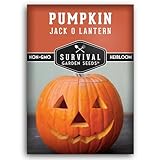
- HALLOWEEN CLASSIC – Reliable jack o'lantern pumpkin that grows 18–24 pound fruits, perfect for carving spooky faces or festive fall porch displays
- TASTY & VERSATILE – Smooth orange pumpkins that can be roasted, baked, or pureed for pies, soups, and other comforting fall recipes
- GROW WITH CONFIDENCE – Easy to cultivate in full sun with regular watering, producing uniform pumpkins ready in about 100 days
- PLANT NOW OR STORE – Seeds stay viable for multiple seasons when stored properly, so you can grow pumpkins this year or in the future
- FAMILY OWNED USA SMALL BUSINESS – Heirloom non-GMO seeds from Survival Garden Seeds, a trusted American brand; always open-pollinated, untreated, and quality tested for garden success
Should pumpkins be refrigerated?
Whole pumpkins generally should not be refrigerated for long-term storage because temperatures below about 45°F can injure pumpkin tissue. Store intact pumpkins in a cool, dry, dark, ventilated area around 50–55°F instead.
How long does a carved pumpkin last?
Carving does not have a reliable universal storage-life number in the cited extension sources. Cutting the rind exposes the interior and makes the pumpkin substantially shorter-lived, so the two-to-six-month whole-pumpkin estimate does not apply.
Can you eat a pumpkin that has been sitting outside?
Discard a pumpkin showing rot, severe softness, leakage, or other spoilage rather than relying on appearance alone. Outdoor exposure, insects, weather, and carving can reduce food quality even when some of the pumpkin still looks acceptable.
Quick wins for a faster PC:
Clear out junk files and repair common Windows errorsFree Scan →Fix the driver behind crashes, sound loss and screen glitchesFind Drivers →How often should you water pumpkin plants?
Water pumpkin plants with at least one inch of water each week from rainfall or irrigation during the growing season. Water at the base with drip or soaker irrigation when possible to keep foliage dry and improve airflow.
The Bottom Line
A whole, mature, undamaged pumpkin can last roughly two to six months, but only when the variety is suitable and the pumpkin is harvested before hard frost, cured when appropriate, and stored cool, dry, dark, and ventilated. Carved pumpkins and canned pumpkin follow entirely different timelines.
Quick Recap
Product prices and availability are accurate as of the date/time indicated and are subject to change. Any price and availability information displayed on Amazon at the time of purchase will apply.

