What’s actually slowing this PC down?
Pick the symptom - the matching free tool is one click away.
Irrigation systems help farmers make scarce water more controllable: they can direct it to crops, choose when to apply it, and regulate how much reaches a field. Whether that improves water use depends on more than the equipment. Crop and soil conditions, system design, maintenance, energy, scheduling, and rules for shared water all matter—and lower withdrawals from one field do not automatically mean more water is available across the wider basin.
Why irrigation matters—and why water control matters
Irrigation supplies crops when rainfall is insufficient or poorly timed. It can stabilize production and support higher yields, but agriculture also competes for limited freshwater. The Food and Agriculture Organization of the United Nations (FAO) reports on its current agricultural water-management page that agriculture accounts for 72 percent of global freshwater withdrawals and that 1.2 billion people live in agricultural areas facing severe water constraints. FAO does not give a reference year for those figures on the page, so they should be read as the figures currently presented there, not as measurements from a specified year. FAO agricultural water management.
As an Amazon Associate I earn from qualifying purchases.
Irrigated land has an outsized role in crop production and value. On its irrigation-management page, accessed in 2026, FAO reports that 23 percent of cropland is equipped for irrigation and produces 48 percent of global crop value; it also says irrigated yields are 76 percent higher on average than rainfed yields. The page does not state the reference year for these estimates. Those figures describe the importance of irrigation, not a guaranteed yield increase for any particular farm. They also do not mean that every farm should install irrigation: the practical decision depends on local water availability, crop requirements, economics, and rules for sharing the supply. FAO irrigation management.
Do these 3 things before closing this tab:
1Repair Windows errors before they cause bigger problems2Scan for outdated or missing drivers - takes under a minute3Clear out junk files and repair common Windows errorsHow an irrigation system can improve control
A system is a way to move and apply water; its value lies in how well it fits the farm’s conditions and is managed. Equipment can give a farmer more control over delivery, but it cannot by itself determine the right amount or timing. Scheduling, upkeep, and coordination with other users shape the outcome.
#1 Best Overall
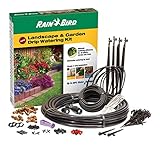
- Comprehensive 108-piece kit for flower beds, gardens and landscaped areas; eliminates hand watering, saves time and money
- Ultimate watering efficiency for all plants, shrubs and trees; up to 80% water savings
- Simple 3-step installation: connect to faucet, insert fittings into tubing, attach watering devices
- Includes 3 differnet types of watering devices: drippers, micro-bubblers and micro sprays
- Pressure-compensating technology ensures all plants receive same amount of water
- Delivery: Convey water to the field or crop area through pipes, sprinklers, or localized application.
- Timing and amount: Schedule applications to respond to crop needs and the available water allocation rather than relying only on rainfall.
- Distribution: Match application to the field layout and crop arrangement, reducing poorly targeted delivery where the design and operation support it.
- Management: Maintain equipment and coordinate operation with water-source limits, energy availability, and rules governing shared supplies.
Control is useful only when paired with a workable plan. A farmer needs to know what supply is available and when, what the crop and field need, and how the system is performing. A poorly matched design, inadequate upkeep, or a schedule disconnected from water allocation can undermine the intended benefit. For localized systems such as drip, filtration and water quality matter because clogging is a maintenance concern; pressurized approaches also need adequate pressure and energy.
FAO describes irrigation modernization as more than replacing old infrastructure: it combines technical and managerial upgrading with institutional reform to improve resource use and water-delivery service. In FAO’s words, modernization is “a process of technical and managerial upgrading – as opposed to mere rehabilitation – of irrigation schemes combined with institutional reforms, with the objective to improve resource utilization (labour, water, economic and environmental) and water delivery service to farms.” FAO adds that modernization is “not simply about replacing old infrastructure with new,” but a transformation in how irrigation systems are managed, operated, and governed. FAO, “Irrigation management”.
Compare systems against the farm, not a universal ranking
Drip, sprinkler, and pressurized-pipe approaches are practical options, but the available evidence does not establish a universally best method or a general performance percentage for any one system. Solar-powered pumping may help where conventional energy is constrained, but the pumping method does not remove limits on the water source. Compare the options against the farm’s crop, field, water, energy, budget, and capacity to maintain equipment.
Outdated Drivers Are Slowing You Down
One free scan finds every outdated or missing driver and matches the right update for your exact hardware.Free scan · exact hardware matchWindows Errors? Fix Them Before They Spread
Repair common Windows errors and clear accumulated junk for a smoother, more stable PC - no reinstall needed.Free scan · no reinstall| Approach | What it may help with | What to assess before choosing |
|---|---|---|
| Drip irrigation | Localized application; FAO guidance includes drip among measures that may reduce water applied. | Crop and row spacing; filtration and water quality; available pressure; clogging risk and maintenance; installation and energy costs; and whether lower withdrawals would also reduce consumption or non-recoverable flows. |
| Sprinkler irrigation | Distributing water through pressurized application. | Crop and field conditions; exposure to wind and evaporation; pressure and energy needs; equipment and maintenance costs. The cited sources do not provide a universal performance ranking. |
| Pressurized piped distribution | Conveying water through a pressurized system; FAO presents it as a practical conservation approach. | Existing conveyance losses; pressure and energy availability; capital costs; maintenance; and how the system is governed. |
| Solar-powered pumping | Lifting water where grid electricity or conventional energy is constrained. | Up-front investment; source and pumping limits; groundwater rules; and the risk that cheaper pumping could increase abstraction. |
The comparison is about fit, not a contest in which one technology always uses less water. For example, drip’s localized application may be relevant where the aim is to reduce water applied, but the system still needs suitable crop and row arrangements, clean-enough water or filtration, pressure, and regular maintenance. Sprinklers distribute water under pressure, so the farmer should account for field conditions and exposure to wind and evaporation as well as operating energy. Piped distribution may address conveyance, but existing losses, maintenance, and governance remain part of the calculation.
Rank #2

- Quick Connect Design: Newly Upgraded Quick Connect Irrigation System Say Goodbye to Complicated Settings! Our upgraded 4-way connectors, tees, and nozzles can now be easily connected directly to 1/4 "irrigation pipes. No more trouble with heating or softening - just plug and play!
- A brand new drip irrigation kit: ABAKUKU drip irrigation system, equipped with multiple components to meet all your garden watering needs. Including basic components such as 197 foot 1/4 inch irrigation pipe, 33 foot 1/2 inch irrigation pipe, 1/2 inch locking barbed tee connector, drip emitter flow, vortex emitter, blue mist nozzle, quick connect tee, faucet connector, etc.
- Multifunctional Applicability: Whether it is a small home garden or a large plantation, this drip irrigation system can provide even moisture distribution and is suitable for a variety of plants such as vegetables, flowers, fruit trees, etc., ensuring the healthy growth of plants.
- Four kinds of irrigation systems: the irrigation device includes four kinds of drip emitters, which can adjust different irrigation modes, such as micro drop, spray, watering, etc. A precise watering system can solve the watering problem of plants in different locations, and the amount of water sprayed can be adjusted separately according to the settings and needs.
- Easy to install and use: The set contains all the necessary components, and is easy to install without professional tools. Users can freely adjust the location of the drip irrigation tubes according to the garden layout to meet the irrigation needs of different plants.
Costs also have more than one component. No current product prices or universal cost comparison are provided, so a farm should not rely on a generic price claim. Compare capital or installation expense with the ongoing cost of energy, maintenance, filtration where relevant, and obtaining parts or service. Include the practical capacity to operate and repair the system; a technically appropriate option may be a poor fit if the farm cannot maintain it. A farm-specific design also needs local information about soil, topography, water source and quality, allocation, and budget. A professional irrigation designer or local agricultural extension service can help assess those conditions.
Field water savings are not automatically basin water savings
“Water saved” can mean different things. A farmer may apply less water to a field or withdraw less from a river, canal, or well. But some water that does not become crop consumption may return to a river, flow downstream for reuse, or recharge an aquifer. Reducing those return flows can leave less water for other users, even when the farm’s withdrawals fall.
FAO and FutureWater distinguish apparent savings from real savings in work originating in 2019 and described in an FAO knowledge product dated 2023. Apparent savings track reduced withdrawals without accounting for consumption. Real savings account for changes in consumption and non-recoverable return flows. FAO’s technical report on real water savings is dated 2021. In practical terms, a change can look like a saving when measured only at the field intake, while producing a smaller benefit—or no additional water for other users—once downstream reuse and return flows are considered. FAO water accounting; FAO technical report on real water savings.
FAO AQUASTAT also cautions that water not consumed by a crop may be reused farther downstream, return to a river, or recharge groundwater. Calling all water not taken up by crops “waste” can therefore be misleading. In some places, a portion of field drainage or seepage is part of the supply available to another user or to an aquifer. The relevance of those flows depends on where the water goes and whether it is recoverable, which is why efficiency claims need a clearly stated boundary. FAO AQUASTAT water-use methodology.
Rank #3

- Convenient and portable storage kit contains 102 professional grade universal Drip irrigation parts
- Plastic pouch neatly stores an included 100' of self-dispensing 1/4" blank distribution tubing
- Individual bags inside kit hold commonly needed parts such as: emitters, connectors, plugs, couplings, and stakes
- Rain Bird's patented Emitter Installation/Removal Tool makes it easy to work with emitters and 1/4" fittings
- High-quality pressure compensating, self-piercing emitters
When assessing a change in irrigation, state which measure you mean: water applied to the field, withdrawals from the source, crop consumption, or recoverable return flows. The answer can differ depending on the boundary being considered—farm, irrigation scheme, or river basin. A reduction in one measure should not be described as a basin-wide saving unless consumption and recoverable flows have also been considered.
How to decide what to evaluate on a farm
- Define the water problem. Identify whether the constraint is limited supply, unreliable timing, uneven field distribution, conveyance loss, pumping energy, or a combination. This clarifies whether the main need is application equipment, distribution improvements, scheduling, or governance.
- Describe the field and crop. Record crop type and row spacing, field shape and topography, soil conditions, and the water quality relevant to the proposed system. These details help determine whether an approach fits the crop arrangement and field layout.
- Check the water source and allocation. Establish the available supply, operating limits, and applicable rules, especially where water is shared or pumped from groundwater. A system’s ability to deliver water does not expand the farm’s allocation.
- Check pressure, energy, and operating capacity. Determine whether the system can be supplied at the pressure it requires, what energy is available, and who can maintain it. Consider filtration and clogging risks for localized systems.
- Compare full costs and upkeep. Include installation, energy, maintenance, and the ability to obtain parts and service, rather than comparing equipment on purchase cost alone. Standard prices are not established, so use local estimates.
- Set a water-accounting boundary. Decide whether the intended outcome is lower application, lower withdrawal, lower crop consumption, or a basin-level benefit that accounts for return flows and reuse.
- Plan scheduling and shared operation. Pair equipment with a workable schedule and arrangements for allocating and delivering water. These management measures are part of modernization, not an optional extra.
These steps also help distinguish a hardware problem from a management problem. If water arrives at the wrong time or is allocated unpredictably, new application equipment alone may not resolve the constraint. If the issue is conveyance, it is worth examining the distribution system rather than assuming a change at the crop level will address it. If the goal is a basin benefit, the accounting must follow water beyond the farm boundary.
FAO’s 2022 guidance on calculating agricultural water-use efficiency concerns global Sustainable Development Goal reporting and the agronomic parameters in indicator 6.4.1; it is not a general performance guarantee for an irrigation system. FAO 2022 guidance on agricultural water-use efficiency. For practical measures and implementation examples, FAO’s 2019 field guide draws on work in Burkina Faso, Morocco, and Uganda. FAO field guide to water management.
The Tool Desk
Outbyte Driver Updater FREEFix the driver behind crashes, sound loss and screen glitchesFind Drivers →Outbyte PC Repair FREERepair Windows errors before they cause bigger problemsFix Now →Solar pumping needs water limits as well as energy access
Solar pumps can improve access to water lifting where grid electricity or conventional energy is constrained. However, lower pumping costs can make it easier to abstract more groundwater. The water source, extraction limits, and groundwater rules therefore need to be considered alongside the equipment and its up-front cost. A less expensive source of pumping energy does not establish that additional abstraction is sustainable.
Rank #4

- 【Upgraded Tube Design & Water Saving】 Our adjustable garden watering system is upgraded to 1/2” diameter to support high water pressure. The 1/2” tee connector in the package so you can easily set up 2 drip irrigation systems as needed. Garden watering systems minimize stage water loss by recharging water directly to plant roots. While traditional irrigation often results in wasted water, this drip irrigation system saves up to 70% of water, no need for manual watering, saves water.
- 【Easy Installation & Quick Connection Technology】 The 4-way connector and emitter connect directly to 1/4" irrigation tubing easily, making installation a breeze. Our garden irrigation system features an innovative quick connect design that makes installing drip irrigation kits a breeze, with no heating or softening required, just plug and play. No tools or special skills are required, saving time and effort while ensuring a solid installation that won't fall off or leak.
- 【Wide Applications】 Drip irrigation system is perfect for lawn irrigation, gardens, patios, vegetables, plant greenhouses, flower beds, agriculture and raised beds, etc., one system can meet the irrigation needs of a wide variety of plants for different growing environments. Designed for all kinds of indoor and outdoor watering, the drip irrigation kit is designed for above ground or raised installation, and can be used all year round to keep your plants hydrated and save water.
- 【Premium Quality & Durable】 High quality adjustable drip irrigation sprinkler heads are removable and easy to clean, no need to worry about irrigation sprayer stake damage and clogged drip heads. The sharp bottom of the sprinkler stake can be easily fixed on the ground. The drip irrigation kit includes 3 types of heads such as stream, vortex and misting. Each sprinkler head can be easily adjusted by rotating the cap for precise water replenishment, making gardening less tedious!
- 【Comprehensive Drip Irrigation Kit】 Garden watering system comes with a variety of components to meet your garden watering needs. Includes 10 Drip Stream Emitter, 10 Drip Vortex Emitter, 20 Misting Nozzle(10 orange with dripper stake +10 blue), 33 FT durable 1/2“ Main Line, 197 FT 1/4” Drip Line, 6 Four Way Couplers, 1/2” Barb Tee and more. Watering plants accurately and efficiently is no longer a chore with our high quality and complete drip irrigation kits!
This is a broader lesson about irrigation technology: making it easier or cheaper to move water can change how much is pumped as well as how it is delivered. Any evaluation of a pump should therefore include the source and rules governing extraction, not just the energy supply. Where water is shared, scheduling and allocation arrangements still matter.
More broadly, technology improves a farmer’s ability to move and apply water; it does not create new water or guarantee that a reduction in field withdrawals benefits the basin. The strongest decisions combine a system suited to local conditions with reliable operation, maintenance, scheduling, and water governance.
Independent reader supportYour contribution helps us test, update, and keep practical guides available for everyone.Frequently Asked Questions
Which irrigation system is most water-efficient?
There is no universal best system or general performance percentage supported here. Drip, sprinkler, and pressurized-pipe approaches each need to be assessed against the crop, field layout, soil, water quality, pressure and energy supply, costs, maintenance capacity, and local water rules.
Quick wins for a faster PC:
Scan for outdated or missing drivers - takes under a minuteDriver Scan →Clear out junk files and repair common Windows errorsFree Scan →Fix the driver behind crashes, sound loss and screen glitchesFind Drivers →Does using less water on a field mean more water is available downstream?
Not necessarily. Some water not consumed by crops may return to a river, be reused downstream, or recharge an aquifer. A reduction in field withdrawals is an apparent saving; determining real savings requires accounting for consumption and non-recoverable return flows at an appropriate boundary.
Best Value

- Be a Gardening Master with the help of our superior and complete Drip Irrigation Kit: 50ft flexible & durable PVC 5/16" Irrigation Tubing + 50ft 1/4" Drip Distribution Tubing + 2 x Female Thread Water Connectors for 5/16" Mainline + 20 Barbed Drip Emitters Stream + 10 Barbed Drip Emitters Vortex + 4 x 1-Way, 6 x 2-Way and 2 x 4-Way Barbed Splitters from 5/16" to 1/4" + 5 x 1/4" Tubing Tee Splitters + 2 x 5/16" Mainline End Plugs + 5 x 1/4" Distribution Tubing End Plugs
- Make your own garden irrigation system kit easier than ever: run a 3/4 connection from your water source to the watering area. Use the 5/16 irrigation tubing as the mainline. Branch off with the 1/4 drip irrigation tubing and connect a maximum of 30 drip irrigation emitters. Stick the dripper stake into the soil, adjust the desired irrigation spray, and feed your plants with your own drip irrigation system. Designed to work with between 20 - 45 PSI and a maximum output of 60 gallons/hour/emitter
- Enjoy taking care of your garden with high quality adjustable spray emitters and forget about broken irrigation sprayer stakes and clogged drip heads. With a length of 7.5 inch and a sharp bottom, the irrigation bubbler stake can be easily fixed into the ground and stays still even in loose soil. Perfect for long time application, the drip irrigation emitter heads are detachable and easy to clean so you don’t worry about clogging. Make gardening less of a chore!
- Spend less, get more - UV resistant and designed for underground or above-ground installation, the Carpathen 1/4 inch drip irrigation tubing will last year-round in any weather. Use the 4 ways/2 ways/1 way couplers to create the perfect branch for your plants. Season after season the distribution tubing part of the irrigation drip system will keep your plants hydrated with minimal waste from evaporation. Choose to cut down your water bills!
- Save Your Time with Carpathen Garden Irrigation System. Our automatic drip watering system minimizes water loss by directly hydrating the roots of your plants. Easily adjust the drip emitters by rotating the cap for precise hydration. Designed for up to 3 raised garden beds, this irrigation system for the garden is ideal as a garden starter kit for healthy vegetables, an automatic watering system for potted plants, a raised garden bed watering system, or a reliable garden grid watering system
What should a farmer compare before installing drip irrigation?
Consider crop and row spacing, filtration and water quality, available pressure, clogging and maintenance, installation and energy costs, and the water-accounting outcome. A farm-specific recommendation also needs local soil, topography, water-source, allocation, and budget information.
Are solar irrigation pumps automatically sustainable?
No. Solar pumping can improve access to water lifting where conventional energy is constrained, but lower pumping costs may encourage greater groundwater abstraction. Evaluate the water source, pumping limits, and applicable groundwater rules alongside the pump’s up-front cost.
What costs should be included when comparing irrigation options?
Compare installation or capital costs with ongoing energy and maintenance needs, filtration where relevant, and access to parts and service. No current product prices or universal cost ranking are provided, so use local estimates rather than assuming one approach is always cheaper.
The Bottom Line
Irrigation can help farmers use limited water with greater control over delivery, timing, and amount, but no system is best for every farm. Compare options using local crop, field, water, energy, cost, and maintenance conditions; pair equipment with scheduling and sound water governance. Most importantly, distinguish less water applied or withdrawn from real water savings: return flows, reuse, and crop consumption determine whether the basin benefits.
Quick Recap
Product prices and availability are accurate as of the date/time indicated and are subject to change. Any price and availability information displayed on Amazon at the time of purchase will apply.




