What’s actually slowing this PC down?
Pick the symptom - the matching free tool is one click away.
Floodable parks are designed to fill temporarily during heavy rain, then return to ordinary park conditions as water infiltrates into soil, evaporates, or leaves through controlled drains and outlets. Grading, vegetation, engineered soil, underground storage, warning systems, and maintenance work together so the park serves as public space between storms and as a stormwater facility during them.
There is no universal emptying time or runoff-reduction result. Soil permeability, groundwater, storm intensity, sediment, outlet settings, vegetation condition, and maintenance determine performance at each site. Designers must size and verify every park with site-specific hydrologic and hydraulic modelling.
As an Amazon Associate I earn from qualifying purchases.
What a floodable park is
A floodable park, sometimes called a stormwater or sponge park, is a deliberately graded landscape that accepts runoff in designated areas instead of allowing uncontrolled flooding on streets, in buildings, or in waterways. Most of the time, its lawns, paths, play spaces, and planted areas function as a normal park. During an intense storm, those same spaces become temporary storage and treatment zones.
Recommended Free Tools
The key distinction is detention rather than permanent impoundment. Water is held long enough to reduce the speed and volume of the discharge, settle sediment, and pass through soil and plant roots. It then moves through one or more designed pathways: infiltration into the ground, evaporation and plant uptake, underdrains, controlled outlets, or an overflow route for storms larger than the design event.
#1 Best Overall

- DURABLE AND ECO-FRIENDLY: Crafted from 100% recycled PPE plastic, our gravel paver system delivers exceptional strength and longevity; This set includes 22 units with a 1-inch depth, covering an area of 65 square feet
- IMPRESSIVE LOAD CAPACITY: With the capacity to handle up to a staggering 27,000 lbs (depending on the base and fill used), HexPave gravel grids ensure stability and support for your outdoor projects; Each unit measures 22 7/8" l x 19 7/8" w x 1 1/8" h
- VERSATILE APPLICATION: Whether you're dreaming of a charming grass patio, a driveway, serene walkway or a sturdy shed base, HexPave's adaptability makes it an ideal choice for a wide range of outdoor projects
- EASY INSTALLATION: Our user-friendly gravel grid simplifies installation, saving you time and effort; Achieve professional-looking results with ease
- SUSTAINABLE WALKING PATH CHOICE: These permeable pavers allow rainwater to seep through the surface and be naturally filtered by the ground, reducing runoff and helping to recharge groundwater
How stormwater moves through the park
1. Catch and convey runoff
Runoff first has to reach the places built to receive it. Street inlets, channels, swales, curbs, and graded paths direct water toward a low landscape basin or a treatment train. The grading is intentional: it prevents water from spreading randomly across activity areas and concentrates flow where soil, plants, pavement, and structures can handle it.
At New York City’s Gowanus Sponge Park, the design captures runoff from 2nd Street before it reaches the canal. The site was excavated about four feet and fitted with concrete cells filled with engineered soil. That arrangement creates a defined path from the street to storage and treatment rather than relying on an ordinary lawn to absorb an unpredictable sheet of water.
2. Detain and filter
Once runoff arrives, rain gardens, bioswales, detention lawns, engineered soil, and modular cells slow it down. Lower velocity gives particles time to settle and allows water to contact soil and roots. Engineered media can be selected for porosity, pollutant capture, structural stability, and plant support. Vegetation also protects the surface from erosion and helps maintain soil structure.
A detention lawn may look like a conventional open field, but its contours and subgrade are calculated to provide a specified storage volume. A rain garden or bioswale normally drains more quickly than a pond because water is spread through a shallow soil profile rather than held in a deep basin. The exact blend of soil, gravel, vegetation, and drainage layers is a professional design decision based on local soils, groundwater, climate, and pollutant loads.
3. Infiltrate, evaporate, or release
After the first flush is slowed and filtered, water leaves through several possible routes. Permeable paving allows rainfall to pass through joints or porous surfaces into a stone reservoir and soil. Bioretention areas allow water to infiltrate through engineered media. Underdrains collect water where native soils infiltrate too slowly, sending it to a pipe or outlet at a controlled rate. Plants and open water return some moisture to the atmosphere through evapotranspiration.
Outlets and overflow structures are essential. They limit the discharge rate during ordinary design storms and provide a safe route when rainfall exceeds the system’s storage capacity. A park that has no defined overflow path can shift risk to paths, adjacent properties, or downstream streets.
Rank #2
- DURABLE AND ECO-FRIENDLY: Crafted from 100% recycled PPE plastic, our gravel paver system delivers exceptional strength and longevity; This set includes 110 units with a 1-inch depth, covering an area of 325 square feet
- IMPRESSIVE LOAD CAPACITY: With the capacity to handle up to a staggering 27,000 lbs (depending on the base and fill used), HexPave gravel grids ensure stability and support for your outdoor projects; Each unit measures 22 7/8" l x 19 7/8" w x 1 1/8" h
- VERSATILE APPLICATION: Whether you're dreaming of a charming grass patio, a driveway, serene walkway or a sturdy shed base, HexPave's adaptability makes it an ideal choice for a wide range of outdoor projects
- EASY INSTALLATION: Our user-friendly gravel grid simplifies installation, saving you time and effort; Achieve professional-looking results with ease
- SUSTAINABLE WALKING PATH CHOICE: These permeable pavers allow rainwater to seep through the surface and be naturally filtered by the ground, reducing runoff and helping to recharge groundwater
Why the park is usually dry between storms
Floodable parks are sized around local hydrology, not around a permanent water surface. The design storm determines how much water must be detained; the soil profile, underdrain, outlet, and overflow determine how quickly that volume is removed. As the inflow stops, the stored water level falls. Infiltration may account for much of the drawdown where native soils are permeable. In tighter soils, underdrains or restricted outlets perform more of the work, while evaporation and plant uptake provide a slower secondary pathway.
Because these variables differ widely, a single “drain time” cannot be applied to every park. Prieur Park in Montreal is evaluated with rain gauges, piezometers, visual observations, drone topography, and PCSWMM 2D modelling. That combination illustrates why operators need measurements of rainfall, groundwater, surface levels, and actual flow paths rather than a generic time estimate.
Designers also account for storms that arrive before the previous event has fully drained. Storage calculations, outlet controls, and emergency overflow elevations must be checked against a sequence of storms, high groundwater, frozen or saturated soils, and blocked inlets where those conditions are relevant.
What the main components do
- Graded basins and channels: create predictable flow paths and temporary storage.
- Rain gardens and bioswales: spread water through planted soil, reduce velocity, and capture sediment.
- Detention lawns: provide broad, shallow storage while remaining usable as open space in dry weather.
- Engineered soil: balances infiltration, pollutant treatment, plant health, and load-bearing needs.
- Permeable paving: routes rainfall below the surface and can reduce runoff from paths and plazas when specified for the site.
- Underdrains and controlled outlets: regulate how quickly water leaves when native infiltration is insufficient or groundwater protection is required.
- Underground tanks or modular cells: add storage where a compact site cannot provide enough surface volume.
- Overflow routes: protect people and property when rainfall exceeds the design capacity.
- Sensors and warning equipment: communicate rising water and restrict access during dangerous conditions.
How different park designs handle water
A naturalized channel park and a compact engineered sponge park can both reduce flooding, but they solve different site problems. Bishan-Ang Mo Kio Park in Singapore uses a naturalized river corridor, broad conveyance space, ecological planting, and public paths. The park must move large flows safely while keeping people away from the channel during severe weather.
Gowanus Sponge Park is a more compact street-end intervention. Its engineered soil cells capture runoff from a defined catchment before discharge to the canal. The limited footprint makes excavation depth, cell construction, inlet protection, and maintenance access especially important.
Do these 3 things before closing this tab:
1Clear out junk files and repair common Windows errors2Fix the driver behind crashes, sound loss and screen glitches3Repair Windows errors before they cause bigger problemsWhen comparing designs, examine the following factors rather than assuming one model fits every location:
Rank #3
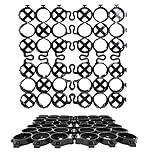
- EASY TO USE: Our lightweight permeable pavers are easy for any level of DIYer to install; Feel proud of your own outdoor home improvements!
- MADE IN USA & RECYCLED: TRUEGRID PRO PLUS paver grids are made in the USA from 100% post consumer recycled HDPE
- ALL WEATHER: TRUEGRID pavers work in all climates and soils; Our pavers are snow plow-able, 100% permeable, and drain instantly
- BEST USES: The PRO LITE pavers are best for driveways, shed bases, parking lots, cart paths, walking, biking and running trails, community green spaces, dog runs, hot tub pads, pool skirts, patios, and much more!
- EASY MAINTENANCE: Our patented permeable pavers require little to no maintenance! No more mud, ruts, puddles, or potholes; These paver can be saw cut for a custom fit
- Storage volume and target storm: identify the catchment area, design rainfall, available volume, and overflow elevation.
- Drawdown pathway: determine how much water infiltrates, drains through underdrains, evaporates, or exits through controlled outlets.
- Pollutant treatment: check sediment capture, engineered media, vegetation, and any pretreatment needed for polluted runoff.
- User safety: provide separation, durable routes, barriers or bridges where needed, sensors, and clear warnings.
- Maintenance and lifecycle cost: include sediment removal, vegetation care, inlet and outlet work, pavement cleaning, inspection, and equipment replacement.
- Equity and accessibility: preserve accessible routes, locate facilities where flood risk and benefits are fairly distributed, and communicate warnings in ways residents can use.
- Monitoring evidence: require measurements that show whether storage, treatment, and drawdown perform as designed.
What documented projects show
| Project | Documented system or evaluation | Reported result or target |
|---|---|---|
| GrowGreen/Manchester Climate Ready “sponge” park | Monitoring over two years | 88–100% reduction in runoff volume and 90–100% reduction in peak flow |
| Bishan-Ang Mo Kio Park | Naturalized river and flood-management park documented by the Government Architect NSW | 15% lower reconstruction cost; annual visitation increased from 3 million to 6 million; biodiversity increased 30% since construction |
| Tseung Kwan O South Park, Hong Kong | Rain gardens, bioswales, detention lawn, permeable paving, and underground storage | 70% rainwater-capture goal and an underground tank of approximately 142,000 litres, reported by Hong Kong’s Architectural Services Department in 2025 |
These figures belong to the named projects, their climates, soils, geometry, controls, and monitoring periods. They are not guarantees for a different park. In particular, the Manchester percentages do not establish a universal reduction range, and the Hong Kong capture figure is a design goal rather than a promise that every site can achieve the same result.
Safety during and after a storm
Floodwater can move quickly, conceal drop-offs, carry debris, and contain sewage or other contaminants. A park should therefore be designed so people can leave before water reaches dangerous depths, and so staff can verify conditions before reopening it.
Bishan-Ang Mo Kio Park uses water-level sensors, signal lights, sirens, and audio announcements to warn users during heavy rain and rising water. Comparable projects may also use elevated activity areas, bridges, signed closures, gated access, and routes that remain above the floodplain. Warning hardware is only effective when it is tested, powered, visible, audible, and connected to an operating procedure.
PC Slower Than It Used to Be?
A free scan shows the junk files, broken settings and background clutter dragging Windows down - then fixes them in one click.Free scan · Windows 10 & 11Outdated Drivers Are Slowing You Down
One free scan finds every outdated or missing driver and matches the right update for your exact hardware.Free scan · exact hardware matchPost-storm reopening should include inspection of paths, banks, play areas, railings, inlets, outlets, and underground access points. Remove debris and sediment, check for erosion or undermining, and confirm that water has receded before allowing children or other visitors into formerly inundated areas.
Public-health planning must include people who may have no practical alternative to walking through floodwater. The Centers for Disease Control and Prevention’s evaluation plan identifies combined-sewer-overflow events, resident knowledge, and waterborne illness as useful measures and highlights low-income residents who may need to reach transit or drinking water through flooded areas. Equity therefore affects site selection, accessible routes, warning languages and formats, transit connections, and cleanup priorities.
Independent reader supportYour contribution helps us test, update, and keep practical guides available for everyone.Maintenance that prevents permanent ponding
A floodable park can lose capacity even when its original design is sound. Sediment can clog inlets or seal engineered soil; vegetation can die or become too dense; permeable pavement can clog; outlets can be blocked; and sensors can drift out of calibration. Each failure reduces storage or slows drawdown.
Rank #4

- HEAVY-DUTY INTERLOCKING PAVER SYSTEM: Strol's reinforced honeycomb cell structure locks gravel securely, supporting up to 600,000kg/m (122,889.6 lbs/f) for driveways, walkways, patios, and erosion-prone areas
- VERSATILE OUTDOOR APPLICATIONS: Suitable for residential or commercial projects such as parking pads, patios, fire lanes, RV spots, event paths, and large landscape edging layouts that require stability and long-lasting durability
- PERMEABLE DRAINAGE DESIGN: These pavers allow natural water flow through every panel, preventing pooling, puddles, and erosion, offering a sustainable solution for landscaping and stormwater control
- FAST TOOL-FREE INSTALLATION: The snap-lock system connects each panel without tools, making it easy for contractors and DIYers to quickly build driveways, patios, pathways, fire pits, and parking areas
- DURABLE RECYCLED POLYPROPYLENE PANELS: Made from UV-stable recycled plastic, these pavers resist cracking, weathering, and chemicals, providing long-lasting strength for demanding outdoor flooring and mud control projects
An operations plan should assign responsibility and funding for:
Free tools Windows power users keep installed
One-click scans. No signup required.
- Removing sediment from forebays, inlets, swales, and treatment areas.
- Maintaining vegetation, replacing failed plants, controlling invasive growth, and repairing eroded soil.
- Inspecting and clearing underdrains, outlets, overflow structures, and access points.
- Vacuuming permeable pavement where the specification requires it.
- Calibrating water-level sensors and testing lights, sirens, and announcements.
- Completing post-storm safety inspections and documenting repairs.
Intervals are site-specific. The engineered operations plan should state inspection triggers, responsible agencies, acceptable water levels, response times, and records to keep. Maintenance funding must continue after construction; otherwise a park may remain attractive while its stormwater function quietly deteriorates.
Governance, funding, and community involvement
Stormwater parks cross agency boundaries. A parks department may own the land, a stormwater utility may control drainage assets, a transportation agency may manage the contributing streets, and community groups may provide local knowledge or stewardship. The U.S. Environmental Protection Agency’s Green Infrastructure in Parks: A Guide to Collaboration, Funding, and Community Engagement addresses this shared-management model.
Puget Sound Regional Council guidance similarly covers planning, equity, maintenance, funding, and lessons from built stormwater parks, including facilities serving basins of hundreds of acres. Early agreements should define who pays for capital work, routine care, emergency response, monitoring, public communication, and eventual renewal of soil media, pavement, sensors, and structural components.
Planning a floodable park for a real site
- Map the catchment: trace streets, roofs, channels, and existing drains that will contribute runoff.
- Set performance objectives: specify the storm size, allowable discharge, storage volume, water-quality goals, and acceptable drawdown conditions.
- Survey constraints: measure topography, soil infiltration, groundwater, utilities, contamination, accessibility, and existing trees or habitats.
- Lay out treatment and conveyance: place inlets, swales, basins, engineered soil, paving, underdrains, outlets, and overflow routes in a sequence that can be inspected and maintained.
- Model ordinary and extreme events: test design storms, back-to-back storms, blocked inlets, high groundwater, and safe exceedance flow paths.
- Design public safety: locate paths and activities above expected water levels, add warnings and closures, and provide accessible alternatives.
- Fund operations before construction: assign staff, equipment, inspection schedules, monitoring, and replacement budgets.
- Measure performance: use rainfall, water-level, flow, groundwater, vegetation, and user-safety data to verify and improve the system.
Are permeable pavers enough?
Permeable pavers can be one element of a floodable-park system, as demonstrated at Tseung Kwan O South Park, but they are not a standalone flood-control solution. Their performance depends on subgrade infiltration, stone reservoirs, edge restraints, loading, sediment exposure, accessible-surface requirements, and maintenance. A qualified designer should specify the full pavement section and connect it to the park’s storage, drainage, and overflow strategy.
Quick wins for a faster PC:
Repair Windows errors before they cause bigger problemsFix Now →Scan for outdated or missing drivers - takes under a minuteDriver Scan →Clear out junk files and repair common Windows errorsFree Scan →The practical answer
Floodable parks avoid permanent standing water by combining temporary storage with multiple release pathways and a safe exceedance route. They are dry and usable between storms because water is directed into designed low areas, slowed and filtered through soil and vegetation, infiltrated or drained at controlled rates, and monitored when conditions become hazardous. Their success depends less on a single feature than on the complete chain of hydrology, construction quality, maintenance, safety management, and long-term public-agency coordination.
Quick Recap
Product prices and availability are accurate as of the date/time indicated and are subject to change. Any price and availability information displayed on Amazon at the time of purchase will apply.

