Quick wins for a faster PC:
Repair Windows errors before they cause bigger problemsFix Now →Scan for outdated or missing drivers - takes under a minuteDriver Scan →Clear out junk files and repair common Windows errorsFree Scan →Cement is made by quarrying limestone and other raw materials, grinding and blending them to the right composition, heating the mix in a kiln to form clinker, then cooling and grinding that clinker with gypsum. The powder produced is cement. Concrete is a different material: it is made using cement along with other ingredients.
What cement is—and what it is not
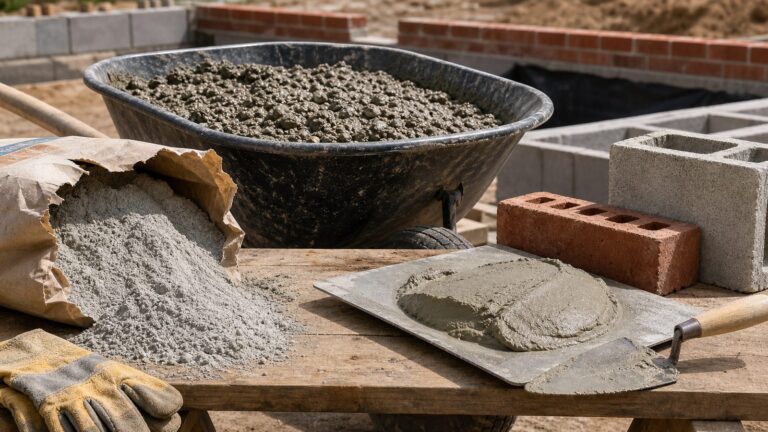
Cement is a finely ground binding powder used to make materials such as concrete. It is not itself concrete, and the two terms are not interchangeable. In the manufacturing process described here, the finished product is Portland cement: a carefully prepared powder made from kiln-produced clinker and gypsum.
| # | Preview | Product | Price | |
|---|---|---|---|---|
| 1 |

|
Tech Mix Portland-Limestone Cement, 15 Pounds | $30.99 | Buy on Amazon |
| 2 |

|
PORTLAND CEMENT 47LB | $51.62 | Buy on Amazon |
| 3 |

|
Tech Mix Portland-Limestone Cement, 30 Pounds | $55.99 | Buy on Amazon |
As an Amazon Associate I earn from qualifying purchases.
Clinker is an intermediate product, not finished cement. It forms when the prepared raw mix is heated and chemically transformed in the kiln. After the hot clinker cools, it is ground with gypsum to make the final powder. Keeping those stages distinct helps explain why the kiln alone does not complete cement production.
Do these 3 things before closing this tab:
1Clear out junk files and repair common Windows errors2Fix the driver behind crashes, sound loss and screen glitches3Repair Windows errors before they cause bigger problemsThe American Cement Association notes that plants can differ in layout, equipment and appearance while following the same general manufacturing sequence for Portland cement. The feed materials and specific process choices also vary with local geology, the intended product and the plant’s equipment. As the Association puts it, “While each cement plant may differ in layout, equipment, and appearance, the general process of manufacturing portland cement is the same.”
#1 Best Overall
- MULTIPURPOSE: Basic building material for crafts, pavement, sidewalks, reinforced concrete buildings, masonry units, and more
- MIX AND USE: Use to create concrete, mortar, and stucco mixes
- GREAT FOR DIY PROJECTS: Ideal for small crafts with forms and silicone molds
- HIGH STRENGTH: Solid once dry, dry in 48 hours
- LESS IS MORE: One bag yields approximately .16 cu. ft.
1. Quarrying limestone and other raw materials
The process begins with limestone, the main calcareous raw material, usually quarried alongside or supplemented by materials that provide other needed ingredients. Depending on local geology and the product being made, these may include clay, shale, chalk, marl, slate, sand or iron ore. The U.S. Environmental Protection Agency also identifies limestone, clay, sand and iron ore among the sector’s raw materials. Some plants can use alternative raw materials as well.
Using more than limestone matters because the plant must prepare a blend with suitable chemistry, not simply turn one kind of rock into powder. The particular feed mix depends on what is locally available and on the composition required for the cement. For that reason, there is no single raw-material recipe that describes every plant.
Quarries are often close to cement plants, reducing the distance between extraction and processing. The quarry feed may vary, so producers sample material and analyze it rather than assuming each load has an identical composition. The American Cement Association describes laboratory sampling and process monitoring as part of maintaining efficiency and quality.
Sampling links quarrying to the later stages: understanding the incoming rock helps the plant decide how to proportion and blend it with the rest of the feed. The sources establish this quality-monitoring role, but do not give a standard sampling frequency or a universal chemical target. Those details should not be inferred from a general process description.
2. Crushing, sampling and preparing the raw mix
Quarried rock is too large to feed directly into the later grinding and heating stages. Crushing breaks it into smaller pieces that can be handled and processed. Sampling and laboratory analysis help producers understand the incoming material and make decisions about how to combine it with other raw materials.
The crushed materials are ground, proportioned and blended into a consistent raw mix. Limestone supplies the principal calcareous component, while materials such as clay, shale, sand or iron ore contribute to the mix’s required chemistry. Proportioning is therefore a central control point: changes in the feed can affect what enters the kiln and the clinker it produces.
Plants use different approaches to raw-material preparation. The sources establish that dry and wet preparation or grinding approaches exist, but do not provide a single universal configuration or a current global breakdown of how widely each is used. It is more accurate to describe the common sequence—prepare and blend a consistent feed—than to imply every plant uses identical equipment or conditions.
Windows Errors? Fix Them Before They Spread
Repair common Windows errors and clear accumulated junk for a smoother, more stable PC - no reinstall needed.Free scan · no reinstallCrashes, No Sound, or Screen Glitches?
Random freezes, missing sound and display glitches usually trace back to one bad driver. Find and replace yours safely.Free scan · under a minuteCrushing, storage and grinding are also material-handling stages that matter beyond the chemistry of the raw mix. The EPA identifies particulate matter sources at these points as well as later in production. This is why a description of cement making includes both the transformation of the feed and controls for dust from moving and processing materials.
3. Preheating the blended feed
At plants equipped with a preheater, the blended raw feed passes through a tower before entering the kiln. Recovered heat from the plant begins reactions in the material ahead of kiln firing. This uses heat already present in the process and prepares the feed for the next stage.
A preheater is part of some plant configurations, not a requirement that can be assumed for every facility. Equipment layout, kiln and cooler arrangements, and process choices vary from plant to plant. The preheating stage should therefore be understood as a common feature of plants that use this system, rather than a universal standalone step in every cement works.
When comparing two plant descriptions, check whether a preheater is included instead of assuming that every feed follows the same route before the kiln. The general sequence remains raw-material preparation followed by kiln firing, but the equipment used to move heat into the feed can differ.
The Tool Desk
Outbyte Driver Updater FREEScan for outdated or missing drivers - takes under a minuteDriver Scan →Outbyte PC Repair FREERepair Windows errors before they cause bigger problemsFix Now →Rank #2
4. Heating the raw mix in the kiln
The prepared feed moves through a rotary kiln and is heated until it partially melts and undergoes the reactions that form clinker. This is the defining transformation in cement manufacture: the kiln converts a blended mineral feed into a new intermediate material rather than merely drying or pulverizing the rock.
Kiln temperatures are often quoted as a single number, but the available source descriptions do not establish one universal operating setpoint. The American Cement Association describes its process at about 2,700°F; the EPA’s sector overview gives 2,550°F. These are source-specific descriptions, not evidence that every kiln runs at exactly one of those temperatures. Actual equipment and operating conditions can differ.
The kiln stage also helps explain why cement manufacturing has substantial energy demands: the process has to heat the raw mix enough for the reactions that produce clinker. The EPA identifies cement manufacture as an industrial sector with air emissions, including carbon dioxide, but the available sources do not establish one emissions total that can be applied to all plants.
Temperature figures are useful for conveying the high-heat nature of the process, but they should not be treated as a direct plant-to-plant performance comparison. A valid comparison would need information about the facility’s equipment and operating conditions, along with its fuel choices and emissions controls. The sector overview and general industry process description provide context, not comparable operating records for individual kilns.
5. Cooling clinker and recovering heat
After it forms, clinker leaves the kiln hot and must be cooled. The American Cement Association describes rapid cooling to bring it to a manageable temperature. Cooling is a necessary handoff between the high-temperature kiln stage and the later grinding operation; the clinker is not yet the finished product.
In the process description from the Association, heated air from the cooler can be recovered and returned to the kiln. This is one example of heat being reused within the manufacturing process. Whether and how a plant recovers heat depends on its equipment configuration, so it should not be treated as a feature guaranteed at every facility.
Cooling is not just a pause before finishing. It changes the material’s condition so it can move on to grinding, while the described heat recovery returns some heated air to the kiln. The source does not specify a universal cooling time or final clinker temperature, so those numbers cannot be generalized across plants.
6. Finish grinding: turning clinker into cement
Cooled clinker is ground with a small amount of gypsum to produce Portland cement. This final grinding step changes the clinker into the fine powder used as cement. Gypsum is part of the finishing process, but the sources do not give a universal formulation or a fixed proportion that applies to every cement type.
The product at the end of this step is the cement that can be supplied for construction use, including as a bagged product. It remains distinct from concrete, which is made using cement as one of its ingredients. In other words, the manufacturer’s process ends with cement powder; concrete production is a separate downstream activity.
That distinction also helps answer what clinker is for: it is the material made in the kiln and then used as the main intermediate for finish grinding. The cement product is made only after the cooled clinker is ground with gypsum. Different cement types may have different formulations, so the description of Portland cement should not be taken as a precise recipe for every product.
7. Dust collection and emissions controls
Air-emissions management is relevant throughout the plant, not only at the kiln. The EPA identifies particulate matter, nitrogen oxides (NOx), sulfur dioxide (SO2), carbon monoxide (CO) and carbon dioxide (CO2) among the primary emissions associated with cement manufacturing. Its overview identifies particulate sources at multiple points, including quarrying, crushing, storage, grinding, clinker production, finish grinding, and packaging or loading.
Rank #3
- MULTIPURPOSE: Basic building material for crafts, pavement, sidewalks, reinforced concrete buildings, masonry units, and more
- MIX AND USE: Use to create concrete, mortar, and stucco mixes
- GREAT FOR DIY PROJECTS: Ideal for small crafts with forms and silicone molds
- HIGH STRENGTH: Solid once dry, dry in 48 hours
- LESS IS MORE: One bag yields approximately .5 cu. ft.
That list makes clear why dust control cannot be reduced to one device beside the kiln: material is moved, stored and ground at several stages. Producers use dust collection and emissions treatment through the process. The sources do not provide comparable plant-level emissions figures, so the presence of emissions controls should not be mistaken for evidence that all plants emit the same amounts or have identical systems.
Energy use and emissions are linked to different parts of the process. Kiln heating is a major energy-intensive operation, while particulate matter can arise from both material handling and production steps. A plant-level environmental comparison would need details about the facility, its process configuration, fuel choices and controls; a single sector-wide figure cannot answer those questions.
Independent reader supportYour contribution helps us test, update, and keep practical guides available for everyone.How process choices differ from plant to plant
The broad production sequence is consistent, but the implementation is not identical. The American Cement Association describes plants as differing in layout, equipment and appearance. The relevant choices include how raw materials are prepared, whether the plant uses a preheater, the kiln and cooler configuration, fuel choices and emissions controls.
Those differences affect how a reader should interpret general process descriptions. A temperature cited by one source is not automatically a setpoint for another kiln; a heat-recovery feature described for one configuration cannot be assumed at all facilities; and a raw-material list is not a fixed recipe. The EPA reported 91 operating U.S. cement plants in 2023. That is a historical count for the United States, not a current total or a global figure.
Dry and wet preparation are useful comparison terms, but the available descriptions do not support a numerical claim about which approach dominates worldwide or which has lower emissions at every plant. To compare actual facilities, a reader would need plant-specific details rather than a conclusion drawn from the process labels alone. The same caution applies to fuel choices, temperature descriptions and the presence of particular emissions controls.
Free tools Windows power users keep installed
One-click scans. No signup required.
The full sequence at a glance
- Quarry limestone and other locally suitable raw materials.
- Crush the rock, sample it and analyze its composition.
- Grind, proportion and blend the materials into a consistent raw mix.
- Where installed, pass the feed through a preheater that uses recovered heat.
- Heat the feed in a rotary kiln until reactions form clinker.
- Cool the hot clinker, with some configurations recovering cooler heat for reuse.
- Grind cooled clinker with gypsum to produce Portland cement.
- Collect dust and treat emissions across relevant production and handling stages.
Frequently Asked Questions
How is cement made?
Producers quarry limestone and other raw materials, crush and analyze them, then grind, proportion and blend them into a consistent raw mix. The feed may pass through a preheater before kiln firing. The kiln forms clinker; after cooling, clinker is ground with gypsum to make Portland cement.
What is the difference between cement, clinker and concrete?
Clinker is an intermediate material formed in the kiln. Cement is the fine powder made by grinding cooled clinker with gypsum. Concrete is a separate material made using cement along with other ingredients.
Is limestone the only raw material used to make cement?
No. Limestone is the main calcareous raw material, but plants blend it with materials such as clay, shale, chalk, marl, slate, sand or iron ore, depending on local geology and the product. Some plants may also use alternative raw materials.
How hot is a cement kiln?
Published process descriptions differ: the American Cement Association gives about 2,700°F, while the EPA sector overview gives 2,550°F. These are source-specific descriptions, not a single universal operating setpoint for all kilns.
What’s actually slowing this PC down?
Pick the symptom - the matching free tool is one click away.
Does every cement plant use a preheater or the same process?
No. Some plants use a preheater, and plants can differ in raw-material preparation, kiln and cooler configuration, fuel choices and emissions controls. The overall sequence is broadly similar, but the equipment and conditions are not identical.
What emissions are associated with cement manufacturing?
The EPA identifies particulate matter, nitrogen oxides, sulfur dioxide, carbon monoxide and carbon dioxide among the primary emissions. Particulate matter can arise during quarrying, crushing, storage, grinding, clinker production, finish grinding and packaging or loading.
The Bottom Line
In short, cement making turns quarried limestone and other locally selected materials into a blended feed, then into clinker in a high-temperature kiln. Cooling and finish grinding that clinker with gypsum produces Portland cement. Plant equipment, feed composition and controls vary, but clinker remains the key intermediate—and cement is not the same thing as concrete.
Quick Recap
Product prices and availability are accurate as of the date/time indicated and are subject to change. Any price and availability information displayed on Amazon at the time of purchase will apply.