Aircraft noise maps are essential screening tools for anyone buying land, designing a house or renovating near an airport. They show modeled outdoor exposure under a defined operating scenario; they do not measure noise inside your home or automatically approve or prohibit development. Use the map to trigger current planning checks, a site-specific acoustic assessment and building-design decisions about façades, windows and ventilation.
What an aircraft noise map actually shows
An aircraft noise map is a modeled representation of exposure over a stated period, usually using airport and aircraft operating assumptions. For U.S. airports using the Federal Aviation Administration (FAA) Part 150 process, Noise Exposure Maps use annual-average operational data and an approved model. Inputs can include the airport layout, runways, flight tracks, aircraft types, day and night operation periods, arrival and departure profiles and aircraft noise characteristics. The resulting contours are boundaries joining locations with similar modeled exposure under that scenario. See 14 CFR Part 150 and Appendix A.
As an Amazon Associate I earn from qualifying purchases.
That definition matters when you are looking at a parcel. A colored line is not an indoor sound reading at the address. Houses on the same contour can experience different peak events because of orientation, terrain, flight paths, weather, construction and how occupants use rooms and windows. A property outside a contour is not guaranteed to be quiet, either. The map represents the assumptions and year it was prepared for, not every future operation or every moment a resident will hear an aircraft.
Free tools Windows power users keep installed
One-click scans. No signup required.
Before relying on any map, record its publisher, metric, publication date and scenario. Confirm whether it represents existing operations, a forecast or a project alternative. FAA guidance says current maps are needed to identify impacted structures, and its airport handbook discusses confirmation when maps used for a project are more than five years old. The UK Department for Transport’s London collection, for example, covers Heathrow, Gatwick and Stansted, but its collection page was last updated January 12, 2017; use the relevant airport’s latest contour source rather than treating that page as current parcel data. The collection is available at gov.uk airport noise contours.
#1 Best Overall

- 【Strong Adhesive, Saves Money】Weather stripping door seal prevent heat and cold from escaping, save your heating and cooling bills. block noise, super adhesive, durable, not easy to degumming, easy to install
- 【5P High-Density Soft Hair】Brush weather stripping made of environmental friendly woven material, high density Brush, wear resistance, corrosion resistance, high-temperature resistance, excellent workmanship, soft bending without deformation
- 【Diverse Functions, Durable】The patio door weatherstripping has good anti-aging sealing performance,windproof, rainproof, dustproof, anti-collision, soundproof and energy saving
- 【Wide Application】Window insulation for winter Self adhesive seal strip widely used in various glass doors, aluminum doors windows, plastic steel windows, wooden doors, security doors, sliding doors, closets, cabinets and other gaps
- 【Easy to install】First measure the size of the gap between doors and windows, how much to use, how much to cut, energy saving, and environmental protection. If you have any questions, please contact us, and we will provide a perfect solutio
How do aircraft noise maps affect home-building plans?
For a proposed house or extension, the map should start a due-diligence process rather than end it. Work through these decisions before committing to a design or land purchase.
1. Identify the controlling authority and rules
Ask the local planning authority which zoning provisions, noise criteria, building-code requirements and planning conditions apply to the site. In the United States, Part 150 is a federal airport-noise compatibility-planning framework, but local authorities decide land use. The regulation states: “The responsibility for determining the acceptable and permissible land uses and the relationship between specific properties and specific noise contours rests with the local authorities.” Read the complete federal framework at 14 CFR Part 150.
Ask specifically whether a noise report, acoustic design statement, environmental assessment or airport consultation is required with the application. A contour may trigger review without dictating the result. A planning officer can also tell you whether a local policy uses the same metric as the map, applies a different threshold, or requires conditions such as ventilation and closed windows for particular rooms.
2. Check whether the map is current and relevant
Compare the map’s year with current runway use, fleet mix, flight schedules and airport development. A forecast contour can be useful for a future project but may not describe today’s exposure. If the map is old, ask the authority or airport whether a newer map, update or project-specific forecast exists. Keep a copy of the map and its explanatory notes with your planning records so the scenario is not lost when the design changes.
Rank #2
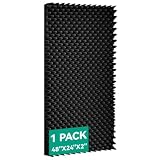
- Superior Soundproofing for Any SpaceTransform your environment with Geynnple Soundproof Foam Panels. These high-density panels are designed to absorb sound, making them perfect for home studios, offices, or any room that requires effective noise control and acoustic enhancement
- Easy Installation (Adhesive Not Included)Installing Geynnple Soundproof Foam Panels is straightforward. While the panels don’t come with adhesive, they are designed to be easily applied using your preferred adhesive or double-sided tape, ensuring simple setup and reliable noise reduction
- Ideal for Home Studios and OfficesGeynnple foam panels provide top-tier soundproofing, making them perfect for music recording, podcasting, or creating a quiet workspace. Reduce distractions and optimize acoustics for a more productive and comfortable environment
- [Quantity Clarification]: Images may show a split or two-part display effect to better illustrate the product’s shape and application. This does not indicate two separate panels. Each order includes 1 Pack = 1 Piece
- Comprehensive Noise Control SolutionAchieve superior sound isolation with Geynnple Sound Foam Panels. Made from high-density foam, these panels improve room acoustics and reduce noise, offering a complete solution for any soundproofing project—just add your preferred adhesive for installation
3. Obtain a site-specific assessment when the decision is consequential
A contour cannot resolve a close call between two parcels or predict the indoor experience in a particular room. A qualified building acoustics professional can interpret the site’s exposure, examine orientation and construction, and set an indoor design target. Ask what measurement or modeling method will be used, which aircraft operations are represented, and whether the report distinguishes average exposure from individual overflight events. Treat the assessment as a design input, not as a promise that every future flight will match the model.
4. Design the building around the actual way it will be used
Discuss room placement, façade and roof construction, glazing, doors, ventilation and the rooms that need the quietest conditions. Bedrooms, nurseries, studies and living rooms may have different priorities. An acoustics professional should explain what performance depends on closed windows, how fresh air will be supplied, and where ducts, vents or lightweight doors could weaken the envelope. Reducing indoor sound does not remove outdoor exposure, and a design that is quiet only with windows permanently closed may not suit the occupants or local ventilation requirements.
Can I build a house inside an aircraft noise contour?
Often, a contour alone does not answer that question. Whether construction is permitted depends on the jurisdiction, the applicable land-use policy, the map’s metric and date, and the proposed building’s details. In the United States, Part 150 compatibility categories are planning references; they do not replace a local zoning or planning decision. The FAA’s airport-noise resources and insulation guidance are collected at FAA Airport Noise.
England takes a similar decision-by-planning approach, but its national guidance is not a worldwide rule. The National Planning Practice Guidance says aviation noise can affect new noise-sensitive development near airports, approach and departure routes or regular low-altitude overflight. Planning authorities may require appropriate mitigation, with the type depending on aviation activity, location and normal environmental conditions. Consult the current guidance at UK National Planning Practice Guidance: Noise.
Rank #3

- Soundproofing - Acoustic foam panels triangular grooves structure for better noise absorption, helps to reduce and absorb unwanted echoes, waves, reverb and flutter echoes for better recording effect.
- Upgraded Accessory - Additional 300pcs strong double-side adhesive tape is included for free, which helps you finish the installation better and protect your walls from damage. Can be removed easily.
- Quick Recovery - If this high-density foam doesn't return to shape, please soak it in water for a few minutes and dry in the air to recover the shape in 24 to 48 hours.
- Wide Applications - Suitably used not only for spot treating sound on walls in your studio and office but also for use in recording studios, vocal booths, control rooms.
- Professional Safe - With strong fire resistance and good air permeability, the acoustic foam panels can stop burning to prevent hidden fire hazards. Also, non-toxic materials won't do harm to your body while everyday use.
Internationally, the International Civil Aviation Organization promotes land-use planning, noise zones, criteria for appropriate uses and accessible information for communities. That is a framework for governments and planners, not a parcel-level permission decision. Its overview is at ICAO Land-use Planning and Management.
| Where you are | What the noise framework does | Who makes the site decision |
|---|---|---|
| United States | FAA Part 150 supplies modeled contours and compatibility-planning guidance; DNL values have defined federal policy uses. | Local authorities determine acceptable and permissible land uses and the relationship of a specific property to contours. |
| England | National planning guidance identifies aviation noise as a consideration and allows mitigation conditions where appropriate. | The local planning authority applies the guidance to the proposal and site. |
| International practice | ICAO promotes airport-area land-use planning, noise zones and public information. | The relevant national and local authorities make permissions and conditions. |
Does a noise map tell me how loud it will be inside?
No. The contour is an outdoor, modeled exposure indicator. It does not account by itself for your wall assembly, windows, roof, floor, ventilation system, room geometry or whether windows are open. It also does not tell you how often a single loud overflight will interrupt sleep or conversation. Those questions require building information and, where appropriate, a site-specific acoustic assessment.
Part 150’s noise-level-reduction (NLR) figures illustrate design assumptions rather than guaranteed results. The 2025 regulation says normal residential construction can be expected to provide 20 dB NLR. In applicable cases where a community determines that residential or school uses must be allowed in particular noise-exposure conditions, its table identifies 25 dB and 30 dB NLR measures. The accompanying note normally assumes mechanical ventilation and closed windows year-round. These values are compatibility and design references, not a promise that a house will be silent or that outdoor noise disappears.
What’s actually slowing this PC down?
Pick the symptom - the matching free tool is one click away.
| NLR reference | How the 2025 Part 150 material describes it | What a homeowner should infer |
|---|---|---|
| 20 dB | Normal residential construction can be expected to provide this noise-level reduction. | It is a baseline expectation in the regulation, not a measured result for your building. |
| 25 dB | A measure identified in applicable conditions where residential or school use is allowed. | It signals a stronger design approach that must be interpreted with local requirements. |
| 30 dB | A higher measure identified in the same applicable conditions. | It still depends on the whole envelope, ventilation and workmanship. |
Because the 25 dB and 30 dB notes normally assume mechanical ventilation and closed windows year-round, ask how the proposed system will maintain air quality and comfort. A technically strong window is not enough if trickle vents, doors, unsealed penetrations or a noisy mechanical system dominate the result.
Rank #4

- Sound Absorption & Noise Reduction: Made with a polyester woven surface and recycled cotton filling, this 3-layer physical barrier effectively absorbs indoor echoes, and reduces sound reflections. Note: 1. This product provides limited sound insulation and is mainly used as a protective barrier only. 2. Keep the product in a dry environment. If it gets wet, please air dry it promptly. Prolonged dampness may cause unpleasant odors and material damage
- Effective Light Blocking: The thick, dense material and dark color effectively block light, creating a dim environment and avoiding glare. Ideal for home theaters, conference room projections, tents, or temporary darkrooms
- Thickened Design: Secured with zig-zag quilting and double-stitched binding, the soundproof blanket maintains its shape, resists tearing, and stands up to long-term hanging use. No glue bonding and odor-free materials make it friendly for users and households
- Large Coverage: Each blanket measures 80 x 48 in / 2032 x 1219 mm. It provides wide coverage with fewer seams, ideal for covering standard doors and windows or handling large spaces where soundproofing, light blocking, and insulation are needed
- Easy Installation: Equipped with multiple metal grommets and woven straps, the acoustic blankets can be hung with hooks, screws, or curtain rods. Quick to set up and secure, it works as a flexible soundproof, blackout, or insulation barrier on walls, doors, and windows.
How can I check aircraft noise before buying land?
- Get the authoritative map. Start with the airport, planning authority or FAA/other national aviation source. Save the map, legend, metric, publication date and scenario notes.
- Locate the parcel accurately. Check the exact boundary, elevation, approach or departure paths and any difference between the parcel and the nearest contour line. Do not infer a property’s status from a low-resolution screenshot.
- Ask what is modeled. Confirm the aircraft and operation assumptions, day/night periods, runway use and whether the map is current, forecast or tied to a proposed airport project.
- Ask the planning authority for written criteria. Request applicable zoning, noise limits, required reports, consultation steps and possible conditions. Clarify who has the final decision.
- Inspect the existing building or site context. Note orientation, prevailing outdoor conditions, nearby roads or industrial sources, façade materials, window types and likely locations for bedrooms and outdoor living areas.
- Commission professional advice if the exposure is material. Have a building acoustics professional evaluate indoor targets and feasible envelope and ventilation measures before you exchange contracts or freeze the design.
- Record uncertainty in the purchase decision. If operations, a runway or a map update could change exposure, make that risk explicit in your feasibility and contingency planning.
Can I renovate or soundproof a home near an airport?
Yes, renovation is possible in many locations, but a contour cannot select a retrofit by itself. Begin with the current map and local permit rules, then inspect how sound enters the particular building. A professional may examine glazing, frames, seals, doors, roof and wall junctions, ventilation openings and flanking paths. The most effective work is often a package rather than a single product.
Possible measures to investigate
- Improved or secondary glazing and carefully sealed window assemblies.
- Upgraded external doors and seals, with attention to thresholds and letter plates.
- Wall, roof and ceiling improvements where the existing construction is lightweight or poorly sealed.
- Mechanical ventilation that allows windows to remain closed when aircraft noise is most intrusive.
- Room-use or layout changes that place noise-sensitive spaces on the quieter side of the building.
Window sound-insulation inserts or secondary glazing are categories worth discussing with a qualified professional, not guaranteed solutions. The official FAA and UK materials support building insulation as a possible mitigation strategy, but they do not test or endorse a particular consumer insert or claim a universal decibel reduction. See the FAA’s AC 150/5000-9B Sound Insulation and the UK guidance at National Planning Practice Guidance: Noise.
Check permits and assistance before work starts
Confirm whether the renovation needs planning permission, building-control approval, an acoustic report or airport consultation. Also ask whether a local or airport mitigation program applies. Eligibility rules for public assistance can be narrower than the rules for carrying out private work.
What does the FAA’s DNL 65 dB rule mean for renovations?
In the United States, FAA Advisory Circular AC 150/5000-9B describes a policy that can limit remedial federal noise-mitigation assistance for certain homes built after October 1, 1998, when they are inside a DNL 65 dB-or-higher contour on a qualifying map published before construction. The circular says the policy can apply to partial renovations and additions and notes that cases are evaluated individually. Read the circular at FAA AC 150/5000-9B.
Best Value

- Upgraded Wedge Design: This window draft stopper features an upgraded wedge design, tapering from 5/32" to 11/32" (0.16"–0.35") to fit a wide variety of gap sizes. Ideal for use on various doors and windows
- Nylon Cloth&PU Foam: Window sound proofing seal outside the use of high tenacity nylon cloth, waterproof and scratch-resistant, doors and windows in the process of switching more silky smooth and not easy to be scratched.The internal by the high elasticity of the PU foam made of dense and delicate such as cream, randomly extruded and not deformed, not only to achieve good sealing effect will not affect the opening and closing of the doors and windows
- Widely Used: Wedge-shaped design of the door space filler can be used in a variety of places in life (sliding windows, casement windows, suspended windows, sliding doors, french doors, exterior doors, interior doors, front doors, cabinets, closets, bathroom cabinets, refrigerators, drawers, etc.), suitable for all kinds of material doors and windows (wood, glass, plastic, metal, etc.)
- Grid Adhesive Backing Design: The around door seal adopts a one-piece grid adhesive backing design, which is more adhesive than the general seal adhesive backing, and will not fall off easily during the use process, realizing long-lasting use
- Multi-Functional:Using our door jamb weather stripping can perfectly realize warmth in winter and coolness in summer, and save energy. At the same time there are sound insulation, anti-collision, shading, dustproof and other effects, make life more comfortable. Please note: When the weather is cold, it is recommended to use a hair dryer to heat the backing to enhance the adhesion
This is an assistance-eligibility issue, not a general ban on building, extending or privately soundproofing a home. Do not assume that being inside a DNL 65 dB contour guarantees assistance, and do not assume that being outside it makes a project exempt from local planning or building requirements. Ask the airport or program administrator for the current eligibility test, the relevant map date and the documents needed to establish construction and renovation history.
How should I compare two sites or renovation designs?
Use the same evidence for every option. A cheaper parcel can become expensive if it needs a new acoustic report, unusual ventilation or substantial envelope work; a more exposed existing house may still be practical if its construction and layout support an effective retrofit.
| Comparison axis | Questions to answer |
|---|---|
| Exposure evidence | Which map edition and scenario apply? What metric and contour are used? Is a site-specific assessment available? |
| Planning position | What zoning and noise rules apply? Is an assessment required? Which authority sets conditions and makes the decision? |
| Building performance | What indoor target is appropriate? What façade, glazing and ventilation work is proposed? Will performance be measured or only estimated? |
| Practical use | Does the design depend on closed windows? How will ventilation work? Which rooms and times matter most to occupants? |
| Cost and eligibility | What are the assessment, construction and permit costs? Could any local or airport program help, and what eligibility evidence is required? |
Common mistakes and how to avoid them
- Treating a contour as a property-specific measurement: obtain the map assumptions and professional advice for the actual building.
- Using an old map as if it were current: verify the edition and ask whether airport operations or runway use have changed.
- Assuming the contour decides permission: obtain the local authority’s written criteria and decision pathway.
- Promising indoor quiet from a listed NLR value: explain the ventilation, closed-window and whole-envelope assumptions.
- Confusing new-build rules with assistance eligibility: check planning requirements separately from any FAA or airport mitigation program.
- Choosing a product before diagnosing the building: identify the dominant transmission paths and specify a coordinated retrofit.
A practical decision rule
Use an aircraft noise map to decide what to investigate, not to make a promise about what you will hear. A defensible build or renovation decision combines a current map and its scenario, the local authority’s rules, a site-specific understanding of exposure, and a building design that supports the occupants’ indoor and ventilation needs. If any of those four pieces is missing, treat the project as provisional until the gap is resolved.
Quick wins for a faster PC:
Scan for outdated or missing drivers - takes under a minuteDriver Scan →Clear out junk files and repair common Windows errorsFree Scan →Fix the driver behind crashes, sound loss and screen glitchesFind Drivers →Quick Recap
Product prices and availability are accurate as of the date/time indicated and are subject to change. Any price and availability information displayed on Amazon at the time of purchase will apply.

