
Recommended Free Tools
“House burping” is the new name for an old habit: opening windows briefly to dump stale indoor air and bring in outdoor air. The useful version is not leaving windows cracked all day. It is a short, intentional air exchange, usually 5 to 10 minutes, with windows open on opposite sides of the house.
When outdoor air is clean and drier than indoor air, burping a house can help with stuffy bedrooms, cooking odors, shower humidity, cleaning fumes, and that heavy indoor feeling after a house has been closed up overnight. When outdoor air is smoky, humid, full of pollen, dusty, or extremely hot or cold, it can make the house worse.
As an Amazon Associate I earn from qualifying purchases.
On our job sites, we think about ventilation in terms of air paths, moisture, exhaust, pressure, and building tightness. A window routine can be useful, but it is not a substitute for working bath fans, kitchen exhaust, attic ventilation, air sealing, or code-compliant mechanical ventilation in a tight or newly remodeled home. The rule is simple: burp the house only when the outside air is cleaner and drier than the inside air, and only long enough to exchange the air.
Outdated Drivers Are Slowing You Down
One free scan finds every outdated or missing driver and matches the right update for your exact hardware.Free scan · exact hardware matchPC Slower Than It Used to Be?
A free scan shows the junk files, broken settings and background clutter dragging Windows down - then fixes them in one click.Free scan · Windows 10 & 11What House Burping Actually Means
House burping means opening windows for a short burst of natural ventilation, then closing them before the home loses too much conditioned air or absorbs outdoor humidity. The basic method is:
#1 Best Overall

- Twin window fan with independent fan blade control and manual and automatic modes
- Can draw in cool air, exhaust hot air, or do both simultaneously
- LCD fan thermostat can be programmed to maintain selected comfort level
- Fits double-hung, vertical slider, and casement windows 24 to 37 inches wide
- Remote control offers convenient operation
- Open windows on opposite sides of the home.
- Create a cross-breeze for about 5 to 10 minutes.
- Use lower and upper windows in a two-story home when practical.
- Close everything once the air feels fresher or the humidity trend improves.
This is different from leaving one window open all afternoon. One open window may not move much air unless wind direction, room layout, and pressure are working in your favor. Two or more openings let air enter and leave. In a multi-story house, warm air naturally rises, so opening a lower window and an upper window can flush warm stale air faster. That stack effect is useful, but it should be controlled. In humid weather, a long uncontrolled opening can load the house with moisture.
The homeowner version is simple. The construction version is more specific: you are temporarily changing the pressure and air pathway in the home. Air will take the easiest route. If the windows are the easiest route, you get fresh air. If the attic, crawlspace, attached garage, chimney, or leaky duct chase becomes the easier route, you may pull in air you do not want.
The Best Time to Burp a House
The best time to burp a house is when outdoor air quality is good, outdoor humidity is reasonable, and the indoor air needs a reset. A 5- to 10-minute cross-ventilation routine is most useful after:
Quick wins for a faster PC:
Clear out junk files and repair common Windows errorsFree Scan →Fix the driver behind crashes, sound loss and screen glitchesFind Drivers →- Cooking, especially frying, searing, broiling, or gas cooking.
- Showering or bathing, if the bathroom fan is weak or missing.
- Cleaning with strong-smelling products.
- Painting, staining, caulking, or using adhesives.
- Hosting a group of people indoors.
- Sleeping with bedroom doors closed overnight.
- Bringing in new furniture, rugs, cabinets, or flooring materials.
Morning can work well in many climates because outdoor temperatures are lower. In coastal or humid areas, morning air may also carry high moisture, so do not assume cooler air is better air. In dry inland climates, short morning airing can be effective. In humid markets, the better choice may be running the bath fan, kitchen exhaust, air conditioner, dehumidifier, or a balanced ventilation system.
A $10 to $30 digital hygrometer is one of the cheapest tools a homeowner can buy. Put one in the main living area and one in the most moisture-prone room, usually a bathroom, basement, laundry room, or bedroom with condensation issues. If burping drops indoor relative humidity toward 30% to 50%, it is helping. If it pushes indoor relative humidity above 60%, stop opening windows and control moisture mechanically.
When Opening Windows Makes Indoor Air Worse
Window ventilation is only as good as the air outside. Do not burp the house during wildfire smoke, high outdoor AQI, ozone alerts, heavy pollen, nearby construction dust, pesticide application, high humidity, or extreme heat and cold. In those conditions, open windows can turn an indoor air problem into a larger one.
Humidity is the trap many homeowners miss. If outdoor air is 75 degrees with high relative humidity, it may feel pleasant for a few minutes, but it can add moisture to drywall, trim, carpet, bedding, and upholstered furniture. Once indoor relative humidity stays above 60%, mold risk increases, dust mites do better, and the house feels sticky even when the thermostat looks reasonable.
What’s actually slowing this PC down?
Pick the symptom - the matching free tool is one click away.
There are also safety concerns. Windows on upper floors need child-safety awareness. Ground-floor windows need security awareness. Homes with fireplaces, atmospherically vented water heaters, older furnaces, or other combustion appliances need extra caution because pressure changes can contribute to backdrafting under the wrong conditions. If a house has known radon concerns, window habits are not a permanent radon mitigation plan. Radon should be tested and corrected with a proper system.
How to Burp Your House the Right Way
Use this practical routine when conditions are favorable:
- Check outdoor conditions first. Look at outdoor AQI, pollen if allergies are an issue, and humidity.
- Turn on source exhaust. Use the bath fan after showers and the range hood while cooking.
- Open windows on opposite sides of the home. Two openings work better than one.
- Use interior doors to control airflow. Open bedroom doors if the goal is whole-house air exchange.
- Run the routine for 5 to 10 minutes. Longer is not automatically better.
- Close windows and recheck humidity. Indoor relative humidity should generally land around 30% to 50%, with 30% to 60% as a broader practical range.
For a two-story house, try opening a lower-level window on the shaded or breezy side and an upper-level window on the opposite side. That can move warm air out quickly. Keep the window opening modest if you have pets, children, security concerns, or no screens.
If the house still feels stale after 10 minutes, that may point to a bigger issue: weak exhaust fans, blocked ducts, poor HVAC filtration, missing return-air paths, moisture in the crawlspace, an over-tight remodel, or windows that no longer operate well enough to use.
The Tool Desk
Outbyte PC Repair FREEClear out junk files and repair common Windows errorsFree Scan →Outbyte Driver Updater FREEScan for outdated or missing drivers - takes under a minuteDriver Scan →Burping Is Not a Replacement for Source Control
The best ventilation strategy starts at the source. If moisture, odor, particles, or chemicals are created in one room, remove them there first. Do not rely on the entire house to dilute a problem that a local exhaust fan should handle.
Bathrooms
A good bathroom fan should exhaust outdoors, not into an attic, soffit, crawlspace, or wall cavity. For many standard bathrooms, a properly selected fan in the 80 to 110 CFM range is common, but sizing depends on room volume, duct length, elbows, and fixture layout. We prefer quiet fans with timer or humidity controls because a fan that people actually leave running is more valuable than an oversized fan no one uses.
Rank #2

- 3-IN-1 FUNCTIONALITY: Features cooling (intake), exhaust, and circulate modes to efficiently manage your indoor airflow.
- DUAL BLADES: Equipped with two fans to provide a consistent breeze that improves air circulation in your living space.
- AUTO-LOCKING EXPANDERS: Built-in accordion expanders adjust from 22-1/4" to 33" wide and lock automatically for a secure window fit.
- REMOTE CONTROL: Conveniently adjust fan speeds and operating modes from a distance using the included remote.
- 3-SPEED CONTROL: Choose between Low, Medium, and High volume settings to customize your comfort.
Run the fan during the shower and for 20 to 30 minutes afterward. If the mirror stays wet for a long time, paint is peeling, caulk is spotting, or the room smells musty, opening a window may help briefly, but the durable fix is usually fan capacity, duct routing, termination, or controls.
Kitchens
Cooking creates moisture, particles, odors, and combustion byproducts if gas is used. A range hood that vents outdoors is better than a recirculating hood for source removal. Use it while cooking and for several minutes afterward. If you sear meat, fry food, cook with high heat, or use a gas range, do not wait until the kitchen smells smoky. Turn the hood on early.
Laundry, Hobbies, and Chemicals
Dryers must vent outdoors through a proper duct. Hobby work, solvents, adhesives, finishes, and strong cleaners need short-term ventilation and careful product handling. A window burp after use can help, but source control and product storage matter more.
Cost Comparison: Free Habit vs Real Ventilation Upgrades
House burping costs nothing if the windows already work and the outdoor air is suitable. Many houses, though, need small repairs before window ventilation is practical. Others need mechanical upgrades because the home is tight, humid, or missing proper exhaust.
| Option | Typical 2026 Cost | Best For | Watchouts |
|---|---|---|---|
| Short window burping routine | $0 | Quick stale-air reset when outdoor air is clean and dry enough | Can bring in humidity, smoke, pollen, dust, heat, or cold |
| Hygrometer | $10-$30 | Tracking indoor relative humidity | Use more than one in problem homes |
| CO2 monitor | About $40-$200 | Bedrooms, offices, classrooms, tight homes | Sensor quality varies |
| Window screen repair or replacement | Often $100-$350 per screen; many projects fall around $147-$516 | Ventilating without insects and debris | Custom sizes, upper-story access, pet mesh, and allergy mesh cost more |
| Bathroom exhaust fan installation | Commonly $120-$900; many estimates land around $343-$889 per fan | Moisture control after showers and baths | Costs rise with new ducting, roof termination, electrical work, and drywall repair |
| Whole-house fan | Commonly $600-$2,300 installed; many typical homes land around $1,500-$3,000 | Fast cooling and flushing in dry climates with cool evenings | Needs enough attic vent area, air sealing, controls, and noise planning |
| HRV or ERV system | Often about $1,500-$5,000 or $2,000-$6,000 installed | Tight homes, major remodels, extreme climates, filtered balanced ventilation | Requires design, duct coordination, balancing, and maintenance |
| Window replacement | Often $300-$2,500 per window; whole projects commonly average around $7,348 | Failed, rotted, unsafe, or non-operable windows | Frame material, glass package, water damage, and code glazing affect cost |
| Ridge or attic ventilation additions | ridge vent often $7-$15 per linear foot; many homes around $350-$600 | Correcting attic heat and moisture movement with proper intake | Soffit intake, roof pitch, roofing material, and sheathing repairs matter |
The cheapest useful upgrade is usually a hygrometer. The highest-value building fix is often a properly ducted bath fan or range hood. The most misunderstood upgrade is the whole-house fan, because it depends heavily on climate, attic venting, and air sealing.
Whole-House Fans Are Not Attic Fans
A whole-house fan and a powered attic ventilator are not the same thing. A whole-house fan pulls outdoor air through open windows, moves it through the living space, and exhausts it into the attic and then outdoors. A powered attic ventilator is intended to ventilate the attic only.
Whole-house fans can work well in dry climates with cool mornings or evenings. They can move a lot of air quickly and reduce air-conditioning use when outdoor conditions cooperate. But they need planning. Before installing one, check:
- Attic vent area, including both intake and exhaust.
- Attic air sealing so the fan does not pull dust or attic air into the house.
- Insulation around the fan damper.
- Fan capacity for the home’s square footage.
- Noise rating and vibration isolation.
- Electrical circuit capacity and control location.
- Fire blocking, framing, and access constraints.
Attic fans deserve even more caution. If soffit vents are blocked or the attic floor is poorly air-sealed, a powered attic fan can pull conditioned air from the living space into the attic. That can increase cooling costs and make the house less comfortable. In many homes, balanced passive attic ventilation, clear soffit intake, air sealing at the ceiling plane, and proper insulation do more good than adding a powered attic fan.
What Tight and Newly Remodeled Homes Need
Newer homes and major remodels are often tighter than older houses. That is good for energy performance, but it changes ventilation. Random leaks are reduced, so planned ventilation matters more. Natural ventilation is not a substitute for code-required mechanical ventilation in new or substantially altered homes.
The current residential ventilation standard, ASHRAE 62.2-2025, addresses minimum dwelling-unit ventilation, local mechanical exhaust, and source control. Homeowners do not need to memorize the standard, but they should understand the practical point: a tight home needs a designed way to bring in outdoor air and exhaust stale air.
Free tools Windows power users keep installed
One-click scans. No signup required.
In many projects, that may mean a continuously rated bath fan, a fresh-air intake tied to HVAC, or a balanced HRV or ERV system. An HRV transfers heat between outgoing and incoming air. An ERV transfers heat and some moisture, which can be useful in humid or very dry climates. Installed residential systems commonly fall around $1,500 to $6,000 depending on ductwork, home size, access, equipment efficiency, controls, and commissioning.
For allergy, wildfire, and high-pollen areas, filtered mechanical ventilation and good HVAC filtration are more dependable than opening windows. In those homes, the better routine may be closing windows, running recirculating HVAC filtration, using a properly fitted filter, and ventilating only when outdoor air improves.
Rank #3
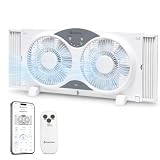
- SMART APP & WIFI CONTROL: Seamlessly connect to your home network and control your fan from anywhere using the Comfort Zone app on your iOS or Android device for cooling down a room before you arrive home
- 3-IN-1 FUNCTIONALITY: Features cooling (intake), exhaust, and circulate modes to efficiently manage your indoor airflow.
- DUAL BLADES: Equipped with two fans to provide a consistent breeze that improves air circulation in your living space.
- AUTO-LOCKING EXPANDERS: Built-in accordion expanders adjust from 22-1/4" to 33" wide and lock automatically for a secure window fit.
- REMOTE CONTROL: Conveniently adjust fan speeds and operating modes from a distance using the included remote.
Moisture, Mold, and the Hygrometer Rule
Burping a house can help prevent mold only if it lowers indoor moisture. It does not kill mold, remove hidden water damage, fix a roof leak, dry a wet crawlspace, or correct a bathroom fan that vents into the attic.
Use these humidity ranges as a practical guide:
- Below 30% RH: air may feel dry; wood movement and comfort issues can show up.
- 30% to 50% RH: a strong target range for most homes.
- 50% to 60% RH: watch closely, especially in closets, bathrooms, basements, and bedrooms.
- Above 60% RH: reduce moisture with exhaust, air conditioning, dehumidification, or repairs.
Condensation on windows is a warning sign. Occasional condensation during extreme weather is not always a failure, but frequent condensation, wet sills, swollen trim, black spotting, or musty smells deserve investigation. The cause may be indoor humidity, cold glass, poor air circulation, failed glazing, missing insulation, or water intrusion.
Do these 3 things before closing this tab:
1Clear out junk files and repair common Windows errors2Scan for outdated or missing drivers - takes under a minute3Repair Windows errors before they cause bigger problemsWhen to DIY and When to Hire a Pro
DIY is reasonable for the basic burping routine, humidity tracking, simple screen replacement, filter changes, and using existing exhaust fans correctly. A homeowner can also check whether a bath fan pulls air by holding a tissue near the grille, though that does not confirm duct performance or actual airflow.
Hire a pro when the issue involves wiring, roof or wall penetrations, duct routing, structural framing, persistent moisture, suspected mold, combustion appliance backdrafting, radon, or ventilation design for a tight home. Also bring in a contractor when windows will not open, will not lock, have rotten frames, show water damage, or need safety glazing.
Permits may be required for new electrical circuits, new exhaust fans, roof penetrations, exterior wall penetrations, whole-house fans, and mechanical ventilation systems. Local rules vary, but the risk is practical, not just paperwork. Poorly terminated bath ducts can rot roof sheathing. Bad fan penetrations can leak. Oversized fans can create pressure problems. Unsealed attic bypasses can move insulation dust and attic air into living areas.
The Builder’s Bottom Line
House burping is useful when it is treated as a controlled tool, not a cure-all. Open the right windows for 5 to 10 minutes when outdoor air is clean and drier than indoor air. Use a hygrometer. Pay attention to outdoor AQI, pollen, smoke, and humidity. Use bath and kitchen exhaust at the source. Close the windows before the house absorbs moisture or loses too much conditioned air.
If the house needs daily burping to feel livable, something else is probably going on. The fix may be as small as a screen repair or timer switch for a bath fan. It may be a properly ducted exhaust fan, attic ventilation correction, window repair, air sealing, insulation work, or a balanced HRV or ERV. The right answer depends on the house, the climate, and the air paths hidden behind the finishes.
A good ventilation plan does not chase trends. It controls moisture, removes pollutants at the source, protects the building assembly, and keeps the home comfortable without asking open windows to solve problems they were never meant to solve.
Frequently Asked Questions
What does burping your house mean?
Burping your house means opening windows briefly, usually on opposite sides of the home, to flush stale indoor air and bring in outdoor air. The useful routine is short, typically 5 to 10 minutes, then the windows are closed again.
How long should you open windows to burp a house?
Most homes only need 5 to 10 minutes of cross-ventilation when outdoor air is clean and dry enough. Longer openings can waste conditioned air or bring in humidity, pollen, smoke, dust, heat, or cold.
Is house burping good for indoor air quality?
It can be, but only under the right conditions. It helps when outdoor air is cleaner than indoor air and when it lowers moisture or clears odors. It can hurt indoor air quality during wildfire smoke, high AQI, heavy pollen, high humidity, construction dust, or ozone alerts.
Can house burping prevent mold?
House burping can reduce mold risk if it lowers indoor relative humidity toward the 30% to 50% range. It will not fix leaks, wet crawlspaces, failed bath fans, hidden water damage, or existing mold growth.
Is a whole-house fan the same as an attic fan?
No. A whole-house fan pulls outdoor air through open windows and exhausts house air into the attic and outdoors. An attic fan ventilates the attic only. Whole-house fans need proper attic vent area, air sealing, electrical capacity, and controls.
When should I hire a contractor for ventilation problems?
Hire a pro for new bath or kitchen exhaust, roof or wall penetrations, electrical work, whole-house fans, ERV or HRV systems, persistent humidity, suspected mold, radon concerns, combustion backdrafting risks, or windows that are damaged or no longer operate safely.
Quick Recap
Product prices and availability are accurate as of the date/time indicated and are subject to change. Any price and availability information displayed on Amazon at the time of purchase will apply.

