What’s actually slowing this PC down?
Pick the symptom - the matching free tool is one click away.
Some links on this page are affiliate links: if you buy through them we may earn a commission, at no extra cost to you.
For most hospitals, the safest answer is a layered system rather than a single technology: diesel or gas generation for sustained high-kilowatt demand, an online UPS or other stored-energy system for zero-interruption loads, and solar-plus-battery equipment where fuel diversity, peak-cost reduction or selected-load islanding justifies the added controls. Batteries can replace a generator only when the hospital limits its emergency loads, accepts a defined autonomy period and provides enough storage, controls, fire protection and recharge capability. A multi-day acute-care outage normally still needs dispatchable generation, protected fuel or a second resilient energy source.
The design decision starts with a critical-load inventory and outage scenarios—not a brochure. The sections below compare five architectures, explain what each can and cannot do, and show why transfer time, fuel logistics, permitting, seismic design, fire safety and commissioning matter as much as nameplate capacity.
As an Amazon Associate I earn from qualifying purchases.
Quick wins for a faster PC:
Fix the driver behind crashes, sound loss and screen glitchesFind Drivers →Clear out junk files and repair common Windows errorsFree Scan →Scan for outdated or missing drivers - takes under a minuteDriver Scan →At a glance
These options are listed alphabetically, not ranked. Prices are project-specific unless a published case-study figure is available; all figures and plan information were checked in November 2026.
| Name | Best for | Key spec or behavior | Price evidence | Checked |
|---|---|---|---|---|
| Batteries and online UPS | Operating rooms, ICU monitors, imaging controls, telecommunications and servers that cannot tolerate a transfer break | Zero-transfer UPS output; typical autonomy is minutes, extended by additional battery cabinets | No universal list price; Eaton 93PM frames are documented at 30–120 kW, with internal-battery runtime configurations | November 2026 |
| Diesel generator sets | Large motor loads and long outages where stored fuel and refueling access are reliable | High transient capability; seconds to start and transfer; 24–96 hours is a planning range when tanks and deliveries support it | No universal list price; sizing and site work determine the quote | November 2026 |
| Flywheel or diesel rotary UPS | High-cycle, high-quality power for imaging, data and other sensitive loads | Instantaneous kinetic ride-through followed by engine runtime in a rotary system | No universal list price; specialist equipment and maintenance are required | November 2026 |
| Natural-gas CHP and fuel cells | Continuous baseload, useful heat and lower local combustion emissions when the gas network remains available | Can island continuously while fuel pressure and equipment remain available; slower ramping or stack constraints may require batteries | No universal list price; engineering, interconnection and heat-use design drive cost | November 2026 |
| Solar PV plus battery microgrid | Fuel reduction, peak-demand savings and selected-load operation during fuel-delivery interruptions | Sub-cycle inverter response; hours of autonomy depend on installed usable megawatt-hours, load shedding and solar conditions | CISA illustrative model: $5,588,420 PV+BESS microgrid capital cost using 2018 assumptions, not a current quote | November 2026 |
Prices checked November 2026.
What is the practical answer for a hospital?
A typical resilient design layers N+1 generator capacity with UPS protection for no-break loads, then adds solar, batteries, CHP or fuel cells when the hospital’s hazard analysis supports the extra controls and maintenance. Generators cover sustained kilowatts and motor starting; UPS equipment bridges the start interval; batteries and solar can reduce generator runtime and keep a defined set of loads operating when fuel deliveries are disrupted.
Popular on Amazon

- Double conversion topology
- Package Dimensions: 55.88 H x 27.94 L x 36.83 W (centimeters)
- Package Weight: 17.237 kilograms
- Country of Origin : China
There is no universal runtime or universally safest fuel. A community hospital with modest critical loads, ample roof space and a reliable gas network has a different risk profile from an urban trauma center with imaging, elevators, chilled-water plants, winter darkness or flood exposure. State the hospital’s acuity, jurisdiction, critical-load percentage, weather scenario and whether the comparison is generator-only or hybrid before selecting equipment.
How should the five options be compared?
Use the same questions for every architecture: How fast does it transfer? How long can it sustain the actual critical load? What fuel or weather dependency remains? Can it black-start and island? What are the emissions, fire, seismic, flood and acoustic requirements? How will selective coordination, motor starting, harmonics, maintenance and replacement be funded? Finally, what is the cost of canceled procedures, spoiled medicines, evacuation or lost data if the system fails?
Windows Errors? Fix Them Before They Spread
Repair common Windows errors and clear accumulated junk for a smoother, more stable PC - no reinstall needed.Free scan · no reinstallOutdated Drivers Are Slowing You Down
One free scan finds every outdated or missing driver and matches the right update for your exact hardware.Free scan · exact hardware match1. Batteries and online UPS: who are they for?
Online UPS equipment is for loads that cannot tolerate even the short interruption while a generator starts. It continuously conditions incoming power and uses batteries, a flywheel or another stored-energy source to bridge the start and stabilization interval. Operating-room controls, ICU monitoring, imaging controls, telecommunications and servers are common candidates.
The principal limitation is autonomy. Typical UPS runtime is measured in minutes, not days. More battery cabinets can extend runtime, but they also add floor area, HVAC demand, fire-protection interfaces, maintenance and replacement obligations. Size by actual kW and kVA, crest factor, fault-current behavior, bypass design, battery chemistry, temperature and the load’s required ride-through—not by average facility demand.
The Eaton 93PM datasheet documents 30–120 kW frames and internal-battery runtime configurations. That is a category example, not a hospital-wide sizing recommendation. The authority having jurisdiction (AHJ) must accept the emergency-power architecture, bypass arrangement, battery room or cabinet protection and maintenance plan.
Choose UPS-first protection when a procedure, network session or life-support control cannot tolerate a transfer. Pair it with generators or another sustained source unless the entire emergency system is engineered and approved as a stored-energy solution. Upgrade from a small UPS installation when critical loads expand, autonomy requirements lengthen or the hospital needs N+1 modularity and serviceable bypass paths.
2. Diesel generator sets: who are they for?
Diesel remains the familiar high-kilowatt source for acute-care hospitals. Automatic transfer switches and paralleling controls start the engines, pick up life-safety and critical branches, and shed lower-priority loads when capacity is constrained. Multiple sets provide N+1 redundancy, allow maintenance while energized and support staged starting of elevators, chillers, pumps, fire systems and imaging equipment.
Also popular on Amazon

- More for the money with this high quality Product
- Offers premium quality at outstanding saving
- Excellent product
- 100% satisfaction
Its strengths are mature equipment, strong transient performance, established service networks and runtime governed mainly by tank capacity and refueling access. Its failure mode is logistical: a healthy engine is useless if contaminated fuel, blocked roads, damaged tanks or an unavailable supplier stops delivery. Diesel also brings particulate and nitrogen-oxide emissions, noise, air permits and tank-maintenance duties.
Design for motor-starting kVA, harmonics and future growth rather than average kW. Include flood elevation, seismic anchorage, day tanks, fuel polishing, transfer-switch testing and black-start behavior. Maintain delivery contracts, protected storage and—where hazard analysis warrants it—a second fuel strategy. A diesel-only design is most defensible where motor loads are large, roof area is limited, winter solar production is weak or a long outage is more likely than a fuel-delivery interruption.
There is no standard purchase price. The generator, paralleling gear, switchgear, exhaust treatment, tanks, structural work, acoustic treatment, permits and commissioning can dominate the quote. Plan a 24-, 72- and longer-duration scenario rather than promising a fixed runtime.
Free tools Windows power users keep installed
One-click scans. No signup required.
3. Flywheel and diesel rotary UPS: who are they for?
Flywheels store energy kinetically and release it immediately, making them useful for high-cycle loads that need excellent power quality. A diesel rotary UPS combines the flywheel, alternator and engine: the flywheel covers the start interval, then the engine supplies sustained power. This can simplify the transition for imaging, data and other sensitive equipment.
The trade-off is specialization. Mechanical components require scheduled service; systems can create noise and vibration; and qualified technicians and spare parts may be less available than for conventional UPS and generator combinations. A rotary system is therefore a complement for a defined load block, not a universal replacement for a hospital’s generation plant.
Specify cycle life, bearing or mechanical-maintenance intervals, fault-current behavior, bypass arrangements, acoustic limits and black-start sequence. Verify that the AHJ accepts the protection and that clinical engineering staff can maintain the equipment. Upgrade when repeated short interruptions or frequent cycling are the dominant risk, rather than when the hospital primarily needs multi-day energy.
4. Natural-gas CHP and fuel cells: who are they for?
Natural-gas engines or combined heat and power (CHP) systems can run continuously, recover heat for hot water or steam and island when pipeline pressure remains available. Fuel cells provide quiet baseload with low local combustion emissions and can be paired with batteries for black start and fast transients.
Also popular on Amazon

- Zero transfer time between on-line and battery modes for uninterrupted operation
- NEMA 5-20P input with one L5-20R and 6 NEMA 5-20R outlets for devices
- Optional NETWORK-M2 network card enables full remote access and control
- Front-panel LCD keeps you up to date with status info and other vital analytics
- Optional external battery modules allow extended runtime to keep equipment running
The resilience weakness is the fuel network. A regional disaster, utility shutoff or pressure loss can disable every gas-fired unit at once. CHP also depends on a useful year-round heat sink; otherwise its efficiency and economics deteriorate. Fuel cells add stack-replacement planning and may ramp more slowly than batteries. Both technologies have a smaller healthcare service ecosystem than conventional diesel.
Use gas systems when heat recovery has a real load and pipeline reliability has been studied under the same hazards as the electric grid. Pair them with stored liquid fuel, batteries or another dispatchable source when a gas interruption would threaten patient care. Test gas-shutoff scenarios, black start, islanding, resynchronization and heat-load changes before relying on the system for emergency branches.
5. Solar PV plus battery microgrid: who is it for?
PV produces energy when sunlight is available; a battery energy-storage system (BESS) responds in cycles and can form or follow an islanded grid through inverters and a microgrid controller. Together they can shave demand peaks, reduce generator runtime, absorb solar energy and support selected critical loads during a fuel interruption. During discharge they have no onsite combustion emissions.
The engineering burden is substantial. Roof or ground area, battery degradation, thermal-runaway controls, fire-code separation, inverter fault-current limits and coordination with generator switchgear all matter. Cloud cover, winter production and a multi-day outage must be modeled. Load shedding is often the difference between a practical system and an uneconomic one.
Recommended Free Tools
A CISA resilient-power example models a New York City hospital with existing 500 kW diesel generators and 250 gallons of fuel. Its modeled critical load is 30% of a typical 500 kW load, with a 1,287 kW-DC PV array and a 214 kW, 1,557 kWh battery. The report lists $3,101,670 for PV, $992,500 for BESS, $25,740 per year for combined PV and BESS operations and maintenance, and a $456,550 battery-replacement allowance at year 10. It estimates $5,588,420 in microgrid capital cost and a 25-year lifecycle NPV advantage of $1,737,800 versus generator-only operation before resilience benefits. These are illustrative 2018-cost assumptions, not a current quotation.
The same example requires approximately 130,000 square feet of rooftop area, a warning to survey roofs, structural capacity, shading, access and fire lanes before promising solar autonomy. A commercial BESS such as Tesla Megapack illustrates the utility-scale product category; final hospital sizing still requires a licensed engineer, fire-protection design and AHJ approval.
California evidence shows the potential and the work. Richmond Medical Center connected 250 kW of solar and a 1 MWh battery to existing diesel generation so emergency services could island if generators were unavailable or diesel supply was interrupted. The California Energy Commission reports approximately 20% peak-demand bill savings, while documenting substantial permitting, space planning, emergency-branch interconnection, controller sequencing and seismic review. A separate hospital-microgrid study modeled an average 72-hour outage and a 24-hour resilience gain over business as usual under its assumptions.
Also popular on Amazon
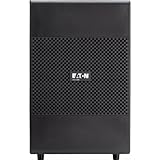
- Connects to select expandable Eaton 9SX UPS systems to add critical runtime
- Includes heavy-gauge battery cabling with high-current 96V DC connectors
- Daisy-chain connector supports additional battery packs for even longer runtime
Can batteries replace diesel generators?
Only for a deliberately limited emergency load and autonomy target. A battery’s usable energy is finite, and adding cabinets increases cost, footprint, fire protection, HVAC and replacement exposure. Solar can extend operation during daylight, but cloudy weather and winter output must be included in the model. For multi-day acute-care operation, a battery-only design generally requires very large storage or another dispatchable source.
A defensible battery-led design identifies exactly which branches remain energized, how loads shed as state of charge falls, how the system recharges, and what happens after several sunless days. It also demonstrates islanding, black start, selective coordination, thermal-event response and restoration procedures to the AHJ.
How much fuel or stored energy should a hospital plan?
Do not choose a universal number of gallons or megawatt-hours. Calculate steady kW, starting kVA, harmonics and the sequence in which elevators, pumps, chillers, fire systems, refrigeration, imaging and IT start. Then model short interruptions, a 24-hour event, a 72-hour regional disaster and a longer fuel-delivery disruption. The result should include load shedding and the patient-safety consequence of each step.
For liquid fuel, account for tank capacity, usable volume, contamination, polishing, access, protected delivery routes and supplier contracts. For batteries, use usable—not nameplate—energy at the expected temperature and aging state, then include reserve state of charge, recharge time and replacement cycles. Document assumptions in the one-line diagram and sequence of operations.
What approvals and site constraints can derail a project?
Early AHJ review should cover emergency wiring, transfer equipment, generator emissions, battery fire protection, seismic anchorage, flood elevation, acoustic limits and utility interconnection. Solar and batteries may require structural studies, roof-access routes, fire separation and inverter settings that coordinate with generator protection. CHP and fuel cells add gas interconnection, emissions and heat-use considerations.
Do these 3 things before closing this tab:
1Repair Windows errors before they cause bigger problems2Scan for outdated or missing drivers - takes under a minute3Clear out junk files and repair common Windows errorsCalifornia project reports show that these tasks can be completed without disrupting patients, but permitting, seismic testing, controller sequencing and emergency-branch work are substantial. Treat construction phasing, infection control, temporary power and clinical communications as part of the resilience design—not as closeout paperwork.
Independent reader supportYour contribution helps us test, update, and keep practical guides available for everyone.How should a hospital select and commission the architecture?
- Inventory loads. Separate life-safety, critical and equipment branches; record steady kW, starting kVA, harmonics and clinical consequences.
- Define scenarios. Model a short utility interruption, 24-hour event, 72-hour disaster and longer fuel-delivery disruption.
- Select a layered architecture. Commonly this means N+1 generators plus UPS for no-break loads, with PV/BESS or CHP where fuel diversity, demand savings or sustainability justify added controls.
- Complete AHJ and utility review. Resolve wiring, emissions, fire, seismic, flood, acoustic and interconnection requirements before procurement.
- Commission the sequence. Test black start, islanding, resynchronization, selective coordination, staged motor starting, battery state of charge, alarms and refueling procedures.
- Compare lifecycle consequences. Include capital, fuel, maintenance, battery or stack replacement, demand savings, incentives and the cost of canceled procedures, spoiled medicines and evacuation.
What maintenance keeps backup power ready?
Exercise generators and automatic transfer switches on the manufacturer’s schedule. Inspect coolant, oil, leaks, starting batteries and fuel level; sample and polish fuel where contamination is a risk; and record transfer time and load pickup. UPS teams should trend battery impedance, temperature, alarms and bypass status. BESS operators should inspect HVAC, state of health, rack temperatures, suppression systems and emergency-response interfaces. Solar teams should check inverter alarms, array damage and safe roof access.
Also popular on Amazon

- 2U RACK MOUNT UPS: 8 outlets provide reliable UPS battery backup & surge protection. 5ft cord ensures easy connection to power. AVR corrects input voltages back to 120V. Add an External Battery Module (BP24V15RT2U, sold separately) for extra runtime.
- CLOUD-ENABLED ONLINE UPS: Monitor your UPS from anywhere via Eaton’s free Cloud portal. Configurable UPS alerts notify you through email or text. Silence UPS alarms, and control the UPS outlet banks through web browser or Eaton's free Brightlayer app.
- SIMPLE SETUP WITH MASS UPS CONFIGURATION: Scanning the QR code on the UPS adds the device to Eaton's Brightlayer app and enables remote management. Instantly mass configure UPS by transfering custom network settings using NFC from your mobile device.
- SMART BATTERY BACKUP: Internal battery is user replaceable with 2x Eaton RBC51. Dedicated USB-C port provides local CLI access for setup and troubleshooting. Silence alarms via LCD or app. QR code downloads the Cloud app and adds the UPS to your account.
- FULLY SUPPORTED: Protected by a 3-Year Limited Manufacturer's Warranty and a $250,000 Ultimate Connected Equipment insurance. To best support your purchase, Eaton's expert technical team is available via phone, web, or email to address any concerns.
Hold tabletop drills with clinical staff so the programmed load priorities match actual patient care. Keep current one-line drawings, sequence-of-operations documents, controller settings, inspection records and test results together. A technically capable system can still fail if staff do not know which loads shed, who authorizes refueling or how to respond to a battery or gas alarm.
How we compared the options
The comparison uses transfer time, sustained runtime, fuel dependence, emissions, footprint, fire and seismic requirements, black-start capability, motor-starting performance, maintenance burden, lifecycle cost, outage-cost avoidance and AHJ complexity. Published case studies are illustrative and jurisdiction-specific; they are not guarantees of runtime, savings or project cost.
The Tool Desk
Outbyte PC Repair FREEClear out junk files and repair common Windows errorsFree Scan →Outbyte Driver Updater FREEScan for outdated or missing drivers - takes under a minuteDriver Scan →Frequently Asked Questions
What happens if a hospital loses both utility power and its fuel deliveries?
The emergency plan should shed to a documented survival load, preserve battery state of charge for the most critical circuits and use any available PV, gas or secondary fuel source. Hospitals should prearrange protected deliveries, alternate access routes and clinical evacuation triggers rather than assume generators alone solve a regional disaster.
How often should a hospital microgrid be tested under island conditions?
Testing frequency follows the applicable electrical, fire and healthcare requirements and the equipment manufacturers’ schedules. In addition to routine generator and transfer-switch exercises, the integrated program should periodically verify black start, islanding, resynchronization, battery alarms, load shedding and communications with clinical and emergency-response teams.
Does adding solar automatically make a hospital more resilient?
No. PV helps only when inverters, controls, protection and batteries can safely operate in an island, and when critical loads are limited to the modeled capacity. A grid-tied array without islanding capability may shut down during an outage, while an undersized battery can drain before the next fuel or solar opportunity.
What is the difference between emergency, critical and equipment branches?
They are distinct hospital electrical groupings with different code functions and priorities. The design team should map each branch to clinical consequences, starting requirements and shedding rules; labels alone do not reveal the actual kW, kVA or runtime needed.

