The home-appliance market is being reshaped by four durable forces: efficiency, electrification, connected energy management, and AI coordination. The most consequential buying decisions are not about adding another screen. They are about replacing inefficient equipment, shifting electricity use, lowering lifecycle costs, and making a home easier to monitor and maintain.
For most renovation and construction projects, heat pump water heaters are the clearest replacement opportunity, while induction cooking is the most accessible electrification upgrade. Smart laundry, connected refrigeration, and AI ecosystems matter too—but only when their practical benefits justify the added installation, privacy, software, and service considerations.
The four forces reshaping home appliances
Home appliances are moving in four overlapping directions: better efficiency, greater electrification, connected energy management, and AI-enabled coordination. The most important changes are not simply larger screens or voice controls. They are hardware and software changes that can lower operating costs, shift electricity use away from peak periods, replace gas or electric-resistance equipment, detect problems earlier, and coordinate several systems in a home.
As an Amazon Associate I earn from qualifying purchases.
That distinction matters during a renovation or new build. A connected appliance is not automatically an efficient appliance, and the most efficient model is not automatically the cheapest choice for every household. The right decision depends on purchase price, installation, electrical capacity, utility rates, maintenance, service availability, expected life, incentives, and the feature’s measurable benefit.
| Trend | What is changing | What a buyer should verify |
|---|---|---|
| Efficiency | Better insulation, sensors, heat-pump technology, and higher-efficiency motors | Certified performance, operating cost, service life, and purchase price |
| Electrification | Induction cooking and heat-pump water heating are replacing combustion or resistance technologies | Panel capacity, circuits, clearances, condensate, ventilation, and local code |
| Connected control | Appliances can schedule cycles, send alerts, detect faults, and respond to energy-management systems | Whether the feature changes energy use or only adds convenience |
| AI coordination | Manufacturers are combining appliances, sensors, cameras, robots, and voice interfaces | Privacy, software support, reliability, repairability, and independent testing |
Heat pump water heaters are the clearest replacement opportunity
For many homeowners, the most consequential appliance trend is the heat pump water heater. Unlike a conventional electric-resistance water heater, it transfers heat from the surrounding air into the storage tank rather than creating all of that heat directly with an electrical element. Many models also include resistance backup heating for periods of high demand or unusually cold conditions.
#1 Best Overall

- An Alexa thermostat - Amazon Smart Thermostat is an easy way to switch from a traditional thermostats for homes and help reduce energy usage.
- Create comfort zones throughout your home by connecting to select Alexa devices to automatically adjust heating and cooling based on temperature readings or presence detection.
- Save money and energy - After purchase, Amazon will send you an email with details about home thermostat rebates that may be available from energy providers in your area.
- Save energy - According to EPA estimates, ENERGY STAR certified thermostats save an average of $90 on yearly energy bills.
- Programmable thermostat and automatic control - Create your own home, away and sleep schedules, or have Alexa automatically control the temperature with Alexa+ advanced features.
The efficiency advantage is only part of the decision. Connected heat pump water heaters can also coordinate heating with utility rates, renewable generation, or demand-response programs. A U.S. Department of Energy field study found that connected units can substantially reduce evening peak demand compared with uncontrolled electric-resistance water heaters. That makes the technology relevant not only to an individual utility bill but also to the wider effort to manage an increasingly electrified grid.
DOE purchasing guidance and ENERGY STAR qualification provide useful starting points for comparing models. Some U.S. households may also qualify for tax credits or rebates, but the amount and eligibility can depend on the product certification, location, household circumstances, purchase date, and the specific program. A rebate mentioned in an older article may no longer apply. Check the current federal, state, utility, or local program before making the final purchase.
Do these 3 things before closing this tab:
1Scan for outdated or missing drivers - takes under a minute2Clear out junk files and repair common Windows errors3Fix the driver behind crashes, sound loss and screen glitchesInstallation conditions can decide whether the upgrade works
A heat pump water heater is not a drop-in replacement in every location. Before ordering, confirm:
- Electrical service: Determine whether the existing circuit is suitable and whether the home has enough panel capacity for the proposed equipment.
- Air volume and clearances: The unit needs an appropriate installation environment and enough surrounding air for its heat-transfer process. Follow the manufacturer’s clearance requirements.
- Condensate management: Heat-pump operation can produce condensate. Plan a drain route, pump, or other code-compliant solution where necessary.
- Hot-water demand: Tank size, recovery rate, household occupancy, bathing patterns, and backup-heating behavior affect comfort and operating cost.
- Noise and location: The compressor and fan have operating sounds. A utility room next to a bedroom may be less suitable than a basement or mechanical room.
- Installer and service access: Confirm that qualified contractors, replacement parts, and warranty service are available locally.
Replacing a gas water heater also involves venting, combustion-air, code, and sometimes gas-line considerations. Replacing an electric-resistance unit may be electrically simpler, but it can still require a different circuit, condensate plan, and adequate space. Installation should be evaluated as part of the product rather than treated as an afterthought.
How to judge the economics
Do not promise a universal payback period. Compare the installed cost of the candidate unit with the cost of keeping or replacing the existing system, then estimate annual energy use using the home’s electricity and fuel rates. Include maintenance, likely service life, financing, incentives, and the cost of electrical or plumbing work.
A heat pump water heater is more likely to make sense when the existing tank is near replacement, electricity is reasonably priced, the installation does not require major service upgrades, and the household can use the equipment’s efficient operating modes. A lower-cost resistance replacement may still be the practical choice when installation constraints or local rates overwhelm the efficiency benefit.
Windows Errors? Fix Them Before They Spread
Repair common Windows errors and clear accumulated junk for a smoother, more stable PC - no reinstall needed.Free scan · no reinstallOutdated Drivers Are Slowing You Down
One free scan finds every outdated or missing driver and matches the right update for your exact hardware.Free scan · exact hardware matchInduction makes electrification accessible
Induction cooking is the most visible electrification upgrade for the kitchen. An induction appliance creates a magnetic field that heats compatible cookware directly. DOE describes induction as an efficiency-oriented option and states that it can be up to 10% more efficient than a conventional smooth-top electric range. That comparison should not be treated as a universal result against every gas or electric cooking setup; actual performance depends on the appliance, cookware, cooking habits, and ventilation.
Full-size induction versus portable induction
A built-in induction cooktop or full induction range is appropriate when a kitchen is being remodeled or an existing range is being replaced. It gives the homeowner multiple cooking zones, a finished installation, and controls designed for regular use. The electrical plan, countertop opening, range dimensions, and ventilation system should be resolved before the cabinets and counters are ordered.
A portable induction burner is a lower-commitment option for renters, temporary kitchens, accessory dwelling units, supplemental cooking, or homeowners who want to test induction before replacing a range. It is also useful during a renovation when the main kitchen is out of service. It does not provide the capacity or integrated finish of a full appliance, and its electrical draw still needs to be appropriate for the circuit.
For either format, check:
- Whether existing pots and pans are magnetic and compatible with induction;
- The cooking-zone dimensions and whether they fit the household’s largest pans;
- Total wattage, circuit requirements, and whether multiple zones can operate at full power simultaneously;
- Control layout, child locks, timers, and the visibility of settings;
- Countertop or cabinet clearances, especially for a built-in unit;
- Ventilation and make-up-air requirements for the kitchen as a whole.
Induction can make the cooking surface easier to wipe clean and can transfer heat efficiently, but it does not eliminate every cooking-related ventilation concern. The kitchen still produces heat, moisture, grease, and combustion or cooking byproducts depending on the equipment in use. Plan the hood or ventilation system based on the full cooking installation, not just the cooktop technology.
The Tool Desk
Outbyte PC Repair FREERepair Windows errors before they cause bigger problemsFix Now →Outbyte Driver Updater FREEScan for outdated or missing drivers - takes under a minuteDriver Scan →Smart appliances are becoming energy-management devices
Smart functionality is becoming common across refrigerators, freezers, washers, dryers, dishwashers, room air conditioners, and thermostats. Useful functions include refrigerator door-open alerts, interior cameras or viewing features that reduce unnecessary door opening, remote monitoring, laundry scheduling, dishwasher scheduling, and dryer sensors that stop a cycle when clothes are dry.
The more significant trend is the movement from remote control to flexible electrical load. A connected washer or dishwasher may be able to run during a cheaper-rate period. A water heater, HVAC system, or other major load may respond to a demand-response signal. Sensors and fault detection may identify unusual operation before it becomes a breakdown. These functions can help a home use electricity when renewable generation is available or when the grid is under less stress.
Rank #2

- Save up to 23% every year on heating and cooling costs, adjusts to your set schedule to save energy when you’re gone and optimize comfort when you’re home. Compared to a hold of 72
- Compatible with 85% of systems, check your system’s compatibility with our online ecobee Compatibility Checker on the ecobee support page
- Change your temperature by easily tapping the color touchscreen or using the ecobee app. Plus, free software upgrades ensure you get the best out of your Smart Thermostat Essential, for years to come
- Automatically adjusts to your set schedule to save energy when you’re gone and optimize comfort when you’re home. Keep track of your energy consumption when you're on the go on the ecobee app
- Easy DIY install. No C Wire, no problem. Get the ecobee Power Extender Kit (PEK) for homes without a C-Wire and keep your walls looking nice with our trim kit – both sold separately
Connectivity is not proof of efficiency
A Wi-Fi connection, camera, touchscreen, or voice assistant does not by itself lower energy consumption. Before paying more for a smart model, identify the mechanism that is supposed to create value:
- Sensor shutoff: Does moisture sensing prevent unnecessary heating and tumbling?
- Scheduling: Can the appliance reliably run during a lower-cost or lower-demand period?
- Demand response: Can it participate in a utility or home-energy-management program, and what control does the homeowner retain?
- Monitoring: Will an alert prevent an open-door event, leak, overheating condition, or missed maintenance task?
- Fault detection: Does the system provide actionable information early enough to prevent damage or an expensive service call?
- Reduced waste: Does the feature help preserve food or avoid over-drying, or does it merely add another interface?
Also ask what happens if the app, cloud service, subscription, or software support ends. A useful appliance should retain its essential local controls and core function even if its connected features are discontinued.
Recommended Free Tools
Laundry is splitting into two separate innovation paths
In laundry, sensor operation is the practical, widely understandable trend. Moisture sensors can detect when clothes are dry and stop a cycle before unnecessary heating and tumbling continue. The value is straightforward: less wasted energy, less wear on fabrics, and fewer overheated loads. A sensor feature is not a reason to ignore the dryer’s capacity, filter design, service history, or actual cycle performance.
Heat-pump dryers are a more substantial technology change. They reuse heat within the drying process instead of exhausting heated air in the same way as a conventional vented dryer. When comparing one, look beyond the label “smart” and examine:
- Cycle duration and the household’s tolerance for longer drying times;
- Energy consumption and expected operating cost;
- Whether venting is required or whether the model needs a drain or water-container routine;
- Humidity management and the suitability of the laundry-room location;
- Capacity, fabric-care programs, and lint-filter maintenance;
- Purchase price, parts, qualified service, and local installer familiarity.
ENERGY STAR product-planning work continues to focus on clothes dryers, clothes washers, heat-pump types, and smart products. That continuing attention suggests that laundry will remain a major area for efficiency and specification changes, especially as builders plan all-electric homes.
Refrigeration: useful monitoring versus novelty
Refrigerators remain a high-value innovation category because they operate continuously. Connected features can alert a homeowner when a door is left open, provide visibility into the contents without opening the door, and help with food management. Those functions may reduce avoidable cold-air loss or food waste, but the benefit depends on whether the household actually uses them.
Free tools Windows power users keep installed
One-click scans. No signup required.
When comparing a connected refrigerator, separate the basic efficiency of the refrigeration system from the convenience of the digital features. Then examine:
- Energy certification and annual consumption;
- Repairability, parts access, and expected software support;
- Whether cameras or inventory tools require an account or subscription;
- What data is collected, where it is stored, and whether household images are uploaded;
- Whether the appliance remains fully usable without internet access;
- Door, hinge, ventilation, and cabinet-clearance requirements.
An interior camera may be useful for a family managing groceries or for a caregiver checking whether food is available. It can also be a novelty that adds cost and complexity without reducing waste. The correct choice depends on the household’s routines, not the number of features listed on the product page.
AI is moving from individual features to appliance ecosystems
Manufacturer demonstrations at CES 2026 showed where the major brands want the market to go. LG presented a connected environment combining appliances, sensors, AI services, robots, and other home devices. Its CLOiD concept was positioned as part of a “zero labor home” direction. Samsung’s CES materials described AI refrigerators, laundry appliances, robot vacuums, cameras, screens, and voice interaction as parts of an integrated home-companion strategy.
These announcements point toward a different appliance interface. Instead of operating each machine through buttons or a separate app, a homeowner may eventually use natural-language commands, automated routines, ambient sensors, predictive maintenance, and cross-room coordination. A system might recognize that a resident has left, postpone a cycle, adjust a room, identify an unusual appliance sound, or coordinate cleaning and laundry tasks.
What’s actually slowing this PC down?
Pick the symptom - the matching free tool is one click away.
CES also emphasized physical AI, smart-home technology, and support for aging in place. For construction, the most meaningful possibilities include fall or activity awareness, easier controls for people with limited mobility, reminders, remote status checks for caregivers, and robots that assist with repetitive household tasks.
What the demonstrations do—and do not—prove
Trade-show demonstrations and manufacturer announcements establish product direction and positioning. They do not independently prove reliability, safety, labor savings, privacy protection, or superior results in an ordinary home. Use careful language: a company may have announced, demonstrated, or positioned a capability without proving that it is ready for broad residential use.
Rank #3
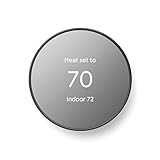
- ENERGY STAR certified smart thermostat for home that helps you save energy and stay comfortable.Connectivity : Wi-Fi - 802.11b/g/n 2.4 GHz, 802.11a/n 5 GHz Wi-Fi., Wireless interconnect : Bluetooth Low Energy Please refer to the product description section below for all applicable legal disclaimers.Product note: You can also check your system’s compatibility before purchasing a Nest thermostat with our online Nest Compatibility Checker on the Google Nest support page
- The Nest Thermostat is designed to work without a C wire in most homes, but for some systems, including heating only, cooling only, zone controlled, and heat pump systems, you’ll need a C wire or other compatible power accessory
- Nest Thermostat turns itself down when you leave, so you don’t waste energy heating or cooling an empty home. Lock feature: No
- Programmable thermostat that lets you create an energy efficient schedule in the Google Home app on your Android or iPhone
- Remote control lets family members change the thermostat temperature from anywhere on a phone, laptop, or tablet[1]
Before specifying an AI-enabled appliance ecosystem, ask whether the system works when the internet is unavailable, whether essential functions have physical controls, how long software updates are promised, and whether components from different brands can communicate. Also consider what happens when a camera, microphone, cloud account, or robot is present in bedrooms, bathrooms, or areas used by children and guests.
Installation economics are part of the appliance trend
For HVAC, refrigeration, water heating, and other major equipment, the headline technology is only one part of the project. DOE research identifies next-generation refrigerants, controls, sensors, and fault detection as active areas of development, but adoption is constrained by installed cost, contractor expertise, electrical infrastructure, code requirements, and supply chains.
That is why builders and remodelers should treat the installation envelope as a design requirement. Confirm the following before a product is selected:
- Electrical: Panel capacity, circuit type, voltage, load calculations, and room for future electrification.
- Plumbing: Water connections, shutoffs, drain paths, leak protection, and access for service.
- Air and ventilation: Ducting, exhaust, make-up air, combustion-air provisions where applicable, and humidity control.
- Condensate: Drain locations and overflow protection for heat-pump equipment and other condensate-producing appliances.
- Clearances: Door swing, cabinet depth, service access, airflow, and manufacturer-required spacing.
- Communications: Reliable network coverage where connected operation is genuinely needed, without making the appliance unusable offline.
- Service: Local technicians, parts availability, warranty terms, and a realistic repair path after the initial installation team is gone.
For construction and retrofit businesses, a connected heat-pump system is an emerging category that brings together efficient hardware, sensors, controls, fault detection, and possible grid interaction. It is promising, but product availability and installer capability vary by region. A national trend does not guarantee that a particular contractor can commission or repair the system locally.
Standards, certification, and incentives will shape purchasing
Efficiency standards establish a baseline that products must meet. Certification programs such as ENERGY STAR help consumers compare products that meet defined efficiency criteria. Incentives can reduce the upfront cost of a qualifying appliance. The three tools work together: standards raise the floor, information improves comparison, and incentives can accelerate replacement.
For a U.S. project, do not assume that a product qualifies because it is marketed as efficient or because a similar model qualified previously. Check the exact model, certification status, location, household or income conditions where applicable, installation requirements, and purchase date. State and utility programs may have their own application process, funding limits, approved contractors, or income rules.
For projects outside the United States, the relevant standards and incentives will be different. The same principles still apply: identify the local efficiency label, confirm the current program rules, and calculate the installed lifecycle cost rather than relying on a headline rebate.
Independent reader supportYour contribution helps us test, update, and keep practical guides available for everyone.A practical buying framework for homeowners and builders
1. Start with the replacement, not the feature list
Identify the existing appliance, its age, fuel source, energy cost, failure risk, and remaining service life. If it is working reliably and replacement would require extensive electrical or structural work, an immediate upgrade may not be the best financial choice.
2. Establish the installation envelope
Before comparing brands, confirm the circuit, panel, plumbing, drainage, ventilation, clearances, cabinet dimensions, network coverage, and service access. This prevents selecting a product that cannot be installed economically or maintained safely.
3. Compare total cost of ownership
Use purchase price plus delivery, electrical or plumbing work, permits, installation, maintenance, energy, financing, and expected replacement timing. Subtract only incentives for which the exact project has been verified. Compare that total against keeping the existing unit or selecting a less complex replacement.
Rank #4

- PRIVACY PROTECTION*: Sensi won’t sell your personal information to third parties
- EASY DIY INSTALLATION: Use the built-in level and step-by-step app instructions for a quick installation. Works with HVAC equipment found in most homes. Common wire (c-wire) is not required in most applications
- SAVE ABOUT 23% ON HVAC ENERGY*: The ENERGY STAR-certified Sensi smart thermostat can help you save energy with features like flexible scheduling, remote access and usage reports
- SIMPLE CONFIGURATION: Looks and feels like a thermostat. Has buttons and fits the same space as a traditional thermostat so you don’t have to patch and paint your walls
- SMART MAINTENANCE: Sensi can help monitor the performance and efficiency of your HVAC system by delivering valuable usage reports, alerts about your equipment, and maintenance reminders like filter replacement
4. Test the claimed benefit
For an efficiency claim, look for certified energy data. For a smart feature, identify the behavior that changes energy use or prevents waste. For an AI feature, ask for evidence beyond a demonstration. Convenience can be valuable, but it should not be confused with measured savings.
5. Plan for failure and obsolescence
Ask whether the appliance works with no internet connection, whether the app is free of a required subscription, how software updates are handled, and whether parts and technicians are available. A simpler appliance with strong local service may outperform a more advanced model over its full life.
6. Choose the right scale of upgrade
- New construction: Plan panel capacity, circuits, ventilation, condensate, mechanical-room space, and communications before finishes are installed.
- Major remodel: Coordinate the appliance with cabinetry, countertops, plumbing, exhaust, and electrical design rather than treating it as a late-stage purchase.
- Routine replacement: Prioritize certified efficiency, dimensions, service availability, and installation cost.
- Renting or testing a technology: Consider a portable induction burner or a suitable energy-monitoring product before committing to a full replacement.
Where monitoring accessories fit
Small monitoring tools can help a homeowner understand which appliances consume power and whether a scheduling change produces a meaningful difference. A home energy monitor can support a broader renovation decision by showing household load patterns, while an energy-monitoring smart plug may be appropriate for compatible small appliances.
Do not use a generic smart plug as a substitute for properly installed control equipment on a high-load range, water heater, dryer, or HVAC system. The device must be rated for the load and used exactly as directed. Major appliances generally require dedicated circuits and professional electrical work.
Quick wins for a faster PC:
Clear out junk files and repair common Windows errorsFree Scan →Fix the driver behind crashes, sound loss and screen glitchesFind Drivers →Repair Windows errors before they cause bigger problemsFix Now →Home appliance trends buyer checklist
- What appliance is being replaced, and what does the current unit cost to operate?
- Is the proposed model ENERGY STAR certified or covered by another recognized efficiency standard?
- Does the home have the required circuit, panel capacity, plumbing, ventilation, condensate route, clearances, and network connection?
- Are incentives available for this exact model, in this location, under the household’s circumstances, on the purchase date?
- Does the smart or AI feature provide a measurable benefit, or mainly convenience?
- What happens if the app, cloud service, subscription, or software support ends?
- Are parts, warranty service, and qualified installers available locally?
- Would a portable or accessory product solve the problem, or is a full replacement justified?
- Can the appliance be repaired rather than discarded if one electronic component fails?
- Does the proposed installation leave room for later electrification or energy-management upgrades?
What to expect next
The durable direction of the market is the convergence of efficient hardware, electrification, connected load management, and software coordination. Heat pump water heaters and induction cooking are already understandable replacement decisions. Sensor-based laundry and connected refrigeration provide practical, if more limited, benefits. AI appliances, robots, and aging-in-place ecosystems are developing quickly, but their real-world value still depends on reliability, privacy, interoperability, repairability, and independent testing.
Before publication or purchase, verify current model availability, certification, prices, local installer capacity, and incentive rules. Those details change faster than the underlying trends.
Frequently Asked Questions
No. A Wi-Fi connection, camera, touchscreen, or voice assistant does not prove lower energy use. Look for a specific mechanism such as moisture-sensor shutoff, off-peak scheduling, demand response, fault detection, or reduced food waste.
Are smart appliances automatically more energy efficient?
It can be, especially when replacing an aging unit, but the answer depends on local electricity and fuel prices, hot-water demand, installation work, incentives, space, noise tolerance, and service availability. Calculate the installed lifecycle cost rather than assuming a universal payback period.
Is a heat pump water heater worth the cost?
No. A portable induction burner can be used by renters, during renovations, or by homeowners testing the technology. It will not provide the capacity or integrated finish of a full induction cooktop or range, and its electrical draw must still be appropriate for the circuit.
Do I need to replace my entire range to try induction cooking?
Free tools Windows power users keep installed
One-click scans. No signup required.
Confirm the electrical circuit and panel capacity, plumbing and drainage, ventilation, condensate route, clearances, cabinet dimensions, network coverage if needed, permits, and local service availability. For major equipment, installation is part of the product decision.
What should be planned before installing a new appliance?
Not necessarily. CES demonstrations and manufacturer announcements show product direction and marketing position, but they do not independently prove reliability, safety, privacy, labor savings, or superior results in ordinary homes.
Are AI appliance demonstrations proven to save labor or money?
The Bottom Line
Bottom line: The strongest home-appliance upgrades are the ones that reduce energy use or enable better control without creating an installation or service problem. Start with the home’s electrical, plumbing, ventilation, and budget realities. Consider a heat pump water heater or induction cooking where the infrastructure supports it, use smart features only when their benefit is clear, and treat AI demonstrations as emerging direction rather than proven performance.
Quick Recap
Product prices and availability are accurate as of the date/time indicated and are subject to change. Any price and availability information displayed on Amazon at the time of purchase will apply.

