Quick wins for a faster PC:
Repair Windows errors before they cause bigger problemsFix Now →Scan for outdated or missing drivers - takes under a minuteDriver Scan →Short answer: the most advanced way to extract useful water from air depends on the climate. Buy a purpose-built atmospheric water generator for the most mature packaged solution; look to MOF and salt/hydrogel sorbents for dry-air innovation; consider solar Hydropanels for proprietary off-grid infrastructure; and use fog nets where measured fog and wind make passive collection possible. There is no universal machine that produces plentiful drinking water from any air without energy, treatment, storage, and favorable atmospheric conditions.
The direct answer
There is no single machine that reliably makes “plentiful” drinking water from any air, anywhere. The most advanced method depends on the climate, energy supply, required volume, and whether the site has fog, humid air, sunlight, or usable waste heat.
As an Amazon Associate I earn from qualifying purchases.
For something a buyer can deploy now, a purpose-built atmospheric water generator (AWG) is the most commercially mature option. It cools humid air below its dew point, collects the condensate, and treats it. For genuinely dry air, sorbent systems using materials such as MOFs, hygroscopic salts, hydrogels, and hybrid composites are more technically significant because they capture vapor without cooling the entire air stream. Solar Hydropanels offer a proprietary commercial version of that general idea. In foggy coastal or mountain locations, however, a passive fog collector may use less operating energy than any powered machine. Dew and radiative-cooling systems are useful supplements, but are usually too site-limited to serve as a high-volume supply on their own.
Windows Errors? Fix Them Before They Spread
Repair common Windows errors and clear accumulated junk for a smoother, more stable PC - no reinstall needed.Free scan · no reinstallCrashes, No Sound, or Screen Glitches?
Random freezes, missing sound and display glitches usually trace back to one bad driver. Find and replace yours safely.Free scan · under a minuteFor a construction project or remote facility, the correct approach is to match the technology to measured site conditions, design treatment and storage from the beginning, and retain a backup source. “Water from air” is a water-treatment and logistics project—not a guaranteed substitute for a well, pipeline, tanker, or rainwater system.
#1 Best Overall

- 50-Gallon Capacity: Provides ample storage for harvested rainwater, ideal for watering gardens, lawns, and plants.
- Durable Construction: Made from UV-resistant polyethylene for long-lasting durability and protection from the elements. Made of 100% Recycled plastic.
- Overflow Valve: Built-in overflow valve for managing excess water and the option to connect multiple barrels for increased storage.
- Convenient Spigot: Easy-to-use plastic spigot for quick and efficient water retrieval.
- Low Maintenance: Easy to install and maintain, offering a simple, sustainable solution for homeowners.
What “water from thin air” actually means
Air can contain water in three different forms, and the extraction method changes with the form being targeted:
- Fog: tiny liquid droplets are already suspended in the air. A mesh can intercept them, allowing them to merge and drain into a tank.
- Dew: water vapor condenses on a surface that has cooled below the dew point, often overnight.
- Water vapor: unsaturated moisture must either be condensed by cooling the air or captured by a sorbent and later released.
These are not interchangeable resources. A fog net is not pulling vapor out of ordinary dry air; it is filtering liquid droplets from a moving fog bank. A condenser AWG is not harvesting fog in the same way; it is chilling air until vapor becomes liquid. A sorbent binds vapor and then needs heat, vacuum, or another regeneration process to release it.
The amount of water available depends on temperature, relative humidity, dew point, airflow, weather, and the size of the collection system. Relative humidity by itself is not enough to predict production: warm air at a given relative humidity may contain far more water vapor than cold air at the same percentage. A vendor’s liters-per-day figure is therefore meaningful only when its test temperature, humidity, airflow, duty cycle, and water-treatment configuration are also stated.
How the leading methods compare
| Method | Best fit | Energy profile | Commercial maturity | Main limitation |
|---|---|---|---|---|
| Electrically cooled AWG | Humid homes, offices, facilities, and sites needing a packaged system now | Electricity for fans, refrigeration, treatment, and controls | Highest | Output and efficiency decline as air becomes cooler or drier |
| MOF or composite sorbent | Dry-air research, prototypes, and systems using solar or waste heat | Heat, vacuum, electricity, or a combination for regeneration | Mostly research and pilot-stage | Scale-up, cycling, shaping, contamination, and water-release engineering |
| Solar Hydropanel | Off-grid or infrastructure-poor sites with solar availability | Primarily solar energy, with system-specific controls and storage | Commercial proprietary systems | Output depends on climate, panel area, sunlight, and design |
| Fog collector | Windy locations with regular, measurable fog | Very low operating energy; wind and gravity do most of the work | Deployed in suitable locations | Produces little or nothing without the right fog and wind regime |
| Dew or radiative cooling | Clear, humid nights where a supplemental source is useful | Passive or very low energy | Simple to experimental, depending on design | Usually modest and highly weather-dependent yield |
1. Electrically cooled atmospheric water generators
A condenser-based AWG is essentially a dehumidifier combined with a water-treatment train. Fans move ambient air through filters and across a cold heat exchanger. When the exchanger reaches or falls below the air’s dew point, water condenses, drains into a reservoir, and passes through additional treatment before dispensing or storage.
The U.S. Environmental Protection Agency describes approximate home-scale production in the range of 1 to 20 liters per day. Commercial systems range from roughly 1,000 liters per day to more than 10,000 liters per day. Those ranges should not be read as universal output promises: temperature and humidity have a major effect on production, and a unit rated in warm, humid air may perform very differently at a cold, dry construction site.
A commercial system described by Watergen illustrates the complete architecture a potable-water buyer should expect: dust, pollen, and PM2.5 filtration; dew-point extraction in a food-grade polymer module; carbon filtration; mineralization; ultraviolet treatment; and storage or dispensing. Watergen also states that production continues at lower relative humidity but is reduced. That qualification is more important than the headline capacity.
Why a condenser AWG is the most practical purchase today
Compared with laboratory sorbents, a packaged condenser AWG has a clearer procurement path. A buyer can ask for rated capacity, electrical demand, operating conditions, filter schedules, noise, warranty, service support, tank size, and treatment documentation. Commercial units can also be integrated into a facility water system more readily than loose sorbent materials or experimental panels.
That does not make an AWG the best answer everywhere. Cooling dry air requires substantial energy, and production can fall sharply as humidity and temperature decline. In a remote location, the project must also account for generator or battery capacity, maintenance visits, replacement filters, condensate drainage, freeze protection, and a backup water source.
Water quality: condensate is not automatically drinking water
“Made from air” does not mean “safe to drink without treatment.” Volatile compounds in ambient air can dissolve into condensate. Microorganisms can also multiply in plumbing, filters, reservoirs, and stored water.
In an EPA evaluation of a Watergen GEN-350, weekly samples did not detect Legionella or Mycobacteria, and the produced water was judged microbiologically safe under the evaluated configuration. However, elevated heterotrophic plate counts were observed, and the manufacturer acknowledged that additional disinfection is needed to reduce microbial-growth risk during long-term preservation. That result supports careful system design; it is not a blanket certification for every AWG or every operating condition.
Do not treat condensate from a household dehumidifier as automatically potable. A construction site or facility specifying drinking-water production should use a purpose-built unit with documented treatment, food-contact components, cleaning instructions, applicable certification, and a defined maintenance program. The water still needs hygienic storage and a plan for testing where local rules or the project risk assessment require it.
2. MOFs and other sorbent-assisted harvesters
Sorbent systems are designed for the condition that challenges compressor-based AWGs most: low humidity. Instead of cooling the entire air stream, a porous or hygroscopic material captures water vapor on internal surfaces or at chemically active sites. The material is then regenerated with solar heat, waste heat, electrical heat, vacuum, or another energy source. The released vapor is condensed and collected.
Metal-organic frameworks, or MOFs, are especially interesting because their pore size and chemical groups can be engineered. A material can be designed to form water clusters at a target humidity and then release those clusters with comparatively modest regeneration energy. This is why surface area alone is not a sufficient measure of performance.
MOF-303: an important low-humidity demonstration
MOF-303 remains a landmark example. A reported stand-alone device operated at 10% relative humidity and 27 °C and averaged approximately 0.7 liters of water per kilogram of MOF per day under the cited desert conditions.
The important achievement was not simply the material’s equilibrium water uptake. The research emphasized fast adsorption and desorption kinetics and a relatively low enthalpy of adsorption, allowing the device to complete more cycles per day. In a real machine, cycle speed can matter as much as the amount captured in a single cycle.
Rank #2
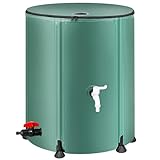
- 【Leak-Proof Design】Unlike typical rain barrels, our product features an integrated design with a straightforward screw-in faucet, eliminating the hassle of assembling multiple parts. This thoughtful construction guarantees a leak-proof system and simple installation
- 【Durable and Sturdy】Our collapsible rainwater collection system is made from premium three-layer PVC material, providing exceptional strength to endure even the toughest conditions. To enhance stability, the rain barrel includes circular footpads, effectively preventing any wobbling or tipping
- 【Easy to Store and Transport】 In contrast to bulky traditional wooden barrels, our rain barrel is foldable, making it easy to carry and store. Say goodbye to heavy, cumbersome containers and embrace convenience. Order our collapsible rain barrel today for effortless water conservation!
- 【Filtering Design】The top of our water storage container is equipped with a mesh design that prevents overflow and keeps leaves and debris out of your clean water. Rainwater collected through the faucet or overflow kit is clearer and can be reused for gardening, farm irrigation, car washing, and more—ideal for eco-conscious individuals
- 【Simple Installation and Exceptional Service】If you encounter any missing or damaged parts during installation, please contact us. We are dedicated to providing prompt replacements to ensure a worry-free experience for our customers
What newer research changes—and what it does not
A 2024 Journal of the American Chemical Society study reported aluminum furan-based MOFs with working capacities of 0.41 and 0.48 grams of water per gram of MOF at 1.70 kPa, with negligible loss after 165 adsorption–desorption cycles in the reported tests. That is meaningful progress in working capacity and stability. It is not proof that an inexpensive, durable, food-safe consumer appliance is ready for ordinary retail deployment.
Another 2024 study combined an amino-acid-based thermoresponsive hydrogel with an aluminum MOF and demonstrated atmospheric water harvesting and solar desalination under laboratory conditions. Hybrid materials may combine water affinity, tunable pores, thermal responsiveness, photothermal behavior, and potentially cheaper constituents. Laboratory rates, however, cannot be converted directly into household liters per day without knowing the device’s sorbent mass, cycle time, airflow, regeneration conditions, condenser losses, and storage system.
For readers tracking the research frontier, MOF atmospheric water harvesting is a useful technical category to investigate. It should be treated as a research and engineering lead, not as a recommendation to buy loose MOF powder or build an unvalidated drinking-water system.
The real engineering targets for a sorbent system
A useful sorbent harvester needs more than high water uptake. It must also provide:
Free tools Windows power users keep installed
One-click scans. No signup required.
- Effective capture at the site’s actual relative humidity and temperature.
- Rapid vapor transport and short diffusion paths.
- Low regeneration energy and a practical heat source.
- Mechanical and chemical stability over many cycles.
- Resistance to powdering, leaching, corrosion, and contamination.
- A scalable form such as pellets, a structured monolith, a coating, film, bead, foam, or panel.
- A safe method for separating the released water from the sorbent and sanitizing it.
Simulations and experiments involving MOF-303 indicate that linker chemistry can help nucleate water clusters inside pores and facilitate release. That helps explain why pore chemistry and adsorption thermodynamics matter at least as much as headline surface area.
3. Hygroscopic salts, hydrogels, and hybrid composites
Hygroscopic salts such as lithium chloride and calcium chloride can absorb substantial quantities of water. In bulk form, though, they can deliquesce, migrate, corrode nearby components, or release water in a difficult-to-control way. Researchers therefore embed salts in porous carbon, silica, MOFs, hydrogels, or other supporting matrices.
The support can shorten vapor-diffusion paths, improve cycling, and provide a mechanically stable structure. Reported research examples include lithium-chloride-in-MOF composites, salt-loaded nanocarbon capsules, alginate systems, and thermoresponsive polymer/MOF materials.
These composites may eventually prove easier to manufacture than pristine high-performance crystals because salts and polymers can be cheaper and can be formed into practical films, beads, foams, or panels. The tradeoff is that high laboratory capacity can conceal difficult field problems: salt leakage, corrosion, contamination, regeneration heat, mechanical fatigue, and the need to condense and disinfect the released vapor.
Recommended Free Tools
For a construction or infrastructure project, the relevant question is not “Which material absorbs the most water?” It is “Which complete module can survive the site environment, cycle predictably, be serviced safely, and produce water that can be treated and verified?” Most current salt, hydrogel, and composite concepts remain at the research, prototype, or specialized industrial-development stage.
4. Solar Hydropanels
SOURCE Global describes its Hydropanel technology as a solar-powered system that extracts atmospheric water vapor, converts it into liquid water, mineralizes it, and stores it until dispensing. The company markets residential, commercial, and community systems, making the technology a notable bridge between sorbent research and deployed off-grid infrastructure.
A SOURCE Hydropanel is a proprietary system, not a generic solar panel and not evidence that any passive panel can produce abundant drinking water. Performance depends on atmospheric conditions, panel area, solar availability, system design, and storage. The appeal is logistical: where water delivery or a piped connection is expensive or unreliable, a solar-powered source can reduce dependence on transport infrastructure.
For a remote construction compound, the decision should include the full system rather than panel output alone. Evaluate the number of panels required, seasonal production, battery or control requirements, mineralization and treatment, tank capacity, installation exposure, cleaning, replacement components, and the backup supply needed during prolonged cloudy or unusually dry periods.
Do these 3 things before closing this tab:
1Clear out junk files and repair common Windows errors2Fix the driver behind crashes, sound loss and screen glitches3Repair Windows errors before they cause bigger problemsHydropanels may be especially attractive where solar energy is readily available and the alternative is trucking water. They are not automatically preferable to a condenser AWG in humid air, a fog net in a fog corridor, or a conventional supply with lower total lifecycle cost.
5. Fog harvesting: the lowest-energy option when geography cooperates
Fog harvesting can be remarkably energy-efficient because the water is already present as liquid droplets. A fine mesh is positioned across fog-bearing wind. Droplets strike the fibers, coalesce, run downward, and are captured in a channel leading to storage. No refrigeration is required, and gravity performs much of the collection and transport work.
CloudFisher uses a three-dimensional fine mesh in a stable frame and is intended for suitable mountain and coastal conditions. The key limitation is climate specificity: fog and wind are prerequisites. Humid air or dew alone is not enough.
Rank #3

- 【Leak-Proof Design】Unlike typical rain barrels, our product features an integrated design with a straightforward screw-in faucet, eliminating the hassle of assembling multiple parts. This thoughtful construction guarantees a leak-proof system and simple installation
- 【Durable and Sturdy】Our collapsible rainwater collection system is made from premium three-layer PVC material, providing exceptional strength to endure even the toughest conditions. To enhance stability, the rain barrel includes circular footpads, effectively preventing any wobbling or tipping
- 【Easy to Store and Transport】 In contrast to bulky traditional wooden barrels, our rain barrel is foldable, making it easy to carry and store. Say goodbye to heavy, cumbersome containers and embrace convenience. Order our collapsible rain barrel today for effortless water conservation!
- 【Filtering Design】The top of our water storage container is equipped with a mesh design that prevents overflow and keeps leaves and debris out of your clean water. Rainwater collected through the faucet or overflow kit is clearer and can be reused for gardening, farm irrigation, car washing, and more—ideal for eco-conscious individuals
- 【Simple Installation and Exceptional Service】If you encounter any missing or damaged parts during installation, please contact us. We are dedicated to providing prompt replacements to ensure a worry-free experience for our customers
Before installing a CloudFisher fog collector or another fog-net system, measure wind speed and direction, relative humidity, temperature, precipitation, and actual collected water. Collector orientation is critical. The WaterFoundation reports that a 30-degree deviation from the prevailing wind direction can reduce yield by approximately 25%.
What’s actually slowing this PC down?
Pick the symptom - the matching free tool is one click away.
The WaterFoundation reports a large Moroccan installation averaging about 22 liters per square meter of net per year, with much higher production on individual fog days. Those are local project results, not a universal performance guarantee. A fog collector may outperform powered equipment on a windy ridge with frequent dense fog and produce almost nothing on a clear inland site.
Fog water also needs a clean collection path, covered storage, and regular inspection. Bird droppings, dust, insects, contaminated pipes, algae, and poor tank hygiene can compromise the water even though the collection process itself uses no electricity. A fog net is most compelling for a remote, fog-prone community or facility where tanker delivery and groundwater development are difficult—not for a dry inland home simply because the air feels humid.
6. Dew harvesting and radiative cooling
Passive dew collectors use a surface that radiates heat toward the sky. Under favorable conditions, the surface cools below the ambient dew point and water vapor condenses on it. Advanced radiative-cooling materials can improve nighttime cooling and, in some designs, support daytime cooling.
The physical constraint remains unchanged: the surface must reach a temperature at which condensation is thermodynamically possible. Yield depends on the dew-point depression, cloud cover, wind, surface temperature, collector area, and heat leaking into the surface from the surrounding structure.
The Tool Desk
Outbyte Driver Updater FREEFix the driver behind crashes, sound loss and screen glitchesFind Drivers →Outbyte PC Repair FREERepair Windows errors before they cause bigger problemsFix Now →Dew collection is most attractive where nighttime humidity is high and skies are clear. It can provide supplemental water with little operating energy, but its output is generally more modest and more variable than the marketing phrase “water from air” suggests. It should not be specified as the sole drinking-water supply for a construction camp without site measurements and backup capacity.
Radiative cooling is therefore a valuable passive technique, not a magic way to pull large quantities of water from extremely dry air. Cleanability matters too: a rooftop or exposed collector must be protected from dust, bird contamination, hydrocarbons, and other pollutants before the condensate reaches a potable-water tank.
Which method is actually the most advanced?
“Advanced” has different meanings depending on the question:
- Most commercially mature for a buyer: electrically cooled AWGs, because complete machines are available with air handling, condensers, filtration, disinfection, storage, and service pathways.
- Most scientifically important for dry air: MOF-303 and related sorbent systems, because they demonstrate vapor capture at low relative humidity without cooling the whole air stream.
- Most promising for low-energy off-grid deployment: solar-regenerated sorbents, including proprietary Hydropanels and research composites using sunlight or waste heat.
- Lowest operating energy where conditions cooperate: fog nets, because wind and gravity perform the collection work.
- Most passive but most site-limited: dew and radiative-cooling collectors.
The best answer is therefore climate-matched rather than universally ranked. A condenser AWG is a practical product. A sorbent harvester is the frontier for dry air. A solar Hydropanel is a proprietary off-grid infrastructure option. A fog net is the efficient answer in the right fog corridor. Dew collection is a useful supplement when clear, humid nights provide the necessary temperature conditions.
How to choose a system for a construction site or remote facility
Step 1: Separate the water demand
List potable drinking water, food preparation, handwashing, sanitation, worker welfare, equipment cleaning, dust control, concrete work, and other uses separately. Atmospheric systems that can supply a modest potable stream may not be economically sensible for high-volume construction uses such as dust suppression or concrete batching. Reducing demand through reuse, conventional storage, rainwater capture, or delivered bulk water may be more effective than increasing atmospheric collection capacity.
Step 2: Measure the site rather than relying on climate labels
Collect representative records for temperature, relative humidity, dew point, wind speed and direction, fog occurrence, solar availability, and seasonal variation. “Coastal,” “humid,” or “desert” is not precise enough for equipment selection. A fog system needs actual fog and wind measurements; an AWG needs the temperature and humidity profile during its intended operating hours; a solar sorbent system needs both atmospheric moisture and a realistic regeneration-energy budget.
Step 3: Normalize vendor claims
Ask every supplier to state:
- Rated liters per day at a named temperature and relative humidity.
- Whether the rating is an average, a maximum, or a short-duration test.
- Electrical consumption and, where relevant, watt-hours per liter.
- Minimum and recommended operating conditions.
- Airflow, compressor duty cycle, and expected output at the project’s actual conditions.
- Filter, UV, mineralization, and storage arrangements.
- Water-quality testing, certification, and food-contact-material documentation.
- Cleaning intervals, replacement-filter cost, noise, warranty, and local service availability.
Do not compare a laboratory sorbent capacity in grams per gram with a packaged AWG’s daily output as though they were the same measurement. A sorbent must still be cycled, regenerated, cooled or condensed, drained, treated, and stored.
Step 4: Design treatment and storage before installation
Include filtration, disinfection, food-safe wetted components, covered tanks, hygienic plumbing, overflow protection, drainage, and a cleaning schedule. Plan for water that remains in the system overnight or during shutdowns. A machine that produces clean condensate can still distribute contaminated water if its reservoir and lines are neglected.
What’s actually slowing this PC down?
Pick the symptom - the matching free tool is one click away.
Step 5: Provide redundancy
Atmospheric water is weather-dependent. Size storage for low-production periods and retain an alternative such as delivered water, a permitted well, rainwater, or a municipal connection where available. For a construction project, redundancy is particularly important because worker demand and operating schedules can change faster than a permanent facility’s demand.
Step 6: Pilot before committing to a large installation
Run a representative trial through the relevant weather cycle or procure a site-specific feasibility study. Record actual water production, energy use, downtime, filter loading, cleaning labor, water quality, and storage losses. For fog, install measurement equipment or a pilot collector before building a larger array. For sorbent or solar systems, verify that the advertised regeneration process works with the site’s available heat and sunlight.
Rank #4

- 50-Gallon Capacity: Provides ample storage for harvested rainwater, ideal for watering gardens, lawns, and plants.
- Durable Construction: Made from UV-resistant polyethylene to withstand outdoor elements and ensure long-lasting durability.
- Overflow Valve: Built-in overflow valve for managing excess water and the option to connect multiple barrels for increased storage.
- Premium Brass Spigot: Features a high-quality brass spigot for easy, secure, and leak-free water retrieval.
- Low Maintenance: Easy to install and maintain, offering a simple, sustainable solution for homeowners.
What to look for when buying an AWG
If a packaged system is the right choice, evaluate it as an energy-consuming water-treatment appliance:
- Capacity at real conditions: insist on temperature and relative-humidity figures next to the liters-per-day rating.
- Energy demand: compare expected electrical use with the site’s grid, generator, battery, or solar capacity.
- Air treatment: check particulate filtration and the manufacturer’s handling of volatile contaminants.
- Water treatment: look for documented carbon filtration, UV or another disinfection stage, mineralization where appropriate, and hygienic storage.
- Materials and certification: verify food-contact components and applicable drinking-water certifications for the relevant market.
- Maintenance: obtain the filter schedule, reservoir-cleaning procedure, sanitation instructions, and annual service requirements.
- Model-specific parts: replacement cartridges are not universally interchangeable. Search for an atmospheric water generator replacement filter only after confirming exact model compatibility.
- Installation: provide clean intake air, drainage, weather protection, ventilation, freeze protection where required, and safe electrical service.
- Operations: check noise, user access, tank capacity, alarms, remote monitoring, warranty, and local technical support.
A generic household dehumidifier may collect water, but that does not make it a certified drinking-water appliance. It may use unsuitable materials, lack adequate air and water treatment, expose condensate to contaminants, or provide no safe storage design.
The Tool Desk
Outbyte PC Repair FREERepair Windows errors before they cause bigger problemsFix Now →Outbyte Driver Updater FREEScan for outdated or missing drivers - takes under a minuteDriver Scan →Claims to reject
- “Produces abundant water in any climate.” Output is strongly dependent on temperature and humidity.
- “All dehumidifier water is drinkable.” Untreated condensate can contain dissolved air contaminants and support microbial growth.
- “This MOF makes household quantities of water.” Laboratory material capacity is not the same as complete-appliance production.
- “A fog net works anywhere the air is humid.” Fog and wind—not humidity alone—are required.
- “Any solar panel can make drinking water.” Hydropanels are proprietary systems with specialized sorbent, treatment, and storage components.
- “Radiative cooling pulls large amounts of water from dry air.” Condensation still requires the collector surface to fall below the dew point.
Bottom line for builders and facility owners
Choose a purpose-built condenser AWG when you need a product that exists now and the site has enough humid air and affordable energy. Investigate solar sorbent systems or Hydropanels when off-grid logistics justify a proprietary system and the climate supports it. Choose fog collection when site measurements show regular fog and favorable wind direction. Use dew and radiative cooling as low-energy supplements rather than assuming they can carry a large water demand.
The genuinely advanced solution is not a universal “thin-air” machine. It is a climate-matched system with verified output, a complete treatment train, hygienic storage, measured operating costs, and backup water capacity.
Frequently Asked Questions
Can I drink water collected by a household dehumidifier?
Can I drink water collected by a household dehumidifier?
Not automatically. Condensate can dissolve volatile compounds from the air, and microorganisms can grow in the drain path, reservoir, or plumbing. Use a purpose-built drinking-water AWG with documented filtration, disinfection, food-contact components, hygienic storage, and maintenance procedures.
Do these 3 things before closing this tab:
1Clear out junk files and repair common Windows errors2Scan for outdated or missing drivers - takes under a minute3Repair Windows errors before they cause bigger problemsWhat is the best water-from-air method for a desert?
What is the best water-from-air method for a desert?
A sorbent system regenerated by solar or waste heat is the most promising technical direction for dry air, but many such systems remain research-stage or proprietary. A compressor AWG may produce much less water and consume more energy as humidity falls. A site assessment is essential.
Will a fog net work in any humid location?
Will a fog net work in any humid location?
No. Fog and wind are both required. A fog collector should be preceded by measurements of fog occurrence, wind speed and direction, relative humidity, temperature, precipitation, and actual pilot yield. Humid air without suspended fog droplets is not sufficient.
Are MOF water harvesters available as ordinary consumer appliances?
Are MOF water harvesters available as ordinary consumer appliances?
Quick wins for a faster PC:
Repair Windows errors before they cause bigger problemsFix Now →Fix the driver behind crashes, sound loss and screen glitchesFind Drivers →Clear out junk files and repair common Windows errorsFree Scan →MOFs such as MOF-303 have demonstrated important low-humidity harvesting results, but laboratory material performance does not establish that an affordable, durable, food-safe consumer appliance is ready. Treat MOF systems as an emerging research and engineering area unless a complete, independently documented product is available.
What should a construction site evaluate before buying an AWG?
What should a construction site evaluate before buying an AWG?
Measure temperature, relative humidity, dew point, seasonal variation, and energy availability. Then compare output at stated conditions, energy use, air and water treatment, food-contact materials, certification, storage hygiene, filter cost, maintenance, service support, and backup water requirements.
The Bottom Line
The best method depends on the site: condenser AWGs are the most purchasable option, sorbents are the leading dry-air research path, solar Hydropanels target off-grid deployment, fog nets are exceptionally efficient in fog-prone areas, and dew systems are supplemental. No method can promise plentiful potable water without favorable atmospheric conditions, treatment, storage, and maintenance.
Quick Recap
Product prices and availability are accurate as of the date/time indicated and are subject to change. Any price and availability information displayed on Amazon at the time of purchase will apply.

