The Tool Desk
Outbyte Driver Updater FREEFix the driver behind crashes, sound loss and screen glitchesFind Drivers →Outbyte PC Repair FREERepair Windows errors before they cause bigger problemsFix Now →Everyday objects can solve small household, workshop, storage, cleaning, gardening, and job-site problems before you buy another specialized product. The key is knowing which “hacks” are sensible reuse—and which old advice should stay in the past.
This is a modern, safety-conscious interpretation of the historical Real Simple feature “101 New Uses for Everyday Things.” A 2006 PBS Real Simple Television episode guide listed the feature among the program’s associated web content, while a contemporaneous extract identified it as an April issue feature attributed to Real Simple and 8 Ink Media. The original list included ideas involving tea, olive oil, lemons, and newspaper. The 101 ideas below keep the useful spirit but update the advice for modern cleaning, food-safety, gardening, and repair practices.
As an Amazon Associate I earn from qualifying purchases.
Before you reuse anything: three rules
- Match the material to the task. A paper product may be suitable for dusting or separating hardware but unsuitable for food contact, high heat, or wet structural work.
- Test first. Try cleaners, oils, adhesives, and lint rollers on an inconspicuous area. Painted, unfinished, antique, delicate, and porous surfaces can react unpredictably.
- Do not replace professional guidance. These are household and light-maintenance ideas—not substitutes for electrical safety procedures, manufacturer instructions, food-safety rules, medical advice, veterinary care, or proper construction materials and PPE.
For food storage, follow USDA refrigeration and food-handling guidance. For repairs, use the lubricant, fastener, sealant, or replacement part specified by the manufacturer whenever one is available.
Cleaning and surface care
- Coffee filters for glass. Use a dry or lightly damp basket-style filter to wipe windows, mirrors, and glass without leaving much lint.
- Coffee filters for eyeglasses. Use them gently on clean lenses; avoid rubbing grit across the surface.
- Coffee filters for car glass. They can make a low-lint final wipe on interior glass after the appropriate glass cleaner.
- lint roller for pet hair. Roll clothing, cushions, bedding, and upholstery to lift dry hair.
- Lint roller for crumbs. Pick up dry crumbs from a sofa, car seat, or tablecloth.
- Lint roller for glitter. Use it after crafts or holiday decorating instead of spreading glitter with a cloth.
- Lint roller for pine needles. Pick up loose needles from fabric furniture, rugs, and car mats.
- Lint roller for craft debris. Collect thread clippings, paper scraps, and lightweight material from a work surface.
- Lint roller for purses and bags. Remove dust and loose fibers from the lining and exterior, after testing the material.
- Old pillowcase for ceiling-fan blades. Slide the case over each blade, wipe, and pull it off carefully so dust falls inside rather than across the room.
- Old pillowcase as a dust cover. Place it over a small appliance, tool, fan, or stored project to reduce surface dust.
- Old pillowcase as a reusable rag. Cut worn cotton cases into manageable cleaning cloths and launder them separately from heavily soiled workwear.
- Rubber gloves for dusty work. Keep a pair dedicated to cleaning and light household jobs; do not treat ordinary cleaning gloves as chemical-resistant PPE.
- Rubber bands for opening lids. Stretch one around a slippery jar lid or tool handle to improve grip.
- Rubber bands for bundling cleaning cloths. Keep matching rags together in a cabinet or work box.
- Paper-towel tubes for vacuum attachments. A tube can act as a temporary extension for reaching a narrow, dry gap; do not use it where it may collapse into moving machinery.
- Paper-towel tubes for paint-roller storage. Slide a clean, dry small roller cover into a tube temporarily to keep it from collecting dust between short work sessions. Follow the coating manufacturer’s reuse instructions.
- Newspaper for odor absorption. Crumple clean, dry newspaper into a non-food container or work boot overnight, then discard it.
- Tea bags for deodorizing. Fully dry, used tea bags can be placed in a small dish or container to help absorb mild odors; replace them if they become damp.
- Lemon for a cutting board. Rub lemon over an appropriate washable cutting-board surface for freshening, then wash and dry it. This is not disinfection.
For a quick pickup tool, a lint roller for pet hair is also useful on upholstery, bedding, clothing, craft debris, crumbs, glitter, and pine needles. Test adhesive products on delicate fabric, unfinished wood, painted surfaces, and anything that may pull or retain residue.
#1 Best Overall

- DIMENSIONS: 16.5" L x 11" W x 6.8" H. Tapered design allows for easy nesting when not in use.
- MADE IN USA: Proudly crafted in the USA using quality, durable materials to keep your belongings safe and secure.
- SEE-THROUGH DESIGN: Transparent construction allows you to easily view contents without opening the lid.
- STACKABLE STORAGE: Securely locking lid keeps items protected and allows bins to be stacked to maximize space in your home, office, or game room.
- SAFE & EASY ACCESS: Built-in pull handle makes it easy to slide out from shelves, while BPA-free, acid-free, and phthalate-free material ensures safe storage.
Kitchen and food preparation
- Coffee filters for straining. Use one to strain a nonhazardous liquid when a fine, disposable filter is appropriate.
- Coffee filter for broken cork fragments. Pour wine or another suitable liquid through a filter if a cork has crumbled. This does not make spoiled or contaminated food safe.
- Coffee filter as a microwave cover. A filter can cover food to reduce splatter when the food and appliance instructions permit it. Never use it as a substitute for a microwave-safe cover where the manufacturer requires one.
- Coffee filter between stacked dishes. Place filters between clean plates, bowls, or pans to reduce scratching during storage.
- Coffee filter for cast-iron storage. After the pan is clean and completely dry, place a filter inside to help separate surfaces and absorb residual moisture. Do not store a damp filter in the pan.
- Coffee filters for small food portions. Use them as temporary separators for dry, nonperishable portions—not as long-term packaging or a replacement for approved food-storage containers.
- Rubber band around a cutting board. A clean band or purpose-made nonslip mat can help reduce movement, but it must not interfere with safe knife handling.
- Rubber bands around jar lids. Improve grip on a lid or group matching pantry jars.
- Ice-cube tray for herb portions. Freeze small portions of chopped herbs in a suitable food-safe tray, then transfer them to labeled freezer storage.
- Ice-cube tray for sauce portions. Freeze small amounts of sauce or stock only after confirming the tray is food-safe and freezer-safe.
- Ice-cube tray for measured ingredients. Use tray compartments for short-term portioning of small dry ingredients during meal preparation.
- Glass jar for pantry storage. Clean, dry jars can hold dry goods if the lid seals properly and the contents are labeled.
- Glass jar for refrigerator leftovers. Use only jars designed to tolerate the temperature change; leave headspace and cool food as required by safe-handling guidance.
- Jar as a utensil holder. Keep frequently used kitchen tools upright in a stable, washable container.
- Jar as a measuring container. Mark approximate levels for noncritical household tasks; use certified measuring equipment for recipes, chemicals, or construction mixtures.
- Lemon for a grater. Rub the cut side over a washable grater to help release food particles, then wash the grater safely.
- Lemon for suitable cutting-board odors. Use it as a deodorizing step on compatible surfaces, followed by normal washing.
- Tea as a cooking liquid. Unsweetened tea can flavor some recipes, but treat this as a culinary choice—not a health claim.
- Tea for soaking cookware. A cooled, unsweetened tea soak may help loosen light residue, but it does not replace detergent or careful scrubbing.
- Newspaper for a non-food work surface. Lay it under messy craft or painting projects, then recycle or discard it. Do not use printed newspaper as a general food-contact liner.
Storage, sorting, and organization
- Ice-cube tray for screws. Sort fasteners by size or type while assembling furniture or completing a repair.
- Ice-cube tray for washers and nuts. Keep small hardware separated so it is not swept off a bench.
- Ice-cube tray for craft supplies. Use compartments for beads, buttons, thread, or small embellishments.
- Ice-cube tray for office supplies. Sort paper clips, rubber bands, pushpins, and binder clips.
- Coffee filters for hardware sorting. Place screws, nails, washers, or anchors in separate filters while working.
- Coffee filters as hardware labels. Write the location or size on each filter and fold it closed temporarily.
- Coffee filters for drawer separation. Use them as lightweight dividers between small, clean items.
- Paper-towel tube for extension cords. Coil a cord loosely and slide the tube over it to prevent tangling in storage.
- Paper-towel tube for charging cables. Label the outside and keep each cable in its own tube.
- Paper-towel tube for twine. Feed twine through the tube so a partial roll is easier to store.
- Paper-towel tube for wrapping paper. Cut a tube lengthwise and place it around rolled paper to stop it unrolling.
- Paper-towel tube for small plans. Store rolled paper templates or drawings temporarily, labeled and protected from moisture.
- Rubber bands for cord identification. Use different colors to distinguish chargers, tools, or temporary low-voltage cable bundles.
- Rubber bands for paint-can labels. Keep a color card or handwritten note attached to a can without covering the manufacturer’s label.
- Old pillowcase for bedding storage. Store a matching sheet set inside one pillowcase.
- Old pillowcase for soft-tool storage. Keep clean paintbrushes, sanding blocks, or cloths together, away from wet coatings and sharp edges.
- Jars for fasteners. Transparent jars make it easy to see screws, anchors, and other small parts.
- Jars for paintbrush soaking. Use a stable container only with a cleaning liquid compatible with the brush and coating. Label it clearly.
- Jars for desk supplies. Hold pencils, rulers, markers, or utility-knife accessories.
- Tea tins for small parts. Reuse clean tins for bits, blades, or other items, provided sharp contents are protected and the tin is labeled.
Use an existing tray before buying anything. If a project involves many parts or regular field work, a small parts organizer with secure compartments may be safer and more durable than a repurposed food tray.
Plants and garden work
- Coffee filter as a pot liner. Place a filter over the drainage hole before adding soil. It can reduce soil loss while still allowing water to drain.
- Coffee filter for seed sorting. Use a dry filter as a temporary surface for separating and labeling seeds.
- Coffee filter for potting cleanup. Set one under a small pot while filling it to catch loose soil.
- Paper towel tube as a seed-starting sleeve. Use it only with suitable plants and moisture control; remove or open the tube if roots become restricted.
- Paper towel tube as a plant label holder. Cut a tube into short sleeves for grouping labeled stakes or garden markers.
- Newspaper as a temporary weed barrier. Use plain, appropriate paper only where local gardening guidance permits it, cover it with mulch, and avoid glossy or questionable printed material.
- Cardboard as a temporary bed layer. Clean, uncoated cardboard can be used in some sheet-mulching systems, but remove tape, plastic, labels, and staples and follow local soil guidance.
- Jar for rooting cuttings. A clean jar can hold water for cuttings when the plant species is suitable for water propagation.
- Jar for collecting seeds. Store fully dry seeds in a labeled, moisture-protected container.
- Jar as a tool cup. Keep hand pruners, plant tags, or small garden tools upright in a stable container.
- Ice-cube tray for seed organization. Use compartments to separate seed packets or plant markers during planning.
- Ice-cube tray for small amounts of fertilizer. Use only for dry, clearly labeled portions and never return contaminated material to a food-use tray.
- Rubber bands for plant supports. Use soft, loose bands to attach stems to a stake temporarily; check often so they do not constrict growth.
- Old pillowcase for produce transport. A clean cotton case can carry dry garden produce, but wash it and keep it separate from chemicals and dirty tools.
- Tea bags for compost only with caution. Add used tea material to compost only if the bag and staple are removed and the contents are suitable for your compost system.
Light maintenance and repair
Repurposed items are useful for holding, labeling, cleaning, and protecting parts. They are not automatically suitable as structural materials, electrical insulation, fall protection, chemical containment, or replacement hardware.
- Coffee filters for protecting small parts. Wrap clean hardware temporarily to keep it together and reduce scratching.
- Coffee filters for applying a small amount of approved lubricant. Use one as a disposable applicator only when the lubricant’s label allows that method.
- Old pillowcase for dust control. Cover nearby furniture or equipment during a low-dust task; use proper containment for hazardous dust.
- Old pillowcase for protecting a tool. Wrap a clean hand tool for transport, keeping sharp edges separately protected.
- Rubber band for a temporary tool grip. Add grip to a clean handle during a light task, but never where it could slip or interfere with controls.
- Rubber bands for temporary part grouping. Keep matching screws or trim pieces together until installation.
- Paper-towel tube for protecting a blade. Cover a dull or properly sheathed blade temporarily; do not rely on cardboard around exposed sharp tools.
- Paper-towel tube for paintbrush protection. Use it as a dust cover after the brush is cleaned and dried.
- Jar for soaking removable hardware. Use a labeled container and an approved cleaning solution; never mix chemicals.
- Jar for collecting removed fasteners. Keep parts from a disassembly in one container and label their original location.
- Newspaper for protecting a bench. Use it under dry, low-risk work or small painting jobs, away from sparks and flames.
- Newspaper for packing nonfragile tools. Cushion clean hand tools in a box, keeping sharp edges and oily parts separately wrapped.
- Tea for loosening light residue. A cooled tea soak may help with minor residue on compatible washable items; test first and wash afterward.
- Lemon for loosening mineral residue. Use lemon or a suitable citric cleaner only on surfaces compatible with acids. Avoid natural stone, some metals, and finishes that can etch or discolor.
- Olive oil on a sticking zipper. The historical feature suggested olive oil, but oil can stain fabric and attract dirt. Use a manufacturer-approved zipper lubricant instead, or test a tiny amount in a hidden area.
- Approved lubricant on a squeaky hinge. Use the product specified for the hinge or mechanism and protect surrounding finishes.
- Olive oil as a hinge default? No. Treat this as a reminder to inspect the manufacturer’s instructions, not as a universal repair recommendation.
- Jar lid for mixing small amounts of compatible material. Use only for nonhazardous, label-permitted mixtures and never reuse it for food afterward.
- Rubber band for holding a temporary tag. Label a disconnected part, cable, or fastener bundle so it can be returned to the correct location.
- Coffee filter for catching sanding debris. Place one beneath a small hand-sanding task to collect dry particles; use appropriate respiratory and dust controls for hazardous or large-scale work.
Moving, work areas, and reuse
- Jars as temporary hardware banks. Keep each project’s fasteners in a labeled jar until the work is complete.
- Newspaper as packing filler. Cushion suitable household items during a move, but do not use it around food-contact surfaces without a clean barrier.
- Old pillowcases as packing covers. Protect lampshades, small furniture, or clean tools from scratches and dust.
- Coffee filters between stored metal items. Separate clean components to reduce scuffing and help keep surfaces dry.
- Paper-towel tubes for rolled drawings. Protect temporary templates, room layouts, and noncritical plans from bending.
- Ice-cube tray for finish samples. Hold tiny, clearly labeled samples during a project—but never store coatings in an unapproved food tray for long-term use.
- Rubber bands for bundled plans. Keep rolled papers together without adhesive that could damage them.
- Tea tins for drill bits. Store small bits only if the tin closes securely and the contents are labeled.
- Jars for recovered screws. Keep reusable hardware separate from waste until it has been inspected for damage and corrosion.
- Old cloth for tool cleanup. Turn worn cotton fabric into rags, but dispose of solvent- or oil-soaked rags according to local fire-safety and waste rules.
- Ball-style jars for useful storage. The idea of giving jars second lives has a long history: a 1954 Ball Brothers booklet, 101 New Uses for Ball Jars and Fittings, promoted uses including vases, utensil holders, lighting, dehumidifying, humidifying, driveway lights, and even bed warming. The booklet also had an obvious commercial purpose—showing alternate uses while encouraging jar sales—so historical usefulness should not be confused with modern safety validation.
Old household advice that needs an update
Do not put citrus on sun-exposed skin
Some historical lists treat lemon or lime as a beauty or sunburn remedy. Do not copy that advice. Citrus juice or plant compounds on skin followed by sunlight can cause phytophotodermatitis, with rash, blistering, swelling, and prolonged pigmentation changes. Poison Control explains the lime-juice-and-sun reaction. Use established sunburn and skin-care guidance instead.
Rank #2

- 【Larger size】: 14.9"x 9.8"x 9.8" (L x W x H). Fabric Storage Bins allows you to accommodate more things, such as clothes, toys, magazines, books and anything else, which is very convenient and practical .
- 【High Quality】: 100% brand new, made of high-quality non-woven fabric, the handle is made of metal stainless steel, durable, safe and environmentally friendly, no peculiar smell or other irritating smell.
- 【Foldable 】: This foldable storage box with lid, a set of 3, foldable design, can meet your various Storage requirements, and tidy up the sundries well.
- 【Space saving】: It can be folded for compact storage when not in use, the handle is easy to grasp, and the cover design prevents dust from entering. It is decorated in home, office, attic, office or residence.
- 【100% Commitment】: If you are not satisfied with your purchase for any reason, please contact us. We offer a 30-day money-back guarantee. 100% satisfied with risk-free shopping! The perfect way to organize and store items.
Do not use newspaper as a blanket food liner
Newspaper is reasonable for some odor-control, packing, and messy-work tasks, but printed paper should not be presented as a general food-contact material. Store food in clean, suitable containers and follow refrigeration, covering, temperature, and cross-contamination guidance.
Do not treat household oils as universal lubricants
Olive oil may appear in historical advice for zippers or hinges, but it can stain fabric, collect dust, gum up mechanisms, and damage some materials. Identify the mechanism and use the lubricant specified by its manufacturer.
Rank #3
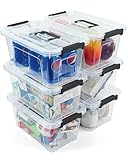
- [Instantly Declutter Your Space] Suitable for home, office, or pantry organization. These 7-quart bins with lids hold daily essentials, transforming chaotic shelves into neat, accessible areas in minutes. Dimensions: 11.6x7.5x5.5"
- [Zero Guesswork with 360° Visibility] Tired of digging through dark boxes? The fully transparent design allows you to locate shoes, crafts, or kitchen supplies instantly from any angle, saving you precious time during busy mornings.
- [Dust-Proof & Food-Grade Safe] The Organizing totes constructed from heavy-duty, BPA-free plastic, these organizers are safe for pantry snacks or nursery items. The secure buckle-up latches tightly seal the lid, keeping moisture and dust out for long-term protection.
- [Wobble-Free Secure Stacking] Maximize your vertical storage safely. Engineered with deep bottom grooves that lock seamlessly into the lid below, these totes won’t topple over, making them ideal for high closet shelves or tight apartment spaces.
- [Versatile Investment & Risk-Free] From classroom supplies to bathroom toiletries, this 6-pack adapts to any life stage. Backed by a 100% satisfaction guarantee—if your bins arrive damaged, contact us directly for an immediate, satisfactory solution.
Do not use household hacks for pet or medical treatment
The historical extract included health, beauty, pet-care, and ingestion suggestions. Advice such as giving olive oil for cat hairballs is not included here because it is not sufficiently supported by the reviewed sources. Contact a veterinarian for an animal-health concern, and a qualified medical professional for a human-health concern.
Independent reader supportYour contribution helps us test, update, and keep practical guides available for everyone.How to choose between reuse and a purpose-built product
| Reuse the household item when… | Buy or specify a purpose-built item when… |
|---|---|
| The task is temporary, low-risk, dry, and easy to monitor. | The item must carry weight, contain heat or chemicals, resist fire, or protect against injury. |
| The material is clean, intact, and compatible with the surface. | Failure could cause water damage, electrical shock, contamination, or a fall. |
| You can label it clearly and keep it away from food or incompatible products. | The manufacturer requires a particular sealant, lubricant, fastener, liner, filter, or PPE. |
| Replacing it is easy if it becomes dirty or damaged. | The task is repetitive, commercial, structural, or governed by a code, specification, or job-site safety plan. |
Bottom line
The best second use is usually simple: a coffee filter for a low-lint wipe or a pot liner, a lint roller for dry debris, a tray for sorting hardware, a pillowcase for dust control, or a jar for labeled small parts. The best “hack” is not the most surprising one; it is the one that saves a purchase without creating a new cleaning, contamination, fire, chemical, or injury risk.
What’s actually slowing this PC down?
Pick the symptom - the matching free tool is one click away.
Rank #4

- Clear Window: All storage cubes feature a front window, making it easier to see and find items inside. Our storage boxes with lids save time and effort, making storage more convenient and efficient
- Large Capacity: The bin with lid measures 14.9 x 9.8 x 9.8 inches, offering ample space for organizing your home or office. Fabric storage bins fit well in closets and shelves. Foldable for easy storage when not in use
- Sturdy Handles: The storage boxes feature removable lids for added convenience and can be stacked without warping. Two sturdy, easy-to-grab handles make carrying simple and allow easy access to bins, even from high places
- Material: The bin's surface is made of non-woven fabric, with a cardboard-supported interior. These high-quality materials ensure the collapsible storage bins are sturdy and meeting your long-term storage needs
- Multi-purpose: Ideal for various household storage needs, these bins are perfect for storing clothes, towels, yarns, toiletries, and office supplies. Suitable for living room, bedroom, storage room
Frequently Asked Questions
Are these the original 101 Real Simple uses?
No. The historical feature is documented as Real Simple content associated with a 2006 PBS episode and a contemporaneous April issue extract. This article is a current, safety-conscious set of 101 second uses inspired by that format, not a claim that all original tips remain valid.
Can coffee filters replace cleaning or food-safety products?
No. They can be useful for low-lint wiping, temporary straining, separating hardware, cushioning dishes, and lining some plant pots. They do not sterilize, disinfect, guarantee food safety, or replace purpose-built equipment.
Best Value

- Dimensions & Size: The plastic storage containers have outside dimensions of 18 1/8" x 12 1/4" x 7" and interior dimensions at the bottom of 14 3/8" x 10 1/8" x 6 1/4", making them ideal for storage needs.
- Durability & Security: Sterilite's Ultra Latch Boxes provide a durable organizing and storage solution. Equipped with heavy-duty latches, the lid attaches securely to the base, keeping contents protected.
- Transparent & Convenient: The clear tote base design of the organizers allows for effortless viewing of stored items, helping you quickly identify and access what you need.
- Organize Effortlessly: A stackable design makes efficient use of vertical space in dorms, closets, basements, garages, and attics, ensuring areas remain tidy and items are easily accessible.
- Everyday Organization: Sterilite products are proudly made in the USA since 1939 and are BPA and phthalate-free.
Is it safe to use lemon on skin?
Do not use lemon or lime juice as a sunburn or beauty treatment. Citrus compounds exposed to sunlight can cause phytophotodermatitis, including blistering and lasting discoloration.
Can newspaper be used to wrap food?
Do not treat printed newspaper as a general food-contact liner. Use clean, food-appropriate containers and follow USDA storage and refrigeration guidance.
Outdated Drivers Are Slowing You Down
One free scan finds every outdated or missing driver and matches the right update for your exact hardware.Free scan · exact hardware matchWindows Errors? Fix Them Before They Spread
Repair common Windows errors and clear accumulated junk for a smoother, more stable PC - no reinstall needed.Free scan · no reinstallThe Bottom Line
The practical rule: reuse ordinary items for temporary, low-risk tasks—but use specified materials, proper PPE, and professional guidance when the job involves structure, electricity, chemicals, food safety, medical care, pets, heat, or injury risk.
Quick Recap
Product prices and availability are accurate as of the date/time indicated and are subject to change. Any price and availability information displayed on Amazon at the time of purchase will apply.

