Quick wins for a faster PC:
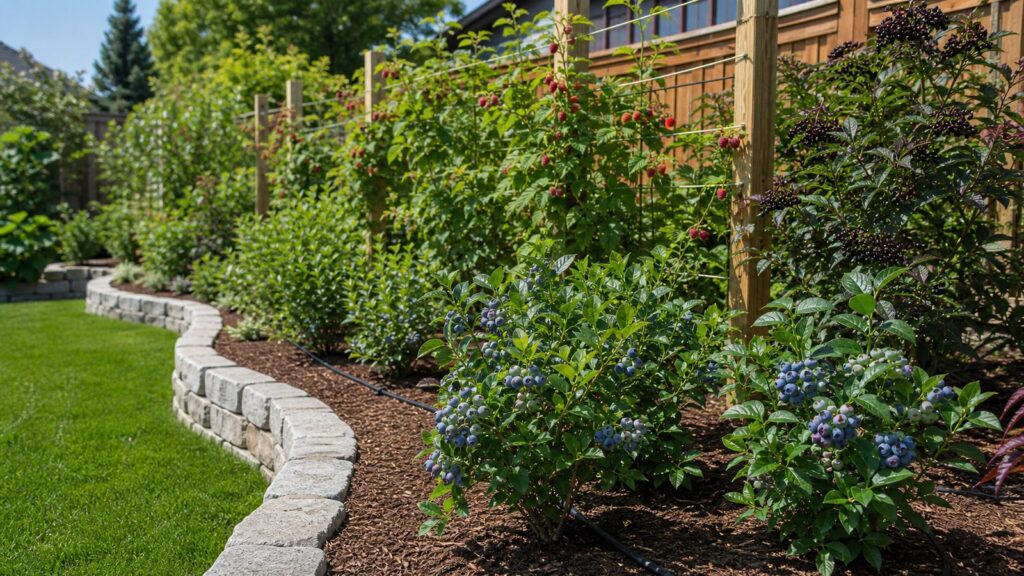
Clear out junk files and repair common Windows errorsFree Scan →Fix the driver behind crashes, sound loss and screen glitchesFind Drivers →Repair Windows errors before they cause bigger problemsFix Now →Healing berry bushes deserve a practical definition. In a home landscape, they are edible shrubs and brambles that provide nutrient-rich fruit, seasonal color, pollinator value, and a reason to use the yard more often. They are not a substitute for medical care, and no shrub belongs in a garden because of a cure-all claim. The right way to plan them is the same way we plan any durable landscape feature on our job sites: match the plant to the soil, drainage, sun, access, maintenance level, and finished look of the property.
For most US homeowners, the best seven to consider are blueberry, raspberry, elderberry, aronia, currant, gooseberry, and goji. Each one can work beautifully, but each has a catch. Blueberries need acidic soil. Raspberries need pruning and containment. Elderberries need safety awareness and usually a second cultivar. Gooseberries can be thorny. Goji handles drought better than many berries, but fruit quality is strongest in hot, dry conditions. A berry garden succeeds when those details are designed in before the first hole is dug.
| # | Preview | Product | Price | |
|---|---|---|---|---|
| 1 |

|
Elderberry Bush Cuttings to Grow - 10 Cuttings | $16.99 | Buy on Amazon |
| 2 |

|
200+Elderberry Fruit Seeds - No GMO Heirloom Black Elderberry Seeds for Planting Outdoor | $6.99 | Buy on Amazon |
Budget-wise, a small DIY berry patch with seven shrubs usually lands around $175 to $650 in 2026 for plants, compost or amendments, mulch, a soil test, simple supports, drip tubing, and basic protection. A professionally installed small berry bed commonly runs about $600 to $2,500 or more, depending on grading, edging, irrigation, fencing, and whether raised beds or drainage correction are needed. A mixed planted garden bed is often estimated around $4.50 to $13.50 per square foot nationally, or about $900 to $2,700 for a 200-square-foot bed before premium hardscape or major site work.
Quick Comparison: 7 Berry Bushes Worth Planting
| Berry | Best Site | Soil pH Target | Mature Size | Spacing | Pollination | Best Use |
|---|---|---|---|---|---|---|
| Blueberry | Full sun, well-drained acidic bed | About 4.0-5.5 | 2-8 ft tall by cultivar | 3-6 ft | Often better with 2 cultivars | Fresh eating, foundation-style edible shrubs |
| Raspberry | Full sun, moist soil, trellis access | About 5.5-6.5 | 3-6 ft canes | 18-24 in | Usually self-fruitful | High-yield backyard patch |
| Elderberry | Moist, well-drained soil; rain-garden edge | About 5.5-7.0 | 6-12 ft | 6-10 ft | Plant 2 compatible cultivars | Syrups, jellies, wildlife habitat |
| Aronia | Full sun to part sun, adaptable soil | Often 5.0-7.0 | 3-8 ft | 3-6 ft | Generally self-fruitful | Native-style hedge, processed fruit |
| Currant | Full sun to partial shade | About 5.5-7.0 | 3-5 ft | At least 3 ft | Varies by cultivar | Jams, sauces, compact edible beds |
| Gooseberry | Full sun to partial shade, good airflow | About 5.5-7.0 | 3-5 ft | At least 3 ft | Often self-fruitful | Pies, preserves, shade-tolerant edges |
| Goji | Full sun, hot and dry exposure | About 6.5-8.0 | 5-8 ft unless pruned | 4-6 ft | Often self-fruitful | Dried berries, drought-tolerant edible shrub |
Use this table as a screening tool, not a shopping list. The final cultivar should match your USDA zone, chill hours, disease pressure, mature size, thorn level, pollination needs, and local rules. That matters more than buying by berry name alone.
What’s actually slowing this PC down?
Pick the symptom - the matching free tool is one click away.
#1 Best Overall
- BERRIES: Prized for its berries and healing powers. Easy to grow
- #1 GROWTH PERFORMANCE: Our rating speaks for itself! Get the best seeds from CZ Grain
- INSTRUCTION INCLUDED: We include instructions with each order and a link to a YouTube video tutorial.
1. Blueberry: Best for Acidic Beds and Polished Curb Appeal
Blueberries are the cleanest fit for homeowners who want edible landscaping that still looks intentional from the street. The shrubs have white spring flowers, summer fruit, and strong fall color. In the right soil, they can be used like foundation shrubs, border plants, or a dedicated berry bed near a patio.
The soil requirement is non-negotiable. Blueberries need strongly acidic, well-drained soil, with a target pH around 4.0 to 5.5. If your native soil is neutral or alkaline, the plant may show yellowing leaves, weak growth, or die even when you water it faithfully. On our job sites, we do not guess with blueberries. We start with a soil test, then decide whether the project needs sulfur, peat or acid planting mix, raised beds, or a different berry altogether.
Plan for 3 to 6 feet between plants depending on cultivar. Compact half-high blueberries can stay closer to 2 to 4 feet tall, while highbush types can reach 6 feet or more. In warmer regions, rabbiteye and southern highbush types are usually the right direction. In colder regions, highbush and half-high cultivars are often better choices. Many blueberries produce more reliably with a second compatible cultivar nearby, so a two- or three-shrub grouping is usually smarter than one lonely plant.
Installed cost rises when the soil has to be rebuilt. A young blueberry plant may cost about $15 to $39, with 1-gallon retail shrubs around the high $30s in common listings. The real expense is the bed: soil testing, acid amendments, 2 to 4 inches of mulch, drip irrigation, and sometimes raised construction to keep roots out of wet clay. Blueberries are shallow-rooted, so drip irrigation and mulch should be part of the base scope, not a luxury add-on.
Free tools Windows power users keep installed
One-click scans. No signup required.
2. Raspberry: Best for Maximum Harvest in a Small Footprint
Raspberries are the workhorse berry for homeowners who want a real harvest from limited space. A 12- to 16-foot row can produce enough fruit to feel worthwhile without taking over the whole yard, but only if the row is built with access and pruning in mind.
Plant raspberry canes 18 to 24 inches apart in moist, well-drained soil. Full sun gives the best yield. We like rows with clear walking access on at least one side, and preferably both sides, because you will be pruning, picking, removing old canes, checking disease, and possibly netting the crop. A narrow strip wedged against a fence looks efficient on paper but becomes hard to maintain once the canes spread.
For most homeowners, primocane raspberries are the simpler choice. They can be managed for a fall crop and cut back more straightforwardly than systems that require careful separation of first-year and second-year canes. Floricane types can produce excellent fruit, but they demand more attention to training and pruning.
Budget for a trellis even if the variety is advertised as manageable. A simple home row can use pressure-treated or rot-resistant posts, heavy wire, and end bracing. Keep thorny brambles away from narrow walks, children’s play zones, utility meters, HVAC equipment, and property-line squeeze points. Raspberries themselves can be inexpensive, often around $7.95 to $20 per plant in 2026 listings, but the final project cost rises with posts, wire, edging, containment, mulch, irrigation, and bird protection.
The Tool Desk
Outbyte Driver Updater FREEFix the driver behind crashes, sound loss and screen glitchesFind Drivers →Outbyte PC Repair FREEClear out junk files and repair common Windows errorsFree Scan →3. Elderberry: Best for Wet Edges, Wildlife, and Processed Harvests
Elderberry is one of the most useful shrubs for a difficult damp spot. It can work near the edge of a rain garden, along a drainage swale, or in a back border where a larger, looser shrub form makes sense. It brings pollinator-friendly flowers, dark fruit clusters, and wildlife value.
Give elderberry room. Many cultivars mature around 6 to 12 feet tall, with spacing commonly in the 6- to 10-foot range. Elderberries prefer moist, well-drained soil, with a preferred pH around 5.5 to 7.0. They usually fruit better with at least two compatible cultivars, so plan the bed as a pair or grouping from the start.
The safety note is important. Elderberries should not be eaten raw. Leaves, stems, and seeds contain cyanogenic glycosides, and the fruit is best handled as a cooked ingredient for syrups, jellies, sauces, or similar preparations. Do not place elderberry where small children are likely to browse fruit unsupervised.
Plant cost varies widely, roughly $8 to $55 depending on size, cultivar, and shipping. In a professional landscape, elderberry is often best used where its size is an asset: the rear of an edible border, a sunny low area, or a naturalized transition from lawn to drainage feature. It is not the right shrub for a tight front walkway unless you are committed to pruning and have chosen a compact cultivar.
4. Aronia: Best Low-Maintenance Native-Style Hedge Berry
Aronia, also called chokeberry, is easy to overlook because the fresh fruit is not as immediately appealing as blueberry or raspberry. That is a mistake in a practical landscape. Aronia is hardy, ornamental, pollinator-friendly, and useful in hedges or mass plantings where you want flowers, dark fruit, fall color, and relatively low maintenance.
Most homeowners should think of aronia as a processing berry. The fruit is very dark and rich in anthocyanin pigments, but it is astringent when eaten fresh. It earns its place in juices, syrups, jams, wines, and blended preserves. From a design standpoint, it is more like an edible ornamental shrub than a dessert berry.
Aronia usually works in full sun to part sun and can tolerate a range of soils once established, although better drainage and mulch still improve performance. Mature size depends heavily on cultivar, commonly around 3 to 8 feet tall. Space plants 3 to 6 feet apart depending on whether you want an individual shrub form or a hedge.
In 2026, aronia plants commonly show up around $25 to $35 for young shrubs. It is a smart choice for homeowners who want the garden to look tidy even when nobody picked fruit that week. Use defined edging, a clean mulch line, and a repeated planting rhythm, and aronia can pass the front-yard test in many HOA-sensitive neighborhoods.
5. Currant: Best Compact Berry for Partial Shade
Currants are compact, productive shrubs that can fit where larger berry plants would be awkward. They tolerate full sun to partial shade, which makes them useful along the brighter edge of a side yard, fence line, or understory transition. They are also more formal-looking than brambles, so they can blend into an ornamental edible bed without looking messy.
Plan at least 3 feet of spacing per shrub, and use 2 to 4 inches of organic mulch at planting. Annual pruning matters. The goal is to keep productive young wood, remove weak or crossing stems, and maintain airflow through the shrub. Poor airflow invites disease problems, especially in humid regions.
Currants are best used for jams, jellies, sauces, baking, and fresh eating depending on type. Red and white currants tend to be brighter and tart. Black currants have a stronger flavor that some people love and others prefer processed.
Before buying, check local rules. Some states and counties have restrictions related to currants and gooseberries because of white pine blister rust concerns. Rules have changed over time and vary by location, so this is a local extension or state agriculture check, not a guess. Plants commonly cost about $12 to $35 in 2026 listings.
Do these 3 things before closing this tab:
1Fix the driver behind crashes, sound loss and screen glitches2Clear out junk files and repair common Windows errors3Scan for outdated or missing drivers - takes under a minute6. Gooseberry: Best Tart Berry for Small Beds, With Thorn Planning
Gooseberries offer a lot in a small footprint: tart fruit, manageable shrub size, and tolerance for full sun to partial shade. They are useful for pies, preserves, sauces, and fresh eating when fully ripe. For a homeowner who likes old-fashioned fruit and does not want a full bramble row, gooseberry can be a strong choice.
The main design issue is thorn risk. Many gooseberries have thorns, and those thorns matter when the plant is near a walkway, patio, play area, gate, hose bib, utility meter, or trash path. Give the shrub room to be maintained without brushing against it every week. At least 3 feet of spacing is a good starting point, with more room where access is tight.
Like currants, gooseberries need annual pruning and good airflow. Use 2 to 4 inches of mulch, keep irrigation at the soil line, and avoid crowding the plant against a wall. Overhead watering can raise disease pressure and waste water compared with drip irrigation.
Expect young plants around $12 to $35 in many 2026 listings. If immediate curb appeal matters, a larger container shrub costs more but gives the bed structure right away. If the project is in a backyard production area, smaller bare-root or young plants can save money as long as you are patient with establishment.
Outdated Drivers Are Slowing You Down
One free scan finds every outdated or missing driver and matches the right update for your exact hardware.Free scan · exact hardware matchWindows Errors? Fix Them Before They Spread
Repair common Windows errors and clear accumulated junk for a smoother, more stable PC - no reinstall needed.Free scan · no reinstall7. Goji: Best for Hot, Dry, Sunny Sites
Goji is not the right berry for every climate, but it can be useful where summers are hot, sun is strong, and water conservation matters after establishment. It performs best in full sun, and fruit quality is strongest in hot, dry conditions. In cool, humid areas, quality and disease performance may be less impressive.
Rank #2
- Edible Landscape Delight: Transform your garden into a sensory haven with fragrant flowers, edible fence shrubs, and delicious fruits.
- Simple Gardening Pleasure: Enjoy the ease of planting and growing with a satisfaction guarantee. This product promises a 90% germination rate
- Outdoor Gifting Extravaganza: Give the gift of nature to loved ones, whether it's for Mother's Day, Father's Day, or any occasion.
- Abundant Harvest, Abundant Benefits: Planting your own fruits yields a bountiful harvest and numerous benefits.
- These rare garden seeds make for unique and thoughtful outdoor gifts, perfect for green-thumbed friends and family members.
Goji shrubs can reach 5 to 8 feet or more if left alone, so plan for pruning and support. Space plants around 4 to 6 feet apart. They can become rangy, which means they are usually better in a working edible bed than as a highly formal front foundation shrub.
For drought-prone yards, goji has a role, but do not confuse drought tolerance with no-water establishment. New shrubs still need steady moisture while roots are developing. A drip line, 2 to 3 inches of mulch, and a weed-free planting zone make the first two seasons much more reliable.
Use goji where it fits the site instead of forcing more water-hungry berries into a hot exposure. It pairs well with practical landscape upgrades such as drip irrigation zones, gravel maintenance paths, and open fencing that keeps deer out without blocking airflow.
Recommended Free Tools
What It Costs to Plant a Berry Bush Garden in 2026
The cheapest berry garden is rarely the best-built one. Plants are only one line item. The durable project includes soil testing, soil preparation, irrigation, mulch, access, support, protection, and cleanup.
| Project Type | Typical 2026 Cost | What Is Usually Included |
|---|---|---|
| One DIY shrub | $25-$125 | Young plant, compost or amendment, mulch, basic hand watering |
| Seven-shrub DIY berry patch | $175-$650 | Plants, soil test, amendments, mulch, drip tubing, simple stakes or trellis, basic netting |
| 200 sq ft mixed edible bed | $900-$2,700 | Typical national bed range at about $4.50-$13.50 per sq ft before premium hardscape |
| Small professional berry-bed installation | $600-$2,500+ | Layout, labor, soil prep, mulch, drip irrigation, edging, plant warranty, cleanup |
| Higher-end installation | $2,500-$8,000+ | Raised beds, masonry edging, deer fencing, grading, drainage correction, premium plants |
The biggest price drivers are mature container plants, acid soil construction for blueberries, raspberry trellising, deer and bird pressure, heavy clay, poor drainage, remote delivery, and whether the bed needs to look finished from day one. Smaller bare-root plants save money. Larger container shrubs make sense where curb appeal matters immediately.
Independent reader supportYour contribution helps us test, update, and keep practical guides available for everyone.Site Prep Details That Matter More Than the Berry Name
Start With Sun, Drainage, and a Soil Test
Most berry shrubs want at least 6 hours of direct sun, and many produce best with 8 or more. Currants and gooseberries tolerate partial shade better than most, but even they need enough light for good fruiting. Drainage is just as important. If water sits in the planting area for more than 24 hours after a normal rain, plan on raised beds, grading, soil rebuilding, or a different location.
A soil test is inexpensive compared with replacing failed shrubs. It is especially critical for blueberries because pH needs are so specific. Do not plant blueberries in lawn soil and hope fertilizer will fix the problem later.
Build Irrigation and Mulch Into the Base Plan
Drip irrigation is the right default for berry beds. It puts water near the roots, keeps foliage drier, and uses less water than overhead watering. For a small bed, a simple drip line or 1/4-inch emitter tubing can be enough. Mulch should be 2 to 4 inches deep, pulled slightly back from the crown or stems so moisture does not sit against bark.
Leave Access for Real Maintenance
A berry bed needs working room. Leave paths wide enough to prune, harvest, net, and remove canes without stepping into the root zone. For most home beds, a 24- to 36-inch access path is practical. Around brambles, wider is better. Plan where ladders, hoses, buckets, and netting will go before the shrubs are mature.
HOA, Permit, Utility, and Safety Notes
Most berry shrubs do not require a building permit by themselves, but the surrounding work might. Raised beds, retaining walls, drainage changes, fences, trellises, electrical sleeves, and irrigation tie-ins can trigger local requirements. Before digging, call 811 for utility locating. This is especially important near service lines, meters, exterior panels, irrigation mains, and side-yard utility corridors.
For HOA-sensitive properties, design berry plantings as ornamental edible landscaping. Use defined bed lines, steel or stone edging, compact cultivars, seasonal color, clean mulch, and intentional spacing. Avoid a loose farm-row look in the front yard unless your neighborhood clearly allows it. Some municipalities protect front-yard gardening, but local rules, sightline requirements, nuisance ordinances, and HOA covenants can still affect layout.
Safety is simple but serious. Do not eat raw elderberries, and do not consume elderberry leaves, stems, or seeds. Keep thorny plants away from narrow circulation routes. Avoid planting shrubs too close to foundations, siding, crawlspace vents, HVAC condensers, dryer vents, septic components, and utility access. Keep air clearance around mechanical equipment and leave room for service technicians.
When to DIY and When to Hire a Pro
DIY is a good fit when you are planting a small, flat backyard bed with good drainage, easy hose access, and no major hardscape. A seven-shrub patch is manageable for many homeowners over one weekend: one day for layout, soil prep, and irrigation, and one day for planting, mulch, cleanup, and protection.
Hire a professional when the bed affects drainage, curb appeal, grading, irrigation zones, fencing, retaining edges, or utility-heavy areas. A pro is also worth it when blueberries require a purpose-built acidic bed, when deer fencing needs solid posts and gates, or when the berry planting is part of a larger patio, walkway, or outdoor-living project. On our job sites, the expensive failures usually come from poor water movement, bad access, and plants placed where future maintenance becomes a fight.
A good installed berry bed should include a scaled layout, plant list by cultivar, soil-prep plan, irrigation plan, mulch specification, access paths, and protection strategy. For blueberries, it should also include a pH plan. For raspberries, it should include a pruning and trellis plan. For elderberries, it should include compatible cultivars and safe placement.
The Best Starting Plan for Most Homeowners
If you want a balanced edible landscape, start with three zones. Use blueberries or aronia where appearance matters most. Use raspberries in a dedicated production row with a trellis and access. Use elderberry only where you have room and a suitable moist location. Add currant or gooseberry for partial shade, and consider goji only if your site is sunny, hot, and relatively dry.
For a first-year planting, seven shrubs is enough: two blueberries, two compatible elderberries or one elderberry plus one aronia if space is tight, one raspberry row section with several canes, one currant or gooseberry, and one goji only where climate supports it. That mix gives you staggered harvests, different uses, and a garden that feels designed rather than collected.
The best healing berry bush is the one that stays healthy in your actual yard. Build the soil correctly, water at the root zone, leave working space, respect local rules, and choose cultivars for your region. Do that, and the garden gives back for years in fruit, flowers, shade, wildlife, and a yard that earns its maintenance.
Frequently Asked Questions
Which berry bushes are easiest for beginners to grow?
Aronia, currants, gooseberries, and primocane raspberries are often easier than blueberries because they are less demanding about acidic soil. Blueberries are excellent, but only when the soil pH is built and maintained correctly.
Recommended Free Tools
Do berry bushes need full sun?
Most berry bushes fruit best with at least 6 hours of direct sun, and 8 hours is better for blueberries, raspberries, goji, and elderberries. Currants and gooseberries tolerate partial shade better than most berry plants.
How much does it cost to plant berry bushes in 2026?
A small DIY seven-shrub berry patch usually costs about $175 to $650 for plants, amendments, mulch, soil testing, drip tubing, and basic supports. Professional installation commonly runs about $600 to $2,500 or more depending on grading, irrigation, edging, fencing, and drainage work.
Which berry bushes are safe to eat raw?
Blueberries, raspberries, ripe currants, ripe gooseberries, aronia, and goji are commonly eaten raw, although aronia is usually better processed because it is astringent. Elderberries should not be eaten raw, and the leaves, stems, and seeds should not be consumed.
Do I need more than one berry bush for fruit?
It depends on the berry and cultivar. Elderberries usually fruit better with at least two compatible cultivars. Blueberries often produce better with more than one cultivar. Many raspberries, gooseberries, aronia, and goji plants are self-fruitful, but cultivar selection still matters.
What’s actually slowing this PC down?
Pick the symptom - the matching free tool is one click away.
Can I plant berry bushes in a front yard or HOA neighborhood?
Often yes, but check local ordinances and HOA covenants first. Use compact cultivars, clean edging, defined mulch lines, and ornamental layouts so the planting reads as intentional landscaping rather than an unmanaged food plot.
Quick Recap
Product prices and availability are accurate as of the date/time indicated and are subject to change. Any price and availability information displayed on Amazon at the time of purchase will apply.




