Do these 3 things before closing this tab:
1Fix the driver behind crashes, sound loss and screen glitches2Clear out junk files and repair common Windows errors3Scan for outdated or missing drivers - takes under a minuteNeither material is a universal winner for a coastal house. Fiber-cement siding has the stronger broad category ratings for pest and fire resistance, while both fiber cement and solid wood are rated high for sustained-moisture resistance. The better choice depends on your salt-spray exposure, wind-design pressure, wood species or fiber-cement product, finish, wall assembly, and installation quality.
Use the siding as one part of a drained, flashed wall—not as the building’s only water barrier. A correctly selected and installed product can perform well near the ocean; a poorly detailed installation can leak or corrode regardless of the cladding material.
As an Amazon Associate I earn from qualifying purchases.
What coastal exposure changes
Oceanfront and near-coastal walls face a combination of wind-driven rain, salt-laden spray, humidity, and storm pressure. FEMA’s Coastal Construction Manual explains that wind-driven saltwater can cause corrosion and moisture intrusion. When spray evaporates, the remaining salt crystals retain water and remain corrosive, so exposed fasteners, flashings, trims, vents, and other metal components need as much attention as the visible siding.
That environment changes the buying question. Instead of asking which material is “waterproof,” evaluate whether the complete wall can drain, whether joints and openings are flashed, whether fasteners are approved for the exposure, and whether the finish can be maintained. The federal ratings described below are broad comparisons, not guarantees for a particular brand, profile, coating, species, or installation.
#1 Best Overall

- Size : 6.3 Inches x 4.75 inches
- Material : Made from a thin piece of PVC
- Easy to Install : Clean, peel, stick, flatten and paint
- Weatherable: Works fine from 5 degrees Fahrenheit to140 degrees Fahrenheit.
- Package Include : 12 Patches Repair Kit & 1 User's Manual
Fiber cement and solid wood at a glance
The Building America Solution Center uses qualitative hazard ratings for common siding categories. Its comparison is specifically for solid wood siding; it should not be read as a rating for every engineered-wood product.
| Factor | Solid wood siding | Fiber-cement siding | How to interpret it at the coast |
|---|---|---|---|
| Sustained-moisture resistance | High | High | Both can resist ongoing moisture when detailed and maintained correctly. Neither makes the wall waterproof. |
| Pest resistance | Low to medium | High | Fiber cement has the stronger broad category rating; wood performance varies with species, detailing, and local pest pressure. |
| Fire resistance | Medium | High | Ratings are relative categories. The fire performance of the entire wall assembly still depends on tested construction and local code. |
| Installed cost estimate | $7.50–$12.50 per sq. ft. | $7–$10 per sq. ft. | Ranges overlap and are estimates, not current bids. Market conditions, availability, and project complexity change the final price. |
In practical terms, fiber cement often appeals to owners who want more inherent resistance to pests and flame. Solid wood can be the better fit when a particular species, profile, repairability, or historic appearance is central to the project. Both choices still require a coastal-rated wall design.
Moisture, salt spray, and corrosion
What salt air does to the wall
Salt does not need to soak through the face of the siding to cause trouble. Spray can reach cut edges, joints, undersides, fasteners, flashing, vents, and penetrations. Repeated wetting and drying leaves conductive salt deposits that accelerate corrosion on unsuitable metals and can hold moisture against adjacent materials. Wind-driven rain can also force water behind laps and trim if the drainage plane is interrupted.
Windows Errors? Fix Them Before They Spread
Repair common Windows errors and clear accumulated junk for a smoother, more stable PC - no reinstall needed.Free scan · no reinstallCrashes, No Sound, or Screen Glitches?
Random freezes, missing sound and display glitches usually trace back to one bad driver. Find and replace yours safely.Free scan · under a minuteHow fiber cement behaves
Fiber cement is cement-based and receives a high sustained-moisture-resistance rating in the Building America comparison. That does not make every product salt-proof or impervious to cracking, edge damage, coating failure, or water entry at joints. Boards still need the clearances, laps, joint treatment, sealants, and fasteners specified by the manufacturer. Keep cut edges protected as required by the product instructions, and do not substitute generic details for the evaluated installation.
Rank #2
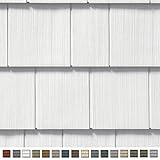
- Patented PanelThermometer for precise installation True Texture finish
- Designed and tested to withstand hurricane force winds Molded Continuous Perimeter Lock
- Made from high quality polymer material Made in the USA
- Limited lifetime warranty
- Panel Projection: 3/4 Inch (Accepts 3/4 Inch J Channel only) Width: 14in. D/7 Inch
How solid wood behaves
Solid wood also receives a high sustained-moisture-resistance rating, but its performance is closely tied to species, grain orientation, coating, end-grain treatment, ventilation, and the ability to dry. Coastal conditions make continued maintenance and treatment especially important. A wood species and finish selected for a sheltered inland wall may not be suitable for direct ocean spray.
The wall assembly matters more than the face material
The Building America guidance says to install siding “with the mindset that it will leak in its lifetime.” Siding sheds most rain and protects more water-sensitive layers, but it is not the sole water-control layer. Use a continuous water-resistive barrier, a drainage path behind the cladding where the design calls for one, and properly integrated flashing at windows, doors, roof-to-wall transitions, decks, utility penetrations, and outside corners.
FEMA’s coastal guidance treats moisture management as a system. If water reaches the drainage plane, it must have a route out rather than a trapped cavity. A material with a favorable moisture rating cannot compensate for missing head flashing, blocked weep paths, open penetrations, or siding installed tight to horizontal surfaces.
Pests and fire: where fiber cement has an edge
Pest exposure
In the federal category table, fiber cement is rated high for pest resistance, while solid wood is rated low to medium. That is a useful directional comparison, not a promise that insects cannot reach a wall. Termites and other pests are controlled primarily through the complete foundation, drainage, clearance, and inspection strategy. Keep cladding away from grade and roofs as specified, eliminate persistent damp zones, and inspect concealed transitions.
Rank #3
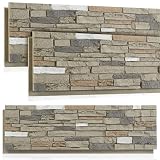
- Coverage and Package: this package includes 3 fireproof panels, each approximately 11.8" x 45.6" in size; Providing nice coverage, these panels are ideal for large scale projects or covering expansive wall surfaces
- Safety Assurance: place safety at the forefront with our panels, thanks to their B1 fire rating; Our faux stone wall panels provide resistance to fire, ensuring safety and reliability for use
- Reliable Quality: boasting a quality PU material, our exterior siding panels boast longevity and durability; This UV resistant material ensures color fading stays negligible even with the longest duration of exposure to sunlight
- Aesthetic Appearance: with gray color and realistic stone imitation, the exterior panels effortlessly replicate the look and feel of real stone; It is designed to deliver an exquisite feeling to any setup
- Ease of Installation: the lightweight nature of our fireproof outdoor wall panels makes handling during installation an effortless task; Easy to hang with simple adhesives, these panels transform the installation process into a seamless experience
Fire performance
The same table rates fiber cement high for fire resistance and solid wood medium. The rating describes the siding category; it does not establish a fire-resistance rating for an entire wall assembly. Sheathing, framing, insulation, air gaps, joints, and penetrations can change the tested result, and wildfire or local fire-zone requirements may impose additional measures.
One manufacturer, James Hardie, states that its Hardie siding is noncombustible, will not ignite when exposed to a direct flame, will not contribute fuel to a fire, and has a Class A fire rating. Its statement is specific to its products and references ASTM E84; the company also notes that applied paints or coatings may be damaged or charred. Do not extend that claim to every fiber-cement product, coating, or wall assembly. Confirm the product’s own evaluation documents and the code provisions that apply to your site.
Which siding holds up better to coastal storms?
Wind ratings are product- and installation-specific
FEMA advises: “Always consult and follow the manufacturer’s installation requirements for the needed wind speed rating or design pressure (refer to the manufacturer’s building code compliance evaluation report).” This is more useful than choosing by material name alone. Two products in the same category can have different allowable pressures, fastening schedules, joint details, and substrate requirements.
Free tools Windows power users keep installed
One-click scans. No signup required.
The Building America guidance says common siding categories can perform well in high winds when properly installed. For a coastal project, obtain the design wind speed and exposure category from the applicable code or project engineer, then select a product whose evaluation report covers the required design pressure. Verify the fastening pattern, fastener type and corrosion resistance, edge distances, starter strips, lap dimensions, and treatment of corners and openings.
Rank #4

- OSHA-compliant: take on siding, fiber cement, Hardie board, or shower backer boards with a 1/2-inch (13mm) max cutting capacity
- Cut glass, wood, plastic, and other conventional building materials up to 5/16 inch (8mm) thick
- Pressure sensitive trigger cuts anywhere from 0 to 2500 strokes per minute
- Swiveling head rotates a full 360 degrees to meet the needs of any project
- Includes a set of reversible and replaceable steel cutting blades, a lock-on power switch, a 6-foot power cord, and a two-year warranty
Storm-installation checklist
- Establish the design demand. Confirm the site’s code wind speed, exposure, building height, importance category, and required design pressure with the authority having jurisdiction or the project engineer.
- Choose an evaluated product. Read the current manufacturer installation manual and building-code compliance or evaluation report for the exact profile and thickness, not merely the product family.
- Specify compatible fasteners. Use the fastener material, length, diameter, and corrosion resistance required for the substrate and salt exposure. Do not replace specified fasteners with ordinary interior or uncoated hardware.
- Prepare the drainage plane. Install the water-resistive barrier and integrate flashings before cladding. Provide the drainage space or rainscreen approach required by the wall design.
- Follow the fastening pattern. Respect nail or screw locations, spacing, penetration, joint staggering, and unsupported spans. Overdriving or underdriving fasteners can reduce holding power or damage the board.
- Detail openings and transitions. Flash windows, doors, vents, decks, roof intersections, inside and outside corners, and utility penetrations so water can drain outward.
- Inspect before close-out. Check laps, clearances, sealant joints, exposed cut edges, trim, and blocked drainage paths. Correct defects before paint or final trim conceals them.
How much does fiber cement cost compared with wood?
The Building America Solution Center lists estimated installed costs of $7.50–$12.50 per square foot for solid wood and $7–$10 per square foot for fiber cement. The figures are estimates from the guide, whose publication date is not stated on the retrieved page. They are not current local contractor quotes and are subject to market conditions, material availability, and home complexity.
| Cladding | Guide’s installed estimate | What the number does not establish |
|---|---|---|
| Solid wood | $7.50–$12.50 per sq. ft. | It does not establish a price for a particular species, profile, region, tear-off condition, finish, or coastal access challenge. |
| Fiber cement | $7–$10 per sq. ft. | It does not establish a price for a particular thickness, factory finish, trim package, scaffolding requirement, or local labor market. |
The ranges overlap, so “fiber cement always costs less” is not supported. Ask bidders to separate removal and disposal, substrate repairs, flashing, trim, paint or factory finish, fasteners, access equipment, and permitting. A low cladding allowance can become an expensive project if coastal detailing is omitted from the scope.
Maintenance and appearance
Maintenance obligations
No universal coastal repainting, resealing, or inspection interval is established for either category. Follow the exact product and coating instructions, then adjust inspections to the site’s exposure. Direct spray, frequent storms, shaded damp walls, and salt deposits justify closer observation than a protected inland elevation.
- For wood: look for coating breakdown, open joints, cupping, splitting, soft areas, failed end-grain protection, and water collecting at trim. Keep the finish system compatible with the species and the manufacturer’s requirements.
- For fiber cement: inspect for cracked or displaced boards, damaged edges, failed sealant, coating wear, and corrosion around fasteners and trim. Replace or repair components according to the product manual rather than improvising a patch that blocks drainage.
- For both: remove salt and organic buildup using the cleaning method allowed by the finish, keep gutters and downspouts functioning, and check that landscaping, decks, and snow or sand accumulation do not defeat required clearances.
Appearance and future changes
Solid wood offers genuine grain, species-specific color, and traditional profiles that may be important in a historic district or a design intended to weather naturally. Fiber cement can reproduce lap, shingle, and board-and-batten looks with more uniform dimensions. Neither category has a universally superior appearance; the decision is an architectural and maintenance preference tied to the selected product and finish.
Best Value

- including: 2 x Siding Overlap Gauge Set
- Convenience:Allows for easy and accurate 1-person siding installations
- Two gauges support the entire length of plank and precisely gauge a standard 1-1/4-Inch overlap - even on a bowed wall Works on old or new 5/16-Inch fiber cement siding plank
- Usage method :For Use With Fiber Cement Siding, Overall Length 6 in, Safety Latch No, Handle Color Silver, Material Steel, Features Precision-Ground Tip Assures Gauge Grips Behind Siding, Two gauges Support Entire Length of Panel and Precisely Gauge a Standard 1-1/4 in Overlap even on a bowed wall
Compare sample boards in the actual coastal light, and ask how the proposed finish is repaired, recoated, and matched after a storm. A factory finish, field-applied coating, stain, or paint can have different preparation and touch-up requirements. Treat the finish as part of the siding specification, not as an afterthought.
Independent reader supportYour contribution helps us test, update, and keep practical guides available for everyone.Installation details that decide real-world performance
Drainage and flashing
Provide a continuous drainage strategy behind the cladding. At windows and doors, install sill, jamb, and head flashing in the sequence required by the window and wall systems so water is directed onto the drainage plane. Flash roof-to-wall intersections, deck ledgers, hose bibs, electrical penetrations, and vents; these are frequent leak paths regardless of siding type.
Clearances and transitions
Maintain the product’s required clearance above grade, roofs, decks, steps, and hardscape. Use compatible trim and sealants at changes of plane, and leave or create drainage openings where the assembly requires them. Blocking a weep path with caulk or trim can turn a durable cladding system into a moisture trap.
Quick wins for a faster PC:
Fix the driver behind crashes, sound loss and screen glitchesFind Drivers →Repair Windows errors before they cause bigger problemsFix Now →Corrosion-resistant hardware
Salt exposure makes hardware selection critical. The installation manual should identify acceptable fastener materials and any restrictions near dissimilar metals. Confirm that flashing, drip edges, starter components, screws, nails, and brackets are compatible with one another and with the expected coastal exposure.
Qualified installation
Ask the installer to identify the exact product evaluation report, design pressure, fastening schedule, flashing sequence, and finish warranty before work begins. Require photographs of concealed flashing and drainage details where inspection access will disappear. Manufacturer instructions and local code govern; a generic “fiber cement” or “wood siding” method is not enough.
Choosing by site and project priorities
| Your priority or condition | More defensible starting point | Checks still required |
|---|---|---|
| Direct ocean spray and high corrosion risk | Either material can work if the wall is thoroughly drained and hardware is specified for the exposure; fiber cement may offer a higher pest and fire category rating. | Confirm salt-exposure compatibility of fasteners, flashings, trims, coatings, and sealants. |
| High pest pressure | Fiber cement has the higher federal pest-resistance category rating. | Control moisture, maintain clearances, and follow the site’s termite or pest requirements. |
| Wildfire or stringent fire requirements | Fiber cement has the higher federal fire category rating. | Verify the complete wall assembly, local code, and the exact product’s tested or evaluated fire performance. |
| Historic character or a specified wood species | Solid wood may better meet the appearance or preservation brief. | Select a species and finish suited to the exposure and budget for ongoing treatment. |
| Budget-sensitive project | Either may fit; the published installed ranges overlap. | Obtain local bids that itemize removal, repairs, flashing, trim, finish, access, and permitting. |
| High-wind site | Do not choose by category alone; select the product with the required design-pressure evaluation. | Match the fastening schedule and details to the code wind demand and manufacturer report. |
A practical selection process
- Map exposure by elevation. Note which walls receive direct spray, prevailing wind, roof runoff, and splash from decks or grade. A sheltered inland elevation may need a different maintenance plan from the ocean-facing wall.
- Set the code and insurance constraints. Identify wind, flood, wildfire, historic-district, and corrosion requirements before selecting profiles or finishes.
- Shortlist exact products. Compare the product manual, evaluation report, fire documentation, finish limitations, trim system, and approved fasteners—not just marketing descriptions.
- Design the water-control layers. Draw the water-resistive barrier, drainage space, flashings, penetrations, and termination details. Resolve conflicts between window, roofing, deck, and siding trades on paper.
- Price the complete scope. Request bids using the same quantities and details, with separate allowances for substrate repair, access, flashing, trim, coating, and disposal.
- Plan inspection and upkeep. Record the product, color, finish, fastener type, and installation date. Keep spare boards or trim when practical, and schedule visual checks based on exposure and the manufacturer’s instructions rather than a generic interval.
Bottom line
For a coastal home, fiber cement is the stronger default when pest and fire resistance are major priorities, while solid wood remains a viable choice when species, character, and repairability justify its maintenance demands. The federal comparison gives both high sustained-moisture ratings, and the published installed-cost estimates overlap. The decisive factors are the exact product, corrosion-resistant hardware, wind evaluation, flashing and drainage, finish, and installer compliance. Choose the cladding only after those details are specified for your site.
Quick Recap
Product prices and availability are accurate as of the date/time indicated and are subject to change. Any price and availability information displayed on Amazon at the time of purchase will apply.

