Recommended Free Tools
Some links on this page are affiliate links: if you buy through them we may earn a commission, at no extra cost to you.
The Florida Roofing & Sheet Metal Contractors Association (FRSA) headquarters in Orlando used two different coating strategies rather than one universal paint system: factory-finished architectural metal for the roof and gutters, and a field-applied PVDF-resin coating for the stucco façade and trim. That distinction is the central lesson of the project. Long exterior life depends on matching the coating, substrate, preparation and inspection process to each building surface.
The project account describes APV Engineered Coatings’ NeverFade coating with Kynar Aquatec PVDF resin on the stucco and trim. The stucco received Soft Sandstone and the trim Colonial White. Roof and gutter components used Kynar 500 finishes supplied through architectural metal-component manufacturers. The products, application conditions and warranty language described below come from the project account and should be checked against current written specifications before being used on another building.
As an Amazon Associate I earn from qualifying purchases.
PC Slower Than It Used to Be?
A free scan shows the junk files, broken settings and background clutter dragging Windows down - then fixes them in one click.Free scan · Windows 10 & 11Crashes, No Sound, or Screen Glitches?
Random freezes, missing sound and display glitches usually trace back to one bad driver. Find and replace yours safely.Free scan · under a minuteWhat the FRSA headquarters project actually coated
“Exterior coating” can mean a factory-applied finish on a metal component or a coating applied on site over an existing wall. The FRSA project used both approaches, and treating them as interchangeable would lead to the wrong preparation and performance expectations.
| Building area | Approach described in the project account | Color or finish information |
|---|---|---|
| Architectural metal roof components | Kynar 500 PVDF finishes applied through architectural metal-component manufacturers | Project account does not identify a roof color |
| Metal gutters | Kynar 500 PVDF finishes applied through architectural metal-component manufacturers | Project account does not identify a gutter color |
| Stucco façade | APV NeverFade, a field-applied coating containing Kynar Aquatec PVDF resin | Soft Sandstone |
| Stucco trim | APV NeverFade, field applied | Colonial White |
The Kynar 500 finishes on the roof and gutters were factory finishes on architectural metal components. The NeverFade work was a separate, field-applied operation on stucco and trim. A specification should therefore identify the exact substrate, the coating location and whether the finish is factory or field applied.
Popular on Amazon

- This high-quality, acrylic latex water-base interior/exterior paint offers excellent hiding properties with great adhesion and water repellency on textured interior and exterior surfaces
- This self-priming paint offers a finish on properly prepared smooth, rough and textured masonry, drywall, stucco, and brick surfaces
- It is alkali-resistant up to ph 12.0, easy to apply, and cleans up with soap and water. This paint can be rolled, Brushed, or sprayed on
- This formula is designed to accentuate all textured surfaces while achieving a natural look
- This is a 1-Gallon can of KILZ interior/exterior concrete, brick, and tile paint with a flat finish. Covers 250-400 square feet per gallon depending on surface texture
Why the façade coating was selected
According to APV’s project material, NeverFade uses a water-based resin containing Kynar Aquatec PVDF and complex inorganic pigments. APV’s Director of Marketing and Business Development, Erin Neff, attributed resistance to film erosion, chalking and fading caused by intense ultraviolet exposure to that resin-and-pigment combination. Those are manufacturer and project-account claims, not independent test results for every climate or substrate.
For an Orlando building, color stability was a practical concern. Strong sun, heat, rain and humidity can make a façade look tired before the wall assembly itself has failed. A coating intended to limit chalking and fading can help preserve the design appearance, but its performance still depends on a sound substrate, correct preparation, film build and ongoing maintenance.
Substrates named for the field-applied system
The project account says the coating can be applied to metals, plastics, concrete, fiber cement, stucco, exterior insulation and finish systems (EIFS), and previously painted surfaces. That list describes the manufacturer’s stated range; it is not an independent compatibility determination for a particular building.
Before specifying a product over one of those materials, the project team should document the existing finish, moisture condition, repairs, contamination and any areas with poor adhesion. A substrate that appears on a product list can still require a different primer, profile, repair material or curing interval. Previously painted walls deserve particular caution because the new coating cannot correct peeling or poorly bonded layers beneath it.
Also popular on Amazon

- GREAT FOR HIGHLY POROUS SURFACES: Brightens the appearance of stucco, stone, brick and wood while letting natural surface texture shine through
- CUSTOMIZABLE COVERAGE: Can be diluted with water to achieve your desired coverage
- SELF PRIMING AND SEALING: All in one formula allows for quick and easy application with a smooth finish
- LOW VOC: Water-based formula is low odor and low VOC allowing for a more comfortable painting experience
- SMOOTH FINISH: Achieve a smooth, matte finish on both interior and exterior surfaces
The project-delivery sequence that reduced risk
The FRSA account describes a coordinated process involving APV, distributor Lazer Manufacturing, contractor Jamie Stewart and his team. The sequence is useful because durable coating work is decided before the first roller is loaded.
- Evaluate the site and substrates. The parties reviewed the building surfaces and conditions before finalizing the system. On another project, record substrate type, existing coatings, cracks, repairs, moisture exposure and areas that need access equipment.
- Specify the coating chemistry. The coating system was selected for the stucco façade and trim, while the roof and gutters retained their separate factory-finish specification. Write down the product, color, substrate, primer requirements, expected film build and environmental limits.
- Issue surface-preparation guidance. Preparation instructions were part of the distributor and manufacturer support. Remove dirt, chalk, biological growth, loose material and failing paint as required by the written system instructions, then allow repairs and cleaned surfaces to reach the specified condition.
- Make coating mock-ups. The project included coating mock-ups. A representative sample lets the owner and contractor check color, sheen, texture, coverage and the appearance of repaired areas before full production. Approve the sample in writing and identify its location.
- Apply under controlled conditions. Stewart described using brushes and rollers. Those tools were suitable to the work he described, but the account does not establish a universal nap, cover material, dilution or application rate. Follow the current technical data sheet for the chosen coating and the actual substrate.
- Inspect the completed work. Inspections were included in the project workflow. Check coverage, holidays, lap marks, runs, pinholes, adhesion at repaired areas and the transition between colors or materials. Record weather conditions, batches, areas coated and any corrective work.
This process is more transferable than a promise that one product will solve every exterior problem. A coating can only protect the surface that is properly prepared and correctly covered.
What’s actually slowing this PC down?
Pick the symptom - the matching free tool is one click away.
How the reported warranty works
The project account reports a 15-year product-and-labor guarantee from APV Engineered Coatings. It says that when fading reaches a Delta E value of five or higher, APV will replace the product and pay labor for recoating, and that the guarantee transfers to future building owners.
| Reported term | What the project account says | What an owner should verify |
|---|---|---|
| Duration | 15 years | Start date, expiration date and whether registration is required |
| Trigger | Fading at a Delta E of 5 or higher | How color is measured, where readings are taken and who performs the measurement |
| Remedy | Replacement product and labor for recoating | Exclusions, preparation responsibilities, access costs and claim procedure |
| Transfer | Reported as transferable to future owners | Notice, documentation and transfer deadlines |
Warranty language can change with formulation, region, substrate, installer qualifications or contract date. Treat the terms above as the project account’s reported guarantee, not as a current offer for every building. Obtain the present written warranty, technical data sheet and eligibility requirements before relying on it in a specification or budget.
Also popular on Amazon

- Waterproofing Protection with Nanotechnology: Engineered with advanced nanotechnology to create a powerful water barrier—KILZ waterproofing paint blocks up to 12 PSI of water pressure to help stop water infiltration on concrete and masonry surfaces.
- Interior & Exterior Versatility: Ideal for both indoor and outdoor use—protects basement walls, masonry walls, stucco, brick, concrete blocks, and retaining walls. For below below-grade application, fill all holes/cracks with hydraulic cement prior to painting. Not for use on floors or on walls with active water leaks.
- Resistant & Alkali Resistant Finish: Formulated for high moisture areas, the resistant paint finish also resists alkali buildup, ensuring a long-lasting, decorative, and durable finish that stands up to tough basement and outdoor conditions.
- Low Odor & Easy to Apply: This low-odor formula is easy to apply, dries to the touch in 1 hour, and ready for recoat in just 4 hours. Fully cures in 7–14 days for washable, durable protection.
- Trusted KILZ Quality: Backed by over 50 years of expertise in surface coatings, KILZ products create long-lasting results you can be proud of for many years to come.
What the project owner expected to save
Lisa Pate, CEM, FRSA’s executive director, estimated that the coating could avoid three rounds of repainting and save thousands of dollars in labor over 15 years. That is an owner estimate for this project, not an audited lifecycle study or a guaranteed result. Actual savings depend on the building’s area, access, labor rates, preparation needs, color, weather exposure and whether repairs are needed between coating cycles.
Pate also said Kynar 500 finishes had been trusted by architectural metal-component manufacturers for 50 years. That statement is attributed to her in the project account; it should not be read as an independently verified product-history analysis. The practical point for a project team is to separate the metal-component finish decision from the field-coating decision and evaluate each under its own documentation.
Free tools Windows power users keep installed
One-click scans. No signup required.
What “durable” should mean in a coating specification
Durability is not one number. A useful specification defines the failure modes that matter to the owner and the conditions under which the coating must perform.
- Color retention: define the acceptable change and the measurement method, especially when a warranty uses a Delta E threshold.
- Chalking and film erosion: identify the inspection method and the appearance level that requires maintenance.
- Adhesion: require sound preparation and, where appropriate, adhesion checks on representative areas.
- Moisture management: repair leaks, failed sealants and water entry before coating. A coating is not a substitute for correcting the source of wetting.
- Movement and cracking: detail how joints, cracks and transitions will be treated so movement does not become a premature coating failure.
- Access and recoating: include how future inspections, cleaning and repairs will be performed without damaging adjacent finishes.
These criteria help an owner compare systems without assuming that a product’s resin name alone predicts service life.
Also popular on Amazon

- MADE FOR EXTERIOR MASONRY: Designed for concrete, cement, brick, stone, stucco and masonry walls. Ideal for refreshing exterior walls, facades, garden walls and other properly prepared vertical masonry surfaces.
- WATER-BASED MATTE FINISH: Water-based formula provides a smooth matte finish with low odor during application. Available in White, Light Grey and Black to suit a range of exterior styles.
- WEATHER-RESISTANT COATING: Forms a durable, weather-resistant finish for outdoor masonry surfaces. The water-repellent coating helps exterior walls handle changing outdoor conditions while maintaining a clean matte appearance.
- SELF-PRIMING APPLICATION: No separate primer is needed on properly prepared compatible surfaces. Stir thoroughly and apply evenly with a brush or roller. Touch dry in approximately 2–3 hours and recoat after 4 hours.
- COVERAGE FOR YOUR PROJECT: Coverage is up to 11 m²/L depending on surface porosity, texture and application method. Choose your size for projects ranging from touch-ups to larger exterior walls.
Field application: what can and cannot be inferred
Jamie Stewart of Stewart Painting described NeverFade as “probably one of the smoothest coating systems I’ve ever used.” That is a contractor’s observation from the project, not a controlled comparison with other products. It does support the conclusion that the crew found brush-and-roller application workable in the conditions they encountered.
Do not copy the tool choice blindly. Roller nap, brush type, thinning, number of coats and recoat time should come from the current manufacturer instructions. A small mock-up should establish whether the selected tool leaves the required texture and coverage on the actual wall. Wind, temperature, humidity and the wall’s porosity can change the result even when the same tools are used.
Questions to answer before using a similar system
Is the existing coating sound?
Look for peeling, blistering, powdery chalk, hollow repairs, incompatible sealants and areas of trapped moisture. Coating over a weak layer transfers that weakness to the new finish. Remove or stabilize failing material according to the written preparation procedure.
Is the color decision appropriate for the exposure?
Review the selected color on a full-size mock-up in direct sun and shade. Light colors such as the project’s Colonial White can reveal dirt, lap marks and substrate variation differently from deeper colors. The project account identifies colors but does not provide independent weathering results for each one.
Also popular on Amazon
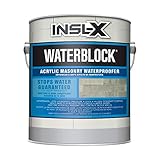
- 1) Water Based coating for sealing vertical interior and exterior concrete walls. Great for basement walls, foundations and retaining walls.
- Fast Drying waterproof paint for interior/exterior basement walls, cinder blocks, stucco and brick, and masonry.
- High alkali resistance – up to pH-13.
- Waterproofing paint keeps basement walls dry
- Paint only when surface and air temperatures are between 50 ° (10 °C) and 90 °F (32.2 °C).
Who will own the warranty paperwork?
Assign responsibility for product records, batch numbers, preparation logs, mock-up approval, inspection reports and transfer documents. If the building changes hands, those records can be as important as the coating invoice.
What maintenance is still required?
Plan periodic visual inspections and gentle cleaning suited to the coating and substrate. Check high-splash areas, parapets, joints, penetrations and repaired sections first. Early correction of leaks or damaged sealants prevents a color-retention warranty from becoming a substitute for building-envelope maintenance.
What this project proves—and what it does not
The FRSA headquarters account shows a practical, coordinated way to use durable exterior finishes: factory-finished metal components for the roof and gutters, a field-applied PVDF-resin coating for stucco and trim, documented preparation, mock-ups and inspections. It also shows why the owner considered color retention and repainting labor when planning the building’s long-term appearance.
It does not provide a controlled comparison against other coating systems, an independently verified savings study or a universal service-life prediction. The reported warranty, chemistry benefits and savings estimate should therefore be carried into a new project only after the current documents, substrate conditions and installer qualifications have been reviewed.
The Bottom Line
The durable choice is not simply “the strongest paint.” It is a coating system matched to each substrate, applied after disciplined evaluation and preparation, then documented and maintained. The FRSA headquarters project’s split between factory-finished metal and field-applied stucco coating, together with mock-ups and inspections, is the part most building owners can reuse.
Quick Recap
Product prices and availability are accurate as of the date/time indicated and are subject to change. Any price and availability information displayed on Amazon at the time of purchase will apply.

