PC Slower Than It Used to Be?
A free scan shows the junk files, broken settings and background clutter dragging Windows down - then fixes them in one click.Free scan · Windows 10 & 11Outdated Drivers Are Slowing You Down
One free scan finds every outdated or missing driver and matches the right update for your exact hardware.Free scan · exact hardware matchSometimes. In England, wall-mounted photovoltaic (PV) panels may qualify as permitted development on a house, block of flats or a building within its curtilage, but only when the relevant General Permitted Development Order (GPDO) limits and conditions are met. Heritage designations and some highway-facing walls remove that right. Regardless of planning status, every PV installation must comply with Building Regulations and be notified to Building Control. A system connected in parallel with the public electricity network also needs the correct Distribution Network Operator (DNO) approval or notification before it is energised or exports power.
This is an England-only guide. Wales, Scotland and Northern Ireland operate separate planning and building-control regimes.
As an Amazon Associate I earn from qualifying purchases.
Three separate approvals govern a solar facade
“Planning permission,” “building-regulations approval” and “electrical approval” describe different decisions. Passing one does not satisfy the others.
Free tools Windows power users keep installed
One-click scans. No signup required.
| Question | Authority or process | What it controls |
|---|---|---|
| Can the panels be installed in this location and form? | Local planning authority (LPA), using the GPDO or a planning application | Appearance, projection, height, heritage designations, highway-facing walls and local restrictions |
| Is the building work safe and compliant? | Local-authority Building Control or a competent-person route | Structure, fire safety and electrical installation requirements under the Building Regulations |
| May the generator operate in parallel with the public network? | Your DNO, through the applicable connection procedure | Network protection, export limits and technical connection conditions |
A wall array can therefore be permitted development yet still require Building Control notification and DNO acceptance. Conversely, obtaining planning permission does not authorise unsafe structural or electrical work.
#1 Best Overall

- [Bifacial Technology]This package contains the solar panel only. These 425W Bifacial solar panels feature a transparent backsheet design, allowing electricity generation from both the front and back, resulting in up to 25% increased efficiency compared to conventional solar panels.
- [N-Type 16BB Cells] Utilizing 16BB N-type solar cells, these solar panels offer superior efficiency and performance, significantly reducing the impact of shading compared to traditional 9BB and 10BB solar cells, ensuring reliable energy production.
- [Durable and Weather-Resistant] Built with black corrosion-resistant aluminum frame, the 425W solar panels withstand strong winds of 2400Pa and snow loads of 5400Pa. The IP65 junction box and IP68 connectors provide exceptional waterproof protection, making them ideal for outdoor use.
- [Easy Installation and Versatile Use] JJN 425 Watt Solar Panel features pre-drilled mounting holes, which enable straightforward installation and transport, suitable for a range of applications from residential rooftops to off-grid systems in RVs and boats.
- [Reliable after-sales Service] As a professional solar panel manufacturer, we provide an extra-long transferable power output warranty of 30 years. Whenever you encounter any problems, JJN Solar will provide you with professional and prompt customer service.
When a domestic wall installation can be permitted development
For a dwellinghouse, block of flats or a building within its curtilage, the domestic solar provisions in the GPDO allow certain microgeneration equipment without a full planning application. The conditions are measurable, so record dimensions and photographs before ordering equipment.
Projection from the wall
Under the cited domestic solar provision, equipment must not project more than 0.2 metres beyond the wall or roof plane. Measure the furthest part of the complete installation, including rails, brackets, frames and any edge trim—not just the module thickness. A design that exceeds the limit is outside that permitted-development condition and needs the LPA to determine the correct planning route.
Height and relationship to the building
The equipment must not exceed the height of the roof. Check the upper edge of the array, mounting frame and associated equipment against the roof’s highest point. Junctions with roofs, walls and other projections also have to meet the applicable GPDO wording; do not assume that a compliant panel thickness makes every bracket arrangement lawful.
Walls facing a highway in protected areas
In a conservation area or World Heritage Site, the domestic wall-mounted class excludes a wall that fronts a highway. “Fronts” is a location test, not a judgement about whether the panels are attractive. A side wall visible from a road may need a careful LPA assessment, while a rear wall may be treated differently. Ask the planning officer to confirm the status of the specific elevation in writing.
Rank #2

- 【UL Certified & 25% High Efficiency】UL61730 certified. A+ grade monocrystalline cells with 16BB, 182mm full-cell, EL tested.This 425W solar panel reduces power loss and delivers up to 25% efficiency for reliable, durable performance.
- 【Higher Power Density & Faster Payback】1.2W/ft² higher power density. Achieves 34-month payback, at least 2 months faster than same-size panels.
- 【Bifacial Power for Higher Output】 The dual-glass bifacial design captures sunlight from both the front and rear sides, delivering up to 30% more energy yield. This helps maximize overall efficiency and improve long-term energy savings.
- 【Heat Resistant & Long Lifespan for Steady Savings】 Loses only 0.16% efficiency per 1°F rise and delivers 2.4% more power than conventional panels in high heat.Built for a 30-year lifespan with low degradation and reliable long-term output.
- 【Versatile Solar Panel for Multiple Applications】 Ideal for rooftops, yards, farms, yachts, and carports. Delivers reliable off-grid power, emergency backup, and dependable year-round performance.
Listed buildings and scheduled monuments
Listed-building curtilage buildings and scheduled-monument sites are excluded from the cited domestic permitted-development class. Historic England states: “Consent is required for installing any type of photovoltaic (PV) installation on a listed building or scheduled monument.” That statement covers facade-integrated systems, surface-mounted modules and other PV types; it is not limited to roof panels.
Listed-building consent is a heritage consent, not a substitute for planning permission, Building Regulations compliance or DNO approval. Establish the building’s listing, the extent of its curtilage and any scheduled-monument boundary before developing the design.
Non-domestic facades and mixed-use buildings
Commercial, industrial and other non-domestic premises do not automatically use the same domestic Class A rights. Separate Part 14 GPDO classes and prior-approval procedures can apply, with different limits and conditions. A block containing flats, shops or communal areas may also raise questions about whether the proposal is treated as domestic, non-domestic or a combination.
Give the LPA a written description that identifies the building use, ownership, wall elevation, dimensions, mounting method and electrical equipment. Request a written view on whether permitted development, prior approval or a full planning application is required. Do not rely on an installer’s generic statement that “solar is permitted development.”
Rank #3
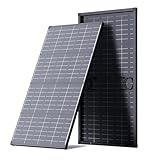
- 【No More Shutdowns from Partial Shade】While ordinary panels can shut down completely from partial shade, the Callsun 215W anti-shading solar panel features 4 independent power zones. If shade covers any zone, the remaining modules continue running at full voltage. This independent design retains up to 75% more power compared to standard panels, ensuring steady all-day energy whether you're RVing under trees, dealing with mast shadows, or camping by mountain ridges.
- 【Stable Vmp & Extended Life】When partially shaded, most solar panels suffer a Vmp drop that forces MPPT restarts, creating hot spots and stress. Callsun’s 4-modules design with multiple bypass diodes keep Vmp unchanged even with one Zone covered—no restarts, no stress, just years of reliable service.
- 【Bifacial Technology, Catches Extra Power】 Callsun 215W bifacial solar panel captures reflected light (from snow, sand, or white roofs) on its backside to generate up to 7-30% more energy daily. Make your RV/rooftop/marine space work harder and earn more.
- 【Over 25% High Conversion Efficiency】Built with premium A+ N-Type 16BB cells, it outperforms traditional panels with higher power output and exceptional stability. Its superior low-light performance ensures you harvest energy longer, for a steady and dependable power supply.
- 【Perfectly suited for 12V systems】 Callsun 215W Solar Panel (Vmp 17.37V, Voc 20.41V) is ideal for 12V battery system and seamlessly compatible with portable power stations such as the Jackery Explorer 1000 plus and Explorer 5000 plus, the Bluetti ELITE 100 V2, ELITE 200 V2, AC200L, AC300, and AC500, as well as the Ecoflow Delta pro, Delta 2, Delta 2 Max, DELTA 3, Delta 3 Plus, Delta pro 3, RIVER 2 pro, and River 2 Max.
Heritage and local restrictions to check before design
- Confirm the national designation. Check whether the main building or any building in its curtilage is listed, and whether the site lies within a scheduled monument.
- Map local designations. Verify conservation-area and World Heritage Site boundaries, then identify whether the proposed wall fronts a highway.
- Check for an Article 4 direction. A local direction can remove otherwise available permitted-development rights. Ask the LPA whether one affects the address or elevation.
- Discuss heritage impact early. Provide panel layout, colour, frame, cable routes, fixings, visibility from public viewpoints and a method for making good the wall.
Historic England’s guidance, created on 25 March 2024, treats PV as building work that must satisfy both heritage-consent rules and Building Regulations. A heritage officer may ask for reversible fixings, concealed cabling, a different elevation or a less visually prominent arrangement; those design requests do not remove the need to deal with structure, fire and electrical safety.
Building Regulations: the approval that still applies without planning permission
Historic England states: “All PV installations must comply with Building Regulations and your local authority Building Control team will need to be notified.” This remains true when the panels fall within permitted development.
Part A: structural safety
Part A issues include the wall’s ability to carry the dead load and resist wind actions transmitted through rails, anchors and fixings. A facade survey should identify masonry condition, cladding build-up, insulation, cavities, corrosion, cracking and any weak substrate. The engineer or installer should specify anchor type, spacing, edge distances, waterproofing details and access for future inspection. Do not drill into a listed or fragile facade until the heritage and structural approach has been agreed.
Recommended Free Tools
Part B: fire safety
Part B considerations can include fire spread, cavity barriers, routes across compartment walls, the position of inverters and isolators, and safe access for firefighters and maintenance staff. The exact solution depends on the building construction and use. A domestic facade and a multi-storey block with occupied flats are not equivalent fire-risk situations; Building Control should confirm the required evidence.
Rank #4

- ShadowFlux Anti-Shading Technology - Renogy shadowflux technology delivers enhanced power generation even in shaded areas caused by buildings, plants, or stains. This solar panel innovative ShadowFlux anti-shading tech significantly reduces hot-spot risks, ensuring reliable power output and peace of mind.
- Unmatched Cell Efficiency - Featuring advanced N-Type solar cells with 16BB technology, this high-performance panel achieves 25% efficiency. The 200 watt solar panel enhances photoelectric conversion while reducing hot spots and micro-cracks, ensuring longer lifespan and superior performance.
- Compact and Lightweight Design - Renogy shadowflux 200w solar panel is 7% smaller and 10% more compact than PERC solar panels, making it an ideal choice for space-saving applications.
- Superior Environmental Endurance - With an ≥ IP67 rating, renogy solar panels are built to endure extreme weather conditions, from snow and rain to small hail. Its advanced encapsulation material enhances water vapor resistance, providing long-term durability.
- Long-Term Reliability - The shadowflux solar panel 200w is backed by a 5-year output warranty & material and workmanship commitment, complemented by a 25-year output ensuring 80% power output.
Part P: electrical safety
Part P covers electrical safety in dwellings. The PV design should address DC string wiring, polarity, isolation, earthing and bonding, AC protection, inverter location, cable protection and labelling. Use a qualified installer who can design, inspect and test the system and issue the relevant completion documentation. Keep the electrical installation certificate, inspection and testing results, inverter information, protective-device settings and PV commissioning records with the property documents.
Choosing the Building Control route
Ask Building Control whether the work requires a full plans application, a building notice or notification through a competent-person scheme. The correct route depends on the project, building type and scope of structural and electrical alterations. Obtain the answer before work starts; retroactive regularisation can be slower and more expensive than a properly documented notification.
DNO approval for grid-connected solar
A PV system that operates in parallel with the public network is a generation connection, even when most electricity is consumed on site. The DNO assesses the inverter, generator rating, protection settings and other technical characteristics.
The Tool Desk
Outbyte PC Repair FREERepair Windows errors before they cause bigger problemsFix Now →Outbyte Driver Updater FREEScan for outdated or missing drivers - takes under a minuteDriver Scan →G98 and G99 routes
National Grid explains that G98 and G99 routes depend on installation ratings and technical characteristics. The correct route is not chosen solely by the number of panels: inverter capability, phase arrangement, export-control equipment and the site’s existing connection can affect the application. Your installer should identify the route and submit the required information to the network operator serving the property.
Best Value
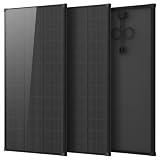
- 【25.6% High-Efficiency & Ultra-Stable Output】AeternaSol 200W solar panel, a premium n type solar panel with 18 BB Full-Welding Silver-Containing Busbars, boasting N-Type A+ Grade Cell, achieves a 25.6% high conversion efficiency. This 200 watt solar panel’s A+ grade monocrystalline silicon effectively reduces microcrack risks, while the 18BB busbars further cut down power loss—ensuring ultra-low degradation and prolonged service life. Note: The 200W rated power is measured under Standard Test Conditions (STC): 1000W/m² irradiance, 25°C, and 1.5 air mass. Real‑world output will vary due to panel angle, operating temperature, shading, wiring loss and connected‑device efficiency.
- 【IP68 Waterproof】Equipped with an exclusive IP68 Waterproof, our solar panels feature advanced potting technology that creates an impermeable seal to prevent water or steam from reaching internal wires. This design minimizes short-circuit risks to the greatest extent, effectively inhibits rust and corrosion, and ensures the solar panel maintains optimal performance even in harsh weather. The junction box’s excellent thermal conductivity enhances heat dissipation, further extending the lifespan of the entire 200 watt solar panel, which is essential for long-term use of solar panels for rv and outdoor applications.
- 【11 AWG 100% Oxygen-Free Copper Wire】Our 200w solar panel comes with 11 AWG 100% Oxygen-Free Copper Wire, which outperforms common copper-clad aluminum cables in conductivity and durability. This extra-thick oxygen-free copper wire can withstand up to 25A current, ensuring efficient power transmission—perfect for rv solar panel and solar panels for camping setups. Beyond the standard insulation layer, the wire is sheathed in a UV-resistant jacket, which significantly extends its lifespan compared to conventional alternatives, providing long-lasting reliability for solar panels for rv and other outdoor uses.
- 【Durable MC4 Connector for Stable Connection】The 200 watt solar panel is fitted with a durable MC4 connector, featuring galvanized copper pins encased in a larger PPO shell that outperforms aluminum-pin connectors with a higher current rating. This robust connector ensures stable power connection for the solar panel charger and compatible devices, while its sturdy PPO shell offers superior compatibility with other connectors on the market. Whether you’re expanding your solar system or replacing parts, this connector makes the 200w solar panel a flexible choice for any setup, including solar panel charger configurations.
- 【Sturdy Aluminum Alloy Frame】Crafted with a more durable aluminum alloy frame, our solar panel is sturdier than steel frames—retaining a sleek shine for years while resisting rust and corrosion. Additional frame sealant prevents air from corroding the monocrystalline cells, protecting the 200w solar panel (200 watt solar panel) from environmental damage, which is crucial for panel solar portatil and solar panels for camping that face frequent outdoor exposure. Pre-drilled holes on the frame ensure effortless installation, making this panel solar portatil easy to set up on RVs, campsites, or rooftops.
Apply or notify before energisation and export
Do not energise a new parallel-generation system or allow export until the applicable DNO process has been completed. Where acceptance is required, retain the DNO acceptance letter: National Grid describes it as confirmation that the equipment was approved to export electricity. A commissioning certificate from an installer is not a substitute for that network approval.
If the design changes after submission—such as a larger inverter, altered phase connection or different export-control settings—ask the DNO whether a revised application is needed. Keep the submitted design, approval correspondence and final commissioning data together.
Independent reader supportYour contribution helps us test, update, and keep practical guides available for everyone.Facade PV options and the issues each creates
| Facade approach | Planning and heritage focus | Technical focus |
|---|---|---|
| Surface-mounted panels | Projection, visual prominence, highway-facing walls and listed-building consent | Wind loads, anchors, wall condition, drainage and maintenance access |
| Facade-integrated PV | Alteration of the external appearance, detailing at openings and heritage reversibility | Waterproofing, fire performance, thermal movement, replacement of damaged modules and cable routes |
| Solar cladding | Whether the cladding change needs planning or prior approval, especially on protected elevations | Substructure, cavity barriers, fire classification, shading, ventilation and whole-life maintenance |
All three approaches still require a lawful planning route, Building Regulations compliance and DNO treatment where connected to the network. A visually discreet system is not automatically exempt, and a system with no export is not automatically free of electrical or building-control duties.
What’s actually slowing this PC down?
Pick the symptom - the matching free tool is one click away.
Step-by-step approval sequence
- Classify the project. Record whether it is a single dwelling, block of flats, a building within a dwelling’s curtilage or a non-domestic premises.
- Survey the elevation. Measure projection, overall height, distance to roof edges and openings, and whether the wall fronts a highway. Photograph the wall and note its construction.
- Check restrictions. Confirm listed-building, scheduled-monument, conservation-area and World Heritage Site status with the LPA. Ask about Article 4 directions and obtain written advice where the classification is uncertain.
- Choose the planning route. If every GPDO condition is met, retain the drawings and evidence supporting permitted development. If a condition fails or the site is protected, seek the required planning or heritage consent before ordering materials.
- Resolve Building Control. Submit the required application or notice, or confirm the competent-person notification route. Address Part A structure, Part B fire safety and Part P electrical safety.
- Complete a documented design. Have a competent installer or engineer specify fixings, cable routes, isolation, protection, inverter location, labels and emergency-shutdown information where applicable.
- Complete DNO procedures. Submit or notify through G98 or G99, as appropriate to the system’s ratings and technical characteristics, before energisation or export.
- Inspect, test and commission. Obtain the electrical installation certificate, PV commissioning records, Building Control completion evidence and any heritage or planning decision.
- Keep the project file. Store approved drawings, structural calculations, product information, test results, DNO acceptance and maintenance instructions. Give them to a future owner or building manager.
Common failure points and how to avoid them
- Assuming permitted development covers every wall. Measure the 0.2-metre projection and roof-height condition, then check protected-area and highway-facing-wall exclusions.
- Treating a listed building like an ordinary house. Obtain heritage advice and the required consent before fixing panels or cutting cable routes.
- Confusing planning with Building Control. Even a permitted-development array must be notified to Building Control and designed for structural, fire and electrical safety.
- Connecting before DNO clearance. Complete the relevant G98 or G99 process first and retain the acceptance document where issued.
- Using incomplete certification. Require design, inspection, testing and commissioning records, not just an invoice or a panel warranty.
- Ignoring future maintenance. Leave safe access to modules, isolators and inverters; record how a replacement panel can be installed without compromising the facade or fire measures.
Documents to request from your installer and authorities
- Scaled elevation drawings showing the complete projection and height.
- Wall-construction survey, fixing schedule and structural calculations where required.
- Fire-stopping and cavity-barrier details for the facade build-up.
- Electrical schematic, protection settings, isolation and earthing details.
- Electrical installation certificate and inspection/testing results.
- PV commissioning records, inverter data and operating instructions.
- Building Control notice, inspection record or completion certificate.
- Planning decision, permitted-development evidence or prior-approval correspondence.
- Listed-building or scheduled-monument consent where applicable.
- DNO G98 notification or G99 application and acceptance documentation.
What to verify before signing off the project
Ask the LPA to confirm the planning status of the exact wall, not merely the property postcode. Ask Building Control which approval route covers the structural and electrical work. Ask the installer to identify the DNO route from the final inverter and export-control specification. If any of those answers changes after a design revision, pause installation until the revised documents are checked.
Rules and technical procedures can change. Recheck the GPDO and Planning Portal guidance after legislative amendments, and confirm the current Building Regulations, BS 7671 edition and DNO procedure at the time of application.
Quick Recap
Product prices and availability are accurate as of the date/time indicated and are subject to change. Any price and availability information displayed on Amazon at the time of purchase will apply.

