Do these 3 things before closing this tab:
1Scan for outdated or missing drivers - takes under a minute2Clear out junk files and repair common Windows errors3Fix the driver behind crashes, sound loss and screen glitchesMadaeon’s VVD (Volumetric Visualization Device) is a genuine glasses-free 3D display, but it is an advanced experimental prototype—not a simple weekend project or a floating hologram. It projects thousands of rapidly changing 2D slices onto a thin translucent diffuser that physically moves through the display volume. Persistence of vision makes those slices appear as one three-dimensional object.
What makes the VVD genuinely 3D?
Unlike a conventional monitor, stereoscopic television, or VR headset, the VVD does not rely primarily on sending separate images to the viewer’s left and right eyes. Its image occupies a physical volume because a translucent film moves through space while the projector displays the appropriate image for each position.
As an Amazon Associate I earn from qualifying purchases.
That makes it a swept-volume display. The image is genuinely volumetric in the engineering sense, although it is not a free-floating hologram: light is scattered from the moving film.
The project is documented on Hackaday and on Madaeon’s project page. It is presented as an open-source working prototype, not as a current commercial kit.
#1 Best Overall

- 3 Highly Accurate Scientific Pipettors: 0.5-10ul; 10-100ul; 100-1000ul
- Large central pipetting button and separate ejection function
- Subjected to sterilization in the autoclave at 121°C (20 min), volume-change protection
- 4-Position volume display, which is always clearly visible
- With air displacement principle, tips ejector and disposal tips, this pipette is easy to operate for sampling and dispensing accurate liquid volumes
How Madaeon’s volumetric display works
- A 3D model is loaded. The software can work from model data such as an STL file.
- The model is sliced along the Z axis. Each slice becomes a separate two-dimensional image.
- A diffuser moves through the display volume. A thin translucent film travels up and down through the intended image area.
- The projector displays the matching slice. The projected pattern changes in step with the diffuser’s position.
- Persistence of vision integrates the sequence. When the cycle is fast and accurately synchronized, viewers perceive a continuous 3D object rather than separate images.
The essential trick is therefore not just fast projection or fast motion. The projector timing, diffuser position, image geometry, and mechanical movement must all agree. Any timing or alignment error can turn the object into a smear, distortion, or flickering collection of incomplete slices.
The main hardware
| Component | Purpose |
|---|---|
| Texas Instruments DLP LightCrafter module | Projects high-speed binary image patterns. |
| Thin translucent film or diffuser | Provides the physical surface that scatters the projected light. |
| Stepper motors | Move the diffuser through the Z axis. |
| Trinamic TMC1141 driver | Controls the motors and supports timing interfaces. |
| UDOO X86 or equivalent computer | Controls the projector, models, and display sequence. |
| Front-surface mirrors | Fold the optical path in the enclosed version. |
| Laser-cut or machined enclosure | Supports and protects the optical and mechanical assembly. |
| CAD, firmware, and fabrication files | Provide a starting point for reproduction. |
The Hackaday project page lists a bill of materials, CAD files, firmware, and machining-related information. Those files are useful, but their existence does not make the VVD a turnkey build. A reproducer still needs suitable high-speed projection hardware, fabrication capability, optical alignment skills, and a workable software setup.
Why the projector is the hardest part
A normal LCD or OLED panel is not a direct substitute. A volumetric display may need to project hundreds of depth slices during each visible 3D refresh cycle. The creator described the relevant LightCrafter configuration as capable of approximately 4,000 binary patterns per second. That figure refers to rapidly displayed patterns, not necessarily full-color volumetric frames.
For perspective, a system showing 100 depth slices at 30 volumetric frames per second would require roughly 3,000 projected patterns per second before allowing for extra timing or color requirements. Later swept-volume research also describes systems using 192 slices at 15 volumetric frames per second, or 2,880 projected patterns per second. Those figures belong to the cited research systems and should not be treated as specifications for the VVD itself.
More slices can improve depth detail, but projector time must then be divided among more images. Color may require time or spatial multiplexing, reducing the available slice rate, brightness, or effective resolution. This is why high spatial resolution alone is not enough when selecting a replacement projector.
What image quality should you expect?
The original coverage described the VVD’s relevant configuration as approximately 608×684 resolution, monochrome, and 4,000 Hz binary-pattern operation. These are historical, attributed specifications for that projector arrangement—not a promise of modern full-color, high-refresh performance.
- Monochrome operation: The published demonstration was oriented toward clear volumetric forms rather than television-quality color.
- Limited animation: The system is better suited to still models and modest motion than smooth 24-frame-per-second volumetric cinema.
- Depth-versus-brightness trade-offs: More slices consume projector timing and can reduce brightness or refresh rate.
- Mechanical blur: Film flex, vibration, acceleration, and imperfect synchronization can soften the image.
- Viewing-angle variation: The object can be inspected from multiple directions, but brightness, occlusion, enclosure geometry, and alignment affect what each viewer sees.
- Not a complete light field: The system provides strong motion-parallax benefits, but it does not automatically reproduce every depth cue or viewing condition of a light-field or holographic display.
Is it suitable for construction and design visualization?
A volumetric display could be compelling for architecture, terrain, engineering, museum, and educational demonstrations. A project team might use a physical 3D display to discuss building massing, site context, mechanical forms, or topographical models with several people standing around the same object.
However, it should complement—not replace—drawings, BIM coordination, physical models, and conventional interactive visualization. The VVD prototype’s limited color, brightness, motion, and availability make it a demonstration platform rather than a dependable construction-office display system.
Rank #2

- 【MATERIAL SPECIFICATION: Solid 304 Grade Alloy】 Constructed from verified austenitic stainless steel meeting food contact standards for prolonged exposure without oxidation or pitting. Limits usage to dry or damp environments only; submersion in acidic liquids requires immediate drying to maintain structural integrity.
- 【FUNCTIONAL UTILITY: Precision Measuring Component】 Engineered scooping surface delivers consistent liquid volume retention for repetitive extraction cycles. Optimized for loose leaf varieties and ground preparations only. Does not retain heat beyond standard ambient temperatures during handling.
- 【SPATIAL FITMENT: Compact Desk Configuration】 Overall footprint measures eight point one by seven point one inches when assembled inside retail packaging. Designed specifically for standard countertop edges and portable travel cases only. Exceeds maximum clearance thresholds for narrow drawer compartments.
- 【SPATIAL FITMENT: Compact Desk Configuration】 Overall footprint measures eight point one by seven point one inches when assembled inside retail packaging. Designed specifically for standard countertop edges and portable travel cases only. Exceeds maximum clearance thresholds for narrow drawer compartments.
- 【STRUCTURAL INTEGRITY: Reinforced Lever Mechanism】 Interlocking clip design secures mesh filtration unit against slippage during continuous pouring sequences. Rated for repeated bending forces up to ten thousand cycles. Not compatible with brittle ceramic components subject to sudden impact fractures.
Can you build one today?
Technically, an experienced maker could attempt it. Practically, it is an advanced or expert-level project. The original estimate was under $1,000, but that was a historical parts estimate. It should not be treated as a reliable 2026 build budget.
The creator later indicated that the relevant LightCrafter model appeared to be discontinued and that newer alternatives might not provide equivalent speed without significantly greater expense. Used or surplus hardware could also be costly, uncertain, or unsuitable. Fabrication, shipping, mirrors, replacement parts, labor, and failed prototypes may not be included in the old estimate.
A realistic development path would be:
- Confirm the availability and technical compatibility of a high-speed DLP module.
- Reproduce the frame and diffuser mechanism.
- Install the motors, driver, controller, and projector.
- Align the projector, mirrors, and moving film.
- Synchronize motor position with projector triggering.
- Test one static slice before attempting a complete object.
- Display a simple geometric model and calibrate its Z position.
- Add automatic model slicing and more complex geometry.
- Enclose and reinforce the mechanism after the optical system works.
This is a practical roadmap, not a creator-validated beginner assembly manual. The published material does not establish a current plug-and-play software package, a complete beginner guide, or guaranteed compatibility with modern replacement hardware.
Common failure modes
The image looks like a vertical smear
Check projector triggering, motor timing, diffuser speed, timing offsets, film wobble, and mechanical vibration. A small synchronization error can distribute each slice over the wrong physical position.
The object is stretched or compressed vertically
The diffuser’s movement may be nonlinear, especially while accelerating or decelerating. Motor position must be mapped to actual Z position, and the projection geometry must be calibrated to the film’s real location.
The display flickers or contains gaps
Possible causes include too few slices, insufficient brightness, incorrect binary-pattern timing, a trigger mismatch, or an overly ambitious color or depth configuration.
The system is noisy or vibrates
Loose mounts, resonance, an unbalanced mechanism, and rapid motor reversals can affect both image quality and component life. Mechanical rigidity matters as much as software.
Windows Errors? Fix Them Before They Spread
Repair common Windows errors and clear accumulated junk for a smoother, more stable PC - no reinstall needed.Free scan · no reinstallOutdated Drivers Are Slowing You Down
One free scan finds every outdated or missing driver and matches the right update for your exact hardware.Free scan · exact hardware matchThe diffuser mechanism wears out
The creator has noted that rubber bands in the oscillating mechanism may need replacement after extended use. This is an important reminder that the VVD is a high-cycle mechanical device, not only an optics experiment.
Rank #3
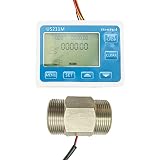
- Ultra-thin design, flexible installation: suitable for a variety of models of assembly, easy to use.
- The large white backlit LCD screen: beautiful, generous, to realize digital.
- The use of ultra wide range of external power supply: to make it more widely used, more energy and a variety of models to connect.
Safety considerations
The VVD should be treated as experimental maker equipment, not a certified consumer appliance. Moving parts create pinch and entanglement hazards. The enclosure should contain the mechanism securely and keep children, loose clothing, and fingers away from the moving film and drive system.
Builders should also account for power supplies, heat, electrical insulation, intense projected light, and any laser or high-intensity optical components used by a particular projector. Do not look directly into intense optical sources, and do not operate an unfinished mechanism where a failed part could become a projectile.
DIY VVD compared with other 3D displays
| Display type | Glasses | Physical depth | Main limitation |
|---|---|---|---|
| Conventional monitor | No | No | Flat image |
| Stereoscopic 3D monitor | Often | Perceived only | Viewing zone and eye-separation limitations |
| VR headset | Yes | Perceived only | Head-mounted and isolating |
| Light-field display | Usually no | Directional light field | Cost and computational complexity |
| Swept-volume display | No | Yes | Mechanical complexity and projector speed |
| 3D LED or hologram fan | No | Usually no | Not equivalent to a volumetric display |
Calling the VVD “true 3D” is reasonable only if the term is qualified. It creates imagery distributed through a real volume, but it is not a perfect hologram and does not eliminate limitations involving brightness, color, occlusion, resolution, or viewing envelope.
Commercial alternatives
For readers who need a functioning product rather than an engineering project, Voxon’s current product information lists the Voxon VX2 at US$6,800, excluding shipping, taxes, and import duties, with an estimated 10–12 week lead time. Voxon describes it as using a high-speed rotating LED array and a commercial volumetric graphics engine.
Voxon also presents the VX2-XL for larger museum, education, entertainment, and corporate applications, but the cited information directs prospective buyers to contact sales rather than publishing a standard price.
The VX2 is not a replacement for the VVD if the goal is learning how to design the mechanics, optics, and synchronization. It is the more sensible route for an organization that needs a finished volumetric display and can justify the cost.
Verdict
Madaeon’s VVD proves that a glasses-free, genuinely volumetric display can be built outside a major corporation. Its impressive effect comes from precise coordination between a moving translucent surface, high-speed DLP patterns, 3D slicing software, and mechanical synchronization.
Recommended Free Tools
That achievement should not be confused with an inexpensive consumer kit. The project is best understood as an advanced open-hardware prototype. It is a worthwhile reference for display engineers, technically capable makers, educators, and researchers—but anyone considering a reproduction should investigate projector availability first and budget for substantial mechanical, optical, and software work.
Quick Recap
Product prices and availability are accurate as of the date/time indicated and are subject to change. Any price and availability information displayed on Amazon at the time of purchase will apply.

