Recommended Free Tools
Data-centre growth can be reconciled with reliable, lower-emissions construction, but not with a single technology or a promise that every new workload will be “renewable”. The workable approach is a package: reduce electricity needed for each digital service, design facilities that can respond to grid conditions, connect them where capacity and water are genuinely available, and add enough low-emissions generation, storage and transmission to serve the remaining load. The right balance is site-specific, so a global forecast cannot substitute for a local power, water and construction assessment.
How large is the energy challenge?
The International Energy Agency (IEA) estimates that data centres used around 415 TWh of electricity globally in 2024, approximately 1.5% of worldwide electricity consumption. In its 2025 Base Case, consumption reaches about 945 TWh in 2030, just under 3% of global electricity use. That is an average growth rate of roughly 15% a year between 2024 and 2030. These are scenario results, not guaranteed totals: the outcome changes with artificial-intelligence adoption, efficiency improvements, grid connections and other infrastructure constraints.
As an Amazon Associate I earn from qualifying purchases.
| Measure | IEA figure and scope | What it means for a project |
|---|---|---|
| Data-centre electricity consumption, 2024 | About 415 TWh globally; IEA 2025 estimate | A baseline for all workloads and facility services, not AI training alone |
| Data-centre electricity consumption, 2030 | About 945 TWh in the IEA Base Case | A scenario that depends on adoption, efficiency and energy-system capacity |
| Average annual demand growth, 2024–2030 | About 15% in the Base Case | Interconnection and equipment schedules must allow for rapid load growth |
| High Efficiency Case | More than 15% lower energy use by 2035 than the Base Case pathway | Software, hardware and infrastructure efficiency can materially change requirements |
| Share of global electricity generation | About 1% today and 3% in 2030 in the IEA supply analysis | A small global share can still create a major local connection problem |
Consumption and generation are different accounting boundaries. The 415 TWh and 945 TWh figures describe electricity used by data centres. Supply projections describe the generation mix serving that demand. They should not be added together or treated as interchangeable.
AI drives growth, but it is not the whole story
Accelerated servers, mainly associated with AI, account for almost half of the net increase in data-centre electricity consumption through 2030 in the IEA Base Case. Conventional servers, storage and networking, cooling, power conversion and other building infrastructure supply the rest. Treating the entire increase as AI-training electricity hides the design work required for ordinary cloud services and facility systems.
#1 Best Overall

- Ventilation Fan: Designed to quietly ASUS GT/RT- AC5300 , cool Xboxs, CPU/ GPU, Playtations, Rokus, TVs, receivers, mondems, routers, DVRs, window fans ,network appliances, DIY aquarium cooling and other audio video electronics
- Variable Speed Control: 110V - 220V Fan power supply with speed control function, turn the knob to adjust the speed, 4V - 12V adjustable fan speed,and can turn off the fan . | Input: 100V - 240V 50/60Hz | Output: DC 3-12V 200-2000ma
- DIY Vertical Window Fan: Can both vertical and horizontal, provide efficient cooling and ventilation. Mining rigs rely on the cooling power of fans for optimal operation.Double Metal Protective, the fan is equipped with double metal protective net
- Easy to Install: Draw out air in refrigerators, provide ventilation in greenhouses, prevent amplifier overheating, and vent hot air from living room consoles like PS4. Y cable connects 2 fans, two fans can be 42cm/16.5 in far away from each other
- Dual Ball Bearing: 240mm x 240mm x 25mm / 9.45in(L) x 4.72in(W) x 1in(H) in in total. | Rated Voltage :12V | Rated Current: 0.93A at full speed | Airflow: (82CFM)x4 at 12V | Speed: 2500 RPMx4
“Understanding the pace and scale of accelerator adoption is critical, as it will be a key determinant of future electricity demand.”
International Energy Agency, Energy and AI, “Energy demand from AI”, 2025
For a construction team, the implication is straightforward: obtain a workload profile rather than relying on a single headline load. Ask how much of the facility will be accelerator-based, how quickly racks will be added, which loads can be curtailed, and which services require continuous operation. Those answers affect substations, generators, cooling plant, floor loading, cable routes and the size of future expansion space.
Free tools Windows power users keep installed
One-click scans. No signup required.
What will supply the additional electricity?
The IEA’s 2025 supply analysis makes the trade-off explicit. Renewables are the fastest-growing source and are projected to grow by an average of 22% a year from 2024 to 2030, meeting nearly half of additional data-centre electricity demand. Natural gas and coal together still provide more than 40% of the additional demand in that analysis. The proportions vary by region, grid and project timing.
Rank #2
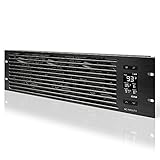
- An intelligent fan system designed for cooling audio video, DJ, server, network, and IT equipment racks.
- Protects rack-mount equipment from overheating, performance issues, and shortened lifespans.
- Programmable thermostat controller with automated speed control, alarm warnings, and backup memory.
- Premium anodized aluminum construction with CNC-machined detailing for a professional appearance.
- Size: 3U Rack Space | Design: Intake | Airflow: 60 to 300 CFM | Noise: 12 to 38 dBA | Bearings: Dual Ball
A contract for renewable electricity is not the same thing as every physical electron entering a building being renewable. Corporate procurement can support new generation or match consumption over a defined period, while the local grid continues to operate with its actual, time-varying mix. A credible planning document states both: the physical supply serving the site and the contractual instruments used to procure electricity.
| IEA climate or supply result | Scope and qualification |
|---|---|
| Nearly half of added demand | Renewables meet nearly half of additional data-centre electricity demand through 2030 in the supply analysis |
| More than 40% of added demand | Natural gas and coal together meet more than 40% of additional demand through 2030 in that same analysis |
| Current indirect emissions | About 180 Mt CO₂ from data-centre electricity consumption today, excluding backup generation |
| 2030 generation emissions | About 320 Mt CO₂ in the IEA Base Case |
| 2035 generation emissions | A shallow decline to about 300 Mt CO₂ in the Base Case |
The emissions figures are IEA estimates and scenario outputs, not universal measurements of every facility. A project’s result depends on its location, operating hours, grid mix, contracted supply and backup arrangements.
Four construction levers that work together
1. Choose the grid connection and site before finalising the building
Grid capacity is a physical constraint, not an administrative detail. During site selection, establish the available connection capacity, reinforcement requirements, queue position, expected energisation date and the generation mix in the relevant power system. A site with abundant renewable generation may still need transmission upgrades or firm capacity for periods of low wind and sunlight. Conversely, a site near a strong grid may have a more carbon-intensive marginal supply.
Include water availability and discharge rules in the same decision. Cooling demand, drought risk, competing users and the carbon intensity of water services can differ sharply between regions. A global electricity percentage cannot tell a community what a particular facility will consume or when local reinforcement will be needed.
Rank #3

- [Adjustable] Adjustable temperature control helps ensure optimal performance for your rackmount such as network, server, music, and AV cabinets
- [Quiet and powerful] Equipped with three powerful 4” (120mm) noise control ball bearing fans capable of pumping 225 CFM of air, preventing overheating of expensive equipment
- [Optimal Airflow] This three fan cooling system will provide excellent cooling with its high-performance fans, which keep the hot air stream away from your setup with its top exhaust cool air system.
- [Compact Design] Device is standardized to mount to any 19" server rack or cabinet while taking only a single unit (1U) of space and has a wide variety of applications.
- [Programmable] Equipped with a programmable thermostat sensor controller for better temperature monitoring that will trigger fans based on your parameter configuration.
2. Reduce electricity per unit of digital service
The IEA High Efficiency Case shows the scale of the opportunity: stronger progress across software, hardware and infrastructure produces more than 15% energy savings by 2035 relative to the Base Case pathway. Efficiency does not guarantee a fall in total consumption; demand can grow faster than the savings. It does reduce the power, cooling and generation required for a given workload.
Design reviews should therefore track useful service delivered per unit of electricity, not only the building’s total annual kWh. Specify efficient servers and power-conversion equipment, eliminate stranded capacity, use software that avoids unnecessary computation, and plan incremental fit-outs so unused halls are not cooled and powered prematurely. Require measured performance after commissioning rather than accepting design assumptions as permanent results.
3. Treat cooling, water and heat as infrastructure choices
Cooling is part of the facility’s energy demand and can be a significant local environmental issue. The European Commission identifies cooling-water and emissions impacts in its data-centre work. The IEA 4E programme identifies water efficiency and provision of waste heat for reuse as potential wider-system contributions. Neither source establishes one cooling method as best at every site.
Quick wins for a faster PC:
Scan for outdated or missing drivers - takes under a minuteDriver Scan →Clear out junk files and repair common Windows errorsFree Scan →Compare options against the local climate, water stress, humidity, heat-rejection method, maintenance needs and available users for recovered heat. A heat-reuse scheme is only valuable when a nearby demand exists at a useful temperature and the connection can be built and operated reliably. Record water withdrawals, consumption, discharge and seasonal limits with the same discipline used for electrical loads.
Rank #4

- Adjustable temperature control helps ensure optimal performance for rackmount such as network, server, music, and AV cabinets
- Noise controlled fans makes the cooling system useful for a quiet office or business space
- Compact design mounts to any 19" inch cabinet and takes up only 1 unit of space
- Simple and easy to use LCD display allows user to control temperature
- Air pumped through to the top exhaust system of the fan
4. Make the facility flexible without compromising critical services
The European Commission says sustainable, flexible facilities that adjust electricity use to grid conditions can lower system costs, improve stability and help integrate variable renewable energy. Flexibility depends on the workload and the reliability requirement. Some batch processing, model training, backups or non-urgent data movement may shift in time; latency-sensitive services and safety systems generally cannot.
During design, separate critical, deferrable and interruptible loads. Provide controls that can respond to agreed grid signals, and coordinate batteries, thermal storage, on-site generation and workload orchestration. Flexibility is not a substitute for firm power: it reduces peaks and improves system operation, but continuous services still need dependable supply.
How to turn the principles into a build plan
- Define the measurement boundary. State whether each number covers IT equipment only, the whole facility, backup generation, water services or upstream electricity emissions. Set a common time period and operating scenario.
- Model the workload. Separate accelerated computing, conventional servers, storage, networking and non-IT systems. Show expected rack additions, utilisation, redundancy and seasonal operation.
- Test several connection locations. Obtain written information on grid capacity, reinforcement works, connection dates, curtailment rules and the physical generation mix. Do not treat a renewable contract as proof of local renewable supply.
- Design for staged expansion. Size rooms, cable paths, cooling distribution and substations for the confirmed phases, with safeguarded routes for later growth. Avoid installing and conditioning capacity that will remain idle.
- Compare cooling and water options. Quantify electricity, water withdrawal and consumption, discharge, maintenance and heat-reuse potential for the actual climate and operating profile.
- Specify controls and flexibility. Identify which loads can move, the maximum interruption acceptable, required response times and the controls that will verify performance.
- Commission and report. Test electrical, cooling and control systems under representative loads. Continue reporting energy performance after handover so design claims can be compared with operation.
A decision framework for competing proposals
Use the following questions instead of labelling a proposal simply “green”. The evidence should cover the same workload, boundary and operating period for every option.
Do these 3 things before closing this tab:
1Repair Windows errors before they cause bigger problems2Scan for outdated or missing drivers - takes under a minute3Clear out junk files and repair common Windows errors| Comparison axis | Questions to ask | Evidence to require |
|---|---|---|
| Energy efficiency | How much electricity delivers the same computing service? | Measured or modelled energy per comparable workload, with assumptions |
| Carbon intensity | What physical electricity mix serves the site by time of day and season? | Grid data plus a separate description of contractual procurement |
| Reliability and flexibility | Which loads can shift or reduce, and what happens during an event? | Load hierarchy, controls test and resilience requirements |
| Water and heat | What are withdrawal, consumption, discharge and reuse conditions? | Site-specific water balance and heat-reuse feasibility |
| Time and location | Can the grid, plant and transmission arrive before the workload? | Connection milestones, permits, construction schedule and contingency |
| Evidence and reporting | Are projections separated from measured operating results? | Defined boundaries, regular reports and independent verification where required |
Current evidence does not establish a universal cost, water-use figure or lifecycle-emissions ranking for every technology or facility. Those comparisons require a named site, workload, design and consistent measurement boundary.
Best Value
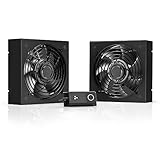
- A quiet fan kit designed for standard 19” racks, to be mounted on the roof or to replace existing fans.
- Features a speed controller utilizing PWM which can control the fan's speed without generating noise.
- Compatible with CLOUDPLATE series rack fans and can be linked to share the same programming.
- Heavy-Duty steel construction with spiral fan guards, mounting hardware, and power adapter.
- Size: Standard 120mm Rack Fans | Fans: 2 | Airflow 200 CFM | Noise: 26 dBA | Bearings: Dual Ball
What European reporting rules can and cannot do
The European Commission describes monitoring and reporting obligations for data-centre energy performance under the EU Energy Efficiency Directive. These obligations improve visibility and make facilities more comparable. Reporting alone does not guarantee lower consumption: it must be paired with design changes, operational controls, procurement decisions and follow-up action.
For projects in Europe, assign responsibility for collecting the required data during design rather than after completion. Meter the major electrical and cooling systems, preserve the definitions used in reports, and make the data usable for future refurbishments and grid-response programmes. Projects elsewhere should check their own national and network requirements; the EU framework is not automatically applicable worldwide.
Common mistakes to avoid
- Using one global forecast as a local impact assessment. Local grid congestion, water stress and generation mix determine the effects of a particular site.
- Calling all growth “AI energy”. Accelerated servers are a major driver, but conventional IT, cooling and other infrastructure also contribute.
- Counting a contract as physical supply. Report procurement claims separately from the electricity physically delivered by the grid.
- Assuming efficiency will reduce total demand. Efficiency lowers energy per service; expanding workloads can still raise the facility’s absolute consumption.
- Choosing a technology before defining the boundary. A cooling or generation comparison is meaningless if one option includes backup power, water services or transmission and another does not.
- Promising flexibility without identifying movable loads. Reliability obligations and workload latency determine what can actually shift.
- Treating reporting as the solution. Measurement is necessary for accountability, but it does not by itself cut electricity, water or emissions.
The practical answer
Squaring data-centre growth with energy and climate limits is an ongoing engineering and planning exercise. Efficiency can moderate the electricity needed for each service; flexible operation can reduce peaks and help integrate variable renewables; grid investment and additional generation provide the capacity that efficiency cannot remove. Construction decisions determine whether those measures are possible at a particular site, through the choice of location, connection, cooling system, metering, controls and expansion strategy.
Crashes, No Sound, or Screen Glitches?
Random freezes, missing sound and display glitches usually trace back to one bad driver. Find and replace yours safely.Free scan · under a minuteWindows Errors? Fix Them Before They Spread
Repair common Windows errors and clear accumulated junk for a smoother, more stable PC - no reinstall needed.Free scan · no reinstallThe defensible project claim is therefore conditional: a facility can reduce its energy and emissions impacts when it demonstrates efficient operation, reports the physical and contractual supply separately, protects local water resources, and aligns its growth with grid capacity. No global scenario can certify that result in advance; it must be designed, measured and verified at the site.
Quick Recap
Product prices and availability are accurate as of the date/time indicated and are subject to change. Any price and availability information displayed on Amazon at the time of purchase will apply.

