Windows Errors? Fix Them Before They Spread
Repair common Windows errors and clear accumulated junk for a smoother, more stable PC - no reinstall needed.Free scan · no reinstallCrashes, No Sound, or Screen Glitches?
Random freezes, missing sound and display glitches usually trace back to one bad driver. Find and replace yours safely.Free scan · under a minuteThe most transferable construction-safety practices are visible leadership, worker participation, hazard-specific training, disciplined subcontractor controls and regular feedback. OSHA case studies of DesCor Builders, Pepper Construction and McCarthy’s Omaha VA Ambulatory Care Center show three different ways to make those practices operational: use consultation and corrective action to improve a program, make safety performance part of contractor selection, and build safety into project onboarding and daily coordination.
These are examples to adapt—not a ranking and not proof that one intervention caused a particular injury result. Your legal duties still depend on the work, location, contracts and applicable OSHA or state-plan requirements.


As an Amazon Associate I earn from qualifying purchases.
What safety practices do construction companies use?
Effective programs connect management decisions with what crews actually do. OSHA’s recommended construction-safety framework has six mutually reinforcing parts:
- Leadership commitment and employee participation: executives set expectations, provide resources and spend time where work occurs; workers can report hazards, stop unsafe work and help design controls without retaliation.
- Hazard identification, prevention and control: teams find hazards before work starts, select controls in the right order and verify that controls remain effective as conditions change.
- Education and training: workers learn to recognize the hazards in their tasks and to use equipment and protective systems correctly.
- Program evaluation and improvement: inspections, leading indicators, incident reviews and worker feedback drive documented changes.
- Communication and coordination on multiemployer sites: general contractors, subcontractors, staffing agencies, vendors and visitors receive the information they need, and their activities are planned so one crew does not create a hazard for another.
The three examples below emphasize different mechanisms within that framework. DesCor used consultation, correction and subcontractor participation; Pepper used procurement and prequalification; McCarthy’s Omaha project used structured onboarding, repeated training and coordinated communication.
#1 Best Overall
DesCor Builders: turn a consultation visit into a working system
What DesCor did
OSHA describes DesCor Builders working with Cal/OSHA consultation services. A site walk-through identified hazards, after which DesCor updated its safety and health programs and corrected the identified items. The company provided training on fall protection, silica and excavation, then established regional safety-manager meetings with subcontractors. OSHA says subcontractors attended the meetings and helped identify, mitigate and prevent hazards.
The useful pattern is not simply “invite a consultant.” It is a closed loop:
- Observe the work: conduct a walk-through that includes active tasks, access routes, material storage, temporary power, excavation edges and changing site conditions.
- Record specific deficiencies: identify the location, task, exposure, responsible employer and interim protection, rather than writing a broad note such as “improve fall safety.”
- Assign and verify corrections: give each item an owner and due date, then confirm in the field that the control is installed and usable.
- Rewrite the program: update procedures, pre-task planning forms and orientation content so the correction becomes normal practice instead of a one-time repair.
- Bring subcontractors into the prevention process: hold recurring regional or project meetings where contractors discuss upcoming work, interfaces and unresolved hazards.
Training tied to actual exposures
DesCor’s topics—falls, silica and excavation—cover three high-consequence construction exposures that require different controls. Fall-protection training should explain the system selected for the task, compatible anchorage, inspection, rescue planning and the limits of the equipment. Silica training should connect the material and tool to the chosen engineering or work-practice control, housekeeping method and respiratory-protection requirements. Excavation training should address soil and protective-system decisions, access, water, nearby loads, inspections and changing conditions. Generic annual slides cannot replace task-specific instruction.
Quick wins for a faster PC:
Repair Windows errors before they cause bigger problemsFix Now →Scan for outdated or missing drivers - takes under a minuteDriver Scan →Clear out junk files and repair common Windows errorsFree Scan →Historical outcome, with its limits
In OSHA’s 2019 DesCor case study, the company’s average DART rate was 0.62 versus a 2.0 national average, and its average total recordable case rate was 1.87 versus a 3.3 national average. Those figures cover the three-year period 2016–2018. They are historical case-study measures; they do not establish that any single DesCor practice caused the rates or predict another contractor’s results.
Pepper Construction: make safety performance part of contractor selection
What Pepper examined
OSHA’s Pepper Construction case describes management reviewing subcontractor experience modification rates (EMR), OSHA 300A data, job-safety performance and the historical performance of individual foremen on Pepper projects. Contractors were prequalified, and bids were withheld from contractors that did not meet safety-performance standards.
This is a procurement control: safety expectations are set before a crew arrives. It makes safety a condition of doing the work, not a promise made after award.
Build a fair, documented prequalification process
- Define the information required: request the relevant EMR period and jurisdiction, OSHA 300A summaries, recent serious incidents, citations, workers’ compensation information where lawful, written programs and references.
- Assess exposure and capability together: compare a contractor’s record with the type and risk of the proposed scope. A rate without context can mislead; a small firm may have few cases, while a high-hour firm may show more cases simply because it has more exposure.
- Review field leadership: ask who will supervise the work, examine foremen’s prior performance on comparable projects and verify that the named supervisor will actually be present.
- Set pass/fail and conditional criteria in advance: document which findings require rejection, which permit a corrective-action plan and who approves an exception.
- Carry requirements into the contract: include orientation, reporting, inspections, training records, stop-work authority, emergency procedures and meeting participation.
- Monitor after award: prequalification is not a substitute for field verification. Reassess when scope, supervision or performance changes.
Why one number is not enough
EMR and recordable-case data can inform a decision but cannot measure every leading indicator. Ask how the contractor identifies hazards, closes corrective actions, trains new hires, investigates near misses and coordinates with other employers. Confirm that the data covers the entity bidding, not an unrelated affiliate, and that dates and jurisdictions are clear. Apply the same written criteria consistently and allow a documented review process so commercial pressure does not quietly weaken the standard.
Dave Pepper, the owner quoted in OSHA’s case, summarized the desired behavior this way: "Our workers are looking after each other, watching out for hazards and eliminating them – and really caring for their fellow employees." A procurement rule is useful only when supervisors and workers are supported in acting on that expectation.
McCarthy’s Omaha VA Ambulatory Care Center: make onboarding and communication continuous
What the project emphasized
OSHA’s partnership account for McCarthy’s Omaha VA Ambulatory Care Center describes site safety orientations, new-employee training and instruction on respiratory protection, silica, electrical work, excavation and trenching, fall protection and struck-by hazards. It also emphasizes consistent communication, positive reinforcement and collaboration among contractors.
On a complex project, orientation is the first control, not the last. A person can understand the site rules at entry and still face a new hazard when a trade changes sequence, a lift path moves or an excavation opens.
Design a two-level onboarding process
- Site orientation: explain emergency contacts, access and egress, restricted areas, traffic routes, reporting channels, stop-work expectations, required personal protective equipment and how trades coordinate.
- Task and employer orientation: before the worker performs the assigned operation, cover the employer’s hazard analysis, equipment, procedures, competent-person contacts and required training.
- Verify understanding: use demonstrations, questions or a short practical check instead of relying only on a signature.
- Reorient when conditions change: repeat the relevant briefing after a transfer, extended absence, incident, major schedule change or introduction of a new process.
Use positive reinforcement without hiding problems
Recognition can reinforce reporting, good housekeeping, correct barricading and effective coordination. It should not reward crews for avoiding reports or discourage workers from stopping a task. Pair positive observations with a dependable correction process: document the concern, protect people immediately, assign responsibility and tell the reporting worker what changed.
Historical project result
OSHA’s McCarthy project case reports a zero total case rate over more than 500,000 work hours. The accessed case page does not state a publication date. Treat this as a historical project result, not a current company-wide rate and not evidence that one project practice guarantees the same outcome elsewhere.
How the three examples differ—and what to borrow
| Example | Primary mechanism | Who participates | Evidence described by OSHA | Adaptable practice |
|---|---|---|---|---|
| DesCor Builders | Consultation, hazard correction and recurring subcontractor meetings | Company safety staff, workers and subcontractors, with Cal/OSHA consultation involvement | Reported practices plus historical 2016–2018 rates in OSHA’s 2019 case | Close the loop from walk-through finding to program update, verified correction and shared learning |
| Pepper Construction | Prequalification and bid decisions based on safety performance | Management, estimating/procurement teams, subcontractor leadership and foremen | Reported management and procurement practices | Define safety criteria before bidding and keep the decision documented and consistent |
| McCarthy, Omaha VA project | Project orientation, new-employee training and continuous coordination | Project leadership, new hires, contractors and subcontractors | Reported project practices plus a historical result over more than 500,000 hours | Combine site orientation with task training, repeated communication and positive reinforcement |
No row is a ranking. The mechanisms can operate together: procurement selects capable partners, onboarding gives them a common baseline and consultation-style reviews keep controls working.
How can contractors improve jobsite safety?
Use the following implementation sequence on a new project or when an existing program is not producing reliable field behavior.
1. Write the commitment and resource it
Have top management state that production, cost and schedule decisions will account for safety. Name the person with authority to stop work, provide competent supervision, purchase controls and release workers for training. Publish the commitment to employees and relevant contractors, staffing agencies, vendors and visitors.
Recommended Free Tools
2. Plan hazards before mobilization
Review design and constructability decisions, estimates, bids, schedule compression, access, temporary works and trade interfaces. Ask what can be eliminated or engineered out before relying on administrative rules or personal protective equipment.
Rank #3
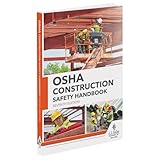
- 2024 OSHA Construction Safety Book is the seventh edition with the new OSHA HazCom final rule on 5/20/24. While the rule takes effect 7/19/24, the compliance dates don’t begin until 1/19/26 per 29 CFR 1910.1200(j).
- Construction Site Book offers quick access to essential OSHA regulations, jobsite hazards, and practical safety tips. It also helps employees identify hazards and prevent injuries and illnesses.
- Features easy-to-read format, full-color images, chapter quizzes with answer key, and comes in a compact size making it a convenient reference for employees.
- Critical topics include Confined Space Entry; Cranes & Derricks; Electrical Safety; Emergency Response; Ergonomics & Back Safety; Excavations; Fall Protection; First Aid & Bloodborne Pathogens; HazCom; Health & Wellness; Jobsite Exposures; Lockout/Tagout; Ladders & Stairways; Materials Handling/Storage; Motor Vehicles; PPE; Scaffolds; Site Safety & Security; Slips, Trips & Falls; Tool Safety; Welding, Cutting & Brazing; and Work Zone Safety.
- Specifications: 5 1/4” x 7 1/4", English, Soft bound. 7th Edition. Copyright 2024.
3. Prequalify and contract for behavior
Use the Pepper-style review of EMR, OSHA 300A data, job performance and foreman history as one part of a broader capability assessment. Put orientation, training, inspections, reporting, meeting attendance and corrective-action deadlines in the subcontract.
4. Orient every person and verify competence
Deliver the site briefing, then task-specific instruction. Keep a current roster of who has completed which training. Do not assign a worker to a ladder, scaffold, excavation, electrical task or fall-protection system until the required instruction and supervision are in place.
5. Run short, task-focused discussions
Schedule toolbox talks before the work they address. OSHA recommends regular talks and communication with the people affected by the work. NIOSH and CPWR’s construction toolbox-talk format includes a hazard explanation, real-life story, discussion questions, recap of safety points, illustration and key solutions. Use that structure, but replace generic examples with the day’s location, tools, materials and sequence.
Do these 3 things before closing this tab:
1Fix the driver behind crashes, sound loss and screen glitches2Clear out junk files and repair common Windows errors3Scan for outdated or missing drivers - takes under a minute6. Inspect, correct and learn
Combine planned inspections with worker observations and near-miss reports. Track open findings by age, risk and responsible employer. Review trends in leadership meetings and revise the program when a recurring condition reveals a planning or design problem.
How do construction companies keep subcontractors safe?
Safety responsibility remains with each employer for its employees, while the controlling or coordinating contractor must manage interfaces and communicate known hazards as required by applicable rules and contracts. Practical coordination includes:
- One site map and schedule: show haul routes, cranes, lifts, deliveries, laydown areas, energized systems, excavations and exclusion zones.
- Pre-task coordination: have affected trades discuss simultaneous operations, handoffs and what changes will trigger a new briefing.
- Shared reporting: provide a simple channel for hazards, near misses and stop-work actions; close the loop with the person who raised the issue.
- Common minimum rules: align expectations for fall protection, housekeeping, access, emergency response, substance impairment and required protective equipment.
- Competent-person contacts: identify who can make decisions for excavation, scaffolds, cranes, electrical work and other regulated activities.
- Verification: review subcontractor plans and records, then observe work in the field. Paper compliance cannot show whether a control is usable.
DesCor’s regional safety-manager meetings illustrate how subcontractors can be participants rather than recipients of instructions. Ask each trade to bring its next major task, highest-risk interface and an unresolved constraint.
What should a construction safety meeting cover?
A useful meeting is short enough to hold regularly and specific enough to change behavior. A 15- to 30-minute agenda can include:
- Today’s work: locations, crews, sequence and simultaneous operations.
- One priority hazard: explain the exposure and show where it exists.
- Control demonstration: inspect the guardrail, excavation protection, silica control, electrical lockout, traffic separation or other control that workers will use.
- Real event or near miss: discuss what happened, without turning the meeting into blame.
- Worker questions: ask what could make the task unsafe and what support is needed.
- Commitments: assign owners and due times for unresolved actions.
- Recap: have a worker restate the critical points and tell everyone how to report a new condition.
For ladders, OSHA’s basic training examples include maintaining three points of contact, placing the ladder on level footing, facing the ladder and avoiding overreach. These are discussion examples, not a substitute for the applicable standard, the manufacturer’s instructions or job-specific instruction.
Independent reader supportYour contribution helps us test, update, and keep practical guides available for everyone.Hazard-specific training that earns attention
Falls
Explain the selected system—guardrail, personal fall arrest, positioning or another permitted method—along with anchorage compatibility, inspection, swing-fall exposure, rescue and limits. A harness alone is not a complete fall-protection system.
Silica
Identify the silica-generating task, the engineering or work-practice control, housekeeping method, restricted areas and respiratory-protection requirements. Train workers to recognize when a control is not operating and who can stop the task.
Excavation and trenching
Cover protective systems, access, spoil and equipment setbacks, water, atmospheric concerns where relevant, inspections and the competent person’s authority. Reassess after rain, vibration, a change in depth or a nearby load.
What’s actually slowing this PC down?
Pick the symptom - the matching free tool is one click away.
Electrical work
Train affected workers on identification of energy sources, de-energization and verification, temporary power, ground-fault protection, approach boundaries and coordination with the qualified person.
Struck-by hazards
Plan vehicle and pedestrian separation, backing controls, suspended-load exclusion zones, spotter communication and material storage. Make the route visible and change it when the workface changes.
Measuring whether the program is working
Recordable rates are lagging measures. Pair them with leading indicators that show whether controls are being used:
- percentage of new workers completing orientation before starting;
- percentage of high-risk tasks with a current pre-task plan;
- inspection findings closed by their due date;
- worker hazard reports and the time to acknowledge and correct them;
- attendance and participation across subcontractors, not just the general contractor;
- observed use and condition of critical controls;
- repeat findings by location, employer or task;
- time between a schedule or design change and the associated safety review.
Interpret lagging data carefully. Rates vary with hours worked, workforce composition, reporting practices, jurisdiction and time period. DesCor’s 2016–2018 figures and the Omaha project’s more-than-500,000-hour result are useful context for those case studies, not universal benchmarks.
Free tools Windows power users keep installed
One-click scans. No signup required.
Common failure modes and practical fixes
Rules exist only in a binder
Symptom: workers cannot explain the control or find the responsible supervisor. Fix: demonstrate the control at the workface, ask workers to explain it back and verify it during inspections.
Orientation is treated as a one-time event
Symptom: a worker knows the site map but not the hazards created by today’s changed sequence. Fix: reorient after transfers, absences, incidents and major changes, and use pre-task talks for the immediate work.
Subcontractor selection relies on one score
Symptom: an acceptable EMR masks weak supervision or poor corrective-action performance. Fix: review multiple data sources, interview the proposed foreman and verify field capability.
Meetings discourage reporting
Symptom: attendance is high but workers stop raising near misses. Fix: recognize useful reports, prohibit retaliation, separate learning from blame and show what changed.
Equipment is purchased without a system review
Symptom: a harness, lanyard or anchorage is incompatible with the task or rescue plan. Fix: select compatible equipment for the worker, anchorage, clearance, environment and applicable requirements; train, inspect and replace it according to instructions. No single fall-protection kit suits every job.
A small contractor’s 30-day starting plan
- Days 1–5: walk one active site with workers and subcontractors; list the five highest-risk tasks and assign immediate controls.
- Days 6–10: update the written commitment, emergency contacts, orientation and core hazard procedures; identify competent persons and stop-work authority.
- Days 11–15: create a simple subcontractor prequalification checklist covering relevant experience, safety data, supervision, training and corrective-action history.
- Days 16–20: hold task-specific toolbox talks on falls, silica, excavation, electrical or struck-by hazards selected from the current work plan.
- Days 21–25: inspect controls with each trade, close findings and document worker suggestions.
- Days 26–30: review leading indicators and repeat findings with management; change the plan, schedule or resource allocation where the data shows a systemic problem.
The goal is a repeatable management cycle: decide what safe work requires, equip and train people, coordinate employers, observe performance, correct conditions and improve the system.
Frequently Asked Questions
Are the DesCor, Pepper and McCarthy examples proof that these practices caused better safety results?
No. OSHA presents the practices and, for DesCor and the Omaha project, historical outcome measures. The cases do not isolate one intervention or establish causation, so use them as adaptable examples rather than guarantees.
What should a general contractor request before awarding work to a subcontractor?
Request relevant EMR and OSHA 300A information, recent safety performance, written programs, training and corrective-action records, references and the identity and history of the proposed foreman. Evaluate those items against the scope and document the decision criteria.
The Tool Desk
Outbyte Driver Updater FREEFix the driver behind crashes, sound loss and screen glitchesFind Drivers →Outbyte PC Repair FREERepair Windows errors before they cause bigger problemsFix Now →How often should a construction safety program be evaluated?
Use routine inspections and toolbox-talk feedback, then formally review trends and repeat findings at regular management meetings and whenever there is an incident, major change, new scope or evidence that controls are not working.
Can a fall-protection harness kit be used on every construction job?
No. Equipment must be compatible with the task, anchorage, clearance, environment, rescue plan and applicable requirements. Workers need job-specific training, inspection and supervision.
Quick Recap
Product prices and availability are accurate as of the date/time indicated and are subject to change. Any price and availability information displayed on Amazon at the time of purchase will apply.

