Free tools Windows power users keep installed
One-click scans. No signup required.
Spreadsheets work well when inventory is limited, transactions are straightforward, and one person can keep the record current. Dedicated construction inventory software is more useful when several people or sites need a shared stock picture, material movements need a consistent history, or inventory must connect to purchasing and job costs. There is no universal project-count or company-size threshold for switching. Choose based on the work your team must record, how reliably it can record it, and the effort and cost of maintaining the system.
What are you really choosing between?
This is a choice between a flexible, manually maintained record and a more structured operational system. A spreadsheet lets a team define its own item codes, units, columns, and reporting conventions. That flexibility can be an advantage when the inventory is small and someone owns updates. It also means the team is responsible for deciding how the workbook represents materials and movements, and for keeping that design consistent as work changes.
As an Amazon Associate I earn from qualifying purchases.
Construction inventory can involve more than a list of materials on hand. Depending on the operation, staff may need to record receipts, issues to jobs, transfers between locations, returns, replenishment, cycle counts, units of measure, valuation, and job allocation. The right tool is the one that supports the transactions your team actually needs to control—not necessarily the one with the longest feature list. Start by asking what information must be recorded at each step and who needs to see it.
Quick wins for a faster PC:
Fix the driver behind crashes, sound loss and screen glitchesFind Drivers →Repair Windows errors before they cause bigger problemsFix Now →Scan for outdated or missing drivers - takes under a minuteDriver Scan →Software is not one uniform category. For example, FOUNDATION describes inventory reporting for quantities, locations, and costs, along with receipts and reconciliations; its page also describes links between inventory receipts, purchase orders, accounts payable invoices, job cost, and accounts receivable modules. Acumatica’s construction guide describes stock and non-stock items, units of measure, replenishment, warehouse transfers, cycle counts, barcode and mobile warehouse functions, and purchasing. These are vendor descriptions, not guarantees that every product, edition, or module includes the same capabilities. Confirm the specific functionality and connections with the vendor. FOUNDATION inventory management; Acumatica construction industries guide.
#1 Best Overall

- Continuous Usage All Day: The EY-H2 USB barcode scanner is designed to always be ready for the next scan, which significantly reduces downtime and repair costs; it shortens checkout lines, improves customer service, and boosts business productivity
- Plug and Play: Eyoyo wired barcode scanner is connected via a USB cable, with no need to install any driver or software; It offers effortless connection and is compatible with Windows, Mac, Android, and Linux; Seamlessly works with Quickbook, Word, Excel, Novell, and all common software
- Supports Multiple 1D/2D Barcodes: Eyoyo QR code scanner scan with most 1D 2D barcodes with ease; 1D Barcodes: EAN, UPC, Code 39, Code 93, Code 128, UCC/EAN 128, Codabar, Interleaved 2 of 5, ITF-6, ITF-14, ISBN, ISSN, MSI-Plessey, GS1 Databar, Code 11, Industrial 25, Matrix 2 of 5, etc. 2D Barcodes: QR, DataMatrix, PDF417, and so on
- Supports Screen Scanning: The Eyoyo 2D scanner is capable of reading barcodes from smartphone screens, such as mobile coupons, digital wallets, and digital loyalty cards; Before scanning, simply turn your screen brightness to the maximum
- Sturdy Anti-Shock and Durable Design: The Eyoyo 2D barcode scanner features an ergonomic design made of high-quality ABS, enabling it to withstand repeated drops from 5 ft/1.5 m high onto the concrete ground; The durable plastic material ensures a long service life
The distinction is not simply “manual versus automatic.” A system can provide structured fields and transaction workflows, but people still need to enter movements and resolve exceptions. Conversely, a spreadsheet can be designed to record those same basic events. The practical question is whether the record’s structure, sharing, and connections match the way your crew and office actually handle materials.
How spreadsheets and software compare
| Decision area | Spreadsheet | Dedicated inventory software |
|---|---|---|
| Setup and flexibility | Can be adapted to a team’s item codes, units, fields, and reports. The team must design and maintain the structure. | Provides a more structured workflow, but the available fields and processes depend on the product and configuration. |
| Material movements | Can record receipts, issues, transfers, returns, and counts if the workbook is designed for them and updates are entered consistently. | May provide structured transaction workflows for these movements. Verify that the chosen system supports the locations, units, approvals, and records your operation needs. |
| Shared visibility | Sharing options differ by spreadsheet tool and setup. Separate copies or delayed updates can leave people working from different information. | Can provide a shared operational record, but only if staff use it and record transactions promptly. |
| Purchasing and job costs | Often requires staff to enter or reconcile information separately from purchasing, invoices, or job-cost records. | Some products connect inventory with purchasing, invoices, and job-cost workflows. Exact connections vary by product and module. |
| Field access and connectivity | May be usable offline, but disconnected edits may need to be merged later. | Mobile access and offline operation are product-specific. Ask how transactions sync when a site has no connection. |
| Ongoing effort and cost | May have little direct software cost, but still requires labor to enter movements, reconcile records, and maintain the workbook. | May require configuration, data cleanup, devices, training, subscription or license charges, and continuing administration. |
Use the table as a checklist rather than a verdict. For example, “shared visibility” is not a guaranteed advantage of every software package: staff need access, the workflow must be usable, and movements have to be entered. Likewise, spreadsheet sharing features differ by tool and setup. The important control is whether everyone who makes inventory decisions can find and trust the current record.
Units of measure deserve particular attention. If the team purchases, stores, or issues an item using different units, the record has to represent those units in a consistent way. Ask how a spreadsheet or proposed system handles the units your operation actually uses; do not assume a feature name means the workflow fits your process.
The Tool Desk
Outbyte PC Repair FREERepair Windows errors before they cause bigger problemsFix Now →Outbyte Driver Updater FREEFix the driver behind crashes, sound loss and screen glitchesFind Drivers →When a spreadsheet is likely to be enough
A spreadsheet can be a sensible fit when inventory is relatively simple and the process has a clear owner. It is easier to keep dependable when the team does not need to coordinate frequent movements across locations or duplicate material data across purchasing and job-cost processes.
- One person, or a small defined group, is responsible for entering receipts and withdrawals.
- The team can identify materials, units, and storage locations consistently.
- Transactions are infrequent enough that updates and periodic checks do not create a backlog.
- Staff can access the current record and know which version to use.
- Inventory does not need a tightly connected workflow with purchase orders, invoices, and job costs.
Consider whether the spreadsheet owner has a practical way to learn about each movement promptly. A workbook can be well organized yet still show an outdated balance if a receipt, issue, or return is not reported to the person maintaining it. If entries tend to arrive later, or if someone has to reconstruct what happened from separate notes, include that work in the comparison.
A spreadsheet is not automatically unreliable. Its weakness emerges when its controls do not match the way people move materials: for example, when multiple files circulate, updates arrive late, or no one is accountable for reconciling differences. A well-maintained workbook may serve a simple operation better than software that the field team does not consistently use.
Rank #2

- Plug and play, This laser handheld barcode scanner has simple installation with any USB port and Ideal for businesses, shops and warehouse operations. Its function is unbeatable and easy to use, design is stylish
- Compatible with Windows, Mac, and Linux; works with Word, Excel, Novell, and all common software
- Scanning Speed: 200 scans per second. Scanning angle: Inclination angle 55°, Elevation angle 65°. Operational Light Source:Visible Laser 650-670nm.
- Decode Capability: Code11, Code39, Code93, Code32, Code128, Coda Bar, UPC-A, UPC-E, EAN-8, EAN-13, ISBN/ISSN, JAN.EAN/UPC Add-on2/5 MSI/Plessey, Telepen and China Postal Code,Interleaved 2 of 5, Industrial 2 of 5, Matrix 2 of 5, etc ; 300 configurable options for prefix, suffix and termination strings, support turn on/off the beep.
- Color: Black. Dimensions: 3.6 x 2.6 x 6.1 inches. Type of Cable: 2M or 6ft straight cable. Shock: 1.5m drop on concrete surface. Regulatory Approvals: FCC CE.
There is also no rule that a team must switch as soon as it reaches a particular number of projects, workers, or locations. Those numbers alone do not describe how often stock moves, how many people enter transactions, or whether purchasing and cost records must connect. A simple process with clear ownership may continue to work; a more demanding workflow may need stronger structure earlier.
What’s actually slowing this PC down?
Pick the symptom - the matching free tool is one click away.
When dedicated inventory software becomes more useful
Consider a structured system when the team needs one dependable view across people or locations, or when the cost of manual reconciliation is becoming difficult to manage. The deciding factor is not a particular number of projects or employees; it is whether the workflow needs more control than the current record can provide.
- Stock moves between sites or storage locations. The team needs to know where an item is, not only its total quantity.
- Receipts, issues, returns, and counts need a consistent history. A structured transaction record can make it easier to trace how a balance changed.
- Materials must be allocated to jobs. The team wants to connect what was issued with job-cost information rather than re-enter it later.
- Purchasing records need to connect to inventory. Confirm whether the product links the exact purchase orders, receipts, invoices, and accounting records your team uses.
- Field staff need to enter transactions where work happens. Check mobile usability, device requirements, barcode support, and offline behavior for the specific product.
These needs are related but not interchangeable. A team may need to track location without needing a purchasing integration, or connect receipts to purchasing while still handling some job issues outside the system. Write down the required workflows separately and ask vendors to show each one. If the system offers a relevant function only through a particular module or integration, include that dependency in your evaluation.
Structured features may include replenishment, warehouse transfers, cycle counts, barcode workflows, and handling of stock and non-stock items, as described in Acumatica’s construction guide. That list is an example of what a construction-oriented system may cover, not a standard feature set for all inventory products. Ask whether a feature is available in the product and edition under consideration, what configuration it requires, and whether it fits the way your team works.
Software does not create accurate inventory by itself. If workers do not record a receipt, transfer, or issue promptly, the shared system can still be wrong. Adoption, clear responsibility, and a process that fits field conditions matter as much as the feature set. A complicated workflow that staff avoid may provide less useful visibility than a simpler record they keep current.
Windows Errors? Fix Them Before They Spread
Repair common Windows errors and clear accumulated junk for a smoother, more stable PC - no reinstall needed.Free scan · no reinstallOutdated Drivers Are Slowing You Down
One free scan finds every outdated or missing driver and matches the right update for your exact hardware.Free scan · exact hardware matchHow to assess the cost and implementation effort
Compare the full operating burden, not just a spreadsheet’s apparent price or a software subscription. A workbook still consumes time for data entry, version control, corrections, and reconciliation. A software rollout may add configuration and training, and it may require clean item and location data before the team can rely on it.
Rank #3

- 【Battery Level Indicator and 2200mAh Capacity】Larger battery enables longer continuous usage and twice the stand-by time of others. With the unique battery indicator light showing the remaining battery level, no more Low Battery Anxiety.
- 【Ergonomic Design】 The curved handle is extended and thickened, tailor-made for North America customers. Specially designed smooth and flat trigger for better grip. 【Package Includes】Barcode Scanner x1, USB Cable x1, Dongle x1, User Manual x1.
- 【Anti-Shock Silicone】 The orange anti-shock silicone protective cover can avoid scratches and friction while falling from the height of 6.56 feet. IP54 technology protects the wireless barcode scanner from dust.
- 【2.4 GHz Wireless plus USB 2.0 Wired Connection】 Plug and play with the USB receiver or the USB cable, no driver installation needed. Easy and quick to set up. Wireless transmission distance reaches up to 328 ft. in barrier free environment.
- 【Digital and Printed 1D 2D QR Bar Code Symbologies】1D: Codabar, Code 11, Code93, MSI, Code 128, UCC/EAN-128, Code 39, EAN-8, EAN-13, UPC-A, ISBN, Industrial 25, Interleaved 25, Standard25, Matrix 2D: QR, DataMatrix, Aztec, Hanxin, Micro PDF417. (Note: Not compatible with Square.)
- Configuration and any needed changes to the team’s processes.
- Cleanup and migration of item, unit, location, and balance records.
- Phones, tablets, barcode readers, or other devices, if required.
- Training time for office and field staff, including new hires.
- Subscription or license charges and any module or integration costs.
- Ongoing administration and the labor required to keep records accurate.
Do not treat the spreadsheet as cost-free simply because the team already has a way to open one. Consider the ongoing work required to maintain item data, collect movement information, resolve discrepancies, and keep versions straight. For software, ask about charges for the specific modules and integrations the workflow needs, and about who will handle configuration and administration. No reliable universal price or savings figure is established for construction inventory software, so compare actual proposals and your own labor assumptions rather than relying on a generic benchmark.
Ask vendors to demonstrate the team’s actual receiving, issue-to-job, transfer, return, and reconciliation process. Use the demonstration to check for duplicate entry, missing fields, awkward field steps, and unclear responsibility—not only whether a feature appears in a checklist. Ask the vendor to show what office and field staff each do, and what information is available after each transaction. Vendor ROI examples are not independent benchmarks; evaluate costs and expected savings using your own transaction volume and labor assumptions.
Implementation also depends on record quality. Before moving data, identify the item codes, units, locations, and current balances the team intends to use. If those records are inconsistent, the changeover will need decisions about cleanup and standardization. Do not assume that importing a file alone resolves those underlying differences.
A practical decision process
- Map the movements. List how materials are received, stored, issued to jobs, transferred, returned, and counted. Include the locations and units your team uses. Note where a movement is first recorded and who needs the resulting information.
- Identify the failure points. Look for late updates, conflicting copies, unexplained quantity differences, repeated data entry, and time spent reconciling records. Distinguish occasional exceptions from recurring problems that affect day-to-day decisions.
- Set the control you need. Decide who can record each movement, how quickly it must be entered, what history must be retained, and which reports the team needs. Be specific about whether you need quantities by location, costs, receipts, or reconciliation information.
- Check the connected workflows. If purchasing, invoices, or job costs matter, trace a real transaction through the existing accounting stack and the proposed product. Do not assume an integration from a general feature description. Confirm which modules or connections are involved and what information passes between them.
- Test field conditions. Have site staff try the workflow on the devices and network conditions they actually face. Ask directly whether offline entry is supported and how synchronization handles conflicts. Do not infer offline capability from mobile access alone.
- Compare total effort and cost. Include setup, data cleanup, devices, training, charges, and ongoing record maintenance for each option. Include the time spent maintaining the current workbook as well as the work needed to administer a new system.
- Make the choice reversible where possible. If the need is uncertain, define a limited workflow to test and a clear way to measure whether it improves record timeliness and reconciliation effort. Use observations from your own operation rather than an unverified industry savings estimate.
This process can also reveal that the answer is not an immediate all-or-nothing change. A team can first establish what it needs to record and what information is missing, then use those requirements to decide whether the spreadsheet can be improved or whether a structured system is warranted. Keep the decision tied to observed workflow gaps, not a broad claim that one tool is always better.
Questions to ask in a software demonstration
- Can the system record receipts, job issues, transfers, returns, and counts using our actual item codes, units, and locations?
- How are corrections and transaction history handled?
- Can a receipt be linked to the purchase order and invoice process we use? Which modules or integrations are required?
- How does a material issue reach job-cost records, and does anyone need to enter it a second time?
- What can field staff do on a phone or tablet? Does it work offline, and what happens when the device reconnects?
- Which barcode workflows are supported, and which scanners or devices are confirmed compatible?
- What data, configuration, training, and ongoing administration will our team be responsible for?
- Can the vendor demonstrate our full workflow with realistic transactions, rather than only a prepared feature tour?
Ask the vendor to use examples that represent your actual work, including a transfer between locations and a return if those are part of the process. Have the people who would perform the steps in the field and office participate. A polished feature tour may not show whether the day-to-day sequence is understandable or whether the resulting record answers the questions your team needs to answer.
A handheld barcode scanner may be useful in a barcode-enabled workflow, but compatibility depends on the selected software and device. Confirm supported models and operating requirements with the vendor before buying hardware. No particular scanner model or software compatibility is established here, so avoid purchasing a device based only on a general claim that the system supports barcodes.
Rank #4

- CCD Image Scanning Technology - NetumScan 1D barcode reader is equiped with advanced CCD sensor, which can quick capture 1D codes from paper and screen, including CODE128, UPC/EAN Add on 2 or 5, that can read even deformed barcodes, i.e. smudged, damaged, fuzzy, reflective barcodes, etc. Reading faster and more accurate than laser scanner.
- Sturdy Anti-shock and Durable Design - Ergonomic design with high-quality ABS making it can support withstand repeated drops from 2m high to the concrete ground, durable to use. Durable plastic material guarantees long service life.
- Three scanning mode - Key trigger mode + Auto-induction mode + Continuous Mode. There is no need to pull the trigger in auto-sensing mode and continuous scanning. Sometimes the self-sensing scanning function is in the inactive stage, please contact us and be at your service at any time.
- Supported 1D Bar Code - 1D Decode Capability: UPC-A, UPC-E, EAN-8, EAN-13, ISSN, ISBN, Code 128, GS1-128, Code39, Code93,Code32, Code11, UCC/EAN128, Interleaved 2 of 5, Industrial 2 of 5, Codabar(NW-7), MSI, Plessey, RSS, China Post, etc.
- Widely Use Range - This NetumScan Handheld USB barcode scanner can be used in supermarkets, convenience stores, warehouse, library, bookstore, drugstore, retail shop for file management, inventory tracking and POS(point of sale), etc.
What the available evidence can—and cannot—establish
There is no reliable construction-inventory-specific industry statistic here that sets a universal spreadsheet error rate, savings figure, or point at which every contractor should switch. A vendor article repeats spreadsheet error and ROI calculations, but those figures are not established as general industry facts. Avoid using them to forecast your own results. Estimate the potential value of a change from your team’s own transaction volume, time spent on reconciliation, and implementation costs.
Customer testimonials can illustrate why a company chose a system, but they do not prove that software caused a reported business result. For example, Acumatica’s guide quotes Jeff Hamilton, president of Roberts Glass & Service, describing the company’s growth while using its system. That is a vendor-published testimonial, not an independent evaluation of causation. Acumatica construction industries guide.
FOUNDATION’s product page also displays a testimonial from Patt Knoff, service manager at SolarCraft Services, Inc., who says, “I’ve never had accounting software that does inventory like this.” It is a customer testimonial on the vendor’s page, not an independently evaluated comparison of inventory systems. Treat testimonials as context about an individual customer’s experience, not as proof that a particular product will produce the same result for your team. FOUNDATION inventory management.
Frequently Asked Questions
Can I manage construction inventory entirely in a spreadsheet?
Yes, if the inventory and transaction process are simple enough for the people responsible to keep the record current. The spreadsheet needs consistent item, unit, and location conventions, clear ownership, and a dependable way to reconcile changes.
When should a contractor stop relying on a spreadsheet?
When the current process no longer provides the shared visibility, movement history, purchasing or job-cost connections, or field workflow the team needs. There is no universal project-count threshold; compare the specific gaps with the cost and adoption demands of a structured system.
Does construction inventory software always work offline?
No general offline capability can be assumed. Mobile access and offline entry depend on the specific product. Ask the vendor to demonstrate what field staff can do without a connection and how transactions synchronize after reconnection.
Best Value
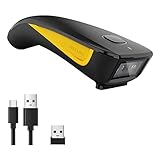
- 3-in-1 Connection Design: Bluetooth Connection: Support HID / SPP / BLE mode, Easily connected with your laptop, PC, mobile phone, tablet, iphone, ipad, POS. the transmission distance in the obstacles environment is about 10m / 33ft. 2.4G Wireless Connection: Support RF DONGLE HID-KBW and RF DONGLE AS VIRTUAL COM mode, Connect the scanner to your device via the USB dongle, Work with Windows XP/7/8/10, Mac OS, linux. the tansmission in the environment without any obstacles can reach up to 100m / 330ft. USB Connection: Support USB HID-KBW and USB COM Port Emulation mode, Connect the scanner to your device via the USB cable. In wired mode, user can scan barcode while charging
- 3 Trigger Modes Key Trigger Mode: Scanning light is only on when press the trigger. Continuous Scan Mode: Scanning light is always on when the scanner is electrified. Scanning barcode without pressing any button. Auto-induction mode: Scanning light is off until a barcode presented in front of the scanner. Once the barcode is detected, the scanning light will turn on automatically to read the barcode.
- Superior Scanning Performance Fast global shutter technology with auto exposure: Equipped with its CMOS sensor the device has a motion tolerance of 24 inches per second, offering fast and accurate scanning results. The 2D scanning engine offers decoding capability for 2D barcodes like PDF417, Data Matrix, QR Code, MicroQR as well as common 1D barcodes.
- Portable Pocket Size Design: Weighing at less than 3 ounces, the NETUM C850 is extremely light weight and portable, making it easily a convenient scanning solution wherever you go
- Manual Scan & Auto-sensing Scan & Continuous Scan. 1200mAh battery ensures 20 hours of continuous handsfree scanning, no pressing the button for efficiency.
Will inventory software automatically connect materials to purchasing and job costs?
Not necessarily. Some products describe links to purchase orders, receipts, invoices, and job-cost records, but the exact connections vary by product, module, and accounting setup. Trace a real transaction in a demonstration and confirm whether staff must enter any information twice.
Do I need a barcode scanner for construction inventory software?
Not necessarily. A handheld scanner may suit a barcode-enabled workflow, but first confirm that the software supports the workflow and that the specific scanner is compatible. No scanner model or compatibility is established here.
How much does construction inventory software cost compared with a spreadsheet?
There is no reliable universal price or savings figure established here. Compare actual subscription or license charges, module or integration costs, configuration, data cleanup, devices, training, and ongoing administration against the labor required to maintain and reconcile the spreadsheet.
What should I ask a vendor to demonstrate?
Ask the vendor to use your item codes, units, and locations to show receiving, issuing to a job, transfers, returns, counts, and reconciliation. Also test purchase-order and invoice links, job-cost handoffs, field access, offline behavior, barcode compatibility, and the work required from your team.
The Bottom Line
Choose the tool that fits the transactions your team must control. A spreadsheet can be enough for simple inventory with clear ownership and timely updates. Software is worth evaluating when multiple people or locations need a current shared record, movements need a consistent history, or purchasing and job-cost workflows need to connect. Before switching, test the team’s real process, verify product-specific features and integrations, and compare total implementation and ongoing effort—not just the subscription price.
Quick Recap
Product prices and availability are accurate as of the date/time indicated and are subject to change. Any price and availability information displayed on Amazon at the time of purchase will apply.




