Two construction companies were fined a combined $85,000 after workers experienced health effects from carbon monoxide exposure at a Toronto construction site. Ontario’s Ministry of Labour said the investigation found that an area where gasoline-powered concrete finishing equipment was in use was not being adequately tested for airborne carbon monoxide. The court also imposed a 25 percent victim fine surcharge; the ministry bulletin does not state its dollar amount.
What happened at the Toronto construction site
The incident occurred on July 4, 2023, at 5868 Yonge Street, where a new-car-dealership project included a three-level parking garage. Fieldgate Construction Management Inc. was the constructor. Metro Concrete Works [2016] Inc. was subcontracted to install an approximately three-inch concrete topping over the structural concrete floor.
As an Amazon Associate I earn from qualifying purchases.
Workers were finishing the concrete with hand tools and gasoline-powered concrete finishing machines when a Metro worker and several others began to feel unwell. Emergency Medical Services attended and treated multiple workers for carbon monoxide exposure. Toronto Fire Services found elevated carbon monoxide in the parking garage and began ventilating it.
The Tool Desk
Outbyte PC Repair FREERepair Windows errors before they cause bigger problemsFix Now →Outbyte Driver Updater FREEScan for outdated or missing drivers - takes under a minuteDriver Scan →The Ministry of Labour, Immigration, Training and Skills Development reported the convictions on October 5, 2026. The offence date was July 4, 2023, and the conviction date was August 28, 2026.
#1 Best Overall

- Electrochemical sensor technology detects CO gas
- Easy installation, no wiring needed, detects during a power failure by operating on 2-AA batteries (included); Install on a wall of your home or place on a tabletop
- Green LED indicates power to the carbon monoxide detector, while an 85-decibel alarm & a red LED indicates the presence of carbon monoxide
- Event Memory records the last time carbon monoxide was detected or when the unit was last tested
What the investigation found about air testing
The ministry said both companies were testing and monitoring air quality, but initial testing showed exposures above applicable limits. Its investigation found that Level P2, where gasoline-powered finishing equipment was being used, was not being adequately tested for airborne carbon monoxide under section 47(3) of Ontario Regulation 213/91.
The ministry’s bulletin does not publish a measured carbon monoxide concentration. It therefore does not establish an exact reading or how far any reading exceeded a limit. The finding concerns inadequate testing on the relevant level; it should not be restated as a finding that neither company performed any air monitoring.
Rank #2

- Keep your family safe with this easy to use plug in carbon monoxide alarm; It works with any standard outlet and also has a battery backup for continuous monitoring of Carbon Monoxide levels, even if there's a power failure
- Features an advanced electrochemical carbon monoxide sensor that accurately detects carbon monoxide levels, no matter where the detector is placed in the room
- Simple to use, with a single test/silence button; a loud 85 decibel alarm sounds when Carbon Monoxide levels reach dangerous levels. Low battery signal mute, quiets low battery signal for upto 8 hours
- To ensure complete protection make sure to place one on each level of your home and in each bedroom
- 7 year limited warranty; Equipped with end of life signal chirp, so you know when it’s time to replace the unit for safety
Fines and the companies’ separate legal duties
After guilty pleas in Provincial Offences Court in Toronto, Justice of the Peace Esther N. Daniel fined Fieldgate $55,000 and Metro $30,000. The combined base fines were $85,000. The court also imposed a 25 percent victim fine surcharge under Ontario’s Provincial Offences Act, but the ministry bulletin does not give its dollar value.
| Company | Project role | Legal provision identified by the ministry | Fine |
|---|---|---|---|
| Fieldgate Construction Management Inc. | Constructor | Failed to ensure the measures and procedures required by section 47(3) of Ontario Regulation 213/91 were carried out, contrary to section 23(1)(b) of Ontario’s Occupational Health and Safety Act. | $55,000 |
| Metro Concrete Works [2016] Inc. | Employer and subcontractor | Failed to ensure compliance with the same regulatory requirement, contrary to section 25(1)(c) of Ontario’s Occupational Health and Safety Act. | $30,000 |
The companies were convicted under different provisions because they had different roles: Fieldgate was the constructor, while Metro was the employer. Both convictions concerned the section 47(3) requirement identified in the ministry’s bulletin.
Rank #3

- DETECTS CARBON MONOXIDE: With backlit display that shows CO levels & sounds a loud 85 dB alarm when CO is detected to signal evacuation; sleep peacefully with no nighttime chirps; LED warning light indicates hazard; Test/Hush button for quick checks
- PLUG-IN POWER WITH BATTERY BACKUP: CO detector plug-in operates on 120V AC with 2 AA backup batteries (included) for detection during outages; rotating plug fits vertical or horizontal outlets; includes power surge immunity to help maintain performance
- TRAVEL-READY DESIGN*: Compact carbon monoxide detector is suitable for use at home or for travel; lightweight design allows you to take it on the go to use in hotels or vacation rentals when detection is needed away from home
- TESTED & TRUSTED: This carbon monoxide alarm is rigorously tested to meet UL 2034 5th Edition standards, and is ETL Listed; includes a 10-year limited warranty on alarm
- BUILT FOR EVERY HOUSEHOLD: Designed to help provide dependable carbon monoxide monitoring for everyday residential use; supports renters, homeowners, and pet owners seeking added awareness and protection from CO hazards in the home
Why gasoline-powered equipment is a carbon monoxide hazard indoors
Carbon monoxide is produced by combustion. Gasoline-powered equipment can generate hazardous concentrations, particularly where ventilation is limited. OSHA’s U.S. construction safety guidance says to suspect carbon monoxide exposure whenever combustion-powered equipment—especially gasoline-powered equipment—is used in such spaces. At an enclosed or partly enclosed work area, relying on workers to notice symptoms is not a substitute for controlling and monitoring the hazard.
OSHA materials provide prevention context, not the legal standard used in this Ontario prosecution. OSHA identifies 50 parts per million (ppm) as the permissible exposure limit for U.S. construction context. That figure is not an Ontario limit, and it is not a carbon monoxide reading reported for the Toronto site.
Rank #4

- DETECTS CARBON MONOXIDE: Model COB monitors CO and sounds a loud 85 dB alarm to signal evacuation to fresh air; LED warning light indicates hazard; Test/Hush button allows quick checks or temporary silencing
- AA BATTERY POWERED: This CO detector is battery-powered, installs without wiring, mount it on the wall or set it on a table, and operates during outages using two included AA batteries
- TRAVEL-READY DESIGN*: Compact carbon monoxide detector is suitable for use at home or for travel; lightweight design allows you to take it on the go to use in hotels or vacation rentals when detection is needed away from home
- TESTED & TRUSTED: This carbon monoxide alarm is rigorously tested to meet UL 2034 5th Edition standards, and is ETL Listed; includes a 10-year limited warranty on alarm
- BUILT FOR EVERY HOUSEHOLD: Designed to help provide dependable carbon monoxide monitoring for everyday residential use; supports renters, homeowners, and pet owners seeking added awareness and protection from CO hazards in the home
Practical controls for construction work in enclosed areas
OSHA’s guidance supports a layered approach: remove combustion sources where suitable, ventilate effectively, and test or monitor the air for remaining risk. Its construction safety transcript illustrates eliminating gasoline-powered concrete saw use in an enclosed space by switching to hydraulic or pneumatic equipment. That example does not establish which alternatives were feasible for the Toronto project.
- Consider the source first. Where the task and site conditions allow, use suitable hydraulic, pneumatic, battery-powered, or electric equipment instead of gasoline-powered machinery. OSHA’s transcript puts the priority plainly: “The best way for these workers to stay safe from carbon monoxide poisoning is to not use a gasoline powered saw.”
- Ventilate the work area. Provide effective ventilation where combustion equipment is used, taking account of the actual space and work conditions. Ventilation should not be treated as proof that the atmosphere is safe without appropriate air testing.
- Test where carbon monoxide may be present. OSHA advises regular air testing in areas where carbon monoxide may occur. Testing should cover the locations where equipment is operating and workers are exposed; the Ontario investigation’s focus on Level P2 underscores why monitoring needs to account for the actual work area.
- Consider personal monitors as an added safeguard. OSHA recommends considering personal carbon monoxide monitors with audible alarms. A monitor is not a substitute for removing or controlling the source, effective ventilation, competent workplace air monitoring, or compliance with applicable rules. Selection, calibration, alarm settings, and suitability for the work matter.
These are general prevention measures described in OSHA materials. The Ontario bulletin does not say which specific controls were present or absent beyond its testing finding, and it does not establish that any particular equipment alternative would have been practical at the project.
Best Value
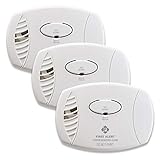
- Keep your family safe from carbon monoxide in multiple rooms with this convenient plug in carbon monoxide alarm 3 pack; The alarms work with any standard outlet and also have a battery backup for continuous monitoring of CO levels, even if there's a power failure
- Features an advanced electrochemical carbon monoxide sensor that accurately detects carbon monoxide levels, no matter where the detector is placed in the room
- Simple to use, with a single test/silence button; A loud 85 decibel alarm sounds when Carbon Monoxide levels reach dangerous levels
- To ensure complete protection make sure to place 1 on each level of your home and in each bedroom
- 7 year limited warranty; Equipped with end of life signal chirp, so you know when it’s time to replace the unit for safety
What the public record does not specify
The ministry bulletin does not report the measured carbon monoxide concentration, the number of workers affected, the duration of exposure, or medical diagnoses beyond treatment for carbon monoxide exposure. It also does not state the surcharge’s dollar amount or provide later appeal or payment status. Those details should not be inferred from the fines or from the incident description.
Quick Recap
Product prices and availability are accurate as of the date/time indicated and are subject to change. Any price and availability information displayed on Amazon at the time of purchase will apply.




