Recommended Free Tools
Asphalt usually costs less at installation, while concrete generally offers the longer published service life. That does not make either material the universal bargain. Your lower-cost choice over the years depends on comparable local bids, site preparation, maintenance, repairs, resurfacing or replacement, climate, and how long you expect to own the home.
For U.S. planning purposes, a September 3, 2025 NerdWallet comparison reports installed asphalt at $7–$15 per square foot and concrete at $8–$20 per square foot, including labor. It reports average project costs of $5,258 for asphalt and about $6,400 for concrete. Those are broad planning figures, not 2026 quotations for your property.
As an Amazon Associate I earn from qualifying purchases.
Concrete and asphalt cost comparison at a glance
| Measure | Asphalt | Concrete |
|---|---|---|
| Reported installed price, including labor | $7–$15 per square foot | $8–$20 per square foot |
| Reported average project cost | $5,258 | About $6,400 |
| Typical service life with ordinary care | 15–20 years | As much as 30–40 years with proper maintenance |
| Average age before repair in the comparison | Not stated | 27.5 years |
| Reported time before use | About 1–3 days | 7–28 days of curing |
| Minor repair example | $1–$3 per linear foot for crack repair | Repair pricing varies by damage |
| Larger repair example | $2–$5 per square foot for sinking, crumbling or pothole damage | $3–$25 per square foot, depending on damage |
The figures in this table come from NerdWallet’s comparison updated September 3, 2025. They describe broad U.S. conditions. Driveway size, finish, slope, thickness, location, labor, excavation, grading and drainage can move an actual proposal far outside the midpoint.
The Tool Desk
Outbyte PC Repair FREEClear out junk files and repair common Windows errorsFree Scan →Outbyte Driver Updater FREEScan for outdated or missing drivers - takes under a minuteDriver Scan →The ranges overlap: a high-cost asphalt project can exceed a low-cost concrete project. Compare bids only when the dimensions and construction scope are equivalent.
#1 Best Overall
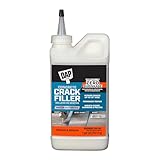
- Concrete crack filler repairs horizontal cracks in concrete, stone and other masonry materials
- Water activated dry powder repairs cracks up to 1/2”W x 1/2”D a single pass
- Ready for light foot traffc in 4 hours, return to full service (including vehicles) within 48 hours
- Ready to use formula, no shaking or mixing: prep surface, fill crack and mist
- DAP Concrete Crack Filler resists shrinkage, UV fading, and cracking
What the initial price actually tells you
Asphalt’s lower starting range can be important when cash flow, a rental property budget or a quick replacement matters. Concrete’s higher range reflects a larger upfront commitment, but the first invoice is only one part of the ownership cost.
Keep project scope equivalent
A “new asphalt installation” is not the same job as replacing an existing driveway or placing an overlay. The NerdWallet comparison reports new asphalt at $7–$13 per square foot, replacement asphalt at $8–$15, and an overlay at $3–$7. An overlay may cost less because an existing surface remains in place; it should not be compared with full demolition and reconstruction as though the two bids provide the same base.
Ask each contractor to identify whether the quote covers demolition, hauling, excavation, subgrade correction, aggregate base, drainage work, edge support, surface thickness, final grading and cleanup. If one proposal assumes a sound existing base and another includes removing unstable soil, their totals are not competing prices.
Free tools Windows power users keep installed
One-click scans. No signup required.
Use square footage, not a headline total
Measure the actual paved area, including widening at the garage, turnaround areas and side strips. A contractor’s total can look low simply because the quoted area is smaller. Request the unit price and estimated quantity for paving, excavation and base material so a change in dimensions can be priced transparently.
Expect local variation
NerdWallet identifies size, finish, gradient, depth, location, labor, excavation and grading as cost drivers. A steep lot, poor drainage, expansive soil, frost movement or restricted access can require work that a national range cannot show. Treat the published numbers as a screening tool for bids, not as a promise of what your driveway should cost.
How to evaluate total ownership cost
A fair comparison is a lifecycle estimate rather than a one-day price check. The U.S. Environmental Protection Agency explains the purpose this way: “Life-cycle cost analysis (LCCA) can help in evaluating whether long-term benefits can outweigh higher up-front costs.” For a home driveway, LCCA means listing every major cash outlay over the period you expect to own or use the surface.
Rank #2

- Concrete patch filler seals cracks and holes in exterior or interior concrete and masonry surfaces
- Concrete sealer is ready to use – needs no mixing or additives making projects easy
- Flexible adhesive is low in odor, cleans up easy with water and provides a 24 hour return to service time
- Provides a durable, long-lasting concrete crack repair that resists gasoline, salt, grease or oil when cured
- Versatile concrete patch and repair may be painted with latex or oil-based paints
Choose a realistic ownership horizon
Use the period that matters to your decision: the time until a planned move, a refinance, a rental-property hold or the point at which you expect to rebuild. A 10-year owner may value a lower initial bill and quick use differently from a 25-year owner. Do not assume that a reported 30–40-year concrete life means the surface will remain maintenance-free for that entire time.
What’s actually slowing this PC down?
Pick the symptom - the matching free tool is one click away.
List costs in the year they occur
- Initial construction: Record the full contract price, including tax, demolition, excavation, base, drainage, edging and permits.
- Routine care: Include any cleaning, sealing or crack treatment the contractor specifically recommends, with the frequency stated in writing.
- Repairs: Allow for likely crack, pothole, settlement or slab repairs instead of treating them as exceptional events.
- Resurfacing: Add an asphalt overlay or other renewal work if the contractor’s maintenance plan calls for it.
- Replacement: Include a future tear-out and rebuild if the expected life is shorter than your horizon.
- Site-related work: Include drainage correction, retaining work or base stabilization that may be triggered by movement or water.
Then compare the totals under the same assumptions. You do not need a sophisticated finance model to avoid a misleading conclusion; a spreadsheet with the year, work item and expected cost is enough. If you discount future dollars, use the same rate for both materials and label the assumption.
Why generic ranges cannot identify a break-even year
The published comparison provides national price and life ranges, not a controlled, head-to-head residential lifecycle study. Asphalt may need maintenance or renewal before a concrete driveway reaches the end of its useful life, but the timing and cost depend on installation quality, weather, traffic and subgrade conditions. Without local bids and a stated maintenance schedule, no responsible source can say that concrete becomes cheaper in a particular year for every homeowner.
The EPA’s cool-pavements compendium also cautions that its public-pavement cost and service-life figures are project-specific and do not represent lifecycle cost. Use its LCCA concept, not roadway numbers, to price a residential driveway. New York City’s Department of Design and Construction lifecycle material likewise contains local public-works examples that should not be transferred directly to a home’s driveway or generalized nationwide.
Maintenance and repair exposure
Maintenance is where a lower initial asphalt price can accumulate additional spending, while concrete repairs can be more expensive when damage is extensive. Neither statement predicts what will happen on your lot; drainage, base preparation and climate often determine whether defects remain cosmetic or become structural.
Asphalt repair figures
NerdWallet reports minor asphalt crack repair at about $1–$3 per linear foot. Larger repairs for sinking, crumbling or potholes are reported at $2–$5 per square foot. The pricing units are different, so a long, narrow crack and a broad failed area should not be compared by simply multiplying one rate by the other.
Rank #3

- Ready-to-use, concrete patch and repair formula is ideal for repairing horizontal cracks in interior or exterior concrete
- Self leveling cement filler dries gray to match and blend with most existing concrete
- Concrete crack repairs are ready for traffic in 30 to 45 minutes for fast project completion
- Concrete crack filler is easy to use; just shake and pour
- Versatile concrete filler may be painted with latex or oil-based paints
Ask whether a quoted repair addresses only the surface or also removes failed material and rebuilds the base. A surface patch over a moving or saturated base may be inexpensive but short-lived. Have the contractor mark the repair area and state the expected service life of the treatment.
Concrete repair figures
Concrete repair is reported at $3–$25 per square foot, depending on the damage. The wide range reflects the difference between a limited repair and work that requires removing and replacing a section. Obtain a written description of whether the proposal fills a crack, levels a settled panel, replaces a slab or corrects the underlying drainage and soil problem.
A generic crack filler can be appropriate for a minor, non-structural crack when the product and method match the condition. It does not solve major settlement, continuously widening cracks, failed edges or water-related movement. A contractor should evaluate those symptoms before you treat them as a do-it-yourself maintenance task.
Track maintenance by condition
Instead of scheduling work solely by age, inspect after winter, heavy rain and periods of extreme heat. Record new cracks, ponding, raveling, potholes, rocking slabs, raised edges and areas where vehicles feel a vertical bump. Early documentation helps a contractor distinguish a surface treatment from a base or drainage repair.
Service life and what “lasting longer” means
The comparison reports a typical asphalt service life of 15–20 years. It reports concrete lasting as much as 30–40 years with proper maintenance and an average concrete driveway age of 27.5 years before repair. “As much as” is an upper-range observation, not a guarantee for every installation.
Service life is also a condition standard. A driveway can remain drivable while showing cracks, patches or discoloration, yet be considered due for repair by another owner. Ask contractors to define the condition that ends their quoted service-life estimate: loss of ride quality, structural failure, unacceptable appearance, drainage problems or the need for extensive repairs.
Rank #4

- 🚶FILL ANY CRACK Because of its granulated formula, Magic Crack Filler can be used to fill everything from hairline cracks to much larger more unsightly ones—and from straight cracks to ones that look more like a road map through the mountains.
- 🚫NO MESS FORMULA All it takes is water to dampen the area to be filled and Magic Crack Filler. That’s it! No messy formula, no attempts to get the right consistency, no buckets and mixing tools—absolutely nothing but water. The installation is so simple virtually anyone can do it.
- 🏡REFRESH YOUR PROPERTY Magic Crack Filler’s formula resists and slows down water intrusion, giving your property that well-cared for look. Once filled with Magic Crack Filler, cracks are almost unnoticeable.
- ⏱️Matches Concrete, dry powder, no mess, no shelf life, quick, easy and DIY
- 🦅Made in the USA!
Construction quality can overwhelm material averages. An asphalt surface placed over a weak, wet or poorly compacted base may fail early. Concrete can crack when joints, reinforcement, drainage or curing are poorly handled. A longer theoretical life does not compensate for an inadequate foundation.
Climate and site conditions
The NerdWallet comparison describes asphalt as more resistant to cold and concrete as vulnerable to cracking in freezing temperatures. It also notes that asphalt may become tacky or oily in very hot weather. These are general tendencies, not engineering predictions for a specific address.
Cold and freeze-thaw exposure
In regions with repeated freezing and thawing, water entering the base or cracks can move the pavement. Ask how the proposed section thickness, base depth, drainage outlets and joint layout address local frost conditions. Confirm whether the contractor has experience with driveways in your county rather than relying on a national material preference.
Heat and direct sun
Hot weather can affect asphalt’s surface behavior, especially during the early period after paving. Ask when parking, turning in place and using kickstands or heavy equipment is permitted. A contractor should provide site-specific instructions rather than a generic number of days.
Water, slope and soil
Standing water and uncontrolled runoff can damage either material. Walk the site during or shortly after rain and identify where water currently collects. Require the bid to show the finished slopes, edge elevations, outlets and any drains or swales. If the driveway crosses fill, clay, expansive soil or a slope, ask what excavation and base stabilization are included.
Installation time and access to your home
The comparison reports asphalt being available for use in about 1–3 days and concrete curing for 7–28 days. These are broad ranges, not a release date for every driveway. Weather, thickness, mix, site access and contractor instructions can extend the restriction.
Best Value
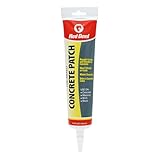
- REPAIRS CRACKS AND BREAKS IN CONCRETE: Premixed formula makes repairs easy
- DRIES A LIGHT TO MEDIUM GRAY COLOR: Ideal for lighter shades of concrete
- WON'T SHRINK OR CRACK: Provides maximum flexibility for a permanent repair
- INTERIOR OR EXTERIOR USE: Can be used inside or outside
- WATER CLEAN UP: Cleans up easily with soap and water. Made in the USA
Plan an asphalt project
- Confirm the paving date and the weather contingency with the contractor.
- Ask exactly when passenger vehicles, delivery trucks and turning movements are allowed.
- Move vehicles, bins and stored materials before demolition begins.
- Keep heavy loads off the new surface until the contractor’s written instruction allows them.
Plan a concrete project
- Ask which curing period applies to walking, passenger vehicles and heavier vehicles; the reported 7–28 days covers a broad range.
- Arrange off-site parking and delivery access for the full restricted period.
- Keep pets, bicycles and lawn equipment off the slab while it gains strength.
- Confirm how weather, coverings and the curing method change the return-to-use date.
If you have one garage or a shared access lane, include temporary parking or access costs in your ownership comparison. A material that costs less but requires a longer disruption can still be the harder project for your household.
Independent reader supportYour contribution helps us test, update, and keep practical guides available for everyone.Appearance, finish and daily use
Concrete generally gives an owner more opportunity to specify a visible finish, while asphalt provides a darker, more uniform pavement appearance when new. The right choice depends on the house, neighborhood requirements, desired edges and willingness to maintain the selected look. Ask to see local installations that are several years old, not only freshly completed work.
Put appearance requirements in the contract: color or finish, exposed edges, transitions to sidewalks, garage-floor elevations and how visible joints or patches will be handled. A decorative or unusually detailed finish can change the concrete price, just as a complex edge, widening or overlay preparation can change asphalt’s price. Do not accept a generic allowance when the appearance is central to your decision.
How to obtain comparable driveway bids
- Measure and document the site. Provide a sketch with length, width, turning areas, slopes, current drainage and nearby structures. Include photographs of cracks, settlement and ponding.
- Define the existing condition. State whether the project is new construction, full replacement or an overlay. Ask each bidder to inspect the subgrade rather than assuming it is sound.
- Set one written scope. Specify demolition and disposal, excavation depth, aggregate-base thickness, surface thickness, reinforcement or joints where applicable, grading, drainage, edging and cleanup.
- Request itemized quantities and unit prices. Have bidders show square footage, linear footage, excavation volume and allowances for unsuitable soil. This makes revisions comparable.
- Ask for schedule and access terms. Obtain start-date assumptions, weather delays, vehicle restrictions and the process for approving additional work.
- Compare warranties and exclusions. Read what is excluded for drainage, soil movement, freeze-thaw damage, oil exposure, heavy vehicles and homeowner maintenance.
- Check references and local experience. Request driveways completed in similar soil and weather conditions, with permission to contact the owners.
- Reconcile differences before choosing. If one bid is lower because it omits base replacement or drainage, revise the scope and ask for a new price instead of averaging incompatible totals.
Decision paths for common homeowner priorities
Choose asphalt as the leading candidate when
- Your main constraint is the initial installation budget and comparable bids confirm a lower total.
- You need the driveway available sooner and can comply with the contractor’s 1–3-day use guidance.
- Your site and climate favor asphalt and you have a realistic plan for crack and surface maintenance.
- You expect to move or renovate before a longer concrete service life would provide value.
Choose concrete as the leading candidate when
- You can absorb the higher initial bid and want the longer reported service-life range.
- You value finish and appearance options enough to justify the added upfront cost.
- You can keep vehicles off the driveway through the specified 7–28-day curing window.
- Your local contractor provides a strong base, drainage and joint plan suited to freezing conditions and soil movement.
These are trade-offs, not automatic prescriptions. A well-built, properly drained driveway that matches your ownership horizon is more important than choosing a material by reputation alone.
Common comparison mistakes and how to avoid them
- Comparing an overlay with new construction: Identify demolition and base work before comparing totals.
- Using a national average as a quote: Replace published ranges with at least two or three local bids using the same scope.
- Ignoring drainage: Require finished elevations and water-routing details; pavement alone cannot correct a failing site.
- Assuming lifespan is guaranteed: Ask what condition and maintenance assumptions support the contractor’s estimate.
- Counting only the first invoice: Add repairs, resurfacing, replacement and temporary access costs over your ownership horizon.
- Accepting vague thickness language: Put surface and base thicknesses, reinforcement and joint layout in the contract.
- Planning around an optimistic reopening date: Get separate dates for walking, passenger cars, deliveries and heavy vehicles.
- Repairing symptoms instead of causes: Investigate settlement, water and unstable soil before applying a surface patch or filler.
A practical worksheet for your final choice
Create one page for each material and fill it from the contractor’s written proposal:
- Quoted paved area and unit price
- Demolition, excavation and disposal
- Base material, thickness and compaction method
- Surface thickness, finish, joints or edging
- Drainage and grading work
- Permit, mobilization and access costs
- Expected reopening dates by vehicle type
- Maintenance tasks, frequency and estimated price
- Repair assumptions and unit rates
- Resurfacing or replacement timing within your ownership horizon
- Warranty duration, exclusions and homeowner obligations
Enter the same ownership horizon and maintenance assumptions for both options. Keep estimates labeled as contractor allowances when the exact condition will not be known until excavation. The worksheet will show whether the apparent price difference comes from material or from missing scope.
Bottom-line decision
Asphalt is generally the lower-cost installation, with a reported $7–$15 per-square-foot range and a $5,258 average project cost in NerdWallet’s September 3, 2025 comparison. Concrete is generally the higher initial investment, at $8–$20 per square foot and about $6,400 on average, but the same comparison reports a service-life range of as much as 30–40 years with proper maintenance versus 15–20 years for asphalt.
Quick wins for a faster PC:
Repair Windows errors before they cause bigger problemsFix Now →Fix the driver behind crashes, sound loss and screen glitchesFind Drivers →Clear out junk files and repair common Windows errorsFree Scan →Those figures do not establish a universal lifetime winner. Select the material only after comparing local bids with identical dimensions, base and drainage work, maintenance expectations, repair allowances, access restrictions and your expected time in the home. Because the available estimates are broad and were last updated in 2025, use them to frame questions for local contractors—not to substitute for a site-specific lifecycle calculation.
Quick Recap
Product prices and availability are accurate as of the date/time indicated and are subject to change. Any price and availability information displayed on Amazon at the time of purchase will apply.

