Free tools Windows power users keep installed
One-click scans. No signup required.
Repair a concrete driveway when the damage is localized and the surrounding slab is stable; replace sections or the entire driveway when cracks, settlement, or deterioration are widespread or structural. The right choice depends on the extent and depth of damage, whether the slab is moving, the condition of its support, and whether the underlying cause will be corrected. Appearance alone is not a reliable diagnosis.
If you cannot tell whether the concrete is sound below the visible damage, obtain an on-site assessment and ask for both a repair scope and a replacement or panel-replacement scope. Federal Highway Administration (FHWA) pavement guidance is useful for distinguishing shallow from deep deterioration, but it is technical context rather than a residential-driveway specification. See the FHWA explanations of partial-depth repairs and full-depth repairs.
As an Amazon Associate I earn from qualifying purchases.
Start with extent and stability, not appearance
Walk the entire driveway and map what you see. A single narrow crack in an otherwise sound panel is a different problem from several intersecting cracks, a broken corner, widespread scaling, or sections that have sunk. Note whether damage is confined to the surface or whether the concrete is fractured through its thickness.
Windows Errors? Fix Them Before They Spread
Repair common Windows errors and clear accumulated junk for a smoother, more stable PC - no reinstall needed.Free scan · no reinstallOutdated Drivers Are Slowing You Down
One free scan finds every outdated or missing driver and matches the right update for your exact hardware.Free scan · exact hardware matchSigns that a localized repair may be reasonable
- One limited crack or small isolated defect is surrounded by concrete that remains solid and level.
- The damaged area does not rock, move under load, or create a significant trip or vehicle-transition problem.
- There is no evidence that adjacent panels are beginning to fail.
- The contractor can identify a repair boundary that includes all visibly and audibly deteriorated concrete.
Even in this category, ask whether the crack is active, whether water or another site condition is involved, and whether the proposed work is cosmetic or intended to restore function. A patch can improve appearance without stopping movement.
#1 Best Overall
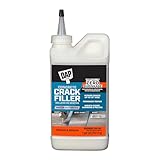
- Concrete crack filler repairs horizontal cracks in concrete, stone and other masonry materials
- Water activated dry powder repairs cracks up to 1/2”W x 1/2”D a single pass
- Ready for light foot traffc in 4 hours, return to full service (including vehicles) within 48 hours
- Ready to use formula, no shaking or mixing: prep surface, fill crack and mist
- DAP Concrete Crack Filler resists shrinkage, UV fading, and cracking
Signs that deeper work deserves comparison
- Cracks intersect repeatedly, divide a panel into several pieces, or continue through the slab.
- Concrete is broken, rocking, displaced, or sunken.
- Spalling or scaling exposes coarse aggregate over broad areas, or sound material cannot be reached near the surface.
- Previous patches have failed in the same locations.
- Several panels show related distress, drainage problems, or settlement.
For multiple intersecting cracks, FHWA pavement design guidance uses whole-slab replacement as a technical response. That transportation guidance should inform questions for a residential contractor, not be treated as an automatic rule for every home. Read the FHWA discussion of repair boundaries and slab replacement at full-depth repair design considerations.
Use a condition-based decision framework
| Observed condition | Options to ask about | What to verify before approving work |
|---|---|---|
| Limited crack or small isolated defect; surrounding slab is sound | Crack filling or patching; monitoring may be reasonable in some cases | Whether the crack is active, whether water or another cause is involved, and whether the work is cosmetic or functional. Concrete Network lists filling and patching among options for minor driveway defects: Concrete driveway repair options. |
| Surface scaling or spalling with no evidence of deeper failure | Surface repair or resurfacing | Whether sound concrete remains below the damaged layer. FHWA pavement guidance describes partial-depth work for deterioration limited to the upper third of a slab: FHWA partial-depth repairs. |
| Intact section has sunk but is not extensively broken | Slabjacking or another lifting method | Why the section settled, whether its support is stable, and whether lifting will restore drainage, door or garage transitions, and safe edges. Slabjacking is identified as an option for some sinking driveways by Concrete Network. |
| Deep, broken, or structural damage in a limited area | Full-depth repair or panel replacement | Whether all distressed concrete and any affected support will be removed or corrected. FHWA describes full-depth pavement repair as removal to the base, treatment of disturbed support, installation of load-transfer devices, and placement of new concrete; residential details must be designed for the site. |
| Multiple intersecting cracks, widespread distress, or repeated failed repairs | Compare replacement of several panels or the complete driveway with a series of repairs | Which panels are included, how boundaries were selected, and whether the cause of the recurring damage is addressed. FHWA’s slab-replacement guidance is transportation context, not a universal residential threshold. |
Match the repair depth to the actual damage
The most important technical question is how far deterioration extends. A surface treatment cannot reliably restore concrete that is broken deeper in the slab or sitting on unstable support.
Partial-depth or surface repair
FHWA defines partial-depth repair as removing deterioration limited to the upper one-third of a concrete pavement slab and replacing it with repair material. Its construction guidance says the approach should change to full-depth repair if additional chipping is needed to reach sound concrete or if dowels become exposed. These dimensions and procedures apply to pavement projects; a driveway contractor must determine whether the same depth relationship fits the home’s slab and loading.
Quick wins for a faster PC:
Scan for outdated or missing drivers - takes under a minuteDriver Scan →Clear out junk files and repair common Windows errorsFree Scan →Ask the estimator how sound concrete was identified, how the repair perimeter will be marked, and what happens if demolition reveals deeper deterioration. A written allowance for concealed damage is preferable to an assumption that the surface alone is affected.
Full-depth repair or panel replacement
FHWA’s full-depth description removes concrete down to the base, addresses any disturbed base, installs load-transfer devices where the design calls for them, and places new concrete. The agency lists conditions such as transverse cracking, corner breaks, deteriorated joints, and blowups among pavement situations that can receive full-depth repairs. On a home driveway, the contractor should adapt the method to the slab layout, reinforcement, edges, drainage, and local requirements rather than copying a highway detail.
Rank #2

- Concrete patch filler seals cracks and holes in exterior or interior concrete and masonry surfaces
- Concrete sealer is ready to use – needs no mixing or additives making projects easy
- Flexible adhesive is low in odor, cleans up easy with water and provides a 24 hour return to service time
- Provides a durable, long-lasting concrete crack repair that resists gasoline, salt, grease or oil when cured
- Versatile concrete patch and repair may be painted with latex or oil-based paints
Full-depth work is appropriate to discuss when damage runs through the slab, a panel is broken into moving pieces, or demolition shows that sound concrete cannot be reached with a shallow repair. It may involve removing only a failed panel or a larger connected area if the adjacent concrete is also compromised.
Compare the main paths
Crack filling and localized patching
Filling is the least disruptive path for a limited defect in otherwise stable concrete. It can keep water and debris out of a crack and improve appearance, but it does not diagnose structural movement or correct settlement. Confirm whether the proposed filler is intended for an actively moving crack and what maintenance or monitoring is expected.
What’s actually slowing this PC down?
Pick the symptom - the matching free tool is one click away.
Do not use a small patch as evidence that a widespread problem has been solved. If cracks continue into adjacent panels, the slab moves, or the same location has failed before, request a deeper evaluation.
Resurfacing
Resurfacing places a new surface layer over concrete with larger-area cosmetic or shallow defects. It is worth considering only when the underlying slab is sufficiently sound and stable. Ask how the contractor will test or expose the substrate, how edges and joints will be treated, and how the new surface will meet garage floors, walks, drains, and existing panels.
Resurfacing can conceal deterioration temporarily if the cause remains active. It should not be presented as a substitute for replacing a structurally broken or moving slab.
Rank #3

- Ready-to-use, concrete patch and repair formula is ideal for repairing horizontal cracks in interior or exterior concrete
- Self leveling cement filler dries gray to match and blend with most existing concrete
- Concrete crack repairs are ready for traffic in 30 to 45 minutes for fast project completion
- Concrete crack filler is easy to use; just shake and pour
- Versatile concrete filler may be painted with latex or oil-based paints
Slabjacking or other lifting
Lifting may suit an intact panel that has settled while remaining largely unbroken. The method raises the concrete rather than replacing it, so the contractor must explain why settlement occurred and whether the supporting condition can hold the corrected elevation. Verify that the finished slope will move water away from structures and that transitions will not create a new trip or vehicle impact.
If the slab is fractured into movable pieces, lifting may not provide a durable result. Ask what the contractor will do if voids, unstable support, or additional breaks are found.
Full-depth repair or panel replacement
This path removes the failed concrete and rebuilds a defined area. It can preserve sound sections while addressing deep damage. The proposal should identify demolition limits, support preparation, reinforcement or load-transfer details where applicable, concrete placement, joint layout, curing, and how the new panel will connect to existing work.
Complete driveway replacement
Replacement is the broadest intervention. It becomes more defensible when distress is widespread, panels are repeatedly failing, or the existing slab cannot be separated into reliable repair areas. Replacement also offers an opportunity to correct the underlying cause, but it involves more demolition, disposal, access disruption, and coordination than a local repair. Concrete Network describes tear-out, disposal, and correction of the underlying cause as parts of a replacement project; see its homeowner overview at Concrete driveway repair and renovation options.
Investigate the cause before choosing the scope
A visible crack is a symptom, not necessarily the cause. Before approving work, ask the contractor to explain what evidence supports the diagnosis and how the proposed scope deals with it. The cause may involve water movement, settlement, loss of support, joint or edge conditions, construction defects, or another site-specific factor; only an inspection can distinguish among possibilities.
Recommended Free Tools
Rank #4

- 🚶FILL ANY CRACK Because of its granulated formula, Magic Crack Filler can be used to fill everything from hairline cracks to much larger more unsightly ones—and from straight cracks to ones that look more like a road map through the mountains.
- 🚫NO MESS FORMULA All it takes is water to dampen the area to be filled and Magic Crack Filler. That’s it! No messy formula, no attempts to get the right consistency, no buckets and mixing tools—absolutely nothing but water. The installation is so simple virtually anyone can do it.
- 🏡REFRESH YOUR PROPERTY Magic Crack Filler’s formula resists and slows down water intrusion, giving your property that well-cared for look. Once filled with Magic Crack Filler, cracks are almost unnoticeable.
- ⏱️Matches Concrete, dry powder, no mess, no shelf life, quick, easy and DIY
- 🦅Made in the USA!
Questions that reveal whether the cause was considered
- What changed at this location before the damage appeared?
- Is the slab still moving, sinking, or allowing water to enter?
- What did probing, sounding, measurements, or exposed areas show about the concrete below the surface?
- Will drainage, support, joints, or transitions be corrected as part of the work?
- What condition would make the proposed repair unsuitable once demolition begins?
A proposal that repairs only the visible surface can leave the damaging condition in place. Ask for the cause-and-correction work to be listed separately so it is clear what is included and what is excluded.
How to compare contractor proposals
Obtain itemized local proposals based on the same defined area and method. The homeowner-facing Concrete Network article was updated June 23, 2021; its cost examples are dated and should not be treated as current quotes. No responsible current price can be stated without location, dimensions, access, inspection, and scope.
| Comparison axis | Questions to put in writing |
|---|---|
| Extent | Which panels, cracks, edges, and surface areas are included? How were repair boundaries selected, and what happens if deterioration extends beyond them? |
| Depth and method | Is the work filling, patching, resurfacing, lifting, full-depth repair, panel replacement, or complete replacement? What damage is each method expected to address? |
| Cause and support | What evidence supports the diagnosis? Does the scope correct drainage, settlement, support, joints, or another identified condition? |
| Durability and limits | What conditions could cause failure or require later work? Which concealed conditions, maintenance tasks, and warranty exclusions apply? |
| Appearance | How will new concrete or a resurfaced area differ in color, texture, joints, and finish from the existing driveway? |
| Demolition and access | Does the price include tear-out, loading, disposal, protection of adjacent property, equipment access, and cleanup? How long will vehicles be unable to use the driveway? |
| Price and timing | Are quantities, unit prices, allowances, taxes, and payment stages itemized? What assumptions could change the total or schedule? |
Compare proposals only after aligning these details. A lower number may represent a shallower method, a smaller repair boundary, or exclusions that another contractor included.
Independent reader supportYour contribution helps us test, update, and keep practical guides available for everyone.A practical decision process
- Document the whole driveway. Photograph cracks, settlement, spalling, joints, edges, drainage paths, and transitions. Mark locations on a simple sketch and note changes over time.
- Classify the distress. Separate isolated surface defects from broken, moving, sunken, or widespread areas. Record whether vehicles, pedestrians, or water are affected.
- Request an on-site assessment. When structural condition or cause is uncertain, have a qualified local contractor inspect the slab and support rather than relying on photographs alone.
- Ask for competing scopes. Request the smallest reasonable repair, a deeper or panel-replacement option where relevant, and full replacement when the contractor believes it is justified.
- Match depth to findings. Approve a surface method only when sound concrete remains below the defect. If demolition must continue to reach sound material or exposes deeper distress, require a documented change to full-depth work.
- Confirm cause correction. Make drainage, support, settlement, joint, or other corrective work explicit in the proposal. Do not assume it is included because it is necessary.
- Check boundaries and transitions. Verify how new work will meet garages, sidewalks, curbs, drains, gates, and neighboring panels, and whether slopes will remain functional.
- Review disruption and protection. Confirm demolition access, disposal, curing or no-drive periods, weather contingencies, and protection of landscaping and structures.
- Choose on value, not price alone. Weigh the method’s fit to the damage, cause correction, excluded conditions, appearance, disruption, and documented cost.
When repair is likely to disappoint
- The contractor cannot explain why the slab failed or declines to inspect adjacent areas.
- The proposal covers only the visible crack even though the panel moves, has settled, or contains intersecting breaks.
- A resurfacing or patching scope does not state how sound underlying concrete will be verified.
- The estimate omits demolition limits, disposal, support preparation, transitions, or concealed-condition pricing.
- Several contractors recommend materially different scopes, but no one explains the evidence behind the difference.
In these situations, pause and obtain another site assessment. A written explanation of uncertainty is more useful than a confident but unsupported guarantee.
What the available technical guidance can—and cannot—tell you
FHWA’s partial-depth guidance gives a useful principle: remove only shallow deterioration when sound concrete remains below it, and change to full-depth work when reaching sound material requires deeper removal or exposes load-transfer components. Its full-depth guidance explains how pavement repairs address the slab and its support and why repair boundaries must include significant deterioration.
Best Value
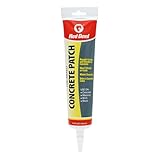
- REPAIRS CRACKS AND BREAKS IN CONCRETE: Premixed formula makes repairs easy
- DRIES A LIGHT TO MEDIUM GRAY COLOR: Ideal for lighter shades of concrete
- WON'T SHRINK OR CRACK: Provides maximum flexibility for a permanent repair
- INTERIOR OR EXTERIOR USE: Can be used inside or outside
- WATER CLEAN UP: Cleans up easily with soap and water. Made in the USA
Those documents concern transportation pavement. They do not establish a universal residential crack-width limit, guaranteed service life, price, permit requirement, or one-size-fits-all repair depth for a home driveway. The sources also do not identify a single numerical threshold that decides repair versus replacement. Crack width must be considered with pattern, depth, movement, settlement, overall condition, and cause.
Costs, timing, and disruption
Use current estimates from contractors who have inspected the property. The 2021 homeowner article’s example prices are historical and should not be repeated as present-day quotes. Your location, driveway dimensions, access for demolition equipment, disposal requirements, support conditions, drainage work, concrete specification, and curing conditions can materially change the total.
Ask each bidder to state what is included in demolition, haul-away, base or support correction, reinforcement or load-transfer details, forming, finishing, joints, curing, cleanup, and access restrictions. For repairs, request the cost and schedule impact if concealed damage requires expanding the boundary or changing from partial-depth to full-depth work.
Bottom line: choose the smallest scope that is structurally credible
Choose localized filling, patching, resurfacing, or lifting only when inspection shows that the surrounding slab and its support are stable and the method matches the depth of damage. Compare full-depth panel repair or replacement when damage is deep or concentrated but the rest of the driveway is reliable. Compare complete replacement when distress is widespread, panels are repeatedly failing, or the cause cannot be isolated without rebuilding the system. In every case, require the proposal to address the cause, define its limits, and explain what evidence supports the recommended method.
Quick Recap
Product prices and availability are accurate as of the date/time indicated and are subject to change. Any price and availability information displayed on Amazon at the time of purchase will apply.

