Free tools Windows power users keep installed
One-click scans. No signup required.
Some links on this page are affiliate links: if you buy through them we may earn a commission, at no extra cost to you.
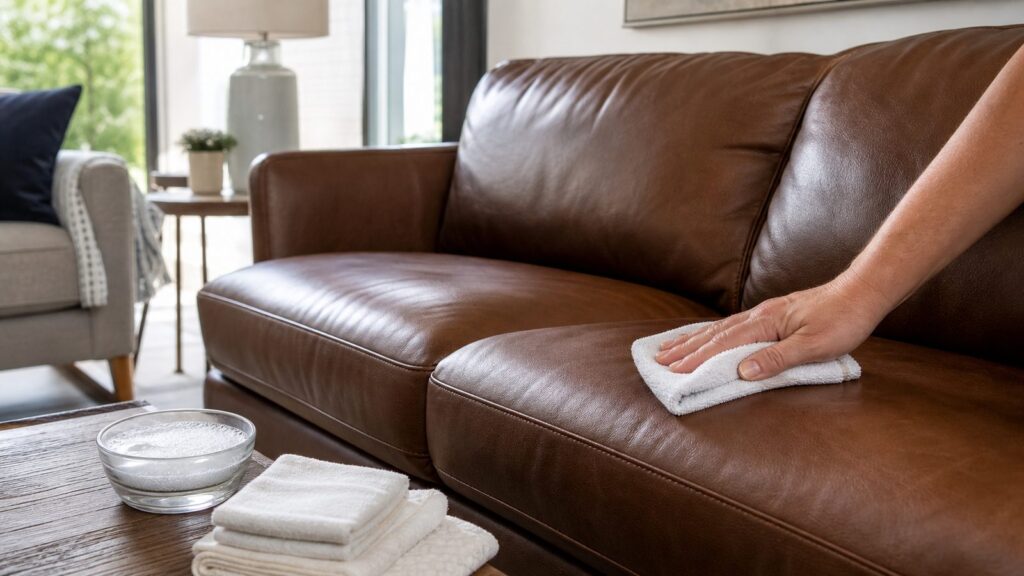
You can clean most finished leather furniture with household ingredients, but the safest method is more controlled than the usual vinegar-and-oil recipe passed around online. Start dry, use very little moisture, test in a hidden spot, clean with warm distilled water and a few drops of mild soap, wipe away residue, dry by hand, and condition only when the leather actually needs it.
That approach works for everyday dust, light body oils, small food spills, mild odors, and some fresh grease. It is not the right fix for suede, nubuck, raw aniline leather, ink, dye transfer, pet urine, mold, peeling bonded leather, or color loss. Those situations can turn a $15 cleaning attempt into a permanent stain or a $300-plus restoration call.
As an Amazon Associate I earn from qualifying purchases.
On our job sites, we treat leather the same way we treat finished wood, stone, and painted millwork: identify the surface first, remove grit before adding liquid, and use the weakest effective cleaner. Leather is durable, but it is still a finished material. Too much water, the wrong household chemical, or aggressive scrubbing can damage the coating that makes the piece cleanable in the first place.
First, Identify What Kind of Leather You Have
Before you mix anything in a bowl, figure out whether the piece is finished leather, aniline leather, suede, nubuck, bonded leather, or faux leather. The cleaning method depends on that answer.
Popular on Amazon
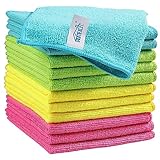
- Effective Streak-Free Cleaning: Clean kitchen countertops, windows, mirrors, bathroom surfaces, stainless steel, car interiors, glass, and other delicate surfaces with just water or your favorite cleaner—these microfiber cloths deliver streak-free, neat results with minimal effort, making daily cleanup fast and simple
- Lint-Free & Scratch-Safe: Soft to the touch and completely lint-free, these cloths won't scratch or damage delicate finishes like glass, ceramic, coated metals, car paint, or polished surfaces—clean with confidence on everything from household appliances to auto trim and electronics screens
- Ultra-Absorbent for Spills, Polishing & Drying: Designed to quickly soak up liquids, grease, and grime, making them ideal for drying dishes, wiping spills, polishing stainless steel, buffing car surfaces, and tackling everyday messes around the house, garage, or workshop—efficient cleaning without extra effort
- Reusable, Washable & Long-lasting: Machine washable and reusable hundreds of times with reinforced edges that hold up wash after wash—a durable replacement for disposable paper towels that cuts down on waste and repeat purchases for families, pet owners, detailers, and busy households
- Versatile Across Home, Auto & Beyond: Equally suited for general household cleaning, interior car detailing, exterior buffing, polishing wheels, wiping down tools, workshop surfaces, electronics, eyeglasses, screens, and more—simply rinse after use or toss in the washing machine; a practical all-around choice for homes, garages, shops, and small businesses
Most leather sofas, recliners, dining chairs, car seats, and built-in banquette cushions in U.S. homes are protected or finished leather. This leather has a pigmented surface coating that gives it more resistance to spills and light damp wiping. If water beads briefly on the surface and does not immediately darken the material, you are probably dealing with finished leather. That is the type this household-ingredient method is meant for.
Aniline and semi-aniline leather are more absorbent. They often feel softer and more natural, with visible grain variation, scratches, and color depth. A drop of water may darken the surface quickly. Suede and nubuck have a nap, meaning the surface feels fuzzy or velvety. Those materials should not be cleaned with soap water or vinegar as a general method. Use a suede brush, dry methods, or a professional cleaner.
Windows Errors? Fix Them Before They Spread
Repair common Windows errors and clear accumulated junk for a smoother, more stable PC - no reinstall needed.Free scan · no reinstallOutdated Drivers Are Slowing You Down
One free scan finds every outdated or missing driver and matches the right update for your exact hardware.Free scan · exact hardware matchBonded leather is a different problem. It is made from leather fibers and backing materials with a surface coating. Once it starts peeling, cleaning will not restore it. Faux leather, vinyl, and polyurethane upholstery are not hide at all, and they can react differently to oils, solvents, and conditioners.
Check the furniture tag, warranty card, manufacturer care guide, or underside label. If the tag has cleaning codes, follow those first. If you cannot identify the leather, test like you are cleaning a high-risk material: choose a hidden area, use a white cloth, and wait at least 24 hours before touching a visible panel.
Household Supplies That Are Safe Enough for Finished Leather
You do not need a large kit. For routine cleaning, the best supplies are simple and controlled.
- Microfiber cloths: Use at least 3: one for dusting, one for cleaning, and one for drying or buffing.
- Distilled water: Better than hard tap water because it reduces mineral spots, especially on dark leather.
- Mild dish soap or unscented Castile soap: Use only a few drops in a bowl of warm water.
- White vinegar: Optional, diluted, and only for spot treatment after testing.
- Baking soda or cornstarch: Useful as a dry absorbent for fresh grease or mild odor, not as a scrub.
- Soft brush or vacuum brush attachment: Helpful for seams, creases, and cushion edges.
- Leather conditioner: Optional, but often worth using after cleaning finished leather if the surface feels dry.
If you already have microfiber cloths, soap, distilled water, vinegar, and baking soda, the cost is usually under $5 to $20. If you are buying supplies from scratch, expect about $15 to $40 depending on cloth quality, soap, a soft brush, distilled water, and whether you buy a leather conditioner.
What Not to Use on Leather, Even If It Is in the House
Many household cleaners are too harsh for leather finishes. Natural does not automatically mean safe, and disinfecting does not automatically mean compatible with upholstery.
Avoid bleach, ammonia, rubbing alcohol, hydrogen peroxide, all-purpose disinfectants, disinfecting wipes, steam cleaners, magic erasers, abrasive powders, stiff brushes, and soaking wet towels. These can strip finish, remove color, dry the hide, dull the surface, or leave permanent marks.
Be careful with olive oil, coconut oil, and heavy homemade oil recipes. A small amount of oil may seem to improve shine for a day, but excess oil can darken leather, turn sticky, attract dirt, and become difficult to reverse. We see the same principle in construction finishes: once oil migrates into a porous material, removing it cleanly is harder than applying it.
White vinegar also deserves caution. It is acidic. Used correctly, diluted vinegar can help with certain light odor, salt, or mineral issues on finished leather. Used as a full-strength all-over wash, it can affect color, finish, and natural oils. Treat vinegar like a spot-cleaning option, not a universal leather cleaner.
Do these 3 things before closing this tab:
1Fix the driver behind crashes, sound loss and screen glitches2Clear out junk files and repair common Windows errors3Scan for outdated or missing drivers - takes under a minuteAlso popular on Amazon

- 10x GRIP-ROOT WEAVE - TRAP MORE, WORK LESS: Ultra-absorbent microfiber towels for car Grip Root weave works like PLANT ROOT FOLLICLES, sucking up & LOCKING AWAY 8x to 10x its weight in liquid, particulates, moisture, grime and dirt in far LESS TIME than traditional ‘Heavy Duty’ Cleaning Rags. Each towel features a 2.5mm thick design, providing enhanced durability and better grip during use.
- WON’T LINT, SCRATCH, PILL, SWIRL, SHED, or BLEED like thin, cheaply made microfiber towels for cars. RAPID DRY release layers make these the ideal microfiber towels for cars, creating that spectacular, SWIRL-FREE MIRROR SHINE with our cleaning rags. With a solid 2.5mm thickness, these towels are built to prevent damage while ensuring optimal performance.
- LASTS 1200+ WASHES - That’s 3.27 YEARS worth of use in this 12-pack of COMMERCIAL GRADE 300 GSM Reuseable Cleaning Cloth. The 2.5mm thickness and OVERLOCK BRAIDED STITCHING makes the ideal SUSTAINABLE SOLUTION for cleaning every SURFACE, crack, and CREVICE in your home, garage, or office.
- SOAK IT UP FASTER - 4X’s MORE ABSORBENT than COTTON cloths, these are the microfiber cleaning cloth for cars to get if you want an ALL PURPOSE cleaning towel, crafted with 2.5mm thickness to scoop up your messes, oils, and liquids FASTER than a SPONGE
- UNRIVALED POWER - TEST THIS GRIP-ROOT technology risk-free for 30 full days. With a 2.5mm thick design, it LOCKS AWAY dirt, dust, grime, spills, and messes better than any other high-performance cleaning rags you’ve tried.
The Best Basic Method for Cleaning Finished Leather
This method is for protected or finished leather that is structurally sound, not peeling, not suede, and not heavily stained. Plan on 30 to 60 minutes for a standard sofa, plus drying time. A dining chair may take 10 to 15 minutes. A sectional can take 60 to 90 minutes depending on seams, recliner mechanisms, and cushions.
1. Remove Dry Soil First
Vacuum seams, cushion gaps, tufting, and edges with a soft brush attachment. Then dust the surface with a dry microfiber cloth. This step matters because grit becomes abrasive when mixed with water. On a job site, we would never wet-wipe dusty cabinetry or finished trim before removing grit; leather deserves the same care.
2. Test for Color Transfer
Dampen a white microfiber cloth with distilled water. Wipe a hidden area such as the back lower corner, underside of a cushion, or rear skirt. Check the cloth for color transfer. Then let the test spot dry for 24 hours if the piece is valuable, dark, old, or unfamiliar.
If the leather darkens, feels tacky, loses color, or leaves pigment on the cloth, stop. That piece needs a manufacturer-approved product or a leather professional.
Recommended Free Tools
3. Mix a Mild Soap Solution
Use a bowl with about 2 cups of warm distilled water and 2 to 4 drops of mild dish soap or unscented Castile soap. You are not making suds for dishwashing. You are lowering surface tension just enough to lift light oils and soil.
Dip a microfiber cloth into the solution, then wring it until it is barely damp. If you squeeze the cloth and water drips out, it is too wet. Leather should never feel soaked.
4. Wipe Small Sections
Work in areas roughly 18 by 18 inches. Wipe gently with the grain where visible. Do not scrub. Use light overlapping passes, then move to the next section. Save seams for last because stitching and cushion edges hold moisture longer than flat panels.
For armrests and headrests, which collect body oil, make two gentle passes instead of one aggressive pass. If soil remains after that, do not keep increasing pressure. Let the surface dry, reassess, and consider a leather-specific cleaner.
5. Remove Soap Residue
Use a second microfiber cloth dampened with plain distilled water. Wring it out thoroughly and wipe the same areas to remove soap residue. Residue attracts dirt and can leave leather feeling tacky.
Also popular on Amazon

- Strong Absorbent & Streak-Free: Crafted with premium microfiber, these cleaning rags quickly absorb water and wipe away spills, dust, grease, and dirt without leaving streaks. Ideal for drying dishes, cleaning countertops, or polishing surfaces in the kitchen, car, or around the home.
- Soft & Lint-Free on Delicate Surfaces: Made from a non-abrasive blend of 85% polyester and 15% nylon, our microfiber cloths are gentle yet effective. They won’t scratch paint, glass, or delicate surfaces, and leave no lint behind—perfect for cleaning mirrors, electronics, stainless steel, and other smooth surfaces.
- Durable Construction for Long-Term Use: Designed with reinforced stitching, these cleaning cloths are not only reusable but also resist wear and tear even after frequent washing. A reliable alternative to disposable paper towels for everyday cleaning.
- Multi-Color Convenience for Any Task: Available in 4 assorted colors—Pink, Green, Blue, and Purple—for easy color-coding. Use different cleaning towels for the kitchen, bathroom, car, or electronics. Stay organized and keep your cleaning tasks clearly separated.
- Machine Washable & Quick-Drying: Each microfiber cloth measures 11.8" x 11.8", making them compact and easy to store. They can be washed by hand or machine. Quick-drying and always ready for your next cleaning job.
6. Dry by Hand
Immediately follow with a dry microfiber cloth. Buff lightly and leave the piece to air dry away from direct sun, heaters, fireplaces, and HVAC blasts. Do not use a hair dryer or space heater. High heat can stiffen leather and accelerate cracking.
7. Condition Only If Needed
After the leather is fully dry, usually in 1 to 3 hours for light cleaning, feel the surface. If it feels dry or looks dull after cleaning, apply a small amount of leather conditioner made for finished leather. Use less than you think you need. Over-conditioning can leave a sticky surface and attract soil.
How to Handle Common Stains With Household Ingredients
Stain removal depends on what was spilled and how long it has been sitting. Fresh spills are easier. Old stains are often partly bonded to the finish, and repeated chemical attempts can make restoration harder.
Food and Drink Spills
Blot first with a clean dry cloth. Do not rub the spill wider. For a sticky residue, use the mild soap solution above, then wipe with plain distilled water and dry immediately.
If the spill contains dye, such as red sports drinks, wine, turmeric sauce, or dark soda, stop after gentle blotting and one mild cleaning attempt. Dye transfer can become permanent quickly.
Fresh Grease or Body Oil
Do not add water to fresh oil first. Blot gently with a dry cloth, then sprinkle a small amount of baking soda or cornstarch over the spot. Let it sit for 2 to 4 hours for a minor grease spot, or overnight for heavier fresh oil. Remove it with a vacuum brush attachment or a soft dry cloth.
Baking soda is an absorbent here, not a scouring powder. Do not scrub it into leather. Abrasive rubbing can dull or scratch the finish.
Quick wins for a faster PC:
Clear out junk files and repair common Windows errorsFree Scan →Fix the driver behind crashes, sound loss and screen glitchesFind Drivers →Mild Odor
Start with ventilation and dry cleaning. Remove cushions if possible, vacuum seams, and let the piece air out in a shaded, dry room for several hours. For mild odor, place baking soda in a shallow bowl near the furniture overnight, or lightly sprinkle it on finished leather only if the manufacturer allows dry absorbents. Vacuum it away gently.
For pet urine, mildew odor, smoke saturation, or long-term mustiness, household ingredients are usually not enough. Those odors often sit inside foam, batting, seams, or unfinished backing materials.
Light Salt or Mineral Marks
For finished leather, a diluted vinegar solution can sometimes help with light salt or mineral marks. Mix 1 part white vinegar with 1 part distilled water. Test in a hidden area first. If the test is clean after drying, dampen a cloth lightly, touch only the affected area, then wipe with plain distilled water and dry.
Do not use vinegar on suede, nubuck, raw aniline leather, cracked leather, peeling bonded leather, or any piece that shows color transfer during testing.
Also popular on Amazon

- 【Microfiber Towels Bulk】One pack of 50 microfiber towels for cars and home, measuring 12x12 inches, Made of 87% polyester and 13% polyamide, 210gsm microfiber cloth, is vacuum-packed to reduce greenhouse gas emissions. Please allow a few minutes for the towels to expand fully after unpacking to achieve optimal fluffiness and absorbency.
- 【Super Absorbent】 TEAWOO microfiber cleaning cloths quickly soak up moisture and dry rapidly, making them ideal for both automotive and household cleaning tasks. They efficiently remove dirt, grime, and liquids with ease.
- 【Soft and Lint-Free】TEAWOO microfiber towels bulk supply of ultra-soft, non-abrasive microfiber towels ensure a scratch-free cleaning experience on surfaces, paint, glass, and coatings. Perfect for cleaning tough grease and dirt from your car, kitchen, and windows, leaving no traces behind.
- 【Reusable and Washable】These reusable and washable microfiber towels cleaning for cars can be used hundreds of times without shrinking, shedding, or losing their cleaning effectiveness. They are a cost-effective alternative to disposable towels, ideal for car and household cleaning.
- 【Easy Maintenance and Use 】Our bulk microfiber towels come in 5 colors and are crafted with high-quality fabric and sewn edges, providing a soft and scratch-free feel. They are easy to maintain and perfect for keeping both your car and home spotless.
Ink and Dye Transfer
Ink, denim dye, printer toner, hair dye, and marker are not good household-cleaning candidates. Rubbing alcohol is often suggested for ink, but it can strip color and finish. If the piece matters, call a leather specialist before adding more chemistry.
Cost Comparison: DIY Cleaning vs Professional Leather Cleaning
Routine household cleaning is inexpensive. Professional cleaning costs more because the technician has to identify the leather, manage pH, clean without over-wetting, condition properly, and sometimes address color or finish issues.
| Option | Typical 2026 U.S. Cost | Best For | Risk Level |
|---|---|---|---|
| DIY with household ingredients already on hand | About $5 to $20 | Dust, light soil, small spills, routine finished-leather maintenance | Low if tested and kept barely damp |
| DIY supplies bought from scratch | About $15 to $40 | Homeowners who need cloths, distilled water, mild soap, soft brush, and optional conditioner | Low to moderate depending on leather type |
| Basic professional leather cleaning | About $197 to $241 per item | Standard leather chairs, sofas, ottomans, and recliners needing deeper cleaning | Lower for valuable pieces |
| Professional leather couch cleaning | About $195 to $475 | Full-size couches, sectionals, heavy body oil, soil buildup, or delicate finishes | Lower than DIY for high-value furniture |
| Average leather upholstery service | About $325 | Leather upholstery that needs specialty products or conditioning | Best for uncertain leather types |
| General upholstery benchmark | About $138 to $247 nationally, with many jobs around $184 | Fabric upholstery comparison point | Leather often costs more than fabric |
Cost varies by furniture size, leather type, number of pieces, soil level, stain type, need for conditioning or color repair, local labor rates, minimum trip charges, parking or access constraints, and whether the item is protected leather or delicate unfinished leather. Recliners and sectionals often cost more because mechanisms, seams, and separate cushions add labor.
There is also replacement risk. Many new leather couches start around $1,000, and quality pieces can cost several times that. If a professional quote is $250 to $400 and the alternative is experimenting on a high-value sofa, the math often favors the professional.
What’s actually slowing this PC down?
Pick the symptom - the matching free tool is one click away.
When to DIY and When to Hire a Leather Professional
DIY cleaning is a good fit when the leather is finished, the piece is in good condition, the soil is light to moderate, and the stain is recent. It is also reasonable for maintenance cleaning every 3 to 6 months in normal-use rooms, or monthly for high-use family room seating if pets, kids, or frequent meals are involved.
Hire a professional when the leather type is uncertain, the piece is expensive, the finish is aniline or semi-aniline, the surface is suede or nubuck, or there is heavy body-oil buildup on headrests and arms. Professional help also makes sense for ink, dye transfer, pet urine, mold, smoke odor, water rings, cracking, peeling, color loss, or sticky residue from previous cleaners.
Stop DIY cleaning if the cloth picks up color, the leather darkens and stays dark after drying, the surface feels sticky, the finish looks cloudy, or the stain spreads. Document what happened: the stain age, what product or household ingredient you used, dilution ratio, dwell time, and test results. That information helps a leather technician avoid repeated exposure and make a better restoration decision.
Independent reader supportYour contribution helps us test, update, and keep practical guides available for everyone.Moisture, Sunlight, and Indoor Conditions Matter
Leather problems are not always caused by cleaning. Room conditions matter. We pay attention to this during remodeling because HVAC layout, window exposure, fireplaces, and humidity control all affect finished materials.
The Tool Desk
Outbyte PC Repair FREEClear out junk files and repair common Windows errorsFree Scan →Outbyte Driver Updater FREEScan for outdated or missing drivers - takes under a minuteDriver Scan →Keep leather out of direct afternoon sun when possible. UV exposure fades color and dries surfaces over time. If a room has large south- or west-facing windows, use shades, UV-filtering window film, or furniture placement that keeps leather out of the strongest light. Even moving a sofa 12 to 24 inches away from a sun line can reduce fading.
Avoid placing leather directly in front of supply vents, return grilles, fireplaces, radiators, dehumidifier exhaust, or space heaters. Repeated blasts of hot, dry, or moving air accelerate drying and cracking. Leave several inches of clearance around vents and avoid blocking airflow with furniture.
For most homes, a relative humidity range around 30% to 50% is a practical target for occupant comfort and building materials. Very dry rooms can stiffen leather. Damp rooms can encourage musty cushions, mildew-prone seams, and odor issues. If you are remodeling a basement, sunroom, or converted porch with leather seating, humidity control is part of the furniture maintenance plan.
Also popular on Amazon

- MATERIAL & CONSTRUCTION: Made of microfiber with ultra-soft & non-abrasive design that will not scratch paints, vinyl, glass, finishes or other surfaces
- SIZE & QUANTITY: Each rectangular cleaning cloth measures 40.6 by 30.5 inches; sold as a pack of 24 towels for multiple cleaning tasks & extended supply
- ABSORBENCY & PERFORMANCE: Soaks up 8 times their own weight; cleans effectively either dry or with liquid cleaners for streak-free results & a lint-free shine
- DURABLE & REUSABLE: Built for long-lasting use with durable construction; can be reused hundreds of times while maintaining softness & cleaning effectiveness
- EASY CARE: Machine washable for convenient maintenance; wash separately before first use & wash with like colors to preserve quality
Can You Disinfect Leather With Household Ingredients?
Cleaning and disinfecting are different jobs. Cleaning removes dirt, oils, and many germs from a surface. Disinfecting uses a product with a germ-kill claim. Household soap and water can clean finished leather, but they are not the same as an EPA-registered disinfectant.
Free tools Windows power users keep installed
One-click scans. No signup required.
The problem is compatibility. Many disinfectants that work on hard nonporous surfaces are not automatically safe for leather finishes. Bleach, alcohol-heavy sprays, peroxide products, and disinfecting wipes can dry, cloud, or strip leather. If disinfection is truly needed because of illness or contamination, look for a product specifically labeled as safe for leather or call a professional upholstery cleaner.
For normal household maintenance, clean high-touch leather areas such as armrests and headrests with the mild finished-leather method, dry thoroughly, and wash hands before and after cleaning. Do not turn a leather couch into a chemistry test area trying to make a hard-surface disinfectant work on upholstery.
A Practical Maintenance Schedule
For a typical family room leather sofa, use this schedule:
- Weekly: Dust with a dry microfiber cloth and vacuum seams if crumbs or grit are present.
- Monthly: Wipe high-touch areas with a barely damp distilled-water cloth, then dry.
- Every 3 to 6 months: Clean finished leather with the mild soap method if it sees regular use.
- Every 6 to 12 months: Consider a small amount of leather conditioner if the surface feels dry or looks dull.
- Immediately: Blot spills, treat fresh grease with dry absorbent, and keep water away from unknown or unfinished leather.
For dining chairs, office chairs, and banquette seating, increase frequency if the leather sees food, sunscreen, hair products, denim dye, or daily skin contact. For guest-room furniture used a few times a year, dry dusting and an annual inspection may be enough.
The Bottom Line
The safest household way to clean finished leather is controlled and boring: dry dust, spot-test, barely damp microfiber cloth, warm distilled water, a few drops of mild soap, residue wipe, hand dry, and condition sparingly if needed. Use vinegar only as a diluted spot treatment after testing. Use baking soda or cornstarch as a dry absorbent for fresh grease, not as a scrub.
The real skill is knowing when to stop. Finished leather can handle careful routine cleaning. Unfinished, suede, nubuck, stained, peeling, moldy, or color-damaged leather needs a different plan. Spending $200 to $475 on professional leather cleaning can be a smart decision when the furniture is valuable or the wrong household ingredient could cause permanent damage.
Frequently Asked Questions
Can you safely clean leather with vinegar?
Sometimes, but only on finished leather and only after a hidden spot test. Dilute white vinegar with water, use it as a spot treatment, wipe with plain distilled water afterward, and dry immediately. Do not use vinegar as an all-over wash for suede, nubuck, aniline, cracked, or peeling leather.
What household ingredients should never be used on leather?
Avoid bleach, ammonia, rubbing alcohol, hydrogen peroxide, disinfecting wipes, all-purpose cleaners, steam, magic erasers, abrasive powders, and heavy applications of olive or coconut oil. These can strip finish, remove color, dry the leather, or leave sticky residue.
Can baking soda remove odors or grease from a leather couch?
Baking soda or cornstarch can help absorb fresh grease and mild odors when used dry. Sprinkle lightly, let it sit for a few hours, then vacuum or brush it away gently. Do not scrub baking soda into leather.
Should I condition leather after cleaning it with soap and water?
Condition finished leather only after it is fully dry and only if it feels dry or looks dull. Use a leather conditioner made for finished leather and apply a small amount. Too much conditioner can make leather sticky and attract dirt.
How much does professional leather couch cleaning cost in 2026?
In 2026, professional leather cleaning commonly runs about $197 to $241 per item for basic cleaning, about $195 to $475 for a leather couch, and around $325 as an average leather upholstery service.
Quick Recap
When should I stop DIY cleaning and call a pro?
Stop if color transfers to your cloth, the leather darkens and does not recover, the surface feels sticky, the stain spreads, or you are dealing with ink, dye transfer, pet urine, mold, suede, nubuck, aniline leather, peeling bonded leather, or color loss.
Do these 3 things before closing this tab:
1Repair Windows errors before they cause bigger problems2Fix the driver behind crashes, sound loss and screen glitches3Clear out junk files and repair common Windows errorsProduct prices and availability are accurate as of the date/time indicated and are subject to change. Any price and availability information displayed on Amazon at the time of purchase will apply.

