Outdated Drivers Are Slowing You Down
One free scan finds every outdated or missing driver and matches the right update for your exact hardware.Free scan · exact hardware matchPC Slower Than It Used to Be?
A free scan shows the junk files, broken settings and background clutter dragging Windows down - then fixes them in one click.Free scan · Windows 10 & 11For a new planted bed, plain cardboard covered with organic mulch is usually the better starting point. It is inexpensive, biodegradable and easy to change when you redesign the bed. Landscape fabric is a more persistent barrier and has a clearer role beneath rock or gravel, where separating stone from soil matters. In planted beds, however, fabric can clog, collect windblown seed and allow weeds to root through it, making later maintenance and removal harder.
Neither material creates a permanently weed-free landscape. The right choice depends on whether the area is planted or hardscaped, how readily water must enter the soil, whether you want to build soil, and how much future planting and maintenance you are willing to do.
As an Amazon Associate I earn from qualifying purchases.
The short answer
- Choose cardboard for preparing a new planting bed or suppressing existing growth temporarily beneath organic mulch.
- Choose landscape fabric selectively beneath rock or gravel, where its separating function can reduce stone migration into soil.
- Use organic mulch by itself in many established planting beds; UF/IFAS recommends a 2–3-inch layer.
- Do not treat either material as maintenance-free. Seeds can land in mulch, persistent weeds can grow through barriers, and poor installation can restrict water movement.
The extension guidance does not establish one universal winner. Virginia Cooperative Extension, Illinois Extension, the University of Maine Cooperative Extension and UF/IFAS all frame the decision around location and long-term use rather than a controlled head-to-head result.
What cardboard and landscape fabric actually do
Cardboard is a temporary sheet mulch
Plain cardboard forms an opaque layer that blocks light while it is breaking down. Virginia Cooperative Extension describes one layer of cardboard, wetted before application and covered with 1–2 inches of organic mulch. The cardboard is readily available, inexpensive and decomposes, so it does not have to be excavated as a permanent textile when the bed changes.
#1 Best Overall

- Keep Your Landscape Clean and Tidy: Our premium weed barrier is designed to provide excellent weed control properties, ensuring a clean and tidy landscape for a long time.
- Built to Last: Made from durable polypropylene, our 3.2oz landscape fabric heavy duty is extremely strong and tear-resistant, making it perfect for heavy foot and vehicle traffic.
- Water and Nutrients Flow Freely: Our weed barrier fabric keeps weeds away while allowing water and nutrients to flow through to the soil beneath, keeping your plants healthy and hydrated.
- Easy to Install: Our weed barrier landscape fabric is super-easy to install and can be cut to fit any size or shape. Lay it down over the soil and cover with landscaping fabric for a finished look.
- Versatile and Valuable: Our weed barrier fabric heavy duty can be used in gardens, landscaped areas, agricultural applications, and more. It's also perfect for stabilizing driveways and preventing erosion.
Its temporary nature is its main advantage in a planted bed: you can suppress vegetation while establishing the area, then continue planting and improving the soil without cutting out a synthetic sheet. The layer is not a substitute for checking the bed. As it softens, weeds can return, and dry cardboard can shed water until it is thoroughly wet or decomposed.
Landscape fabric is a persistent synthetic barrier
Landscape fabric, sometimes called geotextile weed barrier, is installed over prepared soil and normally covered with mulch, stone or gravel. It is initially permeable, so water and air can pass through its pores. Over time, soil particles, leaf litter and other organic debris can fill those pores.
Fabric can suppress weeds for a couple of years, according to Illinois Extension, but it does not stop seeds from arriving in the mulch above it. Persistent weeds may grow through the fabric or establish in accumulated debris. Their roots can bind to the material, so pulling the weed may tear the fabric or lift it from the bed.
Recommended Free Tools
Cardboard and landscape fabric compared
| Factor | Cardboard | Landscape fabric |
|---|---|---|
| Typical role | Temporary sheet mulch for bed preparation or weed suppression, generally covered by organic mulch. | Longer-lasting synthetic sheet barrier, including a potential use beneath rock. |
| Preparation | Use plain material; remove tape, labels, staples and coatings; wet it and cover or weight it down. | Install over weed-free soil; a mulch layer can improve appearance and protect it from sunlight. |
| Water and air | Can shed water when dry; coatings can prevent water movement. | Initially permeable, but pores can clog with soil and organic debris. |
| Later maintenance | Decomposes and does not need to be extracted as a permanent textile; confirm that water reaches plant roots. | Weeds can grow above or through it; roots may penetrate it, and removal can be difficult. |
| Best-supported fit | New-bed preparation where a biodegradable sheet layer is desired. | A hardscape or rock-bed context where separating rock from soil is useful; planted beds require ongoing attention. |
Choose by the location and the future of the bed
New planted bed that you may replant
Cardboard is the more flexible choice when you are converting lawn or a weedy patch into a bed and expect to add, move or divide plants later. It blocks light during establishment and then breaks down. Covering it with coarse organic material also protects it from wind and sunlight.
Plan the bed before laying the sheet. Mark the planting area, remove large perennial weeds if practical, and identify the root zones of plants you are keeping. Cardboard should not be used as an excuse to bury woody crowns or invasive rhizomes without a plan; those plants can reappear through gaps or around the edges.
Established planting bed with living plants
Neither barrier is automatically ideal around an established collection of shrubs and perennials. Fabric can make later division, transplanting and hand-weeding harder because roots may grow into it. Cardboard can be used around existing plants only if you leave generous openings and maintain water access to each root zone.
Rank #2

- Professional Grade Weed Barrier: LAVEVE weed barrier fabric is made of woven polypropylene material. Its high-density and permeable characteristics effectively stop weed growth and protect soil health so your plants can grow well.
- Highly Permeable and Breathable: Weed control mat that resist UV rays and withstand sun exposure feature a cross-weave and permeable, breathable design. It is durable while allowing more air and water to penetrate the soil, effectively reducing erosion and driving out weeds.
- Easy to Cut and Install: Weed blocker fabric has clear green guide lines that help align planting. You can cut it freely with household scissors or craft knife according to the size and shape you need, fix the fabric with U-shaped securing pegs, and you can use it normally.
- Multi-path Application: LAVEVE weed barrier fabric (4FT x 50FT x 2 Pack, total 4FT x 100FT) is enhanced for greater load capacity and is suitable for various applications, including gardens, lawns, vegetable plots, flower beds, gravel paths, brick pavements, sidewalks, driveways, construction projects, and different types of gardens.
- Improve Your Quality of Life: Using weed barrier cover not only solves the trouble of weed growth for you, but also greatly improves the neatness and beauty of your garden.
For a bed that already has desirable plants and manageable weed pressure, an organic mulch layer alone may be simpler. UF/IFAS recommends 2–3 inches of organic mulch in landscape planting beds. Keep mulch off trunks and stems, and refresh it as it settles rather than continually piling up new layers.
What’s actually slowing this PC down?
Pick the symptom - the matching free tool is one click away.
Rock or gravel path, strip or bed
Landscape fabric has its clearest supported use under rock or gravel. Virginia Cooperative Extension notes that it can help reduce rock movement into the soil, preserving the separation between the aggregate and the ground beneath it. Install it over soil that is as weed-free and level as practical, then place the stone.
This application still requires maintenance. Leaves, dust and other debris accumulate on the rock surface and create a place for seeds to germinate. Fabric does not prevent those surface weeds, and it does not make a gravel path permanently maintenance-free.
Area where soil improvement is a priority
Cardboard covered with organic mulch fits a soil-building approach better than a permanent synthetic sheet. As the cardboard decomposes, the mulch remains part of the organic surface layer. Fabric separates the surface from the soil and may eventually need to be cut out if the planting plan changes.
How to sheet-mulch with cardboard
- Sort the material. Use plain, uncoated cardboard. Remove tape, labels, staples, waxy or plastic coatings, glossy sections, color printing and other attached materials that could contain unwanted chemicals or restrict gas exchange. Virginia Cooperative Extension specifically cautions against these materials.
- Prepare the ground. Mow or cut back existing vegetation and remove large debris. If perennial weeds have thick crowns or spreading roots, remove as much of that material as practical before covering the area.
- Lay one layer. Overlap adjoining sheets enough to eliminate light gaps across the target area. Extend the sheet into the future bed footprint, but do not bury plant crowns or cover trunks.
- Soak the cardboard. Wet it before or immediately after laying it down. Virginia Cooperative Extension recommends soaking so the sheet conforms to the ground and does not become hydrophobic; Illinois Extension warns that dry plain cardboard can shed water.
- Open space around plants. Cut a wide opening around every plant you are retaining. Illinois Extension specifically recommends enough clearance for water to reach the root zone rather than running off the cardboard.
- Secure and cover it. Pin it down with suitable garden staples or weights, and cover it with 1–2 inches of organic mulch. The cover holds the sheet in place and protects it while it decomposes.
- Inspect after watering. Check for lifted edges, exposed gaps and puddling. Rewet dry sections and add mulch where wind or foot traffic has displaced the cover.
The 1–2-inch cover recommendation applies to cardboard sheet mulch. It is not the same as UF/IFAS’s 2–3-inch recommendation for organic mulch used alone in a planted bed.
Quick wins for a faster PC:
Fix the driver behind crashes, sound loss and screen glitchesFind Drivers →Repair Windows errors before they cause bigger problemsFix Now →Scan for outdated or missing drivers - takes under a minuteDriver Scan →How to use landscape fabric without creating future problems
- Define the job. Fabric is most defensible where you need a separation layer under rock or gravel. In a planted bed, decide how often you expect to add plants, divide perennials or change the layout before committing to it.
- Prepare weed-free soil. Remove existing weeds and level the surface. Fabric laid over live perennial weeds may only hide the problem temporarily.
- Lay the fabric flat. Fit it to the area and avoid folds that collect soil. Keep the sheet from covering plant crowns or trunks.
- Cut precise planting openings. Make openings large enough for the plant’s root collar and future growth, but do not leave broad exposed cuts that allow light through.
- Cover and anchor it. A mulch layer improves appearance and protects fabric from sunlight; stone or gravel provides the surface in a hardscape application. Secure overlaps and edges so they do not pull free during maintenance.
- Maintain the surface. Remove leaves and sediment before they form a growing medium. Pull young weeds while they are small, taking care not to tear the sheet.
Fabric’s pores can clog with soil and organic debris, reducing permeability. If water begins pooling or running off instead of infiltrating, inspect for accumulated sediment and compacted mulch. Once roots have grown through the sheet, aggressive removal can disturb plants and soil.
Rank #3
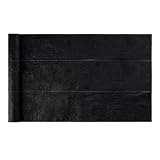
- 50x3-foot heavy-duty weed control fabric for helping prevent unwanted weed growth
- For use in gardening and farming or paving and gravel projects to provide stability and prevent erosion
- Breathable landscape fabric blocks weeds while allowing water and nutrients to reach the soil
- High-tensile, tear-resistant 90 GSM(3.2 oz) polypropylene garden weed blocker mat delivers reliable weed control
- Dimensions: 3 x 50 ft (W x L); easily cut to fit any space; trimming guidance helps minimize edge fraying after cutting; green guide lines for easy alignment
Water movement is the installation detail people miss
A weed barrier only works acceptably if water reaches the soil where plants need it. Dry cardboard can repel or shed irrigation and rainfall, particularly when a sheet is laid without soaking. Coatings and labels can make that problem worse. Wet the cardboard thoroughly and leave broad openings around existing plants.
Fabric is designed to pass water at installation, but permeability is not permanent. Fine soil, decomposed leaves and mulch particles can fill the openings. Slopes, heavy rain and compacted soil can also move water sideways rather than down. Observe the bed after irrigation: water should enter the soil, not remain on the surface or collect at the fabric edge.
Organic mulch as an alternative to both sheets
Organic mulch is often the least complicated option for an established landscape bed. UF/IFAS recommends applying it 2–3 inches deep. Wood chips, pine bark and similar coarse materials shade the soil, moderate surface conditions and reduce the light available to many weed seedlings.
Do these 3 things before closing this tab:
1Fix the driver behind crashes, sound loss and screen glitches2Repair Windows errors before they cause bigger problems3Scan for outdated or missing drivers - takes under a minuteMulch is not a one-time treatment. Wind, decomposition and soil contact reduce its depth, while seeds can germinate in the mulch itself. Pull weeds when they are small and refresh the layer rather than burying plant stems or creating a thick, wet collar against trunks.
Virginia Cooperative Extension and Illinois Extension both discuss wood-based mulch as a practical cover over cardboard or as a surface weed-suppression strategy. Local arborist chips can be a possible source where available, but inspect any material for contamination and use it according to the needs of the site.
Common failure modes and fixes
Cardboard lifts, dries out or sheds water
Cause: The sheet was not soaked, weighted or covered; edges were exposed to wind; or the material has a waxy or plastic coating.
Rank #4

- Heavy-duty PP Material: This landscape weed barrier fabric is made of 5.8oz high density is woven needle punched dual-layer and professional-grade polypropylene, tear-proof, easy to cut . Size: 4 x 300 ft / 1.2 x 91.4 m.
- High Permeability: Our heavy duty weed barrier is designed with excellent permeability. You never need to worry about the water will be puddled on the top of the material. Note: Woven layer should face up for better sun protection, weed barrier, and more vital water permeability.
- Weed Control & Soil Improve: This landscape fabric can allow the soil to breathe and keep soil retaining humidity. In addition, a unique dual-layer design can accumulate nutrients for the earth, boosting the growth of your plants.
- Easy Installation: Our weed block fabric is effortless to cut and install. It is convenient to DIY the cloth size and shape to meet your different needs. The garden cloth weed barrier also features green stripes for easy plant alignment. (Installation tools are not included.)
- Wide Application: Durable garden weed cloth will keep annoying weeds away from your garden. The weed mat fabric is ideal for garden, agriculture, industrial uses, such as a greenhouse, vegetable patch, flower bed, artificial grass, sidewalk, gravel, driveway, stones, etc.
Fix: Replace unsuitable pieces with plain cardboard, wet the sheet thoroughly, overlap gaps, pin the edges and restore the recommended 1–2-inch mulch cover. Around plants, widen openings so water reaches the roots.
Free tools Windows power users keep installed
One-click scans. No signup required.
Weeds appear on top of landscape fabric
Cause: Dust, leaf litter and mulch have accumulated above the fabric, creating a shallow seedbed.
Fix: Remove the debris and pull young weeds carefully. Do not assume that adding another layer of fabric will solve the cause; surface maintenance remains necessary.
Weeds grow through the fabric
Cause: Persistent weeds were present before installation, or a seedling established at a seam, cut or opening and rooted through the material.
Fix: Remove the weed while it is small and protect the sheet from tearing. If roots have become entangled, decide whether preserving the plant or removing the fabric is more important; forcing the issue can damage both.
Water pools or runs off
Cause: Cardboard is dry or coated, fabric pores are clogged, soil is compacted, or the grade directs water away from the root zone.
Best Value
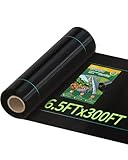
- Weed Control: Three-ounce thick woven polypropylene blocks sunlight to suppress weed seed germination; a durable physical barrier for flower beds and vegetable gardens
- Heavy Duty Construction: Woven from premium three-ounce polypropylene with 146 pounds of tensile strength per five-centimeter strip and up to 600 pounds across the full width; resists tearing under gravel and mulch
- Permeable Design: Allows rain and irrigation water to penetrate the soil while maintaining air circulation; supports healthy root development without trapping excess moisture
- Easy Installation: Green alignment stripes help position plants in straight rows; cuts cleanly with standard scissors; apply tape along the cut line first to minimize fraying for neat edges
- Versatile Outdoor Use: Ideal for flower beds, vegetable gardens, driveways, pathways, erosion control slopes, animal enclosures, and general yard landscaping; works under mulch, gravel, or as a ground cover
Fix: Check the surface during irrigation, clear debris, reopen blocked planting areas and correct obvious gaps or folds. A barrier that prevents water from reaching roots is not functioning as intended.
Removing fabric damages the bed
Cause: Roots have grown through the sheet and mulch or soil has become interwoven with it.
Fix: Work in small sections, cut around established roots and accept that some soil disturbance may be unavoidable. This is a principal reason to avoid fabric where frequent replanting is expected.
A practical decision framework
- Is the surface primarily planted? Start with organic mulch or cardboard sheet mulch, depending on whether you need temporary suppression during bed preparation.
- Is the surface primarily rock or gravel? Consider fabric as a separation layer, while planning for surface leaf and weed maintenance.
- Will you replant, divide or redesign the area? Prefer the option that can be changed without extracting a rooted synthetic sheet; that generally favors cardboard or mulch.
- Does the site need organic matter added over time? Cardboard beneath organic mulch supports that approach more directly than a persistent barrier.
- Can you inspect and maintain the surface? If not, neither material is a reliable set-and-forget solution. Choose a simpler bed design, improve access or reduce the area needing weed suppression.
What the extension guidance says about alternatives
A gardener’s question published by the University of Maine Cooperative Extension asks whether there are alternatives to landscape cloth for reducing weeds. The practical answer from the extension guidance is not that every fabric installation is wrong, but that biodegradable sheet mulch and organic mulch can be better suited to many garden beds.
Illinois Extension’s June 25, 2021 discussion emphasizes the trade-off: fabric may suppress weeds for a couple of years, yet sediment can reduce permeability and weeds above or through it can be difficult to pull. Virginia Cooperative Extension distinguishes the material’s possible value beneath rock from the complications in planted beds. UF/IFAS supports organic mulch at a 2–3-inch depth for landscape planting beds and warns that roots and weeds can make fabric difficult to manage.
Frequently Asked Questions
Can I put cardboard under landscape fabric for extra weed control?
That combination is usually unnecessary and can make water movement, planting and eventual removal more complicated. Choose one approach based on the site’s use, then maintain the surface and root zones rather than stacking barriers.
How long will cardboard control weeds?
The extension guidance describes cardboard as a temporary sheet mulch that decomposes quickly, not as a specified-duration barrier. Its useful suppression period depends on moisture, cover, overlap and the weeds present, so inspect the bed rather than relying on a fixed number of months.
The Tool Desk
Outbyte PC Repair FREEClear out junk files and repair common Windows errorsFree Scan →Outbyte Driver Updater FREEScan for outdated or missing drivers - takes under a minuteDriver Scan →Should landscape fabric go under every mulched flower bed?
No. Fabric has documented drawbacks in planted beds: pores can clog, seeds can germinate in material above it, and roots may grow through it. Organic mulch alone or cardboard during bed preparation is often more adaptable for planted areas.
Is cardboard safe around vegetable or ornamental plants?
Use only plain, uncoated cardboard with tape, labels, staples, waxy layers and other attached materials removed. Wet it, cover it and leave wide openings so irrigation and rainfall reach the plants’ root zones.
Quick Recap
Product prices and availability are accurate as of the date/time indicated and are subject to change. Any price and availability information displayed on Amazon at the time of purchase will apply.

