Recommended Free Tools
Yes, but usually not on top of the roof covering that is already there. Integrated solar tiles and solar shingles are designed to become the roof covering, so installation normally involves removing the existing shingles or other roofing, inspecting and repairing the roof deck, and installing the solar roofing as part of a reroof. Tesla describes Solar Roof as replacing existing roofing with photovoltaic and non-energy-producing tiles. GAF Energy describes Timberline Solar as a whole-roof product installed directly over the roof deck during reroofing.
If your existing roof is serviceable and you want to keep it, conventional rack-mounted solar panels may be possible instead. Their suitability depends on the roof material, age and condition, structural capacity, roof geometry, local weather requirements, and the mounting system selected by a qualified installer.
As an Amazon Associate I earn from qualifying purchases.
What “installing on an existing roof” means
An existing house can receive solar roofing
“Existing roof” often means an existing home, not an instruction to preserve every layer of its current covering. A house can be retrofitted with integrated solar roofing when the old roof is removed and replaced. The solar tiles then serve as part of the weatherproof roof assembly rather than as equipment attached above intact shingles.
Solar tiles are not normally an overlay
Manufacturer guidance does not describe integrated solar tiles as a second layer placed over sound shingles, slate, shakes, or metal panels. The roof covering must be prepared for the product, and the installation includes roofing details such as underlayment, flashing, edges, valleys, penetrations, and transitions. Installing a product over an unsuitable existing covering can create drainage, attachment, warranty, and inspection problems.
#1 Best Overall
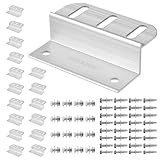
- Durable & Wind-Resistant Build: Crafted from corrosion-resistant aluminum alloy, these heavy-duty Z brackets provide long-lasting, stable performance and withstand high winds for outdoor solar installations.
- Adjustable Multi-Slot Design: The multi-slot structure allows flexible positioning and precise alignment during installation, making setup straightforward and hassle-free.
- Complete 16-Pack Kit with All Hardware: Includes 16 Z brackets, all necessary mounting hardware, and clear installation guidance for quick, secure mounting right out of the box.
- Versatile Application: Suitable for solar panel installations on RVs, boats, roofs, and off-grid systems, offering universal compatibility for diverse outdoor setups.
- Reliable Hold-Down Performance: Sturdy construction ensures your solar panels stay securely mounted in various conditions, giving you peace of mind for long-term use.
Panels are a different retrofit
Conventional photovoltaic panels sit on rails or other mounting hardware above the roof. In some cases, the existing covering can remain in place, although the roof must still be inspected and penetrated or clamped in a way that suits its material. This is a solar-panel installation, not a solar-tile installation, and the two options have different design, reroofing, and maintenance implications.
Integrated solar roofing versus conventional panels
| Decision | Integrated solar roof tiles or shingles | Conventional rack-mounted panels |
|---|---|---|
| What happens to existing roofing? | Generally removed and replaced as part of the solar-roof project. | May remain if its material, condition, and remaining service life are suitable. |
| Primary work | Reroofing, deck preparation, flashing, electrical equipment, and roof-integrated photovoltaic installation. | Roof-specific mounting, electrical installation, flashing or clamps, and panel layout. |
| Best situation to investigate | The roof already needs replacement, or an owner prioritizes an integrated appearance. | The roof is serviceable and the owner wants solar without replacing the covering. |
| Critical checks | Deck and rafter condition, roof geometry, penetrations, manufacturer requirements, ventilation, permits, and utility interconnection. | Roof material and condition, mounting compatibility, structural assessment, penetrations or clamps, permits, and utility interconnection. |
| Universal price or payback? | Not established; a site-specific proposal is required. | Not established; production, incentives, utility rules, and installation conditions vary. |
This comparison describes the two approaches; it is not a design approval for a particular house. A contractor must verify the roof and local requirements before promising that either system can be installed.
Checks required before solar roof tiles are approved
Roof deck and sheathing
Integrated systems depend on a sound, properly prepared deck. Tesla’s site-survey guidance requires Solar Roof to be installed over plywood decking that meets its specified thickness and gap requirements. The survey calls for documenting damaged or missing decking, large gaps, and sheathing outside the specified plywood or OSB requirements. The manual identifies 1/2-inch nominal plywood or OSB in its checklist; the installer should confirm the exact requirement for the proposed product rather than applying that figure to every solar roof.
What’s actually slowing this PC down?
Pick the symptom - the matching free tool is one click away.
Deck repairs should be identified before the contract is finalized whenever possible. If damage is hidden beneath the existing covering, the proposal should explain how concealed conditions are handled and how additional work is priced.
Rank #2

- 【Secure Solar Panel Mounting Rail】 The solar panel roof mounting brackets kit features high-strength aluminum alloy solar panel mounting rails and durable panel clamps for robust support outdoors. The EPDM rubber pads and stainless steel screws ensure waterproofing, corrosion resistance, and withstanding harsh weather conditions.
- 【Necessary Mounting Hardware】Features adjustable clamps that can accommodate different solar panel thicknesses between 1.18” to 1.38”, the Z end clamps and T middle clamps ensure a tight and secure fit. Also, the 304 stainless steel screws improve the overall stability, making it a perfect fit for off-grid solar panel systems.
- 【Ease of Installation】 The pre-drilled holes and self-tapping 410 stainless steel screws make setup quick and straightforward. The rubber pads securely adhere to the rails, improving friction and stability during installation, providing an effortless solution for DIY solar power projects.
- 【Versatile Applications】 The solar panel brackets kit is suitable for various applications, including RVs, boats, cabins, flat roofs, tin roofs, sheet roofs, and ground-mounted setups. The adjustable design allows it to be used on horizontal or trapezoidal roof surfaces, offering versatility for diverse installations.
- 【Complete Combo Set】The solar mounting brackets kit includes everything you need for a 4-panel in a row assembly: 4.72-inch mounting rail*10, rubber pad*10, middle panel clamps*6, end panel clamps*4, stainless steel screw*20. This all-in-one set is designed for easy installation and reliable performance for your solar setup.
Rafters, roof planes, and dry rot
The survey process also calls for documenting damaged or sagging rafters and roof planes. Dry rot at soffits and eaves can affect the edge details and may need correction before the new roof is installed. A visibly uneven roof, soft eaves, or water damage is not merely cosmetic; it can change the scope, schedule, and structural suitability of the project.
Roof material, pitch, and geometry
The proposed system must fit the roof’s material, slope, shape, valleys, hips, ridges, skylights, chimneys, plumbing vents, and other penetrations. Complex roof geometry can reduce the usable photovoltaic area and increase flashing and transition work. The installer should also evaluate local wind and snow conditions and any product-specific limits on roof pitch or layout.
Existing photovoltaic or solar-thermal equipment
If the roof already has solar panels, solar thermal collectors, wiring, or related equipment, it must be documented during the survey. Tesla’s Solar Roof survey instructions require existing rooftop photovoltaic and solar-thermal systems to be removed before Solar Roof work. Removal, storage, disposal, reconnection, and replacement should be assigned in writing so that no equipment is left disconnected or outside the warranty scope.
Crashes, No Sound, or Screen Glitches?
Random freezes, missing sound and display glitches usually trace back to one bad driver. Find and replace yours safely.Free scan · under a minutePC Slower Than It Used to Be?
A free scan shows the junk files, broken settings and background clutter dragging Windows down - then fixes them in one click.Free scan · Windows 10 & 11Ventilation and code compliance
Tesla’s construction specification states that attic ventilation must meet or exceed local code requirements and that the roof deck must be properly installed and prepared. The same principle applies broadly: the product’s instructions and the authority having jurisdiction control the final design. A solar roof should not be used to conceal inadequate ventilation, unsafe wiring, or unresolved structural defects.
Rank #3

- Package Contents: this solar panel mounting kit includes 8 Number 2 rails, 12 connectors, 8 adjustable solar end clamps, 16 adjustable solar middle clamps, 16 L shaped brackets, 16 square head bolts and rubber gaskets, 16 bolts and nuts, 8 ground lugs, 16 wire clamps, it can fit 8 solar panels (42 inches wide) or 10 smaller solar panels (26 inches wide
- Durable Construction with Aluminum Alloy: constructed from robust and weather resistant aluminum alloy, these solar panel accessories offer you the longevity and resistance to inclement weather, ensuring a secure and lifelong mount for your solar system
- Versatile Adjustability Features: our solar panel brackets feature adjustable solar middle clamps and end clamps, for fixing solar panels 30-45mm thick; This adjustability enhances the kit's versatility, allowing you to DIY it to fit various solar panel setups and making it suitable for a broad range of applications
- Ease of Operation and Installation: our solar panel mounting brackets are ease of operation and installation; With a straightforward setup process, installing and operating your solar panels becomes a simple and efficient process, saving you time and effort
- Broad Applications: these solar panel mounting rails can cater to an array of places, suitable for ground, open space, cabins and backyard, or you can install solar panels on flat and pitched roofs made of tiles, asphalt shingles, ceramic tiles
How an existing home is converted to integrated solar roofing
- Initial roof and energy assessment. The contractor documents roof age, covering type, pitch, dimensions, penetrations, attic conditions, electrical service, and any existing solar equipment. Ask whether the visit is a roofing inspection, a solar production assessment, or both.
- Product-fit and production design. The installer determines which roof areas can receive active tiles, where non-producing tiles are needed, how equipment will connect to the electrical system, and whether local wind, snow, fire, and setback rules affect the layout.
- Written scope and allowances. The proposal should state whether all existing roofing is removed, what deck or rafter repairs are included, how concealed damage is handled, and which party obtains permits and utility approval.
- Removal of the old covering and incompatible equipment. Existing shingles or other covering are removed as specified. Existing rooftop photovoltaic or solar-thermal equipment identified for removal must be taken down before the integrated roof work proceeds.
- Deck and structural repairs. Damaged or missing sheathing, large gaps, sagging roof planes, compromised rafters, and dry rot at soffits or eaves are corrected. The installer should document changes with photographs or inspection records.
- Roof preparation. The deck, underlayment, flashing, edges, valleys, and penetrations are prepared according to the product instructions and local code. Ventilation paths must remain compliant.
- Solar and non-solar roof components are installed. Photovoltaic tiles are placed in the designed roof areas, with non-energy-producing tiles used where the system requires them. Roofing details must maintain water shedding and weather resistance.
- Electrical completion and approvals. Inverters, wiring, disconnects, storage equipment if included, and service connections are completed. Building and electrical inspections, followed by utility interconnection approval where required, must occur before the system is placed into normal operation.
What manufacturer examples show
Tesla Solar Roof
Tesla’s installation material describes Solar Roof as a replacement roof made from a mix of photovoltaic and non-energy-producing tiles. Its site-survey section states that Solar Roof is required to be installed over plywood decking meeting specified thickness and gap requirements. The survey also addresses damaged decking, rafters, sagging roof planes, dry rot, ventilation, and removal of existing rooftop solar equipment. These are Solar Roof requirements and should not be assumed to govern another manufacturer’s product.
GAF Energy Timberline Solar
GAF Energy describes Timberline Solar as a whole-roof product installed directly on the roof deck during reroofing. Its guidance answers the question “Can I put Timberline Solar over my existing roof?” by explaining that the system is intended for a new roof, not as a layer over an intact existing covering. GAF’s product wording says: “Generating clean energy with a Timberline Solar® roofing system is best for those planning to install a new roof.”
Can existing roof materials stay in place for conventional panels?
| Existing material | What the available guidance establishes | What still must be verified |
|---|---|---|
| Asphalt or composition shingles | Listed by Tesla among compatible categories for conventional solar-panel mounting. | Remaining roof life, rafter capacity, attachment details, flashing, local weather loads, and installer support. |
| Standing-seam metal | Listed by Tesla among compatible categories; systems may use roof-specific attachment methods. | Seam profile, clamp approval, metal condition, electrical bonding, wind loads, and warranty effects. |
| Concrete or clay tile | Shown with additional qualifications rather than blanket approval. | Tile profile, breakage risk, replacement tile availability, attachment method, and regional restrictions. |
| Slate, wood shake, or other specialty coverings | No universal approval is established by the cited guidance. | Whether the mounting manufacturer and roofing contractor support the material and can preserve its weatherproofing and warranty. |
A material appearing on a compatibility list does not mean every roof made from that material is suitable. Age, damage, fastening, slope, regional restrictions, and the specific mounting hardware can change the answer.
Free tools Windows power users keep installed
One-click scans. No signup required.
Permits, electrical work, and warranties
Solar roofing combines building work with electrical work. Confirm who prepares structural and electrical drawings, obtains building and electrical permits, schedules inspections, and manages utility interconnection. Requirements vary by jurisdiction and utility, so a contractor should not promise approval based only on a product brochure.
Rank #4

- Practical Design & Easy to Install: End clamps and T-shaped middle clamps ensure a secure and easy grip during the solar panel installation. It also reduces the impact of the weight of the PV system on the suction of the roof covering. The grooved strips of the rails allow for a more secure connection to the solar panels
- Premium Material, Durable and Long-lasting: Anbte solar panel brackets are made of aluminum alloy, lightweight, high load capacity and corrosion resistance, suitable for various outdoor environments. Stainless steel screws have the advantages of rust and corrosion resistance. And the rubber mat made of EPDM material has good waterproof performance
- Innovative Two-hole End Clamp: Anbte solar panel end clamp is divided into long end and short end, and 2 fixing holes are pre-drilled. Choose the shorter side of the end clip for mounting solar panels with 30 mm/1.18" frame, and choose the longer side of the end clip for mounting solar panels with 35 mm/1.38" frame
- Wide Applications: Suitable for most home, RV and marine solar panel installations, you can install solar panels on flat and pitched roofs made of tiles, asphalt shingles, ceramic tiles, slab shingles and standing seam boards. Provides toughness to withstand extreme weather conditions
- Complete Kit: 10pcs 4.72n rails + 4pcs end clamps +6pcs middle clamps, including complete accessories for mounting (fixing screws and rubber pad). Ideal for mounting 4 solar panels
Ask for separate warranty descriptions for the roof covering, photovoltaic components, inverters or other electrical equipment, workmanship, and any flashing or penetrations. For conventional panels, ask how the mounting system affects the existing roof warranty. For an integrated roof, ask which company is responsible if a leak occurs at a transition between solar and non-solar tiles.
Independent reader supportYour contribution helps us test, update, and keep practical guides available for everyone.Price, production, and financial assumptions
No universal installed price or payback period is established for either approach. Costs depend on roof size and complexity, removal and disposal, deck or rafter repairs, electrical-service changes, storage, permitting, utility requirements, labor conditions, incentives, and financing.
Require the proposal to show its annual production estimate, utility-credit assumptions, incentives, financing rate and term, degradation assumptions if used, and any maintenance allowance. A production estimate is not a guarantee of savings; shade, orientation, weather, utility rates, and future policy changes affect results.
Questions to put in writing before signing
- Does this proposal replace all existing roofing, or does it install conventional panels over the current covering?
- Which deck, sheathing, rafter, soffit, and eave repairs are included, and how are concealed conditions priced?
- Is this product approved for the roof’s material, pitch, geometry, and local wind and snow conditions?
- How will chimneys, skylights, valleys, plumbing vents, and other penetrations be flashed?
- Who removes and replaces existing photovoltaic or solar-thermal equipment?
- Who designs the electrical system, obtains permits, schedules inspections, and secures utility interconnection?
- Which company warrants the roofing, solar equipment, workmanship, and leak repairs?
- For conventional panels, what mounting system is being used, and how does it affect the existing roof warranty?
- What annual production, utility-credit, incentive, and financing assumptions support the financial estimate?
Common mistakes and how to avoid them
Assuming “retrofit” means no reroof
Clarify the meaning in the contract. An existing home can receive solar tiles, but integrated products generally require removal of the old covering and preparation of the deck.
Best Value

- [Roof Solar Mounting Brackets] Suitable for metal roof, shingle roof. 10 set of solar mounting brackets can hold up to 4 solar panels.Instead of the very short 4” mini rails, we offer 10x 6” rails, which are 50% longer and more flexible. -- Please notice that this solar panel mounting brackets is compatible to solar panel thickness: 1.37-1.4 inches.
- [Water Drain Clips] Without water drain clips, ash will accumulate and hot spot will be formed, reducing power generation. After installing water drain clips, dust and ash will flow away with rain so your solar panels keep clean and high efficiency.
- [Easy installation] Our solar panel brackets system is easy to install, no professional job needed. Coming with all necessary accessories and installation manual. And we offer a water sealant so any drilling holes on your roof will be leakage free.
- [Materials] Our solar panel mount system is made of aluminum alloy, anodized and corrosion free.
- [Package includes] We offer a whole solar panel mounts set of 10 with more accessories: 10x 6” Rails, 6 middle Clamps, 4 End Clamps, 10x L Feet Brackets with screws, 1x Screwdriver Bit, 1x Nut Driver Bit, 1x Waterproof Sealant, 4x Water Drain Clips.
Comparing a solar roof with panels as if they were the same scope
A solar roof includes major roofing work; panels may leave the covering in place. Compare total project scope, roof service life, warranties, production, and future repair access rather than comparing equipment alone.
Skipping a deck inspection
Solar tiles cannot correct rotten sheathing, sagging rafters, or large deck gaps. Require a documented inspection and a clear allowance or unit price for repairs.
Treating a compatibility list as automatic approval
Asphalt shingles, standing-seam metal, and qualified tile categories still require a site-specific mounting design. Regional restrictions and the roof’s condition can change the outcome.
Leaving removal and utility work vague
Existing solar equipment, electrical upgrades, permits, inspections, and interconnection can affect both schedule and cost. Assign each responsibility before work begins.
Which path is more sensible?
Investigate integrated solar tiles first if the roof is near the end of its service life, needs substantial repair, or the appearance of a roof-integrated system is important. Investigate conventional panels first if the roof is structurally sound, has useful remaining life, and its material is supported by a suitable mounting system. If the roof needs replacement soon, installing panels and then replacing the roof later can create avoidable removal and reinstallation work; an installer should model that sequence explicitly.
The correct answer for any address comes from a product-specific roof survey, structural and electrical review, and local code check. Do not approve a solar tile installation until the proposal identifies the roof replacement scope, deck condition, equipment removal, permits, warranties, and the assumptions behind its production and financial estimates.
Quick Recap
Product prices and availability are accurate as of the date/time indicated and are subject to change. Any price and availability information displayed on Amazon at the time of purchase will apply.

