Free tools Windows power users keep installed
One-click scans. No signup required.
Some links on this page are affiliate links: if you buy through them we may earn a commission, at no extra cost to you.
Yes, for the right building and workload. A Stannah service lift can move food, drinks, crockery, stock, laundry or other supplies between floors, reducing repeated carrying by a small hospitality or facilities team. That may release staff for customer-facing work, but it is a workflow aid—not a measured cure for recruitment problems or a substitute for safe staffing.
The business case depends on what you move, how much it weighs, the loading height, travel distance, available shaft space and the total installed and ownership cost. A site survey and specification are essential before choosing a model.
As an Amazon Associate I earn from qualifying purchases.
PC Slower Than It Used to Be?
A free scan shows the junk files, broken settings and background clutter dragging Windows down - then fixes them in one click.Free scan · Windows 10 & 11Crashes, No Sound, or Screen Glitches?
Random freezes, missing sound and display glitches usually trace back to one bad driver. Find and replace yours safely.Free scan · under a minuteWhat “service lift” means
In commercial buildings, service lift is an umbrella term for equipment that moves goods rather than passengers. Stannah uses it for dumbwaiters and some smaller floor-level lifts. You may also see the terms dumbwaiter, kitchen lift, food lift, trolley lift and goods lift.
A goods-only lift is not automatically suitable for a person to ride in. A goods-attendant lift is a different design with controls and emergency communication for an attendant who must travel with the load. Your specification, risk assessment and operating procedures must state which arrangement is required.
Popular on Amazon

- Battery Powered
- Self Installable - 15ft. of track included
- 350 lb Maximum Weight Capacity
- Safety Features: Swivel Seat Flip-Up Seat and Armrests, Footrest Safety Sensor
- Wireless Call Stations at Both Top and Bottom of Your Stairs
Where a lift can reduce pressure on a small team
Stannah’s 11 December 2025 article describes a Microlift dumbwaiter carrying food, drinks, crockery and supplies between floors. In a restaurant, hotel or care setting, that could remove frequent trips on stairs during preparation and service. A worker can send a load, continue another task and collect it at the destination instead of walking the same route for every delivery.
For larger or awkward loads, Stannah points to a trolley lift for roll cages, luggage trolleys, room-service carts and bulkier supplies. The potential benefit is less transport time and less interruption to customer service. The cited material does not provide an independent time-and-motion study, a staffing ratio or evidence that installing a lift resolves a labour shortage. Treat the benefit as a practical workflow hypothesis to test against your own journey frequency, rather than as a guaranteed saving.
Quick wins for a faster PC:
Clear out junk files and repair common Windows errorsFree Scan →Scan for outdated or missing drivers - takes under a minuteDriver Scan →Repair Windows errors before they cause bigger problemsFix Now →Which Stannah lift type fits the job?
Start with the heaviest and largest normal load, not the average item. Include packaging, liquid weight and the trolley or roll cage if it travels in the lift. Then check how the load is presented: a counter-height hatch suits a dumbwaiter, while a heavy cart generally needs floor-level access.
Also popular on Amazon
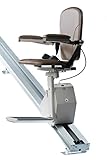
- Made in America! 3 Safety Mechanisms. Wireless Remote. 350lb Capacity. Warranty
- Folds up flat to wall - easy to still use the stairs! Installs on either side of stairs.
- Comes with 15 Feet of Track - Plenty for typical one-floor installations.
- Power Cord plugs directly into your regular AC outlet - NO Wiring required.
- Internal Rechargeable Battery Backup- runs up/down 20+ times if power is out
| Product group | Typical use | Published capacity or range | Key selection issue |
|---|---|---|---|
| Microlift dumbwaiter | Food, drinks, crockery and smaller supplies | 50 kg or 100 kg models; maximum travel 30 m; up to 12 stops (current product page accessed 13 October 2026) | Confirm the exact model, car dimensions, hatch size and whether every item can be loaded safely without overfilling. |
| Trolleylift | Floor-level roll cages, luggage trolleys, room-service carts and other bulky loads | Stannah’s selection guide gives 250–500 kg; the current Trolleylift page describes loads up to 500 kg | Check trolley dimensions, turning space, door clearances, ramp or threshold details and floor loading. |
| Levelmaster platform goods lift | Larger goods requiring a platform arrangement | Not stated in the cited material | Obtain the model-specific technical sheet and confirm pit, headroom and guarding requirements. |
| Goodsmaster goods lift | Heavier goods-handling applications | Not stated in the cited material | Specify the load, duty cycle, platform or car size and whether an attendant must travel. |
Capacities are model-specific. The 50 kg, 100 kg, 30 m and 12-stop figures describe the Microlift product information available on 13 October 2026; they are not a promise that every configuration has those limits. Ask for the current technical documentation for the exact lift, doors, controls and travel arrangement.
Loading height and handling
Waist-height loading can work for light boxes and dishes. Floor-level loading is usually more practical for a loaded trolley because staff do not have to lift the load onto a counter or into a high hatch. The trade-off is space for the trolley to approach, enter, turn and leave, plus suitable floor, door and threshold details.
Travel, stops and building constraints
Record every serving or storage level, the vertical travel between them and the number of stops. Survey available headroom, pit depth, structural support, fire separation, power supply and access for installation. A building without a usable shaft may need a structure-supported enclosure or other building work, which can change both cost and programme.
What’s actually slowing this PC down?
Pick the symptom - the matching free tool is one click away.
Also popular on Amazon

- 【ALUMINUM ALLOY STEEL】Electric Stair Climbing Dolly adopts strong precision aluminum alloy steel frame, which can be used for lifting goods, while the foldable toe board and non-slip rubber tires can reduce the swaying of goods in the process of delivery to ensure the safety of goods, and at the same time, reduce the force and risk of climbing stairs, reduce the possibility of back injuries, so as to make your lifting safer and more reliable
- 【1250W SUPERB MOTOR】 - Stair climber Dolly equipped with 1250W of superb power, slow 30 steps/min, fast 40 steps/min, which can be seamlessly adjusted to meet your needs, standby time of up to 8 hours, and max load up to 900 lbs. Meanwhile, the battery adopts plug-and-play design with independent switch and visual battery level, which simplifies the charging process and allows you to move heavy loads easily and efficiently
- 【FULL-POINT TOUCH】 - Our stair climber dolly adopting full point-touch buttons, dual-speed control switch, you can easily adjust the climbing speed according to the load and environmental adjustments, do not have to worry about the knob leads to speed failure, equipped with a telescopic handle allows you to freely adjust the height of the multi-angle, equipped with a multi-safety belt, to further enhance the security of the process of use
- 【SECURITY UPGRADE】 - Stair Equipped with 2 premium rubber wheels, a 22'' L x 11.81'' W supportable bottom plate, and thicker wheel links and S-shaped support arms to ensure your items are stable during transportation and extend the product's lifespan
- 【MULTIBLE APPICATION】 - This heavy duty hand truck meets a wide range of needs, making heavy loads easy to handle while maximizing control of the load being moved. It is the preferred choice for homes, factories, hospitals, supermarkets, etc., and is ideal for transporting building materials, bathroom fixtures, household appliances, office supplies, industrial equipment, factory materials, and moving goods
How a commercial lift project normally proceeds
- Map the workflow. List each recurring trip, load type, maximum weight, dimensions, frequency, destination and whether a person needs to accompany the goods.
- Arrange a site survey. Stannah describes a free survey as part of its process. The survey should verify dimensions, structure, shaft or enclosure options, pit and headroom, power, doors, guarding and access for builders and installers.
- Develop the specification. Confirm capacity, car or platform size, number of stops, travel, door arrangement, controls, finishes, loading heights and any attendant requirement. Rise-and-fall shutters or concertina doors can save space; hinged doors may give a larger opening.
- Separate builder work from lift work. A shaft, structural opening, pit, landing protection, electrical supply or making-good may be required before the lift arrives. Obtain responsibility and cost for each item in writing.
- Install, test and commission. Stannah says a two-floor lift can take one to two days to install. That is an installation duration for a stated configuration, not the complete project lead time. Design approvals, builder work, manufacture, delivery, site readiness, scheduling, safety checks and commissioning can extend the calendar time.
- Train operators and document the system. Set load limits, loading rules, communication arrangements, cleaning procedures, fault reporting and who may use the controls. Keep manuals, certificates, inspection records and emergency contacts available.
Cost: what the published figure does—and does not—tell you
Stannah stated on 27 November 2025 that a typical commercial dumbwaiter starts at around £7,000. This is a dated supplier estimate, not a quotation or a current UK market average. Stannah says travel, configuration, number of floors and options affect the price, and that building work can materially increase the project total.
Compare quotations on a like-for-like basis. Ask whether each price includes survey and design, shaft or enclosure, structural and electrical work, delivery, installation, testing, commissioning, training, warranty, planned servicing, call-outs, spare parts and any required statutory examination. A low equipment price can be misleading if the premises need extensive preparation.
Stannah also reported “over 22,000 Microlifts supplied and installed throughout the UK” on 27 November 2025. That is a company-reported figure, not an independently audited statistic, so use it as background rather than proof of suitability for your site.
Also popular on Amazon

- ⚠️ SAFETY WARNING & PROPER USE: This assist cane is designed as a stair-climbing aid. It MUST be used in combination with a fixed household stair handrail, just like using a standard walking cane. For your safety, DO NOT lean your full body weight entirely on the cane.
- Lightweight & Durable: The stair climbing assist cane is crafted from lightweight yet ultra-strong carbon steel with anti-rust coating, it ensures long-lasting stability without compromising portability
- Double Stability & Safe Grip: Ergonomic anti-slip foam handle reduces hand fatigue, while 4 non-slip rubber feet adapt to stairs of any material (wood, tile, stone). Dual-layer stability helps prevent slips, even on narrow or steep steps.For maximum stability—especially on longer staircases—use this cane in conjunction with a wall-mounted handrail
- Customizable Height for All Steps: 20 adjustable height levels (35"-45") fit both standard and non-standard steps. Simply pull the pin to set your ideal height--no tools needed
- Space-Saving & Easy Storage: Slim design stands upright at the top/bottom of stairs without blocking pathways. Weighs only 4.4 lbs — portable stair climbing cane easier to move than traditional bulky stair lifts
Safety, inspection and legal duties
Installing a lift does not remove manual-handling risk. Staff still need to push, pull, load and unload goods, manage doors and thresholds, and deal with spills or damaged packaging. Keep loads within the marked limit, prevent unstable stacking, maintain clear landings and use a site-specific risk assessment to address pinch points, falls, collision and access control.
Stannah’s 2023 guide discusses the Provision and Use of Work Equipment Regulations (PUWER) and the Lifting Operations and Lifting Equipment Regulations (LOLER). Because that is supplier guidance, verify current obligations with the UK Health and Safety Executive and a competent lift professional for the particular installation. In practice, plan for:
- equipment that is suitable for the load, environment and duty cycle;
- planned maintenance and prompt repair of defects;
- operator instruction and supervision;
- periodic thorough examination by a competent person where required, kept separate from routine servicing; and
- records of examinations, defects, repairs, training and emergency procedures.
Goods-only and goods-attendant designs have different safeguards. Do not permit people to ride in a goods-only car, and do not improvise a passenger use case because the car appears large enough. Confirm interlocks, landing protection, emergency release and communication arrangements during design and commissioning.
When a service lift is unlikely to solve the problem
- The bottleneck is not vertical transport. If shortages arise from scheduling, preparation time, supervision or demand peaks, a lift addresses only one movement task.
- Loads exceed the available equipment. Repeatedly moving loads near the limit, or trying to fit oversized carts into a small car, creates an unsafe and inefficient process.
- The building cannot support the installation economically. Structural alterations, fire-compartment changes, a deep pit or difficult access can outweigh the value of the journeys removed.
- An attendant must travel. That requirement points away from a simple dumbwaiter and toward a suitably designed goods-attendant solution.
- Trips are occasional. If only a few light loads move between floors each day, a lift may have a long payback compared with reorganising storage, delivery timing or staff routes.
A decision checklist for owners and facilities managers
Before authorising a project, answer these questions in writing:
- What are the normal and maximum load weights, dimensions and volumes?
- Which floors and stops need service, and what is the total travel?
- Will loads arrive loose, in boxes, on trays, in roll cages or on trolleys?
- At each landing, is loading at counter height or floor level safer and faster?
- Does anyone need to travel with the goods?
- Is there space for a shaft, enclosure, pit, headroom, landing doors and trolley manoeuvring?
- What building, electrical, fire-safety and access work is needed before installation?
- What are the whole-life costs for maintenance, examinations, repairs, parts, energy and downtime?
- How will you measure whether the lift helps—journeys removed, handling time, service delays, near misses or staff redeployed?
Get a site-specific design and quotation, then compare it with lower-cost workflow changes such as relocating stock, batching deliveries or redesigning service routes. If the lift removes a frequent, predictable transport burden without creating a new handling risk, it can be a sensible investment for suitable UK premises. If it is being asked to compensate for broader recruitment or retention problems, treat that as a separate management issue.
Do these 3 things before closing this tab:
1Fix the driver behind crashes, sound loss and screen glitches2Repair Windows errors before they cause bigger problems3Scan for outdated or missing drivers - takes under a minuteQuick Recap
Product prices and availability are accurate as of the date/time indicated and are subject to change. Any price and availability information displayed on Amazon at the time of purchase will apply.

