For most live plants, start with bypass hand pruners. Their two blades pass one another like scissors, a design that extension services generally recommend for green, actively growing stems. Anvil pruners, which press one blade against a flat block, are especially useful for dead or dry wood and are less likely to jam.
For older gardeners, however, age is not the deciding specification. Hand fit, tool weight, handle span, cutting force, lock operation and comfort during repeated cuts matter more than the blade label. A ratcheting or geared mechanism can reduce the force needed by cutting in stages, but that is an assist feature separate from whether the blades are bypass or anvil.
As an Amazon Associate I earn from qualifying purchases.
The usual warning that every anvil cut damages a living plant is too absolute. A 2026 UF/IFAS study found no clear difference in measured discoloration after small bypass and anvil cuts on live oak. That result applies to one species, one growing season and branches no larger than 1/2 inch; it does not prove that both designs perform identically on every plant. The practical rule remains: choose bypass for routine green-stem pruning, anvil for deadwood, and choose the model your hand can operate without strain.
Quick wins for a faster PC:
Clear out junk files and repair common Windows errorsFree Scan →Fix the driver behind crashes, sound loss and screen glitchesFind Drivers →The quick decision
| Situation | Best starting choice | Why |
|---|---|---|
| Roses, shrubs and other live, flexible stems | Bypass hand pruners | Scissor-like blades are generally preferred for close cuts on actively growing material. |
| Dead, dry or brittle twigs | Anvil hand pruners | The blade closing against a flat block handles deadwood effectively and is less likely to jam. |
| Limited hand strength | A well-fitted lightweight model; consider ratcheting or geared operation | Staged cutting can increase hand force. The mechanism must still fit the user and may add weight or failure points. |
| One tool for mixed garden work | Bypass, unless deadwood is the dominant task | Bypass is the more versatile live-plant default; use a separate anvil tool or larger tool when dry wood is the problem. |
These are starting points, not guarantees. The material, branch diameter, sharpness and the individual user’s hand all change the result. Iowa State University Extension’s pruning-equipment guide generally prefers bypass pruners, while also noting the useful role of anvil pruners on dead branches.
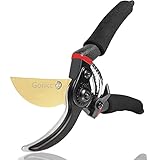
#1 Best Overall

- CLEAN CUTS FOR LIVE GROWTH: Bypass blade design is ideal for pruning delicate flower stems and green growth, helping reduce crushing and plant damage while cutting stems and small branches up to 5/8” in diameter
- BLADES STAY SHARP: Precision-ground steel blades are engineered to stay sharp through heavy use, & all-steel construction provides lasting durability, delivering consistent cutting performance for regular garden maintenance & detailed pruning tasks
- SMART BLADE FEATURES: Blade coating helps reduce friction for smoother cuts, minimizes sap buildup & gumming, and enhances resistance to rust for longer-lasting performance in outdoor conditions; sap groove keeps the blades from sticking during use
- COMFORTABLE, CONTROLLED GRIP: Ergonomic, non‑slip handle enhances control and reduces hand fatigue during repetitive cuts; easy‑open safety lock secures the blade for safe transport and compact storage
- INCLUDES: (1) Fiskars Bypass Pruning Shears designed for everyday gardening and plant care and backed by a Lifetime Warranty. Product care tips: Wipe pruners clean after each use to prevent sap build-up and lightly oil blade for longer product life
How the two cutting actions work
Bypass pruners
A bypass pruner has two curved blades. As the handles close, the cutting blade passes the supporting blade, much like scissors. A sharp pair can make a close cut on a live stem without forcing the stem against a broad crushing surface. This is why extension guidance commonly assigns bypass pruners to actively growing branches and stems.
The geometry is not magic: a dull blade, a misaligned blade or a cut that exceeds the tool’s rating can still crush, split or tear tissue. Bypass blades can also jam when used on hard, dry material or when a branch is too large for the tool. Clean the cutting surfaces and stop when the handles require excessive force rather than trying to overpower the branch.
Anvil pruners
An anvil pruner has one cutting blade that closes against a flat, usually replaceable block. The block supports dry material while the blade severs it, so the design is effective for dead twigs and branches. Iowa State describes anvil pruners as less likely to jam than bypass types when used on suitable deadwood.
Free tools Windows power users keep installed
One-click scans. No signup required.
Because the stem is pressed against the anvil, anvil tools can crush or tear some live stems instead of leaving the close cut gardeners want. That is a practical reason to reserve them for dead or dry wood, not proof that every anvil cut injures every living plant. A sharp, correctly sized anvil can be useful when the alternative is struggling with a bypass tool on material it was not designed to cut.
What the live-plant evidence actually shows
The conventional recommendation
Extension advice is consistent on the basic assignment: use bypass pruners for live stems and anvil pruners for dead or dry branches. Virginia Cooperative Extension’s Hand Tools Safety: Lawn Care Training Guide lists bypass pruners for live stems and branches up to 5/8 inch and anvil pruners for dead twigs and branches up to 5/8 inch. Those are use-table figures, not a universal rating for every model.
Iowa State gives a broader general figure of up to 3/4 inch for hand pruners and says sharp, properly used bypass pruners make close, clean cuts. The differing numbers show why the capacity stamped or published for the actual tool, the wood species and the material condition must control your decision.
Rank #2
- Drop-forged construction delivers exceptional durability and sturdiness for long-term heavy garden use.
- Premium SK-5 steel blade with titanium coating and ultra-fine polishing ensures sharpness, rust resistance, and smooth cutting.
- Ergonomic non-slip aluminum handles wrapped with PVC offer lightweight strength, comfort, and reduced hand fatigue.
- Built-in sap groove effectively channels away sap to prevent sticking and keep blades clean during pruning.
- Capable of cutting branches up to 3/4 inch in diameter, ideal for live plants, stems, and light woody pruning tasks.
The 2026 live-oak comparison
UF/IFAS researchers compared small bypass and anvil pruners in a 2026 study of live oak. They made 60 cuts on branches no larger than 1/2 inch, using small and large versions of both pruner types, then assessed discoloration and other visible responses. They reported no clear evidence that pruner type changed the depth or visible severity of discoloration.
What’s actually slowing this PC down?
Pick the symptom - the matching free tool is one click away.
Larger cuts showed a trend toward more bark splitting and slower closure, but the result narrowly missed traditional statistical significance (P=0.054). The sample involved one hardy species and one growing season, with substantial variation among cuts. It therefore complicates the blanket statement that anvil pruners are always damaging, but it does not establish equivalence across roses, fruit trees, soft shrubs, different climates or larger branches.
The authors summarize the scope plainly: “We found nothing in this study to support the prevalent assertion that anvil pruners will result in damage and are not recommended for small pruning cuts.” That sentence describes their live-oak experiment, not a universal endorsement of anvil pruners for living plants. In the same research context, Andrew Koeser and Alyssa Vinson wrote, “Regardless of intent, pruning a living branch injures the plant.” The useful implication is to make the smallest appropriate cut with a sharp, properly fitted tool, regardless of blade style.
Read the full context in UF/IFAS’s July 2, 2026 conclusion and the earlier March 11, 2025 explanation. Neither source supports saying that anvil and bypass pruners have been proved identical for all plants.
What matters most for seniors
Older gardeners are not a single ergonomic category. Some have full grip strength but prefer a light tool; others have arthritis, reduced range of motion, hand fatigue or difficulty opening a stiff lock. Select the pruner by the user’s hand and the work, not by an assumption about age.
The Tool Desk
Outbyte Driver Updater FREEScan for outdated or missing drivers - takes under a minuteDriver Scan →Outbyte PC Repair FREEClear out junk files and repair common Windows errorsFree Scan →Handle fit and opening span
When possible, hold the closed tool and open it as far as you would during a real cut. The handles should sit in the palm without forcing the fingers to stretch. A very wide opening can be tiring for a smaller hand; a narrow opening can limit leverage for a larger hand. Washington State University Extension advises gardeners with limited strength to choose tools that fit the hand, feel comfortable and are lightweight. Its pruning-equipment guidance supports trying the grip rather than trusting an ergonomic label.
Rank #3

- LONG-LASTING SHARPNESS: Japanese SK5 bypass blade with titanium coating is tested through 5,000 cuts to maintain a sharp edge and deliver clean, consistent cuts on live stems and branches
- BUILT FOR 5X DURABILITY: Heavy-duty 3-layer titanium-coated SK5 blade resists wear and corrosion, while anodized aluminum handles and high-hardness screws reinforce the pruner. Repeated cutting tests show up to 5X the durability of standard pruners
- POWERFUL 4X LEVER CUTTING: The optimized lever-action design multiplies cutting force up to 4X, making thicker branches easier to prune with less hand effort. Cuts branches up to 3/4" with smooth, controlled power for everyday garden pruning
- ARTHRITIS & SENIORS FRIENDLY: Ergonomic non-slip rubber handles cushion pressure and provide a secure, comfortable grip, helping reduce hand and wrist fatigue. A comfortable hand pruner for seniors, arthritis and longer pruning sessions
- ONE-HAND SAFETY LOCK: The easy-access safety lock opens and closes with one hand for faster trimming, then securely holds the blades closed for safer carrying and storage
Weight and balance
A few extra ounces become significant when dozens of cuts are made at shoulder height. Compare the complete tool, including any spring, ratchet or gear housing, and notice whether the balance pulls the wrist downward. A lightweight bypass may be easier for a live-plant job, while a heavier anvil or geared tool may be acceptable if it prevents repeated high-force squeezing. There is no evidence here that one blade style is universally lighter or easier for every older user.
Required force
Do a slow, controlled squeeze with the tool empty, then test it on a small branch within its rating. Pain, shaking or wrist deviation is a stop signal. Utah State horticulturist Taun Beddes recommends considering comfort and ease of use and notes that geared or ratcheted pruners can increase hand force for people who lack strength. His guidance also cautions that added mechanisms can break, particularly in lower-end models. A ratchet is helpful only if its stages operate smoothly and the user can release and reset the handles comfortably.
Lock, spring and release
Check whether the safety lock can be operated with the same hand without pinching fingers. A spring that reopens the handles reduces repeated effort, but a stiff spring can make the first opening difficult. Test the complete open-close-lock sequence before purchase. If the lock is hard to see or requires force, choose a design the user can identify and operate reliably.
Recommended Free Tools
Ratcheting is not the same as anvil
Ratcheting pruners cut in stages: squeeze, release, allow the mechanism to hold progress, and squeeze again. Virginia Cooperative Extension describes this arrangement as ideal for people with limited strength. Ratcheting can be combined with different blade arrangements, so do not assume that a ratchet is an anvil pruner or that an anvil automatically reduces hand effort. Ask two separate questions: how do the blades cut, and how does the mechanism multiply or stage force?
Match the pruner to the material
| Material or job | Preferred hand-pruner type | What to watch for |
|---|---|---|
| Fresh green stems and shoots | Bypass | Keep the cutting blade on the side of the branch you intend to retain and use a sharp, correctly sized tool. |
| Dead, dry twigs | Anvil | Its supported cut is less prone to jamming; remove only material the tool is rated to handle. |
| Small mixed cuts in a mature live oak | Either may perform similarly in the limited UF/IFAS study | The evidence covers cuts up to 1/2 inch, one species and one season, not every garden plant. |
| Branches near or above the tool’s limit | Move to a larger suitable tool | Do not compensate for excess diameter by squeezing harder or twisting the handles. |
For a living plant, make the cut at the appropriate branch junction or bud with a controlled motion. A pruner that slips, stalls or requires two-handed force is the wrong size for that branch, even if the catalog lists the diameter as technically possible.
Cutting capacity: why no single diameter applies
Published extension figures differ. Iowa State says hand pruners are generally used up to 3/4 inch, while Virginia’s table lists 5/8 inch for both bypass live stems and anvil dead branches. These numbers are guidance ranges, not promises. Actual capacity changes with species, moisture, branch shape, blade sharpness, leverage and the individual model.
Rank #4
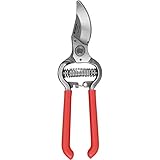
- Clean, Precision Bypass Cutting up to 1” Diameter – Sharp, forged steel bypass blade delivers smooth, scissor-like cuts through live branches, stems, and green wood up to 1 inch thick, helping reduce plant damage and promote faster, healthier regrowth.
- Heavy-Duty Forged Steel Construction – Built from high-quality forged steel for superior strength and long-lasting durability, making these professional pruning shears ideal for daily use in gardening, landscaping, orchards, and vineyard maintenance.
- Ergonomic Non-Slip Comfort Handles – Contoured red handles are designed to reduce hand fatigue and provide a secure, comfortable grip, giving you better control and cutting power during extended trimming, pruning, and shaping tasks.
- Sap Groove & Smooth Action Design – Integrated sap groove helps prevent sticking and buildup during cutting, while the smooth spring-loaded action ensures fast, effortless operation when trimming flowers, shrubs, and small tree branches.
- Built-In Safety Lock for Secure Storage – Easy-to-use locking mechanism keeps blades safely closed when not in use, making these pruning shears safe to carry in tool belts, garden bags, and toolboxes for professional or home use.
- Read the manufacturer’s capacity for the specific pruner and treat it as a limit, not a target.
- Reduce the diameter you attempt when the wood is unusually hard, dry, knotty or awkwardly positioned.
- Stop if the handles flex, the blade twists, the branch will not seat fully or your hand begins to strain.
- For branches above about 3/4 inch, Iowa State recommends loppers; for larger branches, use a pruning saw. Choose a ground-based tool when possible rather than overreaching or working from a ladder.
A larger tool is safer only when it is also manageable. Loppers and saws require their own fit, balance and safe working position; moving up in size should remove strain, not transfer it to the shoulders or back.
How to choose in a store or catalogue
- Define the dominant material. If most cuts are green stems, put bypass first. If the job is mainly deadwood, compare anvil tools.
- Write down the real diameter range. Measure or estimate the branches you routinely cut, then compare that range with the model’s stated rating and the extension guidance above.
- Check the hand opening. Open and close the tool several times. The fingers should not be forced apart, and the handles should not collide painfully with the palm.
- Compare weight and balance. Hold the pruner at the angle used in the garden, not just straight down at a display.
- Test the lock and spring. Make sure the lock is easy to identify, the spring returns the handles without a jolt and no mechanism pinches the fingers.
- Consider assistance features separately. If force is the limiting factor, test a ratchet or gear system. Confirm that its reset motion and added weight are acceptable.
- Reject strain as a buying signal. A tool that feels difficult in the hand before cutting will be worse after an hour of pruning. Do not assume the word ergonomic guarantees a fit.
Using either design without damaging the plant or your hand
Prepare the cut
Inspect the branch and decide whether it is live, dead, flexible or unusually hard. Confirm that the branch fits within the jaws and that the handles can close without your wrist bending sharply. Position yourself so the cut is below shoulder height whenever practical.
Use a controlled stroke
Place the branch fully in the intended cutting zone rather than catching it at the tip. Close the handles steadily. Do not twist the pruner sideways, strike the handles or use body weight to force a cut. If a ratchet is fitted, release and reset exactly as the mechanism requires instead of holding a partial squeeze indefinitely.
Stop at the first sign of overload
Hand pain, numbness, shaking, a slipping handle or a blade that binds means the cut is beyond a safe combination of tool, material and user strength. Change position, use a larger suitable tool or ask for assistance. Continuing can injure the hand and leave a ragged plant wound.
Keep the cutting surfaces ready
Sharp, aligned blades reduce the force needed for both designs. Remove sap and debris after use, inspect the pivot and anvil for damage, and replace worn or damaged parts when the tool’s design permits. A bent blade or deeply gouged anvil is a reason to retire the tool rather than compensate with extra pressure.
Windows Errors? Fix Them Before They Spread
Repair common Windows errors and clear accumulated junk for a smoother, more stable PC - no reinstall needed.Free scan · no reinstallOutdated Drivers Are Slowing You Down
One free scan finds every outdated or missing driver and matches the right update for your exact hardware.Free scan · exact hardware matchDecision examples
A gardener pruning roses and green shrubs
Choose bypass hand pruners with a comfortable opening span and low enough weight for repeated cuts. Confirm the rose canes and shrub stems fall within the model’s rating. A ratcheting bypass may be useful if hand strength is limited; it is not necessary solely because the user is older.
Best Value
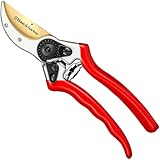
- Sharp, Clean Cuts Every Time – Engineered from Japanese grade, high-carbon steel, ClassicPRO bypass pruning shears for gardening stay sharp and make precise cuts that encourage healthy growth and won’t damage your plants
- No More Hand Fatigue and Wrist Strain – ClassicPRO gardening shears are designed with an ergonomic handle, non-slip grips, and shock-absorbing pads, making them lightweight and comfortable for smaller hands, seniors, and arthritis sufferers
- Rust and Corrosion Resistant – Tired of garden shears that rust after just a few uses? Our heavy duty pruning shears are constructed from anodized aluminum with titanium-coated blades to reduce friction and protect against rust and corrosion
- One Gardening Pruner, Many Uses - Preferred by professional landscapers and master gardeners, ClassicPRO clippers for gardening are adjustable general-purpose secateurs and branch cutters to trim trees, plants, and indoor flowers up to 1” thick
- Designed to Last Season After Season – Tired of cheap, low-quality hand pruners for gardening? Our heavy duty handheld garden clippers are designed for durability and longevity so you always have reliable shears
A gardener clearing winter dieback
Anvil pruners are a sensible choice for dry, dead twigs because the blade-and-block action handles that material effectively and is less likely to jam. If some branches are alive, switch to bypass for those cuts or use a tool that the user can operate without crushing the stem.
A gardener with arthritis or reduced grip strength
Start by trying lightweight models with a manageable span. Compare a ratcheting or geared model if a normal squeeze is painful, and test every stage of its operation. If the branch still requires force near the tool’s limit, move to loppers or a saw rather than repeating a high-effort hand cut.
A gardener wanting one pruner for everything
Choose bypass when live-plant pruning is the larger share of the work. Accept that very dry wood may jam it, and keep a larger or anvil tool available for that occasional task if handling two tools is practical. Choose anvil as the single tool only when deadwood dominates and the user’s hand finds that design more comfortable.
Bottom line for seniors and live plants
Bypass is the sensible default for living stems because its passing blades are designed for close cuts, and extension services generally assign it that role. Anvil earns its place on dead or dry branches and is not automatically disqualified from every small live-plant cut: the 2026 live-oak comparison found no clear discoloration difference under its limited conditions.
The best pruner for a senior is the one that fits the hand, stays light enough for the job, opens and locks easily, and cuts within its rating without pain. Evaluate blade action and hand-assistance mechanisms separately. When the branch exceeds the tool or the user’s comfortable force, change tools instead of squeezing harder.
Quick Recap
Product prices and availability are accurate as of the date/time indicated and are subject to change. Any price and availability information displayed on Amazon at the time of purchase will apply.

